






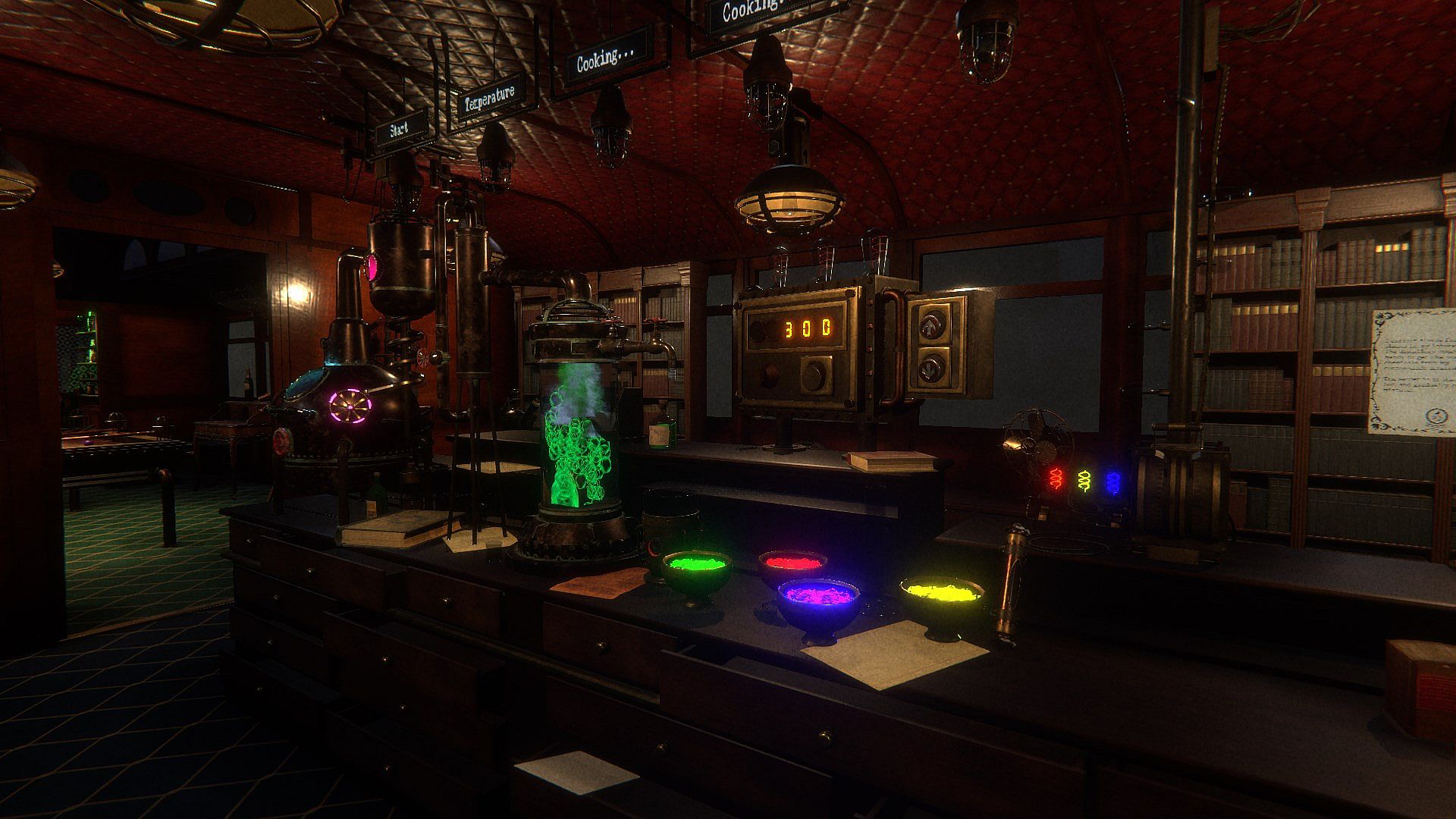
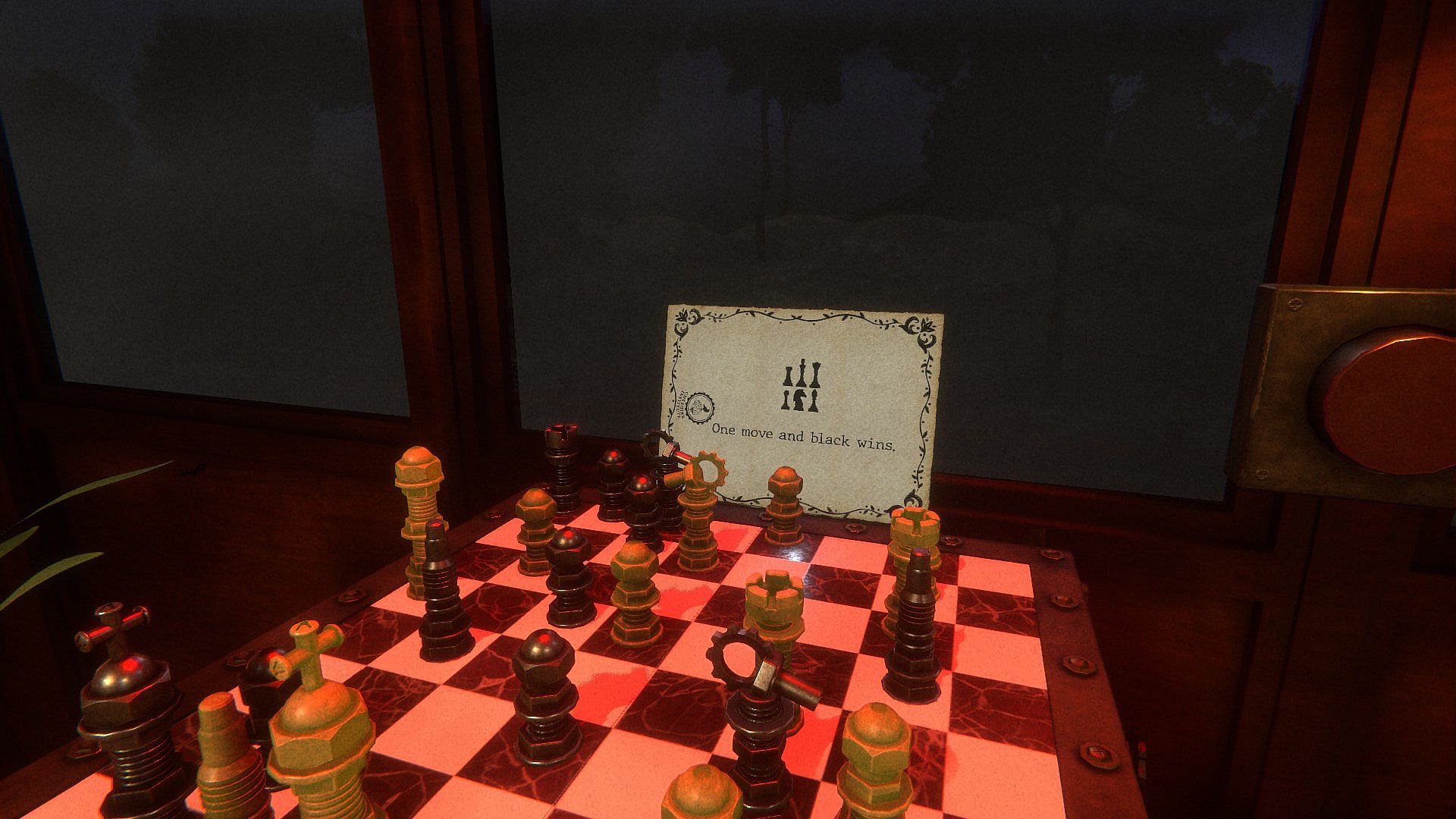
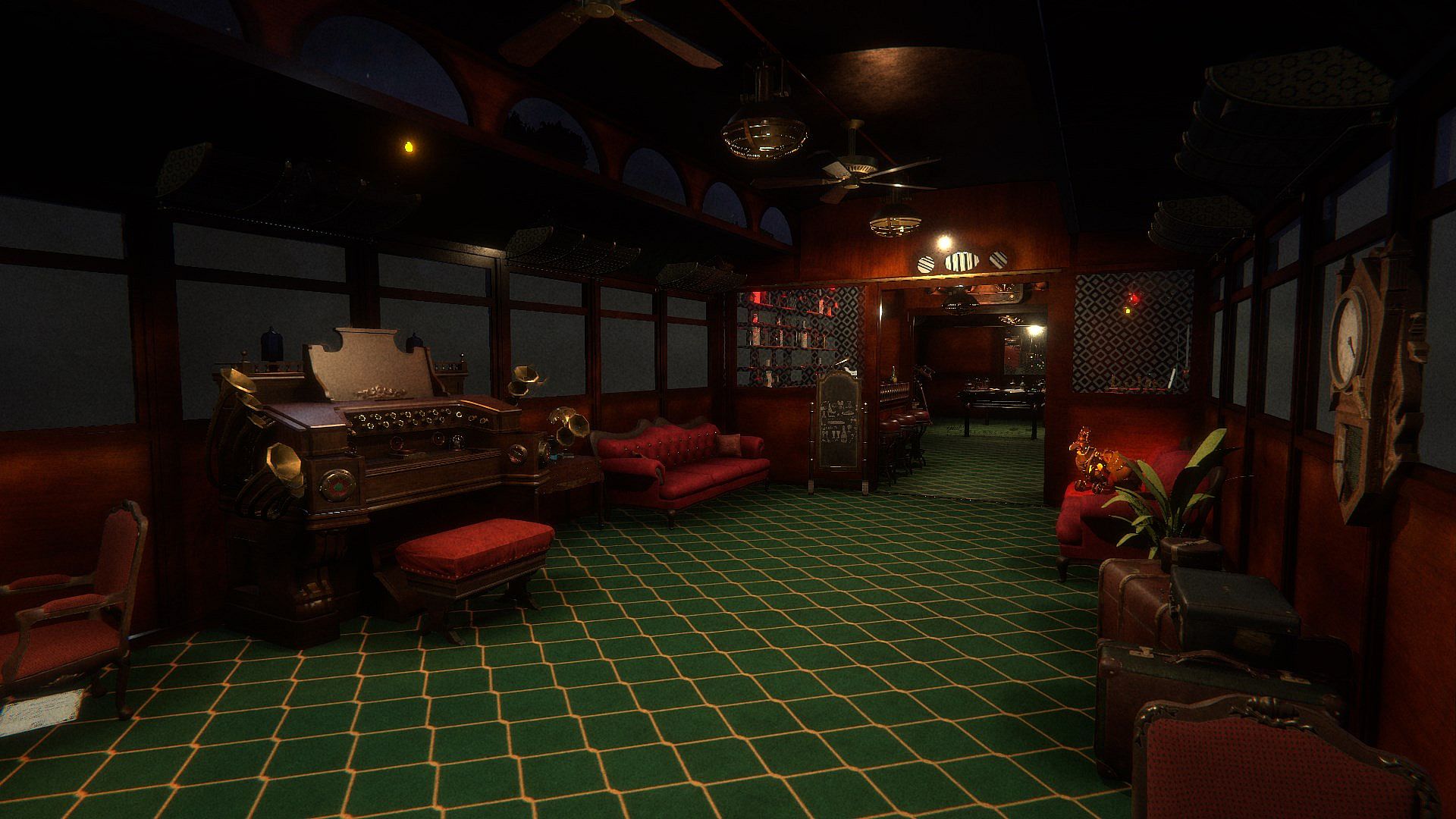
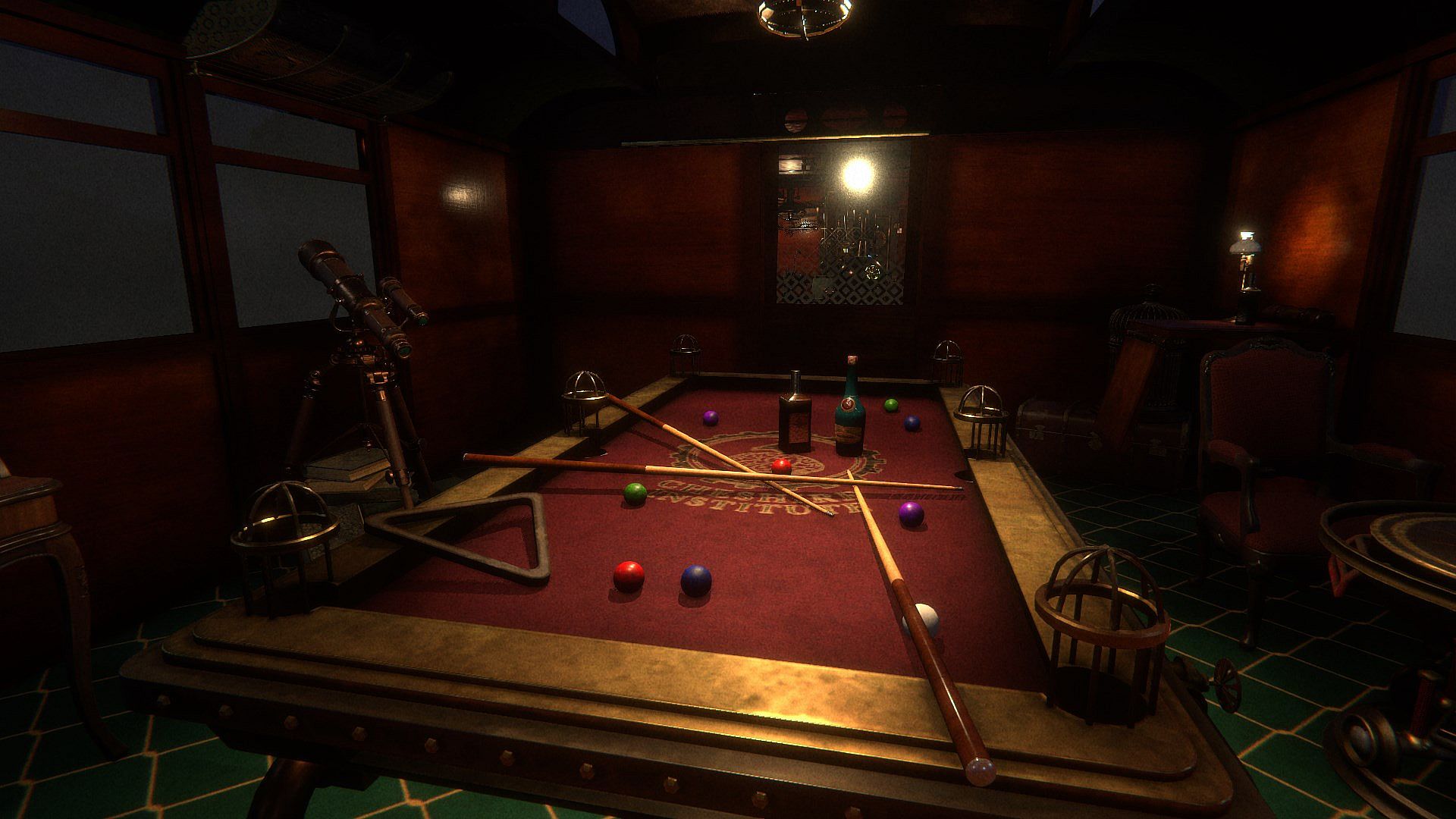
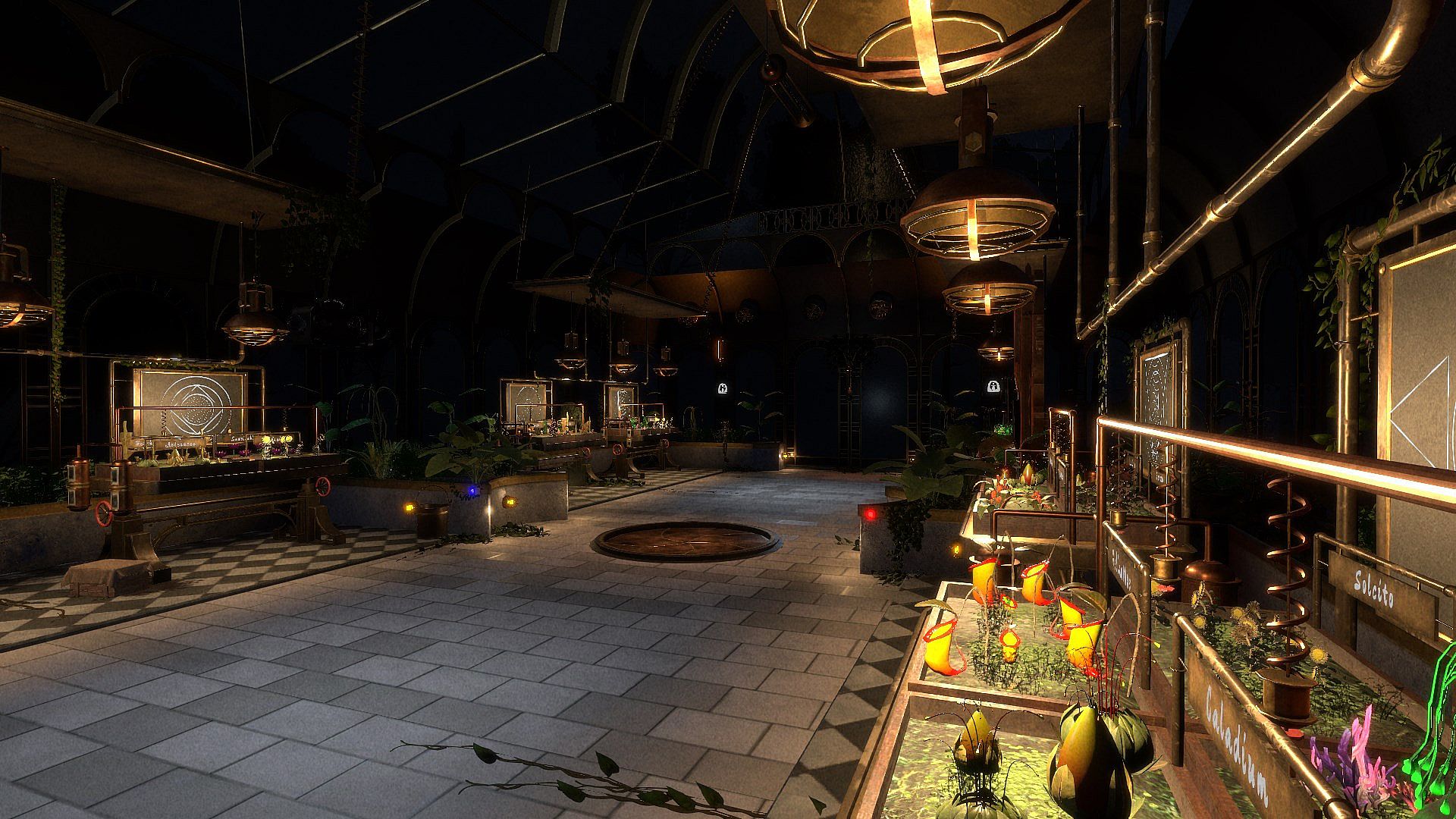
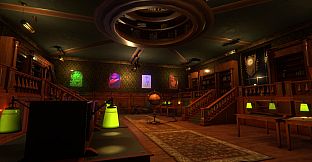
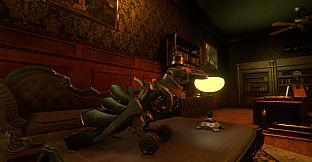
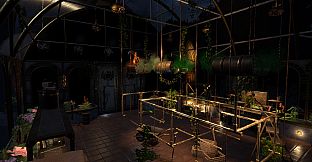
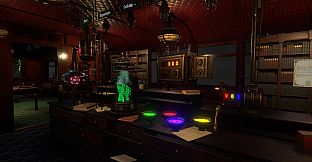
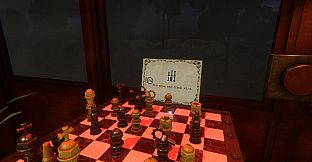

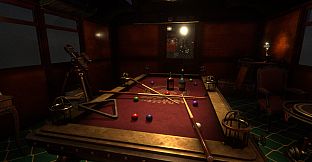
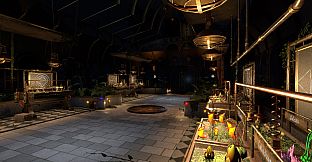
Mad Experiments 2: Escape Room is a first-person puzzle adventure that puts players in the role of subjects trapped inside the Cheshire Institute. Developed as a direct sequel to the 2020 original, it focuses on exploration, clue gathering, and logical problem solving across four distinct environments while advancing a narrative about Professor Cheshire and his daughter Hildegarde.
Gameplay
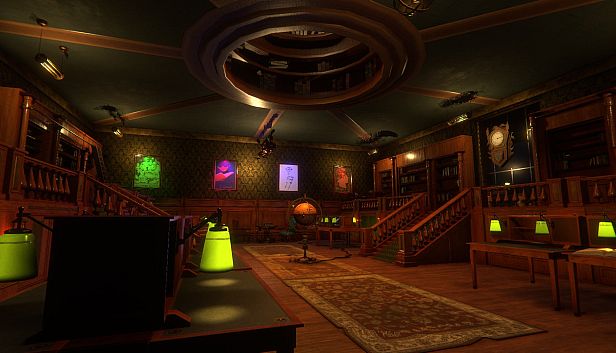
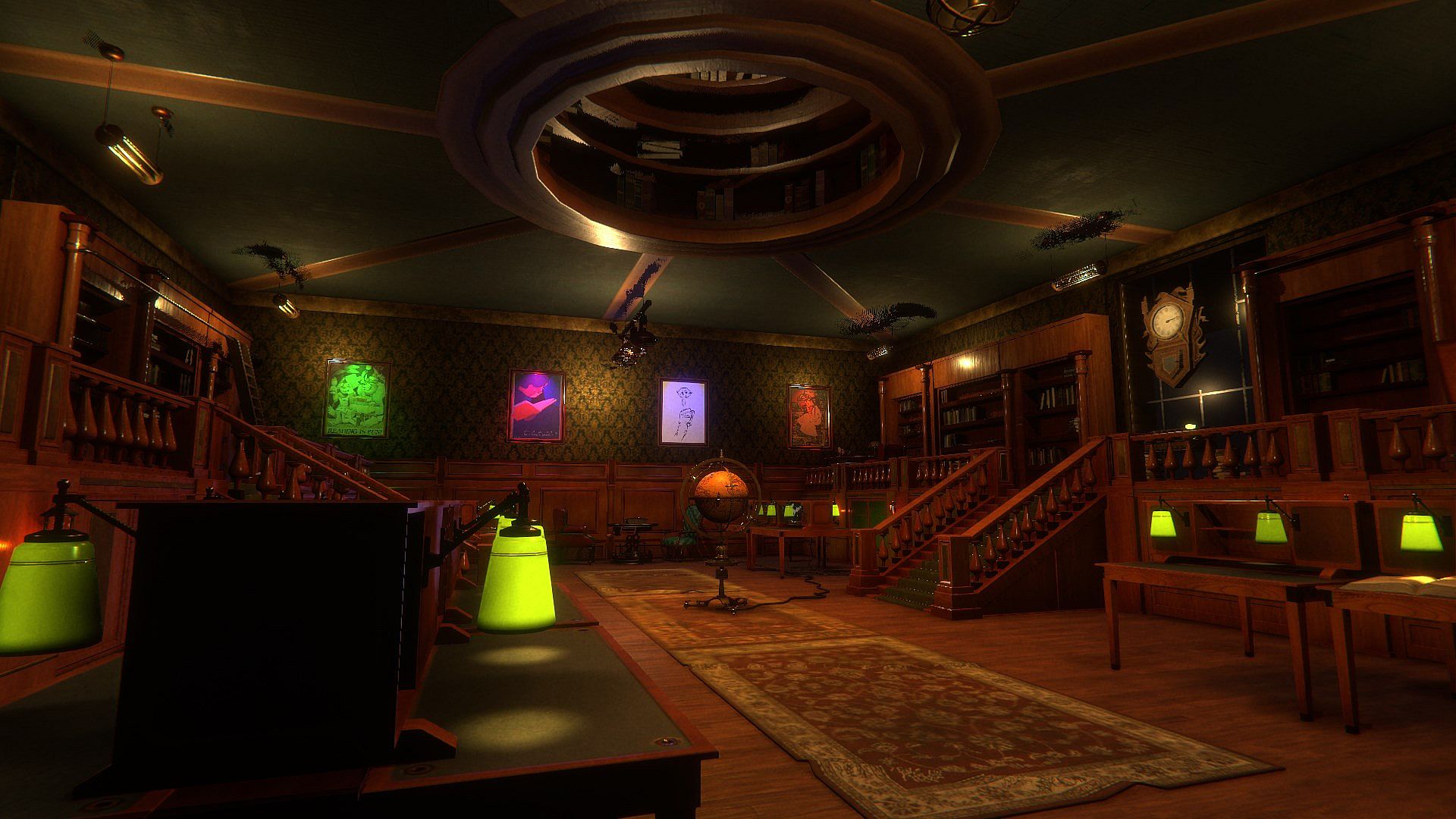
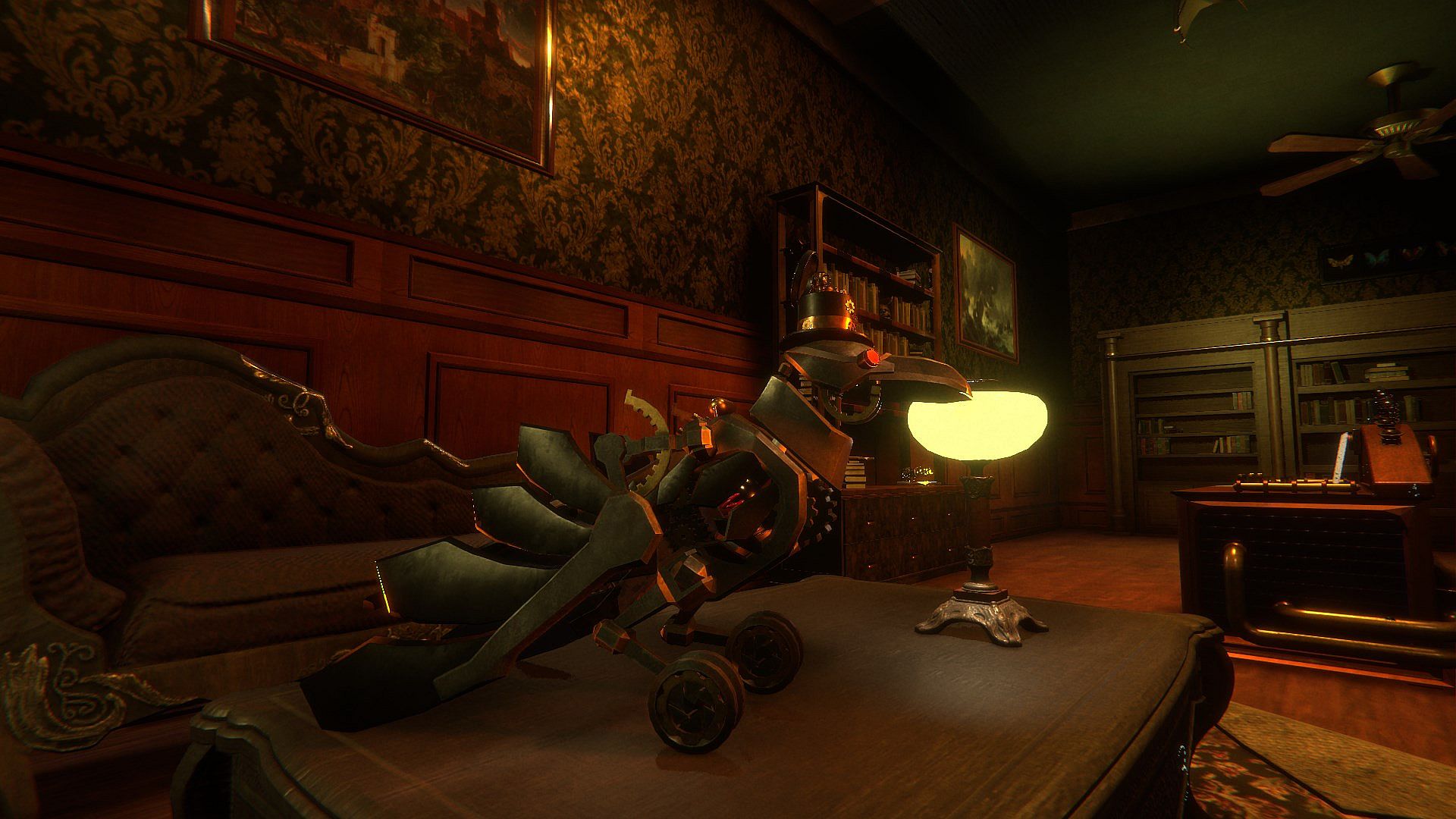
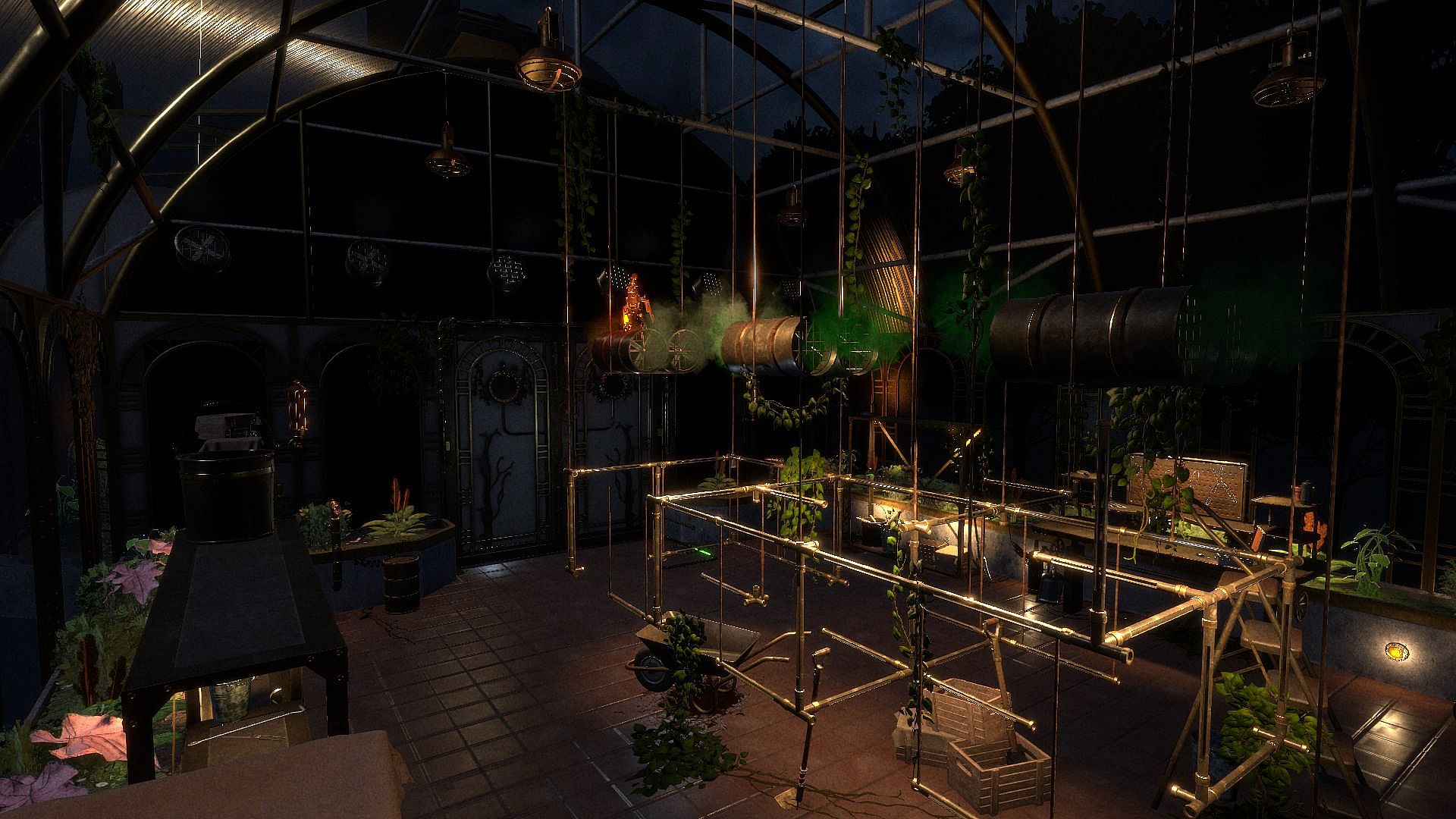
Players move through enclosed spaces in first-person perspective, examining dozens of interactive objects to locate hidden clues and piece together solutions. Puzzles often require combining items, interpreting symbols or instructions, and manipulating mechanisms such as valves, panels, and machinery. Progress reveals fragments of the overarching story, encouraging thorough searching rather than rushed completion. The environments draw from Victorian and steampunk influences, with the Library featuring knowledge-based riddles and an automaton crow, the Greenhouse involving plant extracts and hazardous substances, and the Train centering on a distillery setup. Interaction feels tactile, with objects responding to direct manipulation, though some sequences demand precise timing or repeated attempts when errors occur.
Game Modes
Two primary modes shape the experience. The standard timed mode imposes a 60-minute limit per room, creating pressure that rewards efficient teamwork and quick thinking. Relax mode removes the clock entirely, allowing unrestricted exploration and experimentation at any pace. Both options support solo play or online sessions with others, and the core loop of searching, communicating findings, and testing solutions remains consistent across them. Achievements track completion under specific constraints, such as finishing rooms without hints or within tighter time windows in the timed mode.
Story and Chapters
The narrative continues directly from the first game, placing players inside the memories of a former patient at the Institute. Professor Cheshire established the facility to experiment on minds in pursuit of a cure for his daughter Hildegarde, only to descend into obsession that transforms the site into a controlled prison. Four chapters unfold this tale: a prologue set in the Professor's Office that introduces experimental equipment, the Library where Hildegarde once sought knowledge and encountered unusual mechanisms, the Greenhouse where botanical extracts and gases form the basis of dangerous concoctions, and the Train whose final wagon houses a distillery intended to produce a decisive substance. Each location integrates environmental storytelling with puzzle progression, revealing motivations and secrets through discovered documents and interactions.
Multiplayer Experience
Up to six players can join a single session online, with console versions typically supporting smaller groups depending on the build. Communication becomes essential as teammates divide search duties, read clues aloud, and coordinate actions across the shared space. Solo runs remain viable for those who prefer independent deduction, though the design rewards verbal collaboration on multi-step puzzles. Cross-platform elements allow mixed-device groups in supported environments, and the absence of competitive elements keeps the focus on cooperative escape.
Is It Worth Playing?
Player feedback on Mad Experiments 2: Escape Room has been mixed, with praise centered on the denser prop work in later rooms like the Greenhouse and Train, warmer visual presentation compared to the predecessor, and the satisfaction of co-op puzzle solving. Criticisms often mention occasional control stiffness, matchmaking challenges on consoles, and puzzles that can feel linear or reliant on number-based locks. The game launched on Xbox One and Xbox Series X|S in August 2024 as a complete title with no ongoing seasons or major post-release content updates. It suits fans of digital escape room simulations who enjoy methodical exploration and story fragments woven into the challenges. Those who value tight time pressure or group coordination will find the timed mode engaging, while Relax mode broadens accessibility for casual or solo sessions. At its modest price point, the four-room structure delivers a focused experience best suited to players already familiar with the genre or the first entry in the series.
