




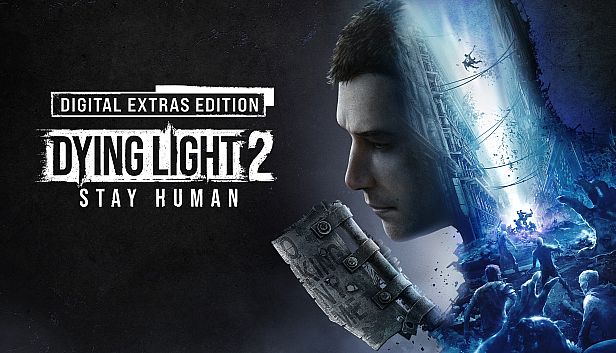



Dying Light 2 Stay Human delivers a first-person open-world action adventure centered on parkour traversal and zombie survival in the ruined city of Villedor. Players control Aiden Caldwell, an infected survivor navigating a post-apocalyptic setting where choices shape the environment and faction influence across different districts.
Gameplay
The core loop combines fluid parkour movement with brutal melee combat. Players scale buildings, use zip lines, grappling hooks, and a paraglider to cross the vertical cityscape while integrating these moves into fights against infected and human enemies. Daytime allows safer exploration amid scavenging survivors and bandits, while nights heighten tension as the infected become more aggressive and roam openly, limited by an immunity timer that forces careful timing.
Combat emphasizes creativity through blocks, dodges, and parkour-assisted strikes rather than simple button mashing. Weapons can be crafted and upgraded with mods, and the system rewards chaining movement into attacks for dismemberment and crowd control. Player decisions regarding local factions alter region control, resource availability, and story paths, leading to different explorable areas and encounters on subsequent playthroughs.
Game Modes
The game supports single-player campaign progression alongside drop-in, drop-out co-op for up to four players. Participants share the same world state based on the host's choices, allowing joint completion of the main story, side activities, and exploration without separate dedicated modes.
Ongoing updates have expanded options with community-created maps and experimental modifiers available through integrated tools, though these build on the primary campaign experience rather than replacing it.
Story and World
Set fifteen years after a viral outbreak, Villedor represents one of the last major human settlements. Factions vie for power while the infection evolves to react strongly to sunlight, confining most threats to shadows during the day. Aiden's journey involves navigating these groups, making sacrifices that permanently reshape districts, and uncovering layers of the city's history through quests and environmental storytelling.
The open world encourages repeated visits as altered faction balances unlock new paths and challenges. Side content ranges from survivor bounties to resource gathering that supports both personal progression and world changes.
Updates and Current State
Post-launch support has included mechanical refinements such as improved parkour physics, rebalanced early-game difficulty, and additions like firearms with limited ammunition. Visual and performance updates target consoles, including PS5 modes that prioritize frame rate stability. Recent initiatives introduce new maps, survival-focused variants, and quality-of-life changes that carry progression across the base game and added content.
The experience remains actively maintained with patches addressing stability and adding seasonal events, keeping the core systems relevant years after release.
Is It Worth Playing?
Critics have given the title generally favorable scores around the mid-70s on aggregate sites, highlighting the parkour and combat as standout elements. User feedback shows a mix of opinions, with many praising the movement and co-op sessions while noting frustrations with narrative pacing in some cases. On PlayStation platforms, the average rating sits near 4 out of 5 from tens of thousands of reviews.
The game suits players who enjoy vertical traversal, integrated melee systems, and choice-driven open worlds with co-op support. Those seeking a tightly scripted story or purely linear action may find the scope overwhelming. With years of patches and continued content additions, the current version offers a more polished entry point than at launch, particularly for fans of survival action on PS4 or PS5.