


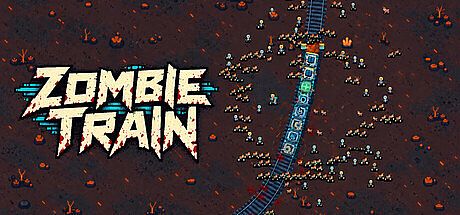


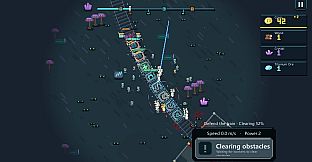
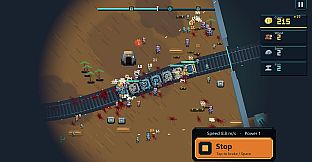
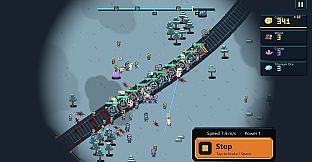
Zombie Train is an action indie pixel-art roguelite survival game set in a zombie apocalypse on PC. Players build and defend a growing armored train as it travels through hostile landscapes, combining automatic weapon fire with strategic car placement and resource management to survive endless hordes.
Gameplay
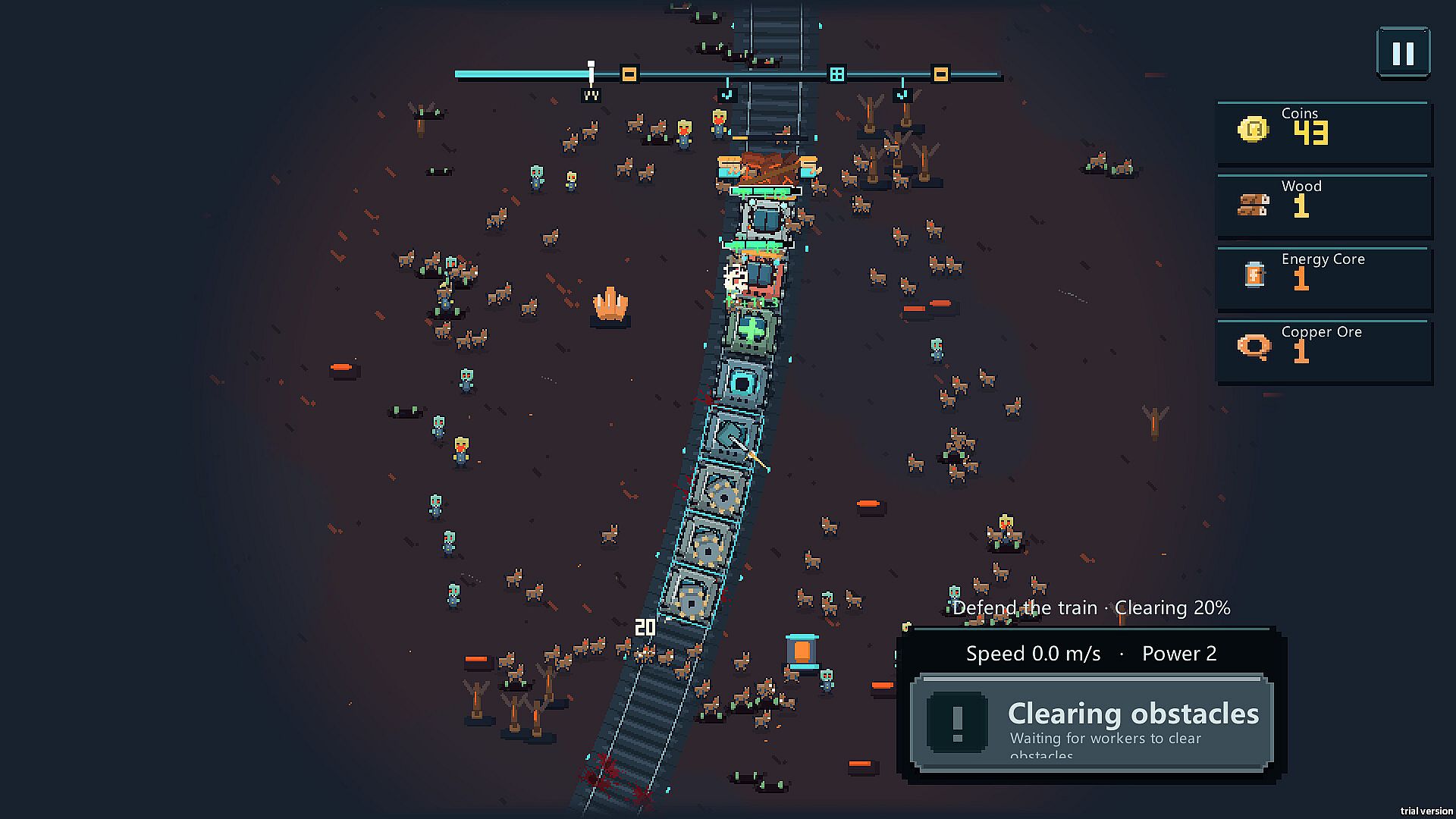
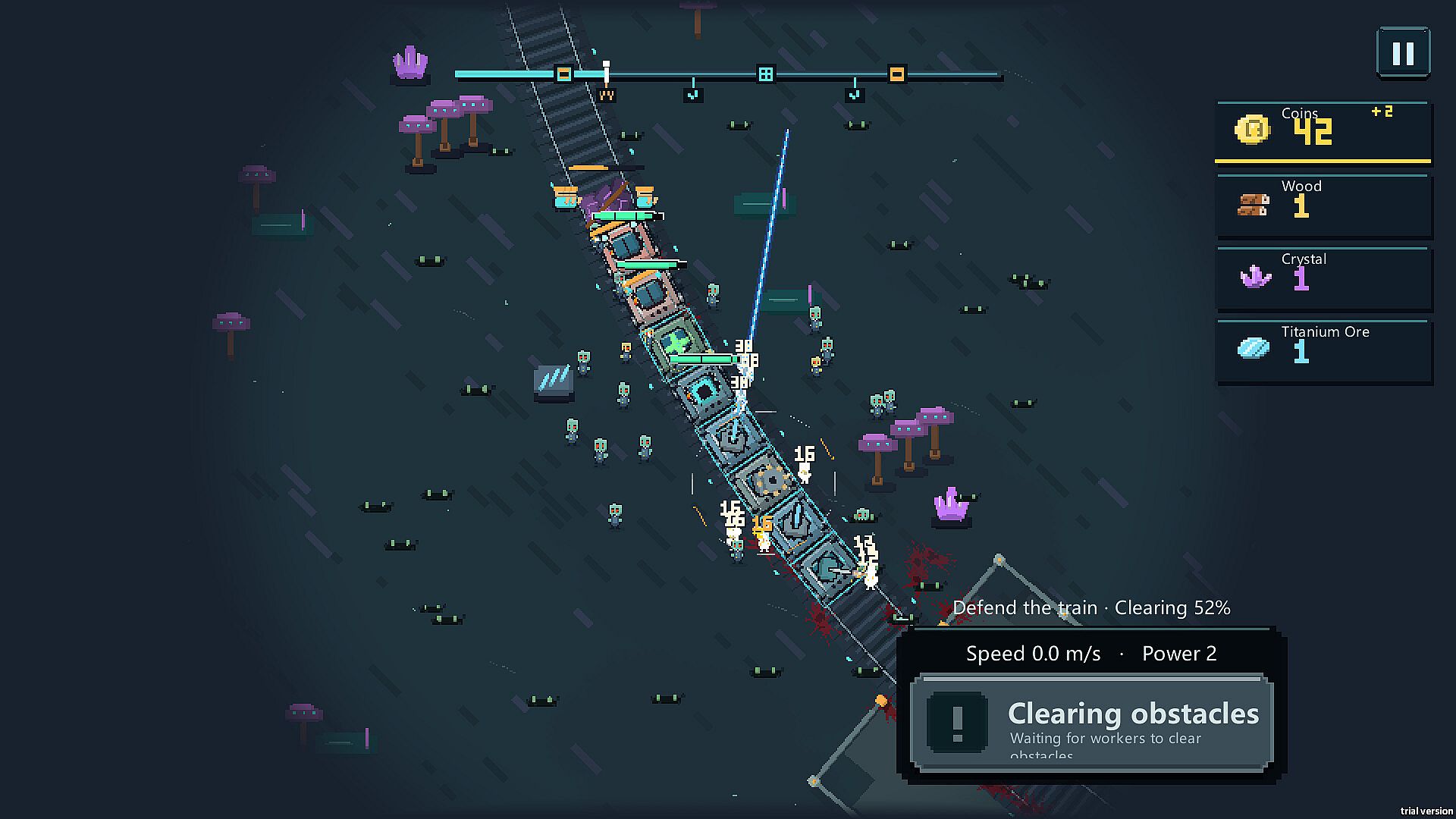
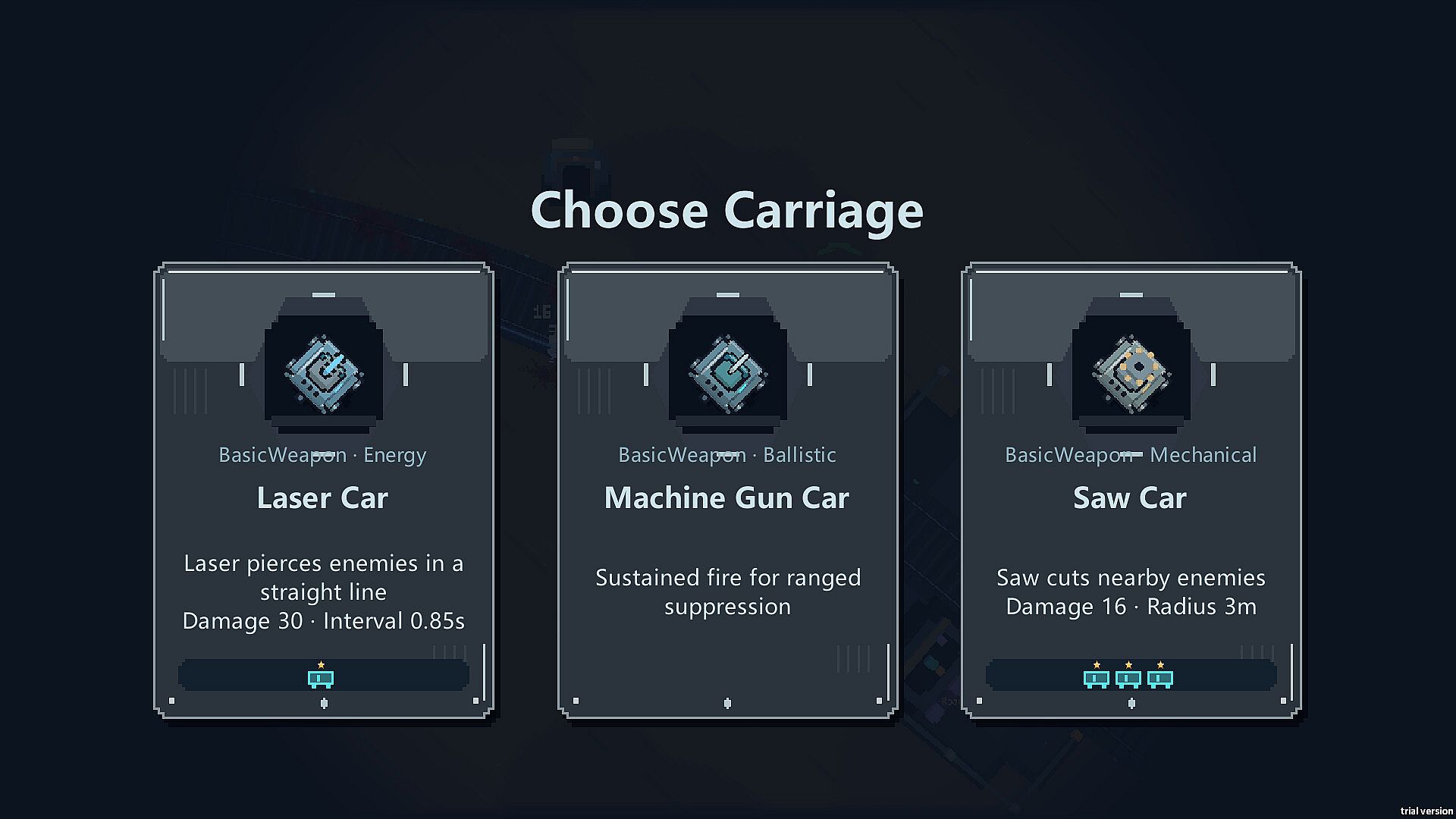
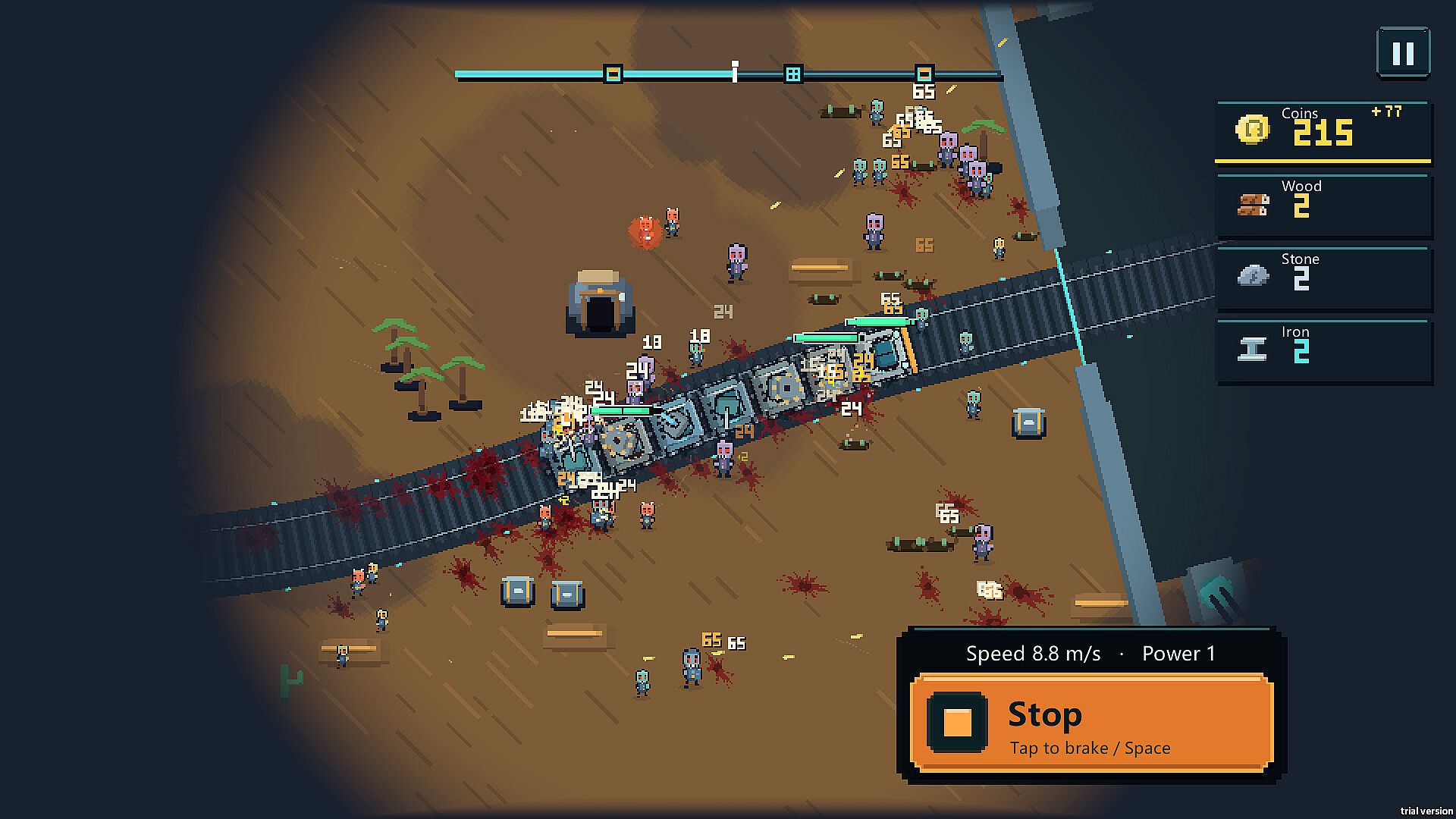
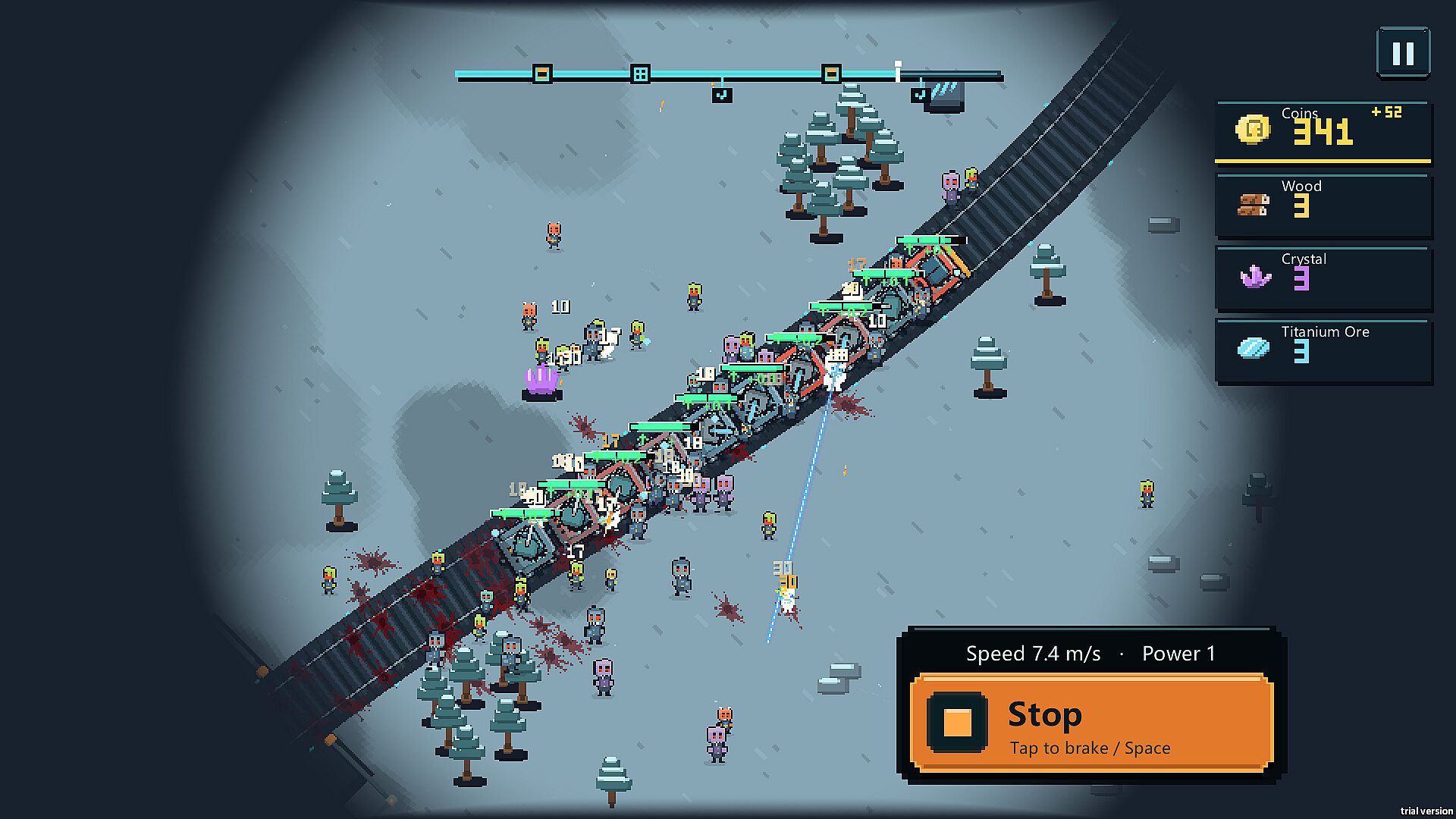
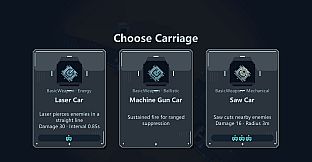
The core loop centers on keeping the train moving while fending off zombies that approach from all sides. Weapons such as machine guns, flamethrowers, and lightning emitters activate automatically once equipped, allowing focus on positioning and timing special abilities to clear paths through dense groups. Each car on the train functions independently, taking damage separately, which encourages careful expansion with dedicated weapon cars for offense, repair cars for maintenance, and shield cars for added durability.
Resource gathering adds depth to every journey. Grappling hooks pull in trees and ore from the surroundings, which players bring back to supply stations for repairs or shops for immediate purchases. Materials collected during runs transfer to a permanent warehouse, where research unlocks lasting improvements to the train structure, weapons, and gathering efficiency. This creates meaningful progression across multiple attempts as better starting options open up.
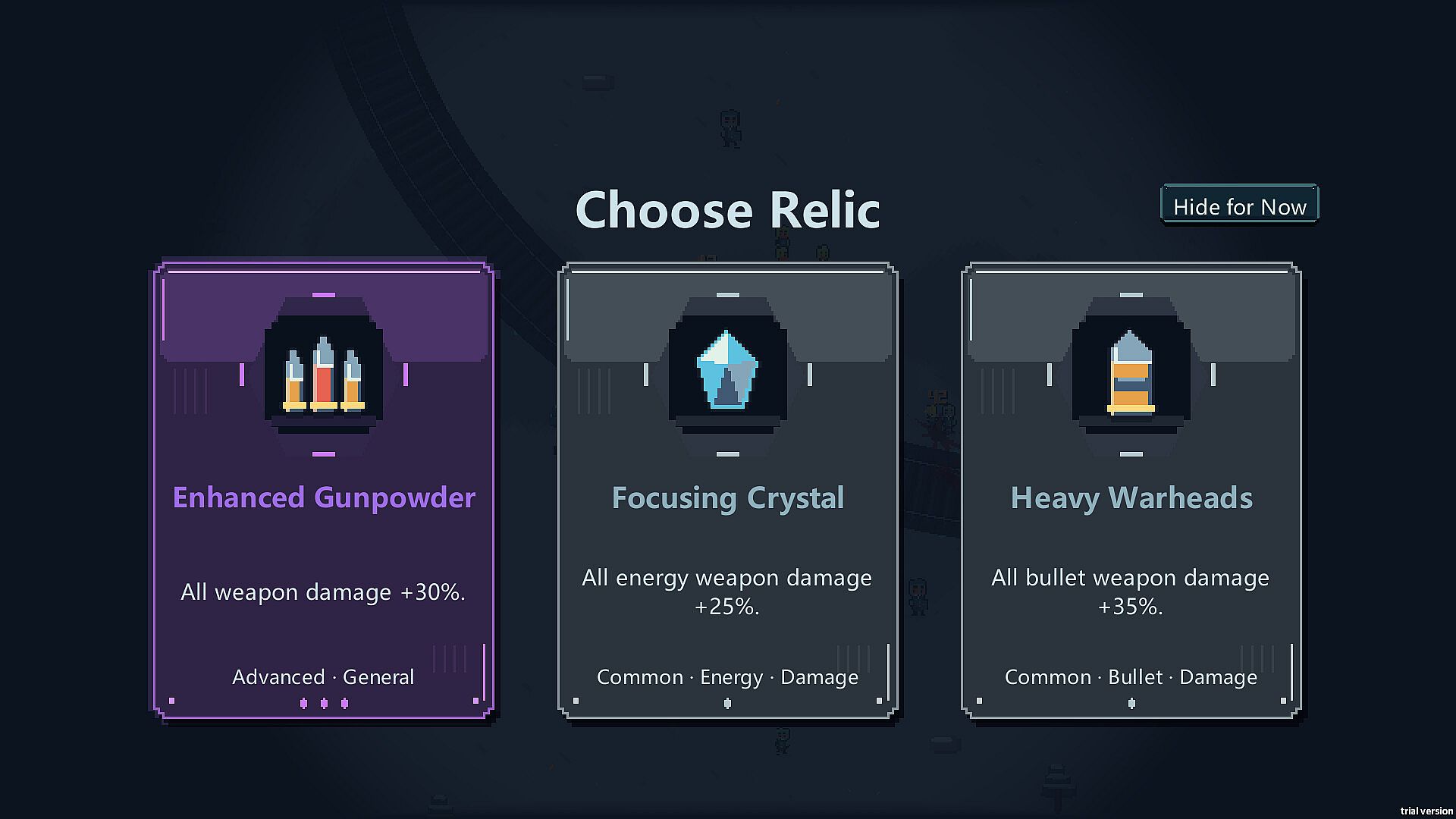
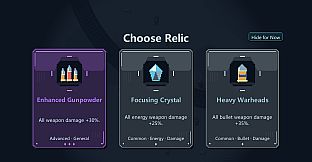
Relics appear randomly during runs and stack to modify the entire train. These power-ups can amplify specific weapons, strengthen defenses, or improve repair rates, pushing players to experiment with combinations that suit their current loadout or address emerging weaknesses. Different biomes introduce varied enemy types and environmental challenges, requiring builds to adapt as the train crosses grasslands, deserts, snowfields, swamps, and lava zones.
Game Modes
Zombie Train structures its experience around roguelite runs where each journey tests a new configuration of cars, weapons, and relics against escalating threats. Permanent upgrades from the warehouse carry forward, shortening early struggles and enabling deeper exploration on subsequent attempts. The single-player focus keeps attention on personal buildcrafting and route decisions without external competition or cooperation.
Progression emphasizes survival to the next stop rather than fixed levels, with success measured by distance covered and resources secured. Failures reset the current run but preserve researched improvements, encouraging repeated play to refine strategies for tougher terrain combinations and enemy patterns.
Key Mechanics and Progression
Modular train building forms the foundation of long-term strategy. Adding cars changes the balance of firepower, protection, and support, while independent damage systems mean losing one section does not doom the entire convoy. Automatic combat reduces micromanagement during intense waves, yet timing skills remains essential for breakthroughs when hordes thicken.
Research and shop systems reward consistent gathering. Early runs focus on basic survival and material collection, while later ones leverage upgrades to handle lava landscapes or swamp ambushes more effectively. Relic stacking rewards experimentation, as synergistic effects can turn a modest setup into a high-clearance fortress.
Is It Worth Playing?
Zombie Train suits players who enjoy roguelite survival games with strong emphasis on vehicle customization and automatic combat loops. The pixel-art style and focused single-player runs deliver a clear loop of gather, build, survive, and improve without distractions from multiplayer elements. Those drawn to modular defense setups and permanent progression systems will find the train-building mechanics rewarding, especially when adapting loadouts across varied biomes and enemy mixes. The game remains in a pre-release state with no user reviews available yet, so interest hinges on appreciation for the described systems rather than established community feedback. If the combination of automatic shooting, relic experimentation, and cross-run upgrades aligns with preferred gameplay, it offers a distinctive take on zombie survival on rails.