





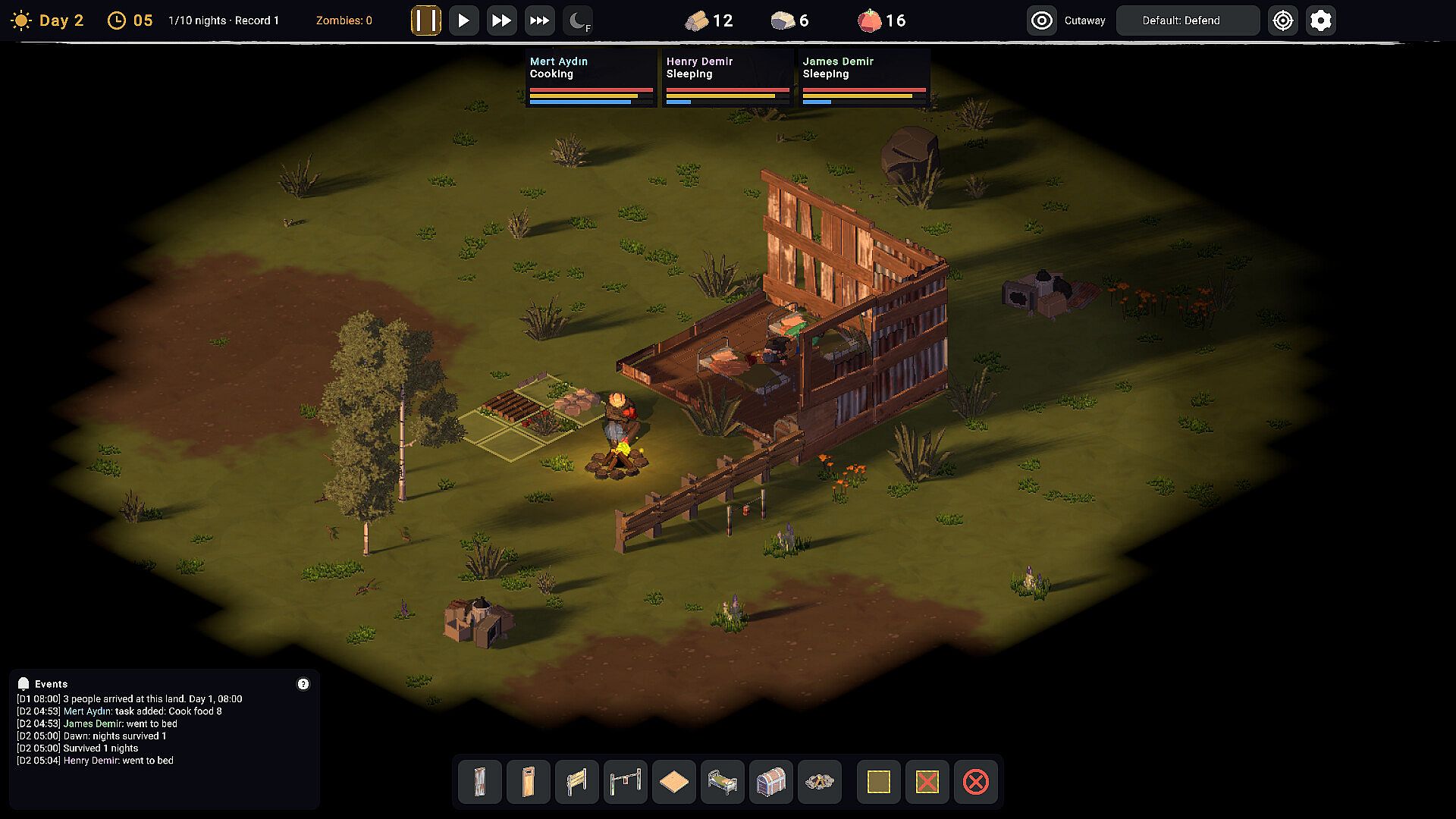
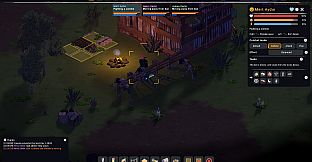
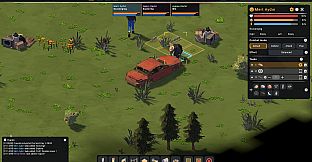
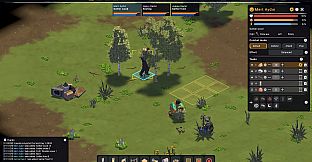
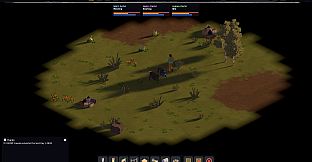
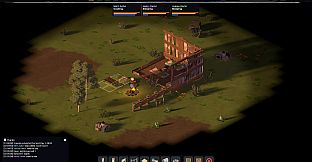
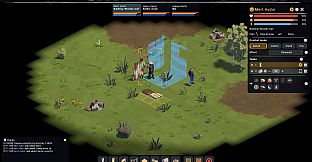
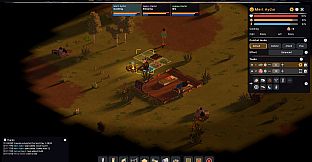
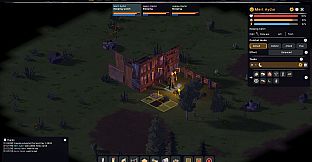
Wakefolk is an isometric zombie survival colony sim that places players in charge of a small group of survivors trying to endure repeated nights of undead threats on PC. The game combines strategy, indie development sensibilities, and simulation elements to create a management experience centered on resource allocation, base building, and careful planning in a fog-shrouded world.
Gameplay
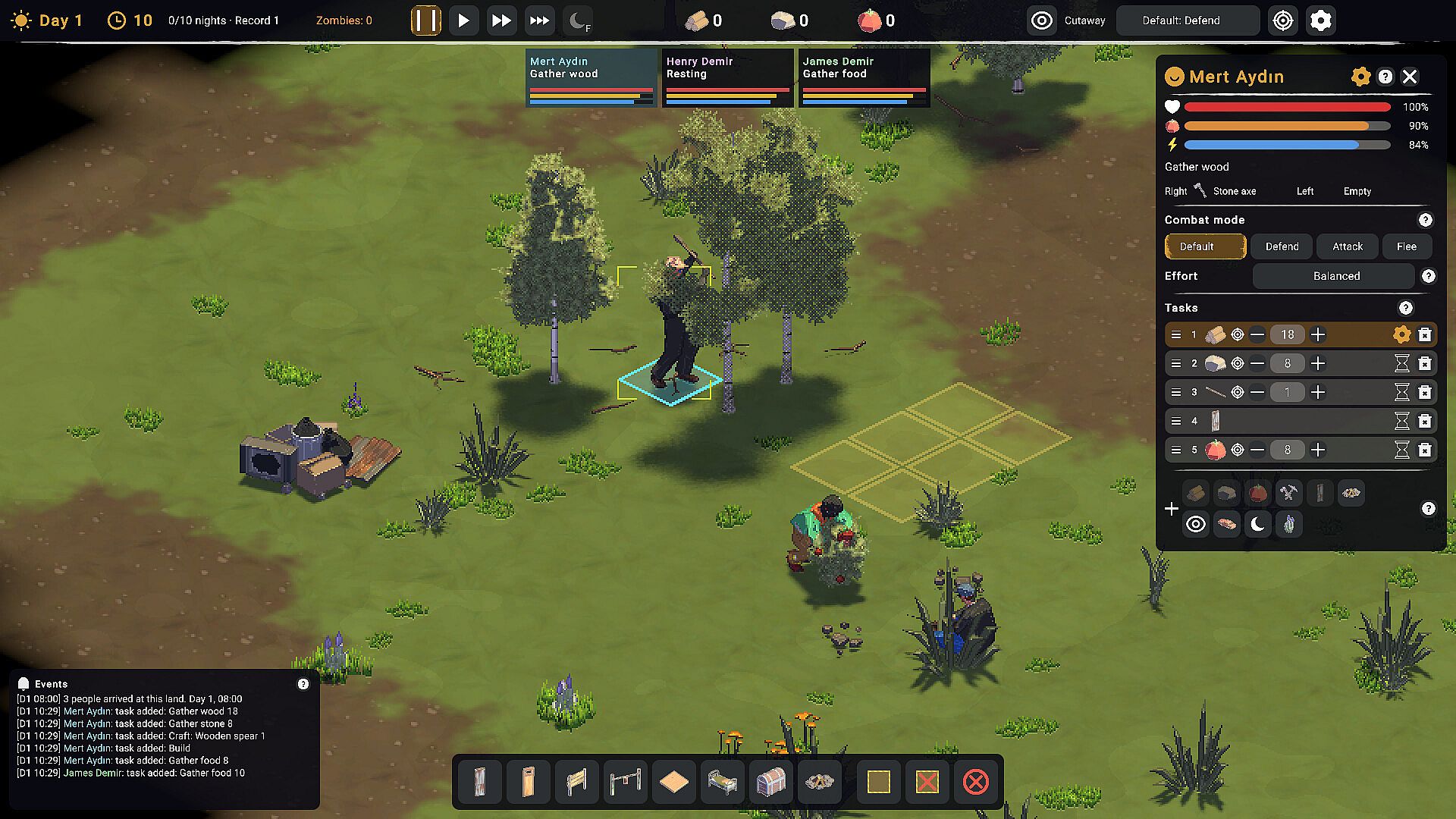
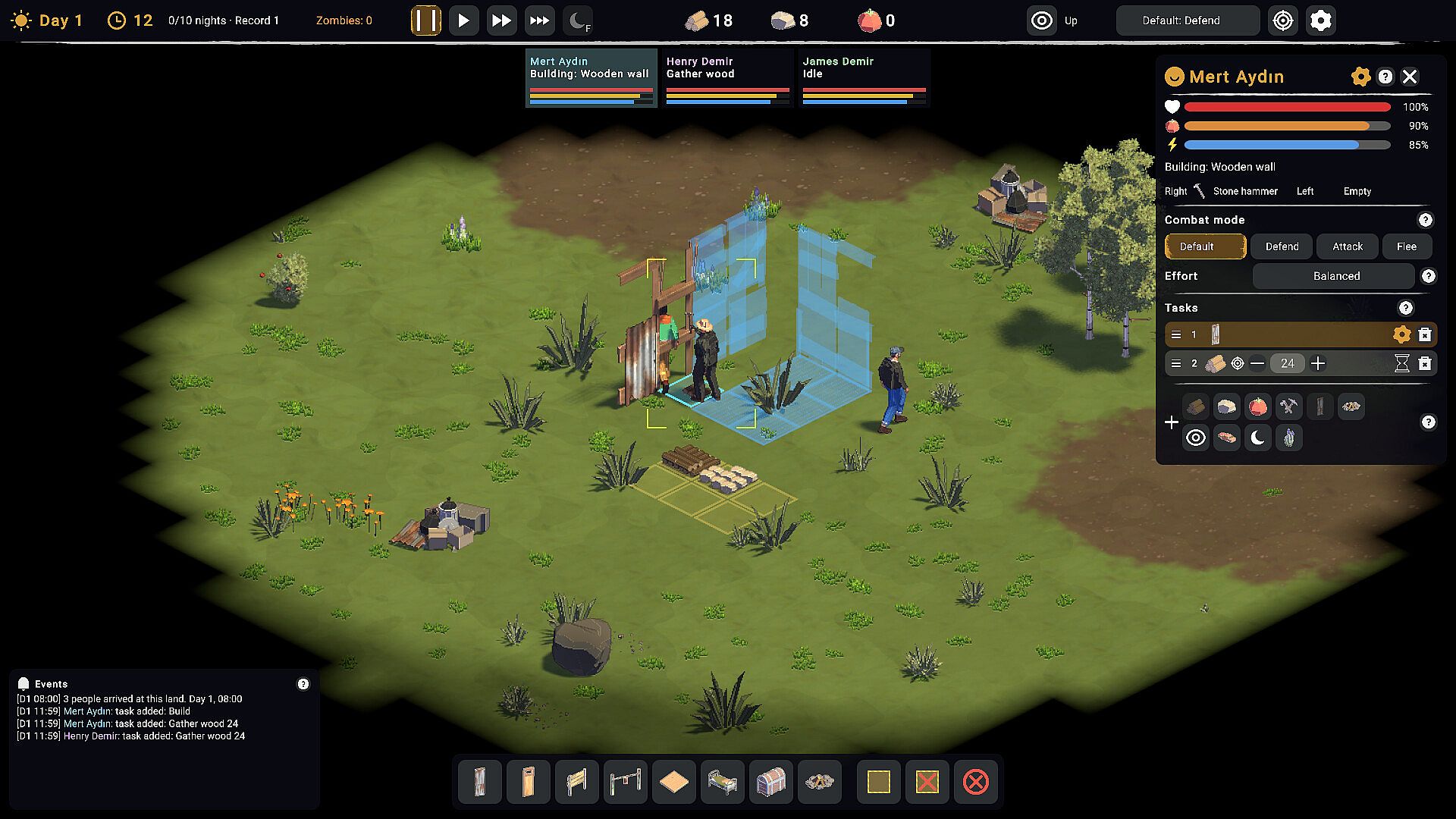
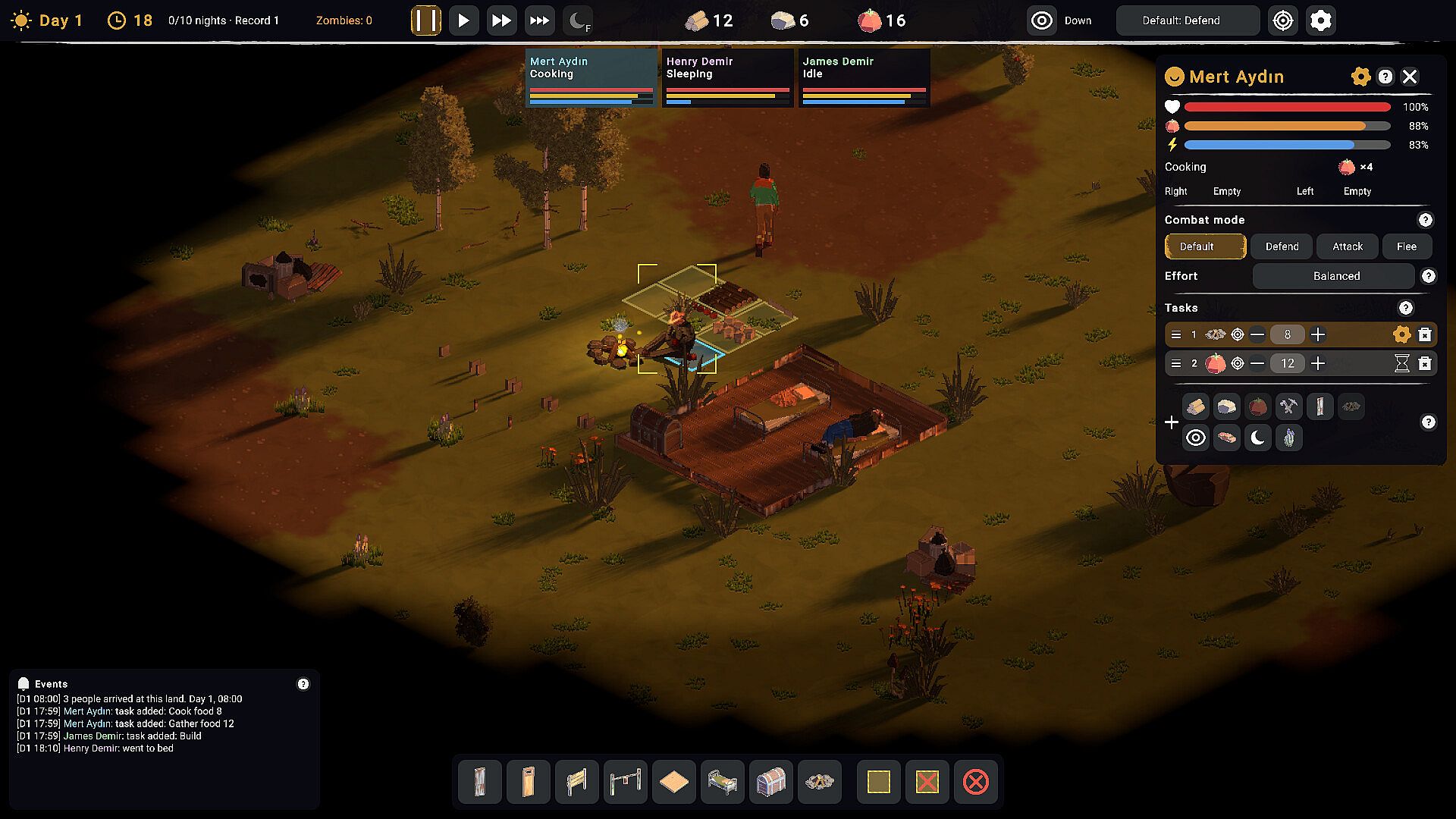
Players begin with three survivors and must direct their daily activities through priority settings, work effort levels, and danger responses. Survivors handle their own needs for food, rest, and healing while executing assigned tasks, which creates constant tension between productive work and personal survival requirements. The isometric view reveals a pixel-art rendered 3D environment where the camp expands gradually through player-directed construction and exploration.
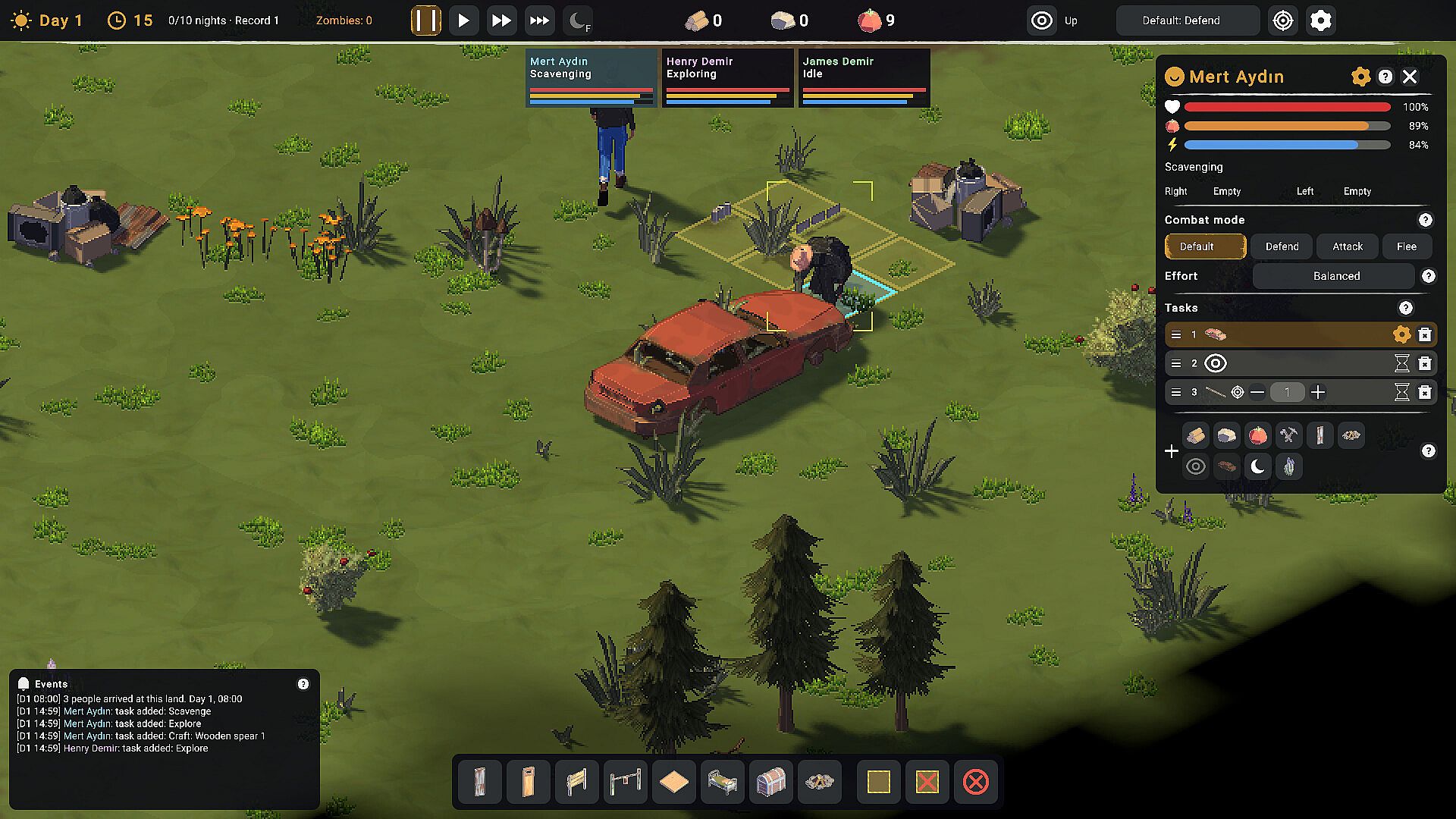
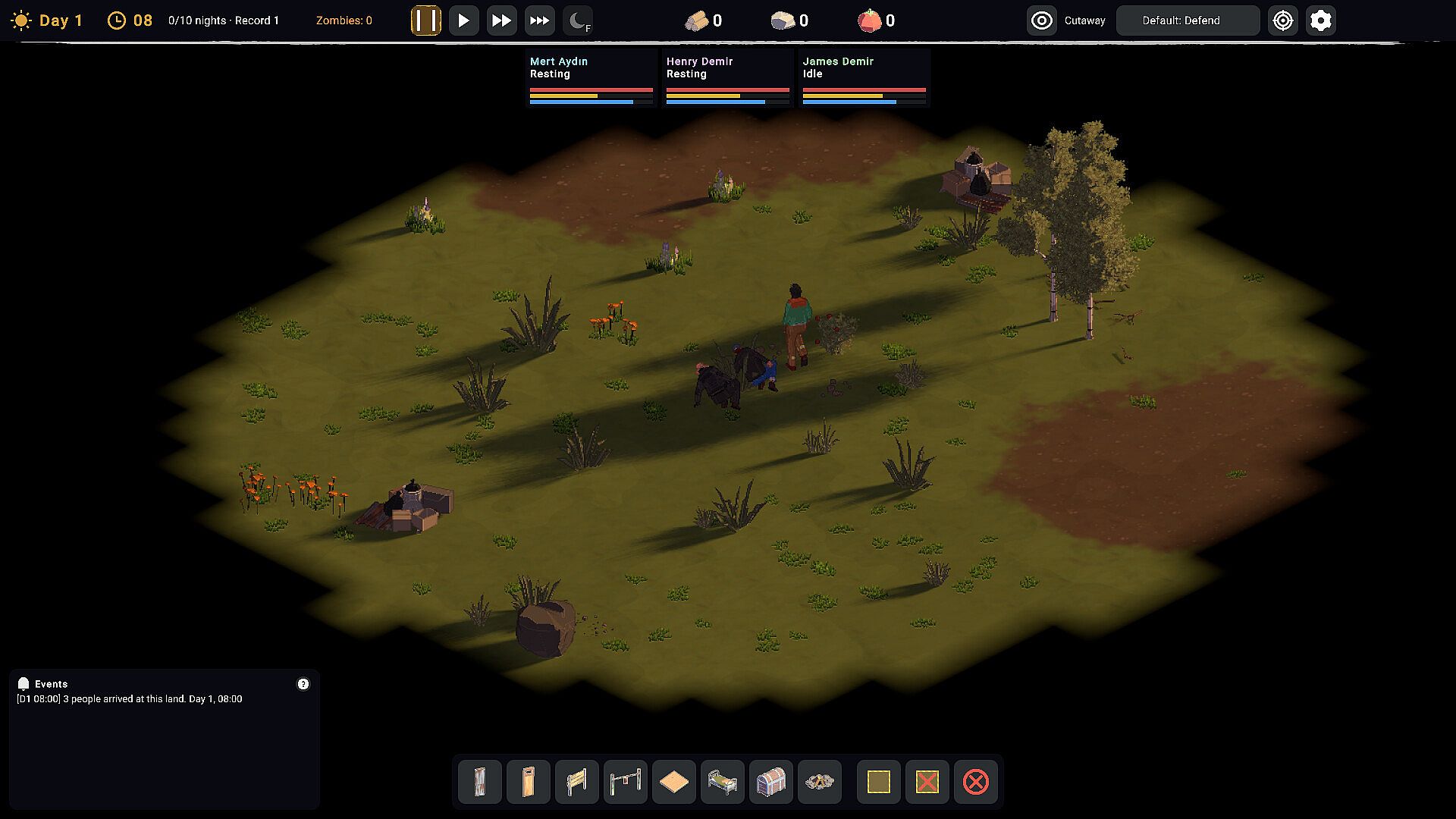
Daytime focuses on gathering wood, stone, and food while crafting essential tools, weapons, and structures such as shelters, beds, and storage. Barricades, alarms, and guard assignments help secure the perimeter before darkness falls. Exploration sends survivors into unknown areas marked by fog of war to locate scrap, canned goods, medicinal plants, and wreckage that can be repurposed for the colony. Return visits to previously cleared zones sometimes yield new opportunities as conditions shift.
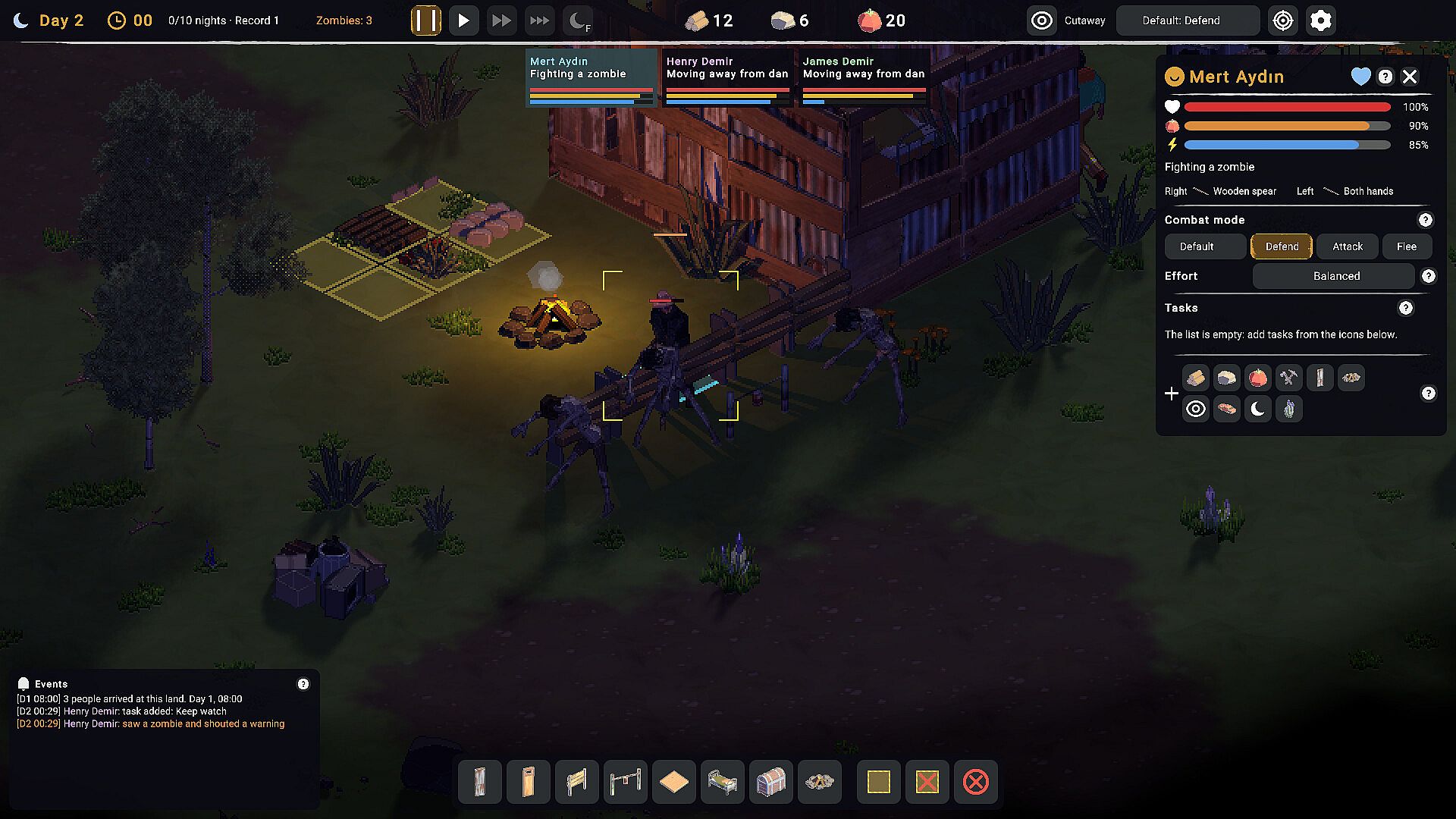
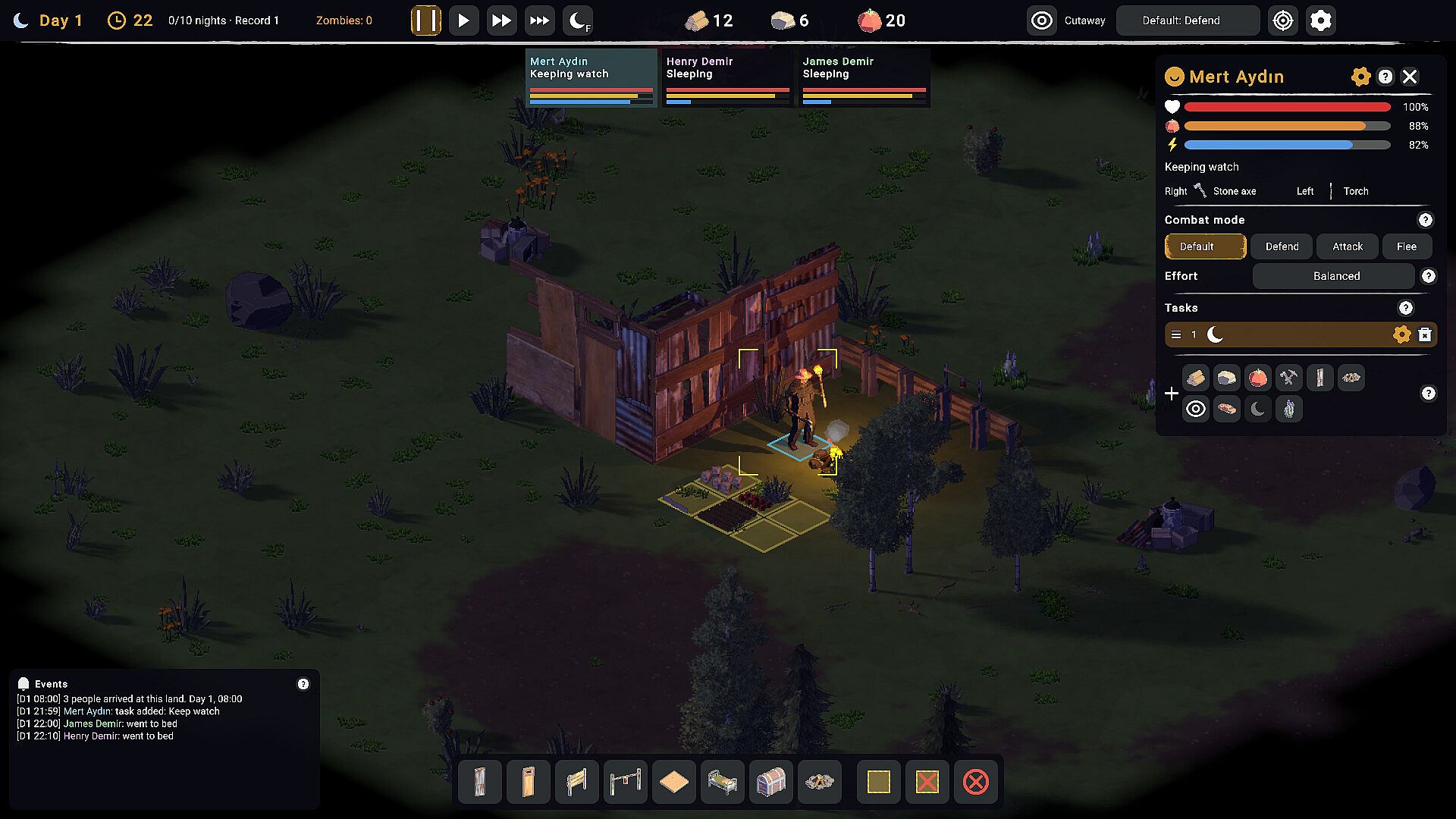
Sound management plays a key role because zombies react to noise from chopping, building, or combat. Players decide when to push aggressive tasks and when to maintain silence. Nighttime defense relies on torches for visibility, sentries to alert the group, and spears for ranged protection from behind barricades. Injuries and fatigue accumulate across cycles, forcing ongoing adjustments to job assignments and rest schedules.
Game Modes
Wakefolk operates as a single-player experience without separate named modes. The core loop revolves around successive nights of preparation and defense, with success measured by how many cycles the colony endures before resources or defenses fail. Procedural elements in the world layout and resource distribution encourage repeated attempts with different strategies, though the fundamental structure remains consistent across play sessions.
Core Mechanics and Survival Loop
Job prioritization forms the foundation of long-term planning. Each survivor receives customized instructions that balance immediate camp needs against personal maintenance, and they autonomously select tools while carrying out orders. This system rewards foresight because every action consumes time and energy that could otherwise address hunger or wounds.
Resource conversion drives progression. Raw materials turn into cooked meals, improved weapons, and reinforced structures that raise the odds of surviving escalating zombie pressure. Exploration rewards careful risk assessment, as venturing farther increases both potential gains and exposure to threats that can disrupt the camp upon return.
Noise and visibility mechanics add tactical layers. Players learn to sequence loud activities during safer periods and rely on sentries and improvised alarms to compensate for reduced visibility at night. The pixel-art aesthetic keeps the focus on functional camp layout rather than visual spectacle, allowing clear oversight of multiple survivors and their positions.
Is It Worth Playing?
Wakefolk targets players who enjoy deliberate colony management and zombie survival tension without overwhelming scale. The emphasis on small-group coordination and noise-aware decision making distinguishes it from larger settlement builders. Because the game remains in development with a playtest available, interested players can evaluate the systems firsthand before full release. Those drawn to isometric strategy titles that reward methodical planning and adaptation to growing threats will find the described loop aligns closely with that preference. The single-player focus keeps attention on personal rule-setting and colony longevity rather than competitive or cooperative elements.