




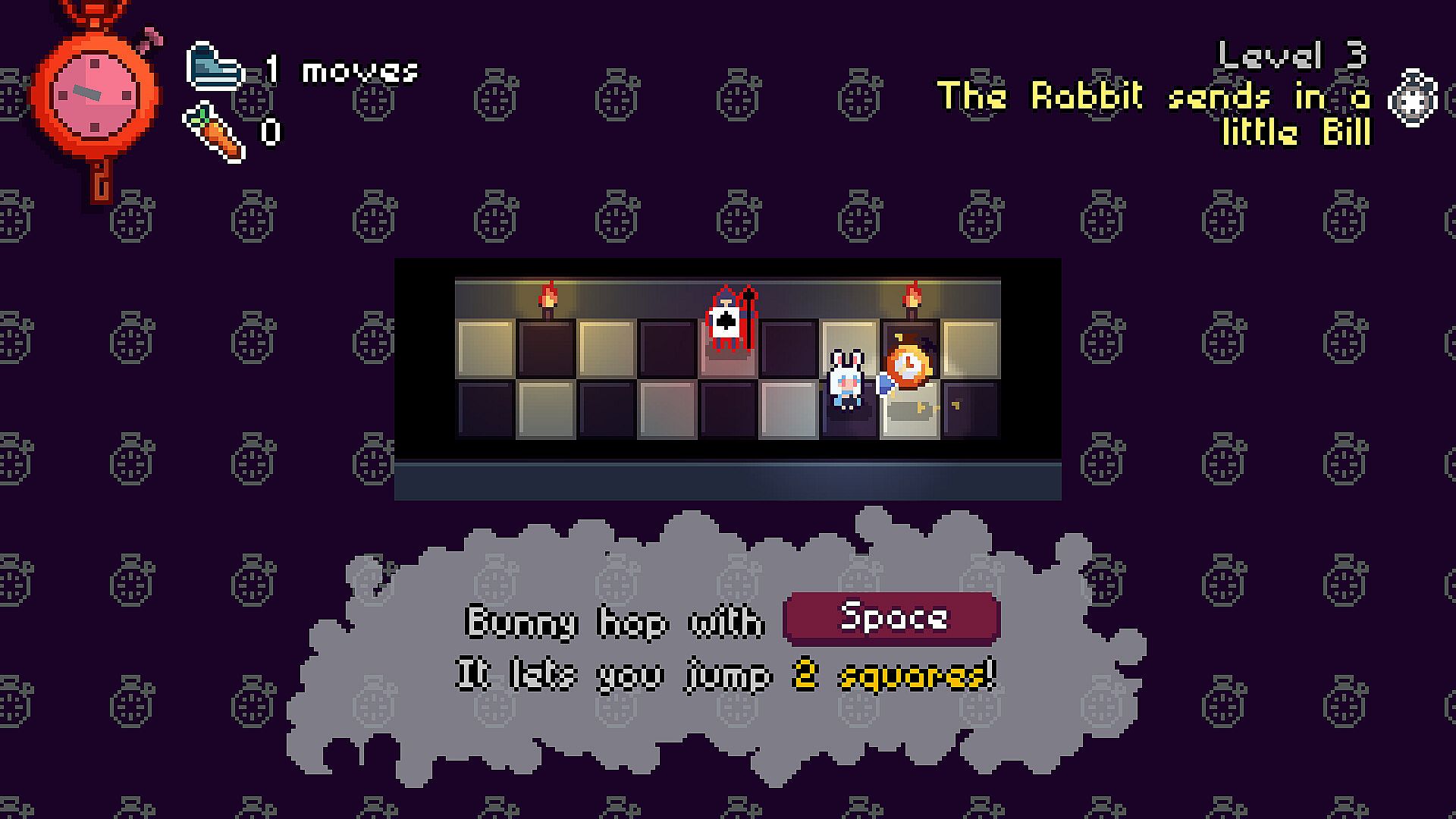
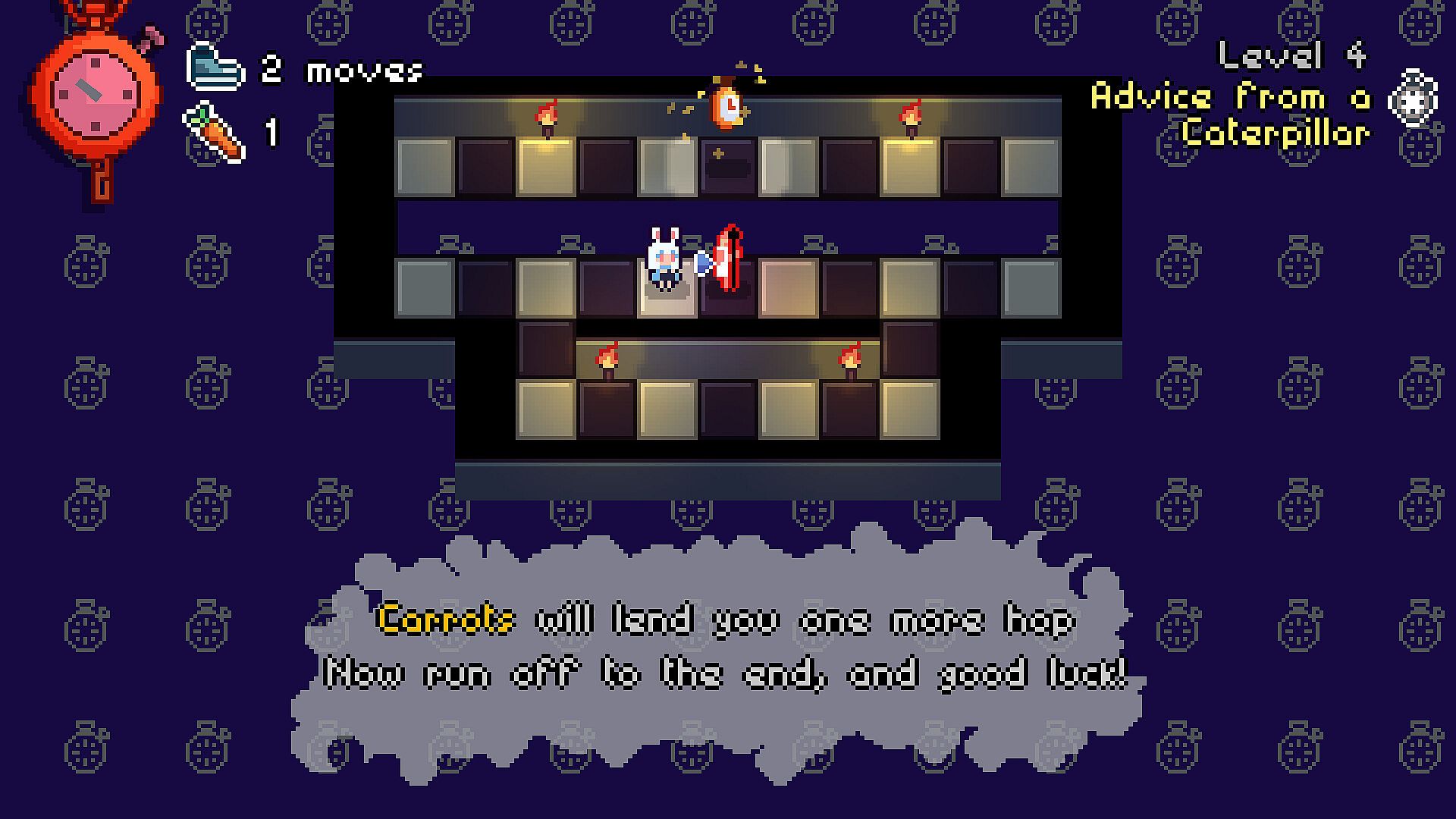
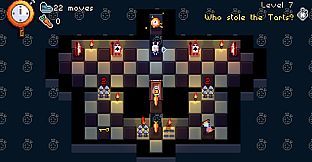
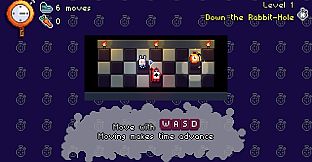
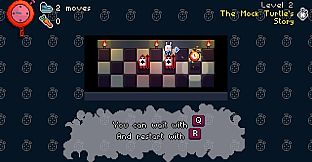
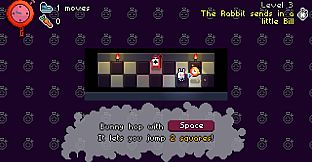
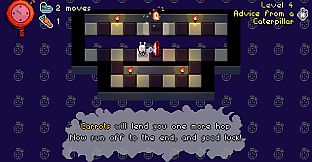
Wabi Is Late is a strategy indie casual puzzle game for PC that centers on precise movement and time management. Players guide a character named Wabi through levels where every step advances a countdown timer, requiring careful planning to reach the exit before time expires. The game originated as a four-day entry in the GMTK 2026 Game Jam themed around countdowns and is now expanding into a full release.
Gameplay
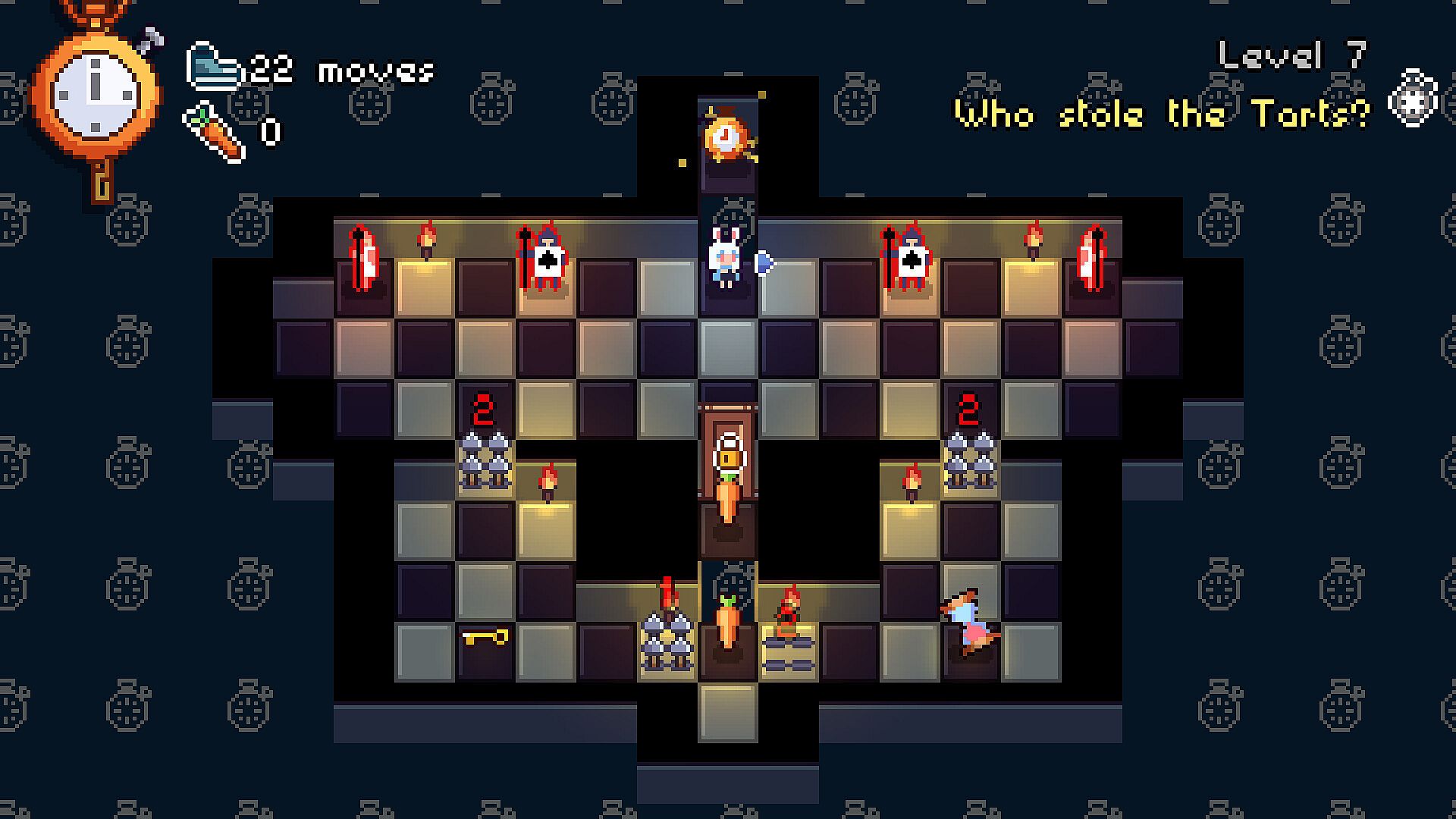
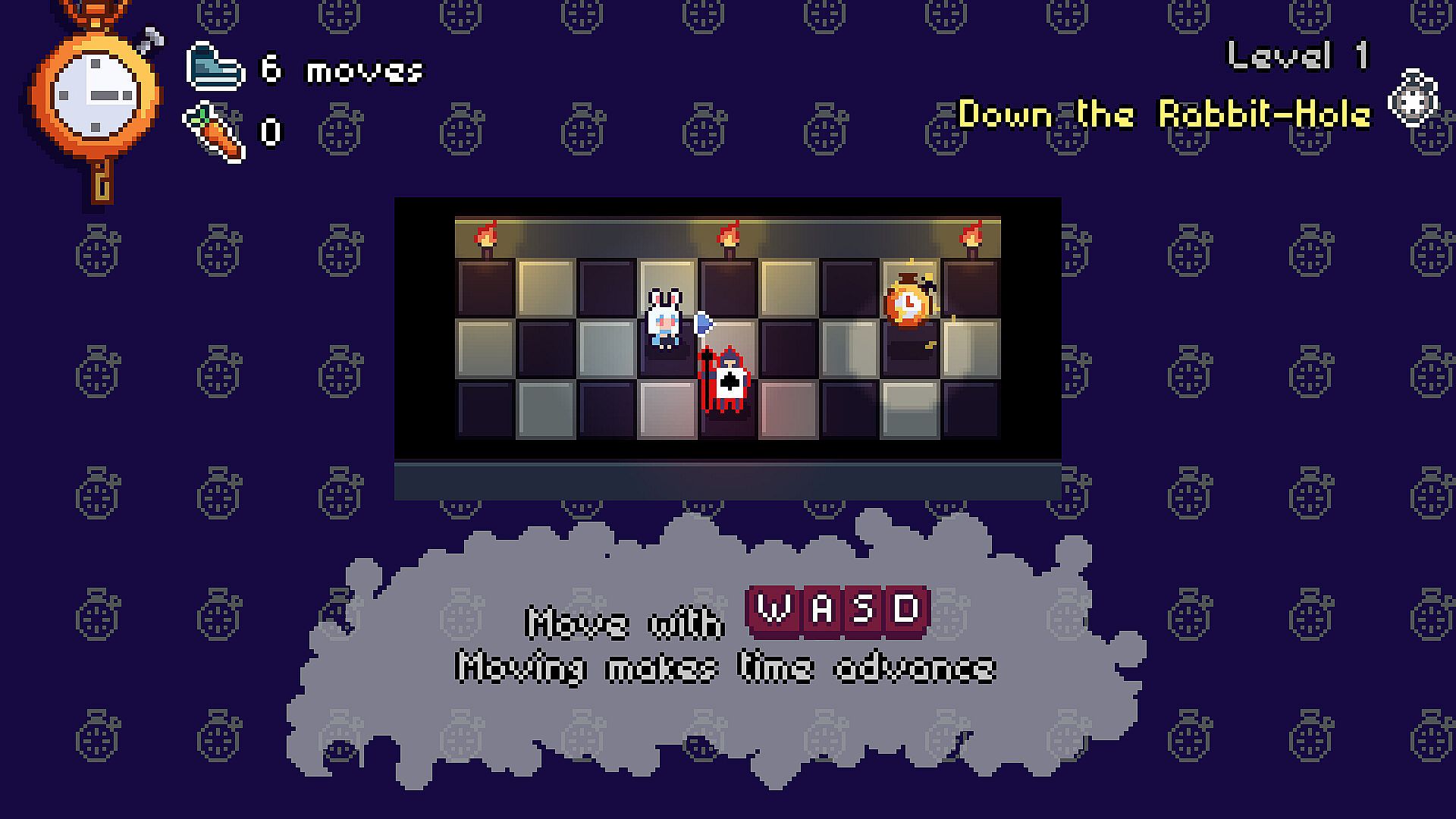
The core loop revolves around navigating grid-based levels under a strict time limit. Each movement consumes one unit of time from the starting allotment, so inefficient paths quickly lead to failure. Success demands finding the shortest or most efficient route while accounting for hazards that block direct progress.
Jumping forms a central mechanic. Collecting carrots grants access to Wabi's bunny hop, which lets the character leap over a single tile to bypass obstacles or gaps. This ability expands movement options without altering the fundamental time cost of actions.
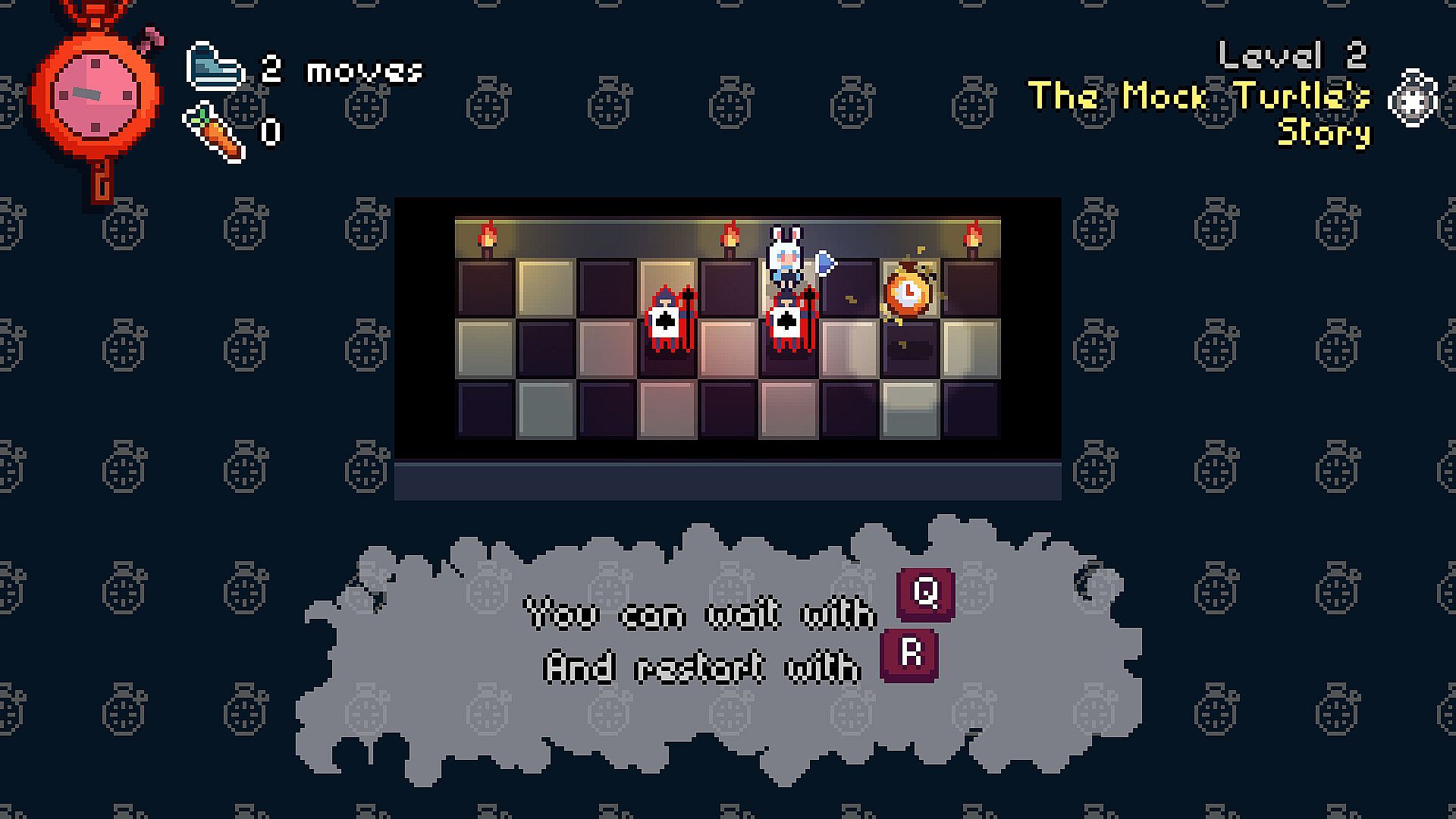
Waiting serves as another deliberate tool. Standing still avoids moving threats such as cards or other antagonistic elements that patrol certain areas. Timing these pauses correctly prevents collisions while preserving remaining time for later sections of a level.
Additional powerups and obstacles appear as players advance. These elements introduce new variables that either aid navigation or create fresh constraints, turning later stages into layered brain-teasers. The design gradually layers mechanics so each new challenge builds on prior ones without explicit tutorials beyond the basics.
Accessibility features include optional hints, an undo button, and other toggles adjustable in the menus. These options reduce frustration for players who prefer a less punishing experience while remaining entirely optional.
Game Modes
The game presents its content as a sequence of puzzle levels that increase in complexity. Early stages focus on basic movement and the timer constraint, while later ones integrate jumping, waiting, and the growing set of powerups and hazards. No separate named modes exist beyond this single-player campaign structure, where the emphasis stays on solving each level within the allotted time through optimal routing and mechanic use.
Progression relies on mastering the interaction between time ticks, spatial navigation, and environmental interactions. Levels introduce mechanics incrementally, allowing players to experiment with combinations such as hopping over threats or pausing to let obstacles pass before resuming movement.
Development Background
Created in Unity with pixel art produced in Aseprite and music composed using FL Studio and FamiStudio, the project began as a jam prototype. The developer has since prepared a Steam page and continues work on a complete version, building directly on the original four-day build. Feedback from the jam highlighted the polished presentation, smooth introduction of mechanics, and appealing visual style as strengths.
Is It Worth Playing?
Players who enjoy deliberate puzzle games with time pressure and incremental mechanic discovery will find a focused experience here. The jam version earned strong marks for enjoyment and artwork among participants, with comments praising the cute aesthetic, clean pacing, and variety packed into short levels. Accessibility options make it approachable for a broader audience without removing the core challenge for those who prefer it.
The full release remains in development, so current availability centers on the jam prototype. Those drawn to strategy and casual puzzle titles centered on movement optimization and careful timing stand to appreciate the design. The emphasis on thoughtful routing over reflex or combat suits sessions where planning ahead matters more than speed alone.