






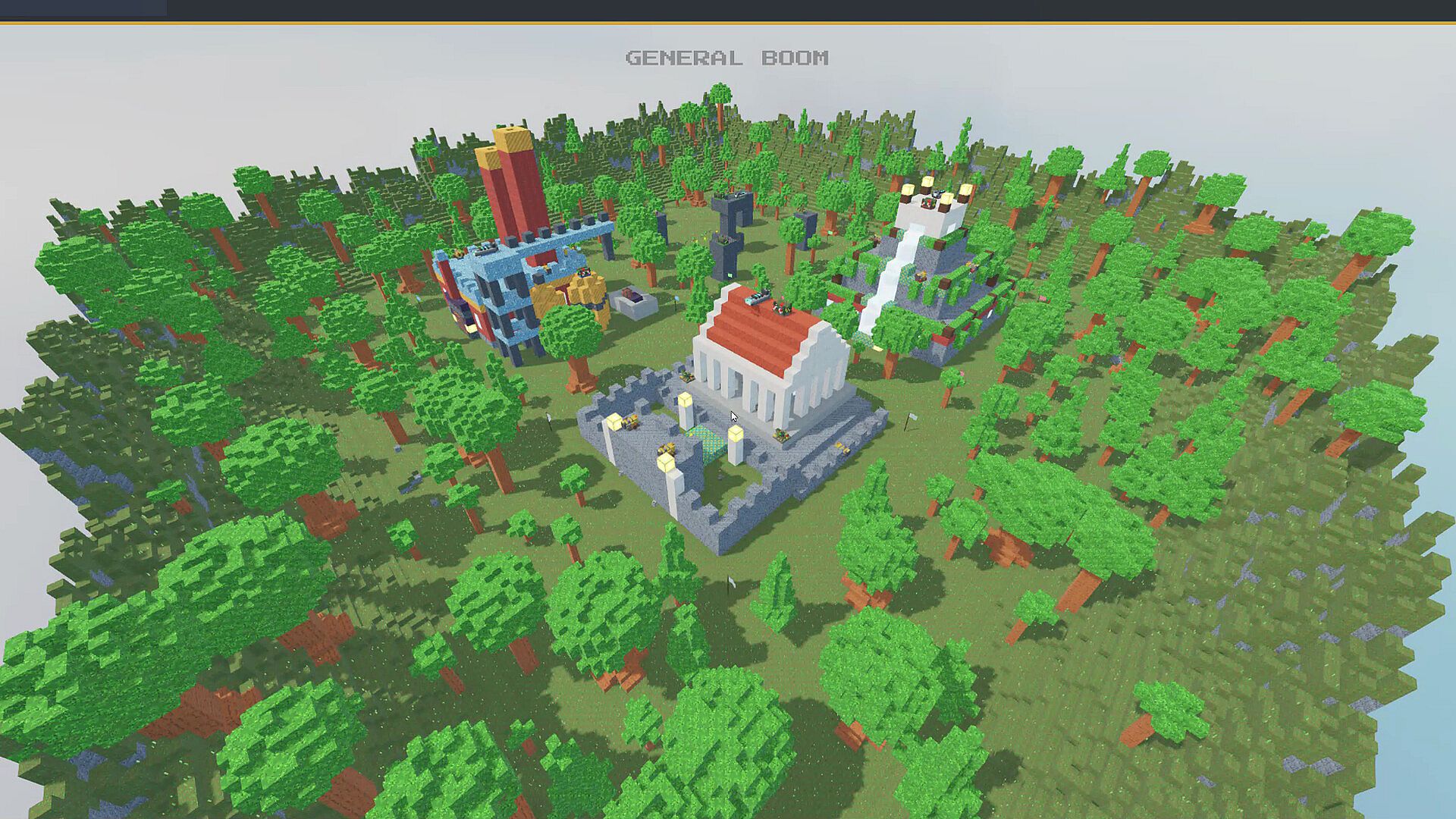

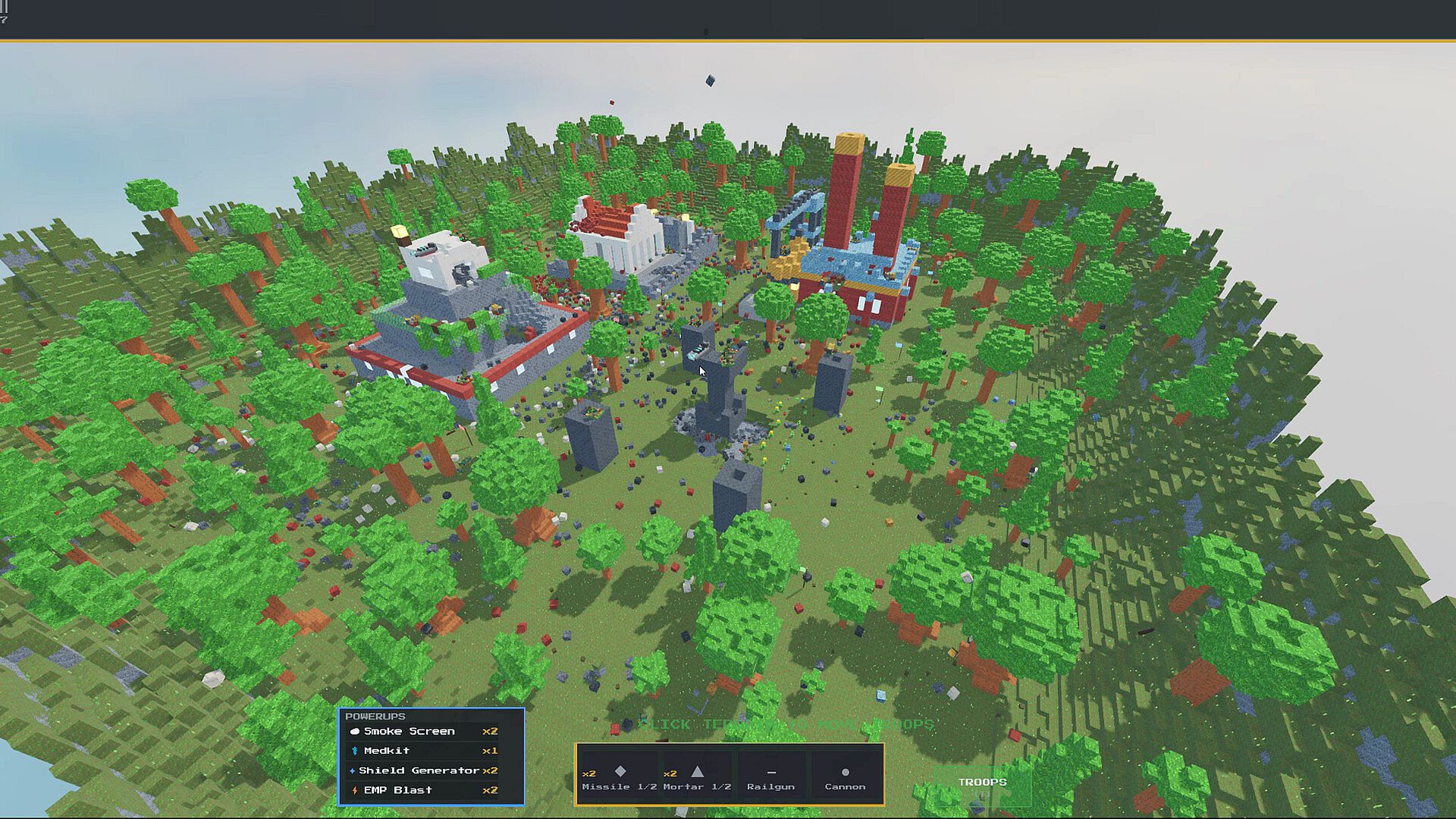
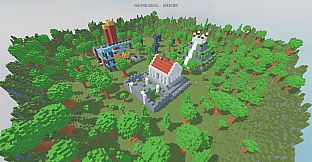
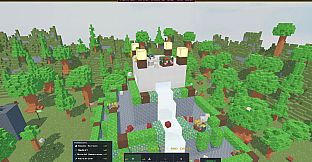
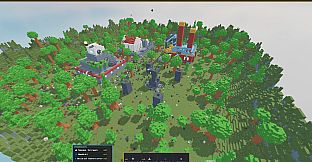
Voxel Siege is a turn-based strategy and action game built around building and destroying fortresses in a fully destructible voxel environment. Players construct strongholds block by block before engaging in artillery duels that emphasize careful aiming, material properties, and structural collapse. The core loop alternates between a construction phase where budgets fund defenses and weapons, and a combat phase where shots reshape the battlefield through explosions, fires, and falling debris.
Gameplay
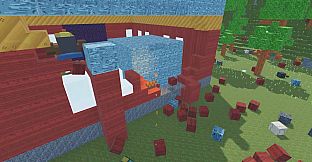
Construction begins with allocating resources across more than two dozen materials, each carrying distinct costs, durability levels, and interactions. Dirt and timber provide basic options, while steel, obsidian, armor plate, lanterns, and ember rock introduce specialized traits such as fire resistance or structural support. Unsupported sections collapse naturally, glass breaks on impact, and thatch ignites from nearby flames. Players position cannons for direct fire, mortars for arcing trajectories, railguns for penetration, homing missiles for tracking, and drills for tunneling. Infantry and demolishers add ground-level pressure, while doors allow troop movement and decorative elements like banners or statues add visual detail without altering core mechanics.
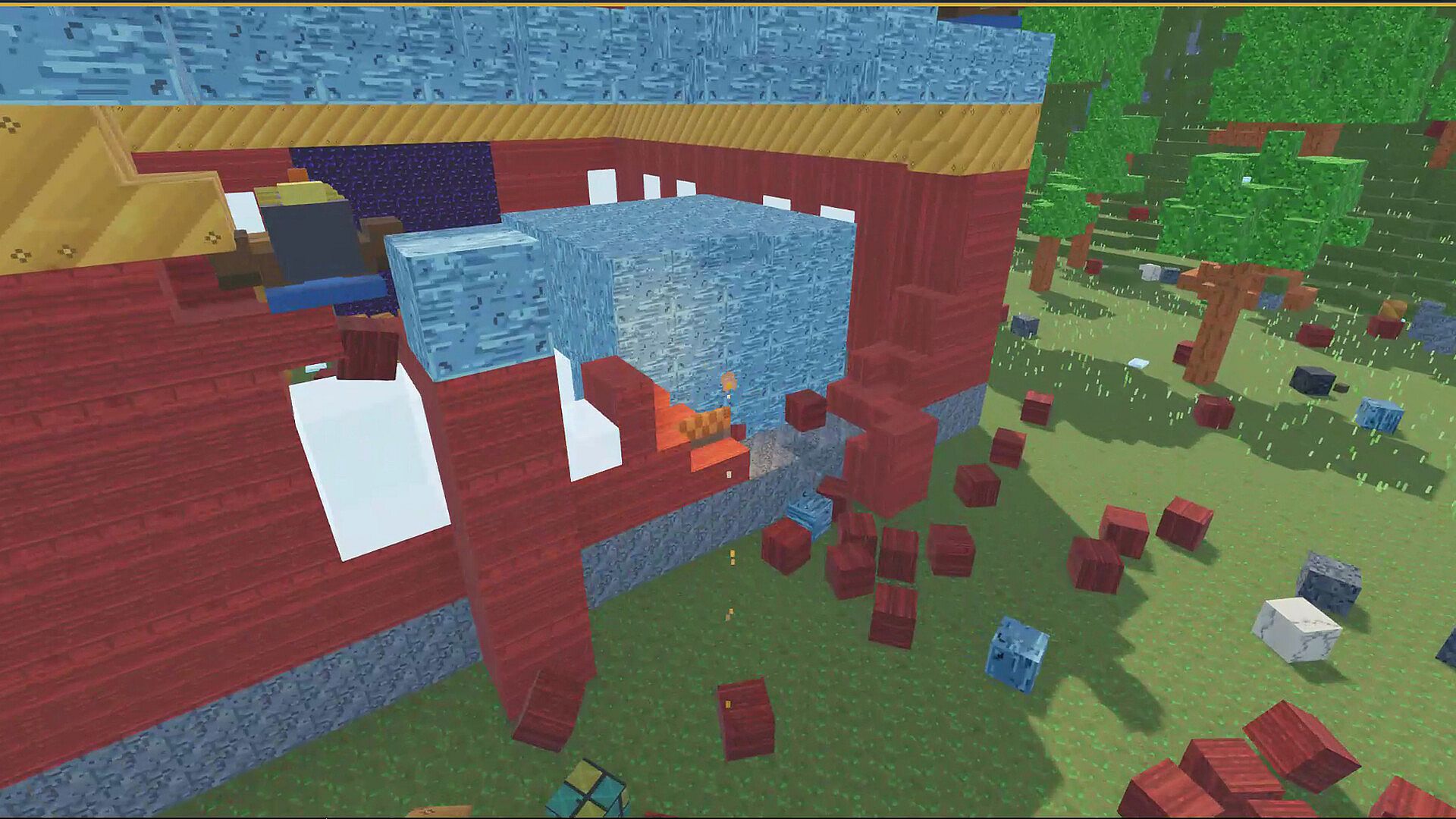
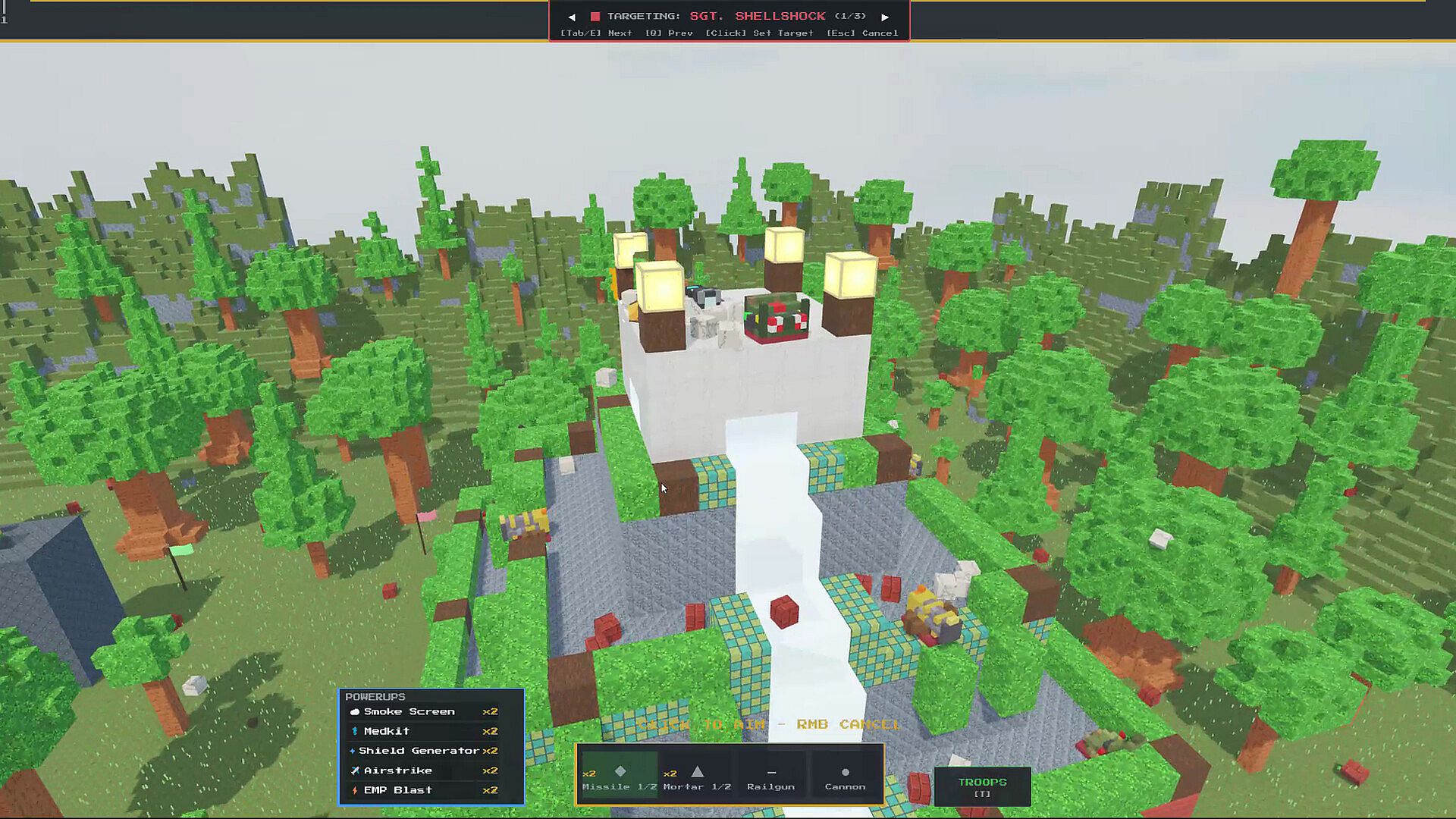
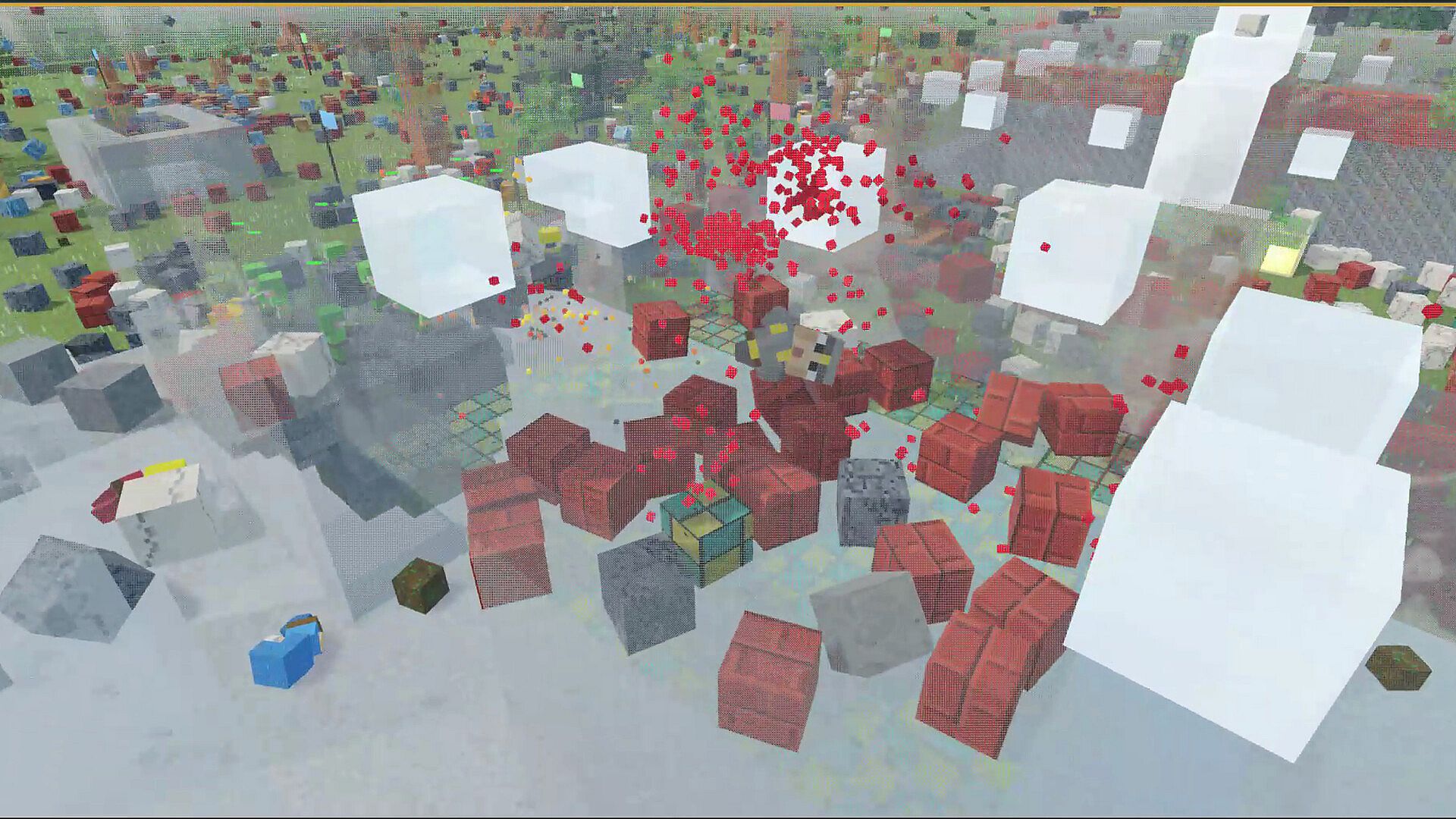
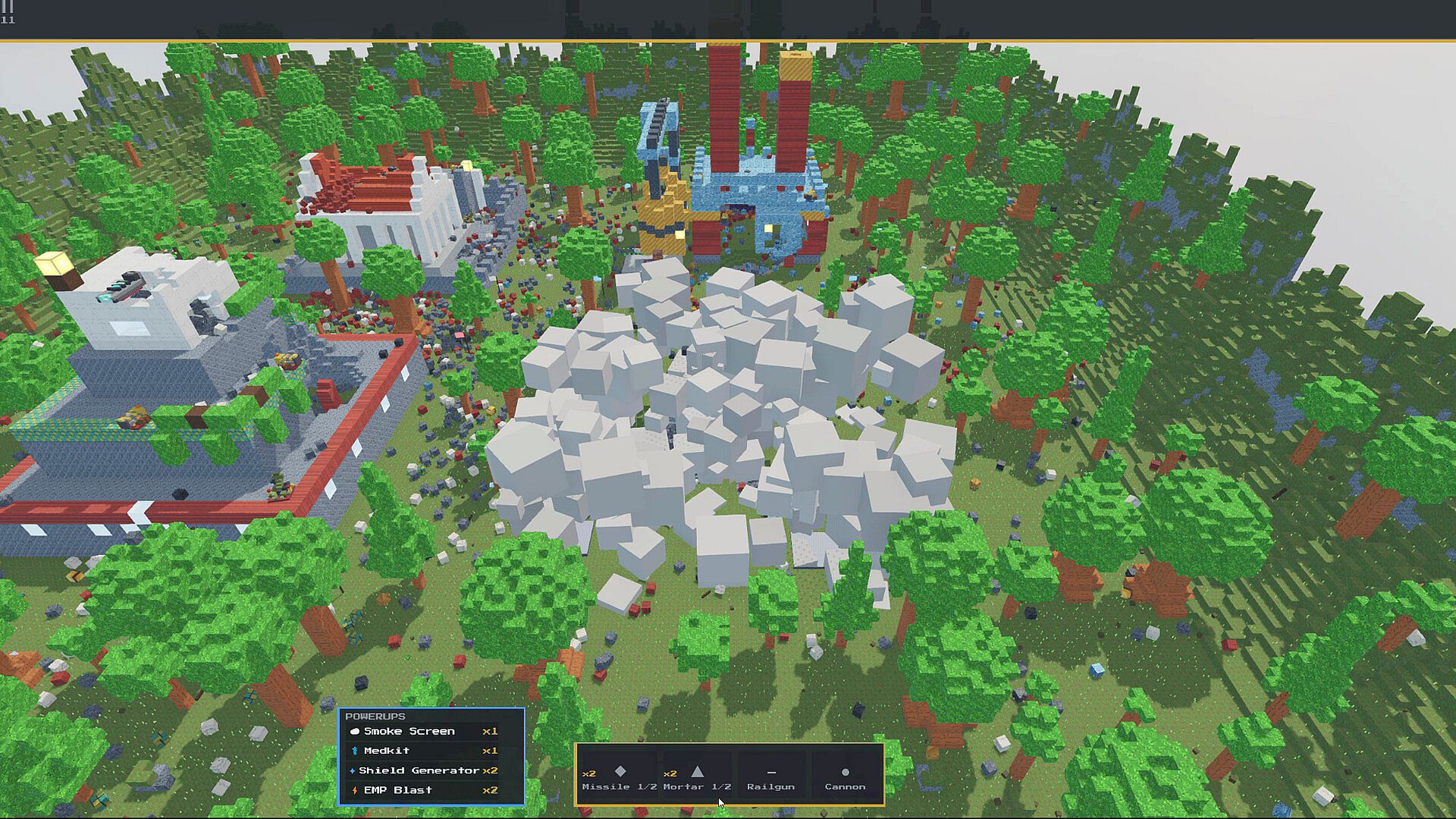
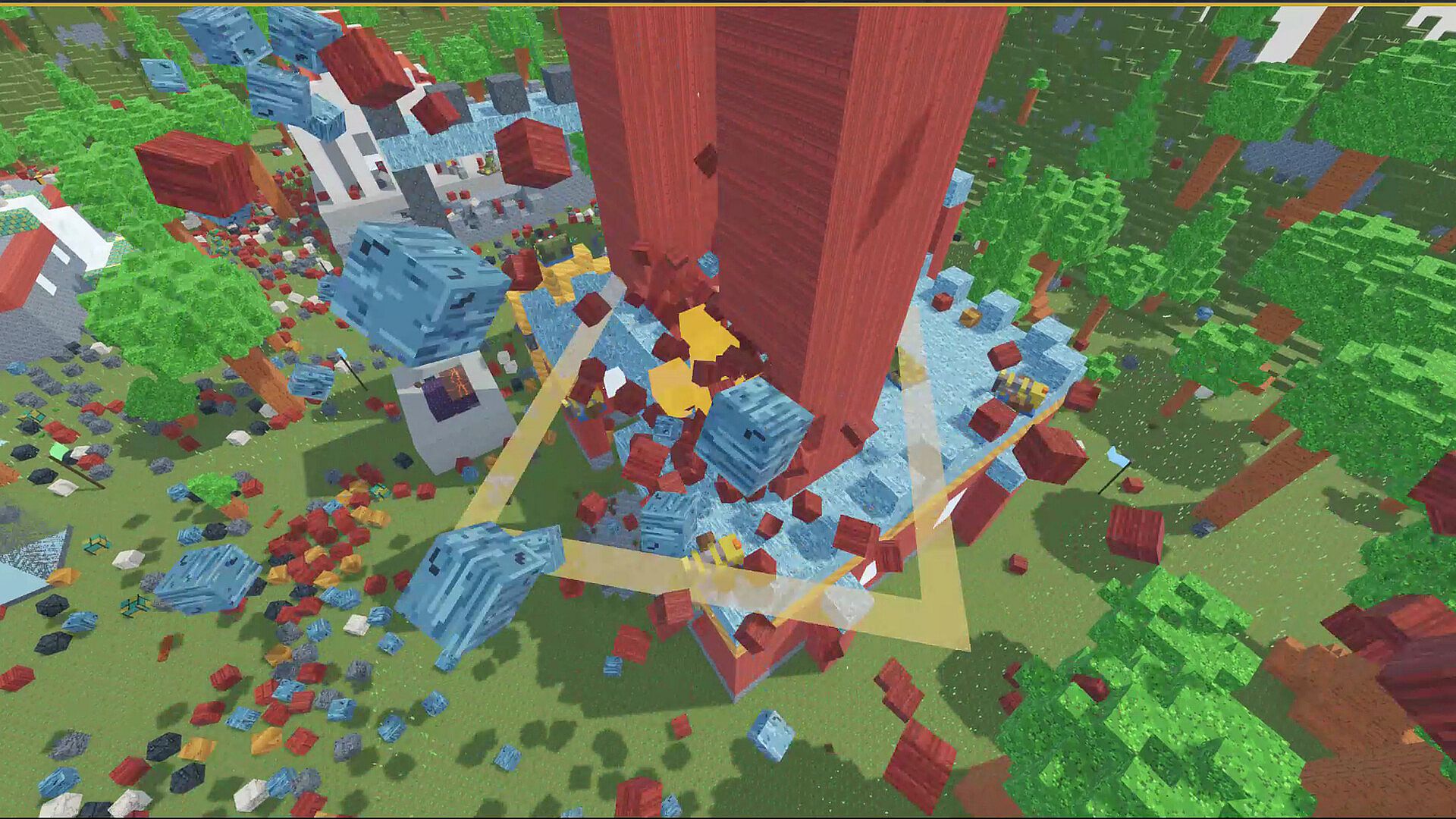
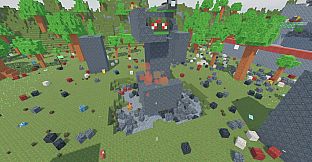
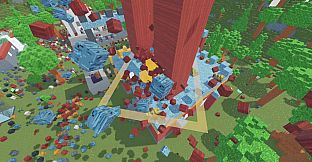
Power-ups expand tactical choices during combat. Smoke screens obscure lines of sight, shields absorb incoming fire, medkits restore units, EMP blasts disable enemy equipment, and airstrike beacons call in support strikes. The commander must remain hidden within the fortress, forcing opponents to breach layers of protection to secure victory. Every placement decision carries consequences because the voxel structure reacts realistically to damage, with towers toppling when foundations fail and fires spreading across flammable sections.
Game Modes
Campaign mode pits players against 36 hand-designed enemy fortresses divided into three difficulty tiers. Early encounters feature simple bunkers, while later stages present sprawling citadels that test resource management and targeting precision. Each battle follows the build-then-fight sequence against AI opponents.
Online multiplayer supports two to four participants. Hosts adjust budgets and turn timers, and bots can fill empty slots. Matches use code-based or invite systems for quick entry. Sandbox mode removes all constraints, allowing unrestricted building and the ability to save completed designs as reusable blueprints for future sessions.
Visual Style and Destruction Mechanics
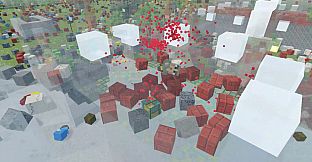
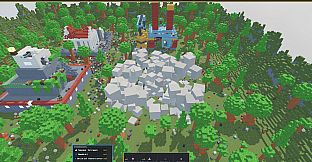
The game employs a chunky retro voxel aesthetic that prioritizes functional design over ornamentation. Every block contributes to both appearance and defense, so aesthetic choices directly influence how structures withstand bombardment. Destruction unfolds in real time during each turn, with chunks tumbling, fires propagating, and entire sections collapsing under their own weight once supports are removed. This system rewards players who anticipate structural weaknesses rather than relying on raw firepower alone.
Is It Worth Playing?
Voxel Siege targets fans of deliberate, turn-based strategy games that combine construction creativity with destructive physics. The verified mechanics of material-specific behaviors and progressive fortress sieges create repeatable sessions where outcomes depend on planning and adaptation. With a planned release in September 2026 and no user reviews available yet, the experience remains untested by a broad audience. Those drawn to artillery duels, voxel destruction, and customizable strongholds in single-player campaigns or small-group online matches will find the described systems align closely with that preference. The inclusion of sandbox tools and bot-supported multiplayer further broadens accessibility for solo experimentation or casual group play.