




Undermaze is a single-player strategy and simulation game that blends city-building with turn-based maze navigation and defensive design. Players manage an underground faction forced below the surface, where they must expand a network of caverns while racing against spreading pollution that steadily degrades efficiency and resources.
Gameplay
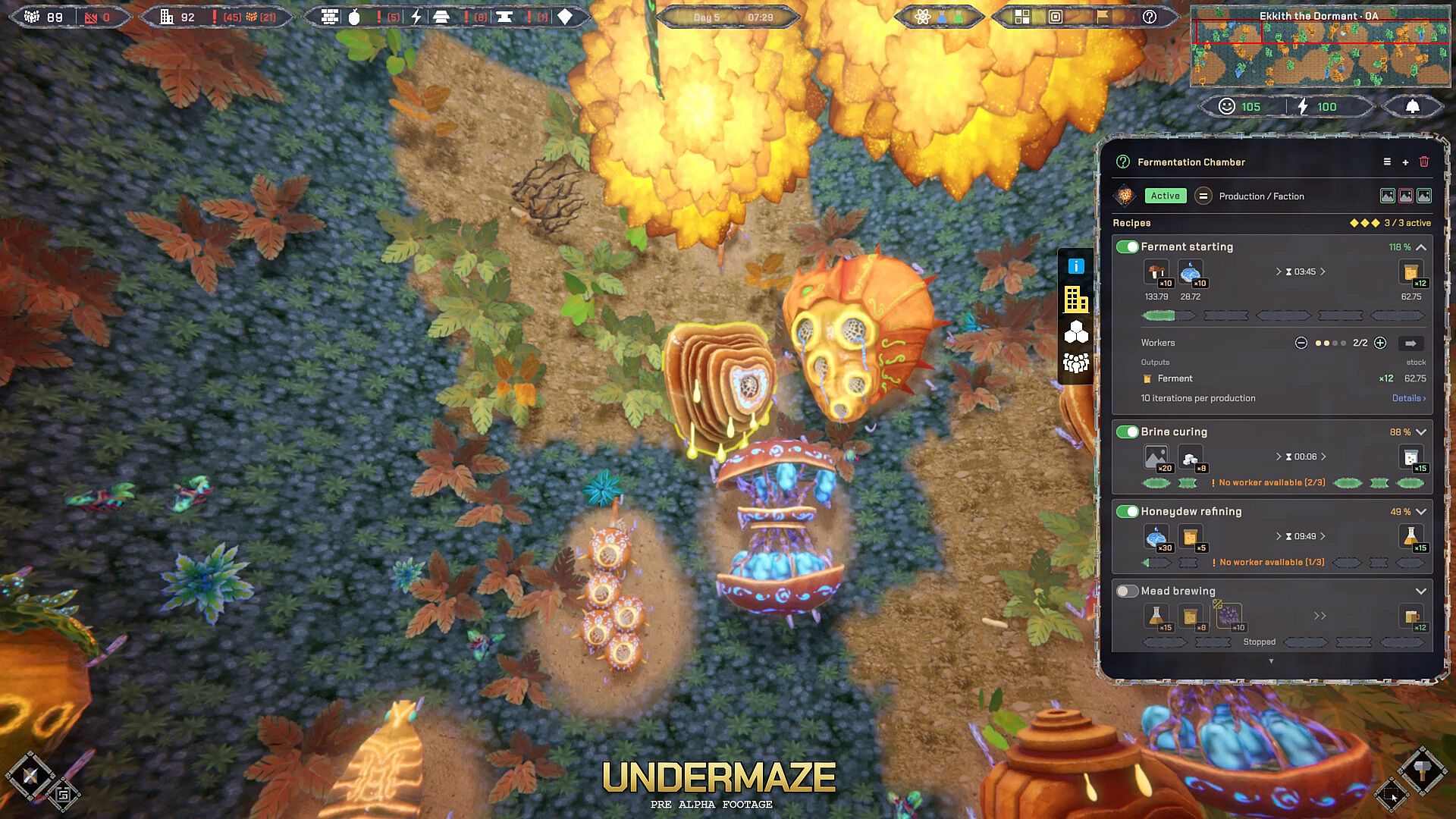
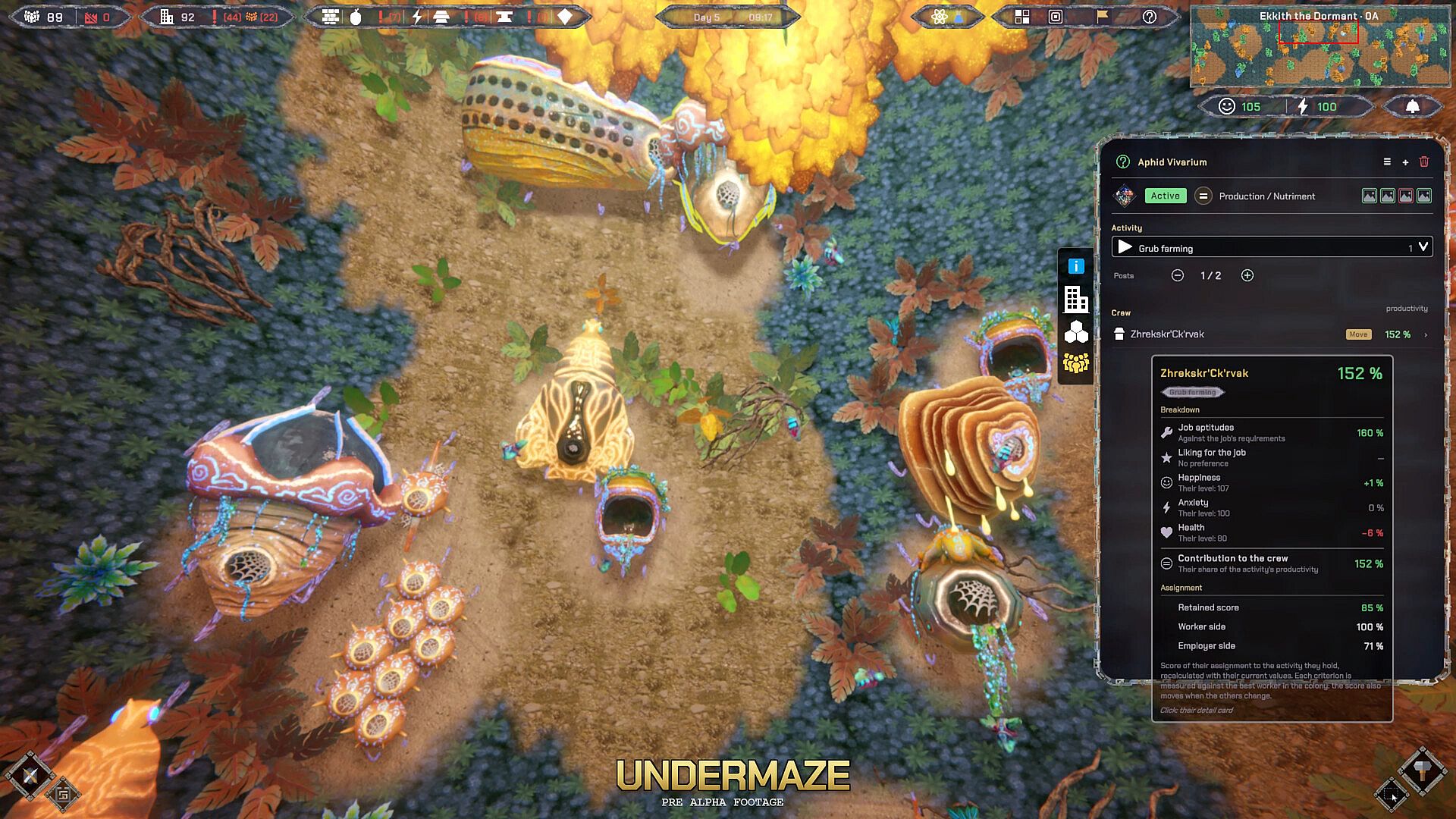
The core loop centers on colony management inside spherical underground cavities. Workers operate with individual attributes, needs, and affinities that influence their suitability for specific roles, from production to maintenance. An automatic assignment system handles initial placements, while a search tool allows manual optimization to balance the dense economy of production lines, specialized storage, perishable goods, transportation, and operating costs.
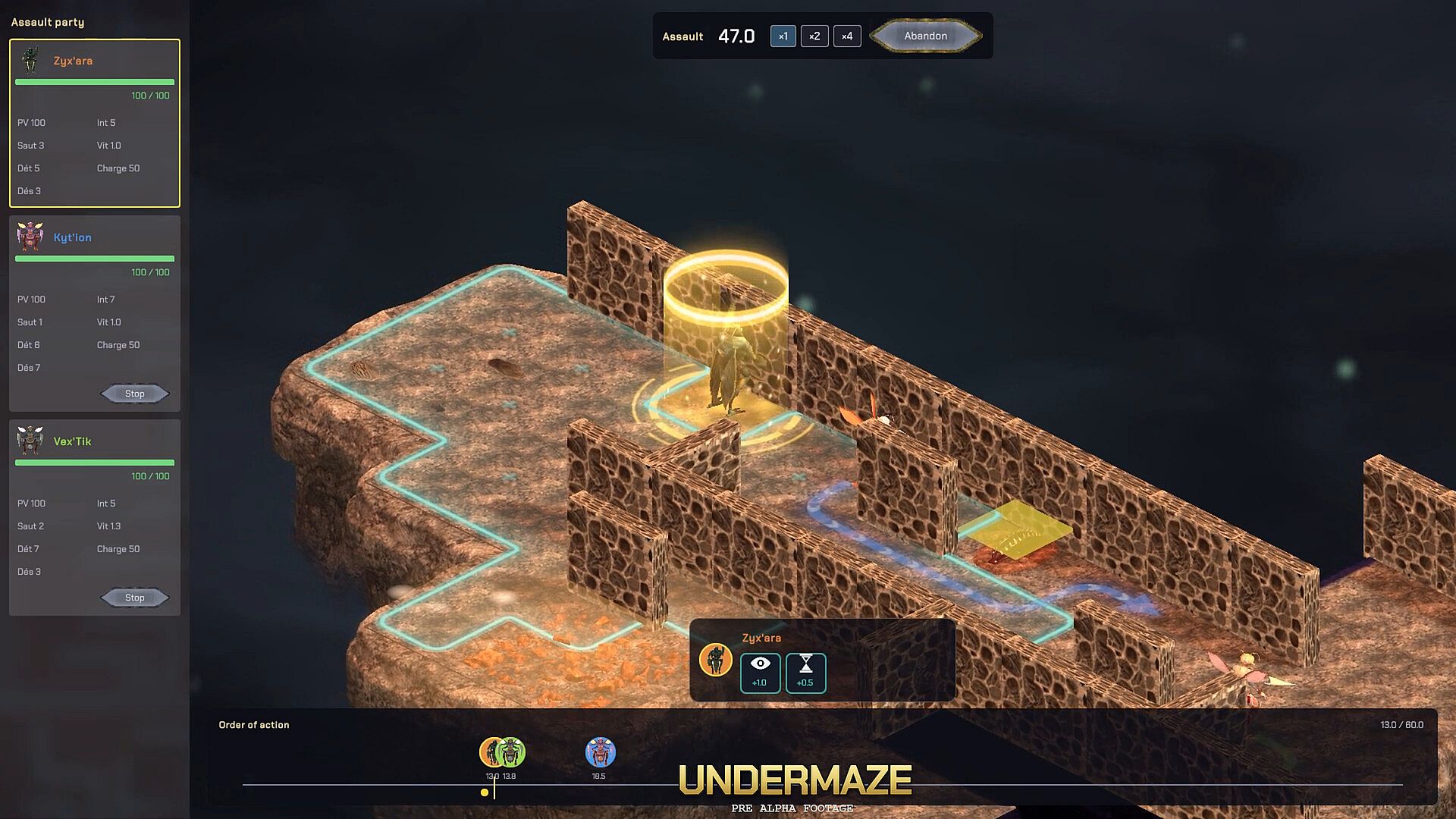
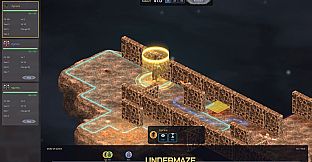
Expansion requires clearing mazes that block access to new resource veins. Heroes explore these mazes in turn-based attempts, navigating traps, guardians, and levers within a countdown timer. Failed runs send heroes back for healing and re-equipment, during which pollution advances and erodes colony output. Discoveries persist across attempts, allowing incremental progress toward the exit. Once cleared, the new cavity can be settled and connected to the existing network, with workers and resources transferable between sites to address local shortages.
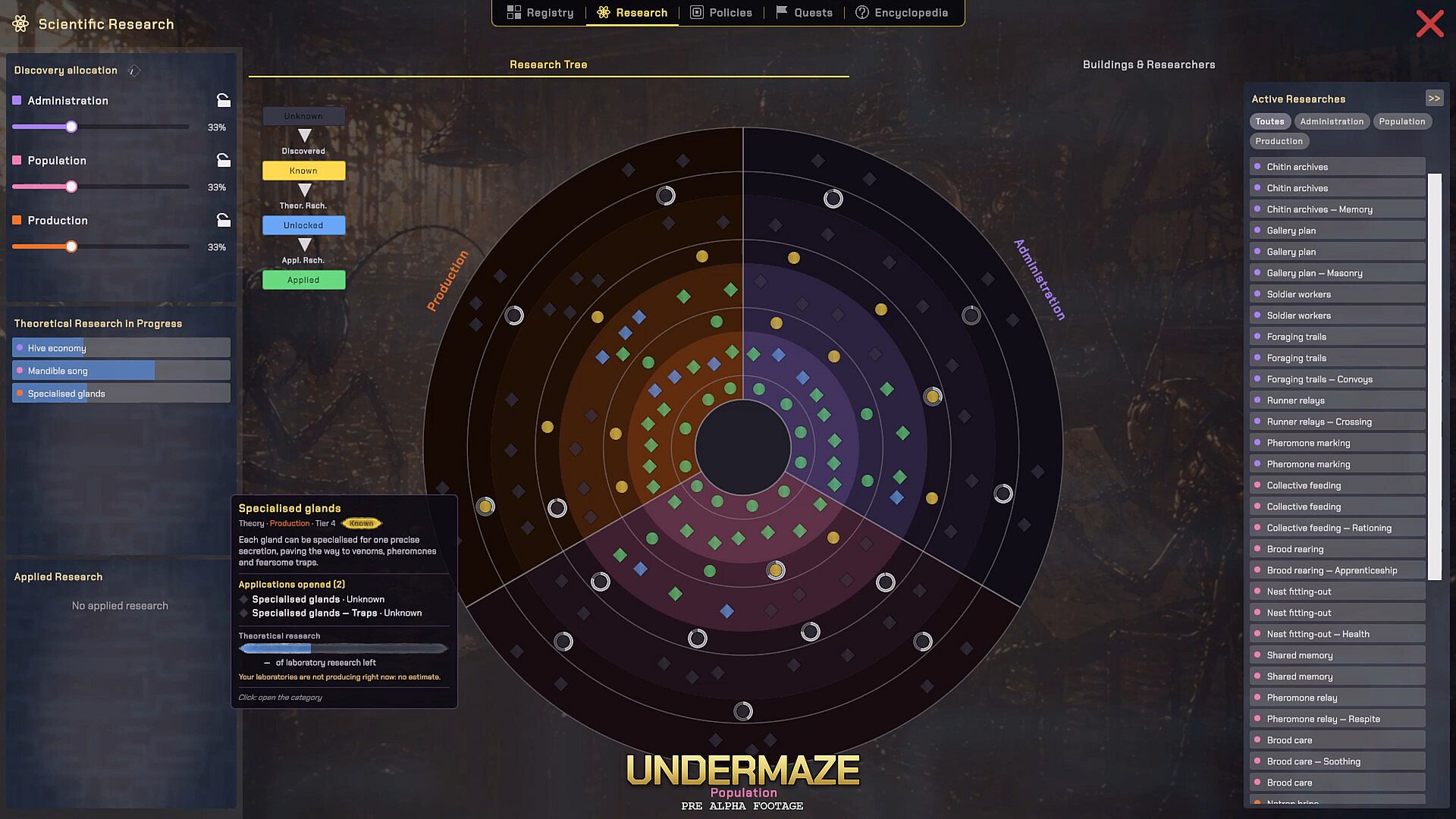
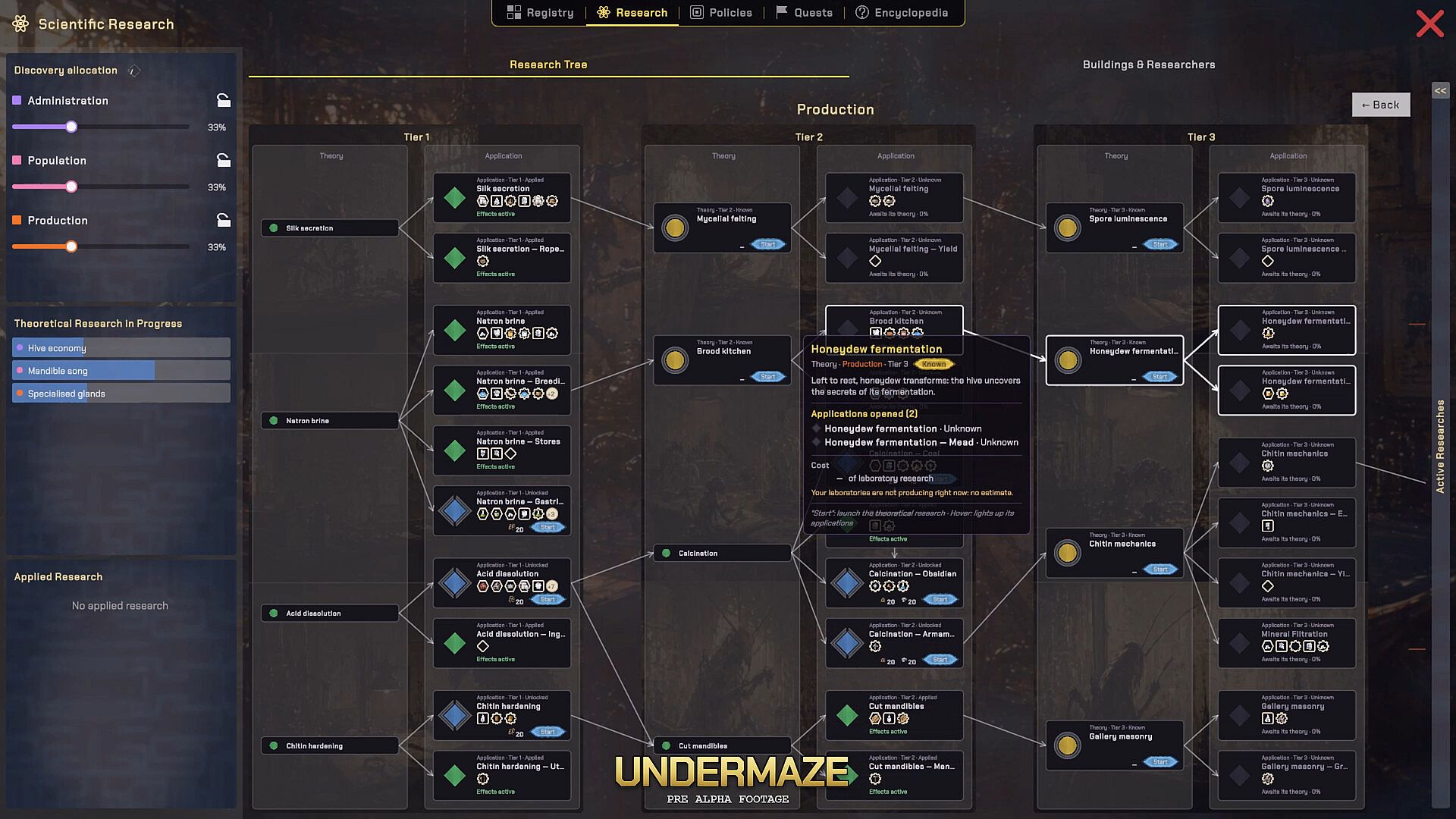
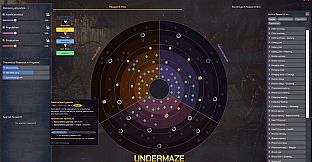
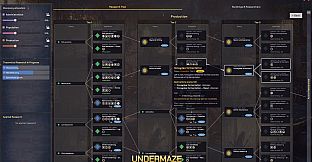
Pollution acts as a constant timer, damaging caves and reducing productivity if expansion stalls. Research follows a two-stage process where theoretical discoveries unlock applied projects that yield improvements or breakthroughs. The immersive first-person view places the player inside the colony rather than in an overhead perspective, with workers moving through the space around the central viewpoint.
Game Modes
Undermaze operates as a unified single-player experience without separate selectable modes. The primary systems integrate colony simulation with offensive and defensive maze interactions. Assault sequences involve repeated exploration runs into unknown mazes to locate exits and unlock new caverns. Defense activates automatically after each assault, as rival factions probe the player's designed maze in real time or fast-forward. Successful enemy incursions remove supplies, prompting adjustments to traps and layouts between rounds.
Each defensive encounter generates a replay with a navigable timeline and statistics, enabling analysis of failures and refinements to the maze structure. This loop ties directly into the time pressure of pollution, as every failed or delayed assault accelerates resource loss and colony decline. The design encourages iterative strategy in both exploration efficiency and protective layout without external multiplayer elements.
Colony Systems and Progression
Workers form the foundation of the simulation, each excelling in roles matched to their strengths while requiring attention to personal needs that draw from shared supplies. The economy demands careful oversight of perishable goods and operating costs that affect every production chain and the mazes themselves. Network expansion across multiple cavities creates interdependencies, where relocating workers or materials compensates for imbalances in resources or shortcomings unique to each site.
Time management remains central, as maze attempts consume real in-game time that allows pollution to advance. Successful navigation opens new opportunities for settlement and resource gathering, gradually building toward the goal of locating the resource needed to reverse pollution and return to the surface. The system rewards planning across short-term maze runs and longer-term colony optimization.
Is It Worth Playing?
Undermaze targets players who enjoy detailed colony simulations combined with puzzle-like maze navigation and defensive design under time constraints. The single-player focus delivers a self-contained loop of expansion, research, worker management, and iterative maze refinement without reliance on external servers or seasons. With a planned release in Q4 2027 and no user reviews available yet, the game appeals most to those drawn to indie strategy titles that emphasize resource chains, individual unit attributes, and persistent environmental pressure. Those seeking turn-based exploration paired with automated counterattacks and replay analysis will find the mechanics align closely with the described systems.