






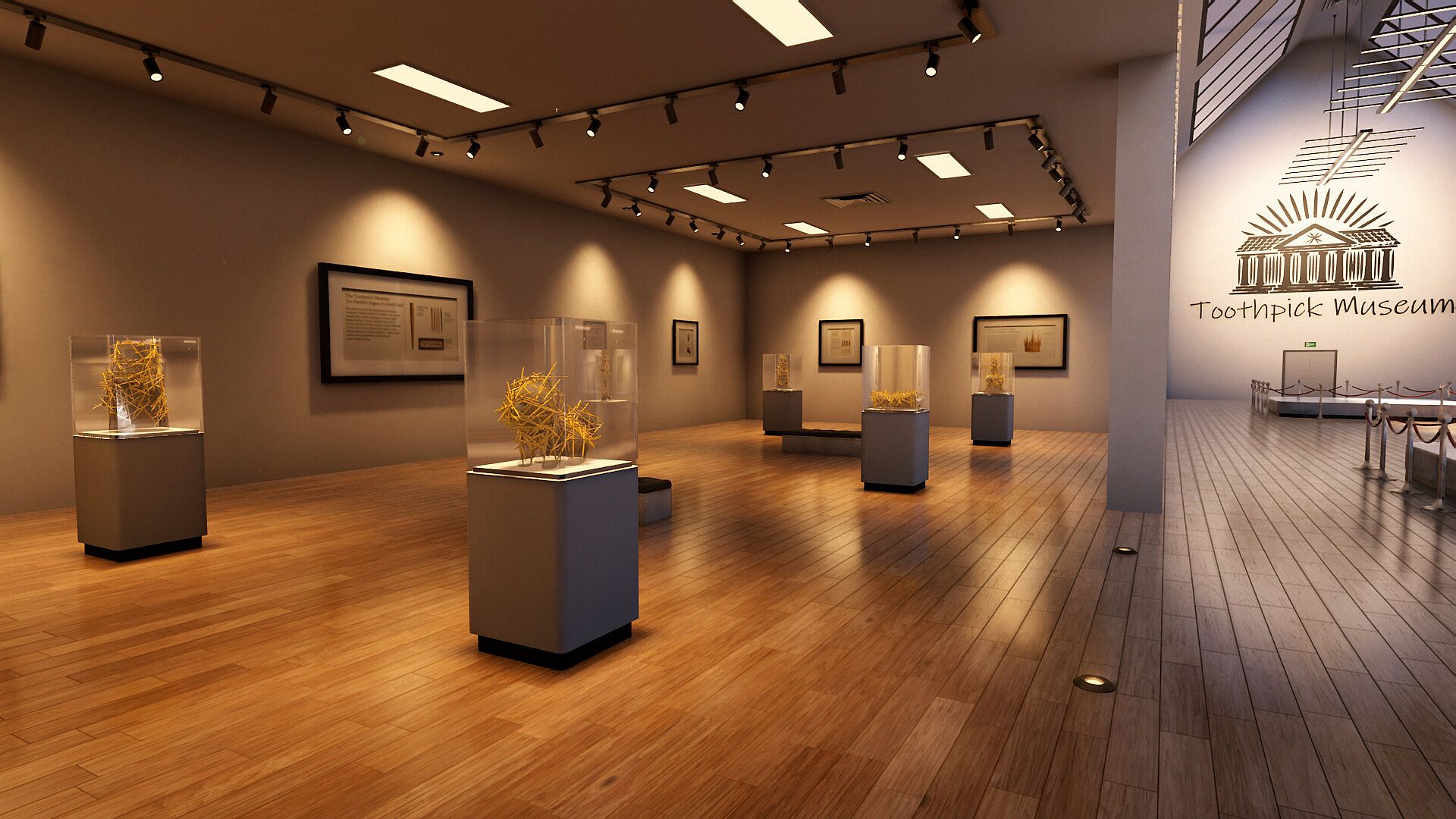

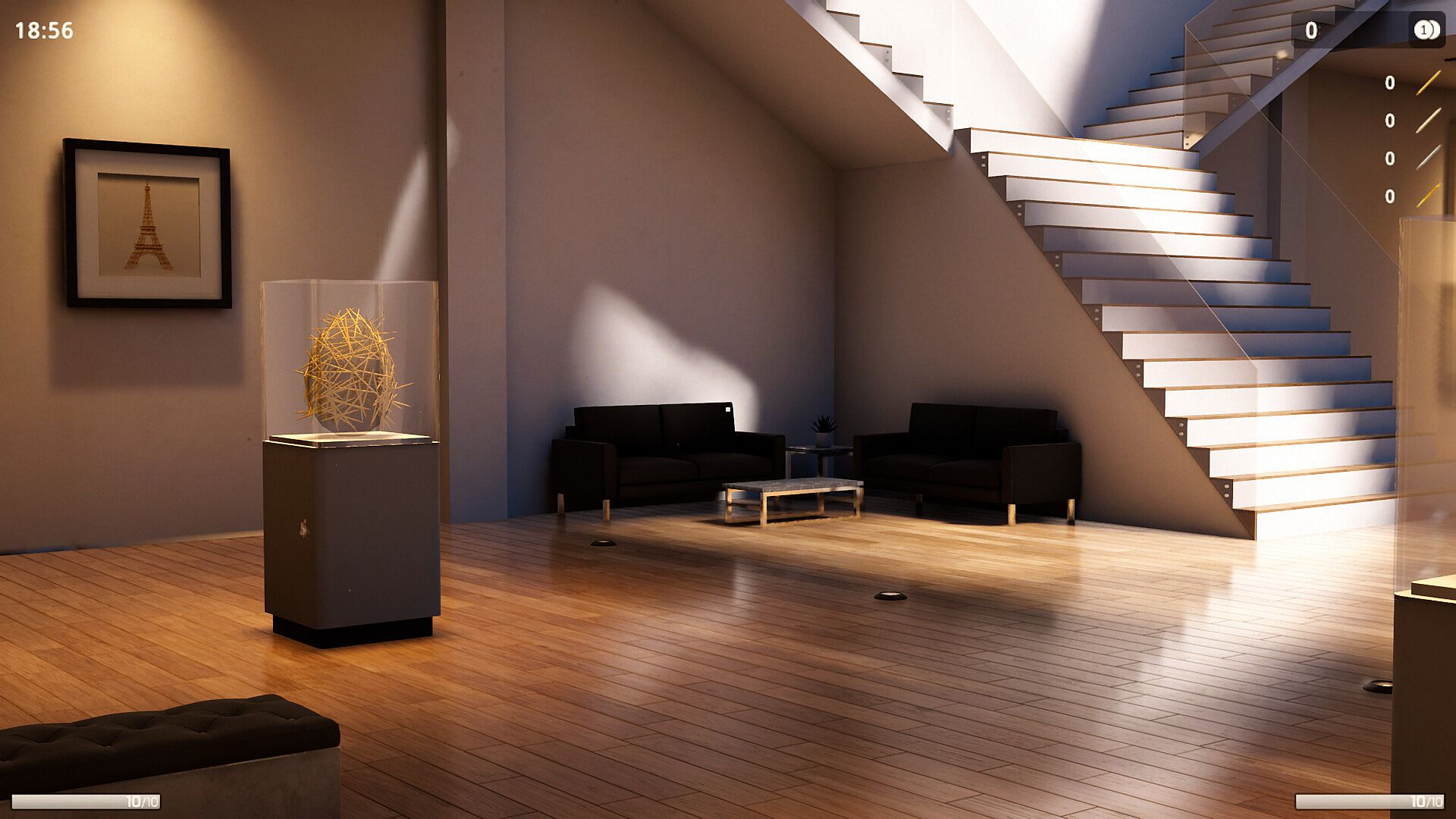




Toothpick Museum is an indie casual adventure game for PC that puts players in the role of a museum curator racing against the clock to restore a unique exhibition. The premise centers on a collection of toothpick-based art pieces that have been scattered after a transport accident, leaving the player with one night to gather every item before the grand opening. This setup creates a focused, hands-on experience centered on careful observation, precise interaction, and steady progress toward a visual payoff.
Gameplay
The core loop involves first-person exploration of the museum halls to locate scattered toothpicks. Each one must be retrieved manually, with attention paid to material type and positioning. Bamboo, ivory, gold, and silver toothpicks carry different values, so players decide which clusters to tackle first for better efficiency. The mechanics emphasize tactile grabbing, where the angle and pinch point matter to avoid injury from sharp ends. Success depends on reading the layout of exhibits and planning routes that minimize risk while maximizing recovery.
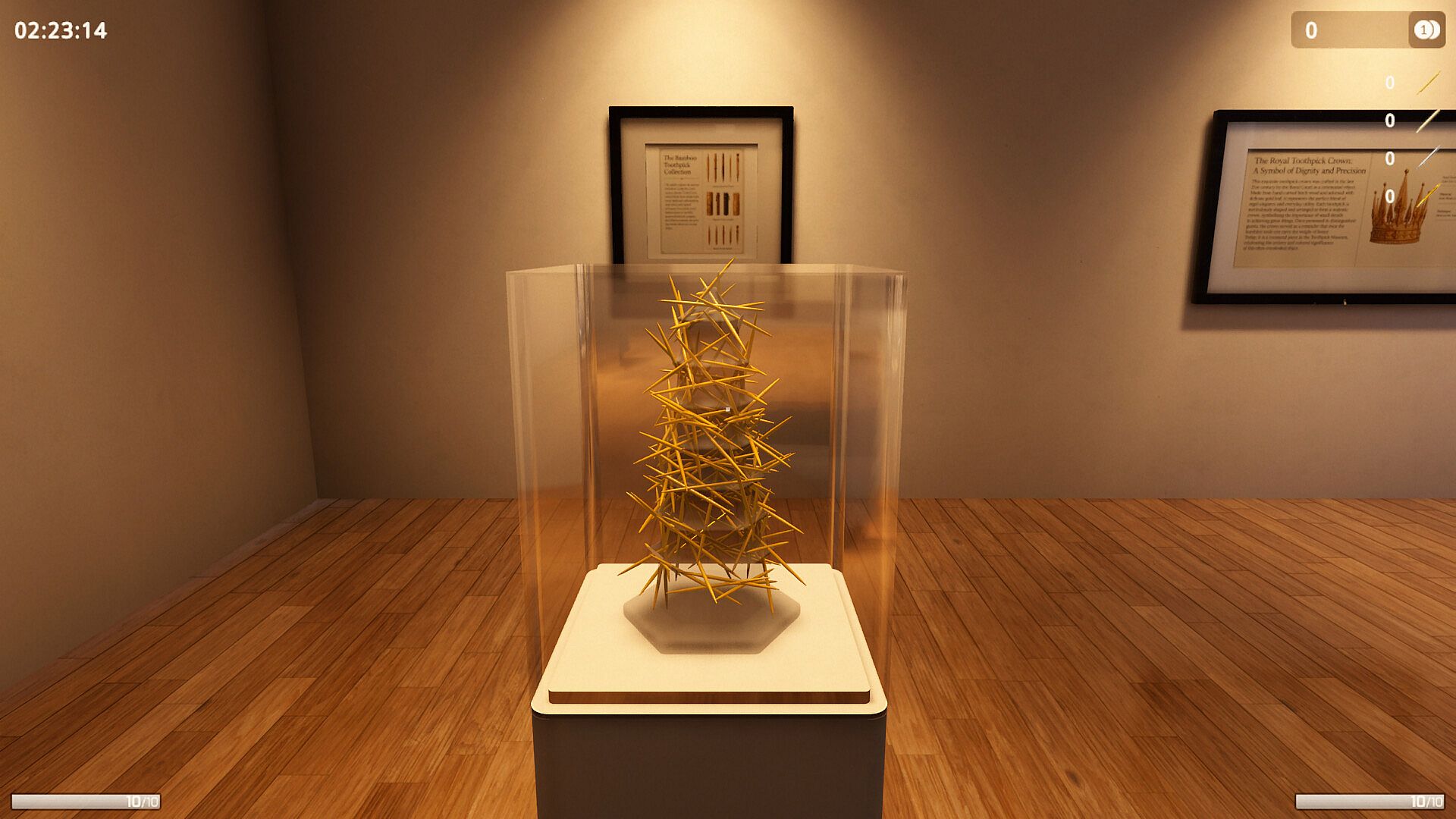
Recovered toothpicks automatically fly to a central pine tree, gradually turning its bare branches into a full canopy of needles. This transformation serves as the main visual reward and tracks overall progress. Funds earned from the toothpicks can be spent on upgrades that increase grab capacity, movement speed, or injury resistance. New exhibits become available through these purchases, expanding the collection and offering fresh challenges within the same hall. A cat provides occasional assistance by healing hands and offering a brief pause that can indirectly improve performance.
Game Modes
Toothpick Museum presents a single continuous experience without separate named modes or competitive elements. The entire session unfolds as one unbroken night of preparation, with no combat systems or failure states that force restarts. Players can choose to take calculated risks for faster results or proceed more cautiously, but the museum doors open on schedule regardless of the approach taken. This structure keeps the focus on personal strategy and incremental improvement rather than branching scenarios or multiplayer sessions.
Progression and Upgrades
Skill upgrades form the main layer of progression. Spending recovered funds unlocks abilities that let players clear larger areas at once or move with greater safety. Exhibit unlocks add variety to the halls, introducing new toothpick arrangements that require adjusted tactics. The pine tree serves as a constant progress meter, with each batch of returns visibly altering its appearance. Petting the cat adds a light management element, as its healing effect can keep the curator effective during longer sessions. Every choice ties back to completing the full collection before time runs out.
Is It Worth Playing?
Toothpick Museum suits players who enjoy relaxed, puzzle-like tasks with a strong emphasis on observation and steady accumulation. The absence of failure conditions and combat makes it accessible for casual sessions, while the upgrade system and exhibit variety provide enough depth for multiple attempts at better efficiency. The tactile grabbing and the rewarding tree reconstruction create a satisfying loop for those drawn to indie adventure titles focused on restoration and quiet management. Availability on PC allows straightforward access for anyone interested in this specific style of hands-on curation gameplay.