




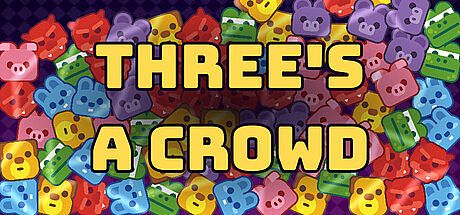



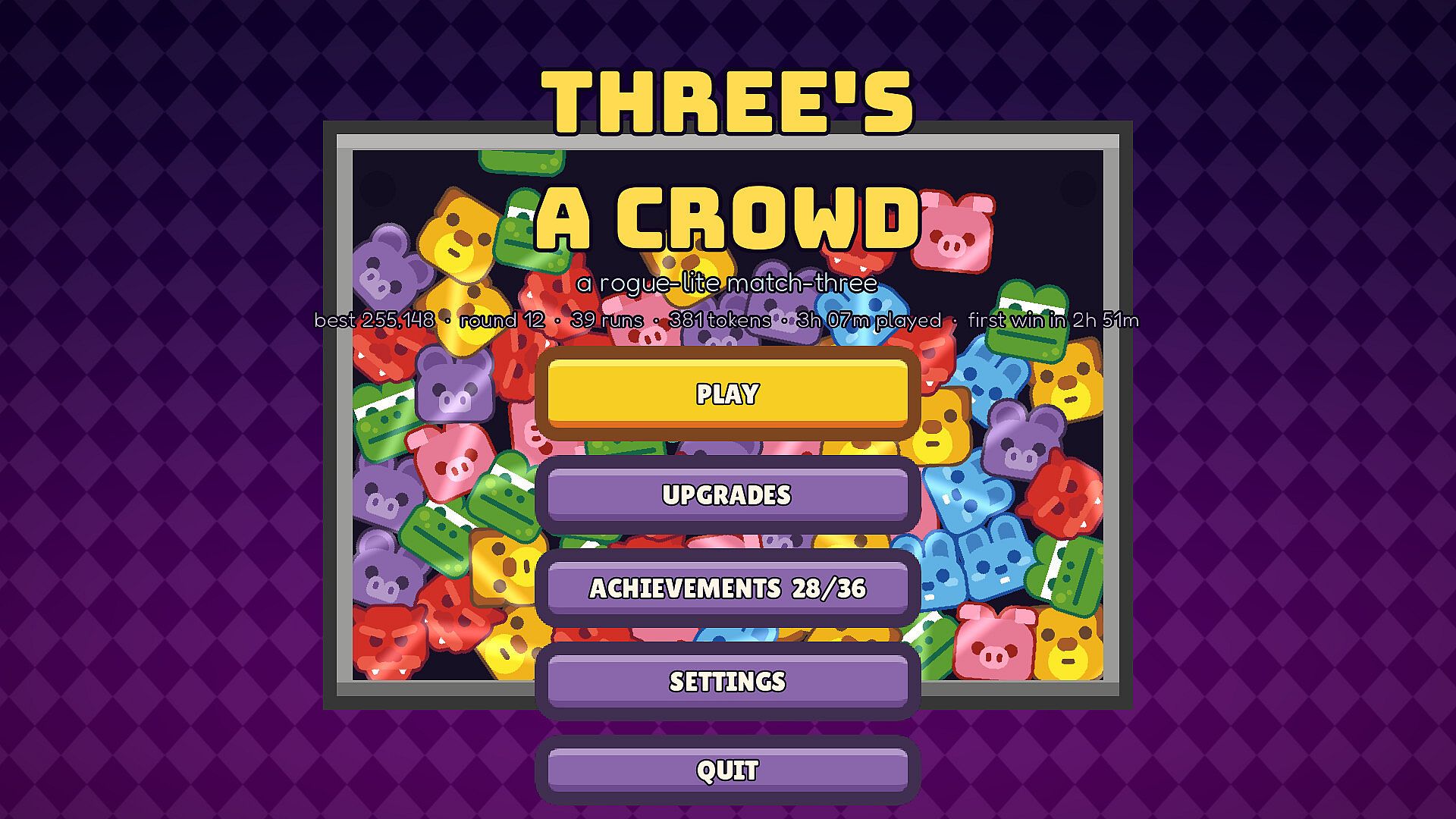
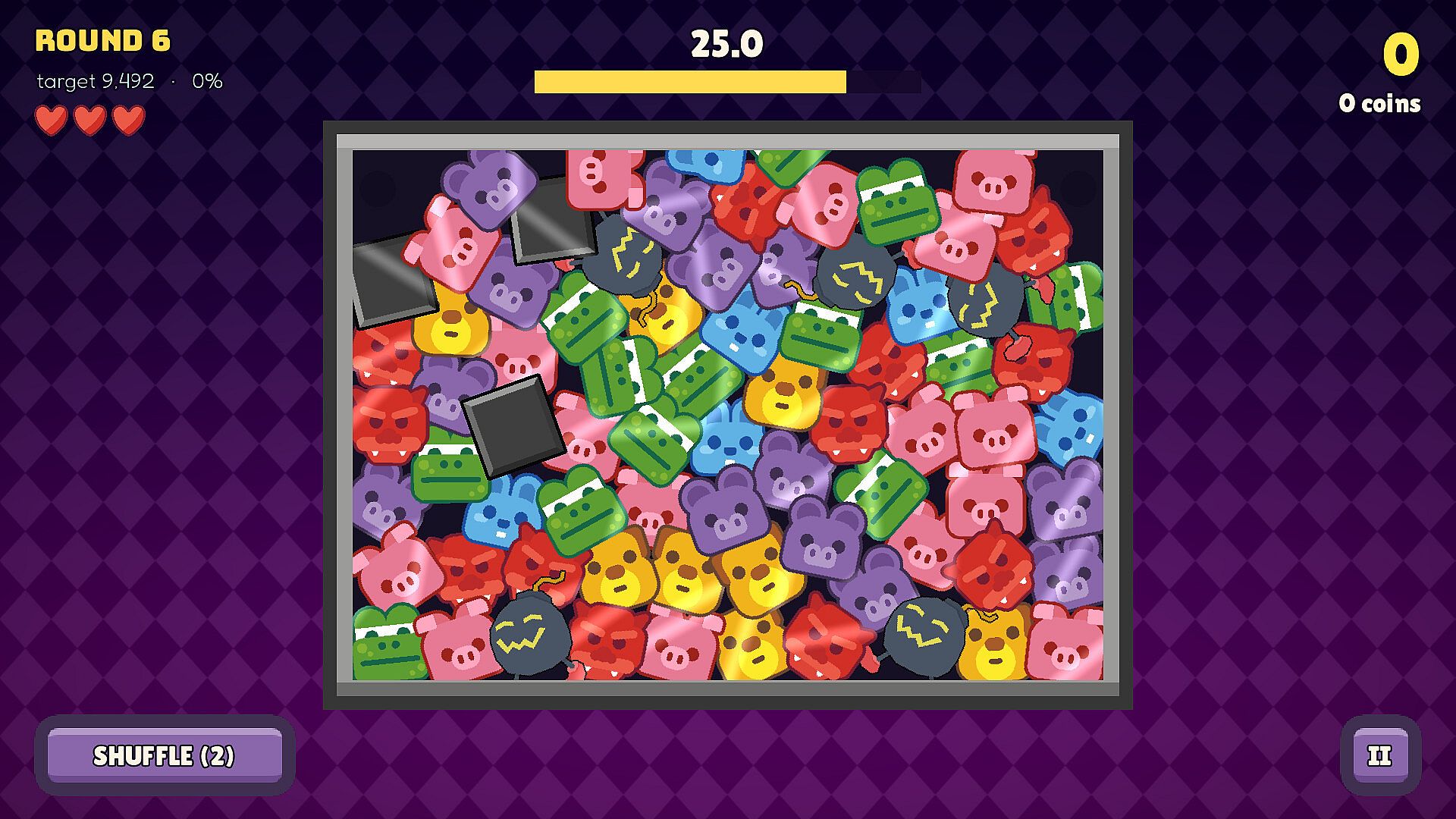



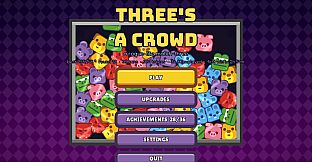
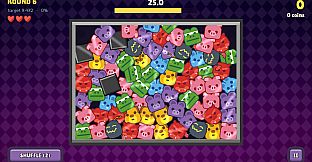

Three's a Crowd is a casual single-player puzzle game built around physics-driven match-three mechanics on PC. Animals drop into a glass well and settle according to real object physics rather than fixed grids, creating unpredictable piles where players clear groups of three or more identical animals that touch.
Gameplay
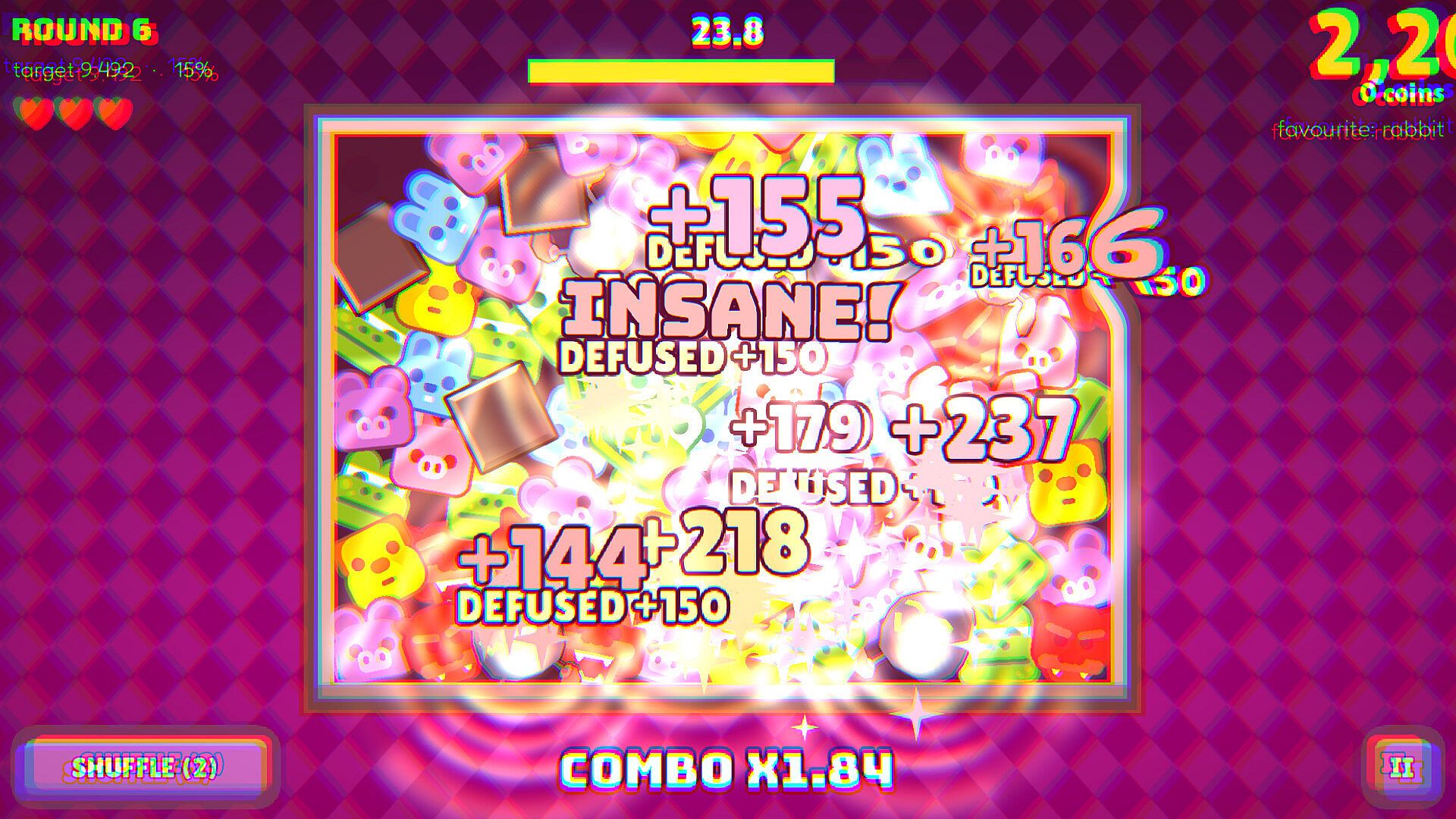
The core loop centers on short timed rounds that last twenty-eight seconds each. A score target must be met to continue, or the run ends immediately. Animals function as individual physics bodies that roll, wedge, and collapse when matches form, opening gaps that shift the entire pile. This setup turns every clear into a chain reaction that can expose new opportunities or bury hazards deeper.
Hazards add tension without direct matching options. Bombs and blocks fall among the animals. Clicking a bomb consumes one of the starting single life, while blocks occupy valuable space. Clearing animals around these hazards removes them too and awards a defuse bonus, shifting focus from simple color matches to strategic selections that maximize clears and minimize losses. Missing a match entirely deducts time from the clock, punishing rushed or imprecise clicks.
Between rounds, earned coins purchase temporary upgrades that last only for the current run. These include widening the definition of touching animals, allowing pairs to count as matches, clearing neighboring colors, buying back time, or improving bomb defusal. The temporary nature encourages experimentation without long-term commitment.
Game Modes
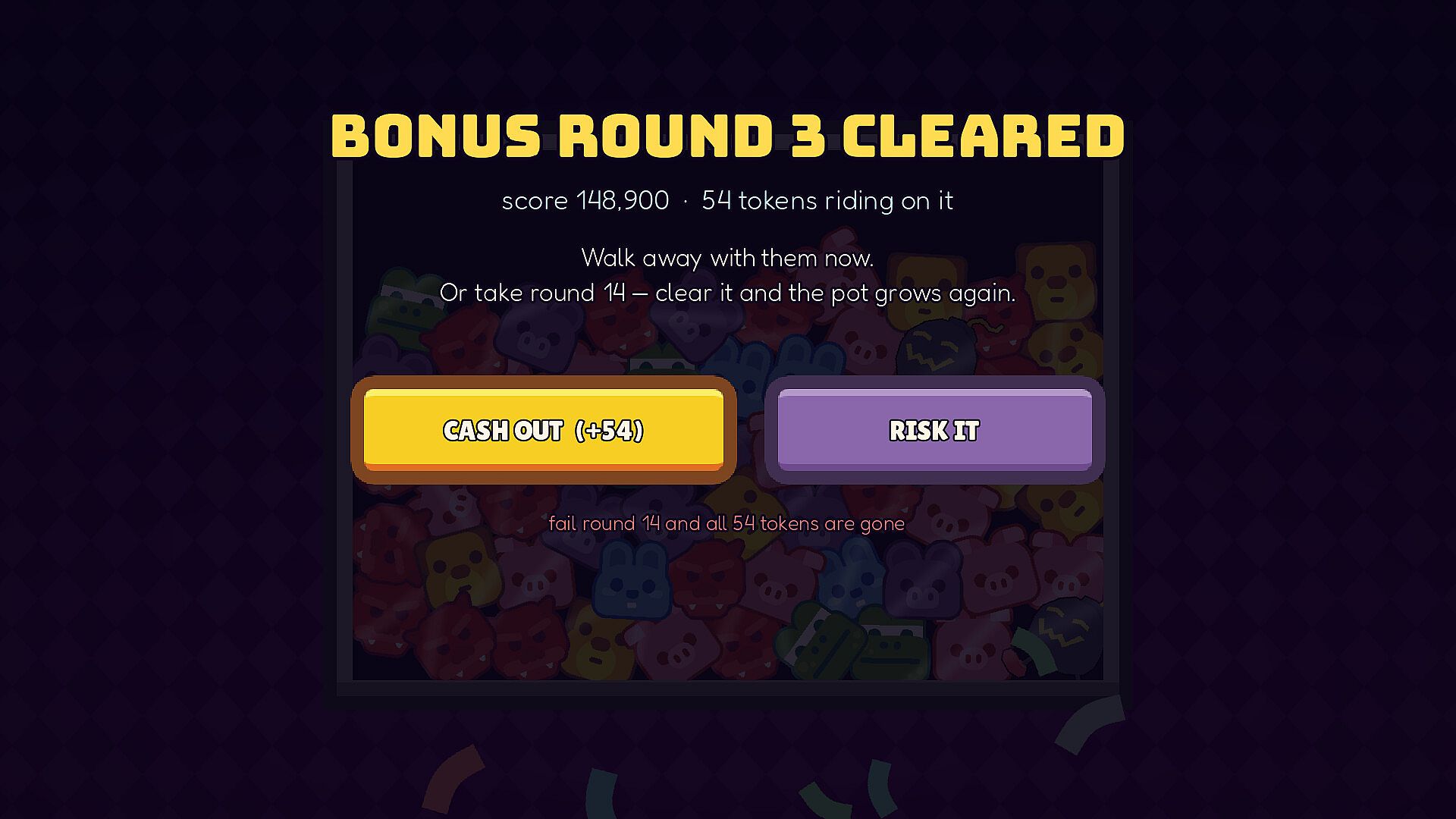
The primary experience consists of a standard run through ten rounds. Completing round ten counts as a win that can be banked for the payout. Players may instead continue into bonus rounds where score targets rise and the accumulated payout grows with each success. Failing any bonus round forfeits the entire pot earned so far, returning the player to the start with nothing from that attempt. The decision to continue appears after every bonus round, placing full control over risk in the player's hands.
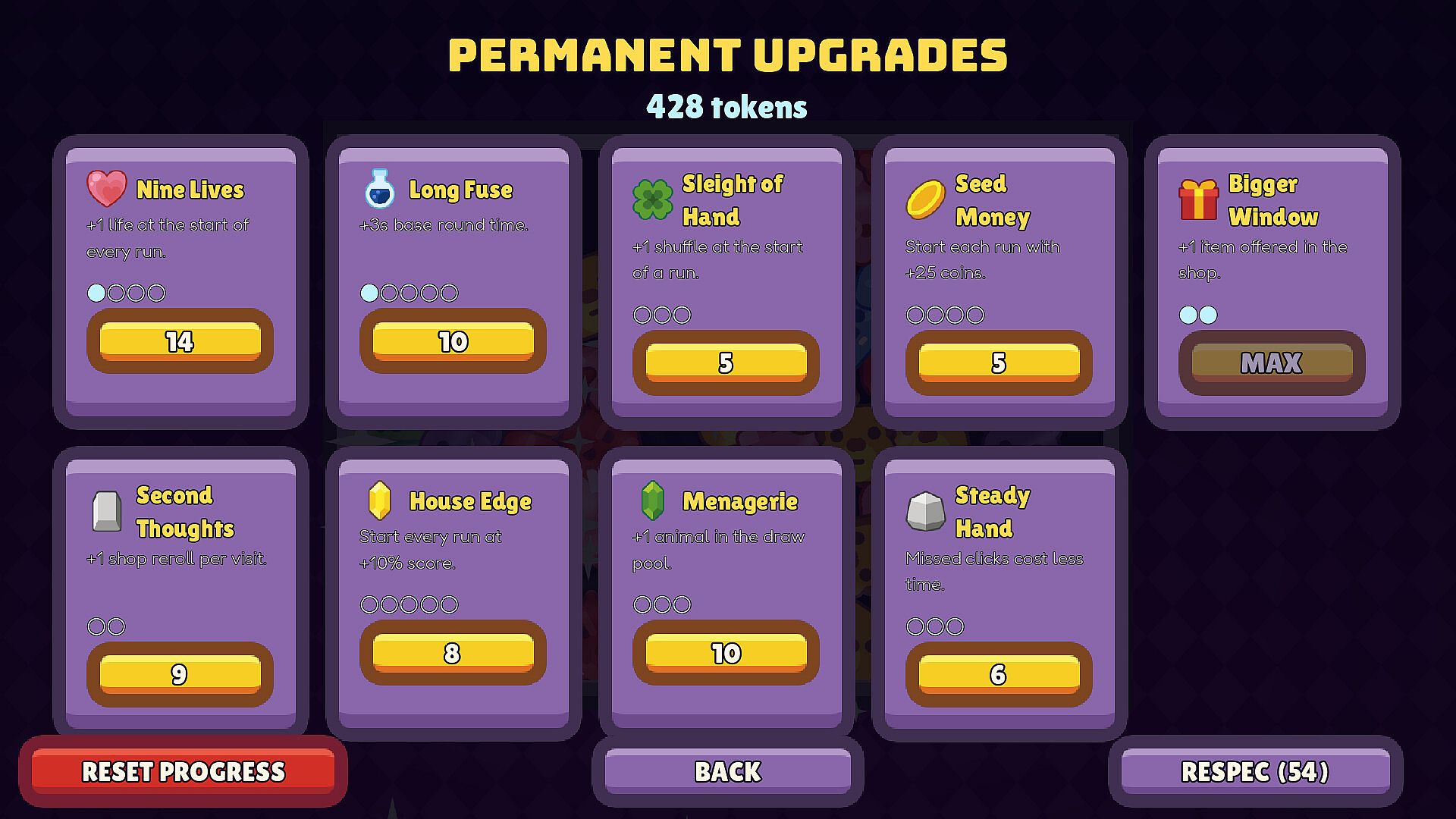
No separate named modes exist beyond this core structure and its optional high-stakes extension. The Menagerie permanent upgrade increases difficulty by adding another animal type to the pool, reducing match frequency across all runs. An achievement tracks completion with every animal type active, serving as the sole reward for that challenge.
Upgrades and Progression
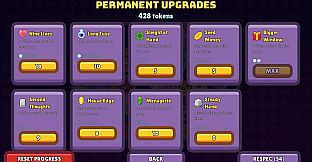
Permanent upgrades purchased with tokens between full runs provide lasting benefits such as extra starting lives, extended round timers, a larger temporary shop, or an initial score boost. Free respec options allow complete rebuilds at any time, removing hesitation around experimentation. These systems layer short-term coin spending during a run with longer-term token investment across attempts, creating steady progression without rigid builds.
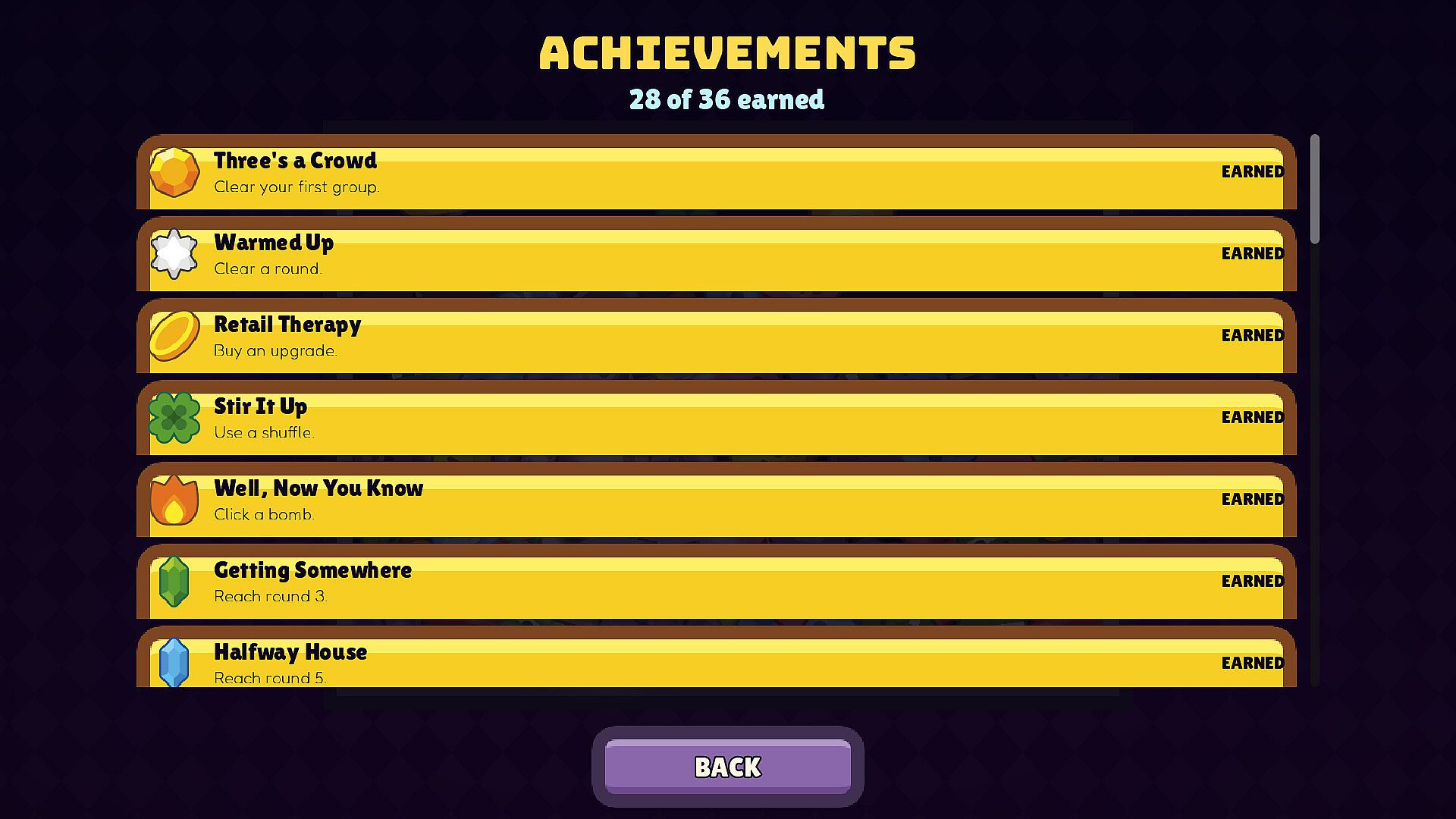
Thirty-six achievements cover milestones from the first successful group clear through extended challenges that require multiple runs to unlock. The design keeps focus on the matching and physics interactions rather than external progression tracks.
Accessibility and Controls
Controls remain strictly mouse-based with a single button input, eliminating any need for keyboard commands or complex bindings. A colorblind mode applies distinct shapes to each animal type for clear identification regardless of hue. The game supports both fullscreen and windowed display, preserving the chosen setting across sessions.
Is It Worth Playing?
Three's a Crowd suits players who enjoy precise, physics-influenced puzzle solving in short sessions with meaningful risk-reward choices. The combination of timed rounds, hazard management, and layered upgrades delivers consistent depth without requiring prior experience. Its mouse-only design and accessibility options broaden appeal to casual audiences seeking quick, replayable challenges on PC. The game remains in development with a release date listed as coming soon and no player reviews available yet, so final judgment depends on personal tolerance for physics randomness and the optional high-risk bonus structure.