


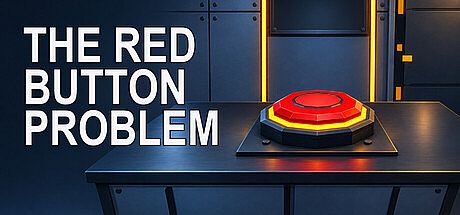


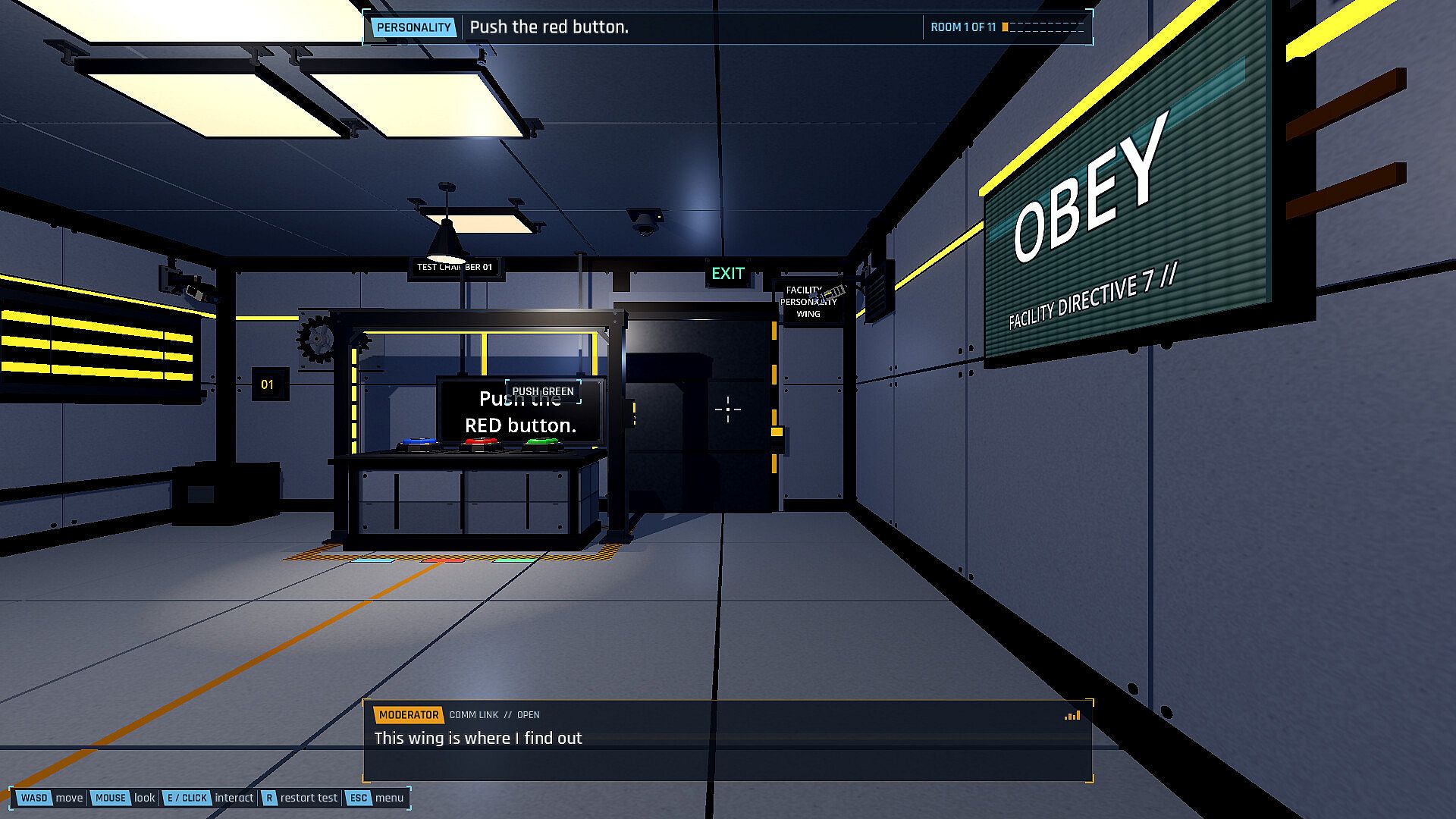
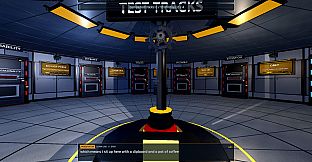
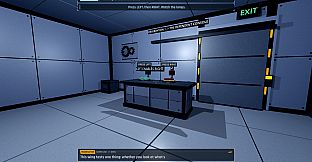
The Red Button Problem is a first-person psychological puzzle game developed as an indie adventure title for PC. Players enter a retro-industrial research facility where a voiced Moderator delivers instructions through speakers, guiding participants through a series of tests that examine obedience, hesitation, and decision-making under observation.
Gameplay
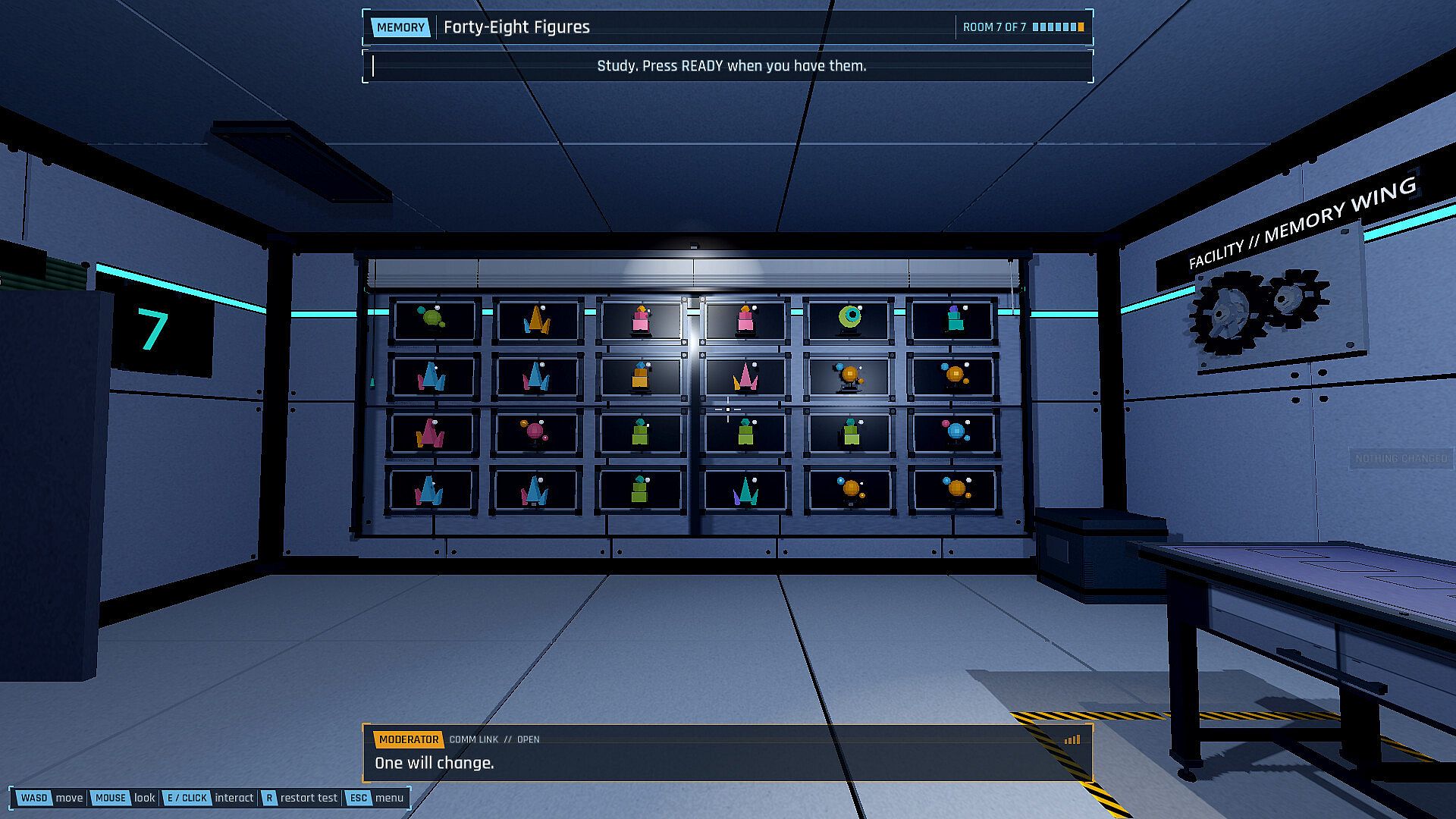
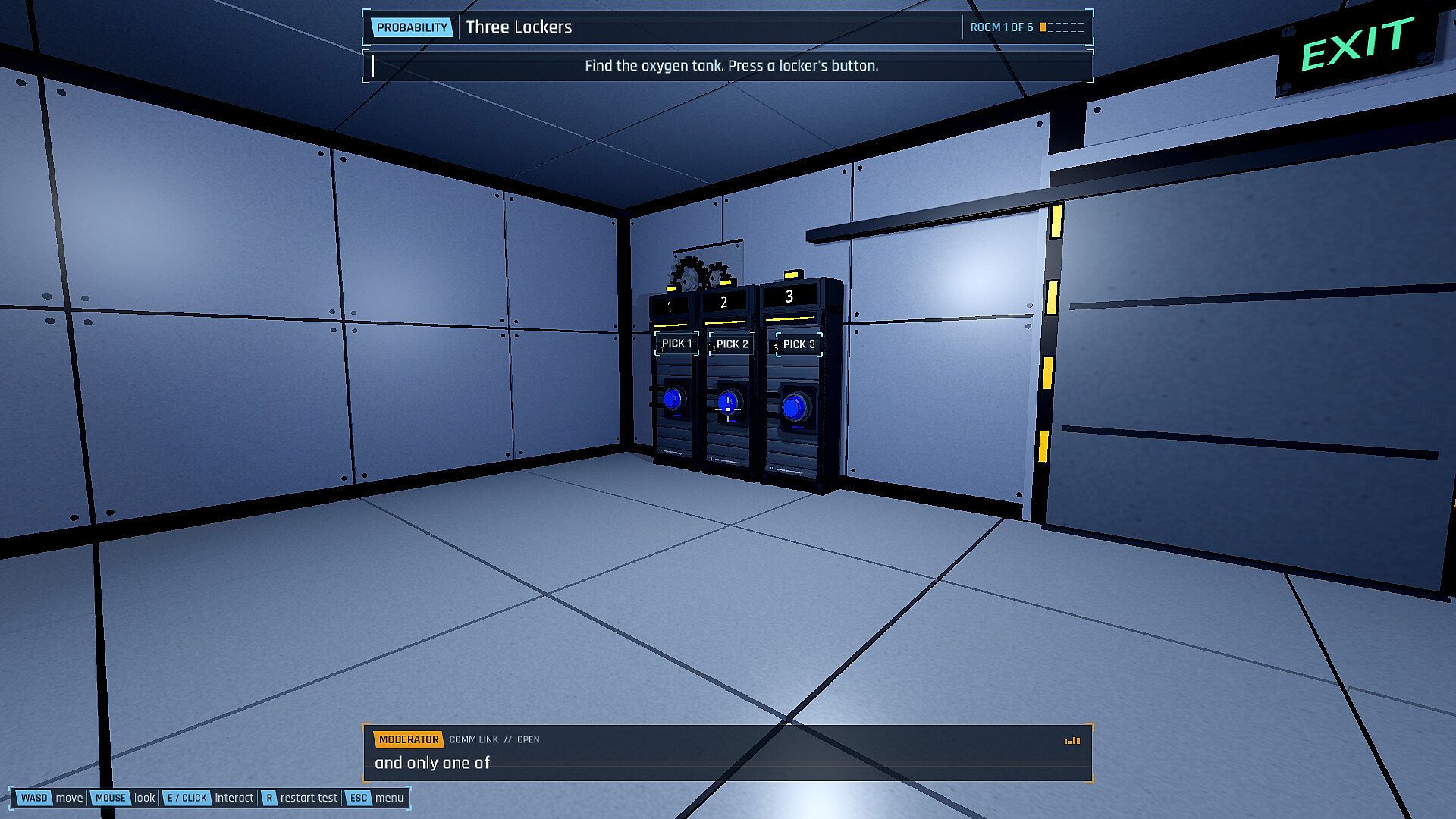
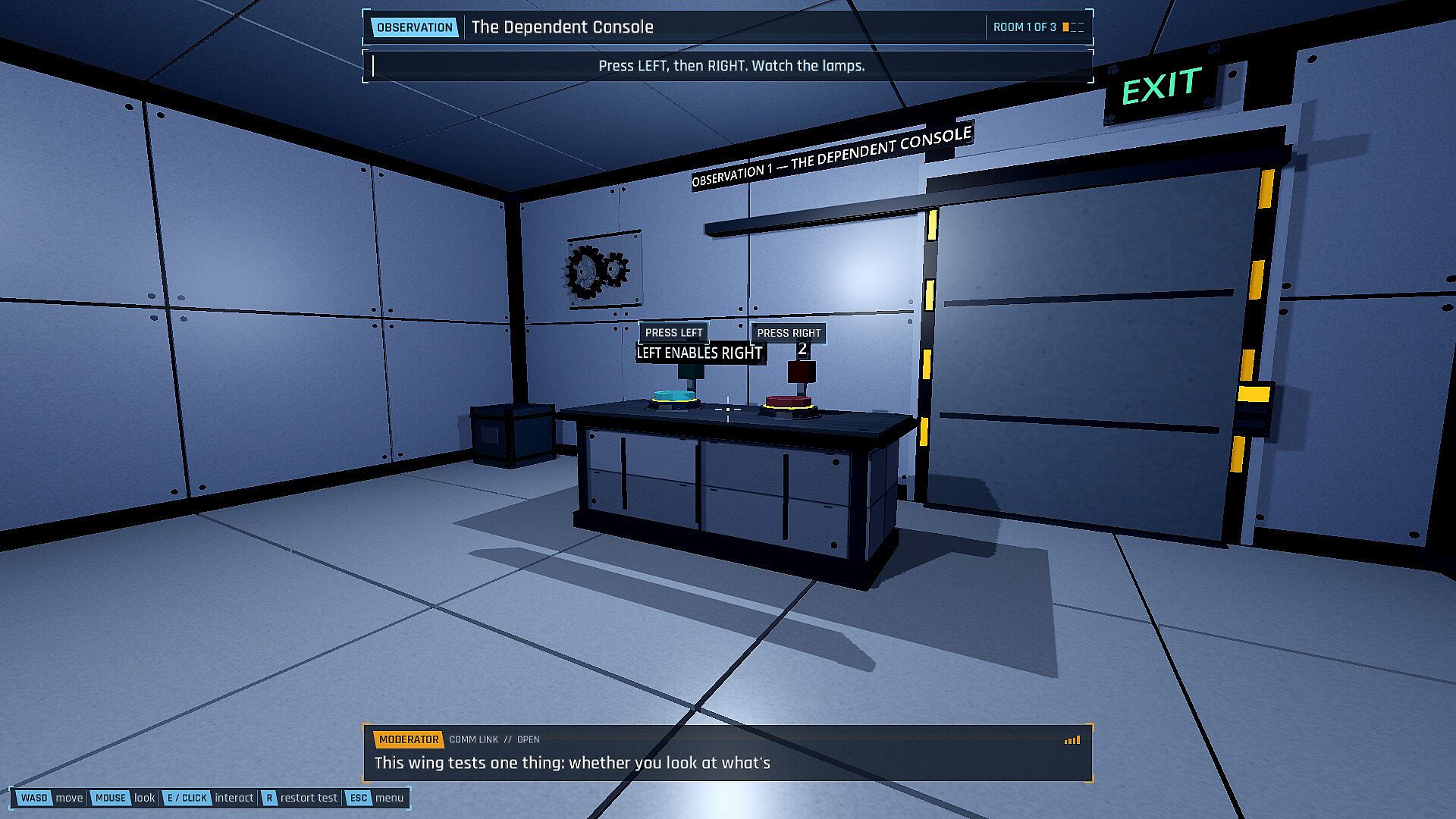
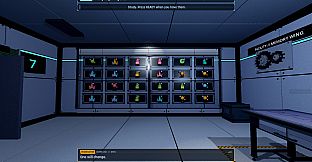
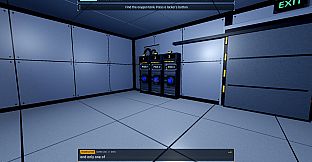
Exploration occurs in first person as players navigate connected chambers within the facility. Core interactions involve pressing buttons, operating levers, and observing environmental details to complete assigned tasks. Careful attention to surroundings often reveals additional context or distractions that the Moderator records alongside primary actions. Memory challenges require studying sculptures in a dedicated gallery space, while probability elements involve selecting options such as oxygen lockers when standard approaches prove insufficient. Attention and judgment tests incorporate competing stimuli that test focus during simple procedures. Trust mechanics emerge through interactions with the Moderator's guidance and the consequences of following or deviating from spoken directions. Keyboard and mouse controls support precise navigation and interaction on PC, with on-screen options available for compatible touchscreens. Sessions reward deliberate pacing, as time spent examining details contributes measurable data to the final behavioral profile.
Game Modes
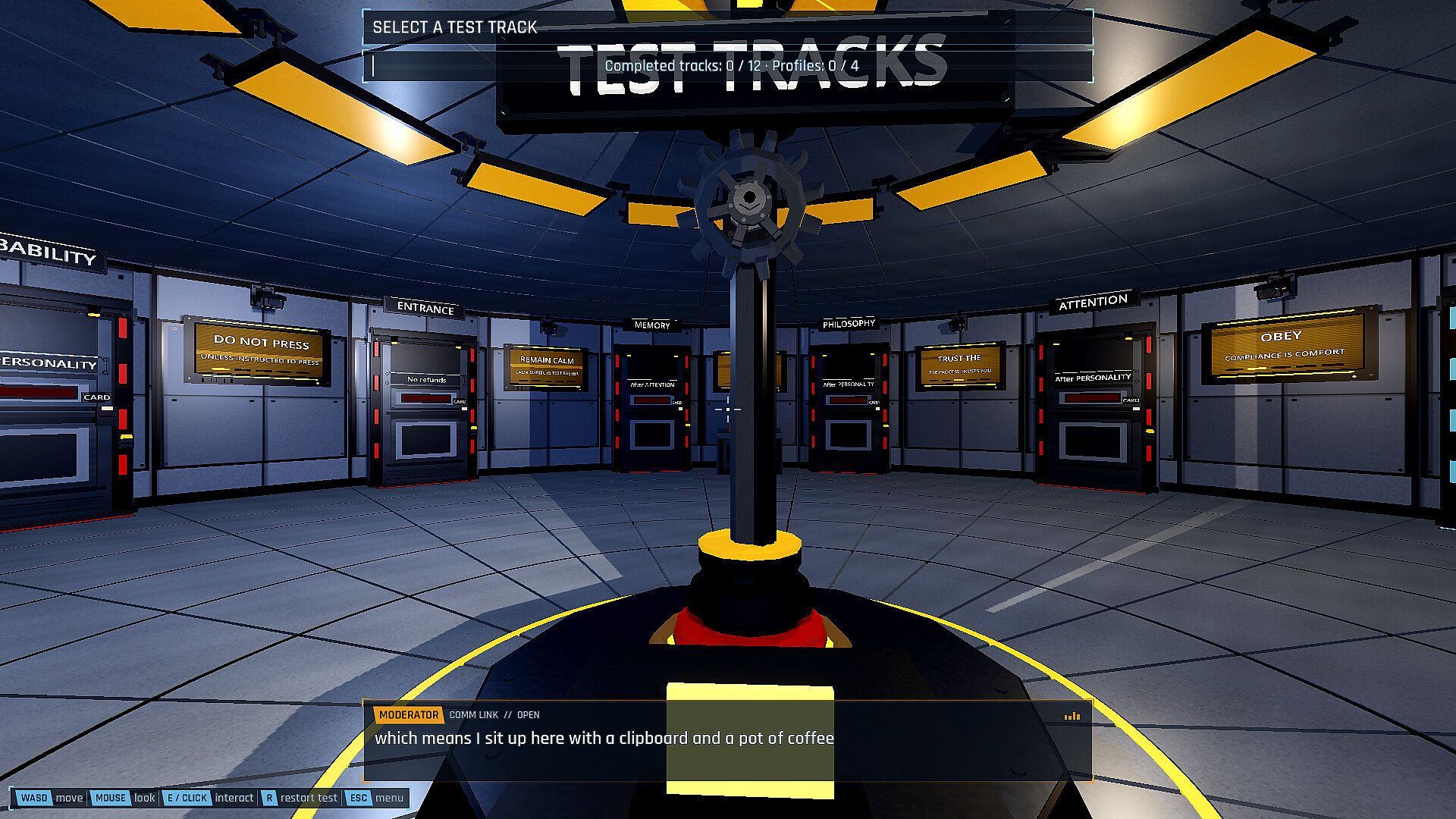
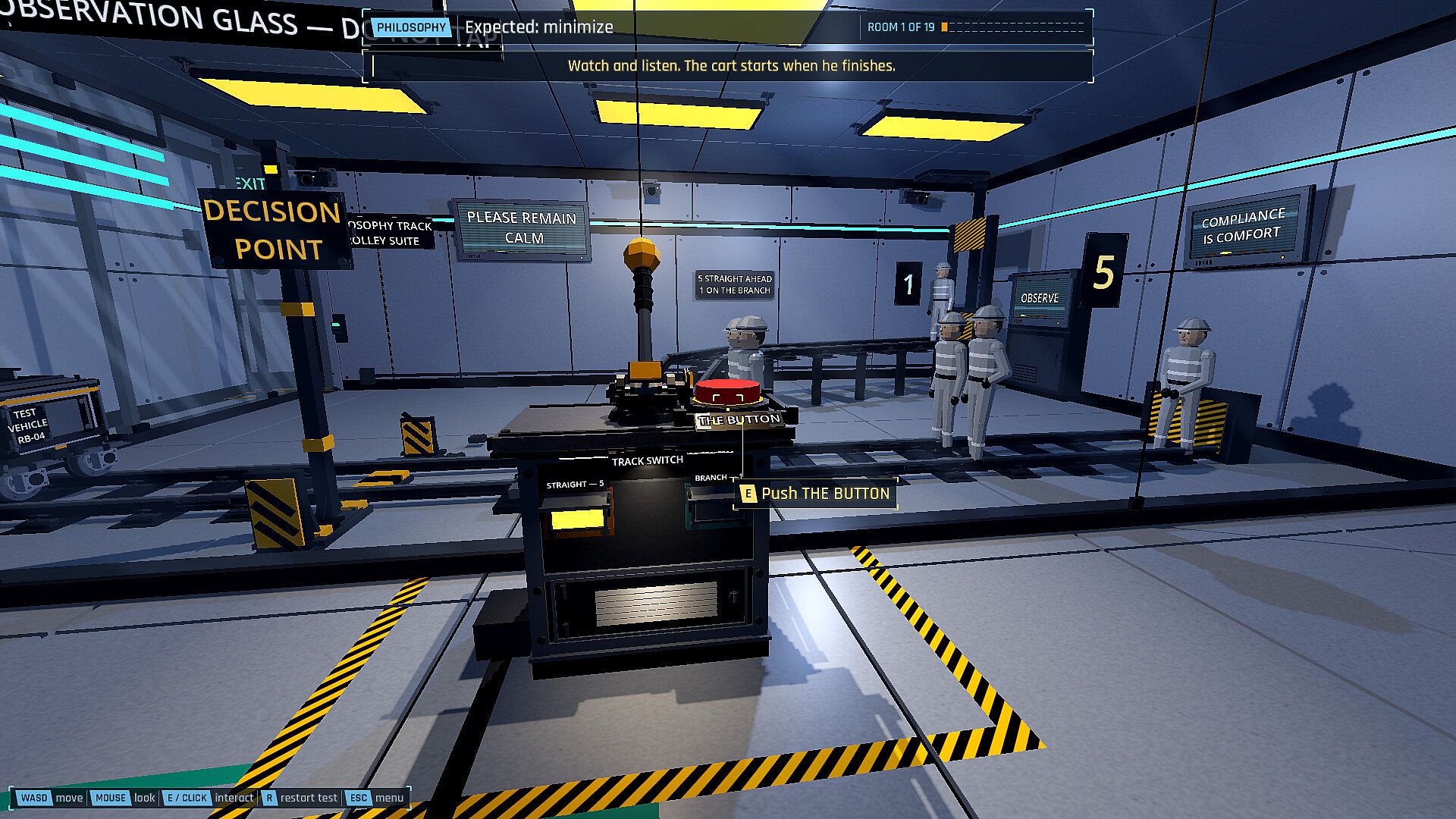
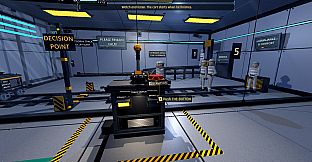
The experience structures its content around distinct tracks that players complete sequentially. Each track presents a focused set of tests covering memory, probability, attention, judgment, and trust. One notable segment is the Trolley Suite, which places players in scenarios involving visible subjects and machinery choices that probe personal principles through route selection and positional adjustments. Another area centers on the Memory Gallery, where sculpture examination forms the basis of retention and selection tasks. Tracks conclude with a Moderator assessment that logs obedience, hesitation, and refusal behaviors into a personalized profile available upon completion. No competitive or cooperative modes exist, keeping the focus on solitary progression through the facility's connected spaces.
Key Mechanics and Features
Physical puzzle solving relies on direct manipulation of facility elements combined with observational skills rather than complex inventories or combat. The Moderator provides fully voiced narration and responses that adapt to player actions, creating a consistent layer of external evaluation. Post-track profiles summarize recorded behaviors without assigning numerical scores, offering insight into patterns across multiple attempts. The design encourages repeated visits to earlier chambers for fresh observations, as waiting periods or alternative viewpoints can alter outcomes in probability or attention-based tests. Single-player focus ensures uninterrupted pacing suited to thoughtful engagement with the psychological elements.
Who This Game Appeals To
Individuals interested in narrative-driven puzzle experiences that emphasize introspection and behavioral analysis will find alignment with the structure. The emphasis on observation, timed decisions, and response to external direction suits players who prefer deliberate exploration over fast-paced action. Those seeking short, repeatable sessions benefit from the track-based format that allows targeted returns without lengthy commitments. The absence of multiplayer elements makes it ideal for focused solo play on PC hardware.
Is It Worth Playing?
The Red Button Problem delivers a contained psychological puzzle experience centered on facility navigation, button and lever interactions, and Moderator-guided tests of memory, probability, attention, judgment, and trust. Its track structure and post-completion profiles provide clear feedback on player tendencies. Availability on PC with keyboard, mouse, or touchscreen support accommodates different preferences. Players who value observation-heavy gameplay and voiced narration in an indie adventure context will likely appreciate the focused design and behavioral tracking system. Those preferring expansive worlds or competitive elements may find the scope more limited. The game stands as a self-contained title without ongoing seasonal content or additional modes confirmed beyond the core tracks.