




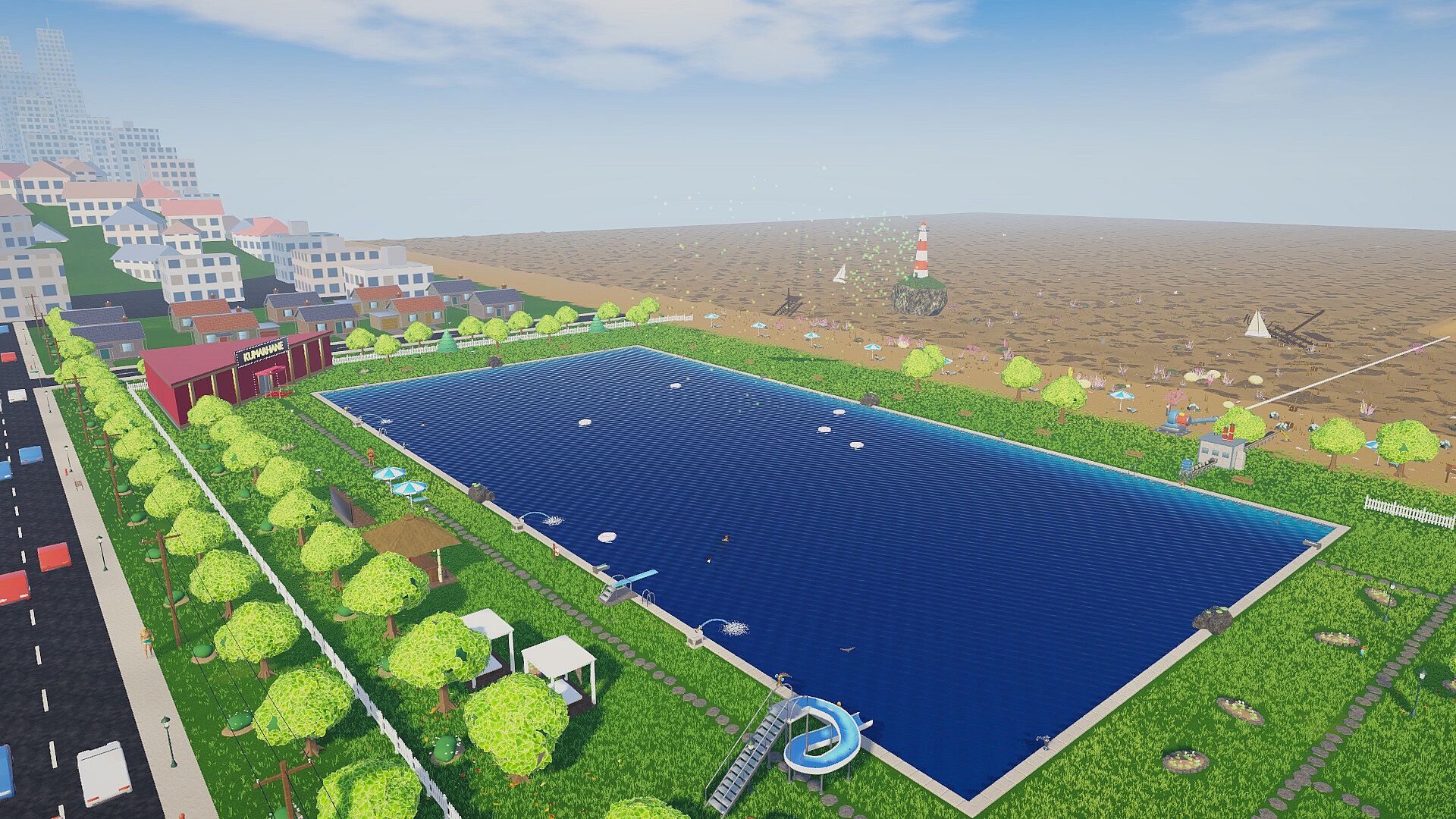
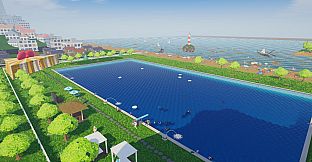
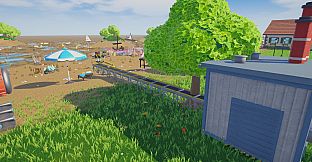
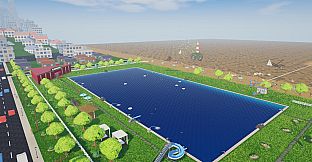

The Pool Problem is an indie casual simulation game for PC in which players gradually fill an enormous backyard pool by carrying water from a neighboring sea using a progression of tools. The experience blends incremental progression with first-person movement, allowing players to walk, run, jump, swim, and dive through a detailed environment while managing cleaning, filling, and maintenance tasks.
Gameplay
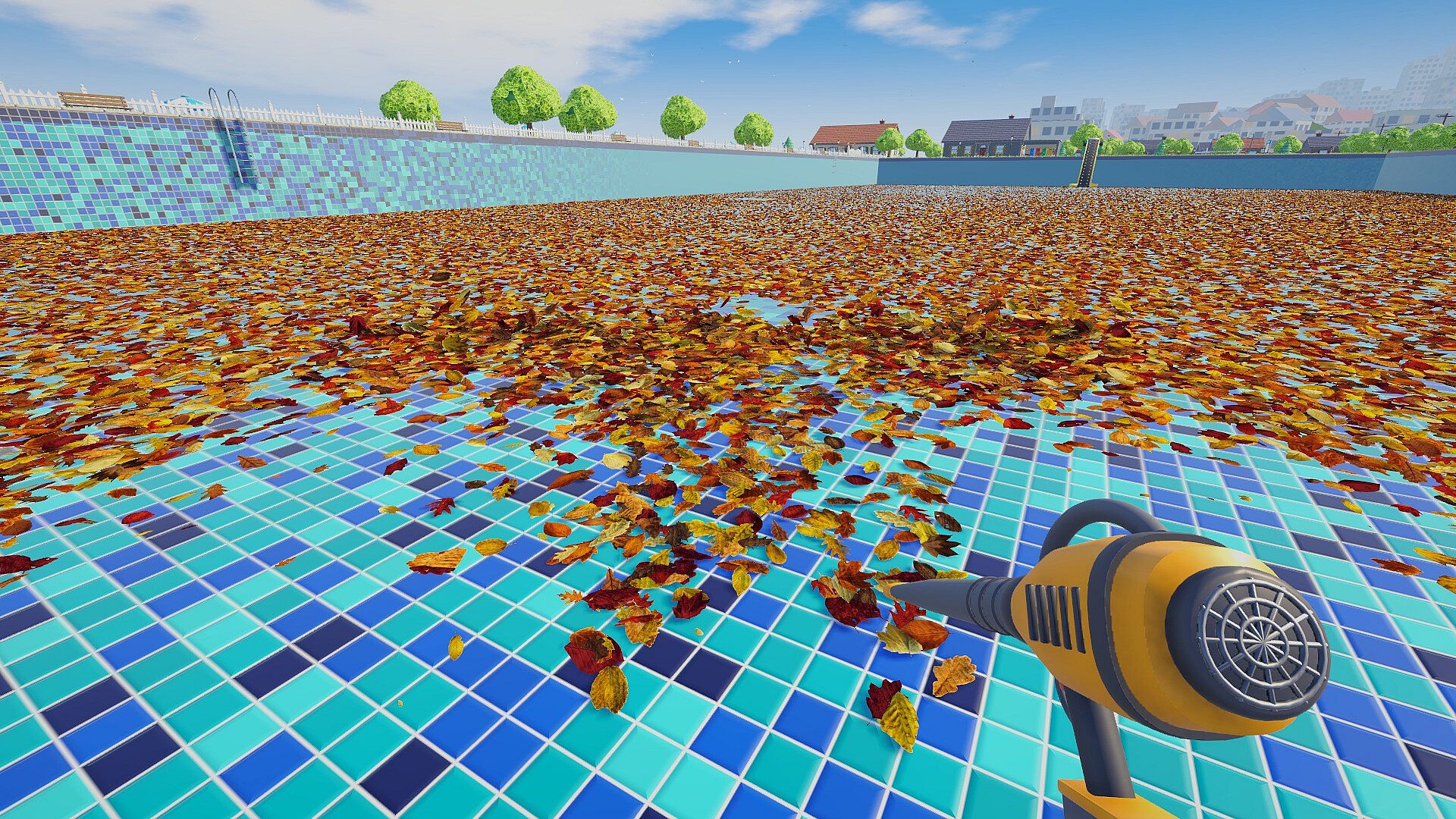
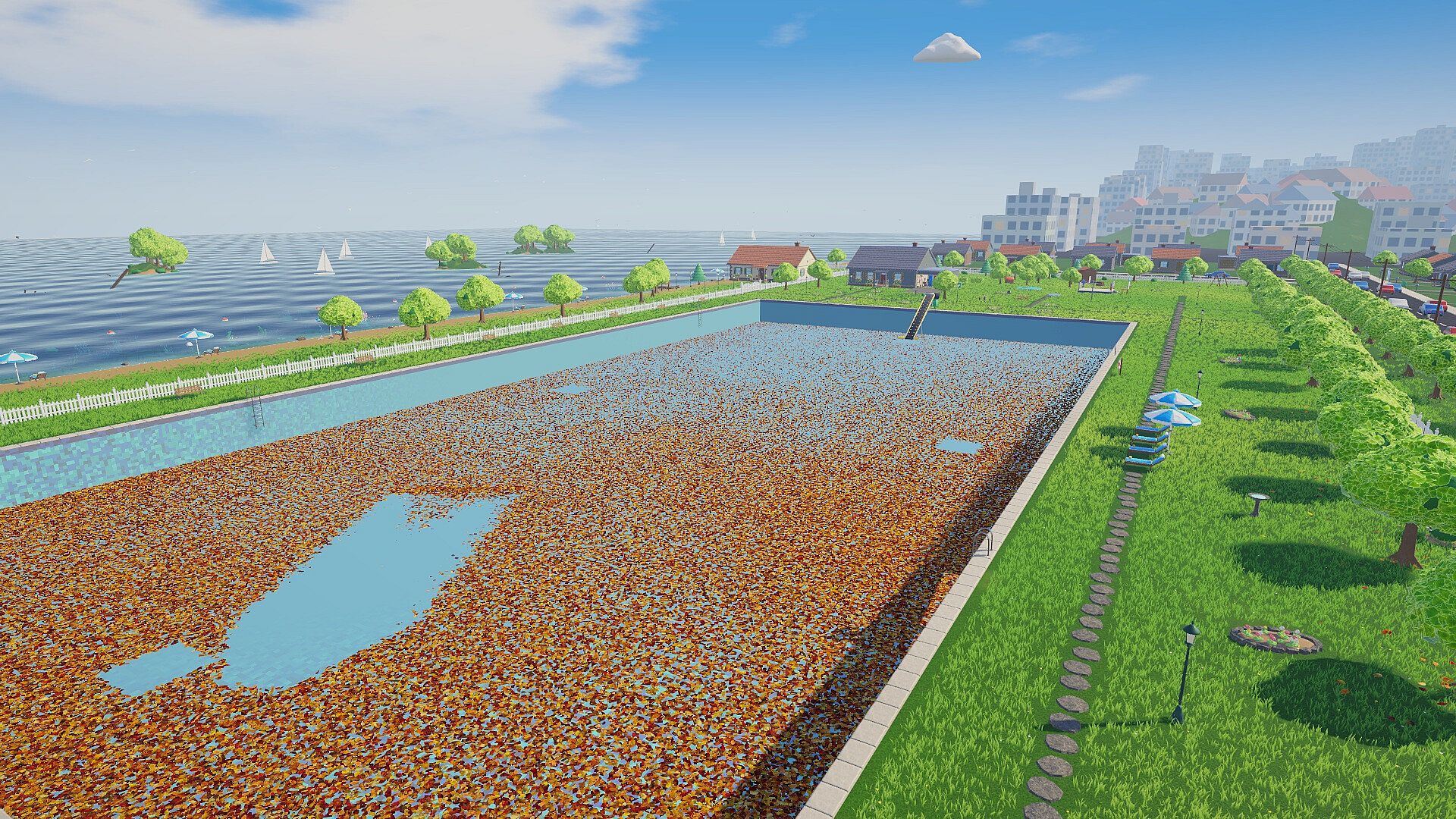
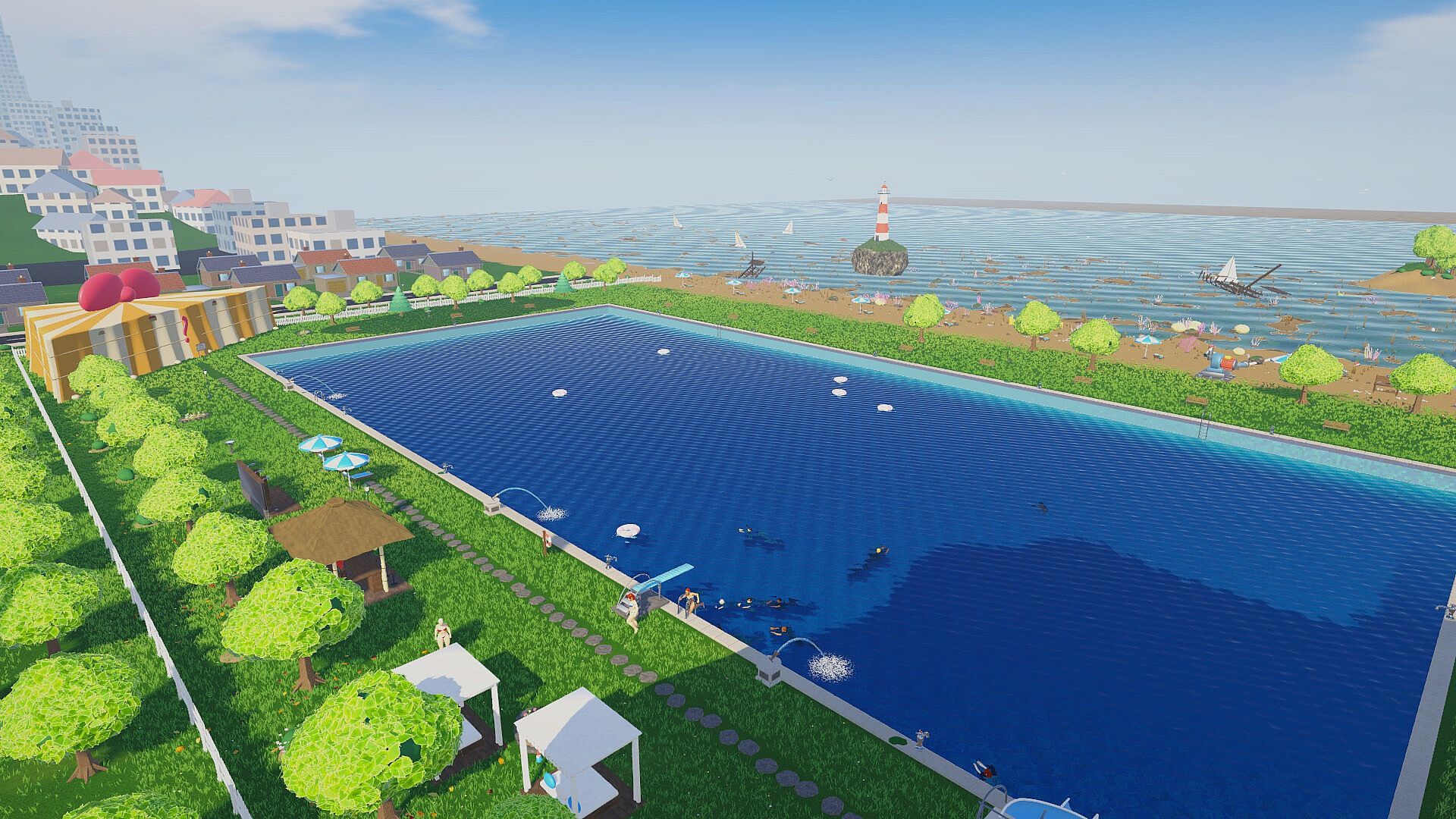
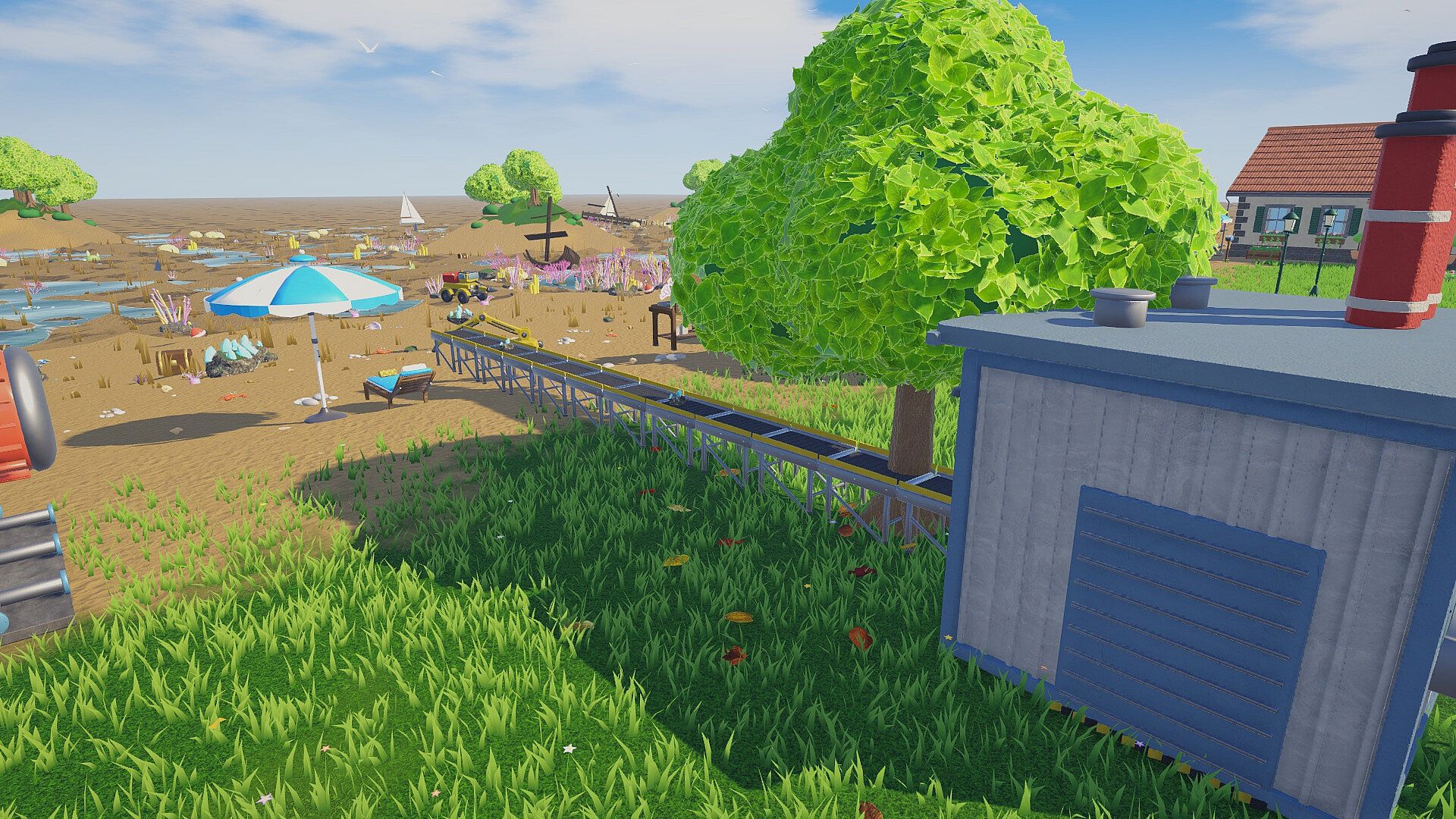
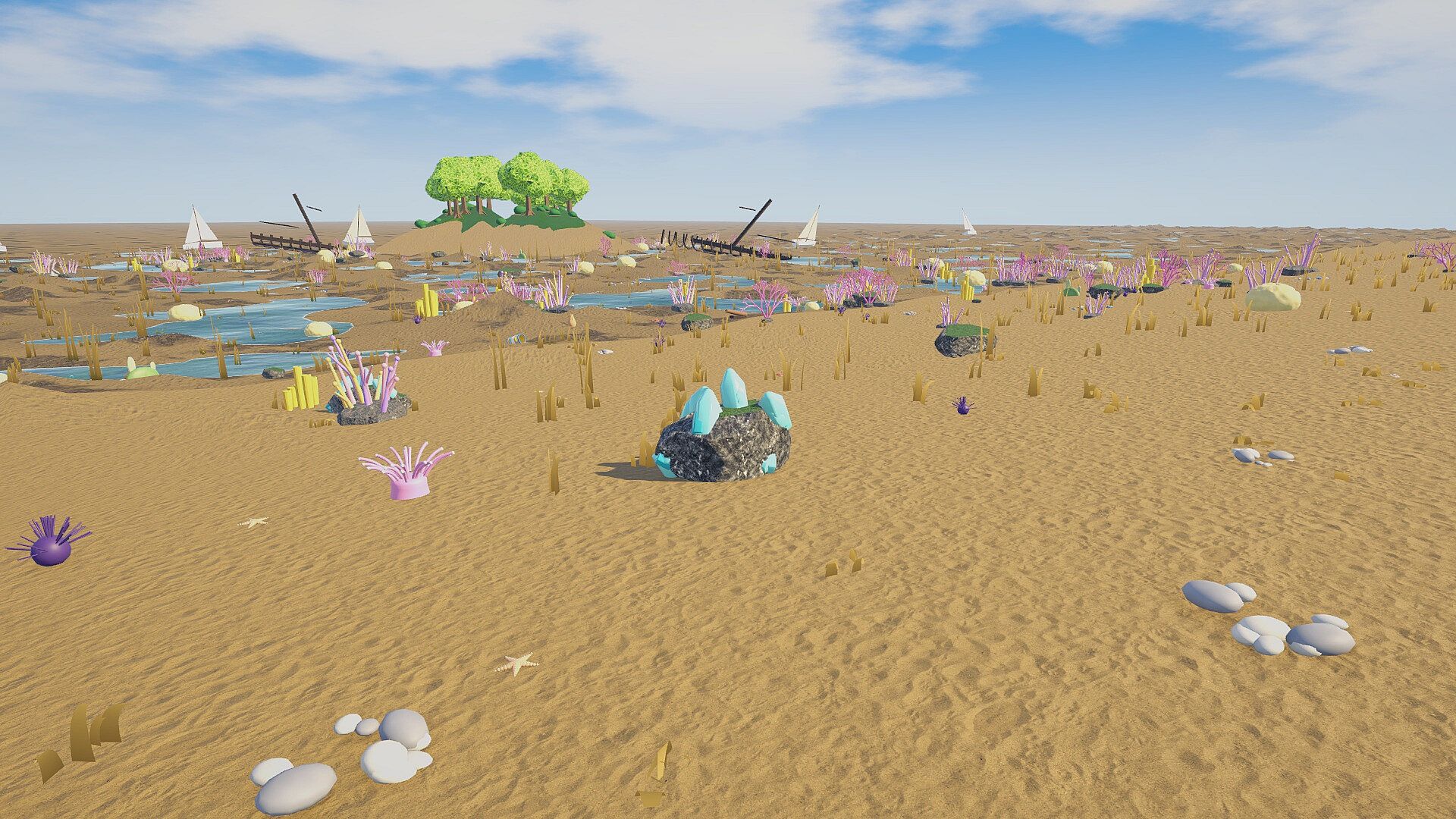
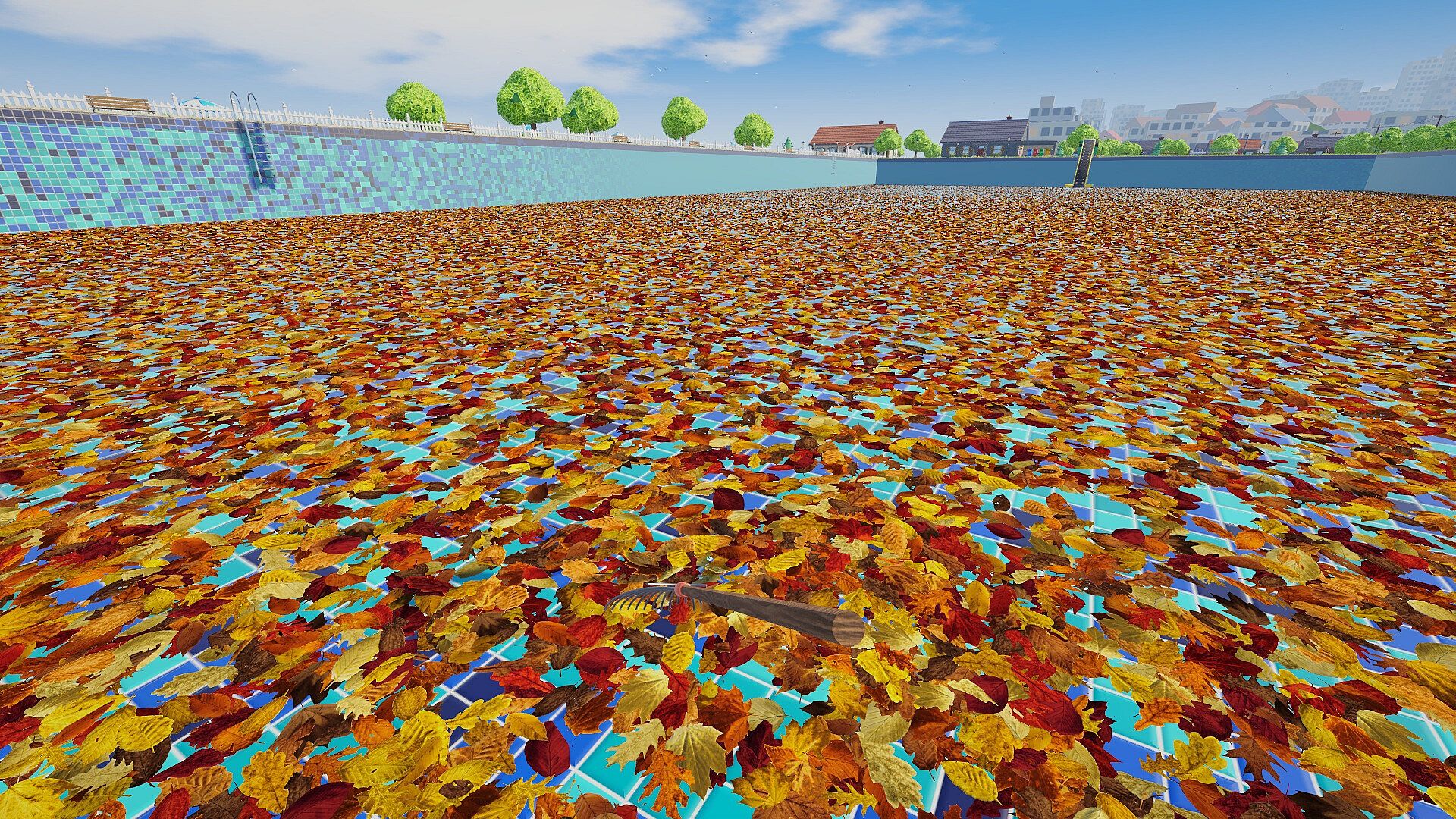
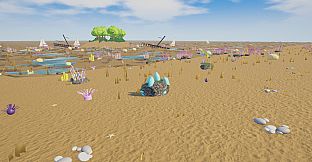
Core gameplay revolves around a steady loop of cleaning the pool and transporting water. Players begin by clearing millions of autumn leaves using rakes, blowers, and vacuums that feed into a conveyor system. Water collection starts with a single spoon and advances through sponges, cups, jugs, buckets, barrels, wheelbarrows, and water vacuums before unlocking faucets, pipes, channels, and massive stone waterfalls. As the pool fills, the sea recedes to expose shipwrecks, treasure chests, and crystal rocks.
Water quality requires ongoing attention. Players mine chlorine rocks, process them in a workshop, and dive to seal cracks that could cause leaks. Automation expands the operation with mining robots, robot arms, conveyor belts, a chlorine factory, and an automatic doser. Once operational, the pool opens to visitors who purchase tickets, relax in cabanas, and use slides. Decoration options increase visitor numbers and revenue.
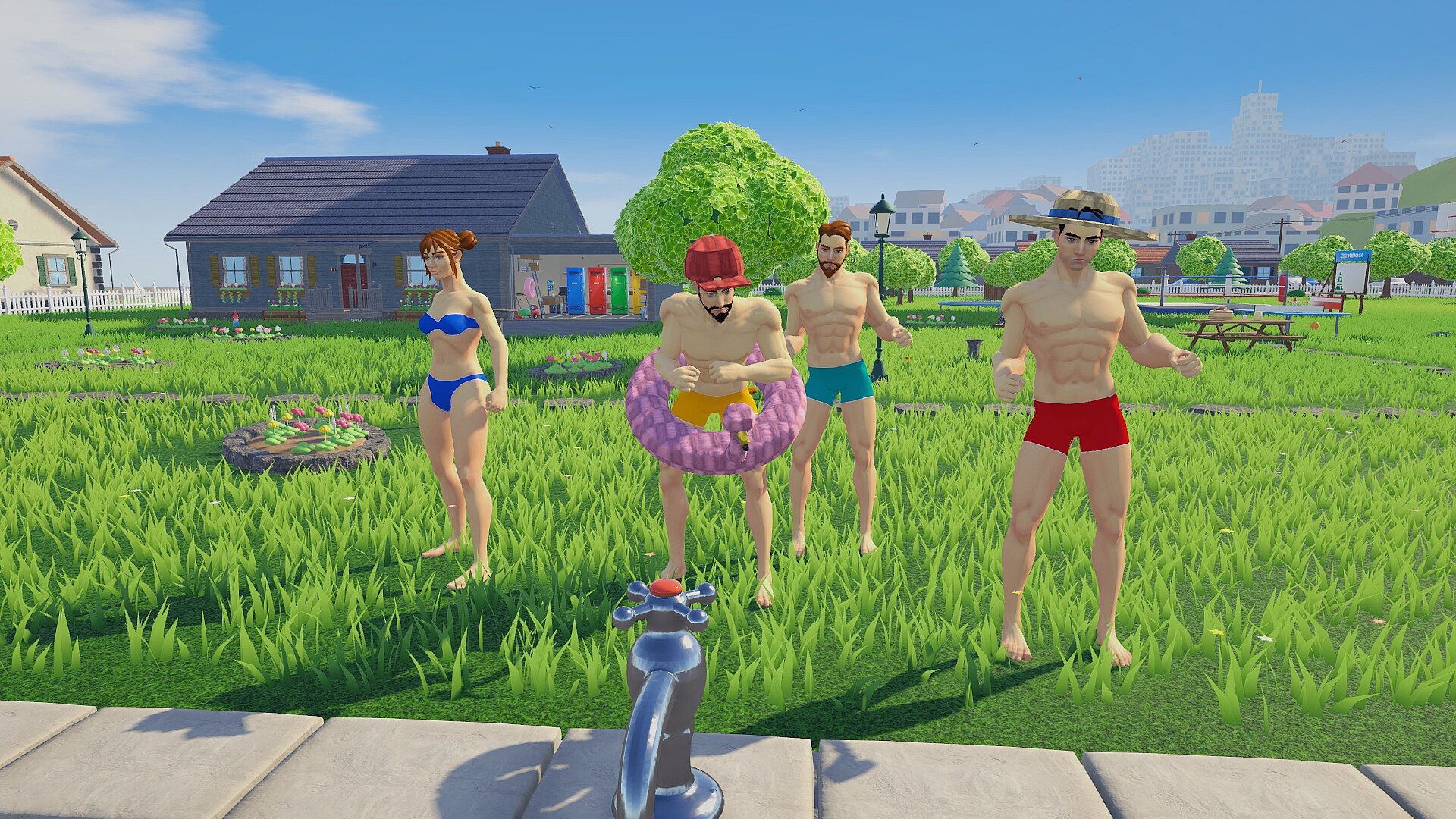
Movement feels physical and satisfying in first person, supporting exploration of the growing facility. The game supports solo play or drop-in drop-out co-op for up to four players who share money and upgrades while each retaining personal tools and a colored locker.
Game Modes
The Pool Problem offers solo and online co-op modes. Co-op supports up to four players through Steam lobbies and invites, with built-in proximity voice chat for coordination. Difficulty settings affect the time required to complete the pool, with easy mode taking three to four hours and medium or hard modes extending the challenge.
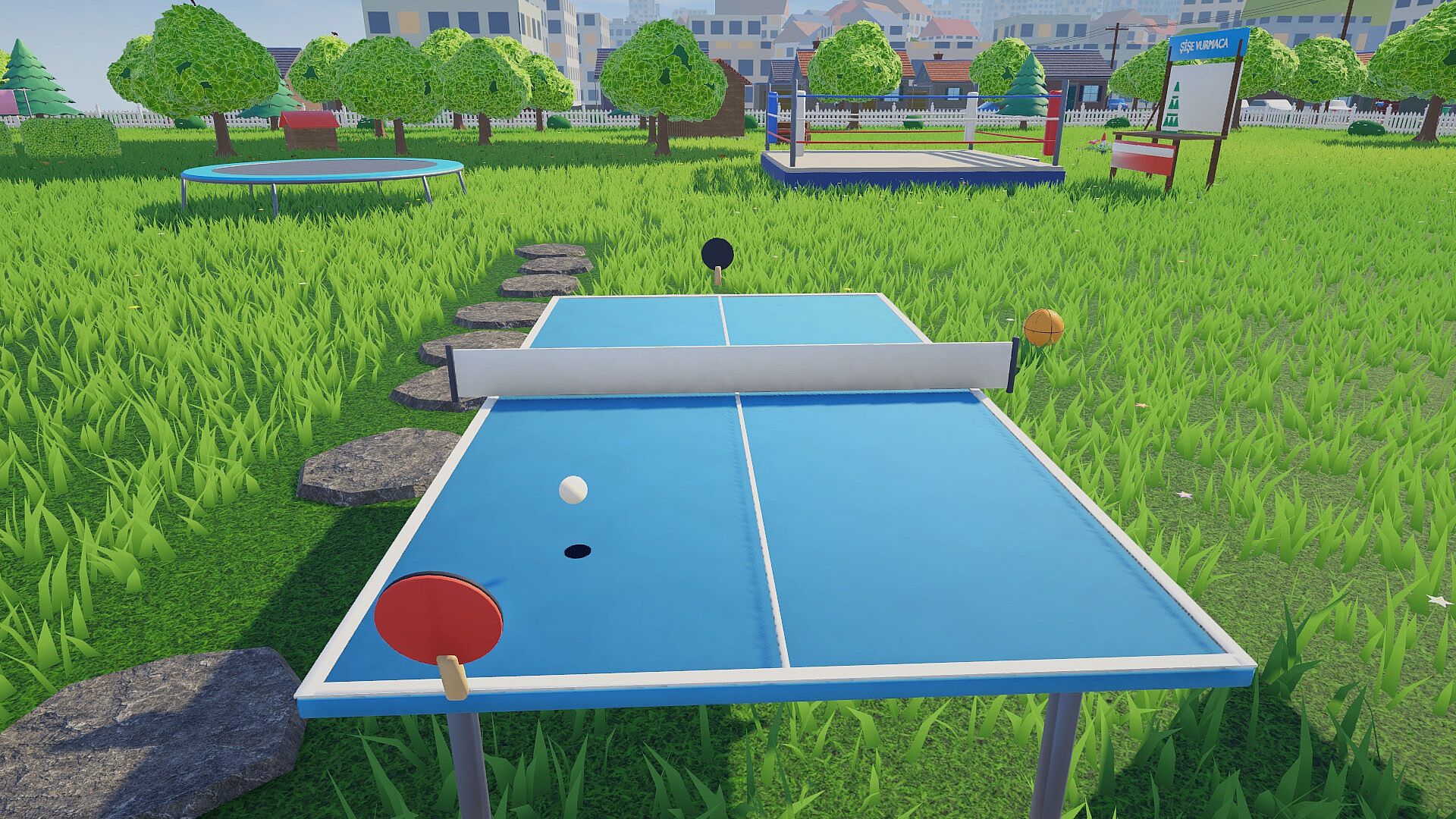
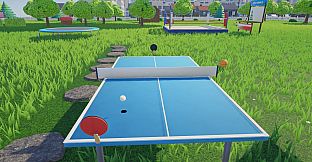
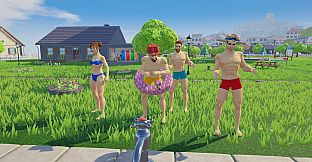
Freeform activities enhance both modes. An emote wheel, boxing gloves with a dedicated ring, chess, ping-pong, basketball, and a backyard casino provide opportunities to goof around between tasks. Cosmetic unlocks include outfits, hats, glasses, and pool floaties for character customization.
Progression and Automation
Tool progression forms the backbone of advancement. Early manual methods give way to industrial-scale systems that handle leaf removal, water transport, and chemical treatment automatically. Players balance active management with expansion, deciding when to invest in new equipment or visitor amenities to accelerate earnings and pool completion.
Shared progression in co-op encourages teamwork on large-scale projects while allowing individual customization. The relaxing pace suits players who enjoy methodical building and incremental gains within a walkable world.
Is It Worth Playing?
The Pool Problem appeals to fans of casual simulation and incremental games who appreciate hands-on first-person interaction rather than abstract menus. Its blend of cleaning, filling, automation, and light social elements creates a satisfying loop that rewards steady effort. Co-op adds replayability for groups seeking relaxed shared sessions with optional distractions like mini-games and customization.
Players who enjoy physical movement, gradual world changes, and low-pressure progression will find the experience engaging. Those seeking high-intensity action or complex narratives may prefer other titles, but the game delivers a focused, original take on pool management that stands on its own merits.