




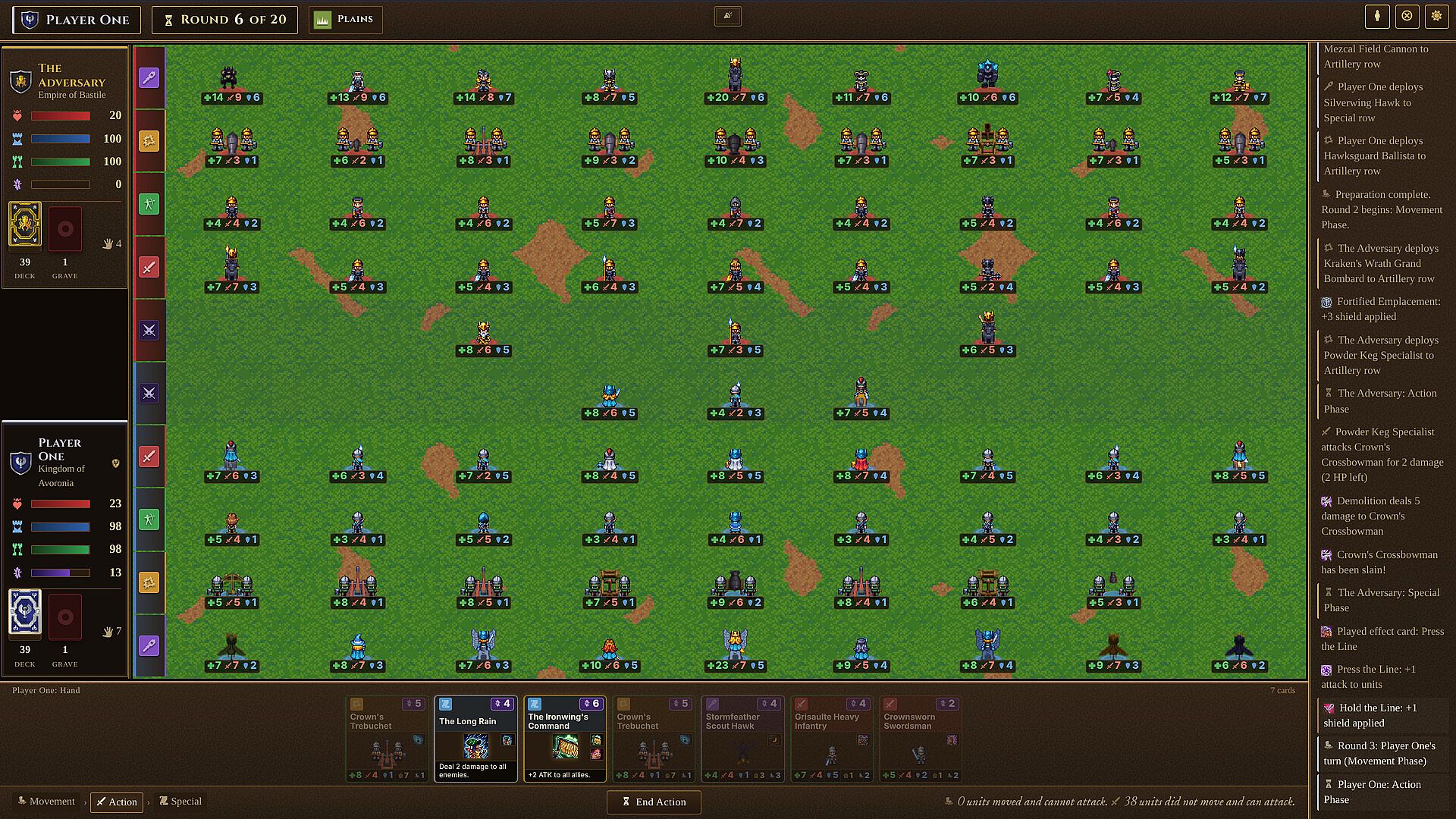
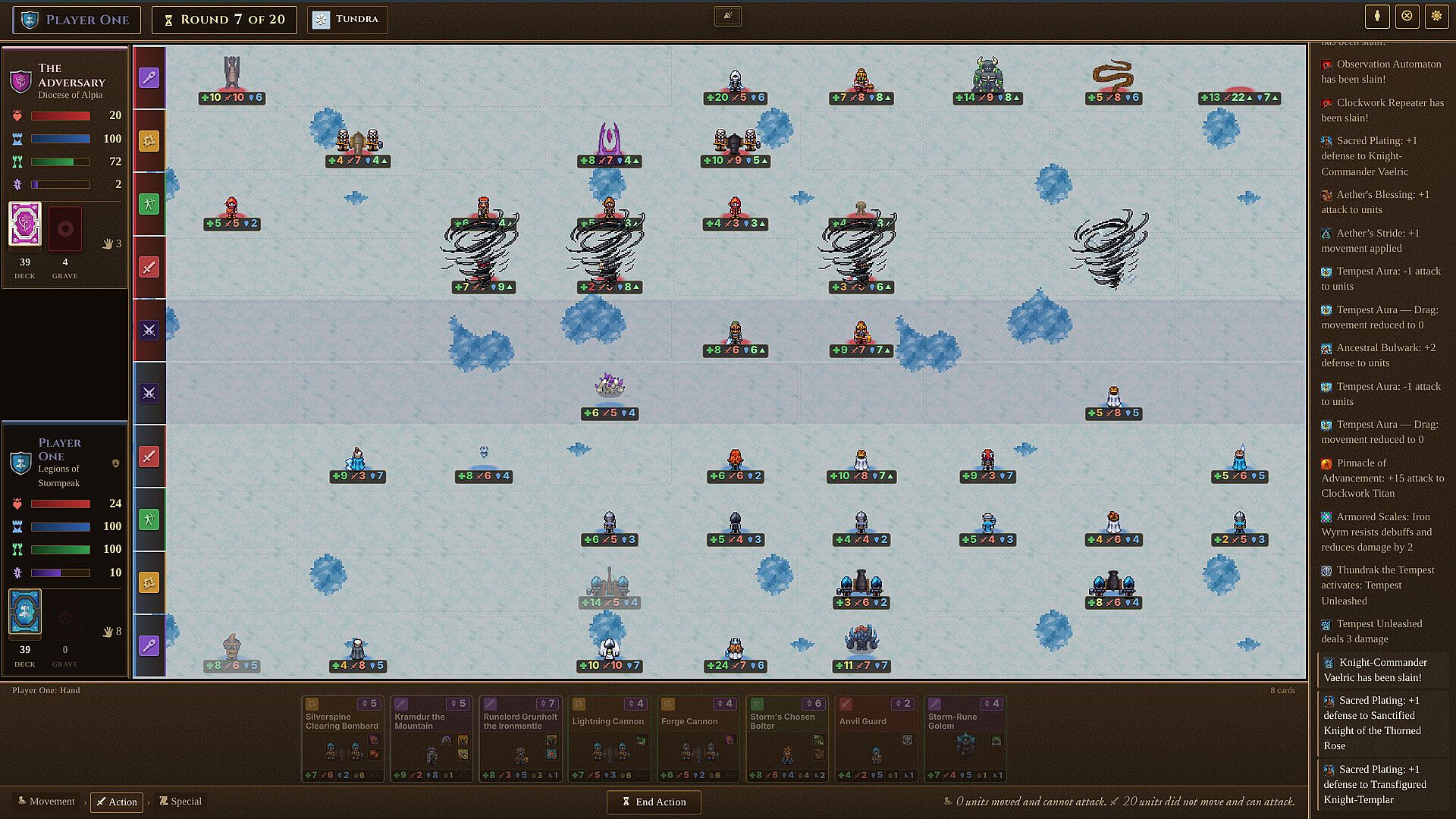
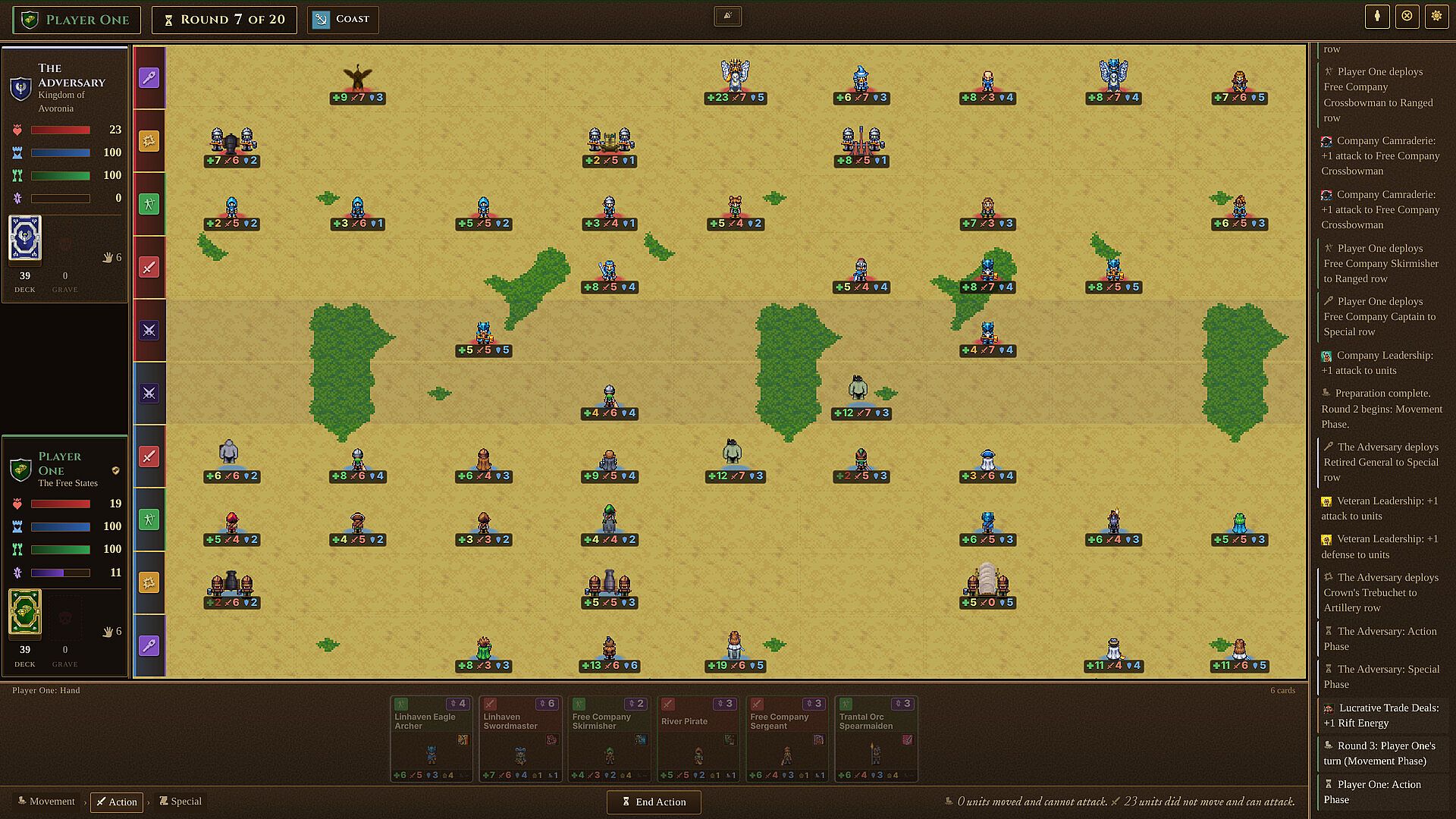
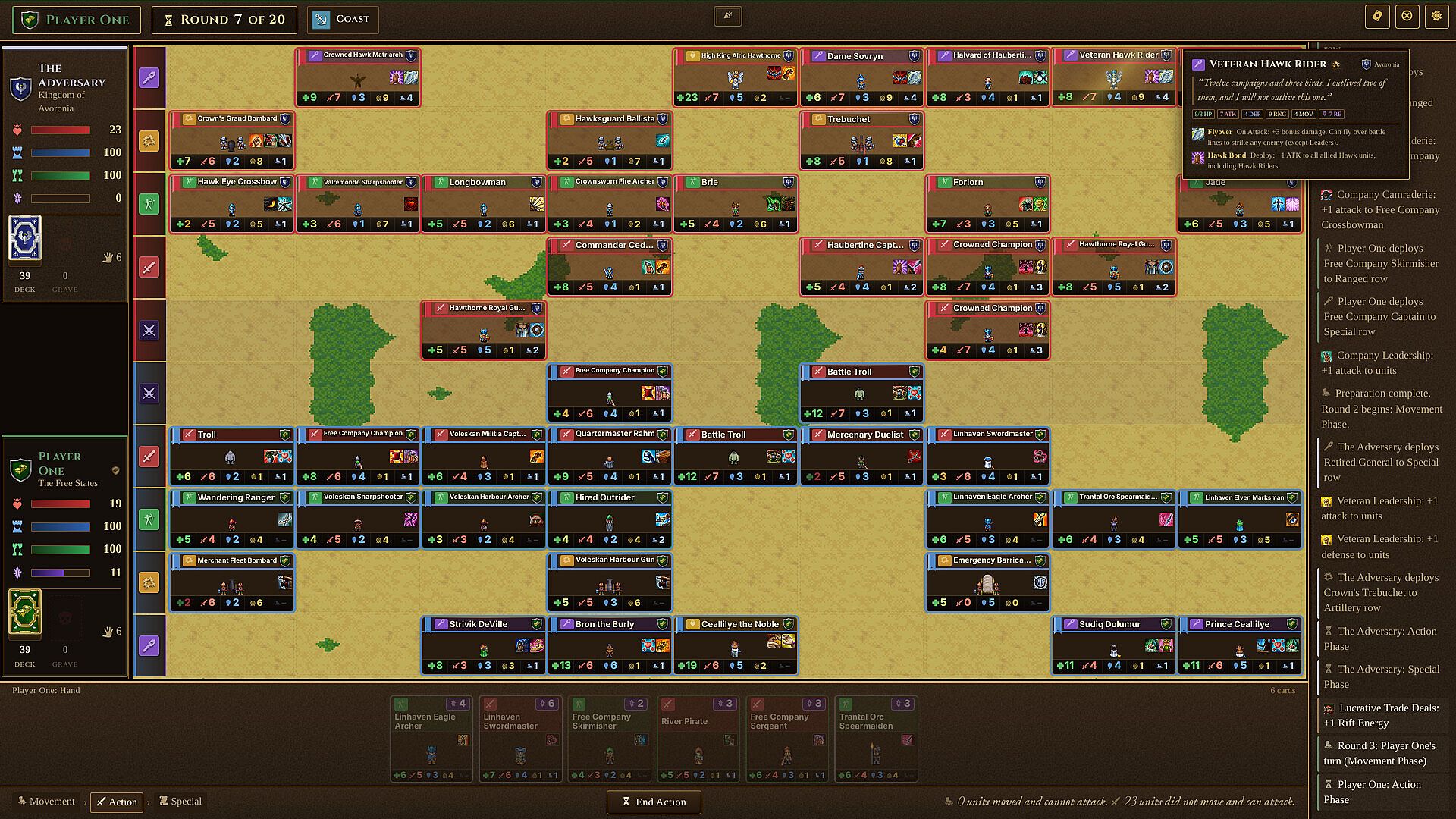
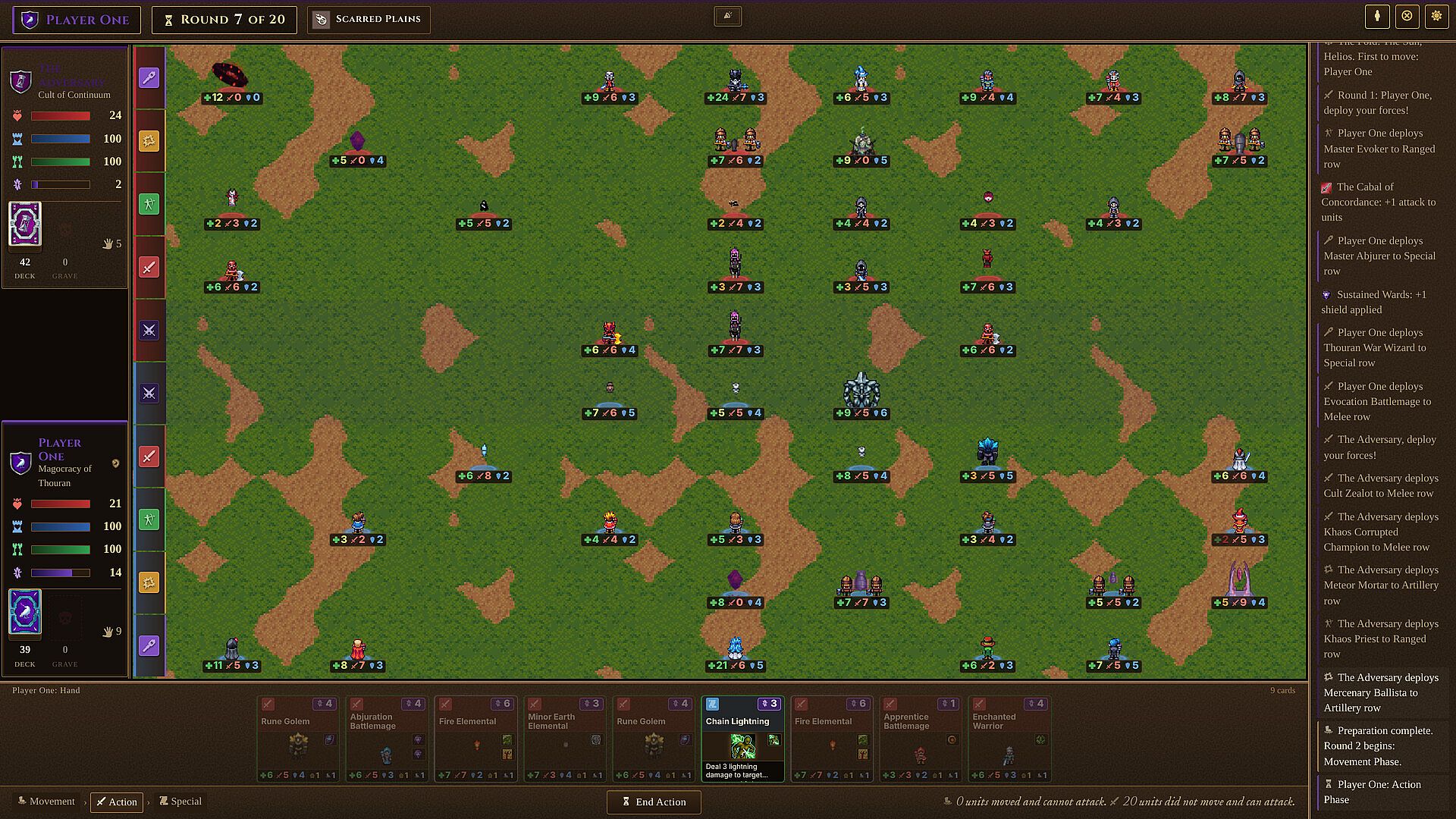
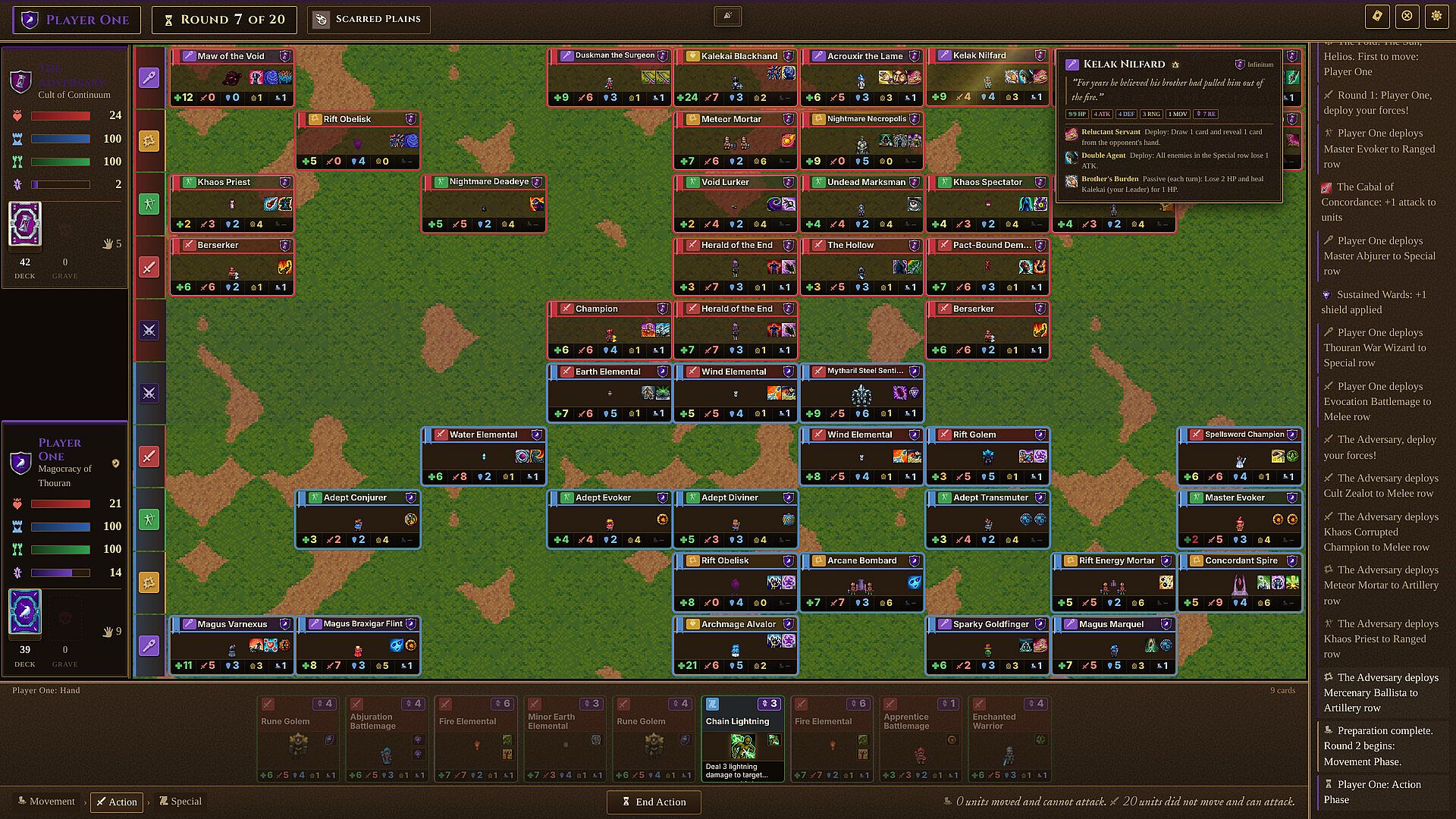
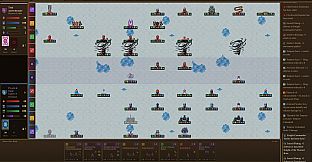
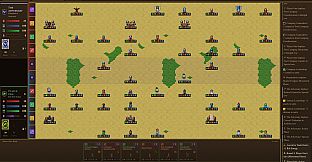
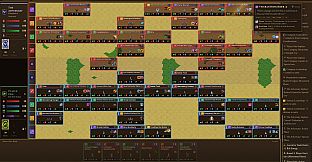
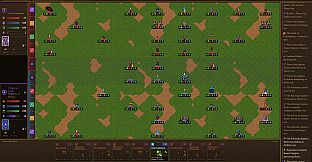
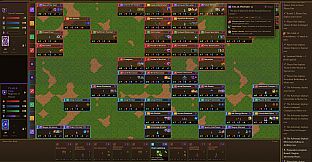
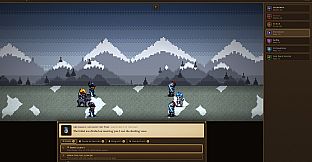
The Lords' Game is a turn-based fantasy card game that blends chess-like positioning with the tactical layers of large-scale warfare. Set in the continent of Tolria on the edge of open conflict, players select one of nine factions, appoint a lord, and assemble an army from a pool of one thousand cards. The experience centers on deck construction, board control, and resource management across mirrored five-row battlefields that include special, artillery, ranged, melee, and battlefield zones.
Gameplay
Each match unfolds in three distinct phases per turn: movement for marching and deployment, action for strikes, and special for spells and abilities. Rift Energy limits how much a player can commit each round, forcing choices between advancing units and preserving their attack potential. A unit that moves forgoes its strike that turn, which rewards careful planning over aggressive rushes. Three simultaneous win conditions keep pressure high: reduce the enemy leader's health to zero, eliminate the opposing army entirely, or break their morale to force a rout. Ten distinct battlefields alter unit movement and engagement rules, from frozen tundra to scarred plains and marshland.
Deck building draws from faction-specific and neutral cards that cover melee infantry, cavalry, artillery, heroes, creatures, spells, and effects. Nine factions deliver sharply different approaches rooted in their histories and identities, such as disciplined northern cavalry supported by court mages, southern legions rebuilt around rift machinery, tundra berserkers paired with bone-and-blood sages, or clockwork titans and martyr-cultists that reject magic in favor of iron. Every faction maintains its own card pool and thematic mechanics, ensuring no two decks feel interchangeable even when mixing neutral options.
Game Modes
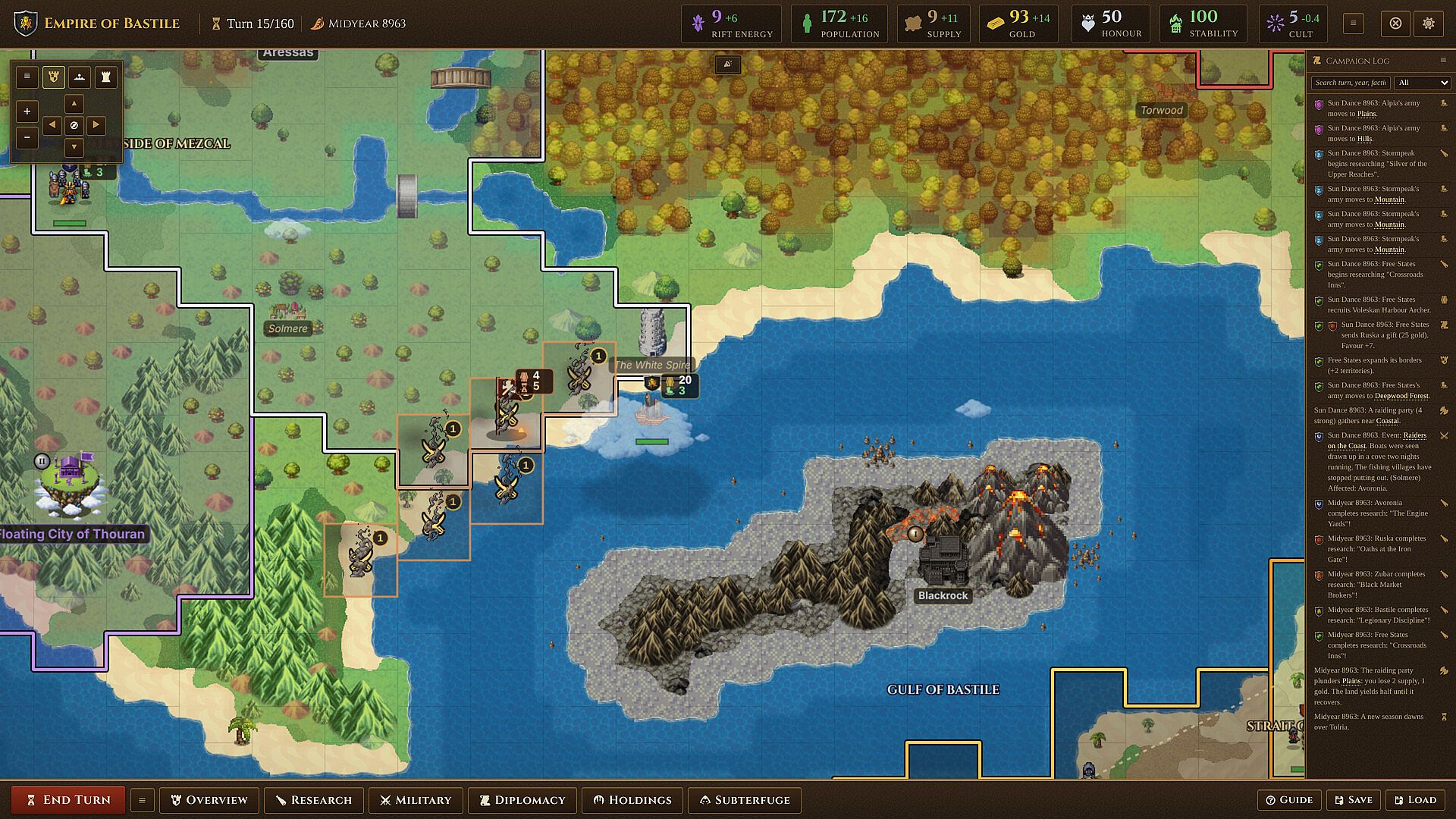
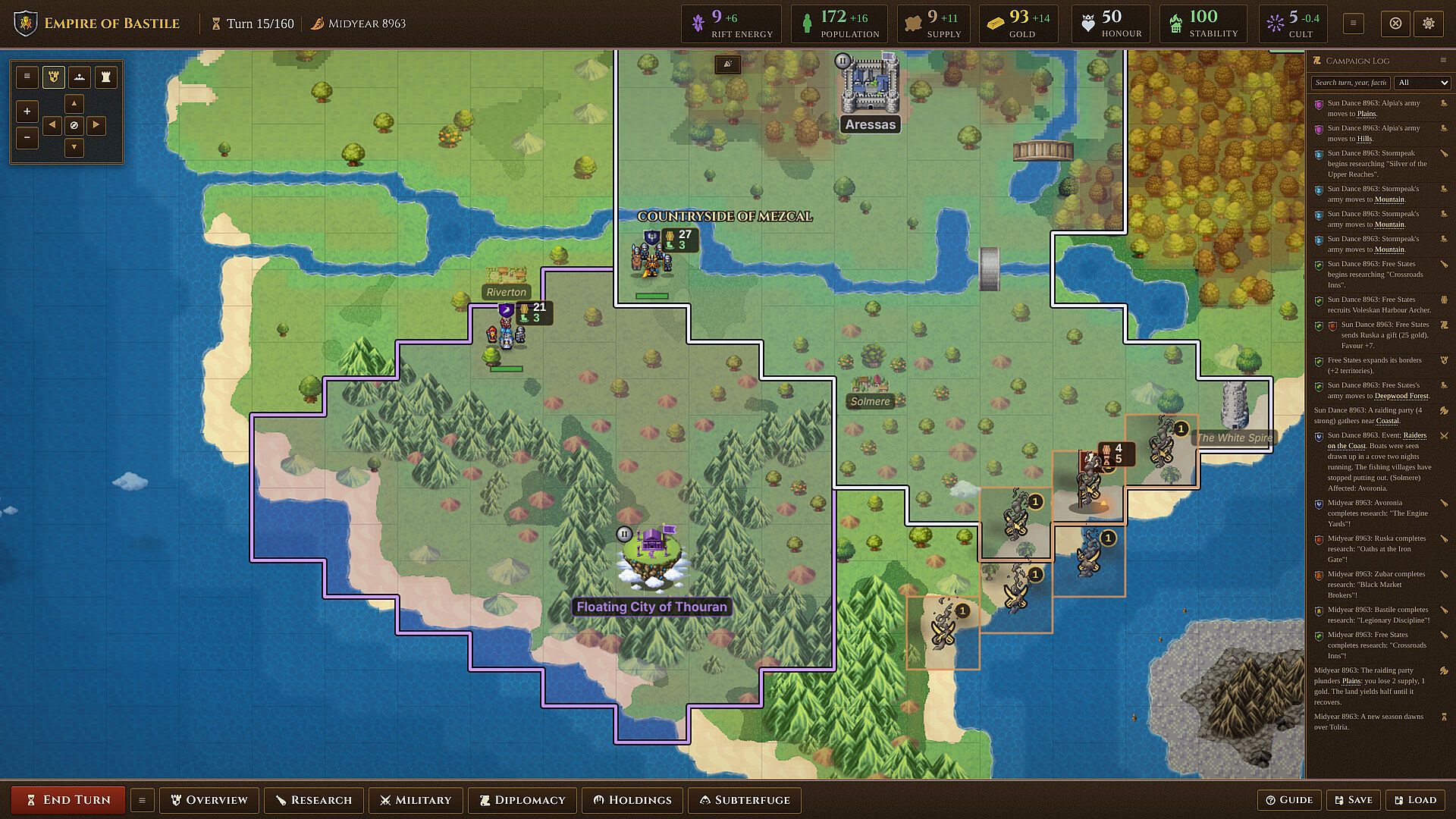
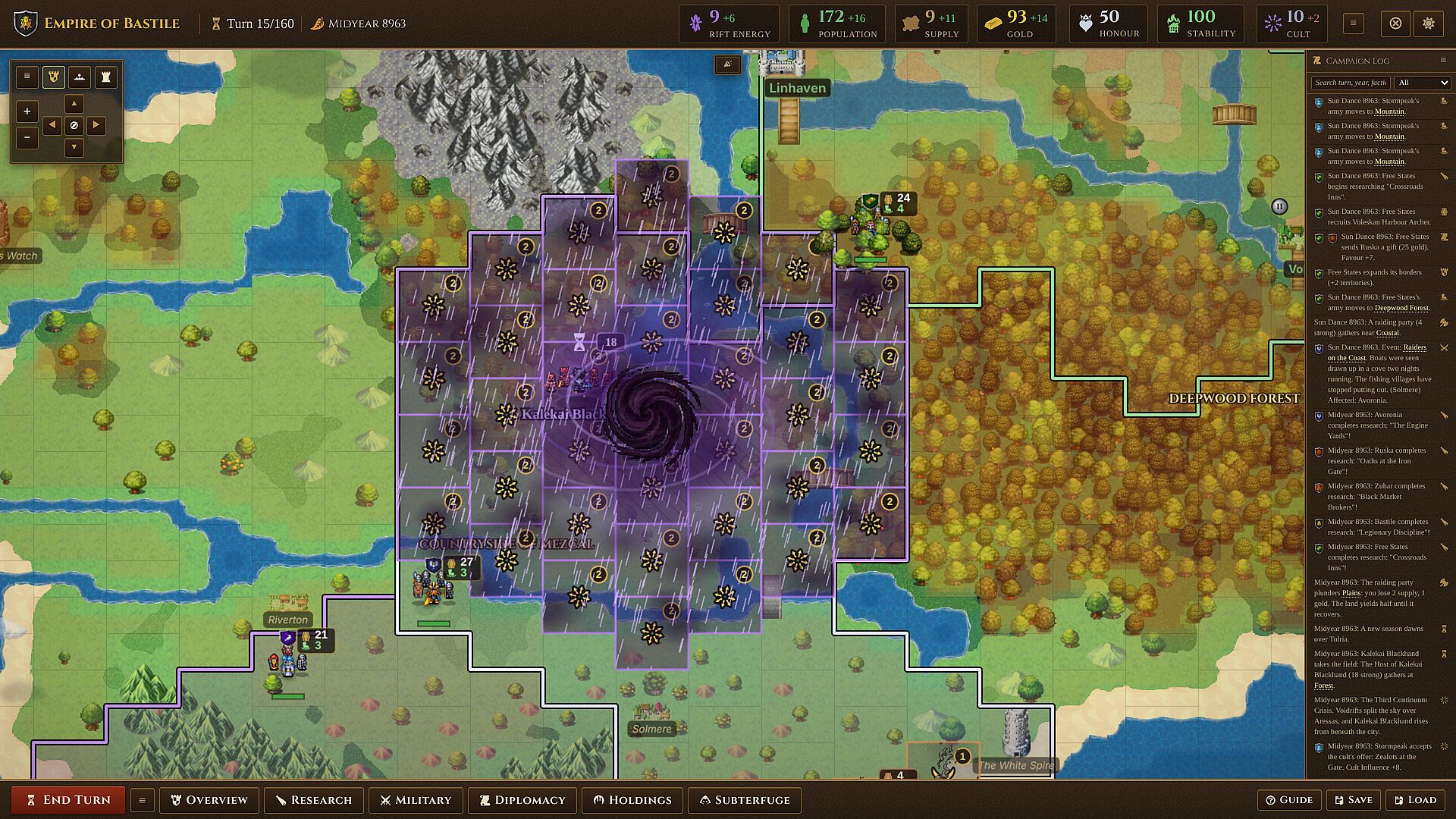
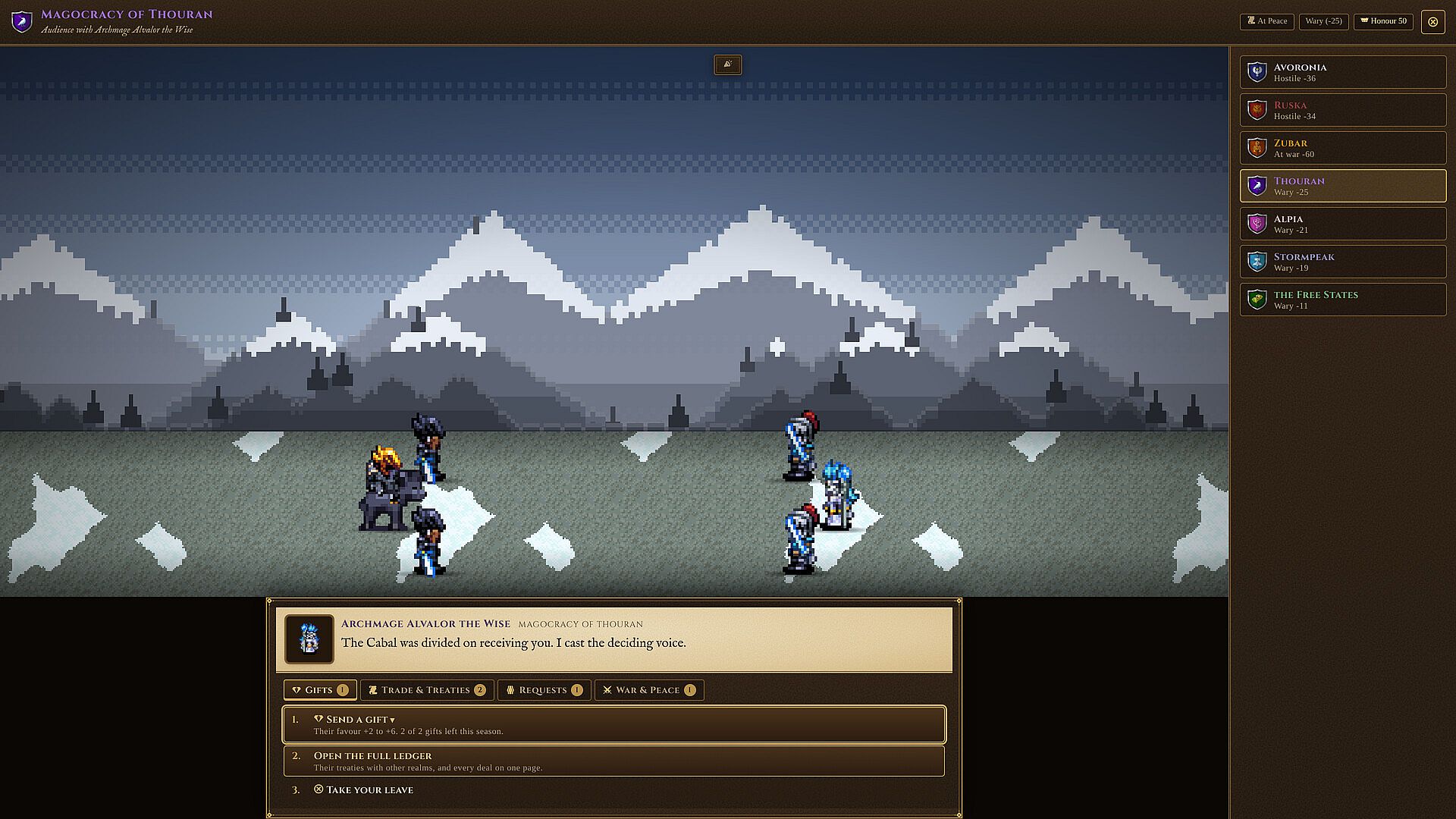
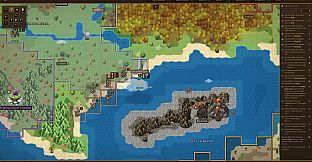
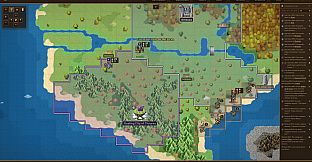
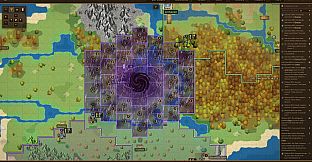
Free play supports matches against AI opponents, hotseat sessions with friends on the same screen, or online battles against players worldwide. Campaign play expands the scope into a turn-based grand strategy layer on a hex-grid map of Tolria. Players manage gold, supply, population, and Rift Energy while expanding territory, researching faction upgrades, recruiting units, and conducting diplomacy that includes trade, pacts, demands for submission, or declarations of war. Honour tracks influence court interactions, and agents, duels, and border hunts add further layers. Battles resolve using the army raised during the campaign phase.
Two editions shape the entry point and depth. The Finite Edition limits players to four starting factions, twenty-four-card decks, and a ten-round cap for shorter sessions that emphasize core tactics. The Infinite Edition unlocks all nine factions, the full thousand-card pool, fifty-two-card decks, and matches that run to twenty rounds or continue without a limit. Story mode campaigns exist in both editions, with four realms available in Finite and eight in Infinite, the latter incorporating a hidden cult that advances a larger narrative arc across the continent.
Factions and Strategy
Each faction enforces a unique identity through its card pool and play patterns. Northern forces emphasize heavy cavalry, disciplined infantry, and arcane support from a silver tower. Southern legions rely on rebuilt machinery and naval elements under an immortal ruler. Tundra warriors field berserkers, oath-bound thanes, and primal beasts alongside ancestral magic. A war-torn duchy leans on spies, assassins, and syndicates that operate through intrigue. A tech-focused theocracy deploys clockwork constructs and fanatical infantry while banning magic. An airborne arcane city fields battlemages and summoned constructs. Merchant interests hire diverse mercenaries and specialists. Storm dwarves combine shield walls, superior artillery, and rune-driven golems. A cult faction summons eldritch horrors and distorts reality with forbidden magic. These differences extend to campaign research trees and unit synergies, rewarding players who master one faction's rhythm before exploring others.
Is It Worth Playing?
The game suits players who enjoy deliberate strategy sessions that reward foresight in positioning, resource timing, and deck synergy rather than fast reflexes. Local hotseat and online multiplayer options, along with AI opponents, accommodate both solitary campaigns and group play. The Finite Edition provides an accessible on-ramp for learning the three-phase turns and multiple win conditions without overwhelming options, while the Infinite Edition delivers the complete card pool and longer strategic arcs for those ready for greater complexity. With an original soundtrack tied to each faction and consistent art direction across the thousand cards, the presentation supports repeated play. As the title enters its beta period ahead of full release, the core systems and faction variety already demonstrate clear depth for fans of turn-based card strategy and grand strategy campaigns.