




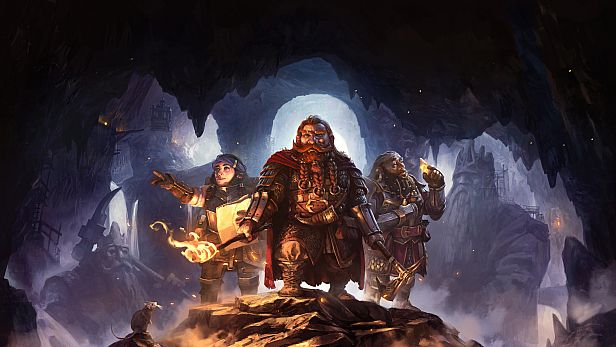








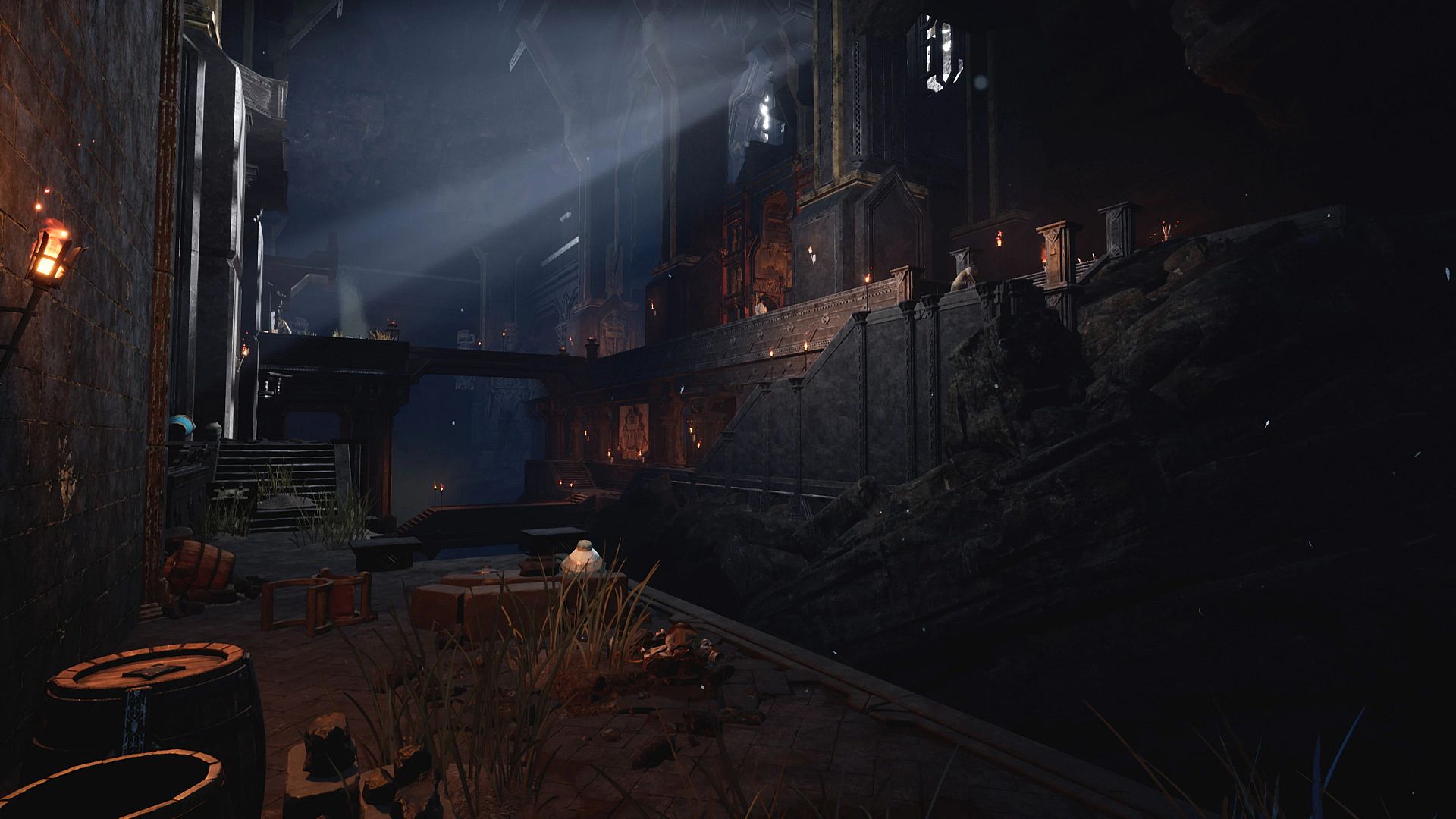
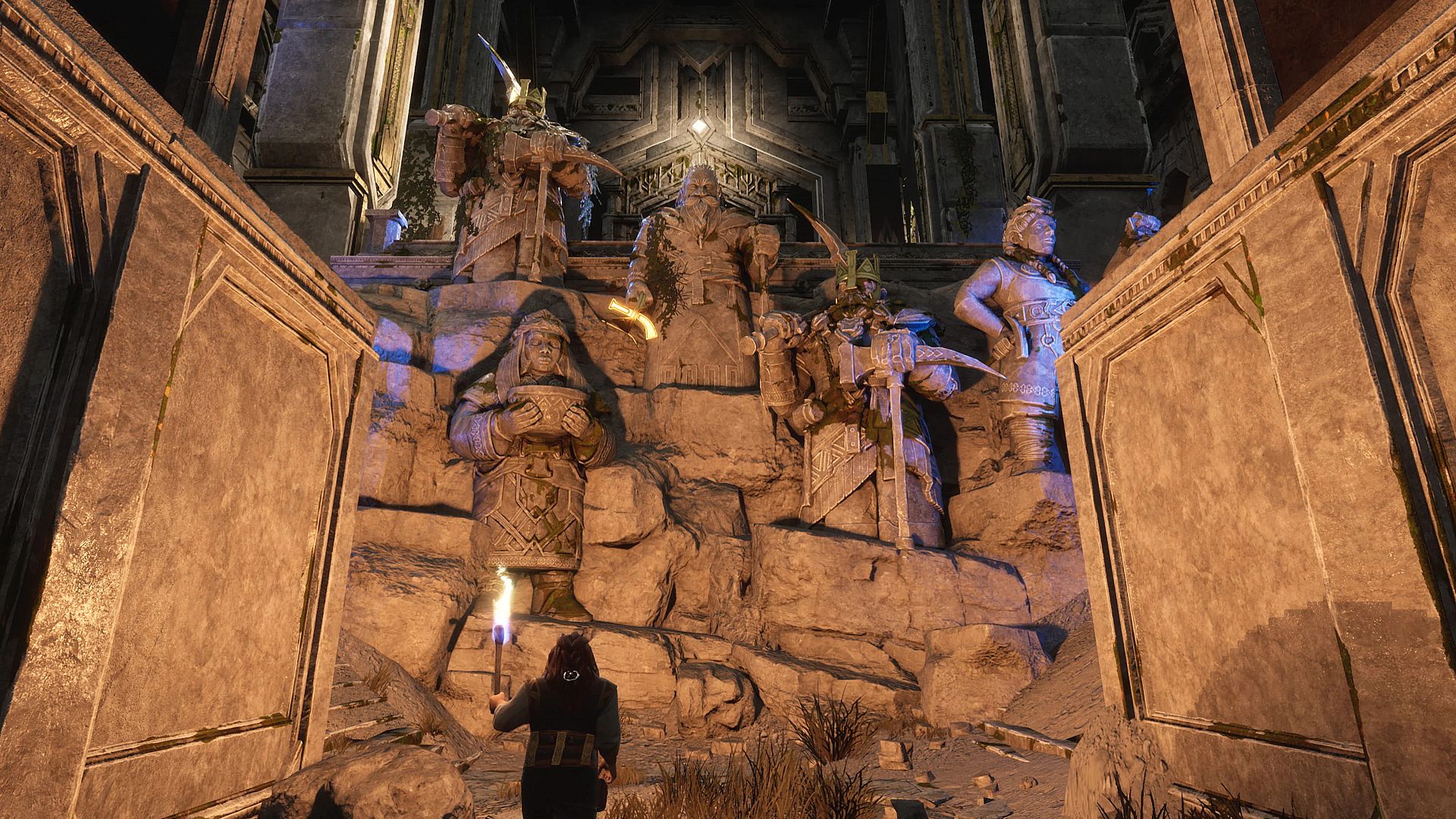
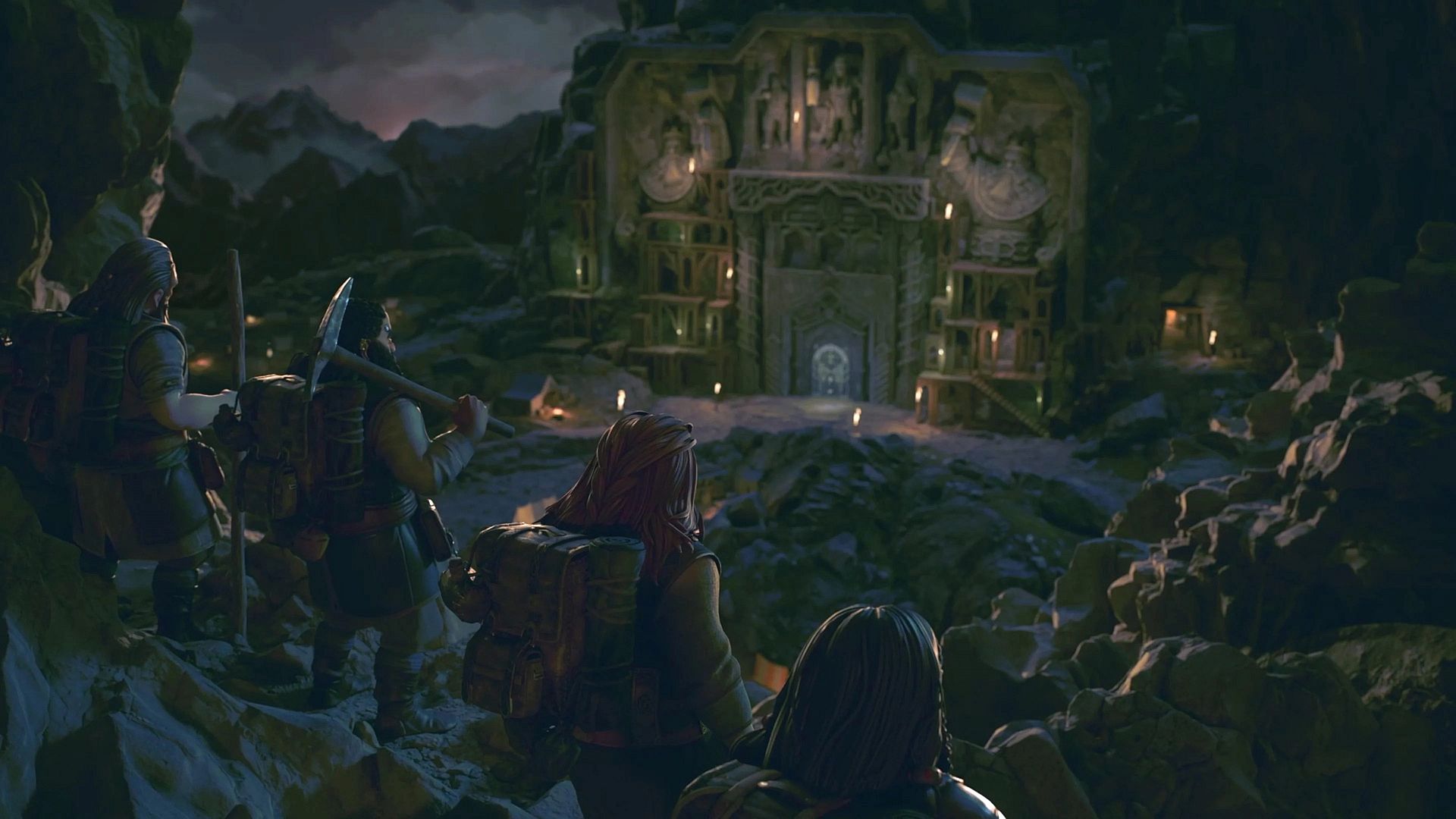
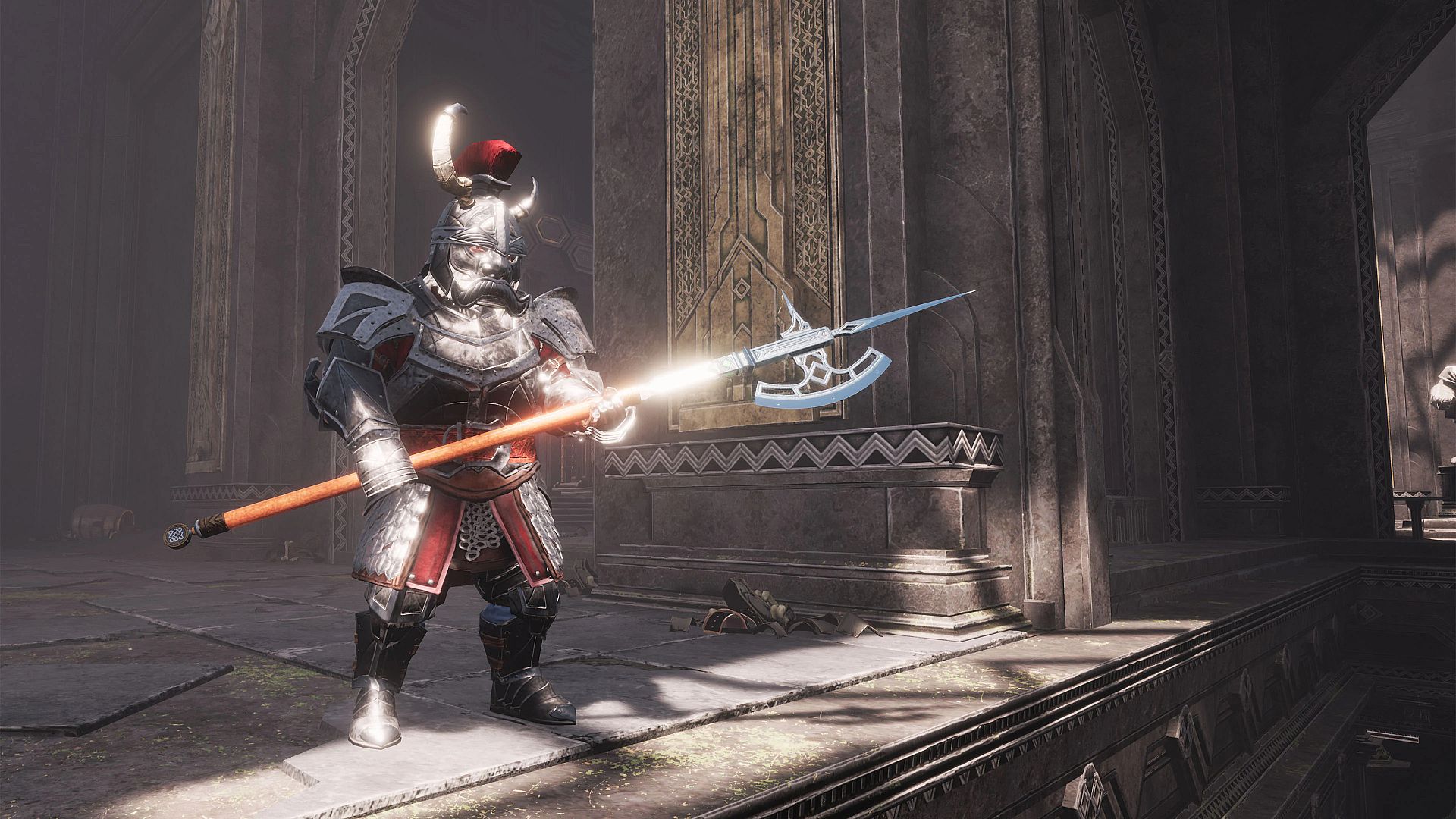
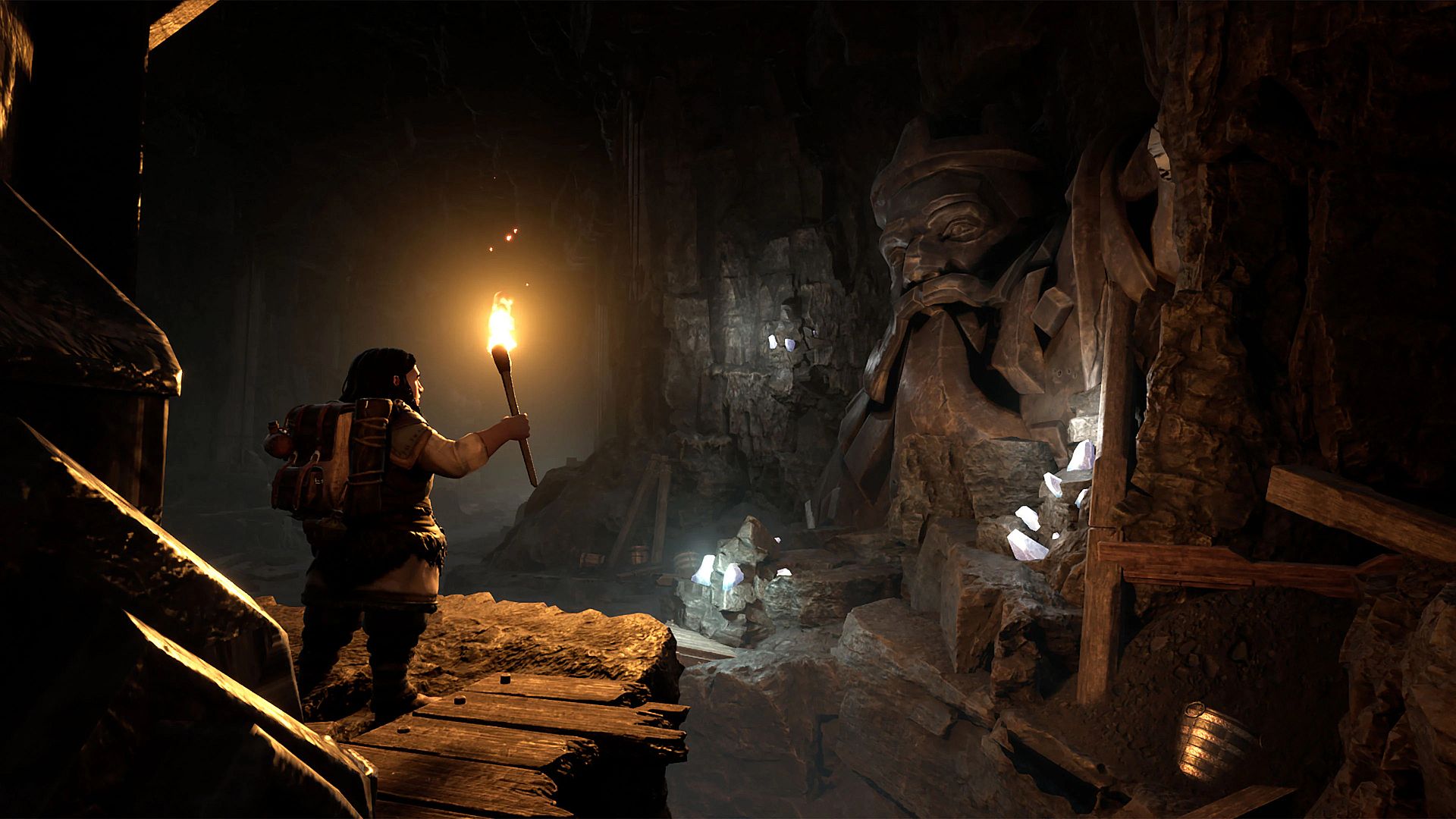
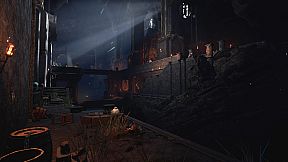
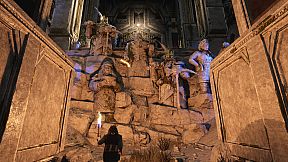
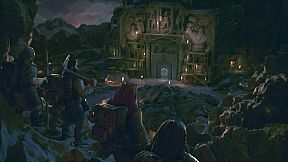
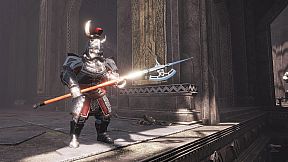
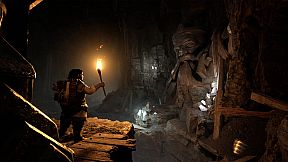
The Lord of the Rings: Return to Moria is a survival crafting adventure game set in the Fourth Age of Middle-earth. Players lead a company of Dwarves summoned by Gimli Lockbearer to reclaim the lost kingdom of Khazad-dûm beneath the Misty Mountains. The experience centers on mining resources, managing survival needs, crafting equipment, constructing bases, and pushing deeper into procedurally generated mine networks while fending off threats from Orcs and other dangers hidden in the dark.
Gameplay
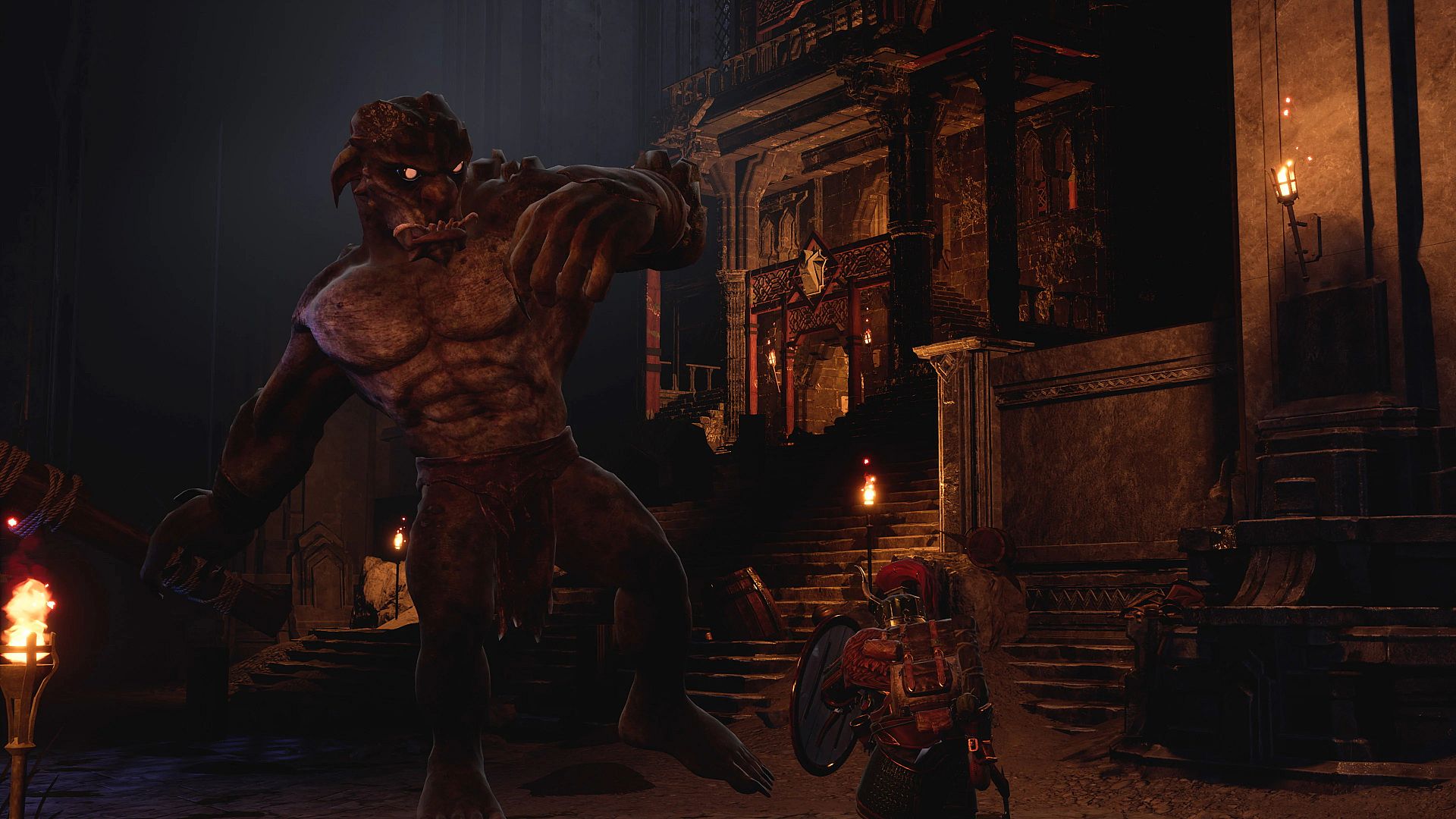
Core loops revolve around resource extraction and careful management. Mining ore such as iron, gold, quartz, and the rare Mithril yields materials for ingots and upgrades, yet the noise draws hostile attention that can trigger combat encounters. Players must balance hunger, rest, temperature, and sound levels to avoid exhaustion or unwanted fights. Combat involves melee strikes, blocks, charged attacks, and ranged options with bows against groups of Orcs and larger threats.
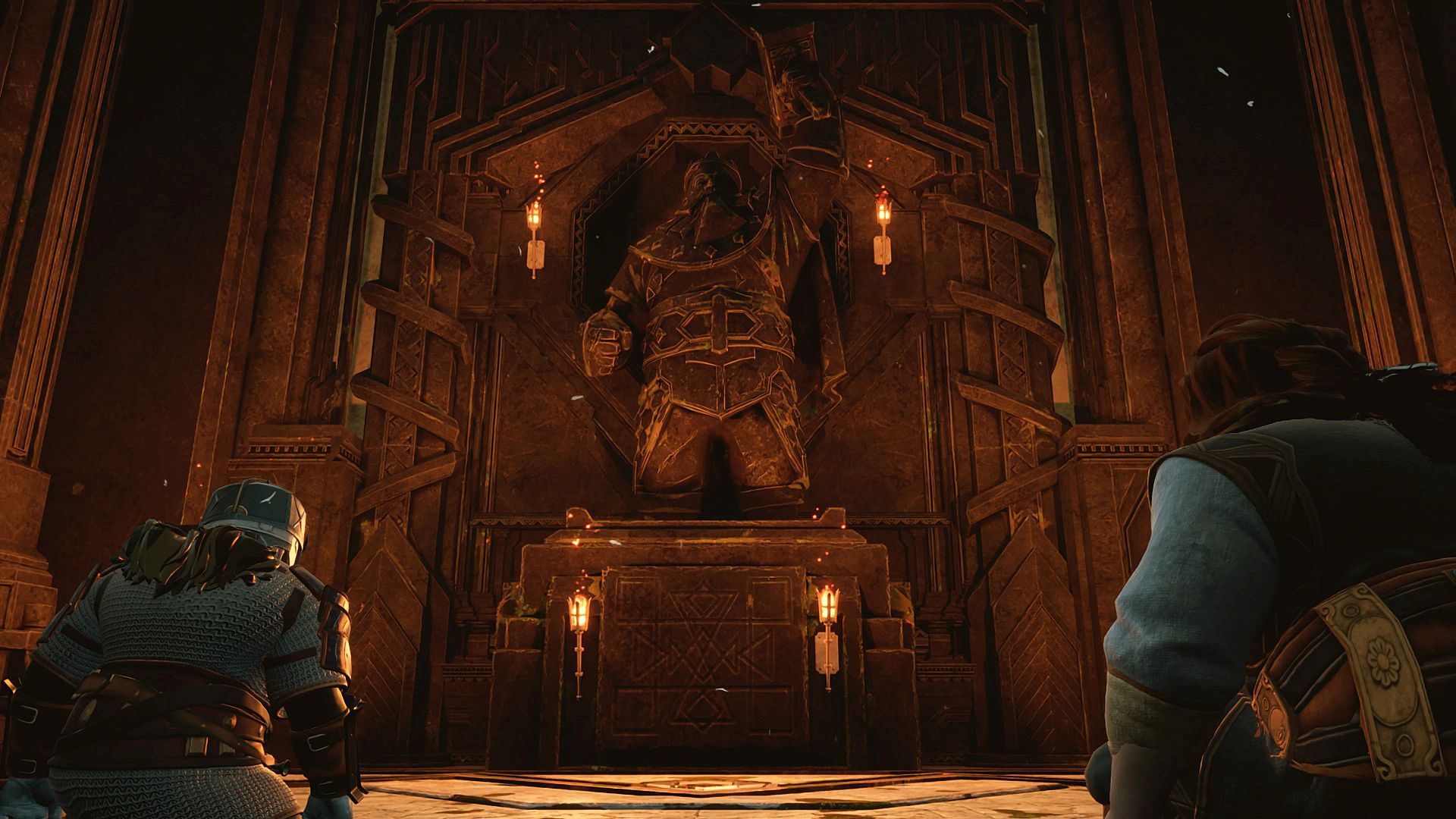
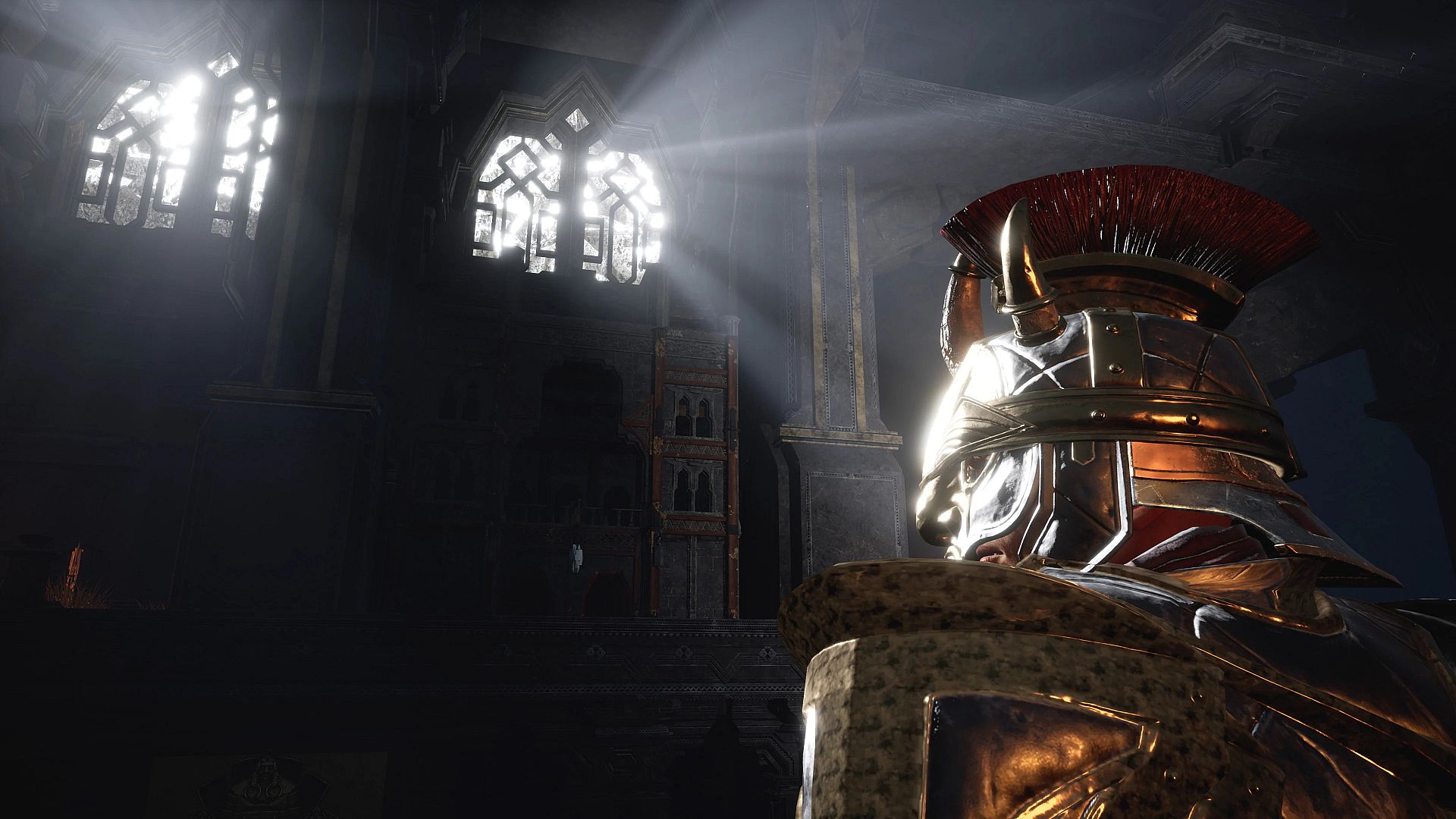
Base building provides safe havens. Players clear areas, construct new structures, or expand existing Dwarven architecture using gathered resources. Forges and crafting stations allow creation of tools, weapons, armor, and machines, with options to repair, enchant, or upgrade gear. Ancient magic artifacts appear during exploration, including glowing swords that detect Orcs nearby, maps marking Mithril deposits, recipe books, and amulets that enhance strength or wisdom. Character customization through the Dwarf builder lets players shape their expedition leader before entering the mines, with further personalization through crafted equipment.
Game Modes
Two primary modes shape the experience. Campaign mode follows a structured narrative arc that guides players through story beats, landmark restoration, and progressive challenges tied to reclaiming Moria. Sandbox mode offers a more open-ended approach with greater freedom to shape worlds, experiment with builds, and tackle repeatable cooperative events in randomized dungeons. Both modes support solo play or online sessions, and procedural generation ensures varied layouts and resource placements across runs.
Recent updates introduced quality-of-life refinements such as improved mapping with layered isometric views and expanded building options. The Durin's Folk expansion added narrative chapters, NPC recruitment for settlement roles like blacksmiths or guards, and new cooperative expeditions that extend end-game activities.
Exploration and Survival Systems
Procedural environments span multiple legendary mountains within Moria, filled with hidden chambers, resource veins, and remnants of ancient Dwarven industry. Players excavate landmarks, reactivate forges, and uncover the source of a lingering Shadow while restoring the kingdom's former glory. Noise management remains central, as loud activity risks awakening deeper threats that interrupt progress.
Survival demands attention to inventory and environmental factors. Hunting, gathering, and resource conservation sustain expeditions, while temperature regulation and sleep cycles prevent debuffs during long delves. These systems integrate with crafting to create a steady rhythm of descent, collection, fortification, and advancement.
Multiplayer and Platform Details
Cooperative play supports up to eight participants with cross-play across available platforms. Sessions allow friends to join ongoing expeditions, share bases, and coordinate large-scale building or combat efforts. The PS5 version includes physical and digital releases along with ongoing patches that addressed early stability concerns and added features like refined save handling.
Is It Worth Playing?
Post-launch updates have strengthened the title through extensive patches, new modes, and the Durin's Folk expansion that delivers additional story content and mechanics. Player feedback highlights the atmospheric setting, satisfying progression from basic tools to advanced Dwarven engineering, and strong co-op sessions as standout elements. Early technical issues have been mitigated, making the current version more stable on PS5.
The game suits players who enjoy survival crafting loops wrapped in Tolkien lore, particularly those interested in base building and cooperative exploration rather than fast-paced action. Campaign mode provides a guided entry point, while Sandbox mode rewards longer-term creativity. Availability on PS5 with cross-play support broadens options for group play. Those drawn to methodical resource management and Dwarven reclamation stories will find consistent engagement across multiple sessions.


