







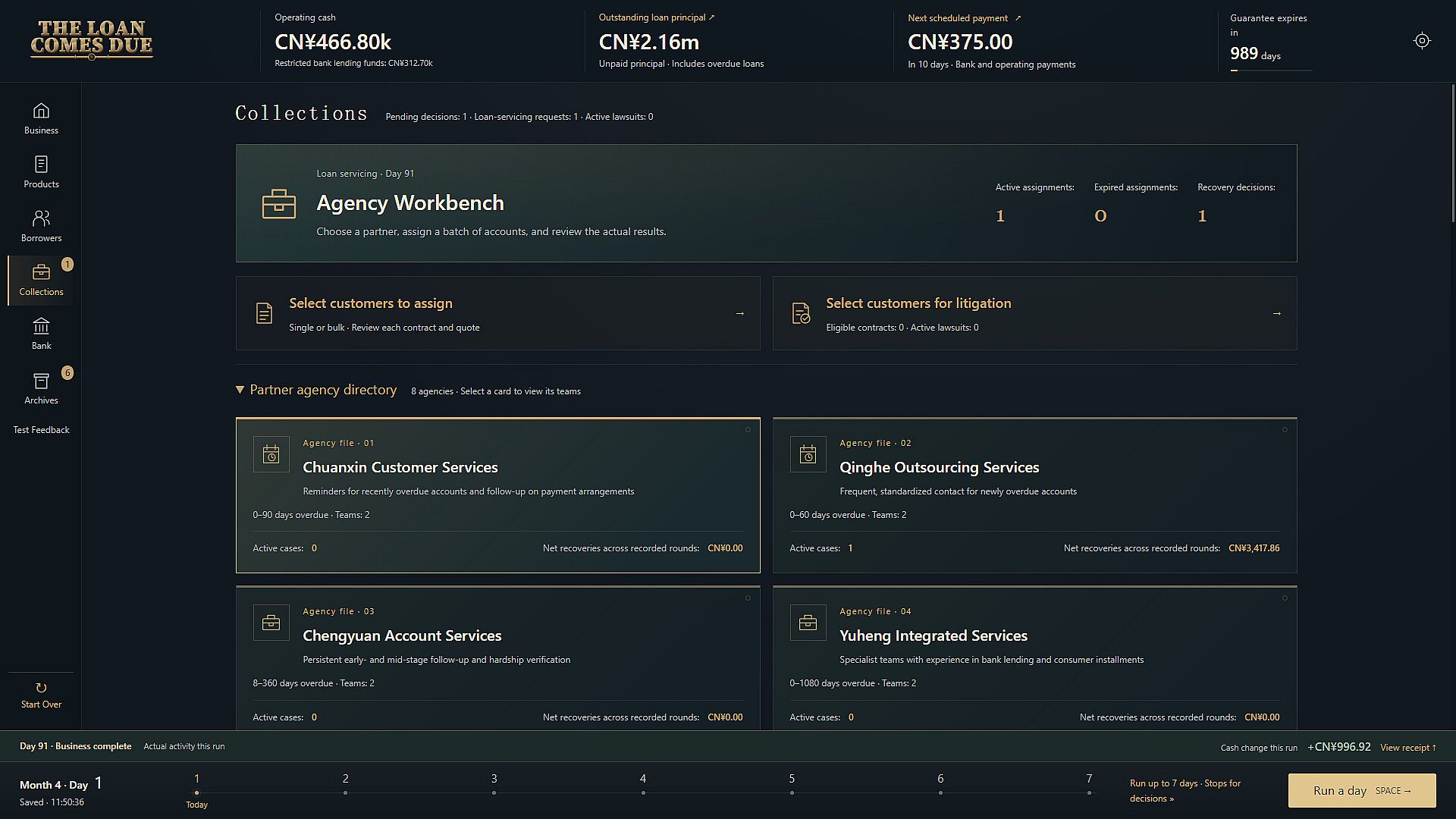







The Loan Comes Due is a strategy, indie, and simulation game set on PC. Players inherit a struggling lending company and must manage its operations over a fixed 36-month period while handling incoming loans, repayments, and mounting financial pressures.
Gameplay
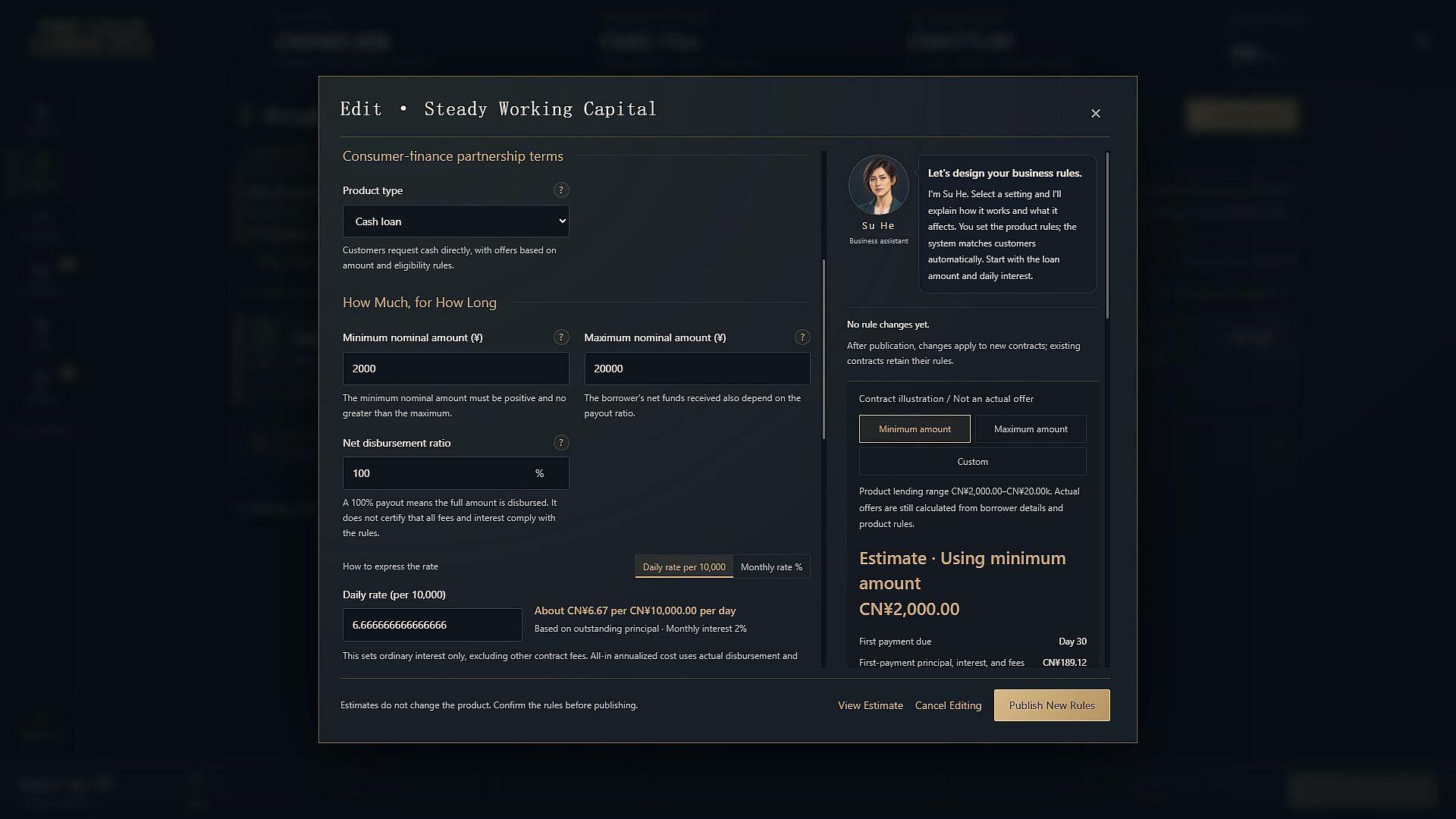
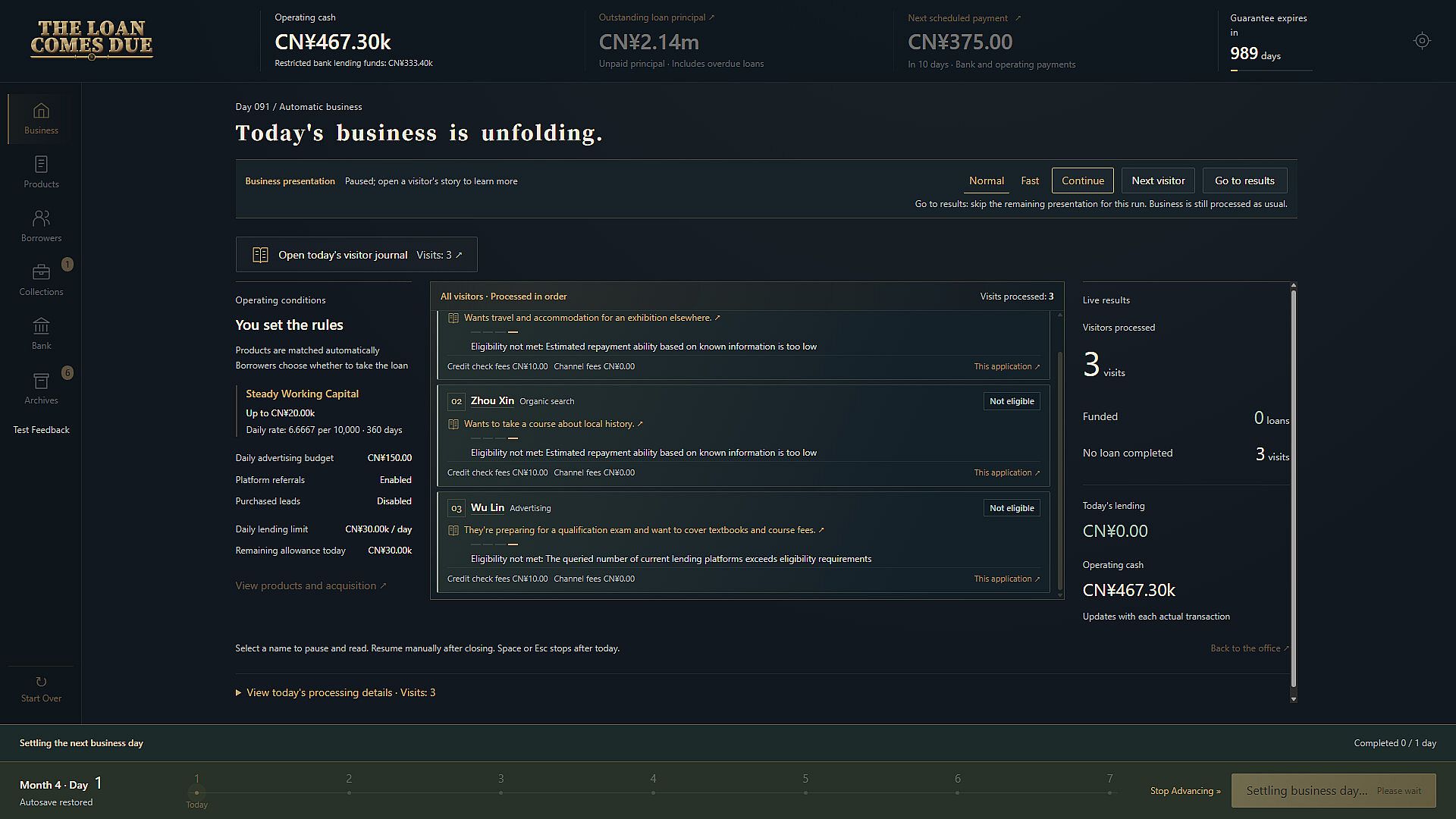
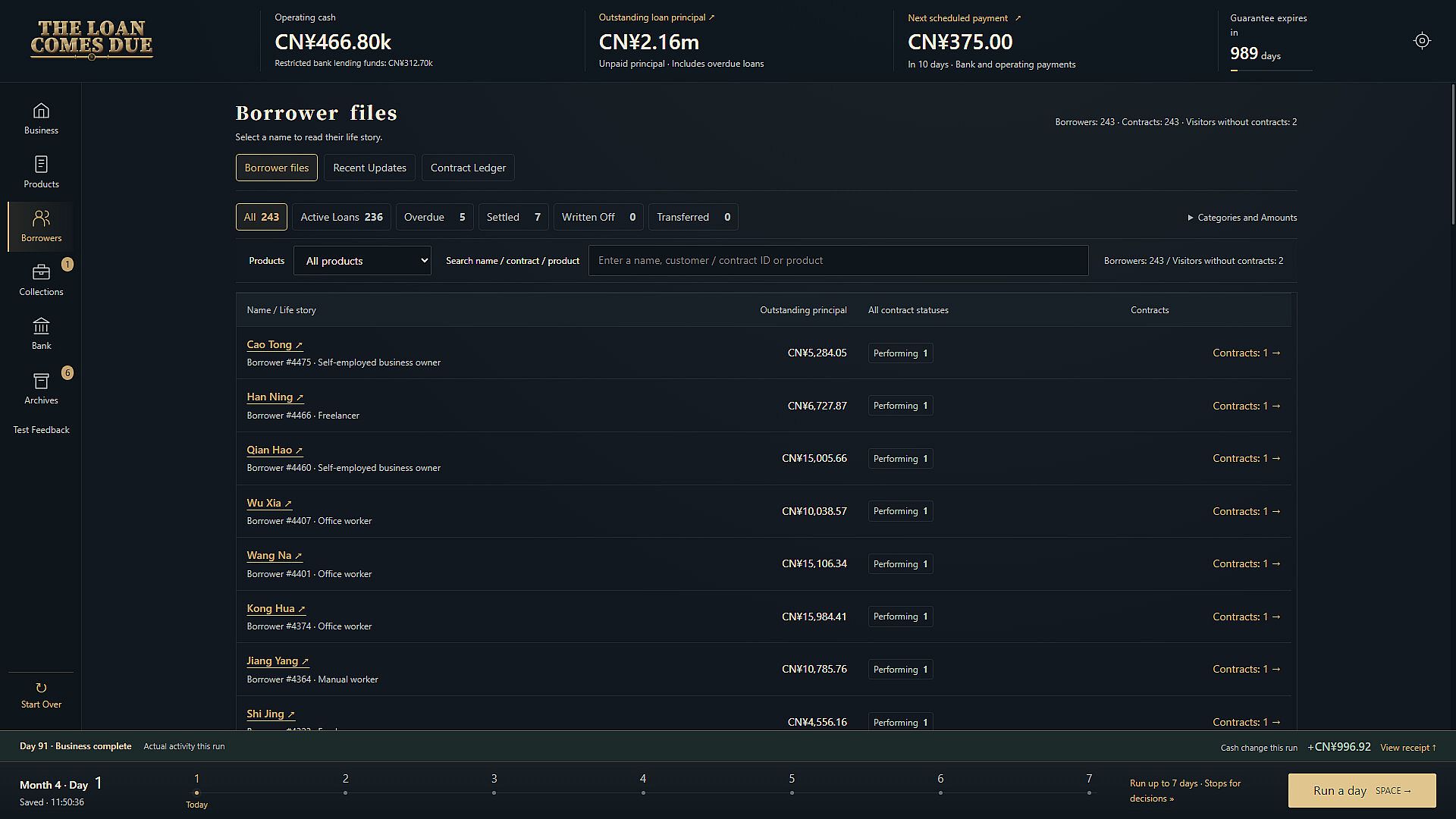
Core gameplay centers on running a small lending business from the perspective of the new owner. The player sets loan parameters including amount, interest rate, and repayment terms, then builds or modifies product templates to attract borrowers. Applications arrive based on those rules, with automatic screening that still leaves the final approval decision in the borrower's hands. Lowering qualification standards brings in more applicants but increases the risk of defaults, while higher rates can deter reliable payers. Each borrower has a detailed life story that reveals their financial history and reasons for seeking funds, such as home repairs or education costs. These details help inform lending choices without guaranteeing outcomes.
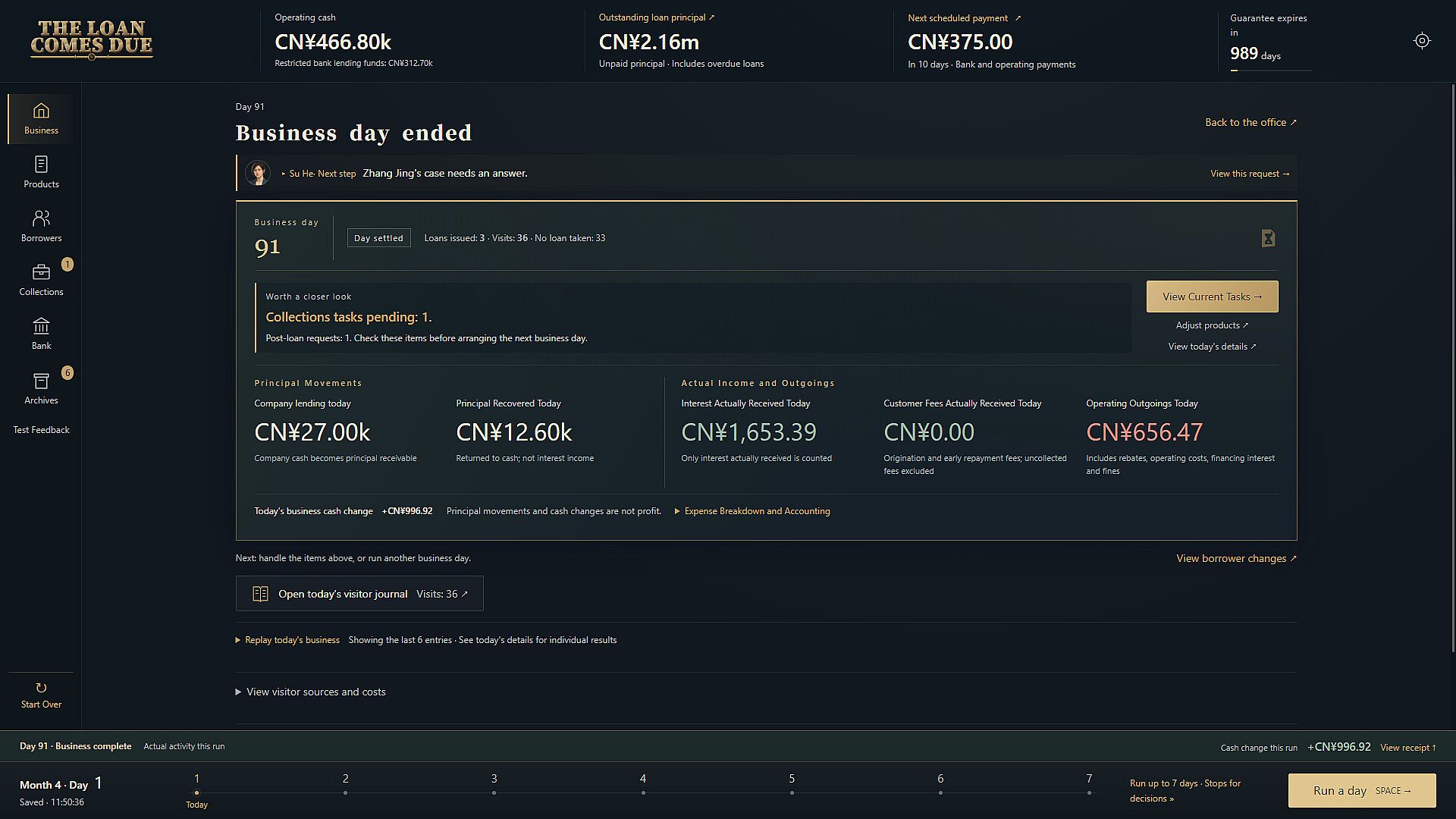
Once loans are issued, attention shifts to collections. Late payments require selecting appropriate agencies, negotiating fees, and deciding whether to pursue settlements, renew assignments, or escalate to legal action. Regulator complaints also arrive and demand direct responses. Cash flow management adds another layer, as the company faces its own deadlines for new lending, operating expenses, and bank loan repayments. Daily summaries and monthly reports track which products generate profit, helping decide whether to maintain reserves or reinvest funds. Every decision compounds across the 36 months, shaping the final financial ledger that measures survival and independence.
Game Modes
The experience remains single-player throughout, focused on one continuous management campaign. No separate multiplayer or competitive modes exist. Instead, the structure emphasizes iterative decision-making within the core lending and collection loop, with the ability to pause for review or accelerate time to observe results. Adjustments to lending criteria and collection strategies occur in real time as borrower behavior and cash positions evolve.
Key Mechanics and Systems
Lending products form the foundation, starting from two inherited templates that can be expanded or refined. Borrower screening combines automated filters with manual oversight, while life stories provide context for each application. Collection work involves matching debt age to agency types and evaluating settlement offers against ongoing recovery potential. Cash oversight tracks incoming payments against outgoing obligations, with reports highlighting product performance. The 36-month timeframe creates a clear end point where overall viability is assessed through net results after losses and costs.
Is It Worth Playing?
This title suits players who enjoy detailed management simulations and the consequences of policy choices in a financial setting. The single-player format delivers a self-contained campaign built around lending cycles, collections, and cash management without external distractions. Those drawn to strategy games that reward careful observation of patterns and willingness to adapt rules will find the systems engaging. The emphasis on individual borrower stories and long-term ledger outcomes adds depth for fans of simulation experiences centered on business survival and decision trade-offs. Availability is limited to PC, aligning with its focused design.