







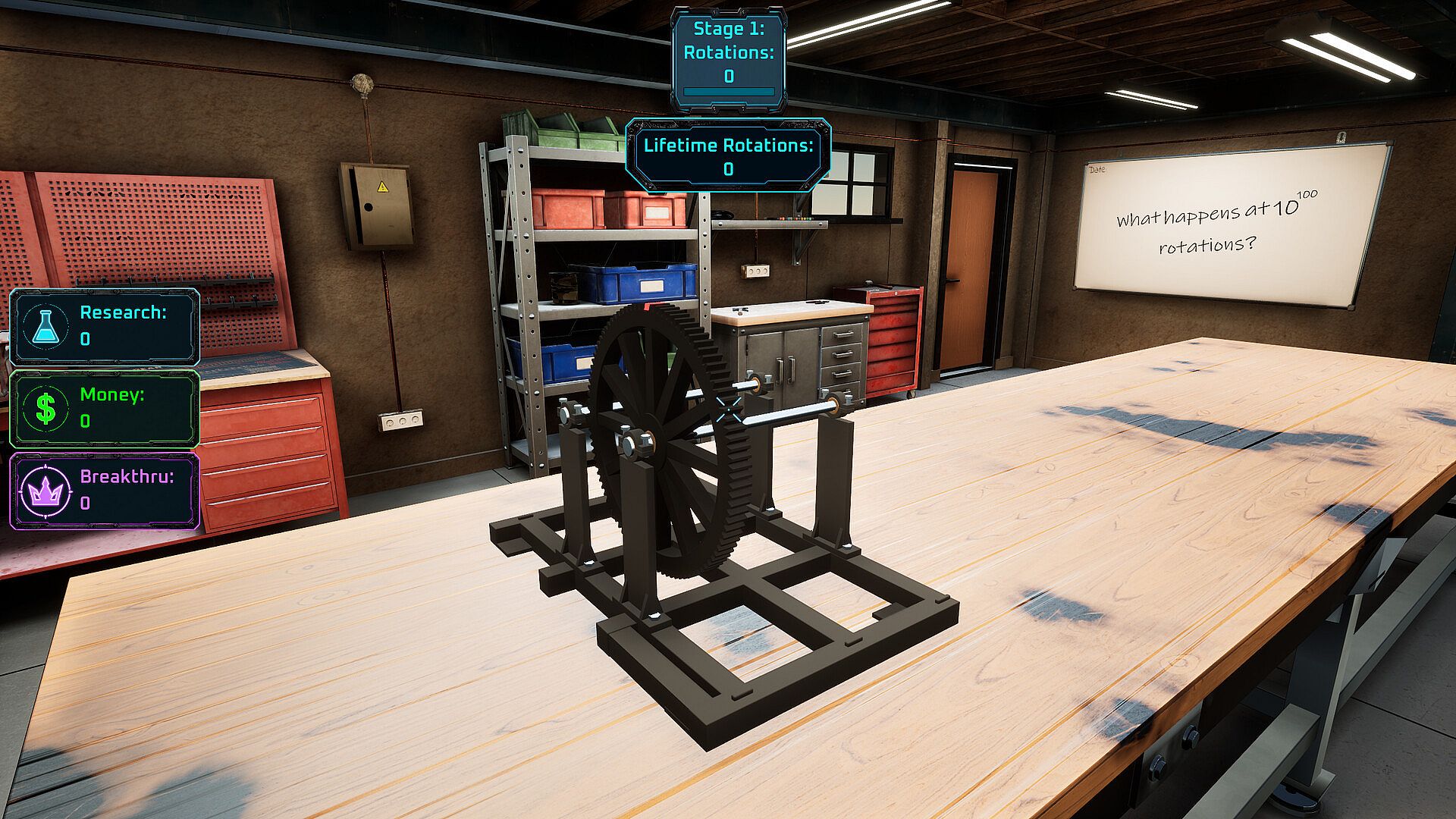
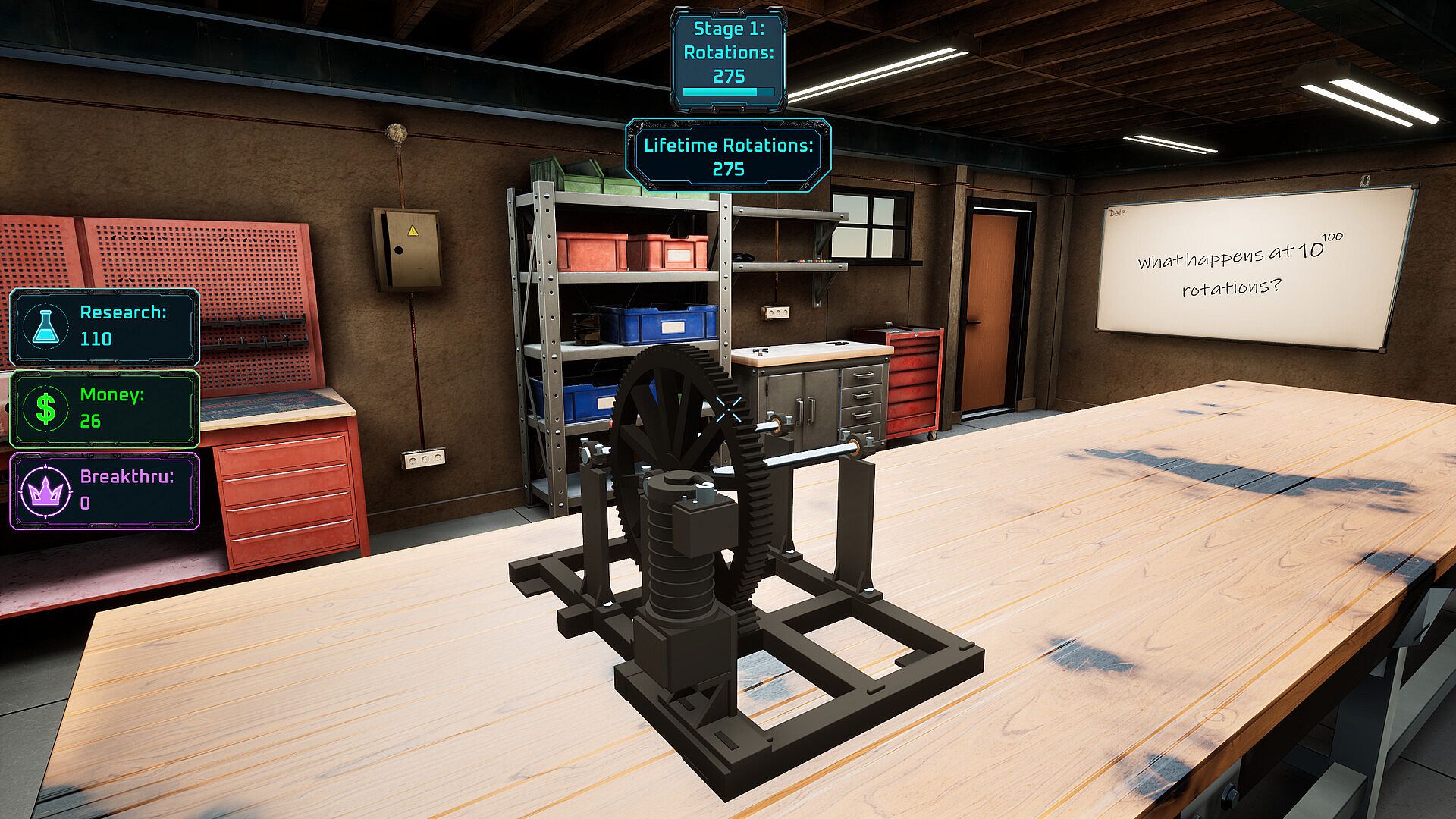
The Hundredth Gear is a first-person incremental strategy and simulation game developed for PC. Players begin with a basic mechanical setup and focus on turning a single gear by hand to generate research points. This foundation expands through research, purchases, and physical module installations that transform the setup into a complex automated system.
Gameplay
The core loop centers on manual interaction with the machine. Early stages require direct rotation of the gear to produce research, which then funds upgrades and new components. Players unlock technologies that increase the value of each turn, allowing the machine to generate resources more efficiently over time.
Progression involves installing physical modules directly onto the visible machine in the workshop. These additions automate previously manual tasks, add new mechanical stages, and improve overall output. Systems can be upgraded individually, with efficiency gains that compound as the structure grows larger and more intricate.
Even after automation takes hold, manual intervention remains relevant. Players can still approach the machine to provide direct input, boosting production during key moments or testing new configurations. The focus stays on expanding the physical apparatus from a simple workbench experiment into a multi-stage mechanical system.
Game Modes
The game operates as a single continuous experience without separate modes or branches. Progression follows one primary path: advancing through successive mechanical stages while managing research, resources, and system efficiency. All activity builds toward completing the full machine and pursuing extended numerical targets beyond the initial completion point.
Players manage an increasingly complex singleplayer setup that blends incremental resource generation with hands-on construction and optimization. There are no competitive or cooperative elements, keeping the emphasis on personal experimentation and long-term mechanical development.
Building and Automation Systems
Research serves as the primary currency for unlocking new options. Players spend it to acquire modules that attach to the machine, each contributing specific functions such as additional rotation support, resource multipliers, or automated processes. Money earned from operations allows further purchases that integrate into the physical structure.
Automation develops gradually. Initial hand-turning gives way to powered components that handle rotations independently, freeing the player to focus on higher-level expansions. New stages introduce fresh challenges in balancing output, stability, and growth, requiring careful planning of module placement and upgrades.
The machine expands across the workbench as more elements are added. Gears, shafts, supports, and specialized systems accumulate into a larger assembly, with each addition increasing capacity and introducing new variables to manage.
Is It Worth Playing?
The Hundredth Gear suits players who enjoy incremental games that combine resource management with tangible building mechanics. The first-person perspective and direct module installation provide a distinct feel compared to abstract clicker or idle titles, rewarding those who appreciate watching a creation grow through deliberate choices.
Progression remains engaging across dozens of stages because each new addition alters how the machine operates. The long-term target of reaching extreme rotation counts offers extended play for those who like optimizing systems and pushing numbers higher through layered upgrades and automation.
Reception centers on the satisfying loop of manual effort transitioning into automated power, with continued relevance for player interaction even late in the process. It appeals most to fans of strategy and simulation experiences that emphasize construction and efficiency over combat or narrative elements.