




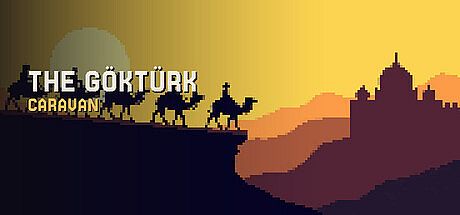


The Göktürk: Caravan is a single-player strategy, indie, and simulation game set in the seventh-century Göktürk khaganate. Players manage a merchant caravan traveling west from Ötüken, balancing cargo weight against market value while navigating forks in the road and handling encounters along the way.
Gameplay
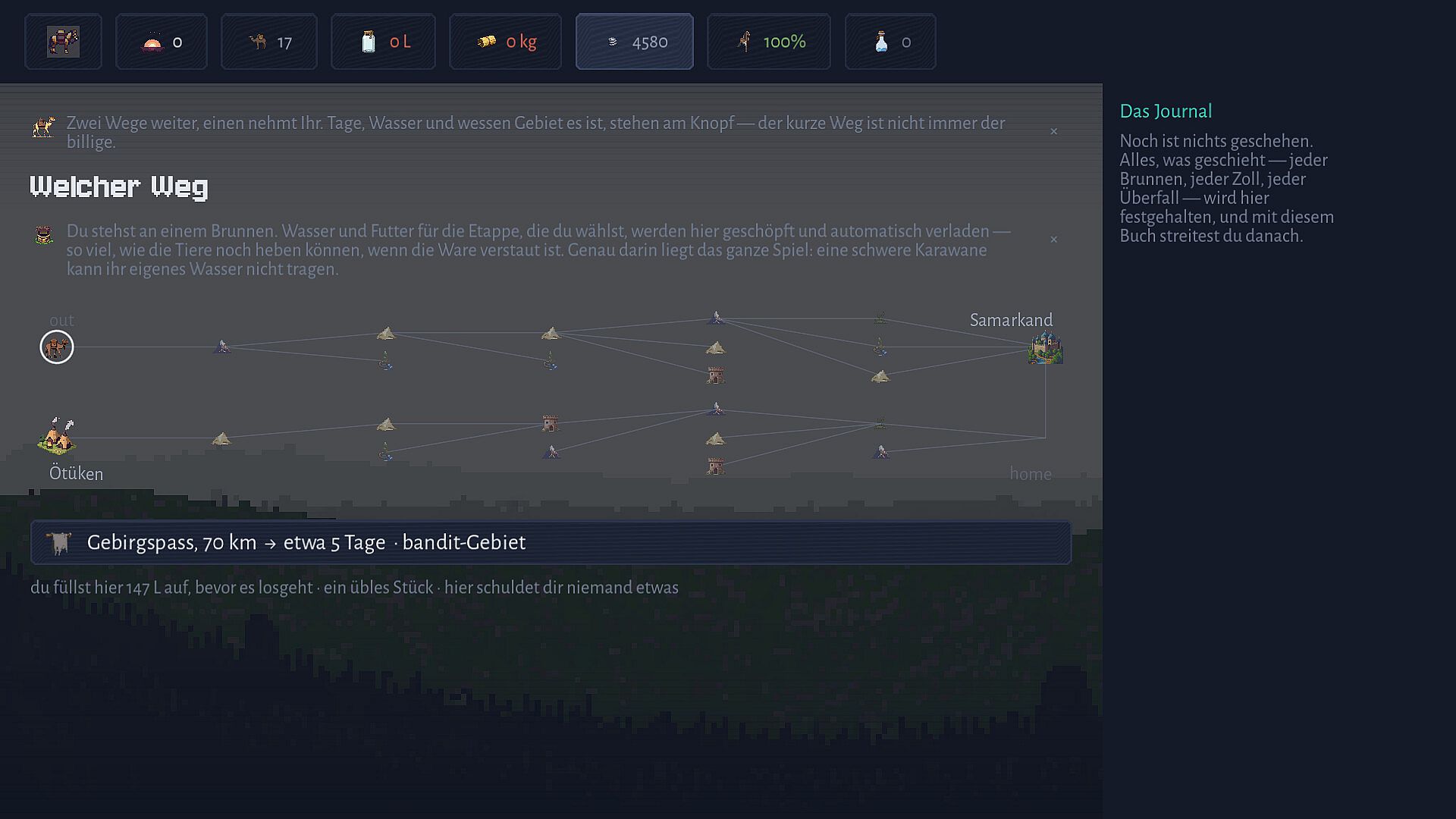
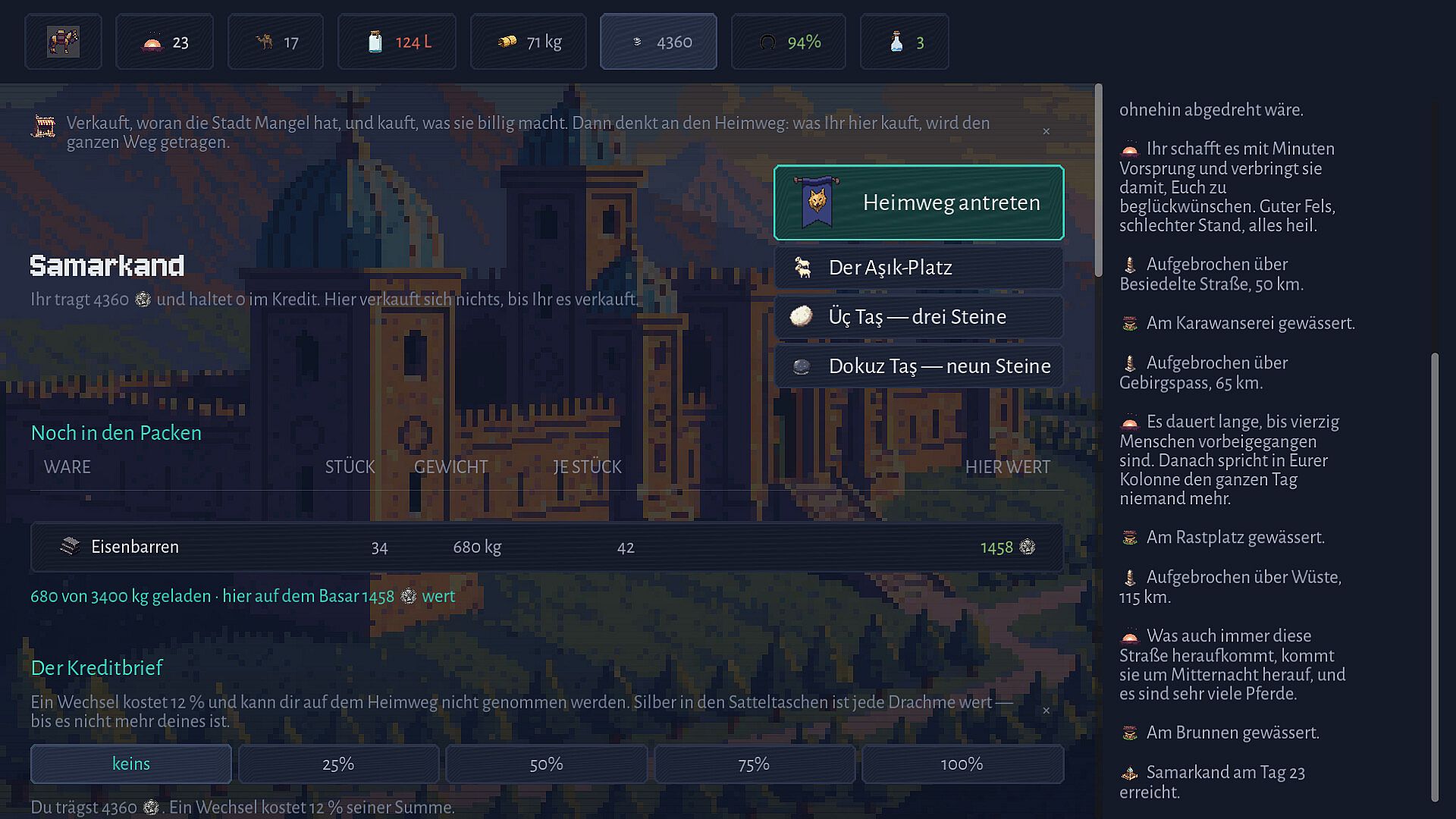
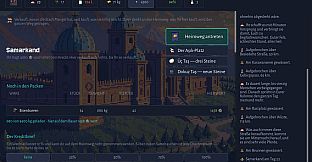
Core play centers on loading a caravan with goods such as iron, felt, silk, turquoise, and Khotan jade. Each choice of what to carry affects both immediate capacity and long-term profit, since animals transport items without preference for value. Markets at destination cities respond to supply, so flooding one location can depress prices for weeks afterward. Road segments present clear options like a shorter bandit-heavy path versus a longer river route, with details on distance, travel time, territory ownership, and prior visits displayed upfront.
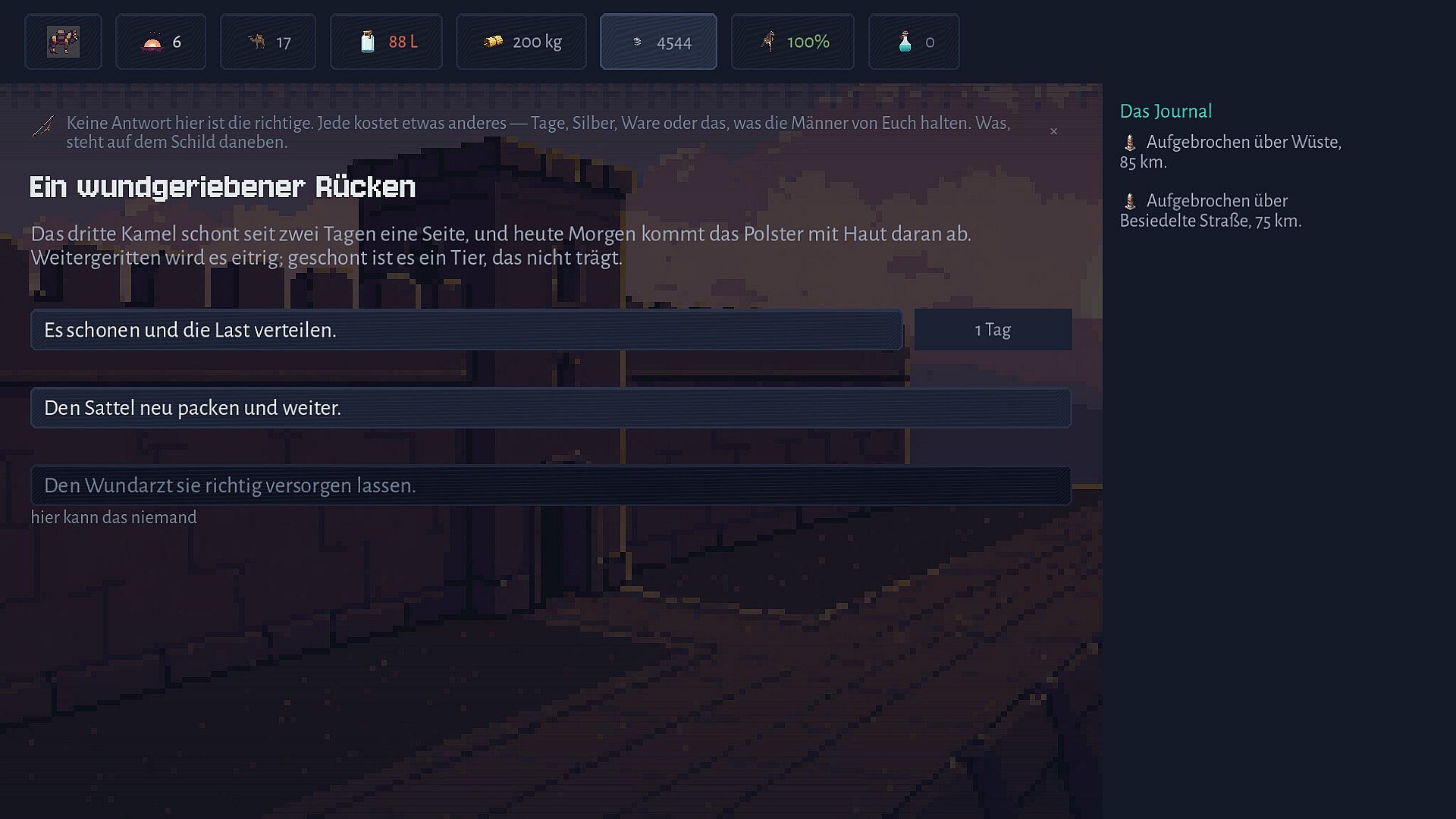
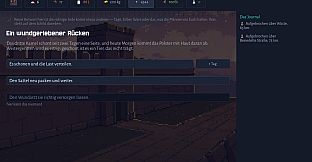
Two hundred unique encounters shape each journey. These range from a flooded ford to meetings with a Tang commissioner, a shaman seeking iron, or a blind singer offering ancestral knowledge. Responses carry different costs in time, silver, goods, or crew morale, and repeated choices influence future events as word spreads about the House's habits. Buying off threats works initially but can attract more aggressive demands later if the pattern becomes known.
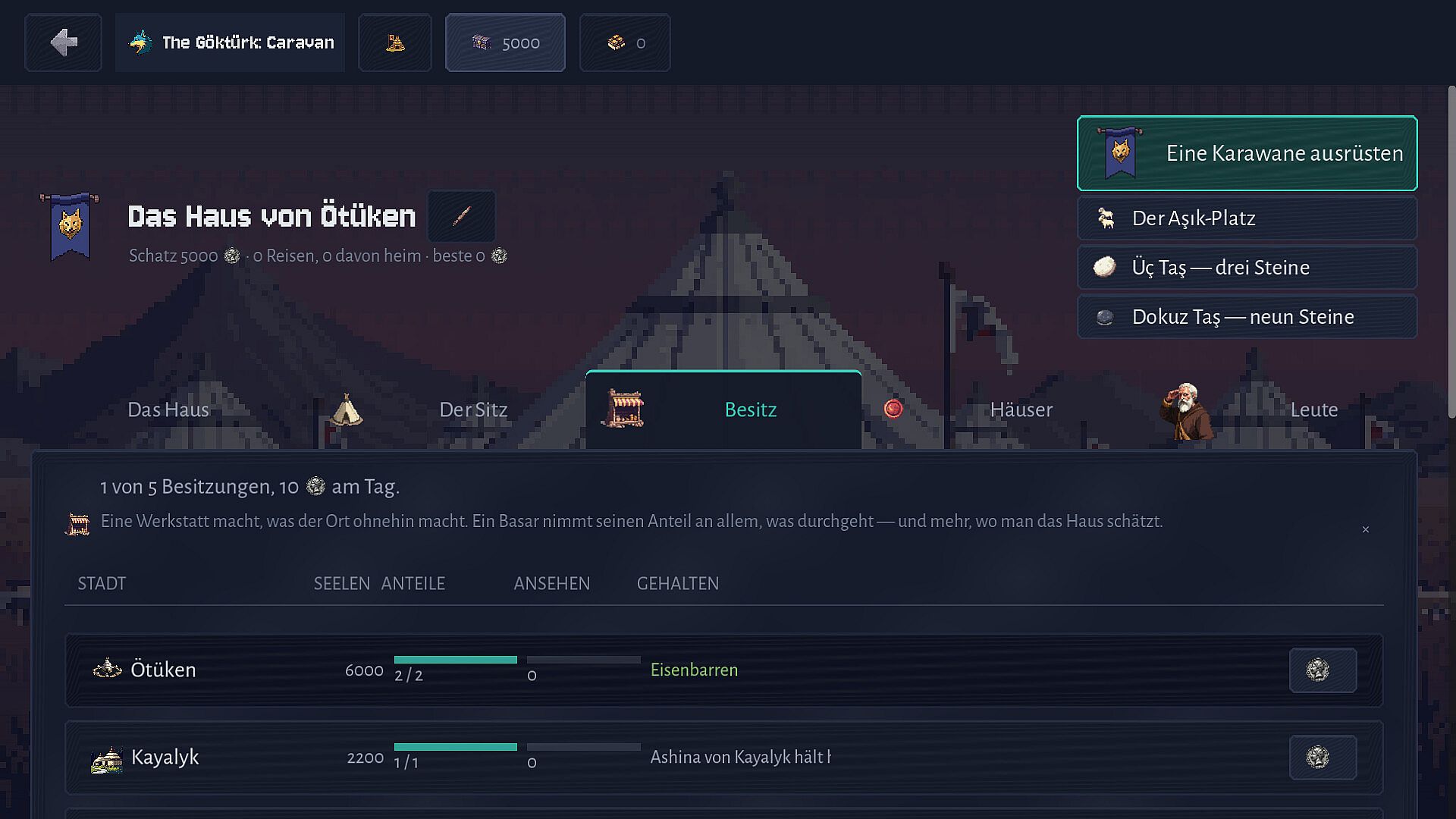
Minigames appear during downtime in caravanserai yards. Aşık oyunu involves knocking knucklebones from a circle with a weighted throw. Üç Taş and Dokuz Taş use three or nine stones on dust-drawn lines, with opponents playing to win rather than bluff. Stakes can include silver or portions of the load, and reputation from these games affects access to circles on the road.
Game Modes
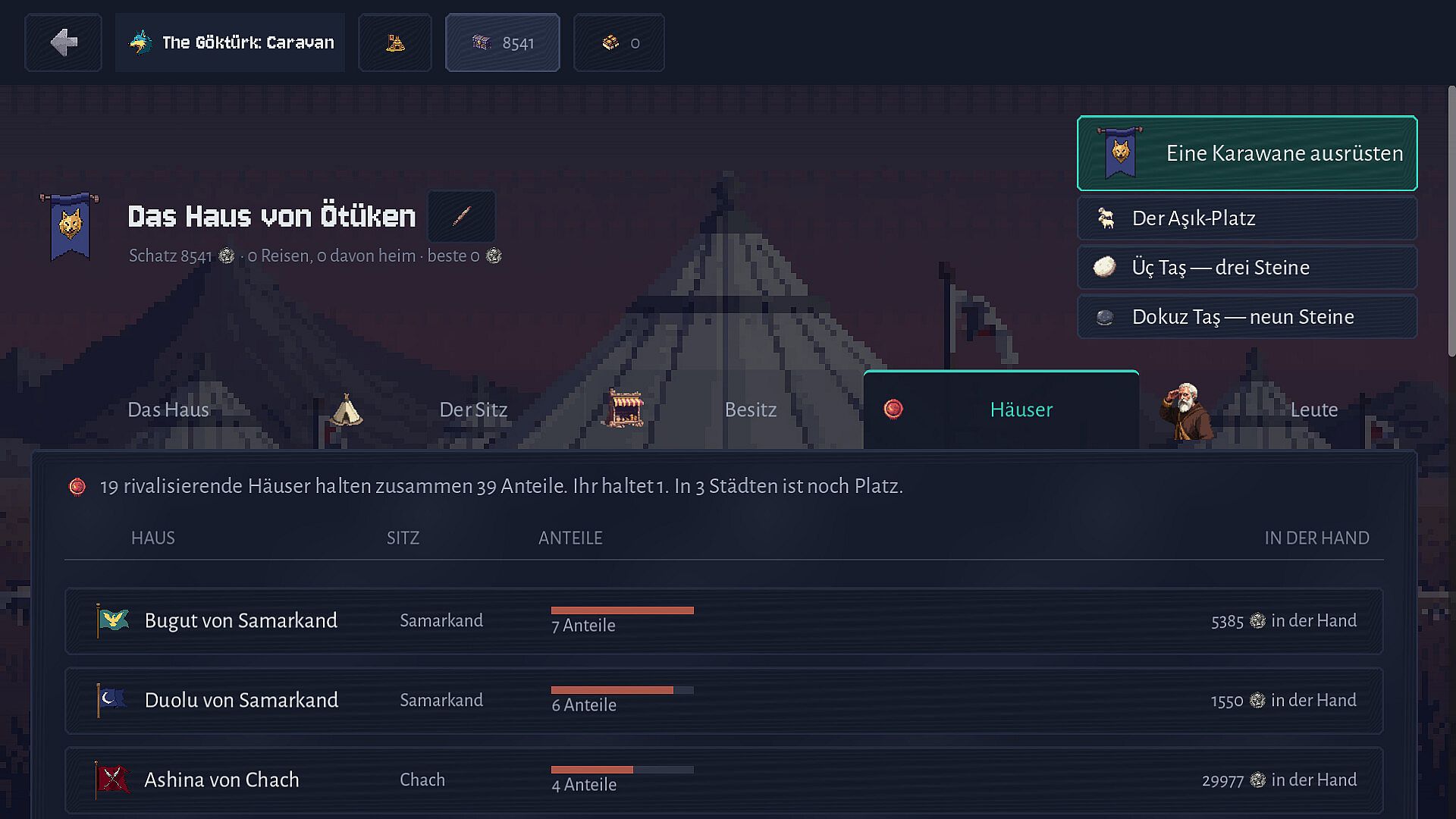
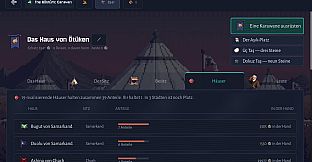
The game runs as a single-player experience with roguelite structure. Individual caravan masters carry personal backgrounds that influence packing skill or negotiation ability, yet each master dies with their acquired traits. The House persists across runs, retaining its name, banner, treasury, staff, plots, and records of past masters. This allows continued play even after a failed journey, as rival Houses compete for influence in the twelve cities while the player is away.
No separate multiplayer or co-op modes exist. All activity stays within the persistent House framework, where nineteen rival merchant groups operate independently, claiming plots and offering buyouts upon return from long routes. Progression focuses on repeated journeys that build House resources while markets and territories evolve based on prior actions.
Historical Setting and Features
Every element draws from seventh-century records rather than invention. Trade goods match items actually moved along the routes, cities stand at their historical locations, and the three minigames replicate documented play. Banners, roadside markers, and offering practices reflect the period without added decoration. The interface supports English, German, Turkish, French, Japanese, and Simplified Chinese, with native 1280 by 800 resolution, full controller support, remappable controls, text scaling between 85 and 150 percent, and a color-blind-safe palette.
System requirements remain modest, running on Windows 10 or later with basic Vulkan or OpenGL support. The design targets couch play through controller navigation and adjustable display options.
Is It Worth Playing?
Players interested in deliberate trading decisions, consequence-driven choices, and a persistent organization across multiple short campaigns will find a focused loop here. The emphasis on long-term reputation effects and House continuity rewards attention to patterns rather than one-off optimizations. With a planned release on September 16, 2026, and no reviews available yet, suitability depends on preference for simulation-style management over action or narrative-heavy experiences. Those drawn to historical trade routes and repeatable single-player runs with evolving consequences stand to gain the most from the systems described.