






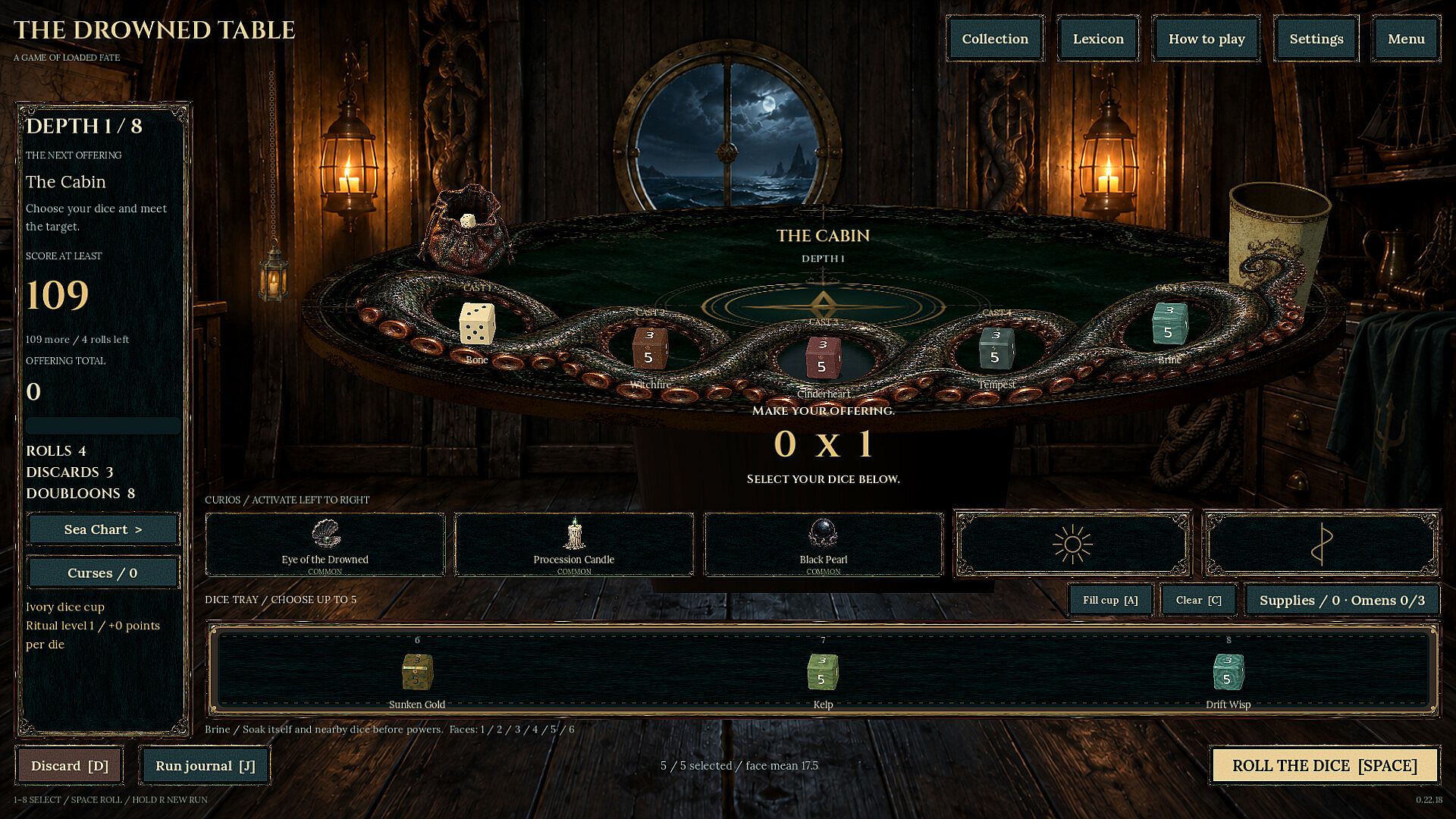

The Drowned Table is a single-player horror roguelike dice-building game set on PC. A sailor wakes at a jade table inside a storm-battered cabin after a shipwreck. The player builds a bag of dice, casts them across the physical table surface, and watches powers interact as scores resolve. Strange dice and Curios alter outcomes through synergies such as chaining lightning or growing effects, while the room itself shifts in response to deeper voyages.
Gameplay
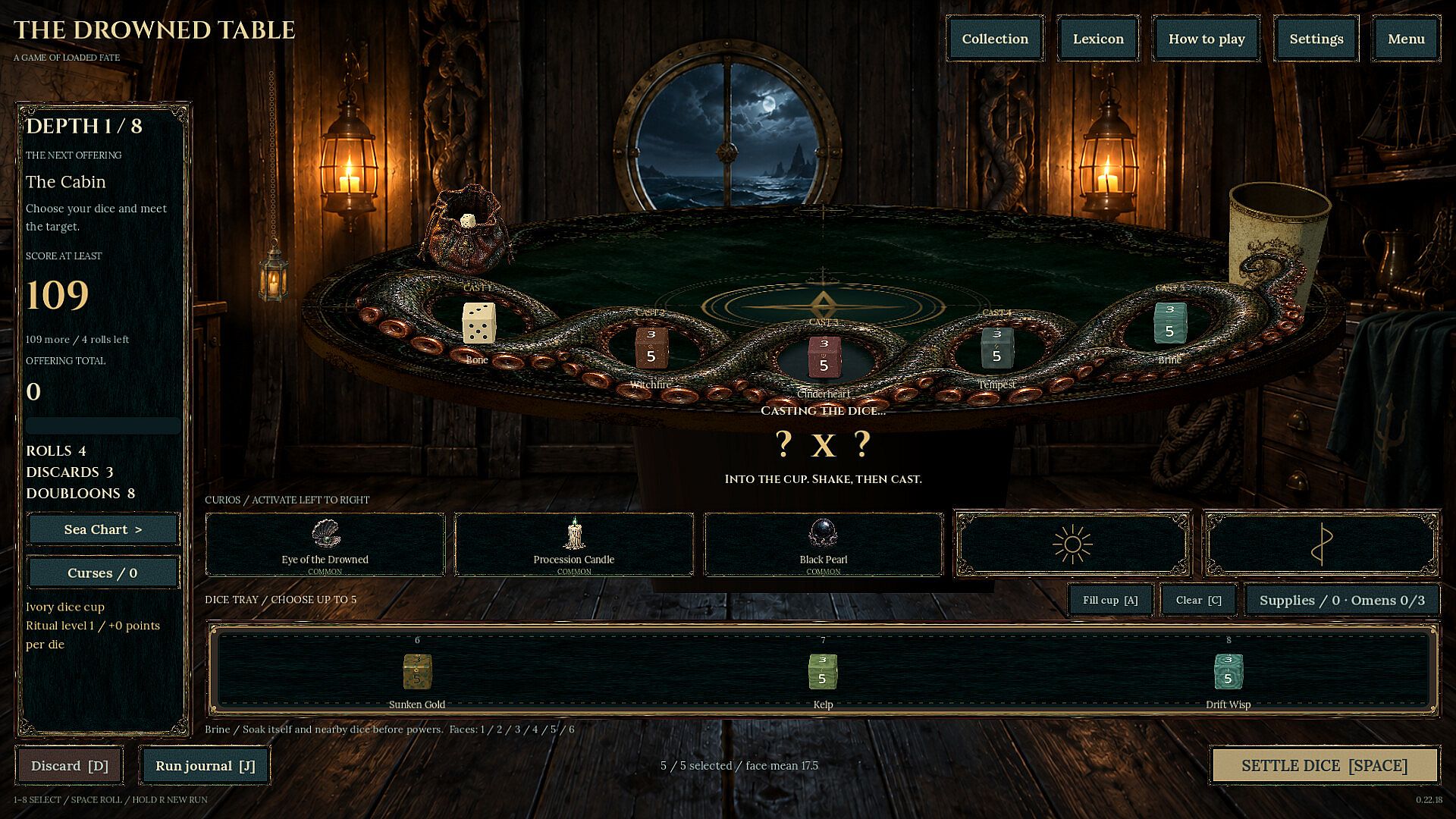
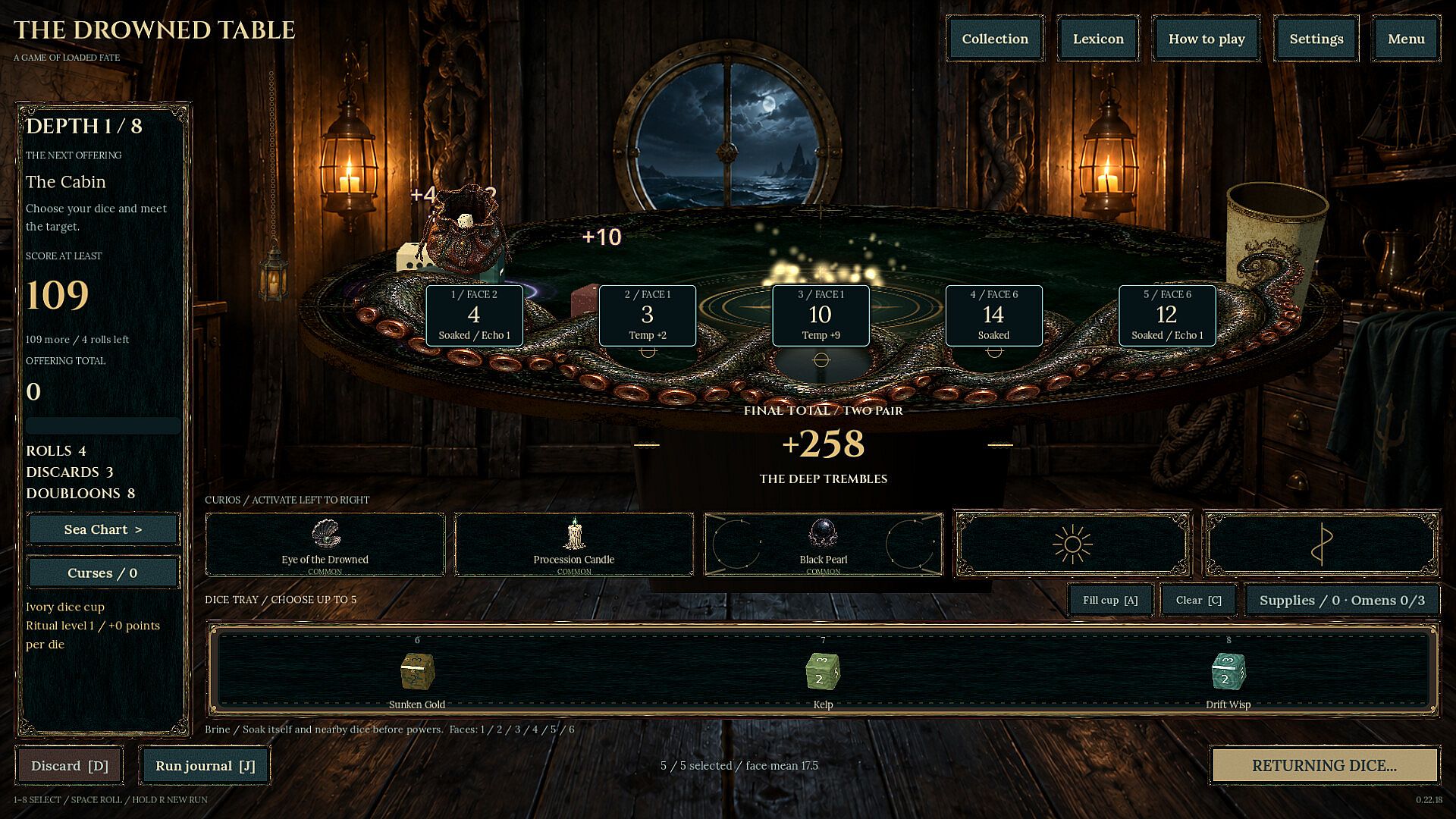
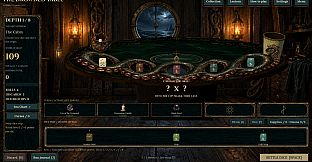
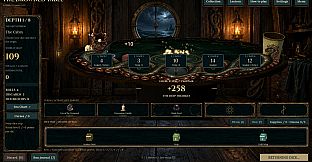
Core play centers on bag construction and cast resolution. Players start with basic Bone dice and expand the collection by acquiring unusual dice and eldritch Curios. Faces can be reshaped, pieces enchanted, or items sacrificed for stronger results. Placement on the table and cast order influence how effects trigger, such as soaking nearby dice to propagate lightning or feeding a sacrifice to the void. The physical dice tumble and collide before settling, with final totals calculated from landed faces and assembled powers.
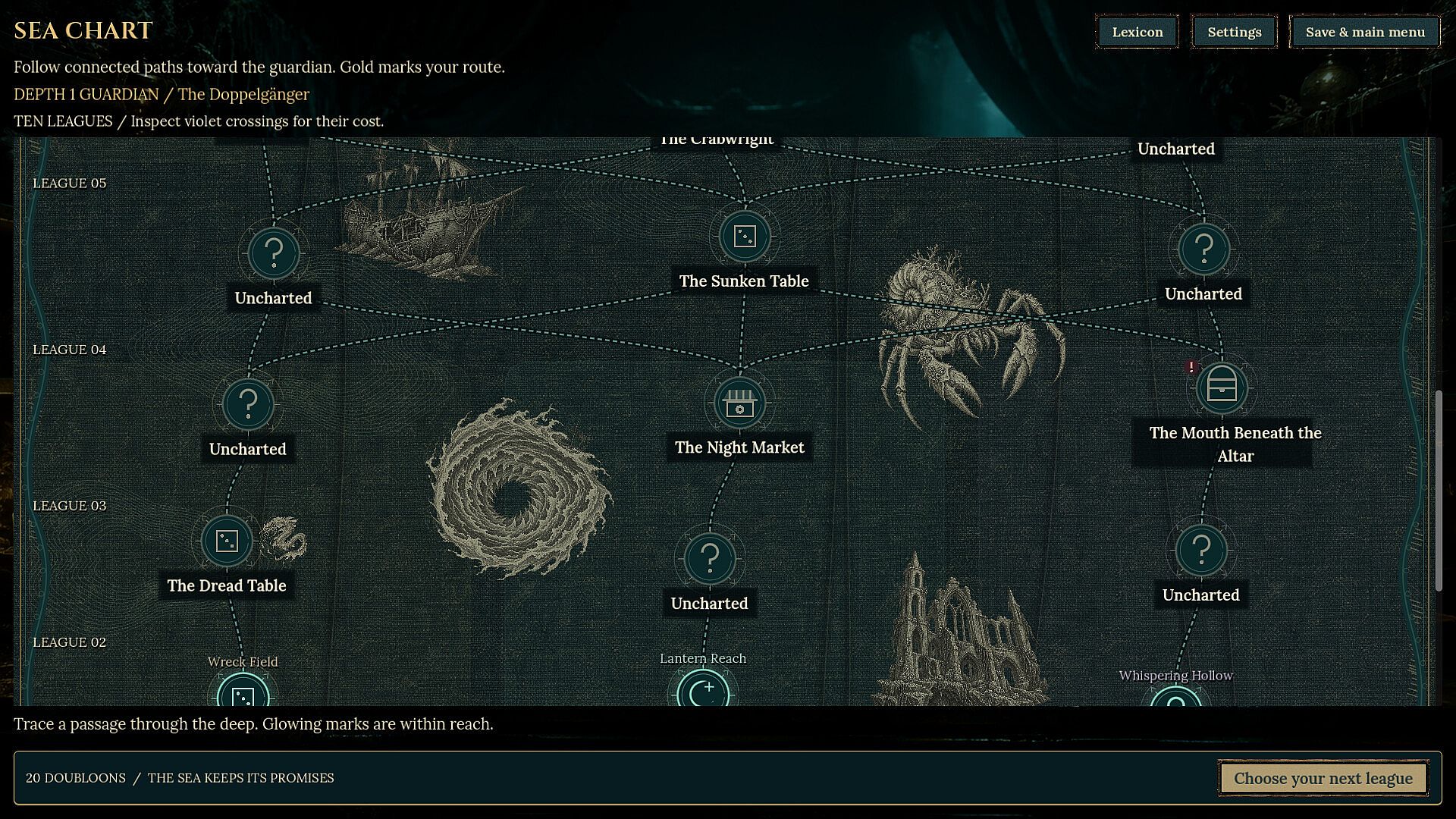
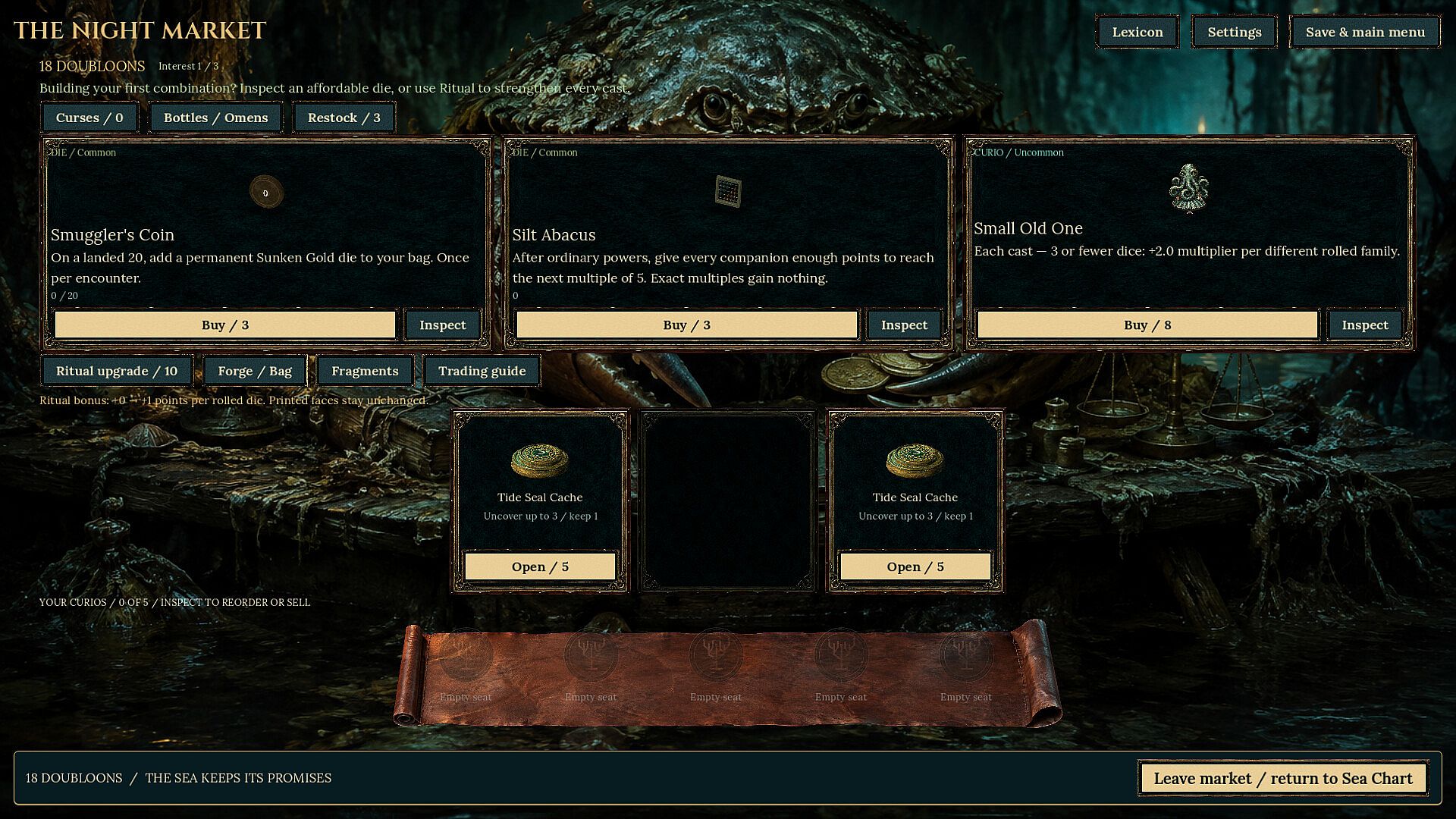
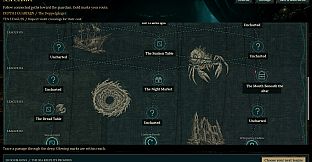
Progression involves following a branching Sea Chart across eight depths. Routes lead to fights that yield Doubloons, visits to the Night Market for new acquisitions, or encounters with strangers offering bargains. Each choice alters available preparations before guardian confrontations. Guardians modify the rules that a build depends on, forcing adaptation through alternative dice kept in reserve or decisions on when to bank offerings versus pushing for higher scores. The descent ends in survival checks that unlock continued Endless play.
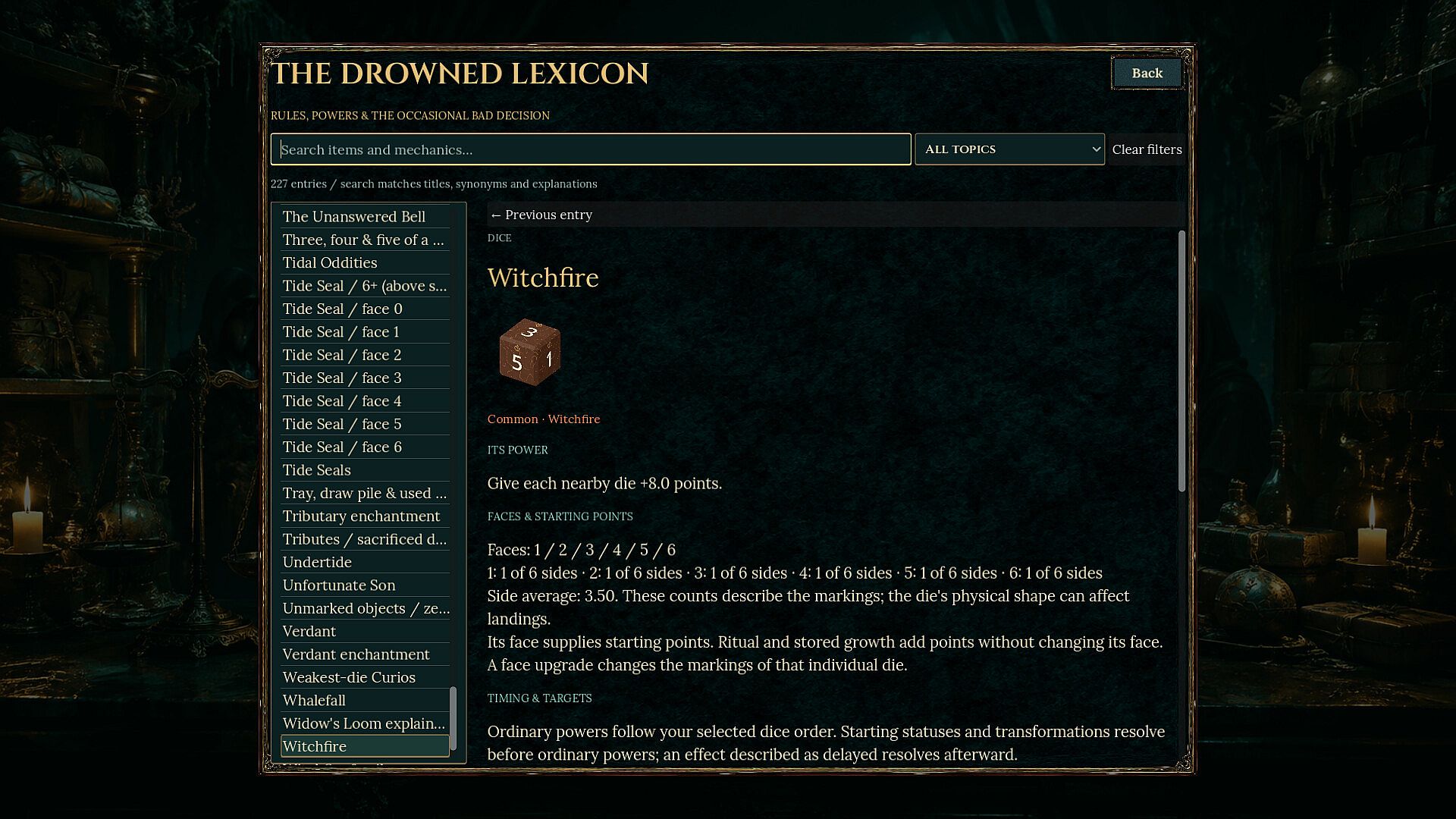
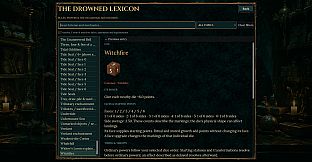
Additional systems support experimentation. An in-game Lexicon details every die, Curio, power, and table rule. A Practice Table allows testing of unlocked dice without risk. Casts are reviewed in a scoring journal. Three Captain's Logs can be maintained to save voyages for later resumption. Accessibility options include Reduced Motion, optional overhead casting views, and faster scoring animations.
Game Modes
The primary experience follows the Sea Chart through eight depths in a roguelike structure. Each run presents randomized events, score targets that rise steadily, and guardian battles that change core mechanics. Successful completion of the descent opens Endless mode, where the voyage continues without a fixed endpoint and further challenges accumulate.
Single-player focus means all decisions rest on the individual. No cooperative or competitive modes exist. The structure emphasizes repeated runs to unlock new dice and Curios while refining bag strategies against shifting guardian rules.
Progression and Content
Over 220 dice and over 100 Curios span five rarity tiers. These are obtained through progression and unlocks rather than direct purchase. More than 30 secrets appear across routes, and over 80 achievements track specific accomplishments such as particular combinations or survival feats. The Night Market and branching encounters expand options on each run, while connected horror events remember prior choices and influence later discoveries.
Visual and atmospheric details reinforce the setting. Moving shadows, strange company, and a voice in the dark accompany the sailor. The candlelit cabin and jade table remain central, with the room growing less bound by the storm outside as depth increases.
Is It Worth Playing?
The Drowned Table suits players who enjoy dice-building roguelikes with physical interaction and horror atmosphere. Its bag-building loop, guardian adaptations, and table physics create distinct runs that reward experimentation with synergies and risk assessment. The demo offers a substantial taste with dozens of common dice and Curios already available, allowing direct assessment of the core cast and build systems.
Because the game remains in development ahead of Steam Early Access, full content depth and polish will continue to expand. Those drawn to single-player strategy titles that blend chance management with eldritch themes will find the current version worth trying through the available demo. The emphasis on adaptive bag construction and rule-altering encounters provides clear replay value for the target audience.