




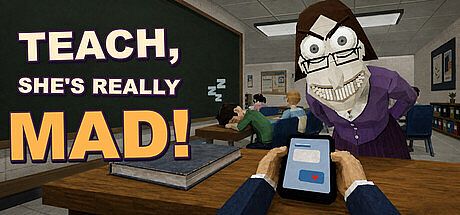


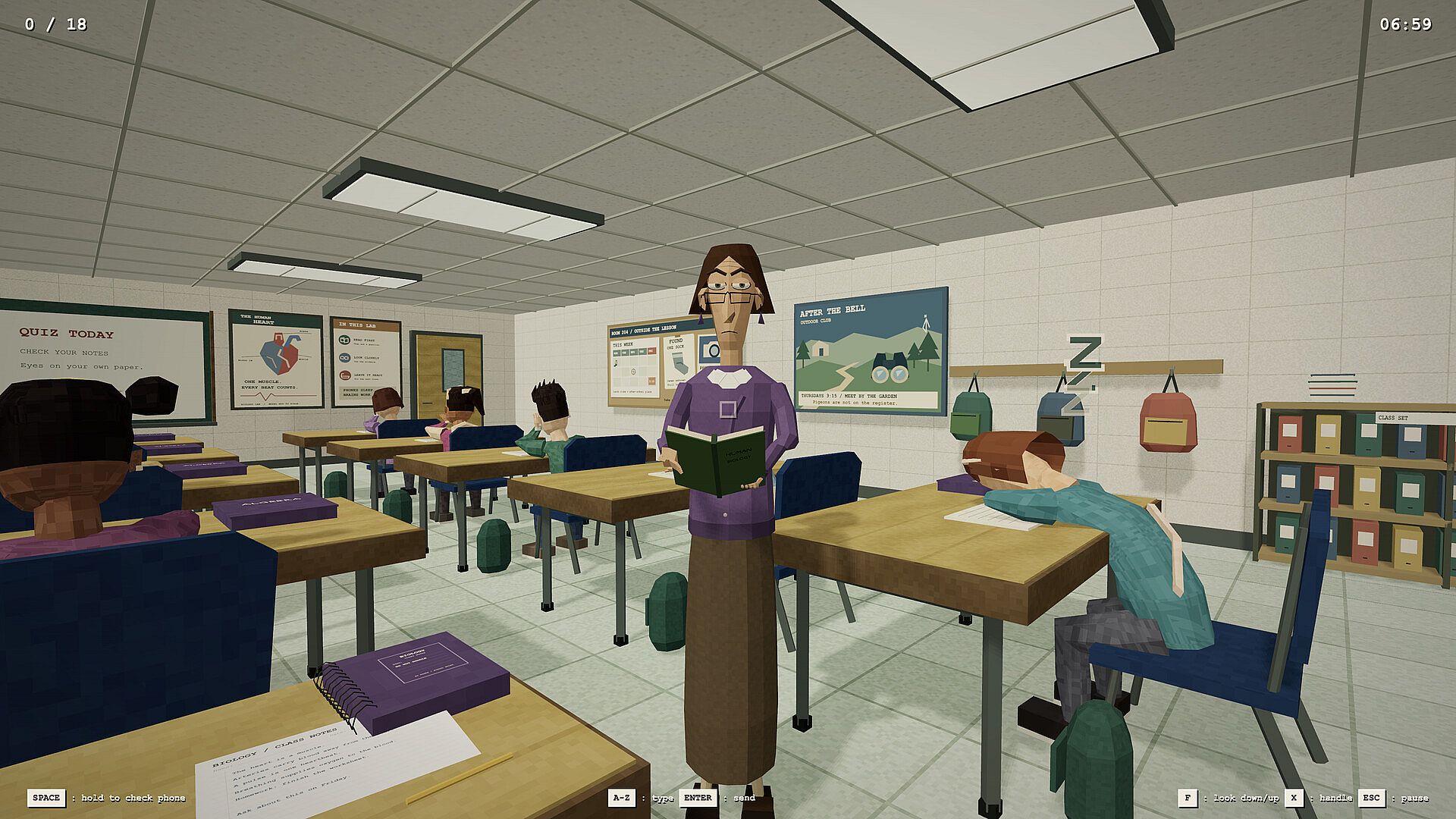
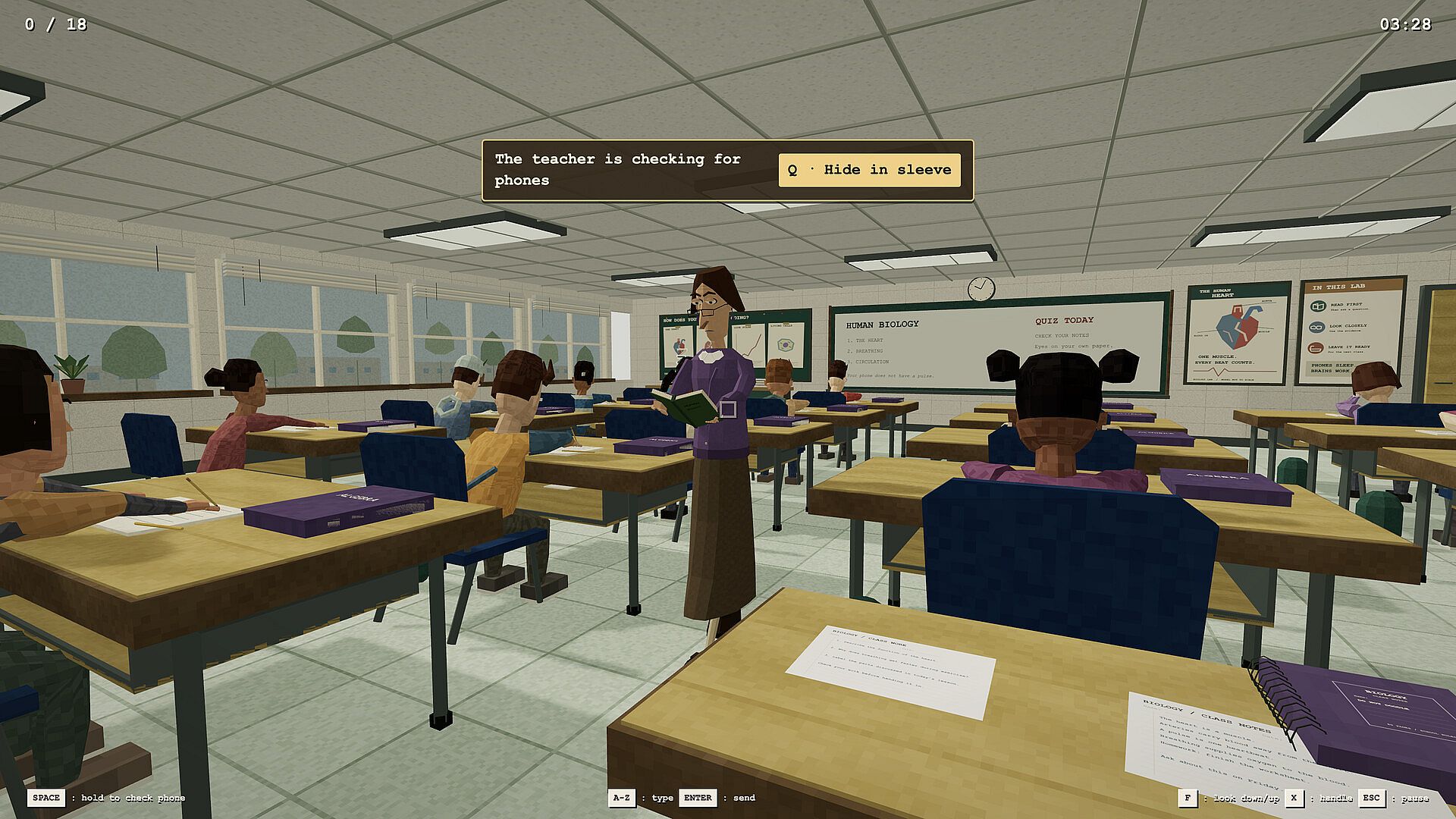
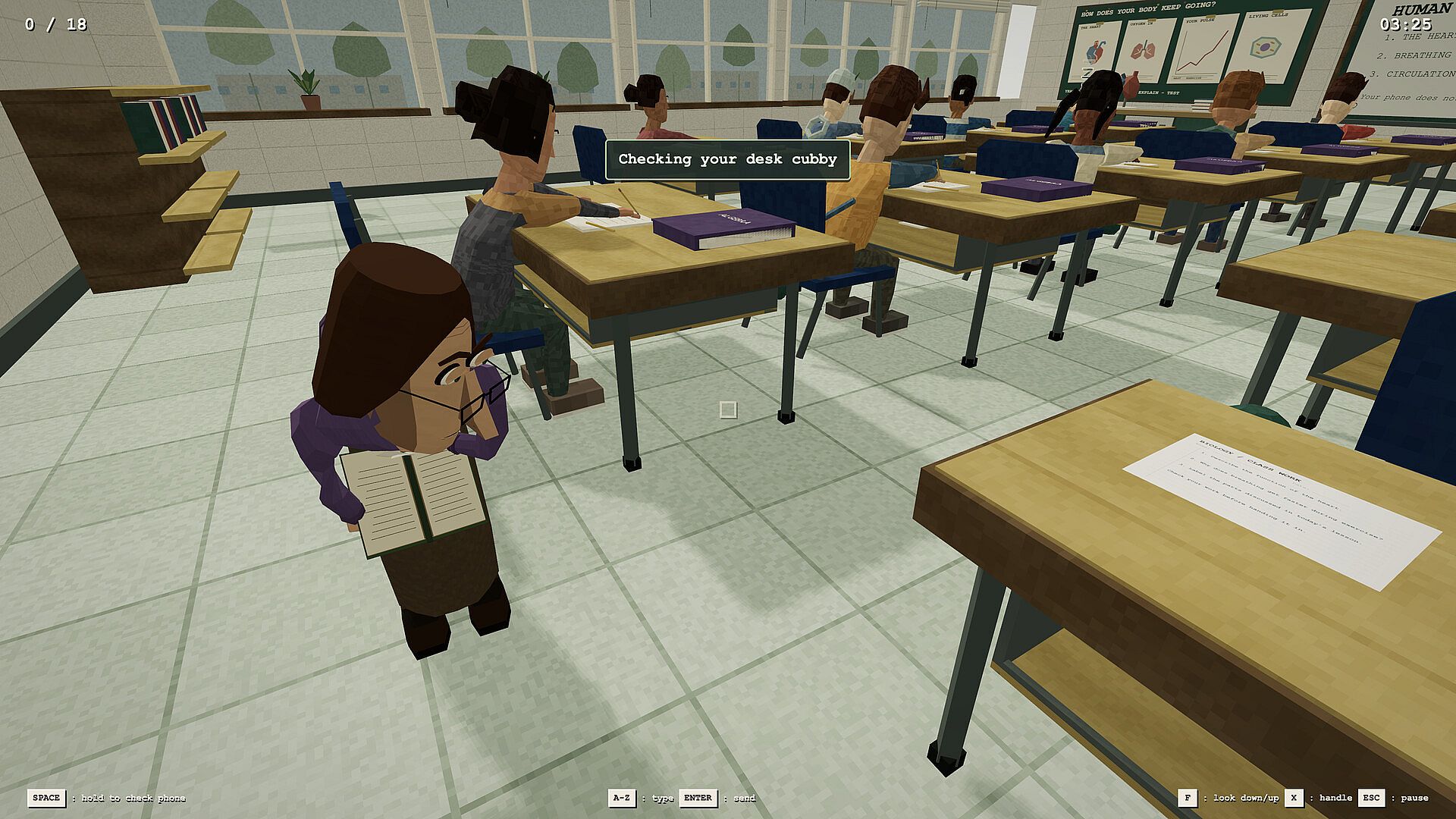



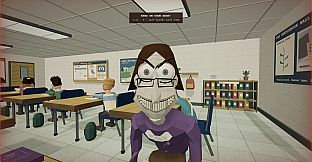
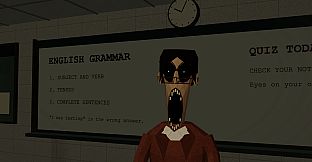
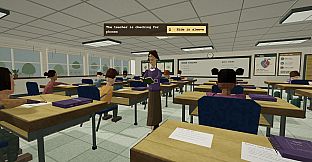
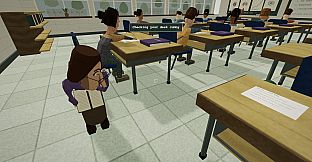
Teach, She's Really Mad! is a casual simulation game for PC that places players in a classroom setting where they must balance texting a demanding girlfriend with staying under the radar of a watchful teacher. The core challenge revolves around quick timing and observation as the bell rings and messages start arriving. Success depends on reading the room through audio cues like footsteps and voice, then acting fast when the teacher moves away.
Gameplay
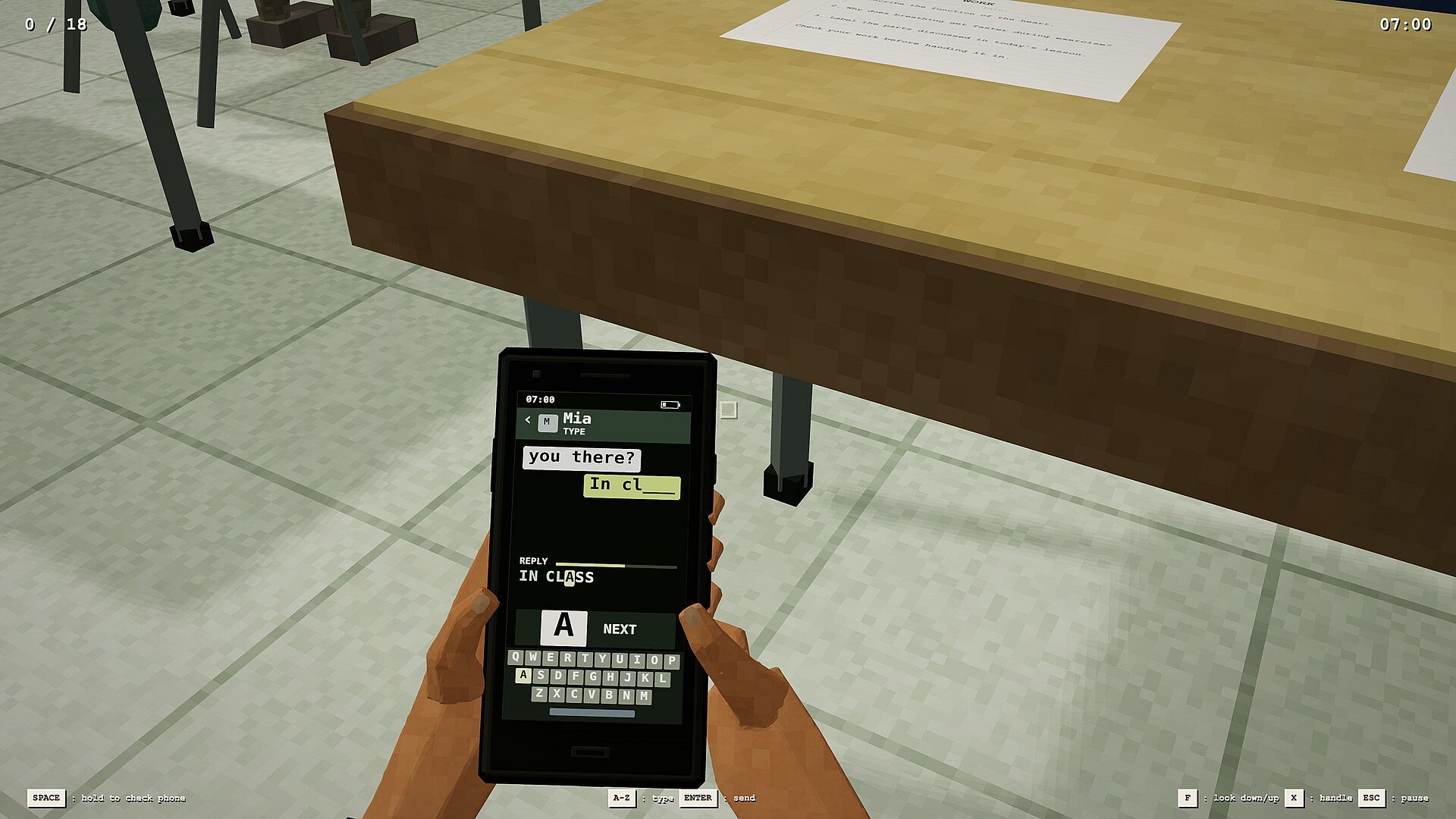
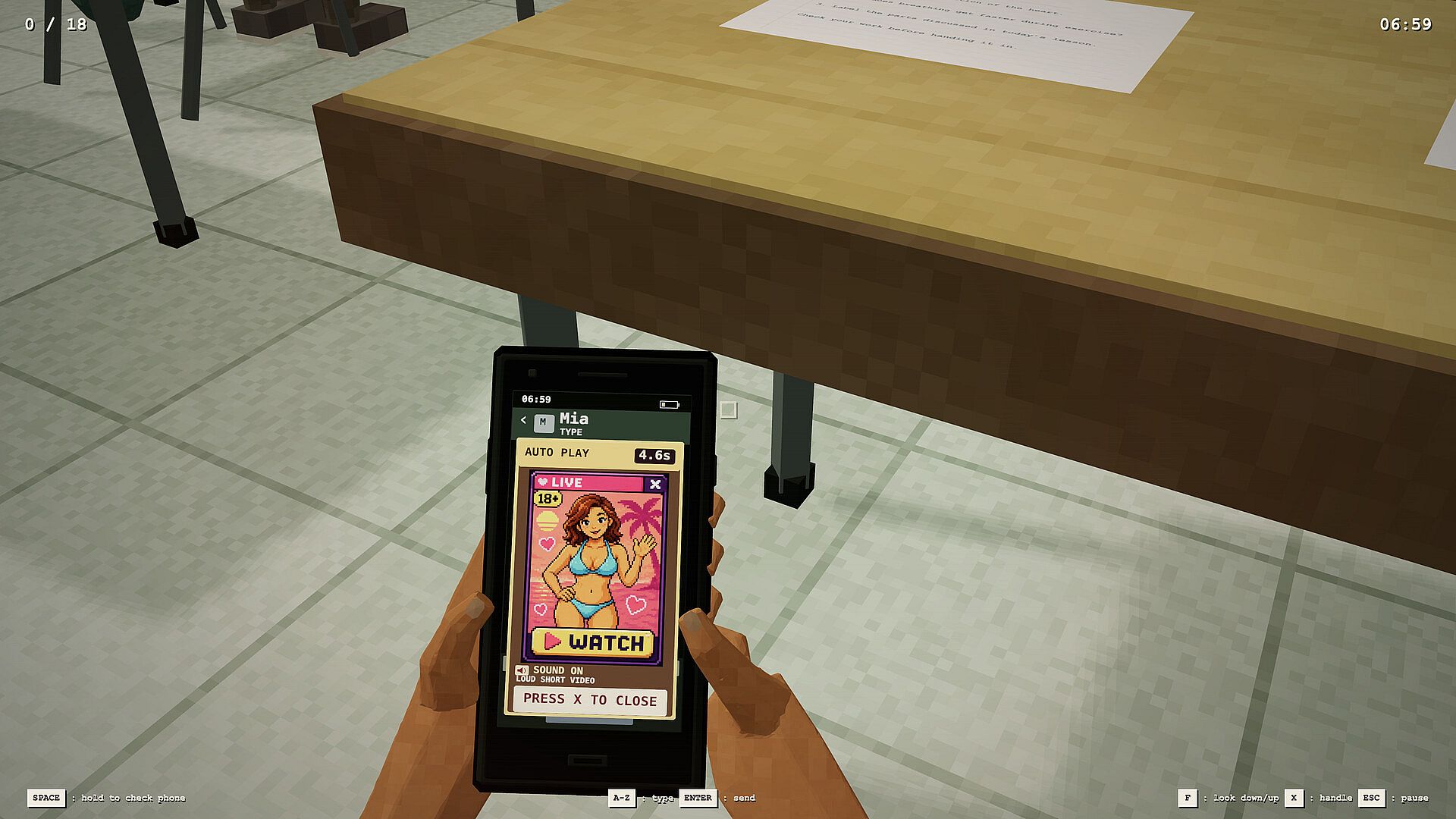
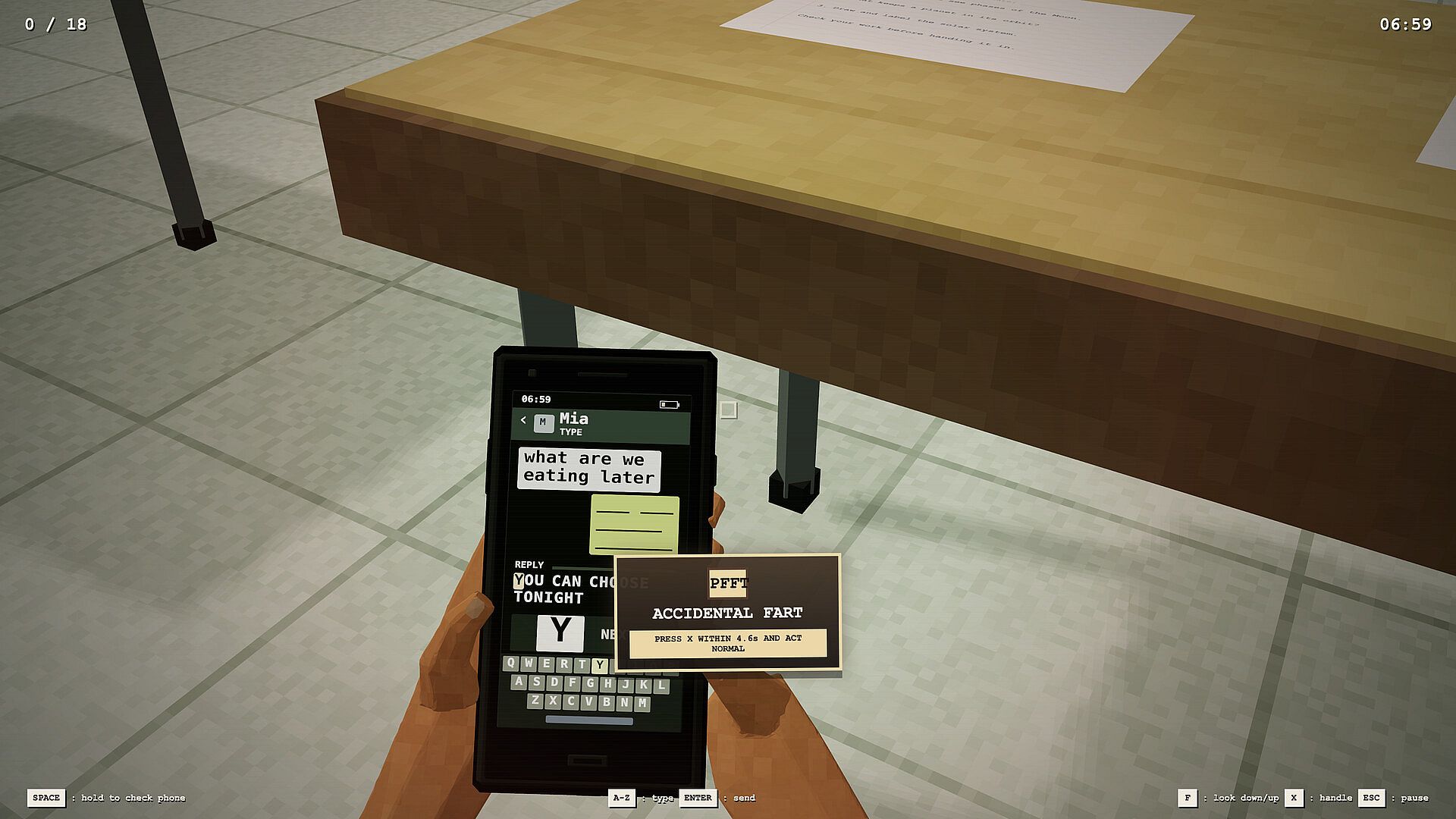
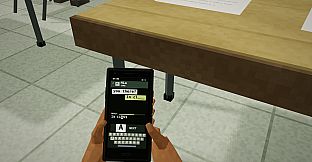
Players sit at a desk and receive text prompts that require typing specific letters to reply. The phone stays hidden under the desk during these moments, but any teacher approach forces immediate concealment. Audio signals from the teacher help gauge distance and position, allowing brief windows for responses before the risk rises. Unexpected interruptions add pressure, such as a video suddenly playing with sound or a private message routing to the entire class group chat. Physical mishaps like an ill-timed fart can also draw attention at critical times.
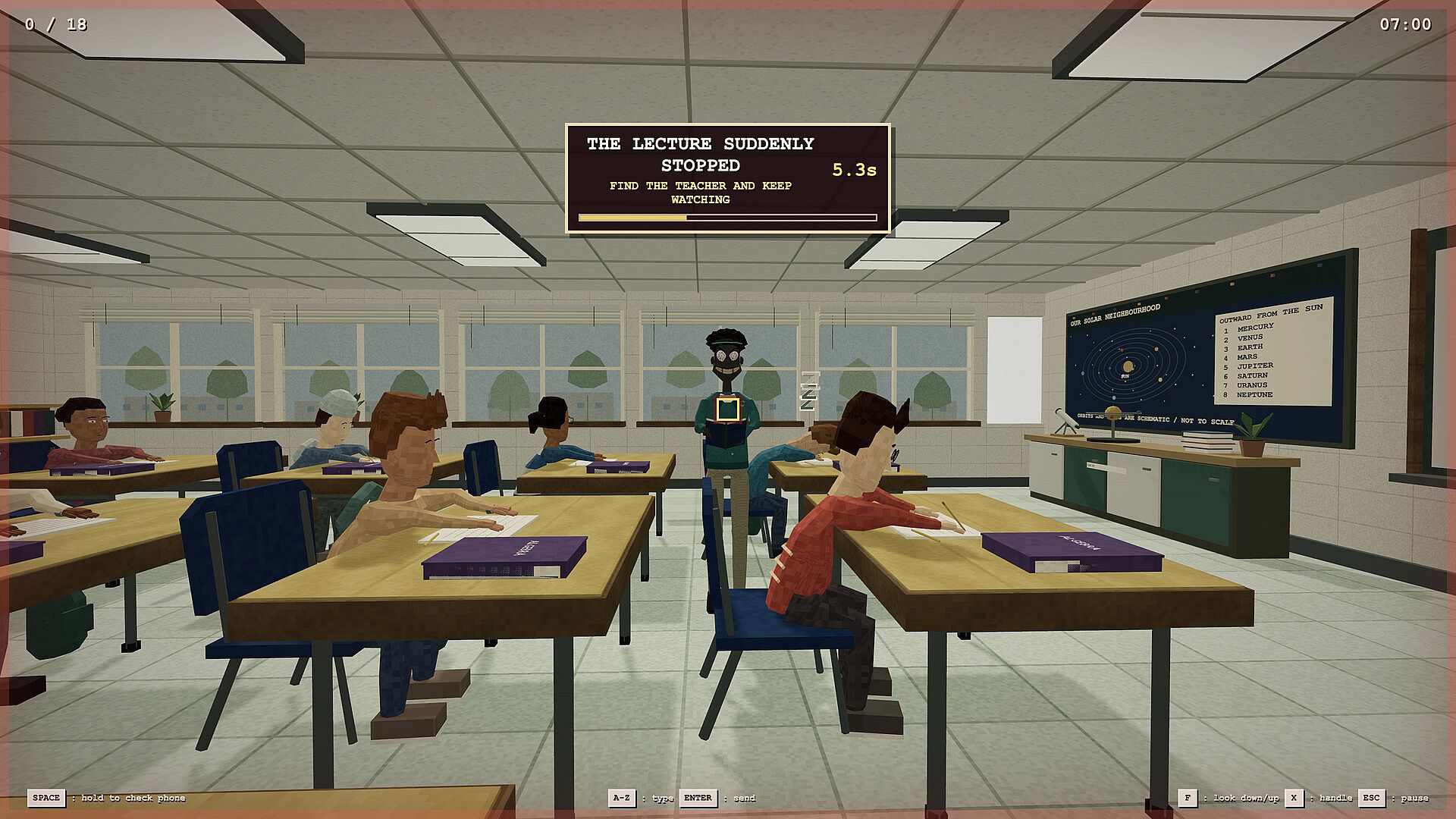
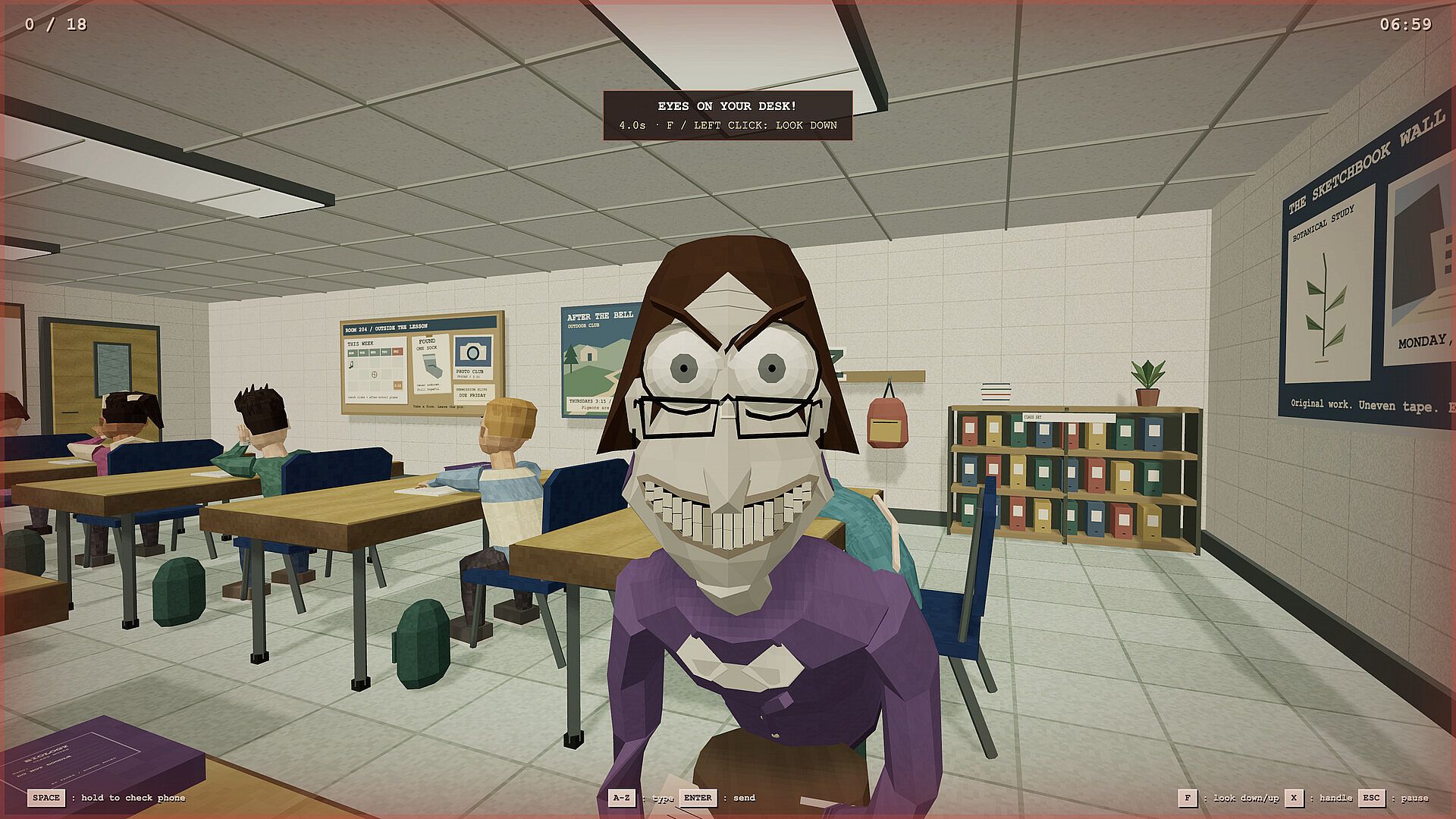
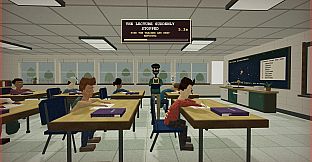
Teachers sometimes pause lectures without warning and move to unexpected spots. Desk inspections require sliding the phone into a sleeve for cover while maintaining an attentive appearance. The loop repeats across sessions where attention must remain fixed forward whenever authority figures draw near. Progression introduces more frequent and varied disruptions that test reaction speed and awareness.
Game Modes
Two difficulty options shape each lesson. Normal mode provides standard time limits tied to the specific class content. Extreme mode tightens those limits and increases the density of events, making every second count. Both modes run through the same four classes, but the higher setting demands tighter execution and faster recovery from surprises.
Lessons grow progressively harder as players advance. Early sessions focus on basic positioning and simple replies, while later ones layer in additional complications that build on prior mechanics. The structure encourages repeated attempts to master the rhythm of each class without relying on external aids.
Class Structure and Challenges
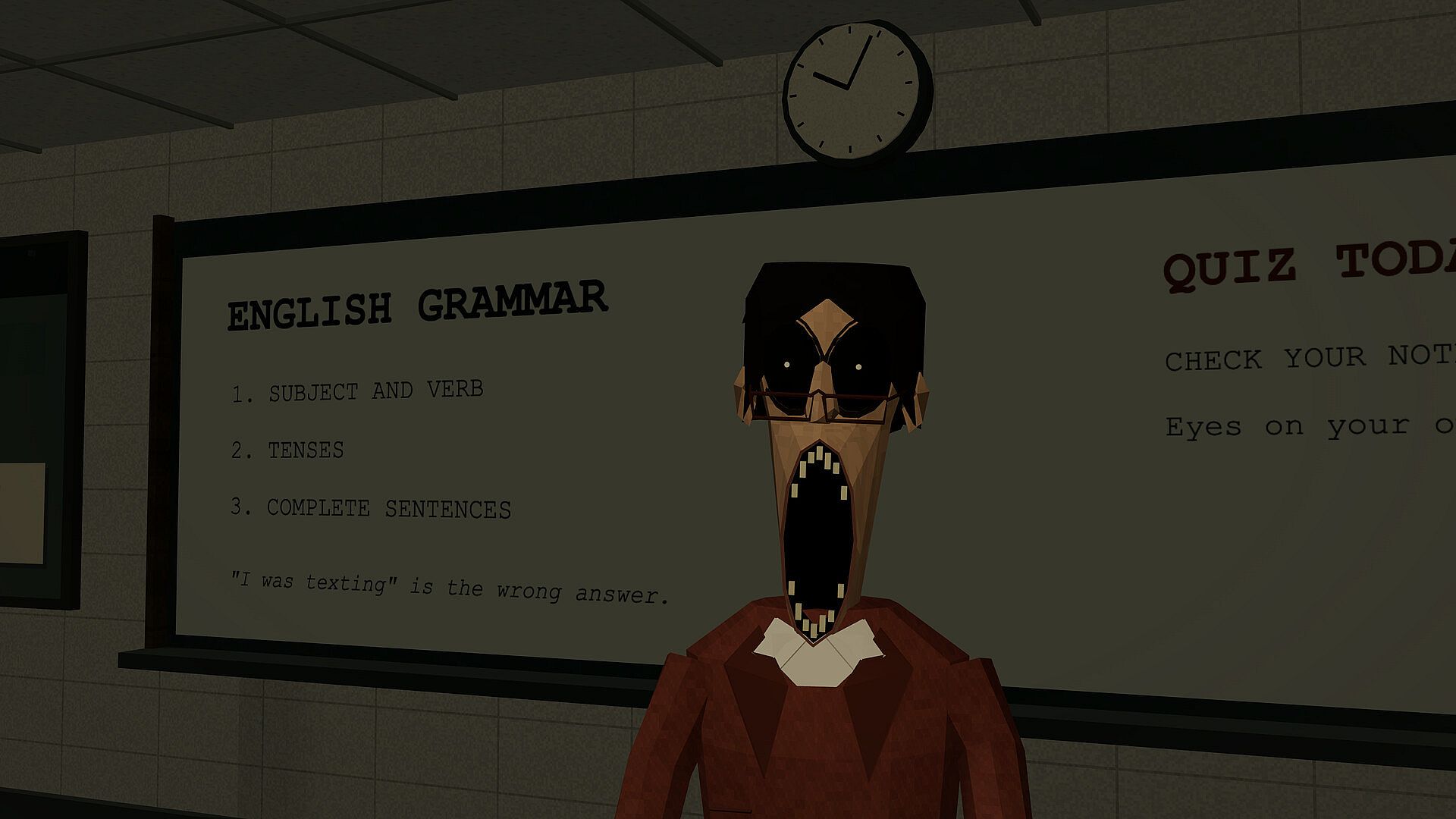
Four classes form the campaign backbone, each with its own pacing and hazards. The first lesson appears in available footage and serves as an introduction to core controls and audio cues. Subsequent classes ramp up the frequency of strange phenomena and embarrassing incidents, such as sudden teacher repositioning or group chat mishaps. These elements force constant vigilance and split-second decisions about when to engage with the phone.
Time limits adjust per lesson in both modes, rewarding precise management of attention cycles. Players who learn to anticipate patterns in teacher movement and sound cues gain an edge, though the increasing complexity across classes prevents any single strategy from carrying through the entire experience.
Is It Worth Playing?
This singleplayer experience suits fans of short-session simulation games that emphasize timing, observation, and light tension. The mechanics stay focused on classroom deception without expanding into unrelated systems, delivering a consistent loop across the four classes. Normal mode offers an accessible entry point for learning the audio and positioning rules, while Extreme mode provides a stricter test for those seeking tighter constraints.
Reception centers on the novelty of the premise and the satisfaction of completing a full set of lessons without detection. The game remains available on PC as a straightforward indie title in the casual simulation genre, with no additional content layers confirmed beyond the base classes and modes. Players who enjoy quick-reaction challenges in confined environments will find the structure rewarding through repeated play.