







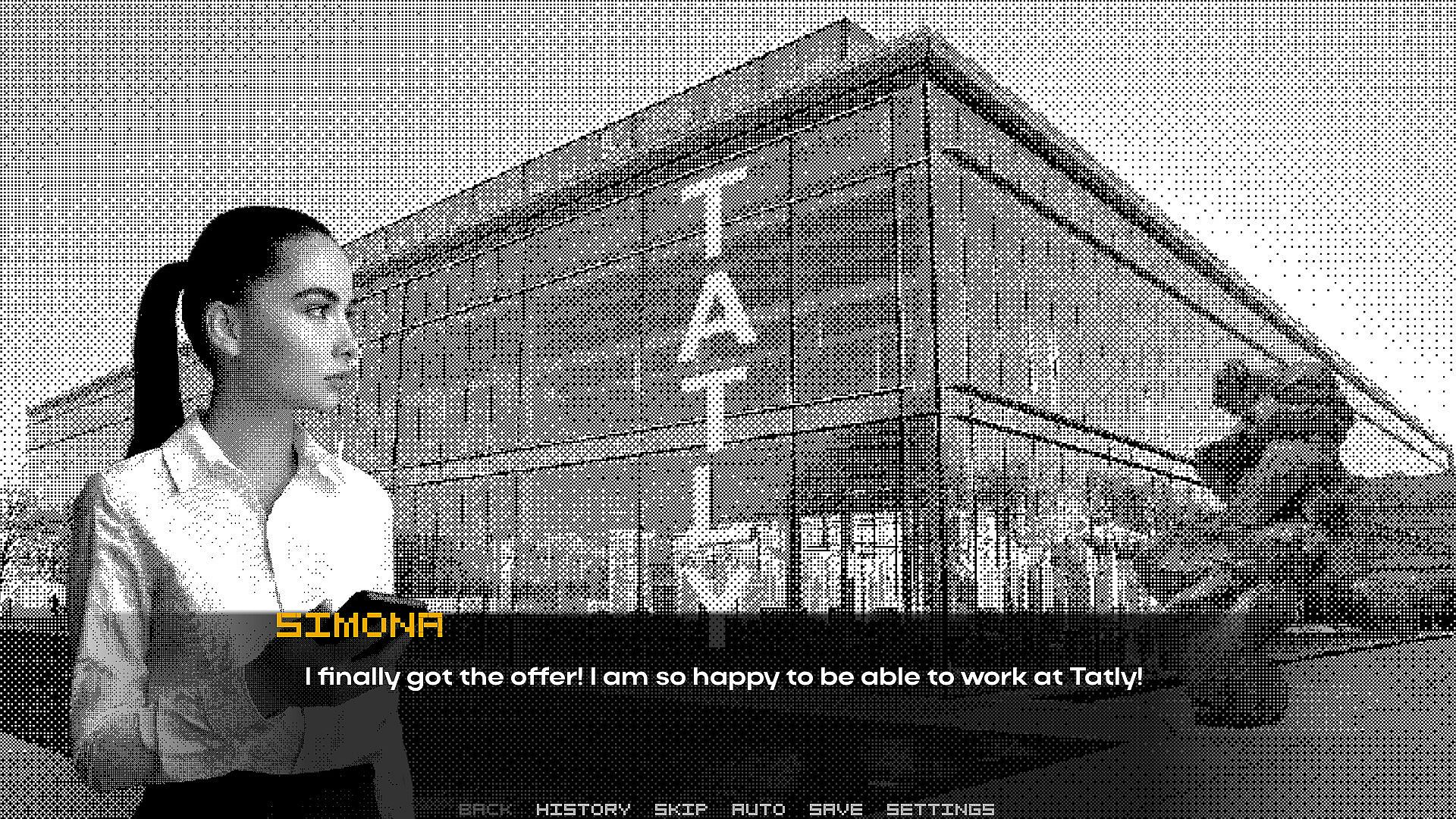
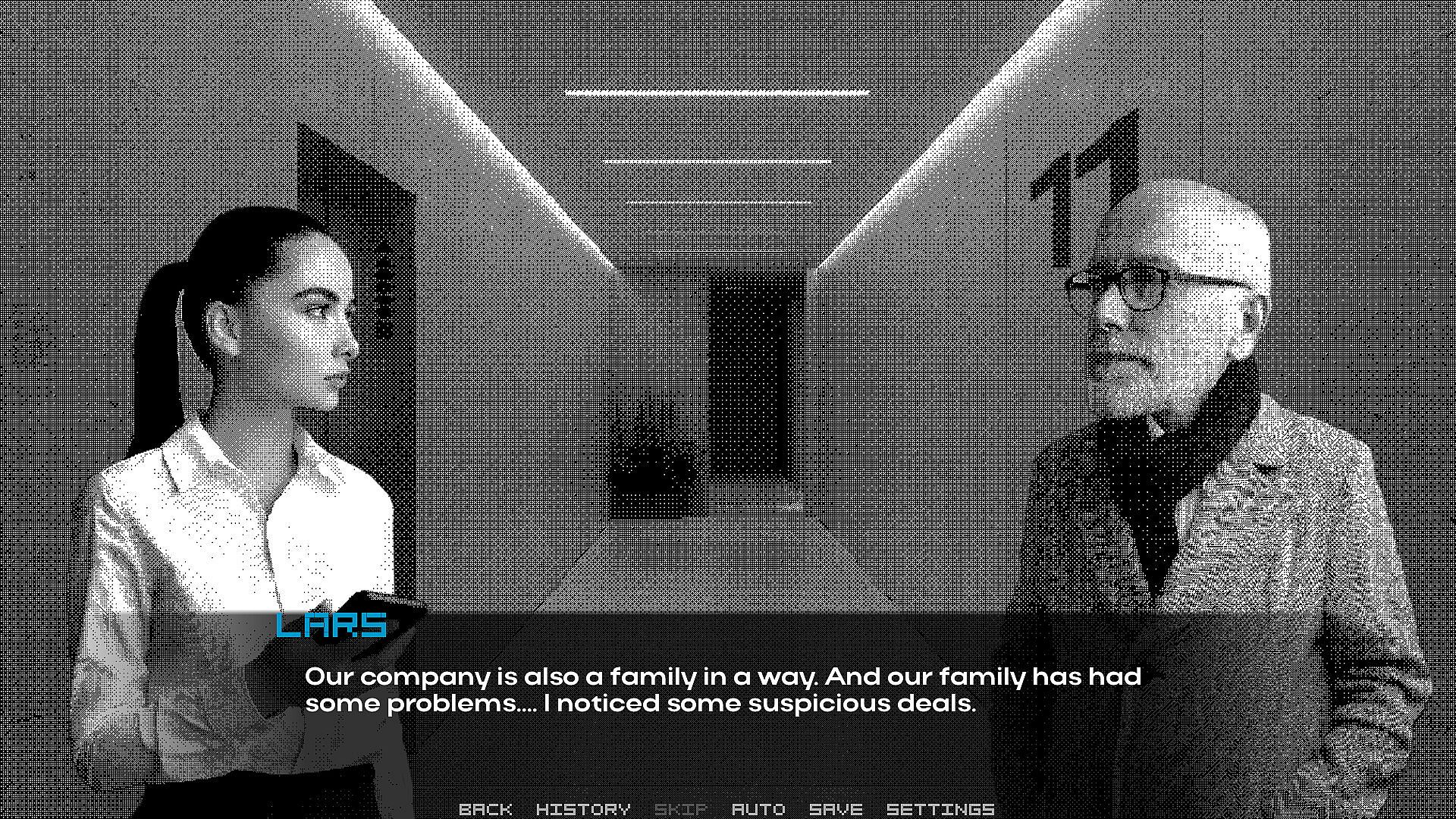

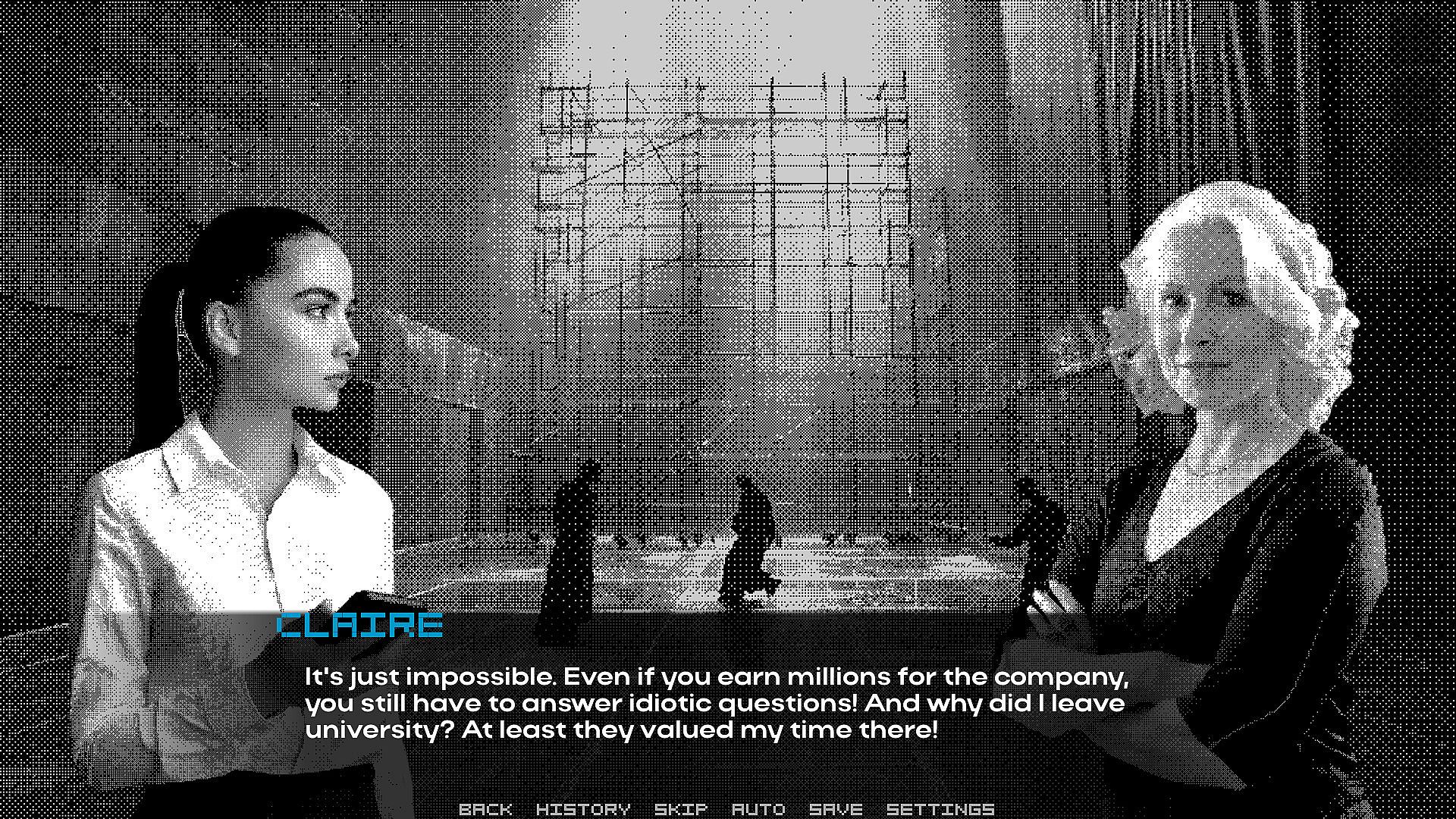
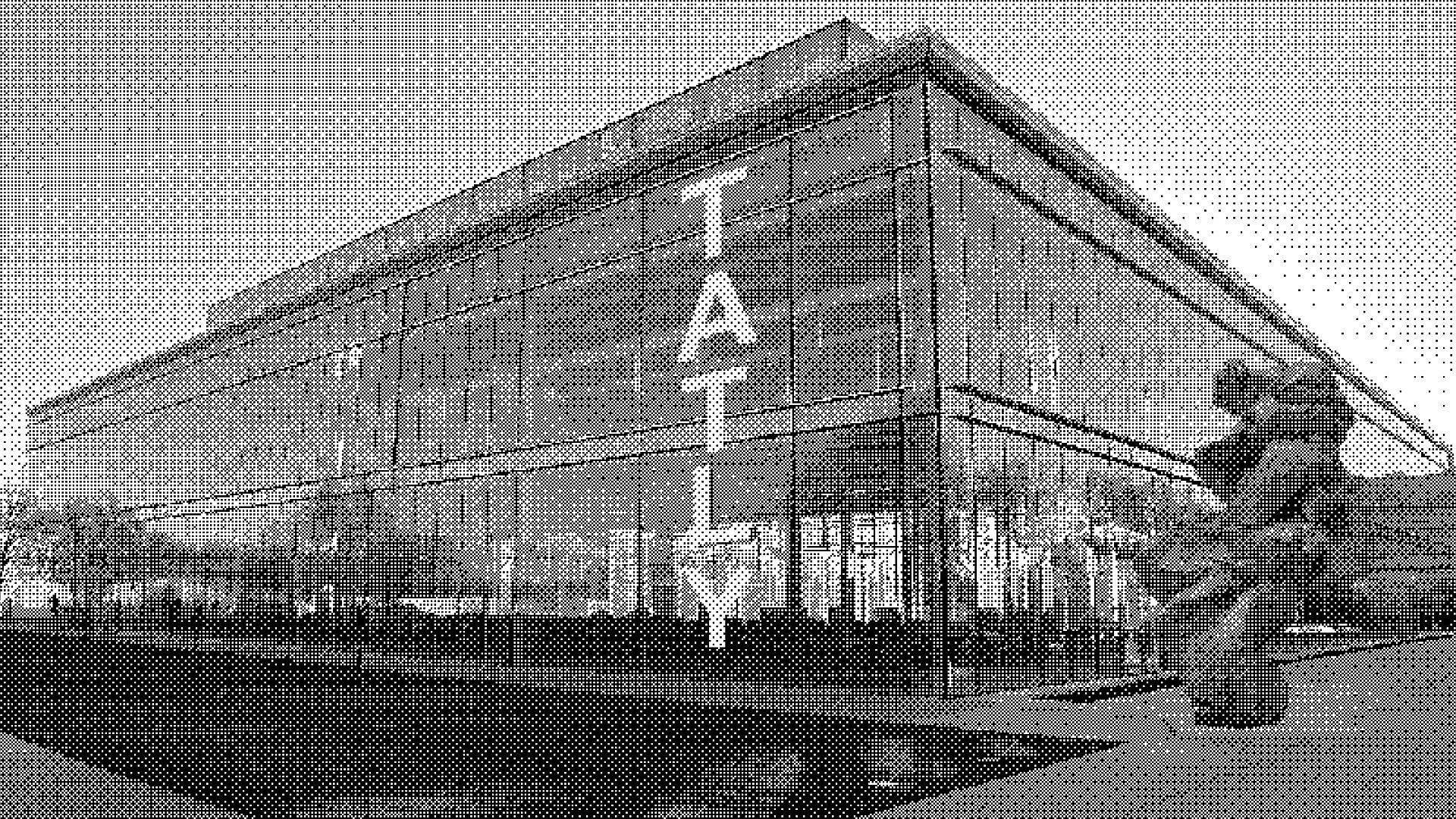
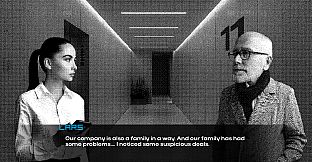
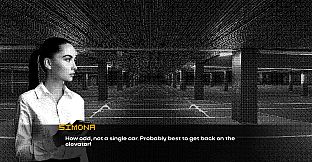

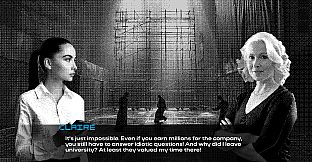
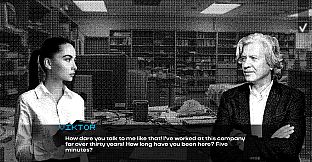


Tatly is an indie casual visual novel for PC that presents itself as an interactive essay on the role of art amid big tech dominance and corporate control. Set in the near future, the story follows a young curator named Simona who joins the Tatly megacorporation, a company that has consolidated the global art market through advanced AI tools and platform strategies. Players navigate her entry into this environment, where initial enthusiasm for promoting fresh artistic voices gives way to encounters with opaque contracts, manipulated sales data, and hidden corporate practices.
Gameplay
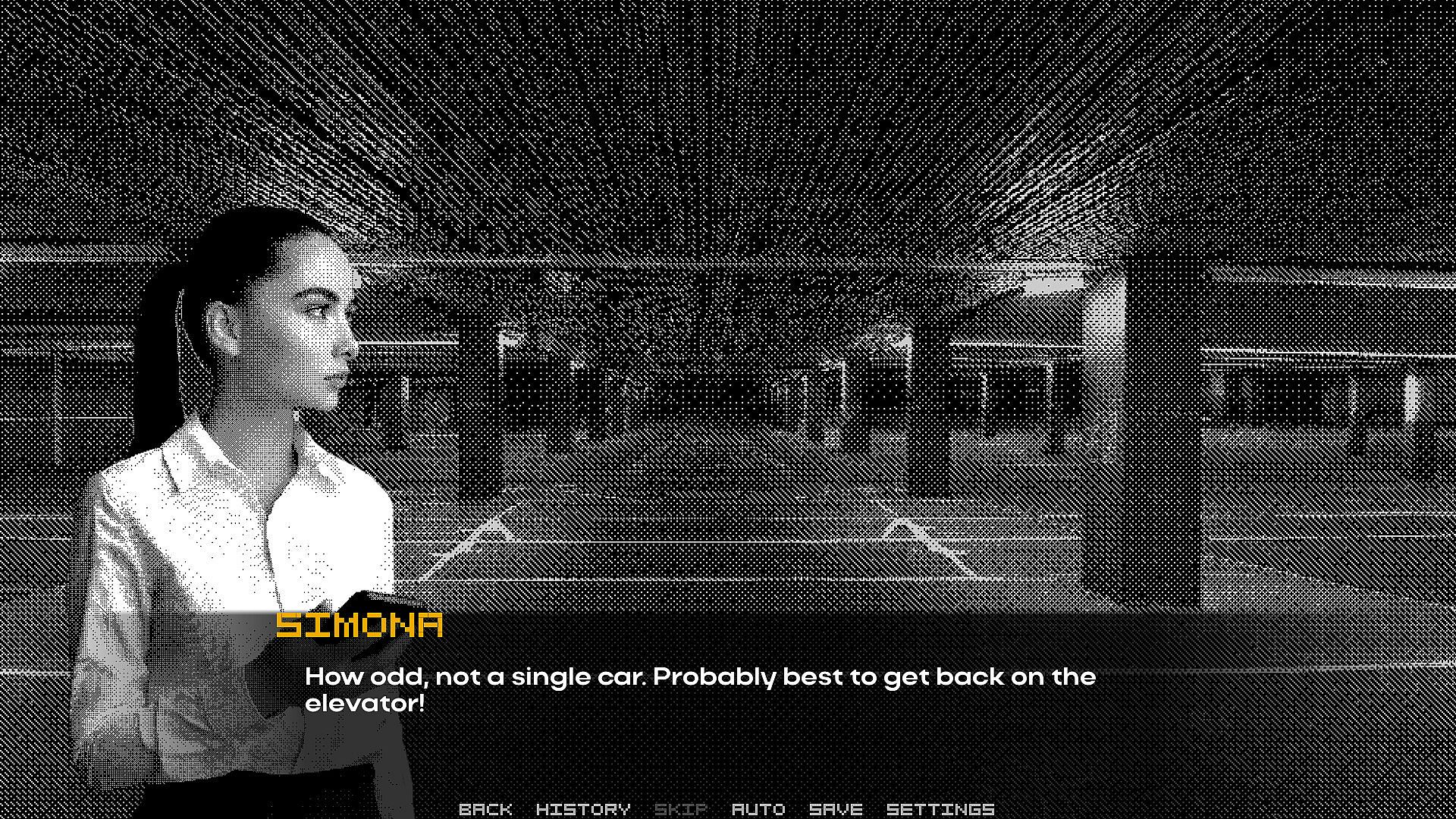
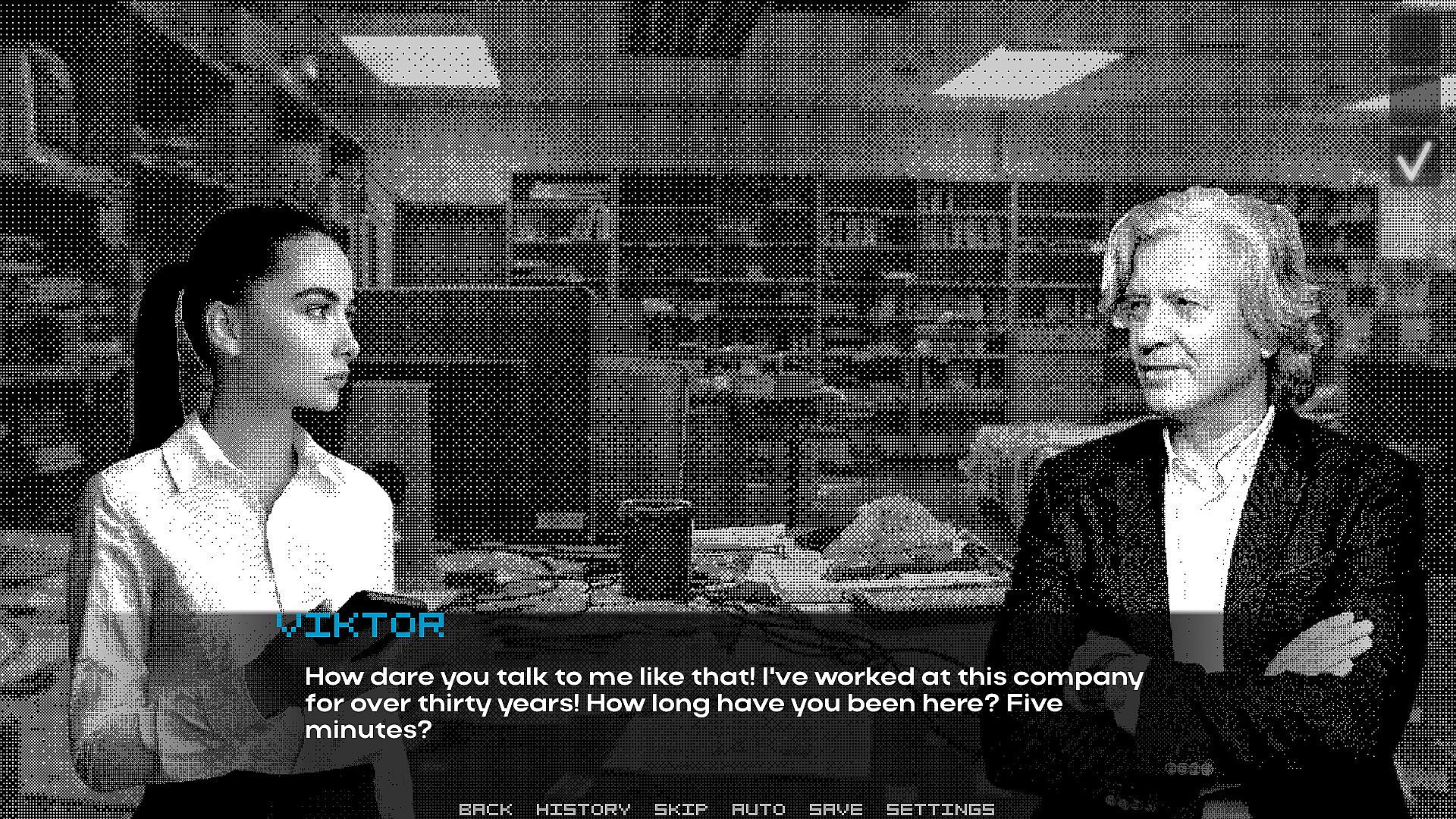
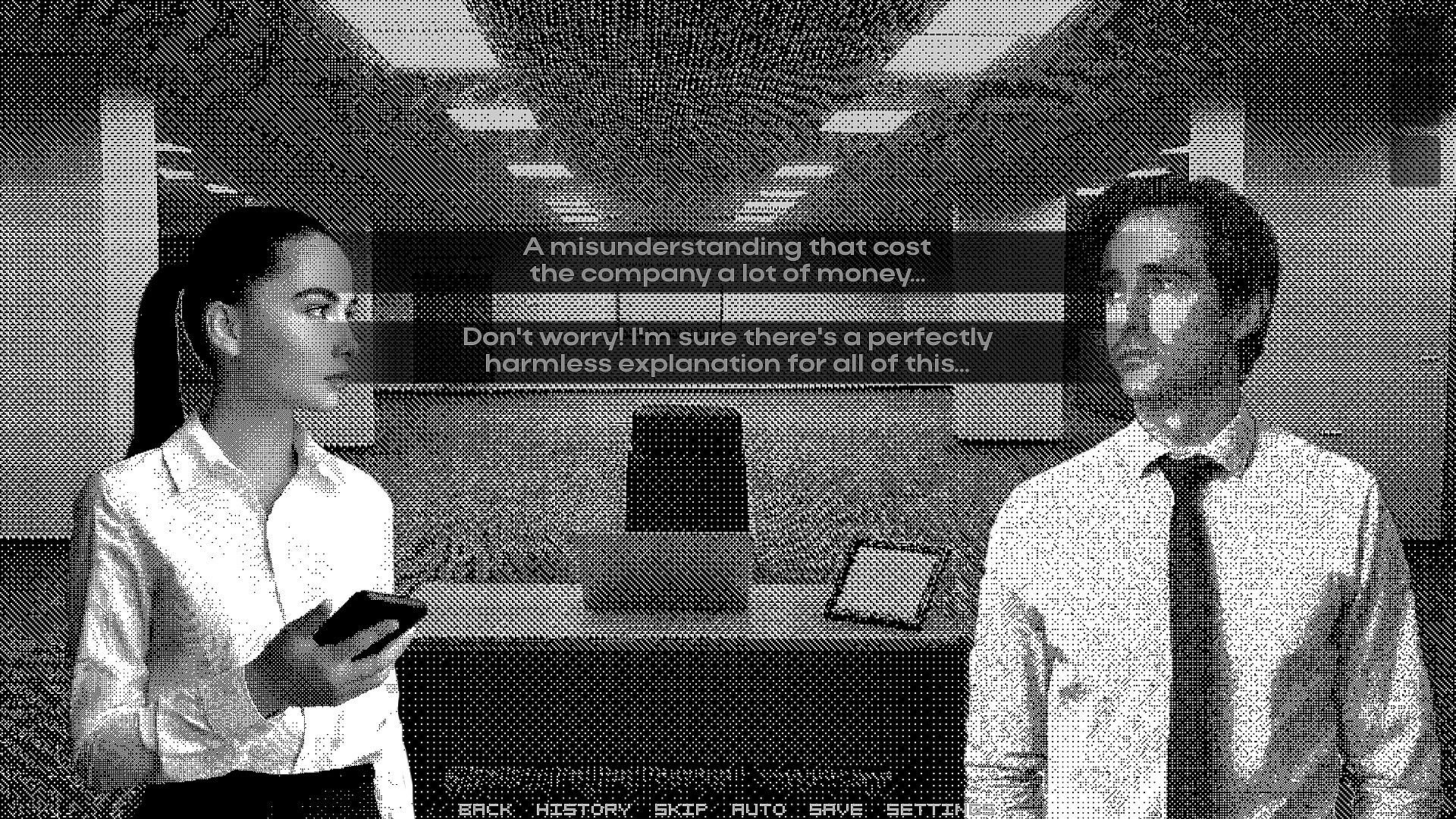
The core loop revolves around exploration within the corporation's multi-floor headquarters and conversations with a small cast of characters. Movement occurs primarily through elevator controls that allow access to different levels, each revealing new locations and opportunities for interaction. Dialogue forms the central activity, with players selecting questions and responses during exchanges with five key figures to uncover details about ongoing art transactions and internal operations.
Investigation mechanics encourage close attention to specific deals, such as undervalued sales of historical pieces or unusual pricing for performance works. These elements tie directly into the narrative progression, where choices in conversation influence what information becomes available and how the curator's understanding of the company's methods evolves. The experience remains grounded in point-and-click style navigation and text-based decision making rather than timed challenges or resource management.
Game Modes
Tatly operates as a single continuous narrative experience without distinct game modes or separate campaigns. Progression follows the curator's career path through the corporation, blending exploration segments with extended dialogue sequences that build toward revelations about algorithmic influence on art valuation. All content stays contained within this unified structure, allowing players to focus on piecing together the story through repeated visits to locations and follow-up conversations.
Branching occurs naturally from dialogue selections, but the overall path remains focused on the central mystery of corporate art practices rather than offering replayable side activities or competitive elements. This design suits the game's emphasis on thoughtful examination over varied gameplay loops.
Story and Themes
The narrative examines how human creativity intersects with technology-driven platforms and profit motives. Simona begins eager to champion genuine talent yet quickly confronts the realities of a system that prioritizes scalable AI solutions over individual artistic intent. Key plot threads involve suspicious contracts and the reasons behind specific art sales, prompting players to question the boundaries between innovation and exploitation in the contemporary art scene.
Texts and design elements highlight the tension between original ideas and corporate frameworks, drawing from the contributions of artists Yanis Proshkinas and Serj Tubash alongside writer Tomas Čenys and designer Daria Solovyova. The result delivers a concise yet layered examination of these issues through the lens of one employee's growing awareness.
Is It Worth Playing?
Tatly suits players interested in narrative-driven titles that prioritize reflection on cultural and technological topics. Its visual novel format delivers a focused story about corporate influence in art without requiring extensive time commitments or mastery of complex systems. Those who enjoy dialogue-heavy experiences and uncovering layered motivations through conversation choices will find the mechanics align closely with the thematic goals.
The game stands as a complete, self-contained work released in 2024, with no ongoing seasonal content or additional updates required for the core narrative. It appeals particularly to audiences seeking indie works that blend art-world commentary with accessible gameplay rather than high-action or multiplayer formats. For the right player, the combination of investigation and character interactions provides a meaningful way to engage with questions about creativity under corporate pressure.