


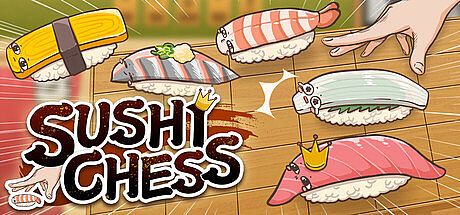



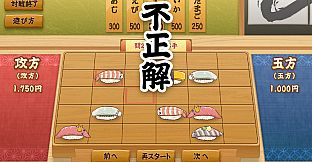
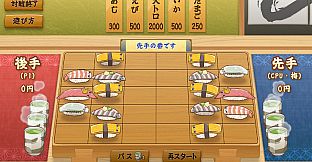
SUSHI CHESS is a turn-based strategy board game that blends elements of chess and shogi with an economic twist. Players move sushi pieces across the board, where each piece carries a set price, and capturing an opponent's piece requires paying that amount from your own funds. The goal centers on managing both position and budget, as every capture affects your wallet while advancing your control of the board.
Gameplay
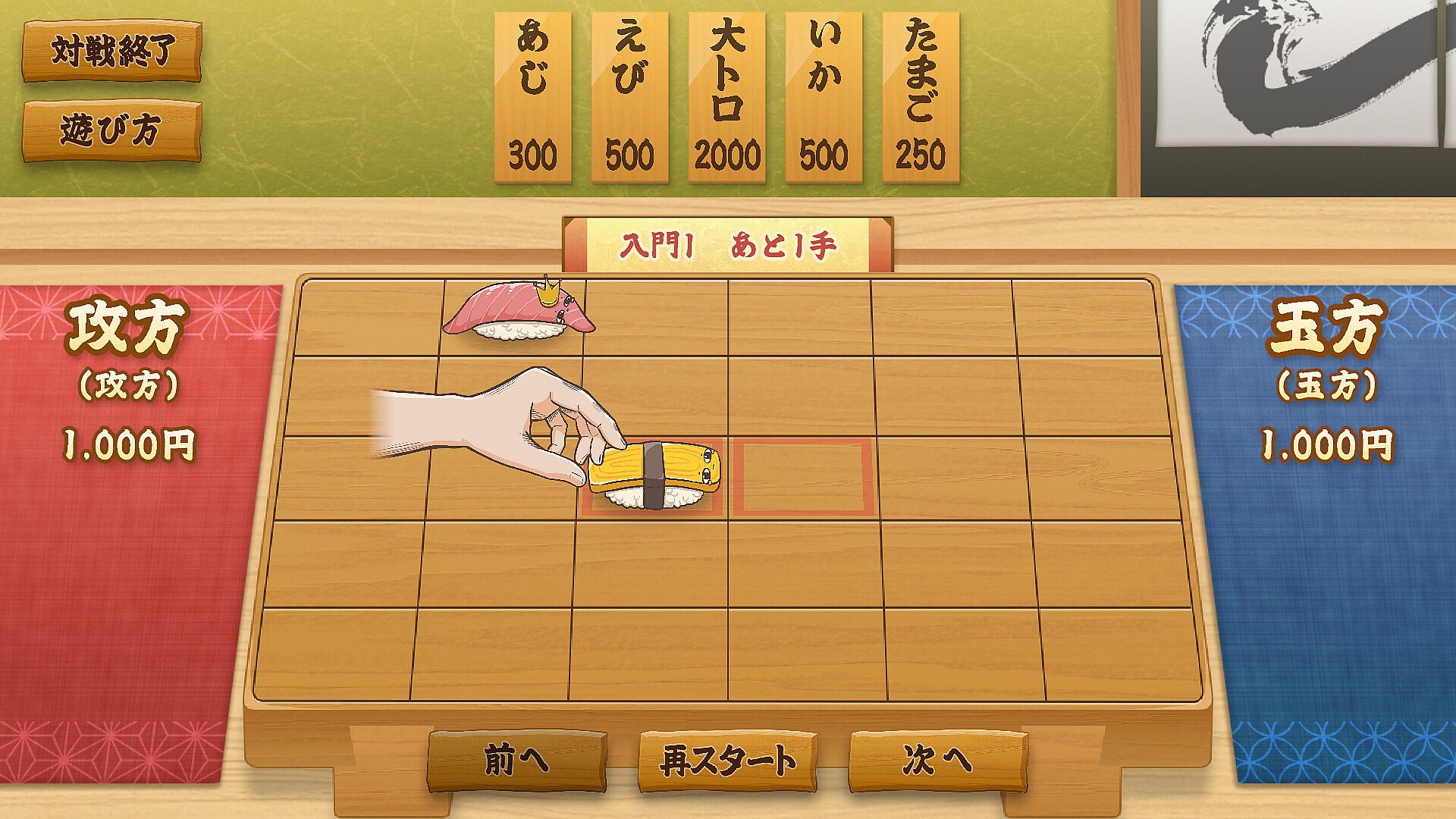
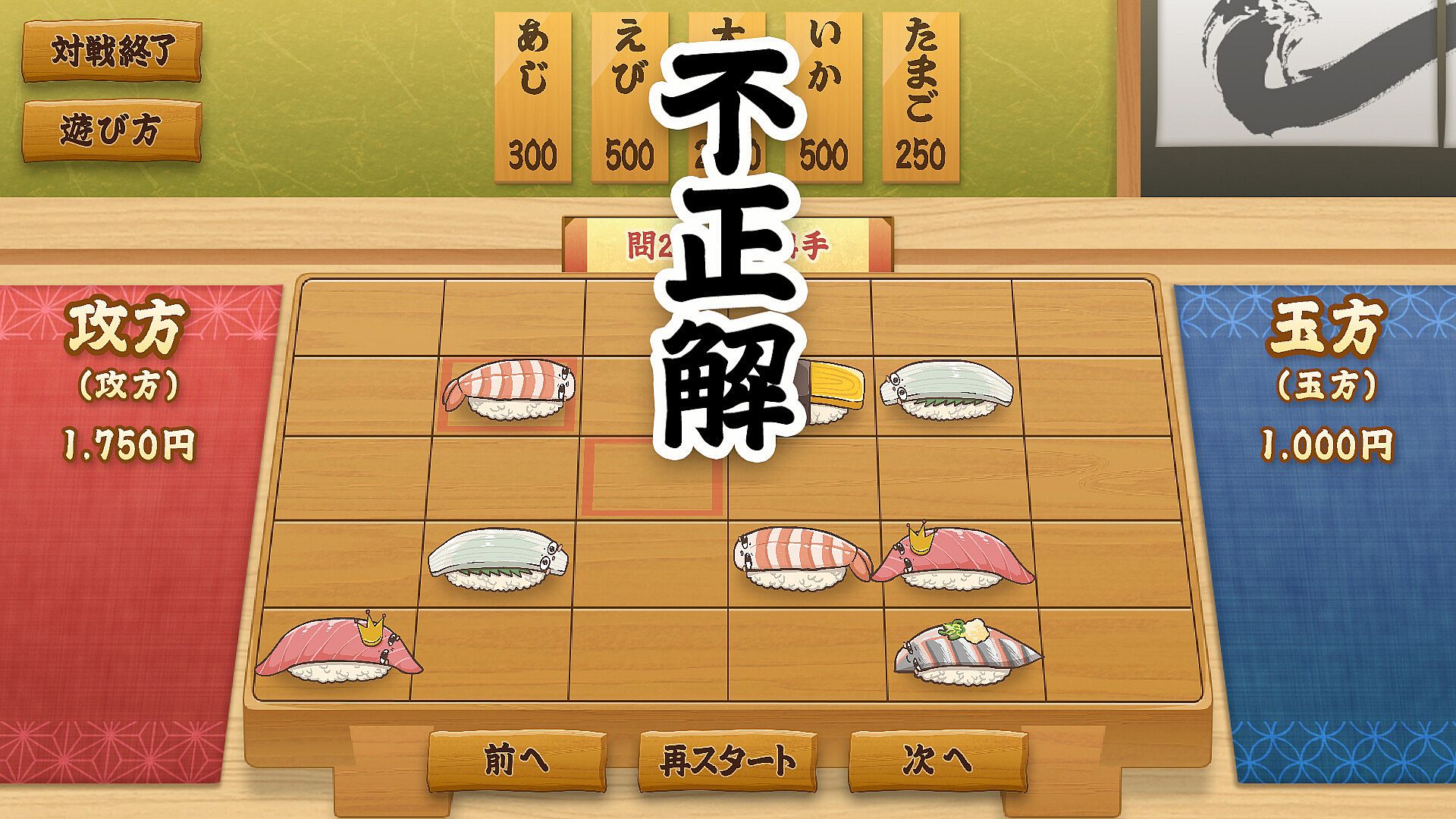
The core loop revolves around careful decision making on each turn. Moving a piece follows standard board game movement rules adapted for sushi variants, but the real tension comes from the cost of captures. Taking a low-value piece like an omelet might secure immediate space at little expense, while pursuing a high-value tuna could drain resources quickly. This system turns every exchange into a calculation of risk versus reward, where tempting an opponent into an expensive capture can shift the balance of both the board and the finances.
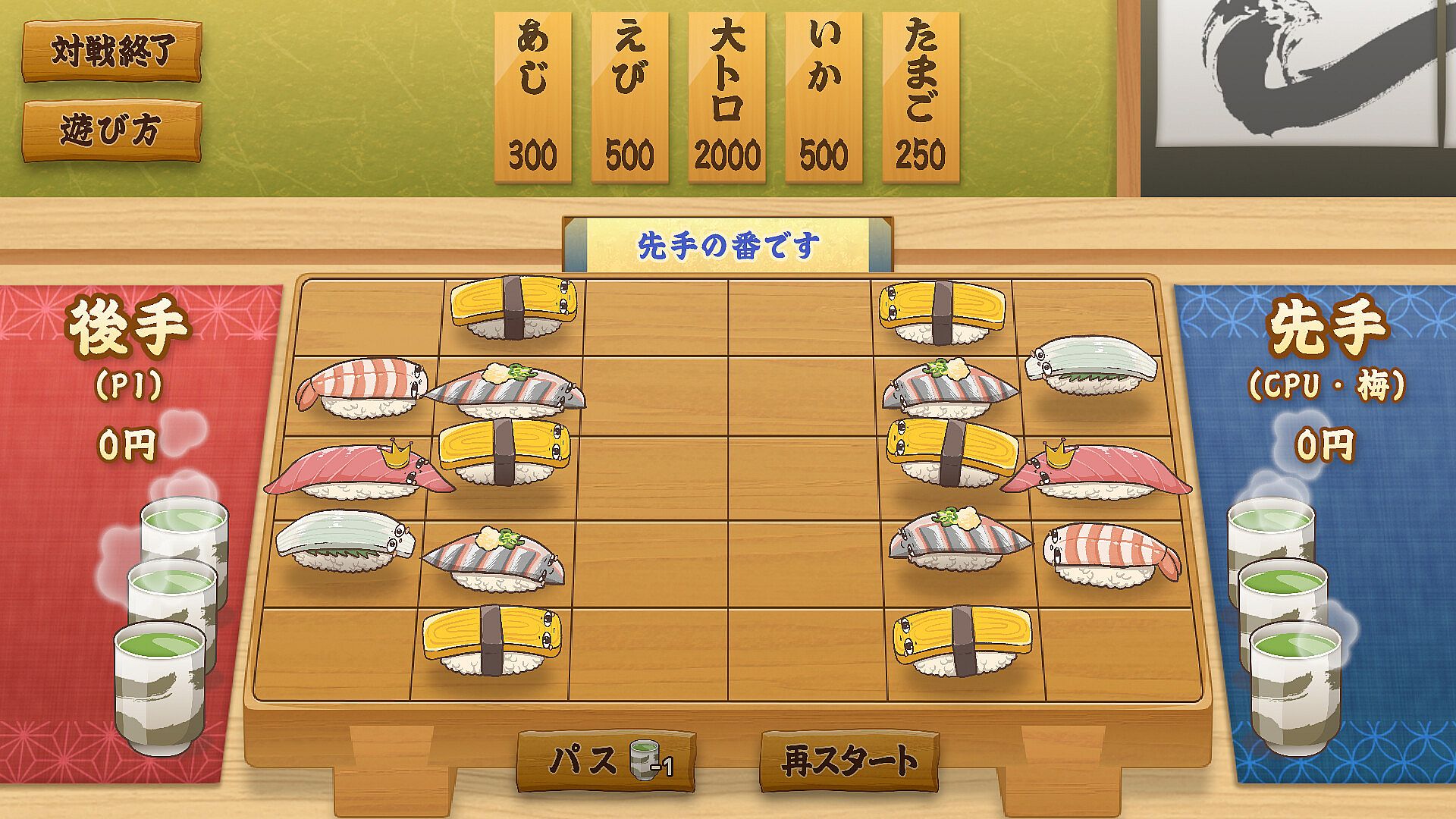
Passing a turn is possible but not free. Choosing to skip a move requires paying for a cup of tea, which adds another layer of resource management. The mechanic discourages stalling and forces players to weigh whether holding position is worth the ongoing cost. Pieces such as the omelet and tuna appear in key positions, encouraging players to evaluate short-term gains against long-term budget health throughout the match.
Game Modes
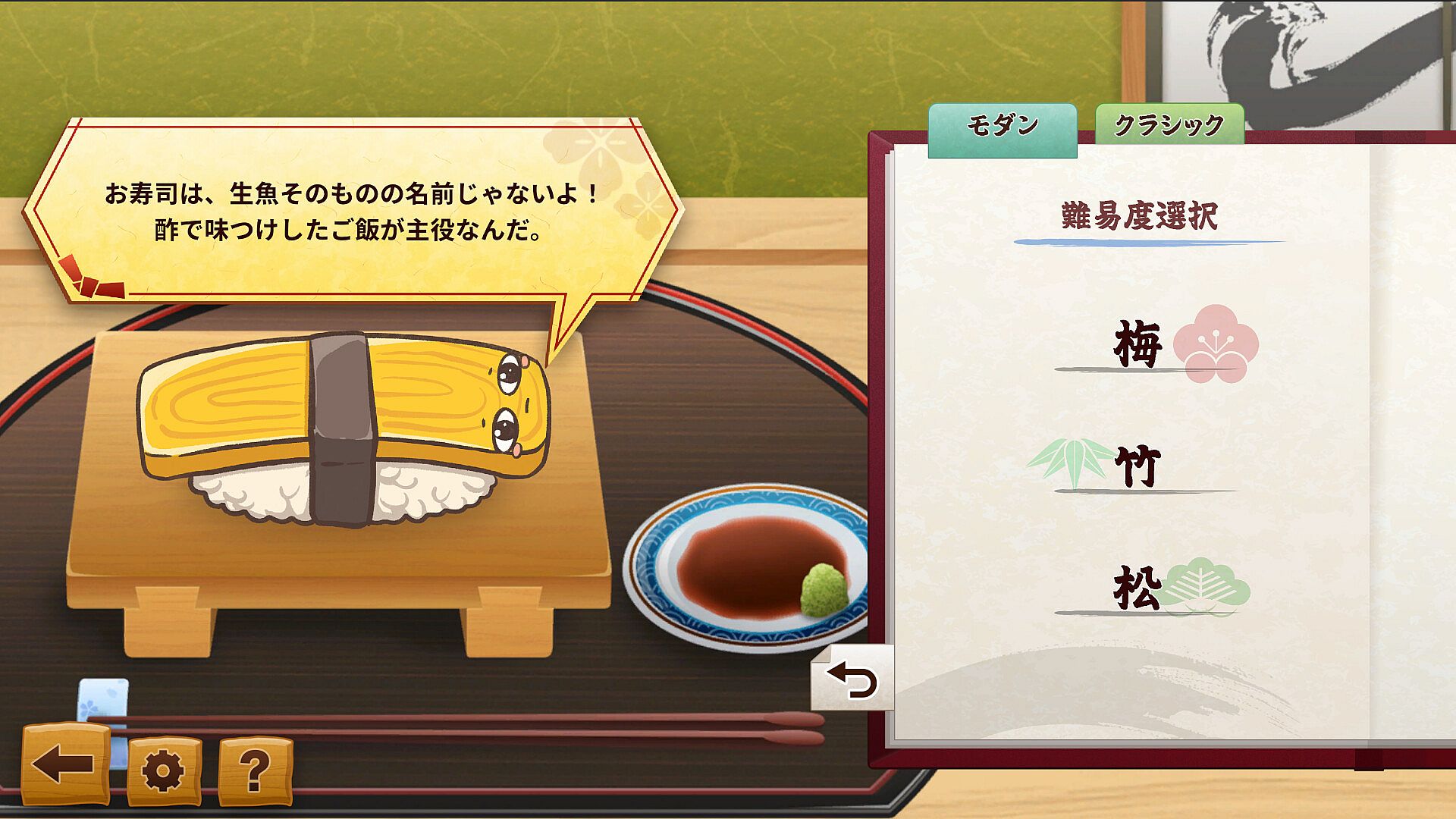
Puzzle Mode provides solo challenges where players solve specific board positions by finding the correct sequence of moves within a limited number of turns. These puzzles test pattern recognition and foresight across varying difficulties, allowing practice without the pressure of an opponent. CPU matches offer three skill levels, Easy, Normal, and Hard, so players can adjust the challenge to their experience level while learning the money mechanics.
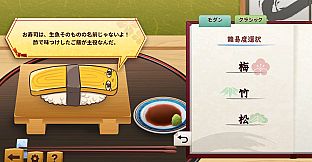
Multiplayer options include local play on a single PC for face-to-face matches and online sessions with invited friends. The game supports one-on-one competition in both formats, keeping the focus on direct strategic confrontation. Two victory condition sets exist: Modern rules incorporate the money system fully, with outcomes tied to capturing key pieces like the big tuna, forcing bankruptcy, or limiting passes, while Classic rules remove the financial element for a more traditional board game experience.
Strategy and Decision Making
Success depends on reading the opponent as much as the board. A player might deliberately leave an expensive piece exposed to lure the rival into a costly capture that weakens their budget. Conversely, protecting high-value sushi while advancing lower-cost pieces can build a positional advantage without excessive spending. The tea pass option adds timing considerations, as repeated passes can lead to defeat under certain rules.
The economic pressure changes standard chess-like tactics. Instead of pure material advantage, players track both captured pieces and remaining funds. This dual focus rewards those who plan several moves ahead, anticipating not only board developments but also the financial impact of each exchange.
Is It Worth Playing?
SUSHI CHESS appeals to fans of casual strategy games who enjoy combining tactical movement with resource decisions. Its indie roots and straightforward presentation suit players seeking a fresh take on familiar board game structures without overwhelming complexity. The inclusion of puzzle challenges and adjustable CPU opponents makes it accessible for solo practice, while local and online multiplayer options support competitive sessions with others.
With a planned release in March 2027 and a demo already available, the game remains in active development. Those interested in turn-based titles that add an economic layer to captures will find the mechanics distinctive. The absence of user reviews at this stage means potential players should try the demo to assess whether the money management twist aligns with their preferences for strategic depth in a casual format.