







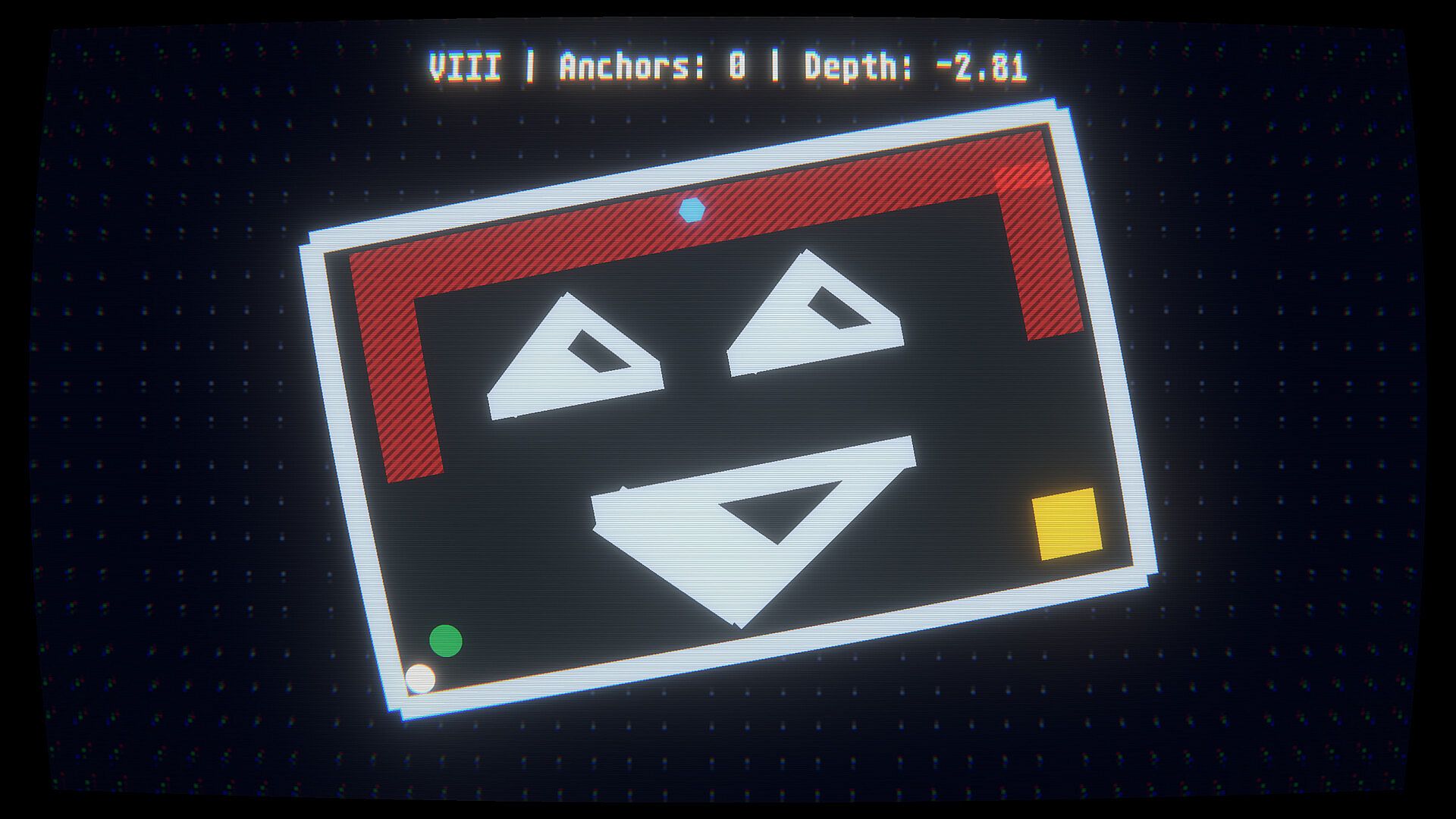
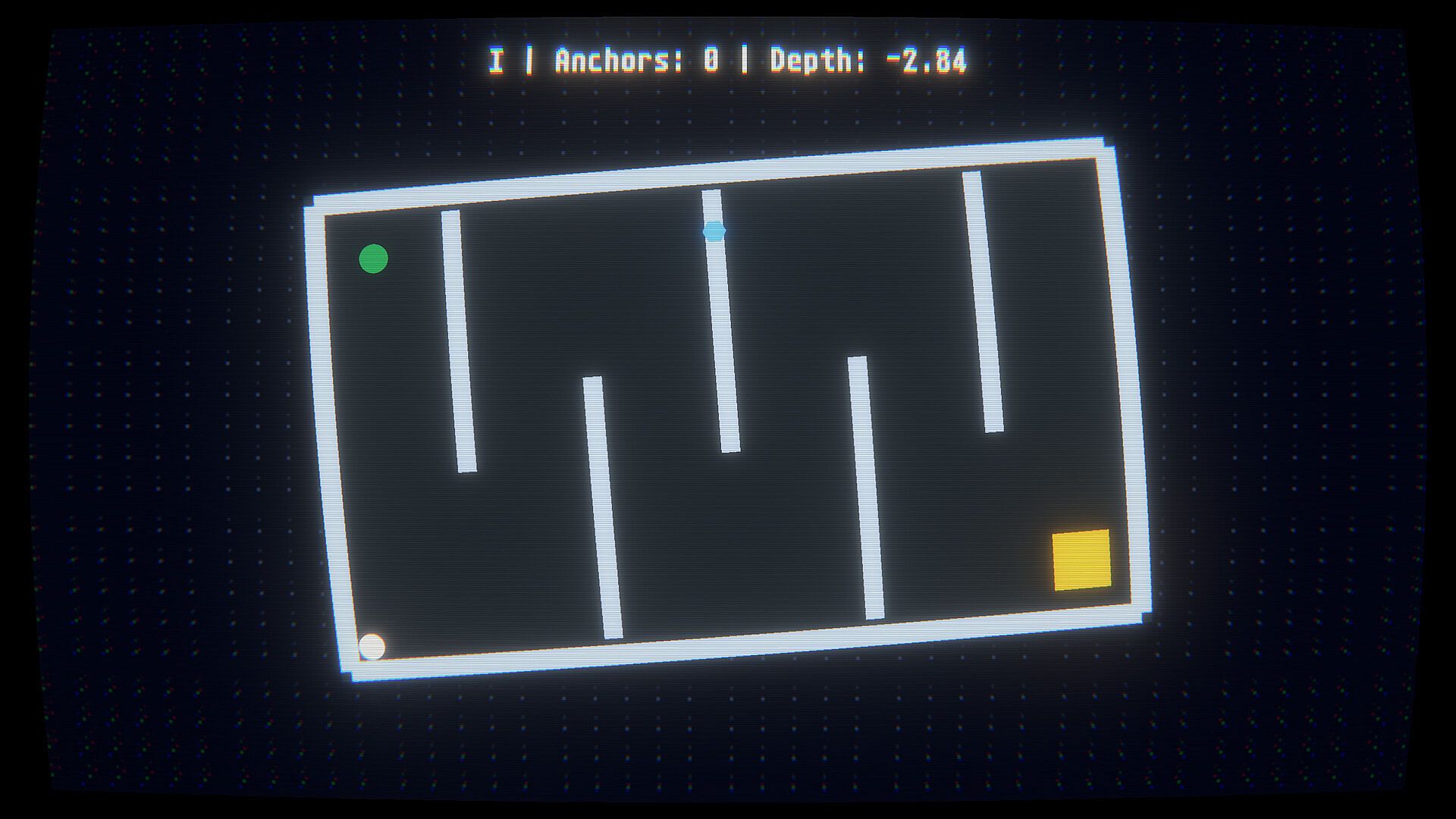
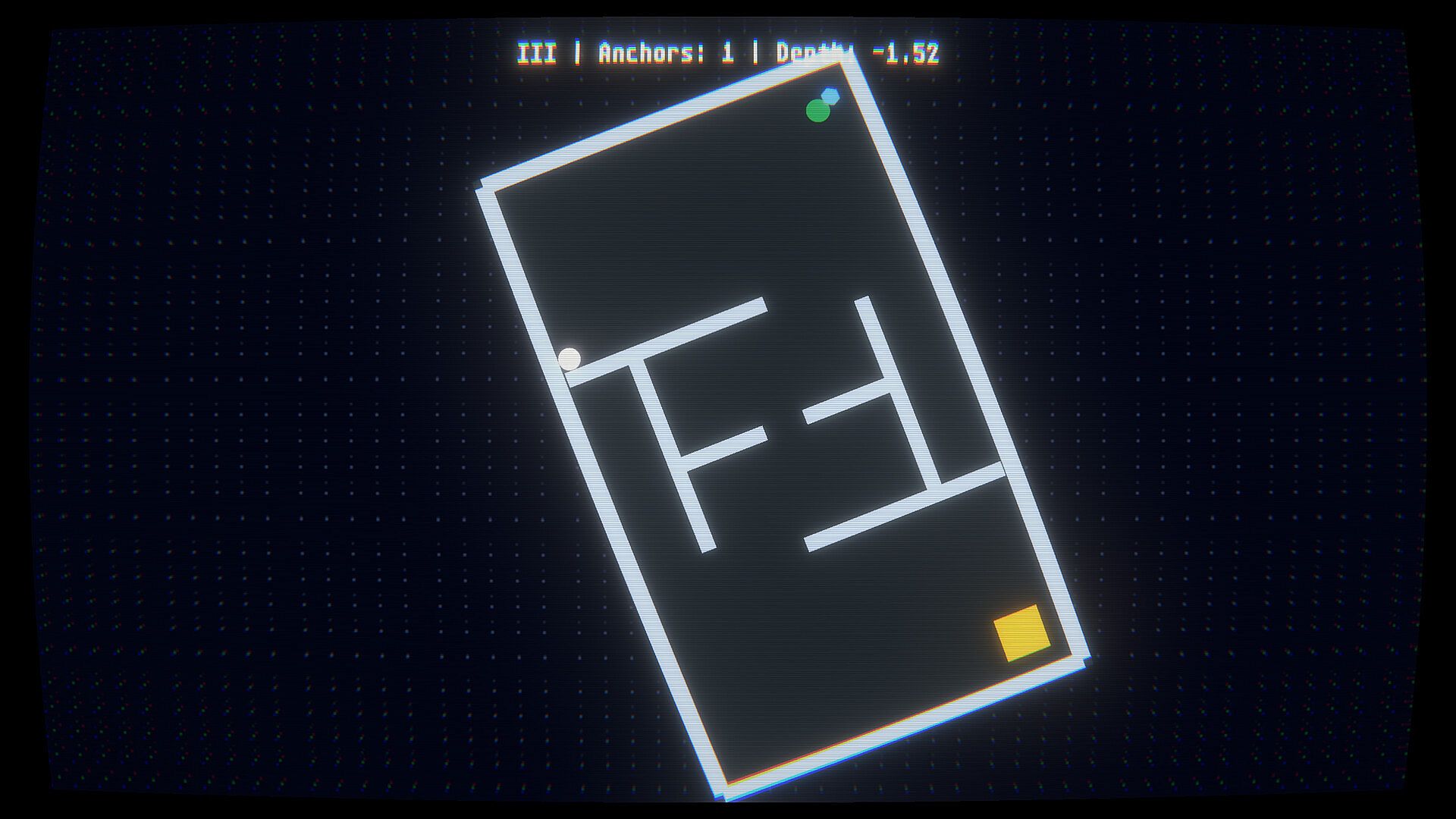
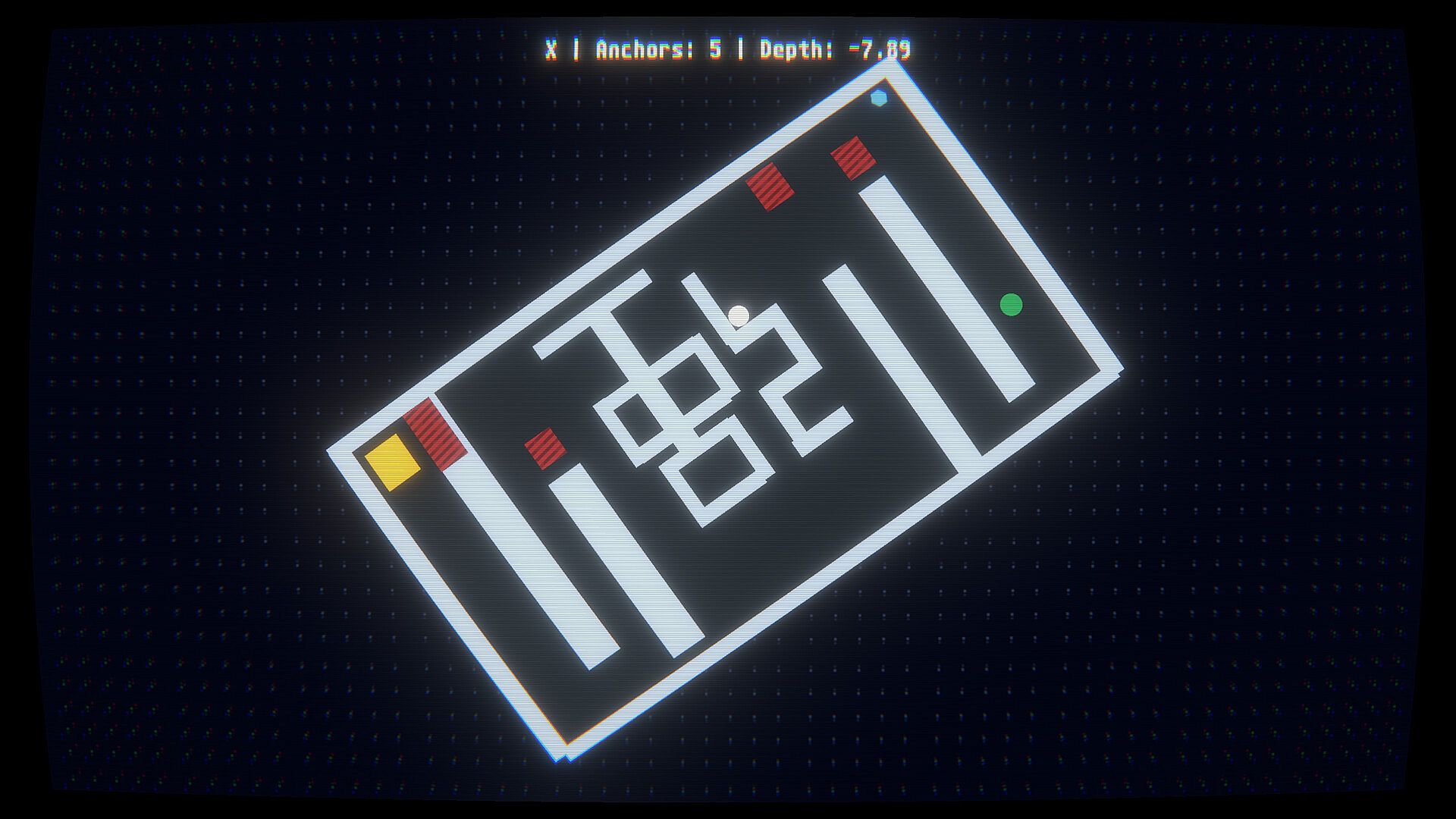
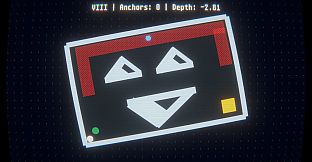
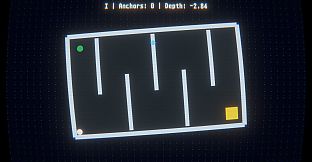
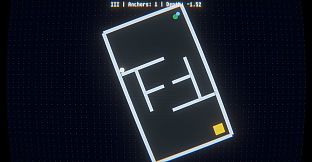
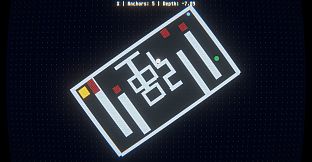
SUPERANCHOR is a 2D physics puzzle game in the strategy and indie genres, available on PC. Players guide a ball through suspended mazes by repositioning a single anchor point rather than directing the ball itself. The core loop revolves around gravity and momentum, where each anchor placement alters the maze's center of mass, causing rotations, swings, and shifts that propel the ball toward the exit.
Gameplay
The central mechanic places full control over the environment instead of the ball. Repositioning the anchor suspends the entire maze around that point, which changes slopes, creates new paths, and builds swinging motion under gravity. Walls, passages, and internal mechanisms all respond to these shifts, turning every decision into a calculation of physics forces.
Observation becomes essential. Players track the ball's current speed and trajectory while anticipating how a new anchor location will affect the maze's overall balance. A precise placement can produce a gentle roll through tight sections, while a poorly timed move might trigger violent swings that redirect the ball unpredictably. Momentum accumulates naturally from rotations and collisions, often providing the final push needed to clear obstacles without direct intervention.
Levels emphasize different approaches to the same system. Some demand slow, deliberate adjustments to navigate narrow corridors without overshooting. Others reward building high-speed swings to launch the ball across gaps or over barriers. The minimalist high-contrast visuals, complete with scanlines and glitch effects, keep attention fixed on structural changes and physical interactions at every moment.
Game Modes
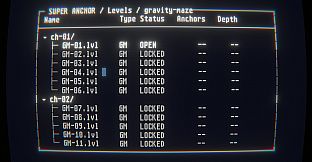
Play centers on a sequence of individual puzzle levels that progressively introduce more complex maze layouts and mechanism interactions. Each level presents a fixed goal of guiding the ball to an exit while experimenting with anchor placements to harness gravity effectively. Variation comes from level design rather than separate modes, with some setups favoring precision control and others encouraging momentum buildup through repeated swings.
The experience remains singleplayer throughout, focused on mastering the anchor-and-gravity system across increasingly intricate environments. No additional multiplayer or competitive elements appear in the available information about the title.
Visual Style and Presentation
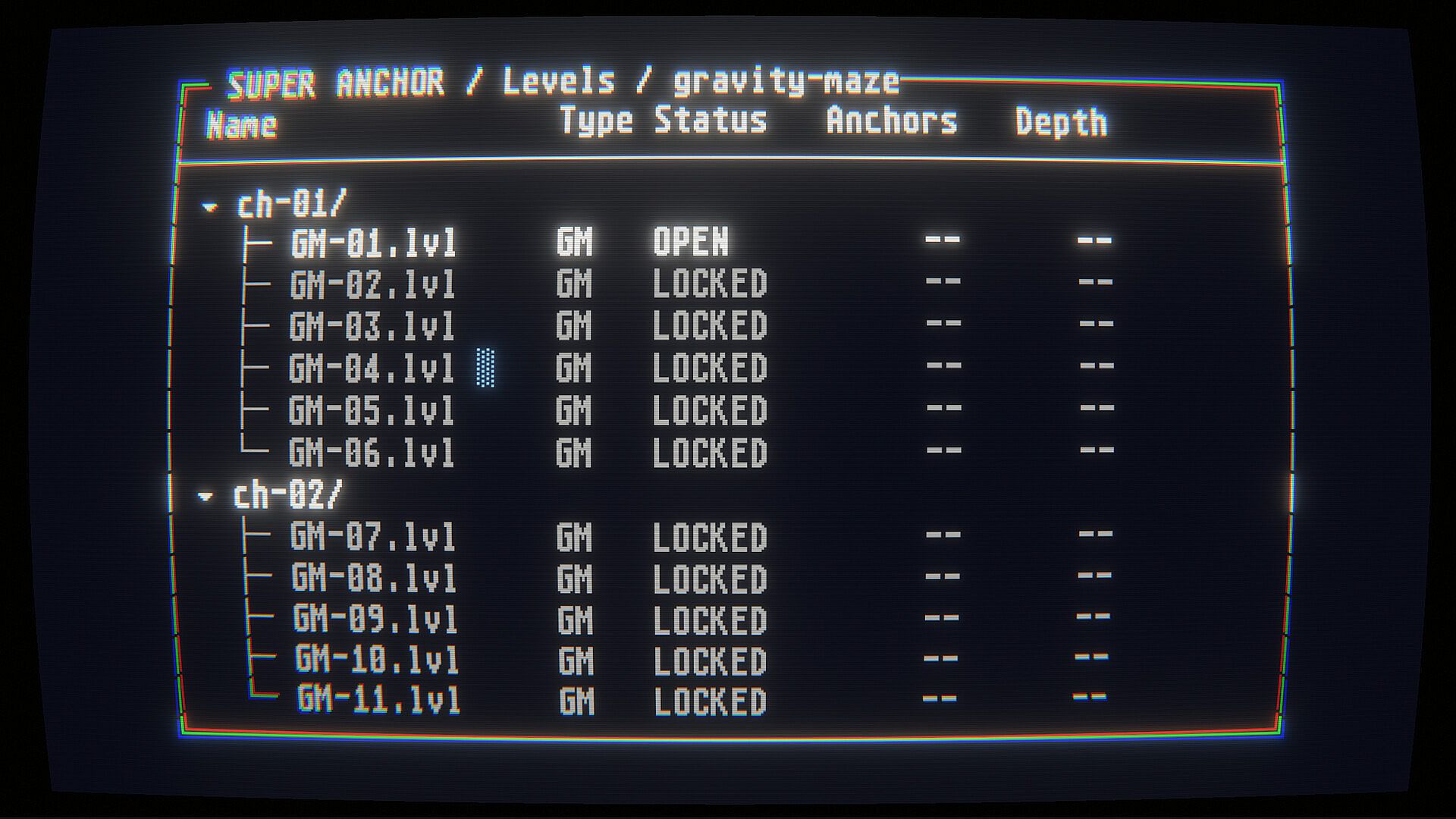
The game adopts a cold, abstract aesthetic built around high-contrast elements that highlight the maze structure and motion. Terminal-inspired interfaces and glitch effects reinforce the focus on physical simulation without distracting visual noise. Every rotation, collision, and loss of control registers clearly because the design strips away unnecessary details.
This approach suits extended play sessions where repeated attempts reveal subtle differences in how anchor positions influence outcomes. The style supports the strategy elements by making cause-and-effect relationships immediately visible.
Is It Worth Playing?
SUPERANCHOR remains listed as coming soon on its Steam page, with no release date or player reviews available at this time. The described mechanics appeal directly to fans of physics-based puzzle games who prefer indirect control and environmental manipulation over traditional character movement.
Those who enjoy titles that reward careful observation and timing with gravity systems will find the core loop engaging. The absence of direct ball control creates a distinct challenge that emphasizes planning and adaptation. Players interested in minimalist strategy experiences on PC may want to follow further updates for a potential release.