





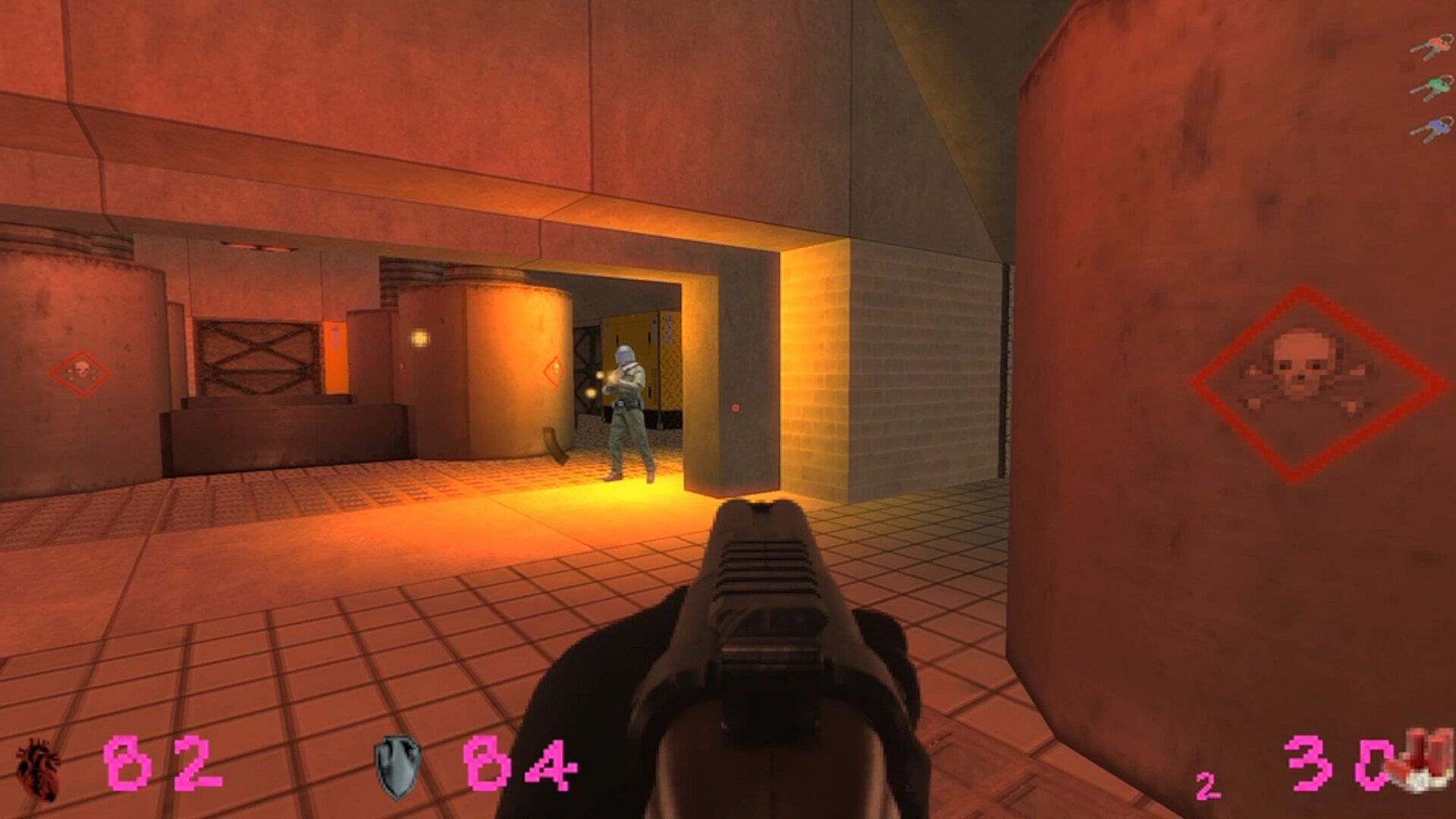
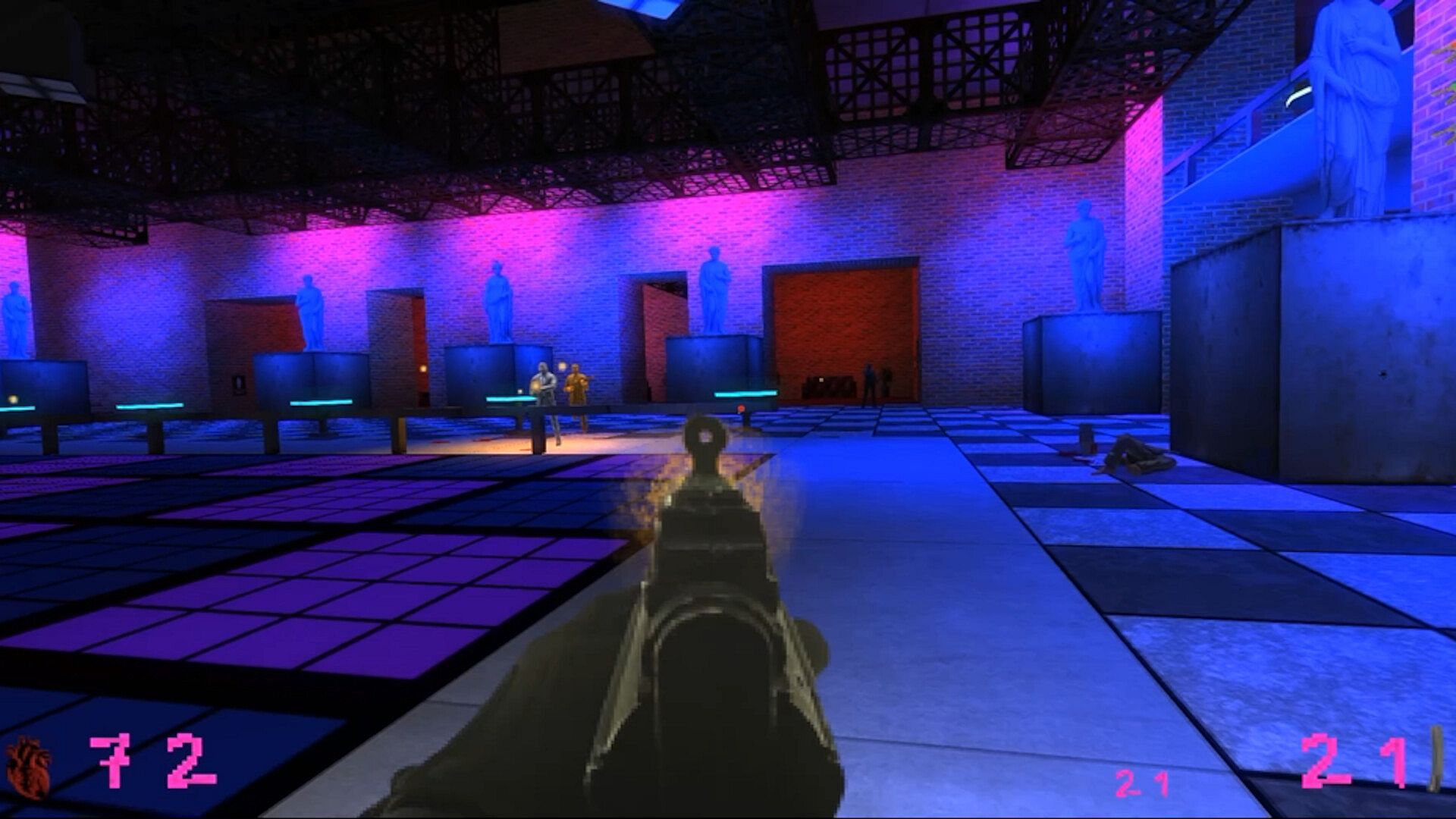
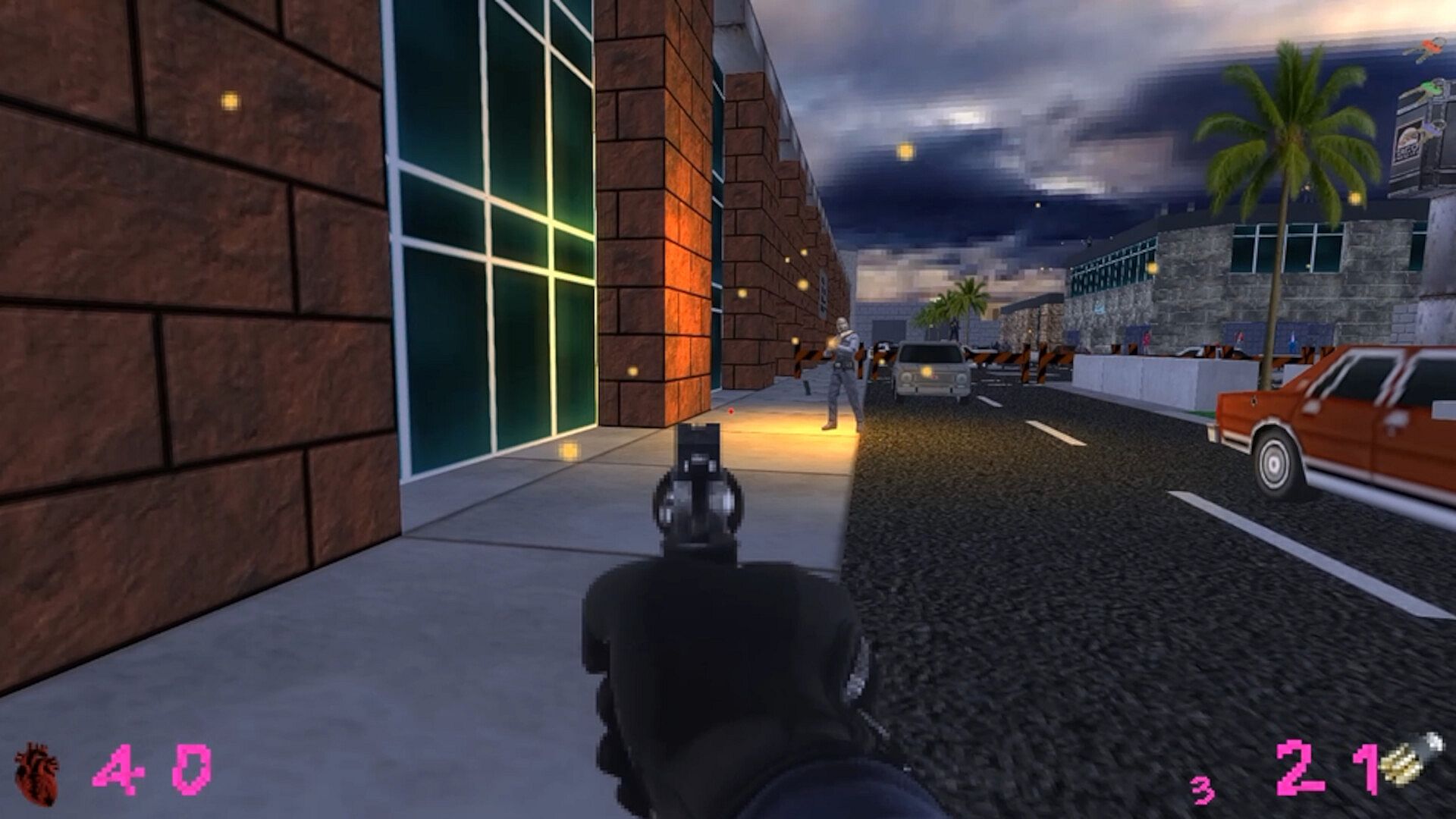
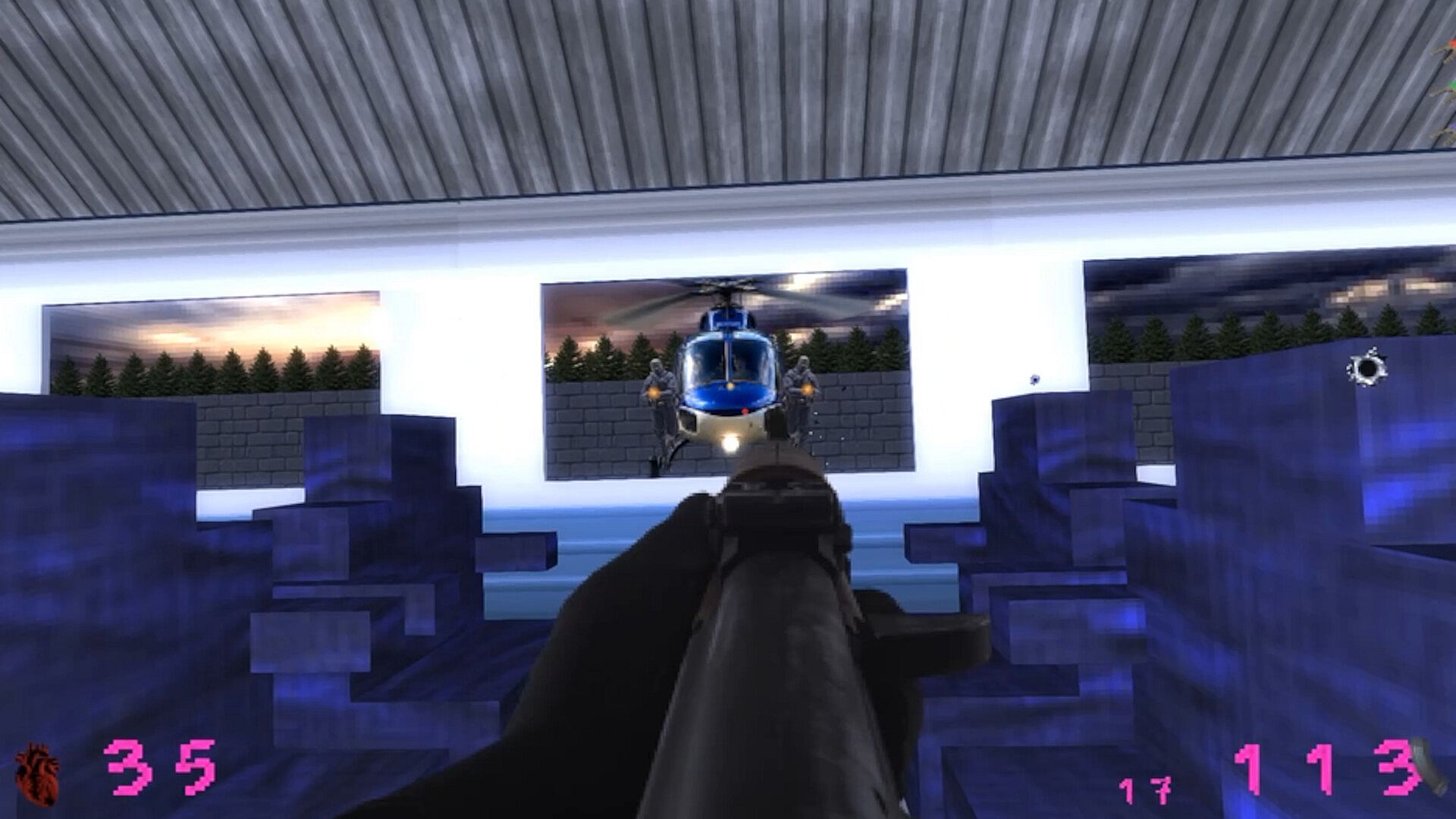
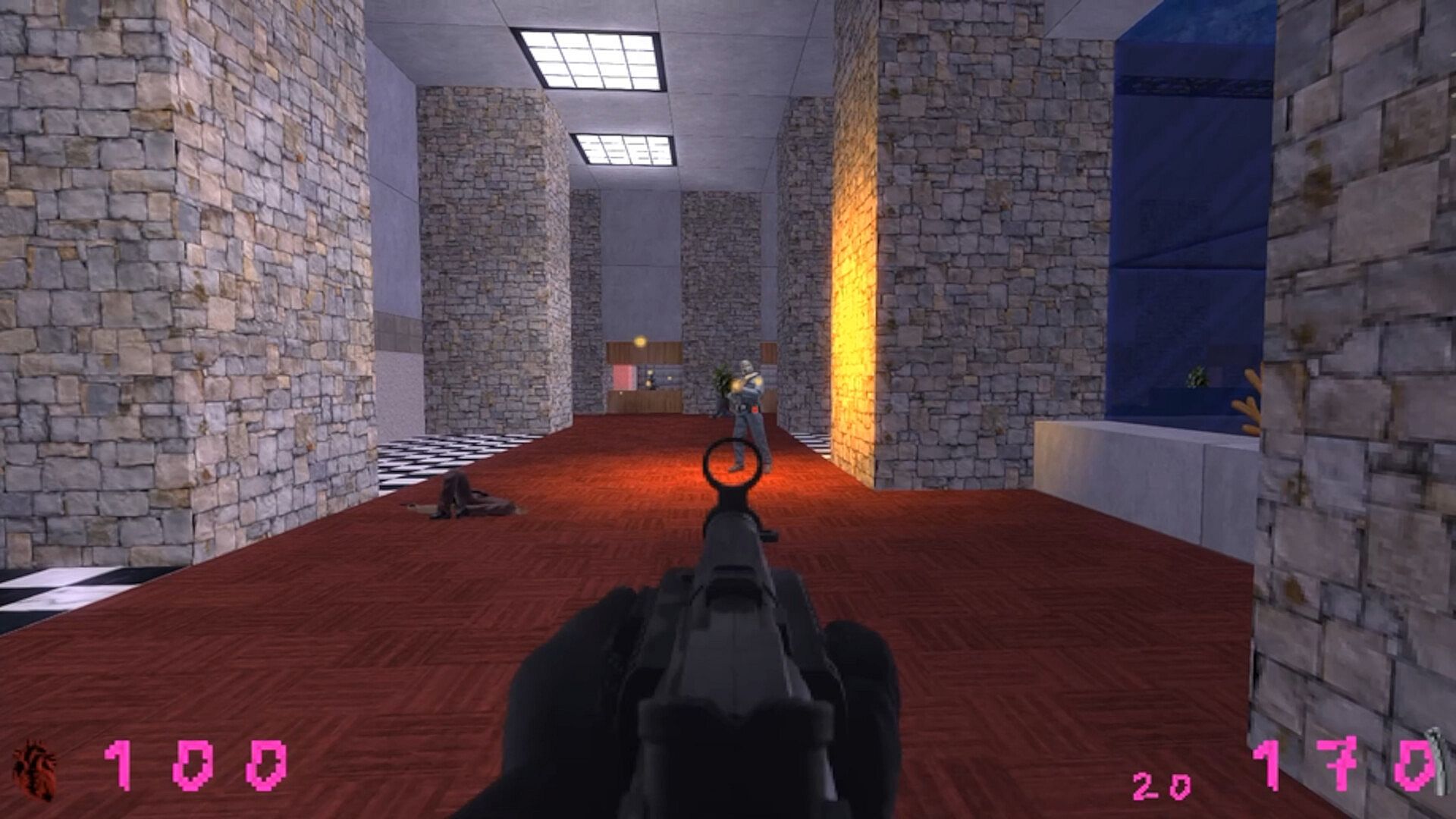
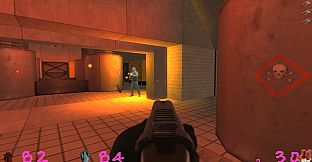
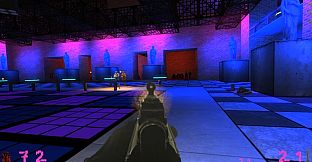
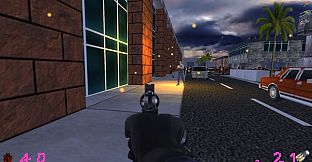
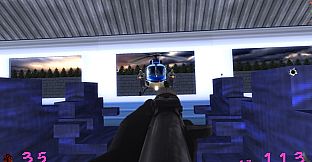
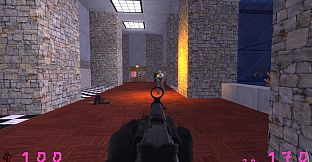
Street Tuff: The Miami Chapter is a single-player retro first-person shooter set in 1988 Miami. Players take on the role of a hardened detective drawn back into an old case involving drug trafficking and violent crime across the city.
Gameplay
The core loop centers on linear level progression through various Miami locations. Combat mixes ranged shooting with close-quarters encounters in environments that shift from open streets to confined spaces like train cars. Movement emphasizes direct confrontation rather than stealth or complex navigation.
Eight distinct weapons support different combat situations, ranging from a standard 9mm pistol for precise shots to the AK-47 for sustained firepower. Each weapon handles differently in terms of rate of fire, damage output, and suitability for the enemies encountered.
Enemies include basic street criminals armed with melee weapons and incendiary devices as well as more organized gang members carrying heavier firearms. Encounters require constant repositioning because foes attack in groups and use cover or aggressive rushes. Seven dedicated boss fights punctuate the campaign, each built around patterns that force players to adapt positioning and weapon choice mid-battle.
All character models and weapon animations were produced with stop-motion techniques, giving the visuals a textured, physical quality uncommon in digital shooters. An instrumental soundtrack composed by Black Ice Burn underscores the action with driving rhythms that match the pace of firefights.
Game Modes
The game offers a single continuous campaign with no additional modes or variations. Progression follows a fixed sequence of levels that advance the detective's investigation into a series of heists and the larger criminal network behind them. There are no branching paths, alternate difficulty settings, or separate challenge arenas confirmed at this stage.
Players move from one hotspot to the next while collecting evidence and eliminating threats. The structure keeps the focus narrow, delivering a complete story arc without side content or repeatable objectives.
Visual Style and Presentation
The stop-motion process applied to every enemy and weapon creates a distinctive handcrafted appearance. Details such as fabric folds on gangster suits or the mechanical look of firearms stand out because of the physical animation technique. Levels depict recognizable Miami settings rendered in a gritty, period-appropriate palette that supports the 1988 timeframe.
Sound design pairs the visual approach with a focused instrumental score. Tracks build tension during exploration segments and intensify during sustained combat sequences, maintaining momentum from the opening scene through the final confrontation.
Length and Pacing
The entire experience is designed to be completed in roughly the time it takes to watch a feature film or single television episode. High-intensity action begins immediately and continues without extended downtime or filler sections. Levels maintain a consistent forward drive, with encounters spaced to keep pressure on the player throughout.
Is It Worth Playing?
Street Tuff: The Miami Chapter targets players who enjoy short, focused retro-style first-person shooters. The campaign delivers a complete narrative through direct combat encounters, varied weapons, and a series of demanding boss fights. Its handcrafted stop-motion visuals and dedicated soundtrack provide a distinct presentation that sets it apart from typical digital releases.
Those seeking a lengthy open-world title or multiplayer options will find the scope limited. Players who prefer concise single-player campaigns with tight pacing and classic shooter mechanics will find the game aligns with that preference. Because the title remains unreleased, final assessment depends on post-launch performance and any patches that address balance or technical issues.