




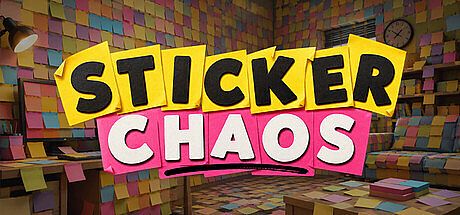


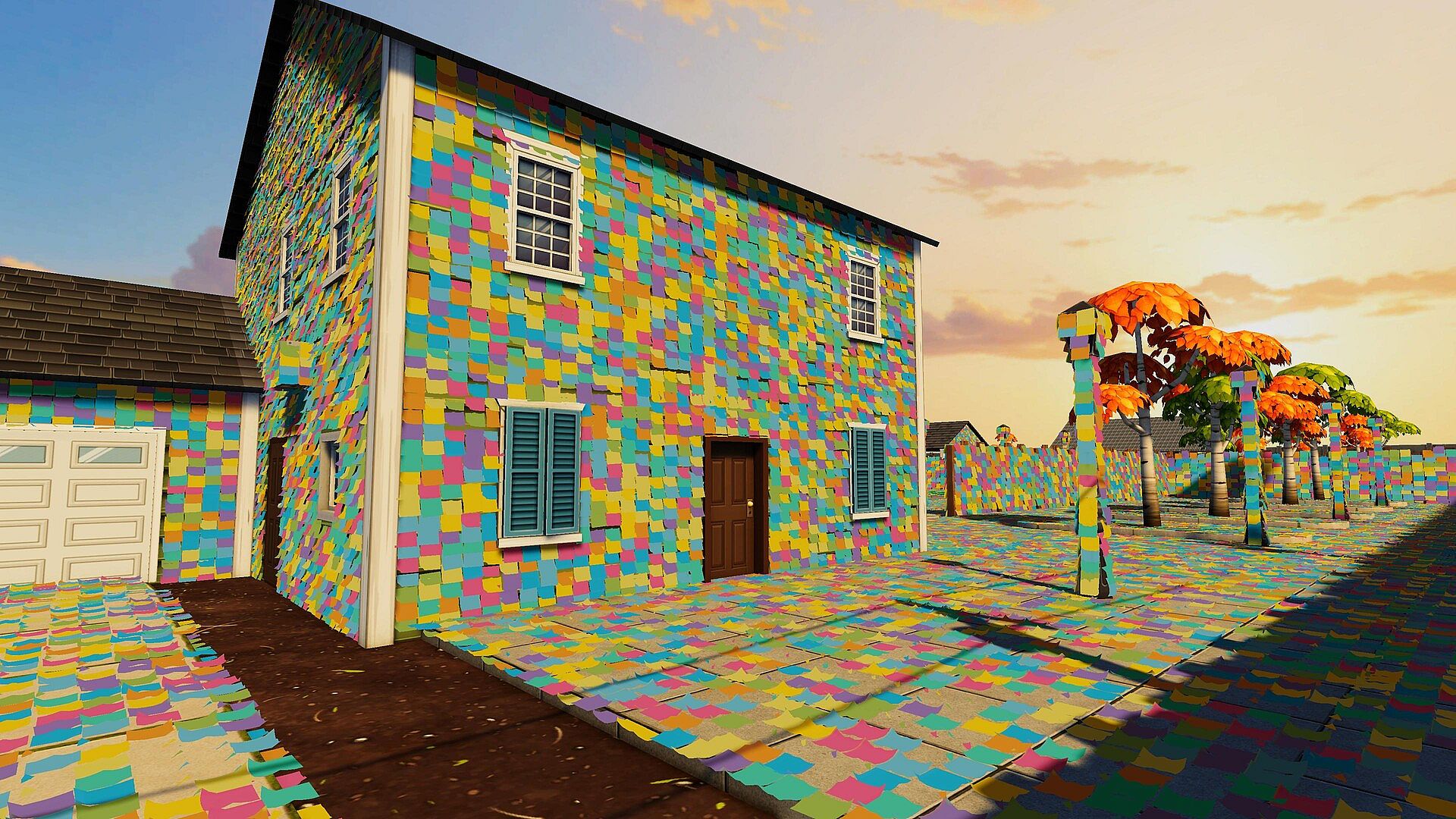
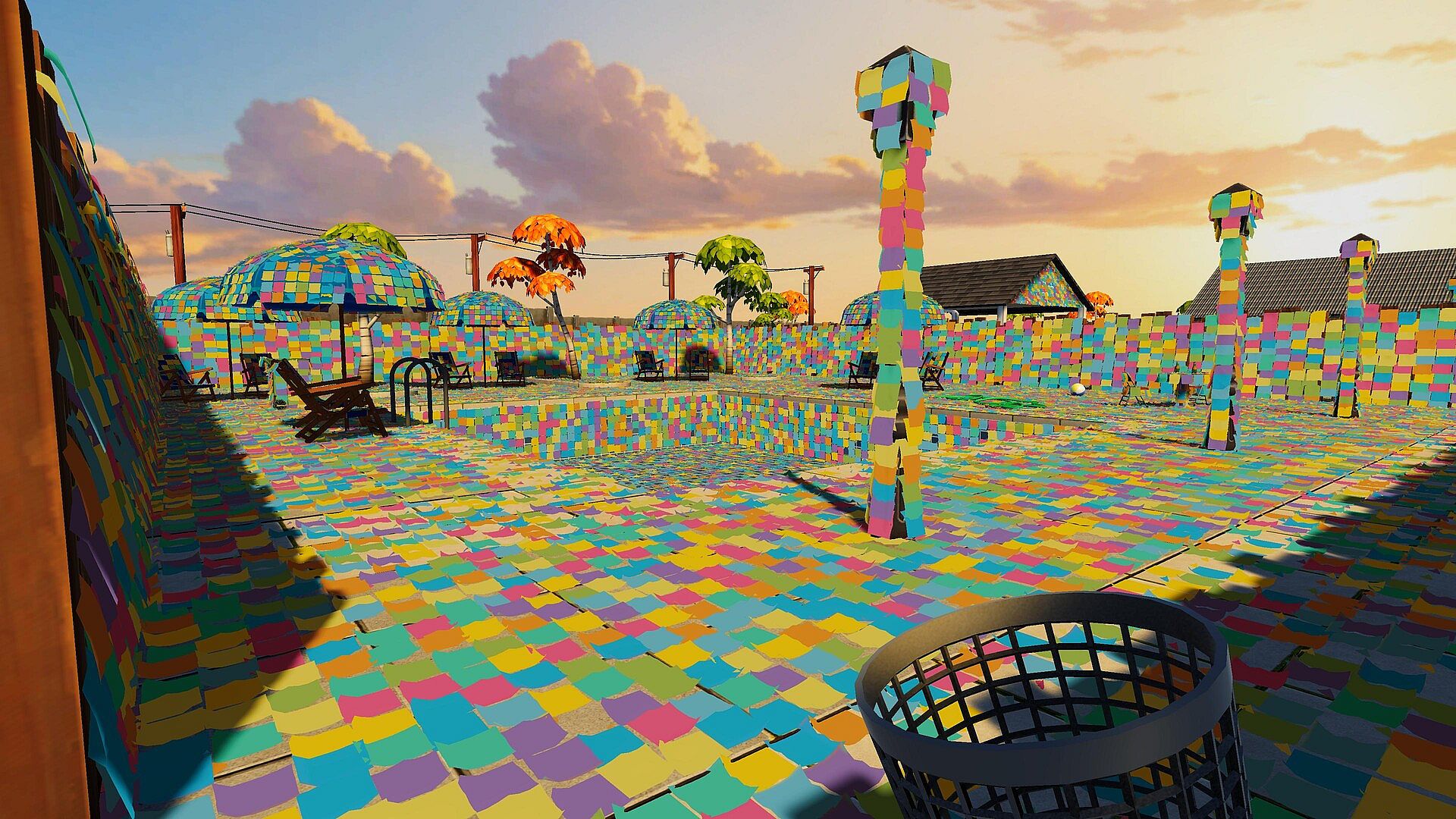
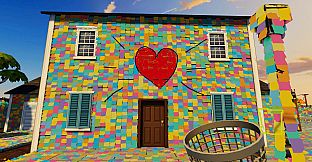
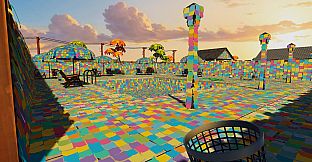
Sticker Chaos is a relaxing first-person indie simulation game set in everyday office spaces overtaken by thousands of sticky notes. Players step into a world where ordinary paper has created widespread disorder, and the central task involves methodically clearing the mess while uncovering layers beneath the surface.
Gameplay
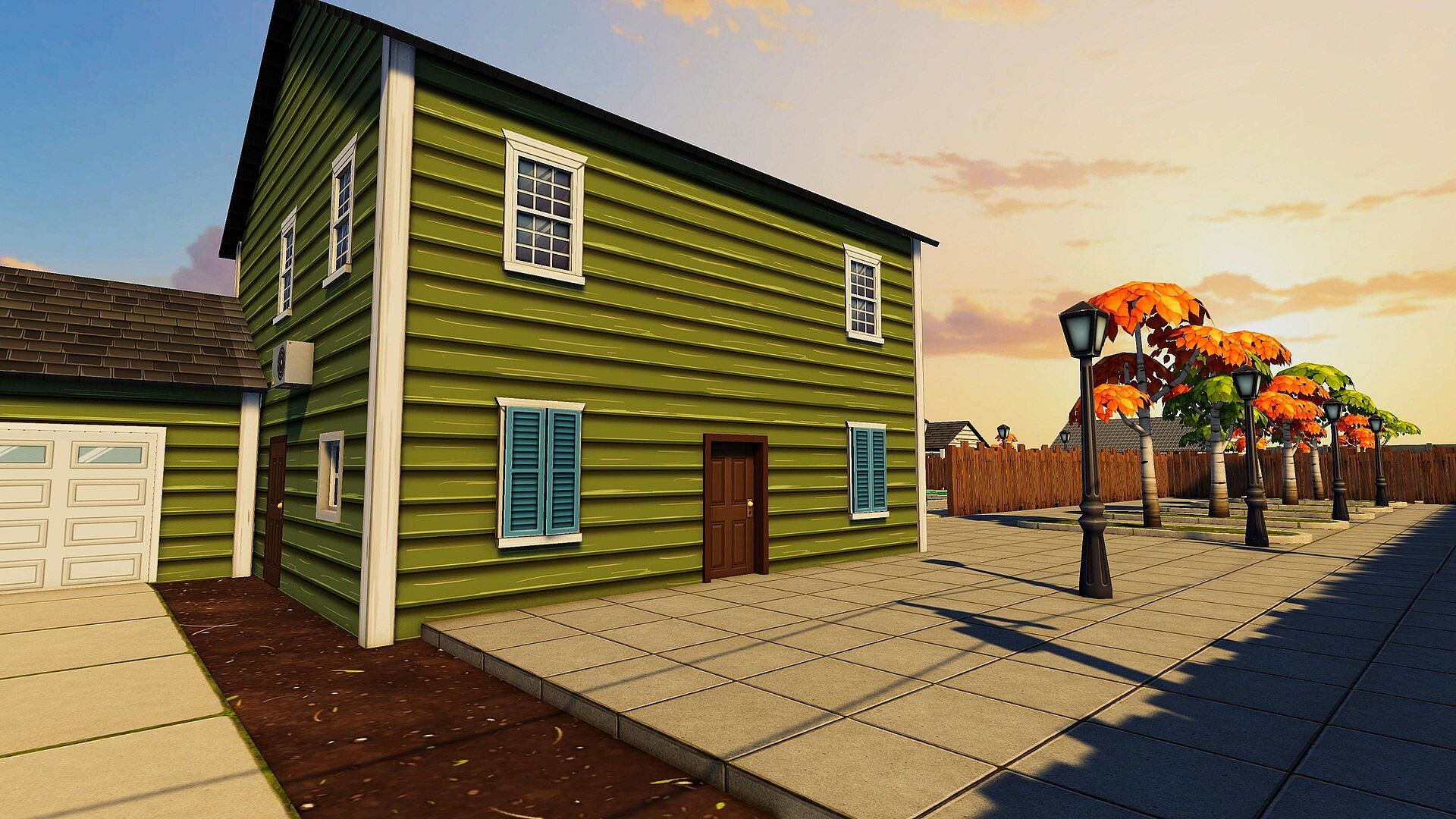
The core loop centers on exploration through cluttered environments filled wall to wall with sticky notes. Movement feels deliberate and unhurried as the first-person perspective lets players approach each surface closely. Peeling begins with basic tools that improve over time through earned currency and completed tasks. Progress comes from clearing sections one note at a time, which gradually reveals the original room layout underneath.
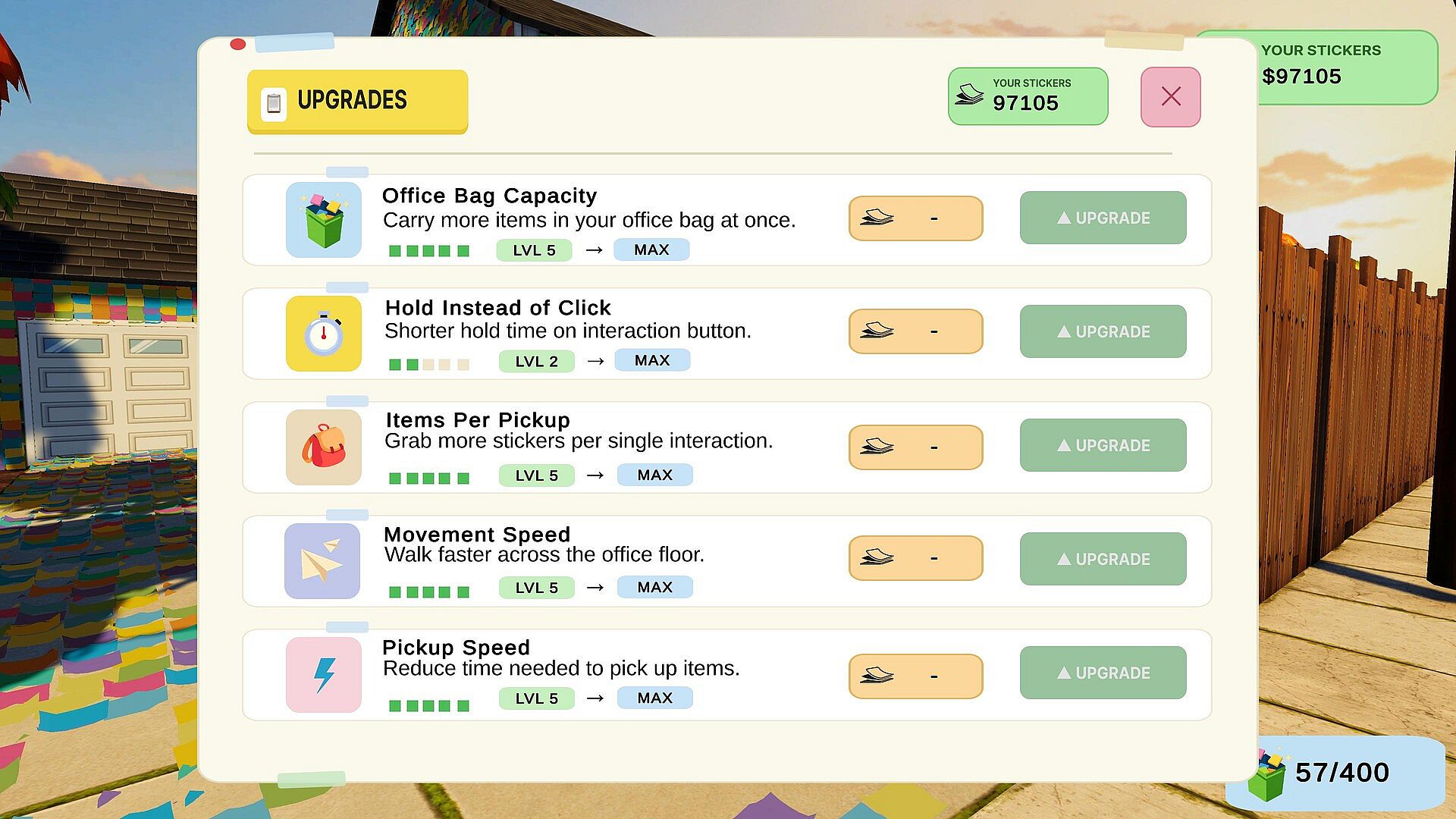
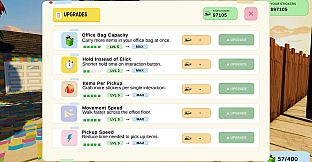
Upgrades focus on efficiency, such as better tools for handling larger volumes or abilities that speed up the removal process without removing the satisfying tactile feel. Quests provide structure by directing attention to specific areas or challenges within the locations. Money collected from these activities funds further improvements, creating a steady sense of advancement through repeated sessions.
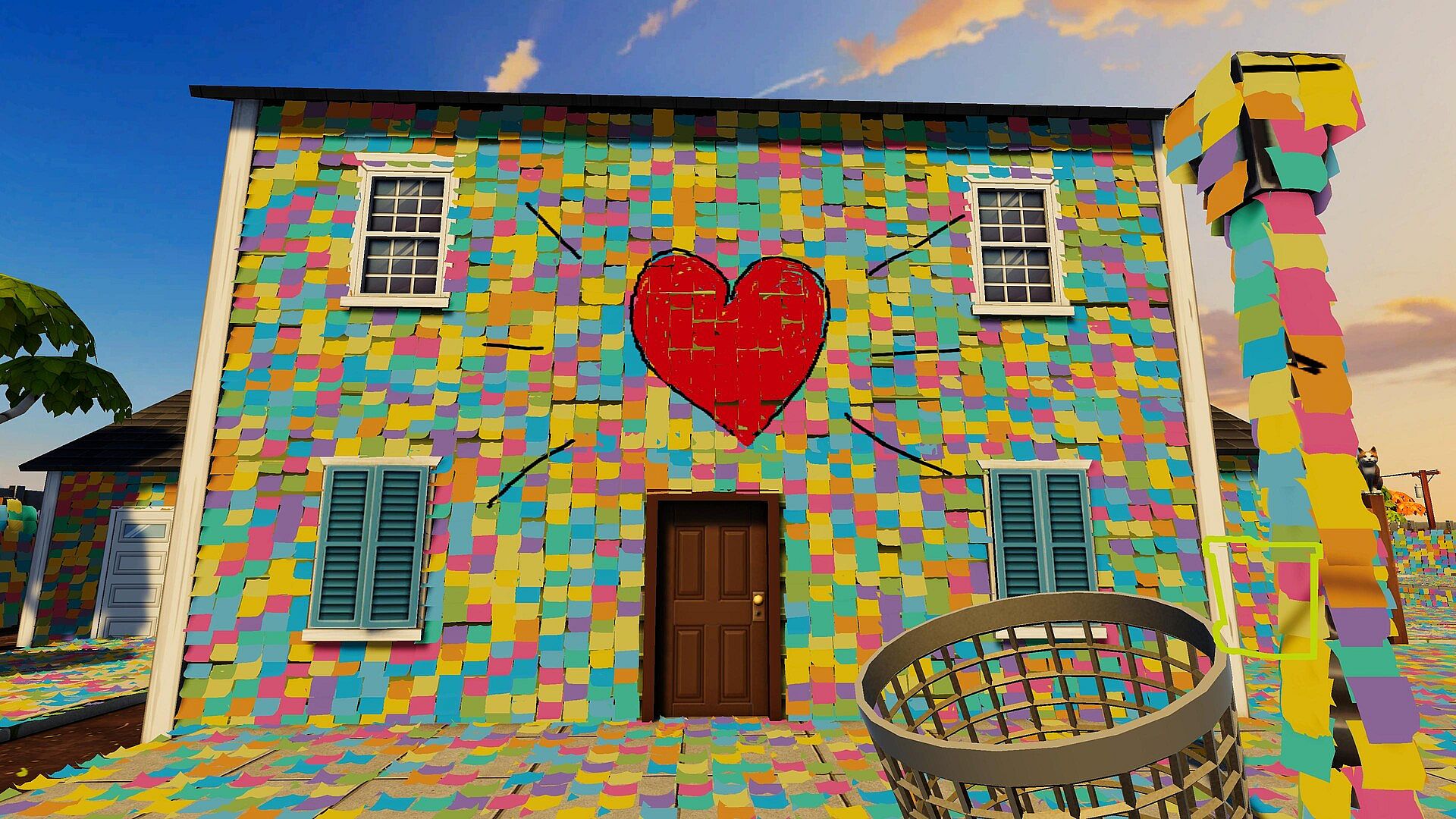
Beyond removal, the game includes a creative element where players use a marker to draw directly onto individual notes. These personal additions remain in place, adding custom touches that persist as the environment transforms. Exploration rewards curiosity with hidden notes that contain small surprises and optional mini-games scattered throughout the spaces. These elements encourage thorough searching rather than rushing through objectives.
Game Modes
Sticker Chaos operates as a single-player experience without separate competitive or multiplayer modes. The entire journey unfolds in one continuous campaign style where progression ties directly to the amount of notes cleared and areas restored. Players move freely between locations at their own pace, deciding how much time to spend on creative drawing, quest completion, or uncovering secrets.
No timed challenges or ranked systems appear in the verified details. Instead, the design emphasizes personal pacing, allowing sessions to range from short focused cleanups to longer explorations that mix peeling, drawing, and discovery. This structure suits players who prefer self-directed activities over structured competitive play.
Exploration and Customization
Each location starts as a blank canvas buried under layers of notes. As peeling advances, familiar office details emerge, giving a tangible sense of restoration. Hidden elements reward careful attention, with some notes containing clues or leading to mini-games that break up the main activity.
Drawing on notes adds a layer of personalization. Simple marker work turns plain paper into unique markers of the player's presence, and these changes stay visible even after surrounding notes are removed. This feature blends the simulation aspects with light creative expression, encouraging players to revisit cleared areas to add more details over time.
Is It Worth Playing?
Sticker Chaos targets players who enjoy slow-paced simulation games centered on methodical tasks and gradual world changes. The combination of peeling mechanics, tool upgrades, and optional creative drawing creates a loop that feels consistent and low-pressure. Those drawn to exploration and small discoveries will find value in the secrets and mini-games that appear during play.
Because the title remains in a coming-soon state with no released player feedback available, expectations should center on the described relaxing first-person simulation style rather than high-action elements. Availability on PC supports straightforward access once released, and the single-player focus means no need for online connectivity or group coordination.
Overall, the game aligns well with fans of indie simulation titles that prioritize atmosphere and incremental progress over intense challenges or social features. If the idea of restoring order through careful peeling while leaving personal marks appeals, it offers a distinctive take on the genre.