




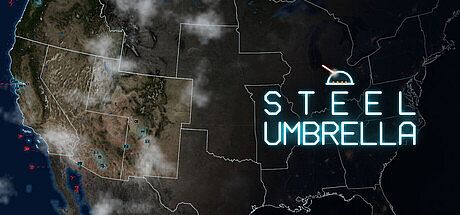


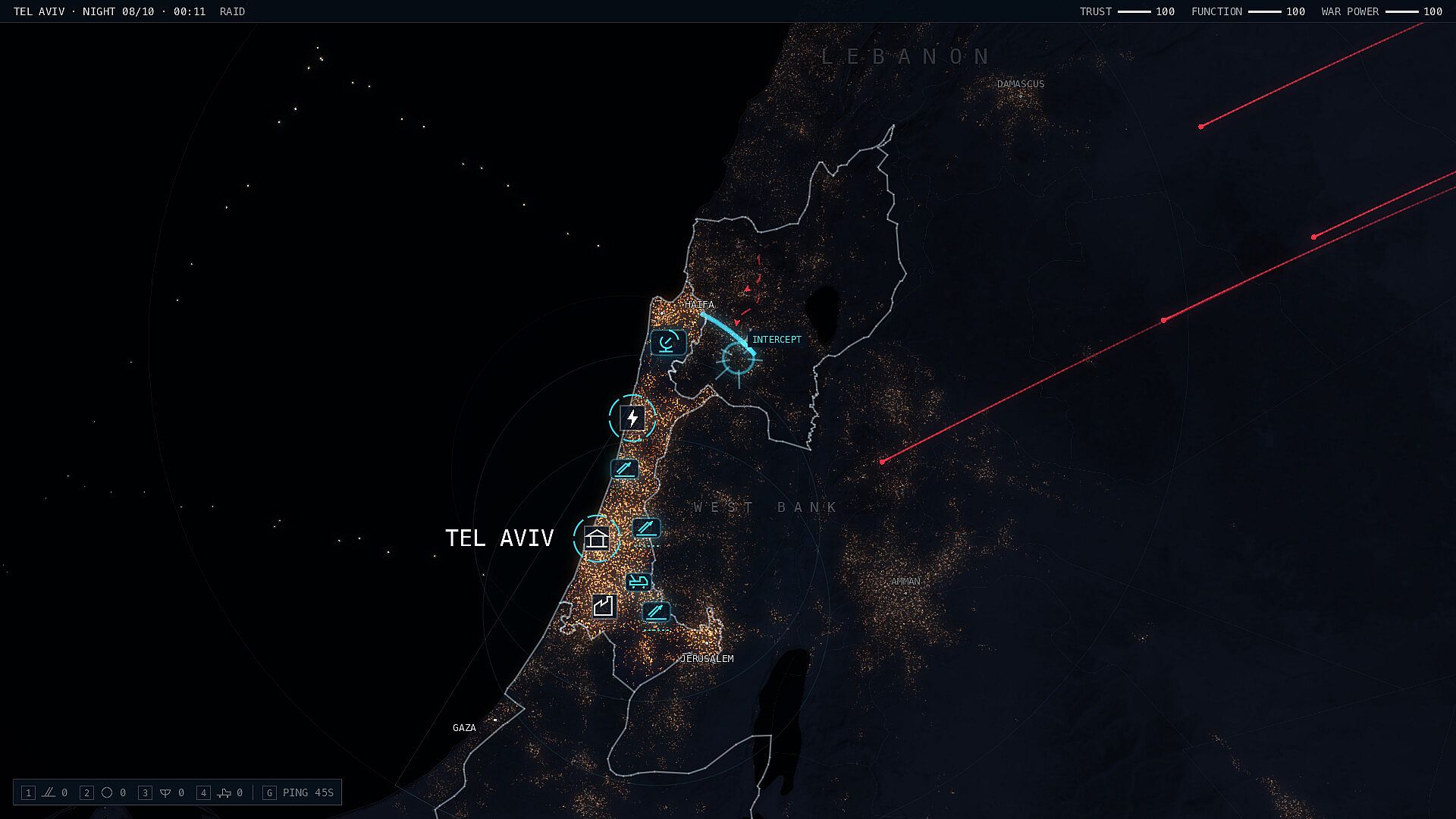
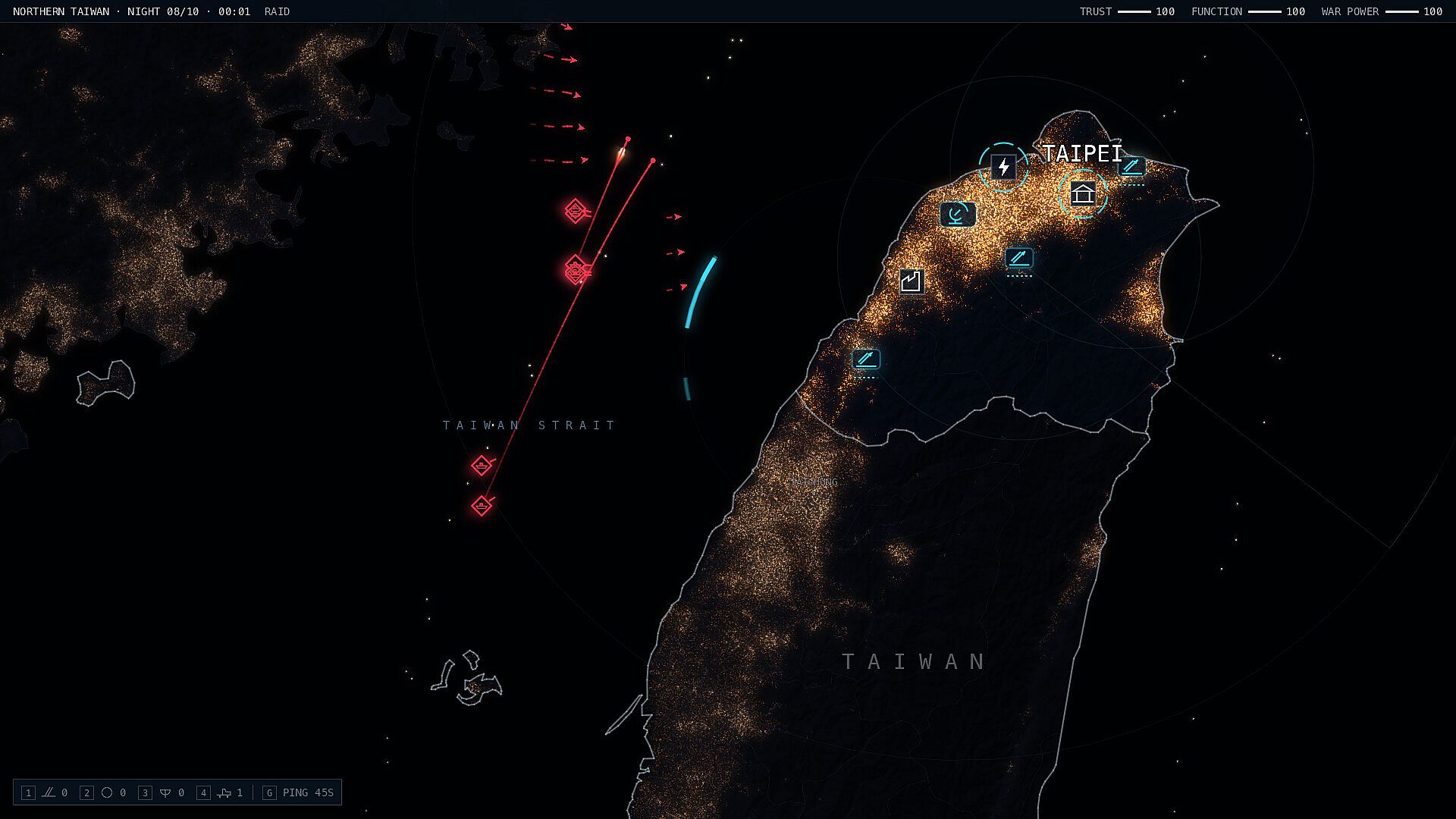
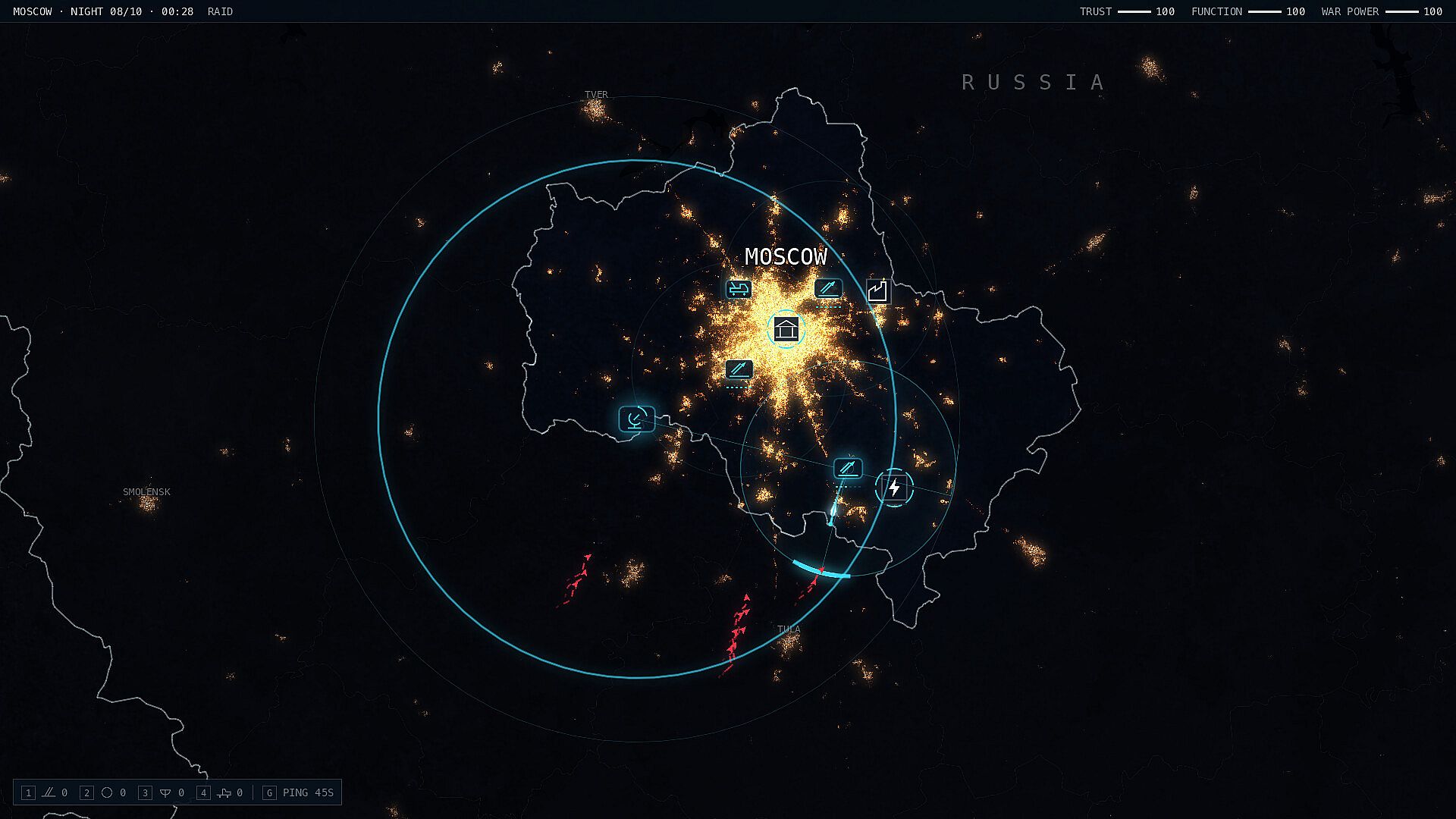
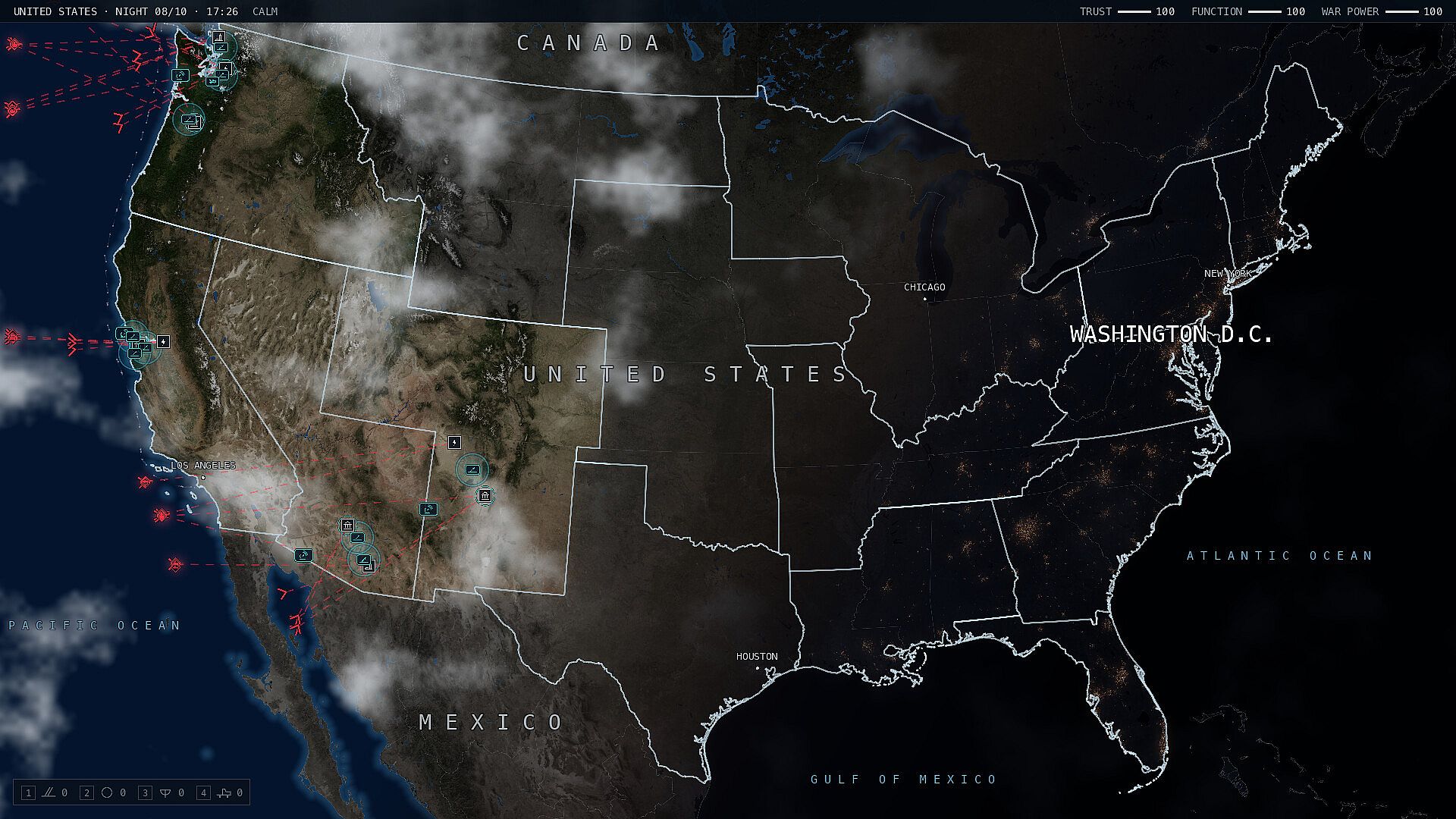
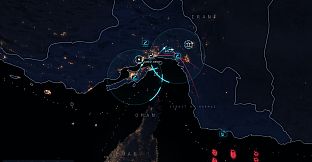
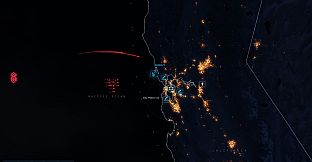
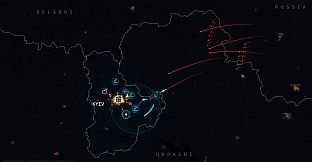
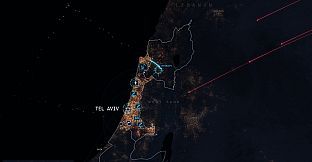
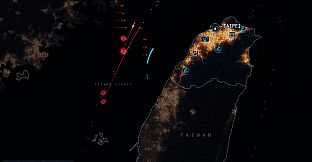
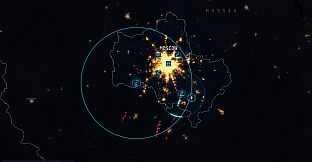
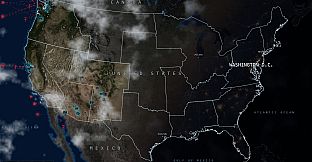
Steel Umbrella is a real-time strategy game that places players in command of air defenses protecting cities from nocturnal drone and missile raids. Set on a satellite view of the Earth, the title blends day planning with night execution in a cycle that mirrors the planet's rotation. Developed as an indie project for PC, it emphasizes careful positioning of limited resources and adaptation to incoming threats without any offensive capabilities of its own.
Gameplay
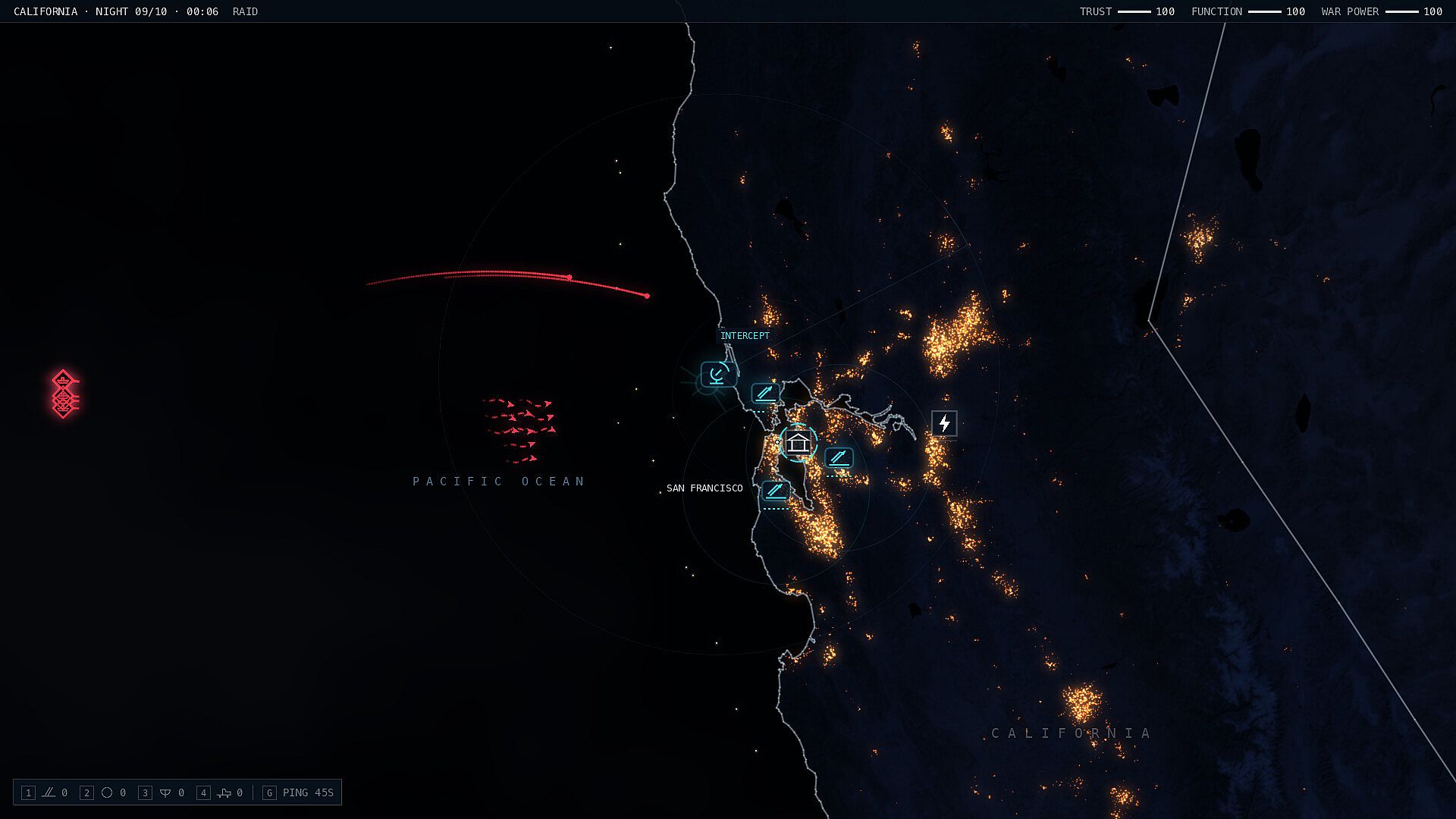
During daylight hours, players position launchers, nets, and radar installations around key urban sites on the map. Each placement requires consideration of range, cost, and coverage gaps, as attacks arrive only after sunset. The sun's movement across the globe dictates the available preparation time, allowing thoughtful decisions about which areas to fortify and which to risk leaving exposed.
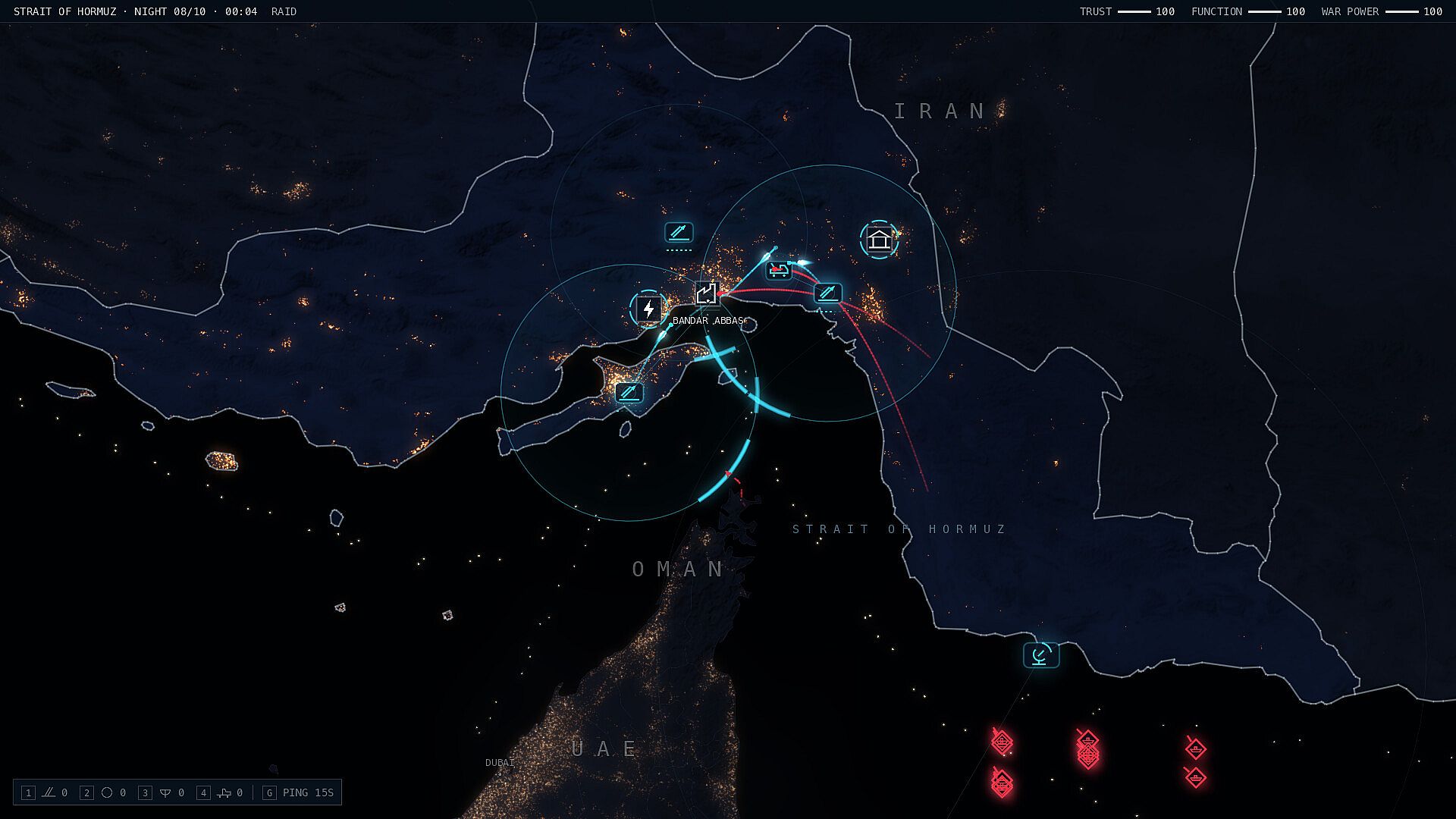
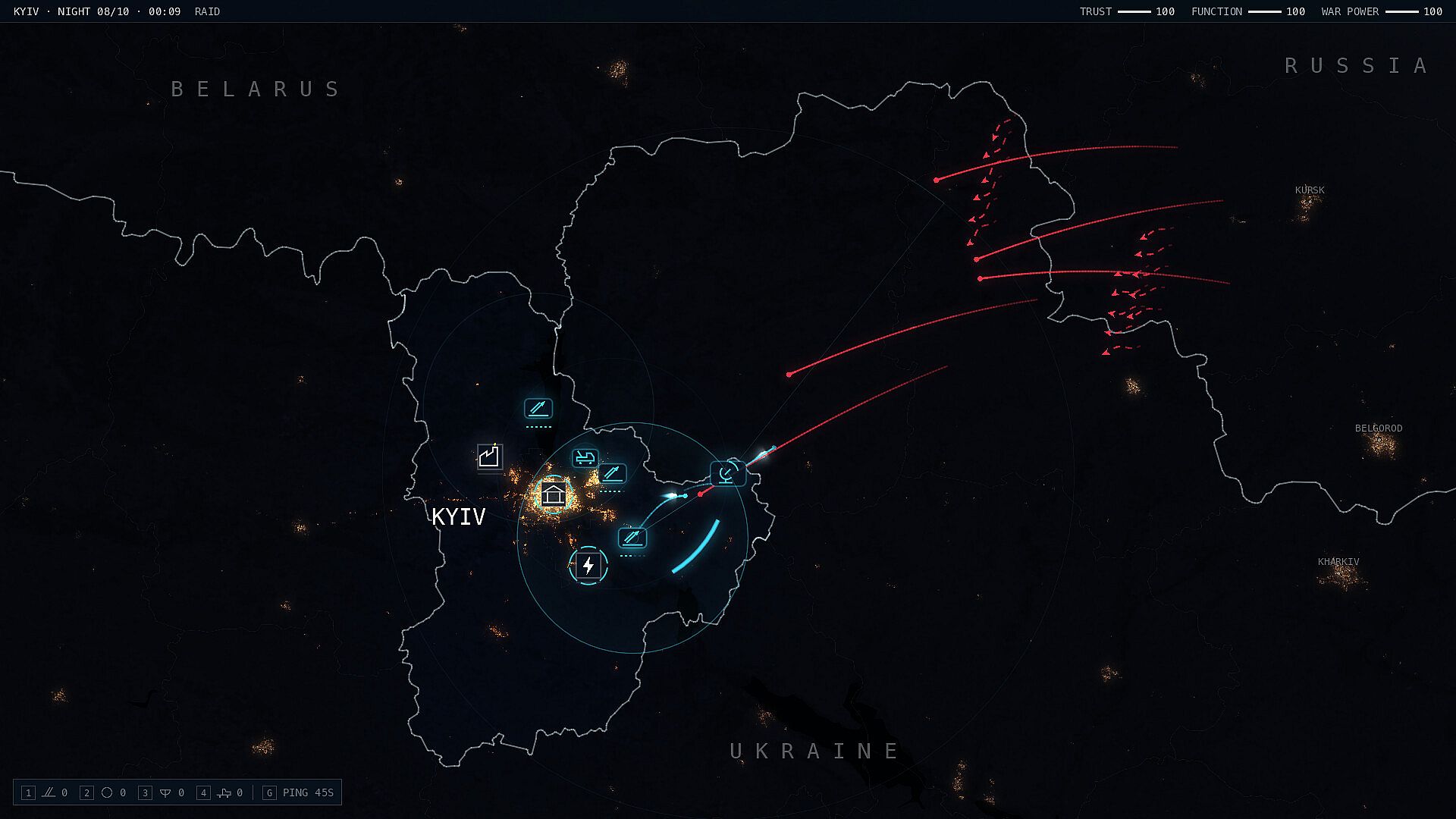
Once night begins, the layout becomes fixed except for mobile machine-gun crews that can be repositioned even during active raids. Visibility remains restricted to what the placed defenses detect. Launchers reveal contacts within their reach, while radar sweeps leave temporary marks on detected objects. A manual ping command highlights contacts in a ring for several seconds, improving lock-on accuracy for nearby launchers, though the radar then requires a lengthy recharge period before reuse.
Three critical sites per city track separate ratings that influence ongoing survival. Trust declines with strikes on residential or power infrastructure and triggers defeat at zero. Functionality governs setup speed, reload times, and repair rates for defenses. War power from the factory determines launcher effectiveness and resupply volume, with upgrades becoming unavailable below a threshold. Damage persists across nights, with repairs occurring only at dawn, creating cumulative pressure over the required ten-night survival period.
Game Modes
The core experience revolves around defending successive cities through a sequence of ten nights, with no separate named modes beyond this central loop. Every three nights, players select one option from three cards that introduce new defenses, upgrades, emergency supplies, or access to additional regions in certain theaters. A talent tree branches into Intercept, Shield, and Home Front paths, granting one point per completed night for permanent improvements.
Four emergency items provide one-time interventions: full site repairs, instant launcher reloads, temporary nets across all sites, or advance intelligence on the raid's origin point. These tools integrate directly into the night phase without altering the fundamental day-build, night-fight structure.
Defenses and Progression
Four primary defense types shape each layout. Long-range launchers carry limited missiles suited for distant threats. Nets intercept drones directly over protected sites. Early-warning radar extends detection range with its sweeping mechanic. Mobile pickups deploy machine-gun teams that actively hunt drones and retain full mobility during raids for flexible repositioning.
Progression ties directly to nightly performance and card selections. The talent tree offers targeted upgrades across its three branches, while repeated nights build familiarity with optimal site prioritization. Damage carryover and resource ratings ensure that early choices compound into later challenges, rewarding consistent protection of all three sites.
Is It Worth Playing?
Steel Umbrella suits players who enjoy deliberate real-time strategy with a strong emphasis on positioning, resource trade-offs, and adapting to limited information. The day-night rhythm creates distinct phases of planning and reaction, supported by the persistent damage system and rating mechanics that track long-term consequences. Those drawn to defense-focused scenarios set against real-world geography will find the fictional sites and neutral borders provide clear orientation without complicating the core task of safeguarding infrastructure.
The absence of offensive options keeps the focus narrow on interception and mitigation, appealing to fans of methodical indie strategy titles. Survival across the fixed ten-night span offers a clear endpoint while the card and talent systems introduce meaningful variation between attempts. Players comfortable with managing multiple interdependent systems under time pressure will likely appreciate the depth available within its scope.