







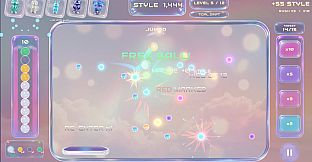
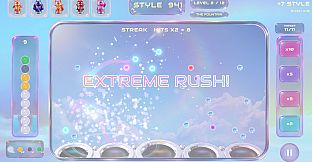
STARZ.PEG is a casual single-player physics roguelike for PC that centers on chain reactions and precise ball physics. Players launch shots from a fixed cannon across a series of boards, purchasing blind-box figures known as STARZ between rounds to unlock new abilities and extend runs. The game emphasizes building momentum through stacked triggers and layered scoring systems rather than direct combat or exploration.
Gameplay
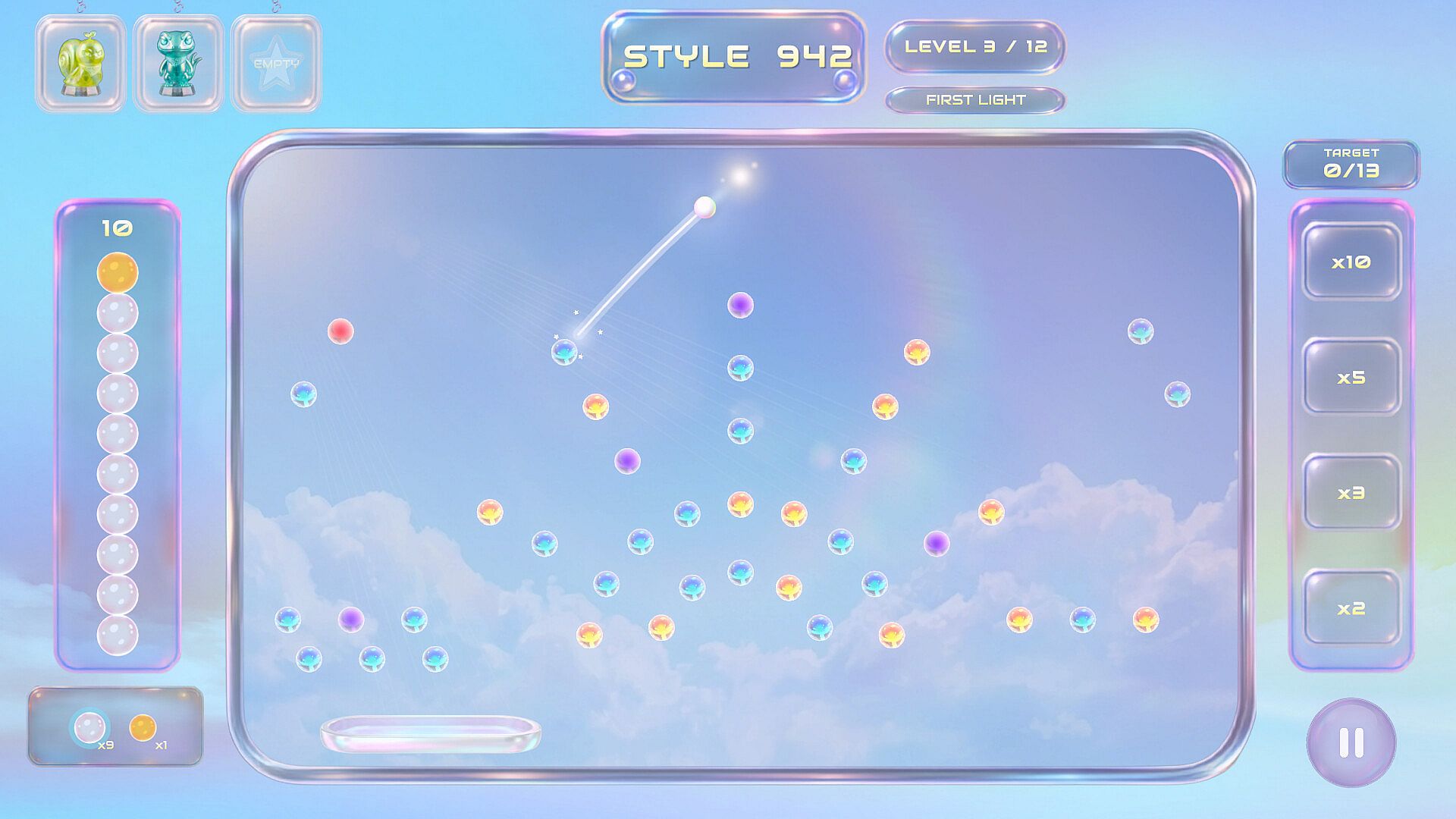
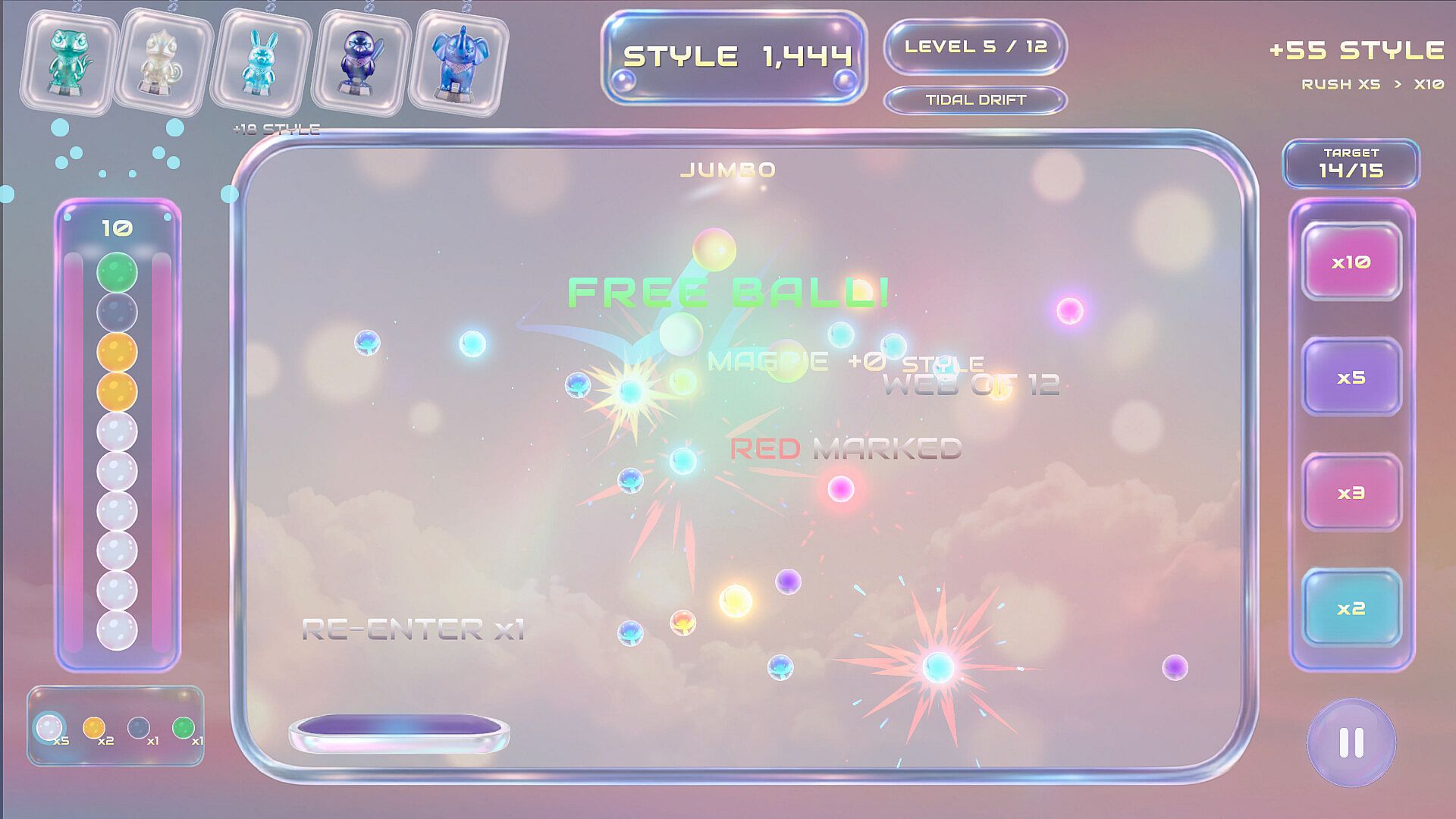
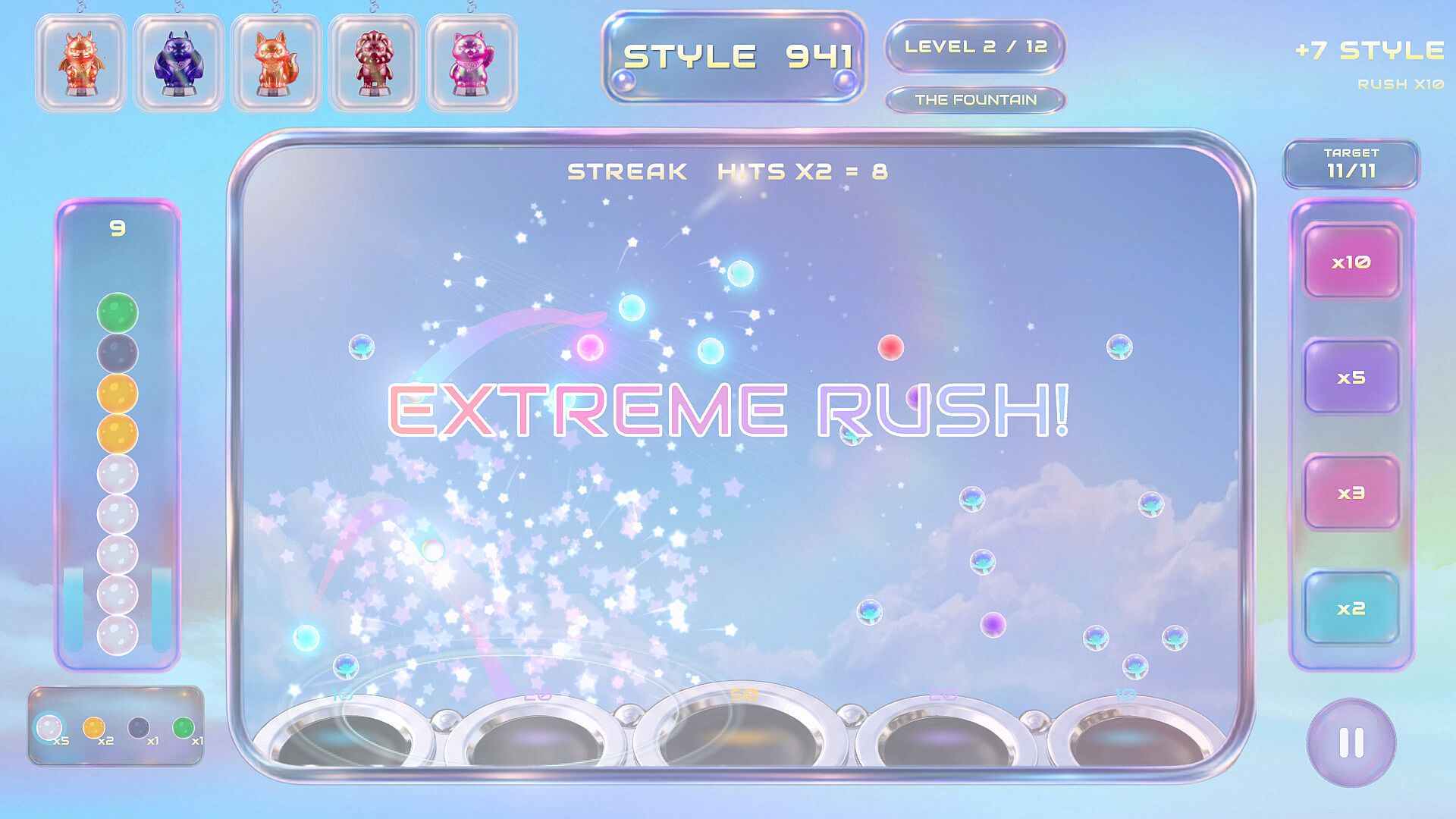
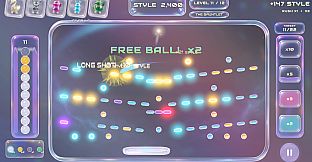
The core loop revolves around a fixed cannon that fires ten balls per level. Players adjust the launch angle before each shot and rely on gravity to guide the balls across the board. Each successful bounce contributes to a running hit count that multiplies the overall score.
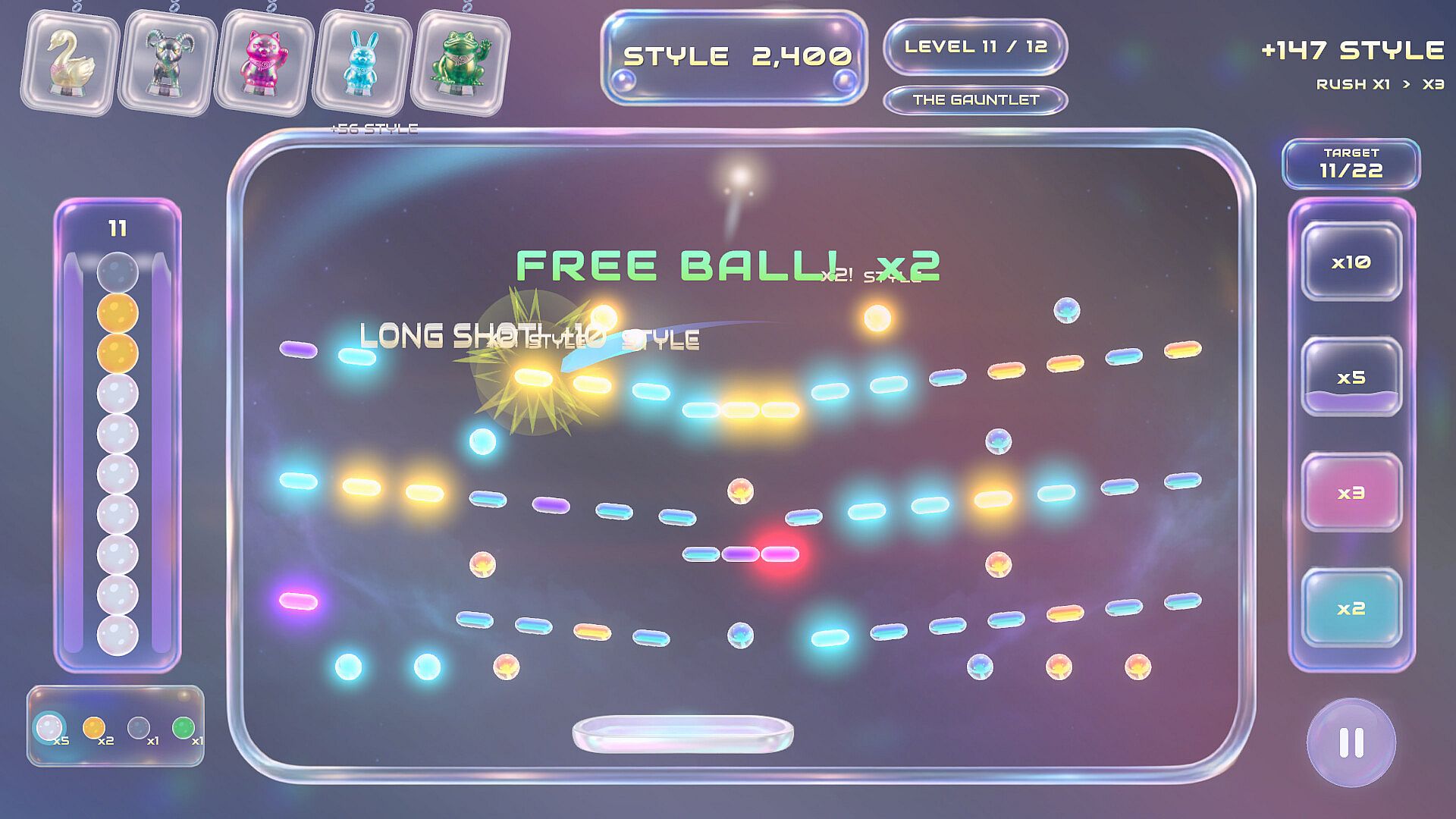
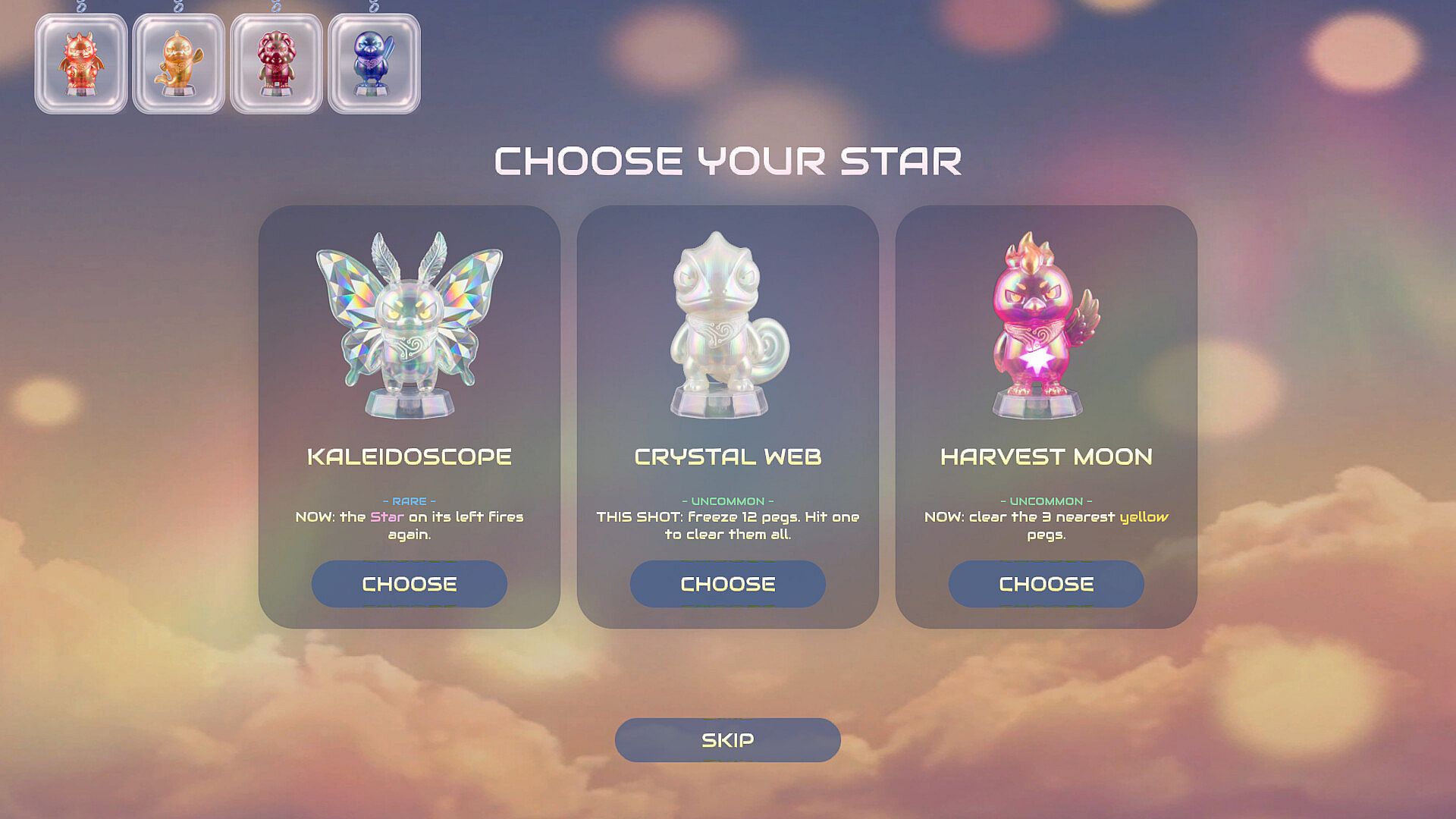
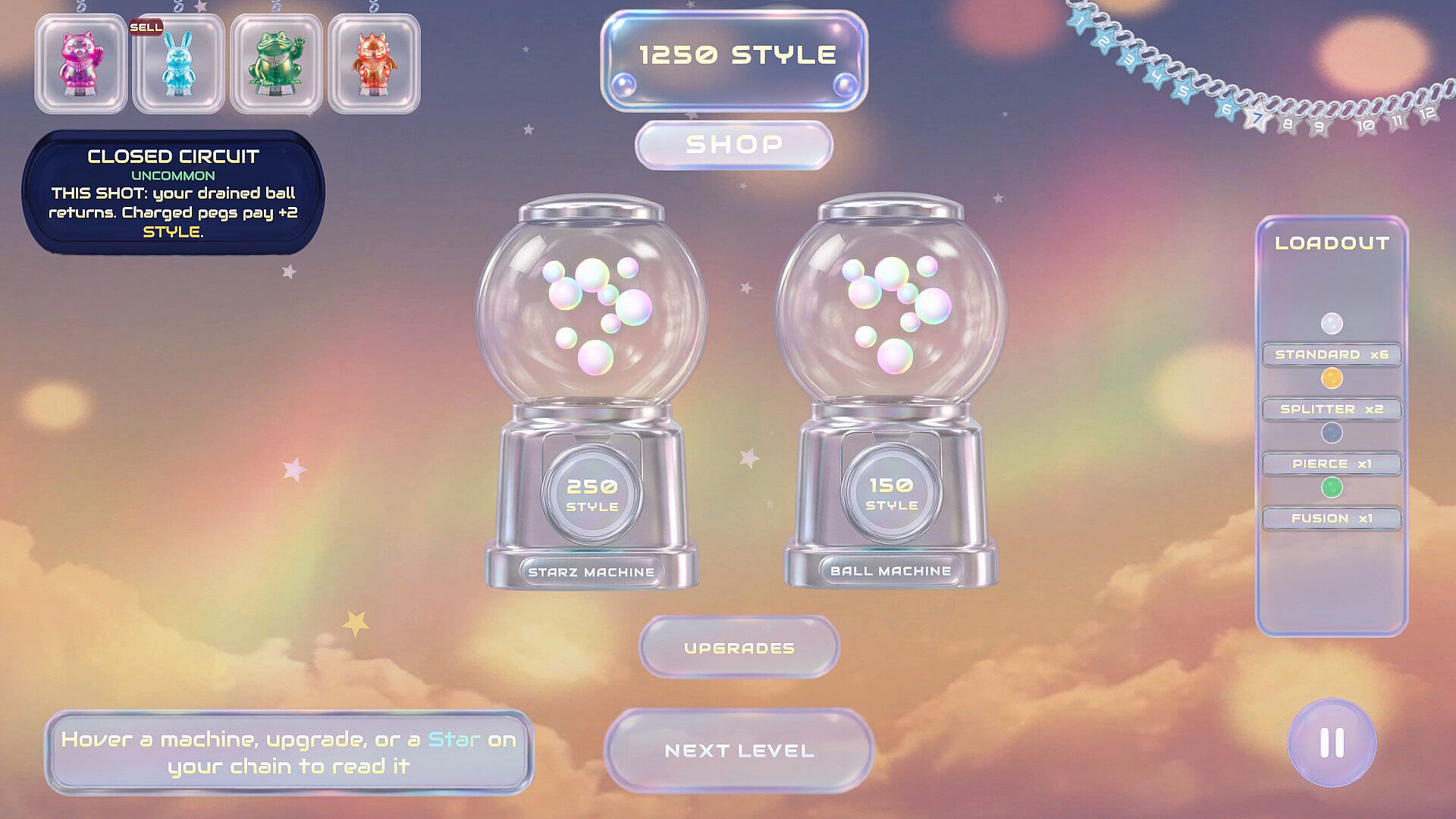
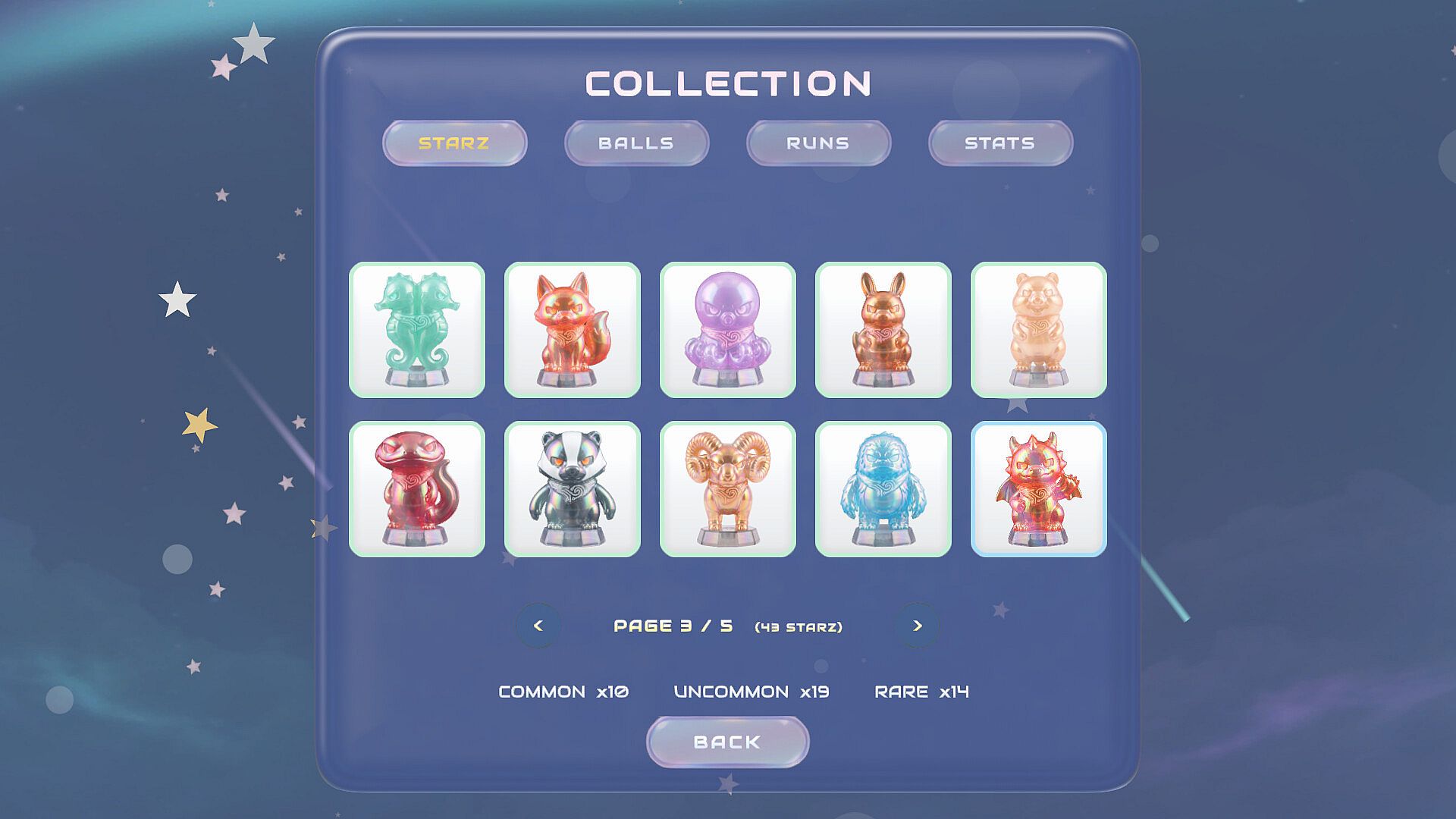
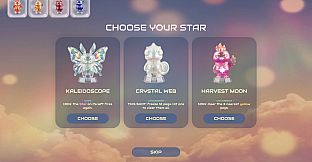
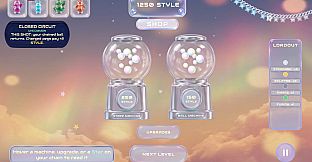
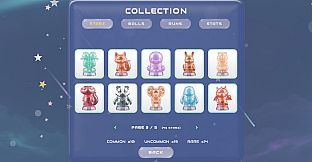
Between rounds, players acquire STARZ figures from blind boxes. Up to five of these can be held at once, and their abilities activate in sequence when balls interact with the board. Chaining multiple STARZ effects in a single shot can clear large sections of pegs and triggers at once. Yellow pegs feed into a Rush multiplier that compounds with the total hit count from every bounce, rewarding sustained chains over isolated hits.
Board layouts grow more demanding across twelve stages that progress from Noon to Midnight. Early boards offer wider spaces and lower target scores, while later ones tighten the geometry and raise the required totals. The visual style draws from early-2000s aesthetics with glossy interfaces, aurora backdrops, frosted glass elements, and liquid chrome accents that reinforce the Y2K theme without distracting from the physics.
Game Modes
STARZ.PEG operates as a single continuous roguelike progression. Each run advances through the twelve escalating boards, with purchases and ability chains carrying forward only within that attempt. Failure resets the run, encouraging repeated attempts to refine angle choices and STARZ selections for longer chains and higher scores.
No separate multiplayer or competitive modes exist. The experience remains focused on solo runs where success depends on understanding how individual STARZ abilities interact with the fixed ball count and board geometry. Players experiment with different combinations of held figures to discover efficient board-clearing sequences.
Progression and Scoring Systems
Scoring builds through two intertwined mechanics. The Rush multiplier grows whenever yellow pegs are hit, while the hit count from every bounce applies an additional layer of multiplication. This structure rewards players who maintain long, unbroken chains rather than short, high-impact shots.
STARZ purchases occur strictly between rounds, so decisions about which figures to keep and activate become critical for later boards. The limit of five held STARZ forces careful selection, as each new acquisition replaces or supplements existing options. Board progression introduces tighter layouts that punish imprecise angles and reward precise chaining of abilities.
Is It Worth Playing?
STARZ.PEG suits players who enjoy physics-driven puzzle games and roguelike runs built around incremental optimization. The fixed ten-ball limit and stacking mechanics create a clear focus on planning and execution, with the Y2K presentation adding a distinct visual layer. Because the game remains in development ahead of its January 2027 release, current details are limited to the confirmed systems of ball physics, STARZ chaining, and board escalation. Those drawn to chain-reaction scoring and deliberate shot placement will find the core loop intact and self-contained.