




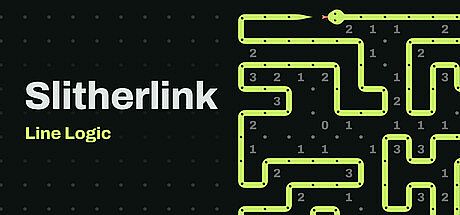


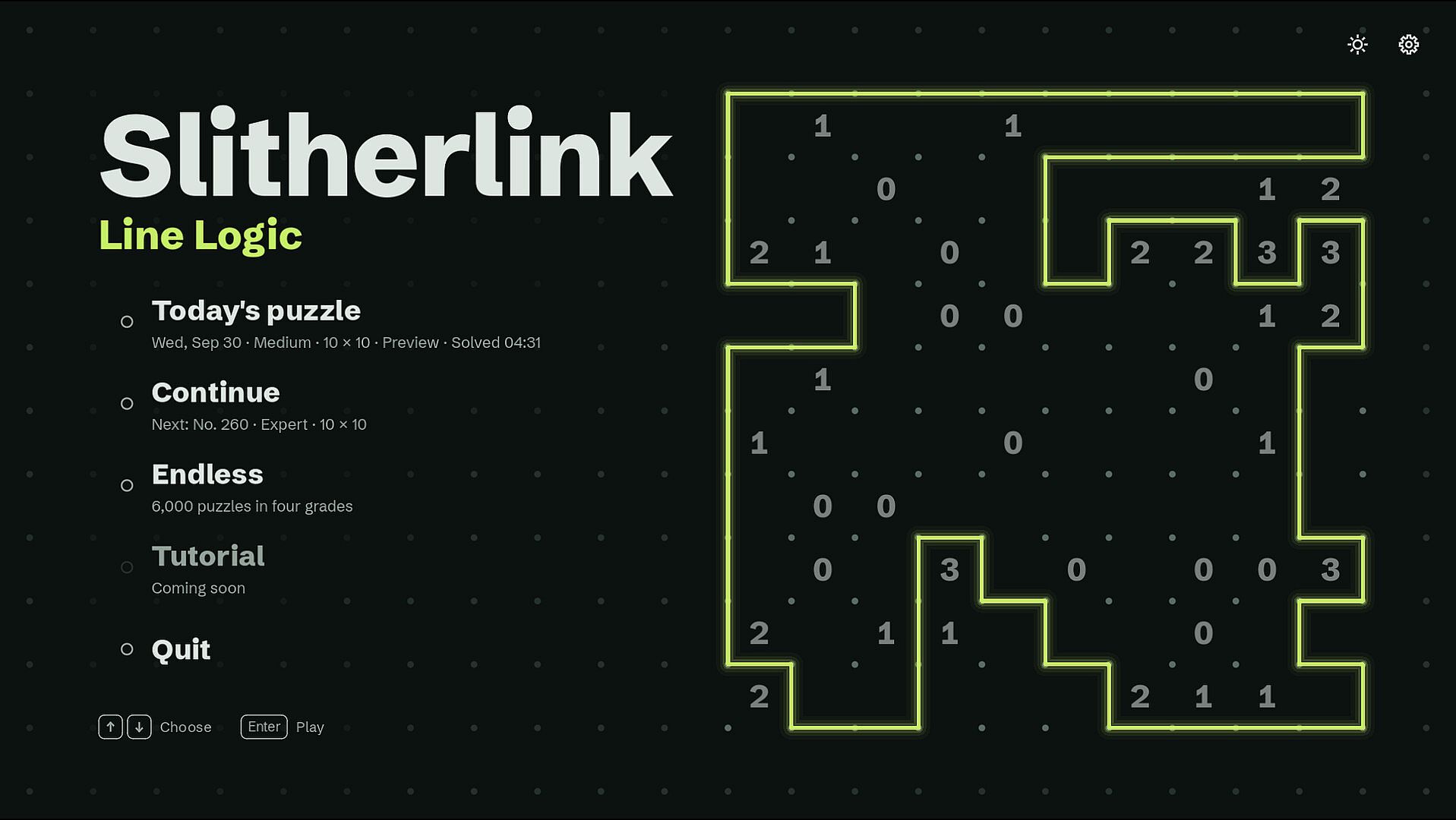
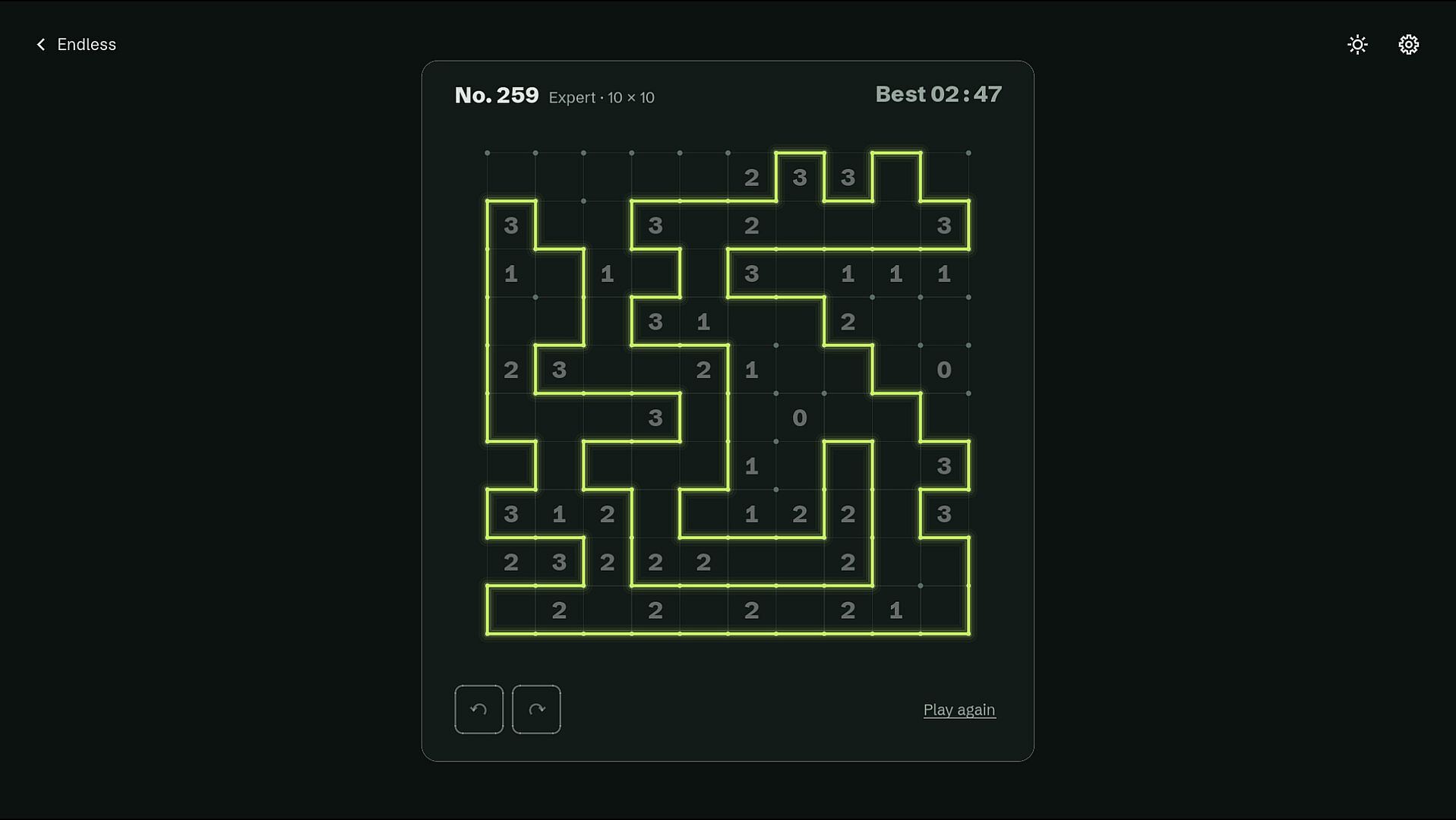
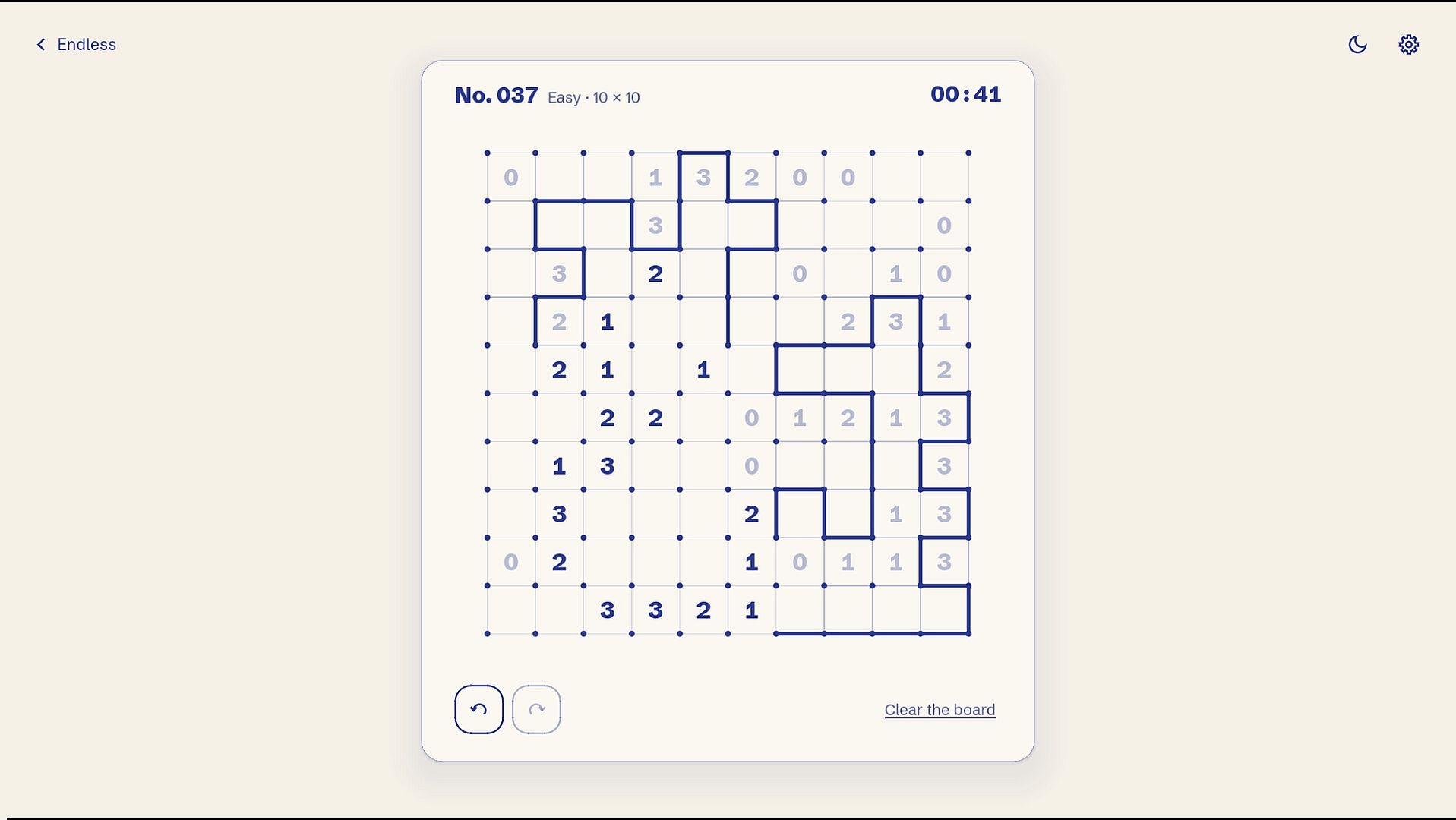
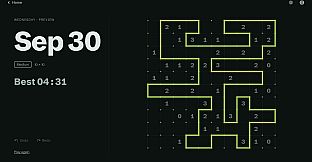
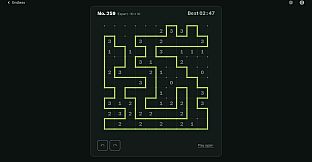
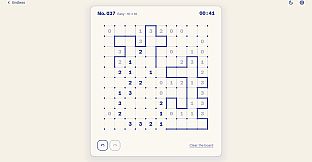
Slitherlink: Line Logic is a single-player strategy puzzle game in the indie and casual genres available on PC. It challenges players to connect dots on a grid to form one continuous loop while following numerical clues that dictate exactly how many sides of each marked square the loop must use. The core appeal lies in its pure deductive reasoning, where every puzzle has a single valid solution reachable through logic alone without any need for guessing.
Gameplay
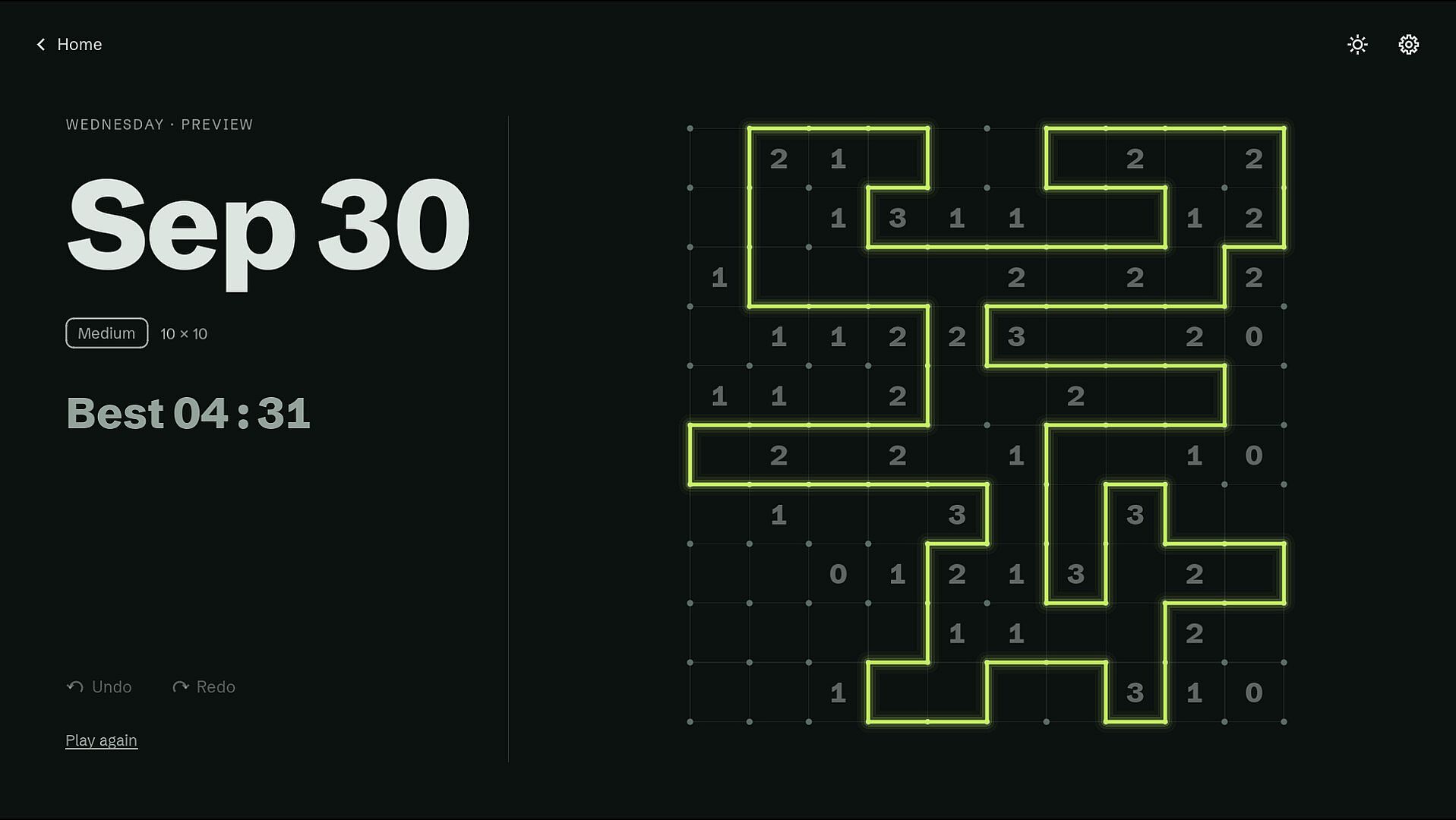
The central mechanic requires drawing lines between dots to create a closed loop that never crosses itself or branches. Numbers placed inside squares specify the precise count of their four possible sides that must form part of the loop. Blank squares impose no restrictions on line placement. At every dot, the finished loop uses either zero or two connecting lines, ensuring a simple closed path with no loose ends or intersections.
Progress builds through careful observation and pattern recognition. Players mark lines or exclusions step by step, using the constraints from each number to eliminate possibilities until the unique solution emerges. The game supports both mouse and keyboard input for placing lines, with options to hide the timer for a more relaxed pace or pause to obscure the board entirely during breaks.
Visual customization includes light and dark modes along with multiple color themes and font selections. These adjustments help maintain comfort during extended sessions on larger grids. Saved progress tracks completed puzzles and records best times for each one.
Game Modes
Daily mode delivers one new puzzle each day that remains identical for all players. This shared challenge encourages consistent play and allows comparison of completion times across the community.
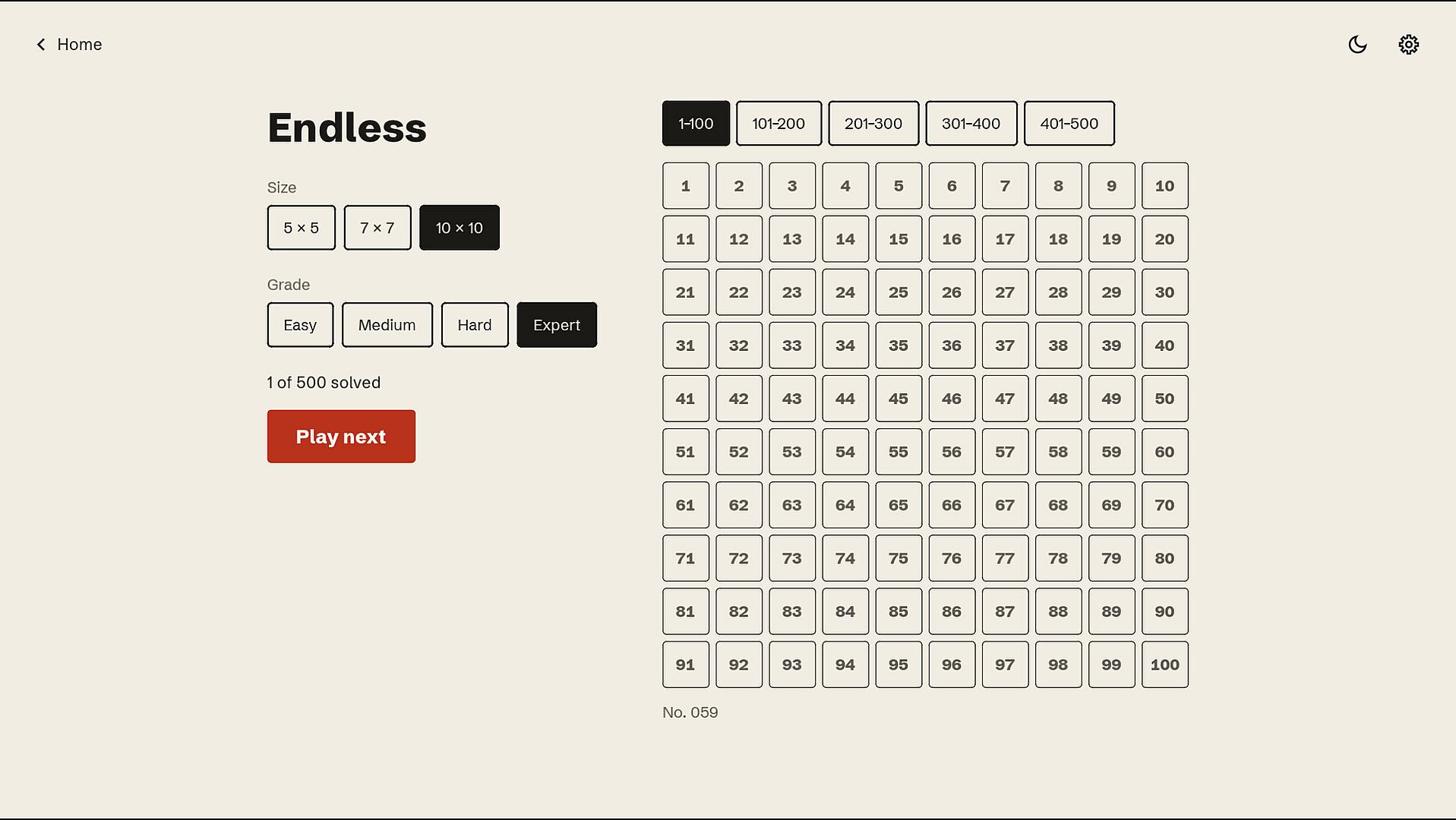
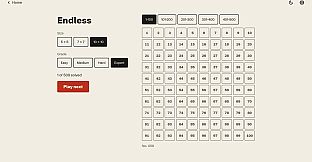
Endless mode provides access to thousands of generated puzzles across board sizes ranging from 5x5 to 10x10. Four difficulty levels organize these puzzles according to the specific solving techniques required rather than grid size alone. This structure lets players advance based on mastery of logic patterns instead of simply scaling up dimensions.
Both modes emphasize single-player progression with no multiplayer elements. Puzzles remain fully solvable through deduction, aligning with the experience of similar number-based logic games like Sudoku.
Controls and Accessibility
Input flexibility stands out as a practical feature. Mouse clicks handle line placement directly on the grid edges, while keyboard shortcuts offer an alternative for precise control. The interface supports pausing that conceals the board, which proves useful for stepping away without losing focus on the current deduction chain.
Progress saving ensures players can resume exactly where they left off across sessions. Best-time tracking adds a layer of personal benchmarking without introducing competitive pressure beyond individual improvement.
Is It Worth Playing?
Slitherlink: Line Logic suits players who enjoy methodical logic puzzles and appreciate the satisfaction of deducing solutions without trial and error. Its structure of daily and endless modes provides ongoing variety through different grid sizes and technique-based difficulties. The absence of guessing requirements and the guarantee of unique solutions make it a reliable choice for focused, single-player sessions on PC.
Customization options for themes, fonts, and timer visibility further support extended play. Those drawn to strategy and casual puzzle experiences will find the core loop rewarding, especially when seeking alternatives to number-placement games. The game remains in a pre-release state with features centered on accessibility and pure logic challenges.