




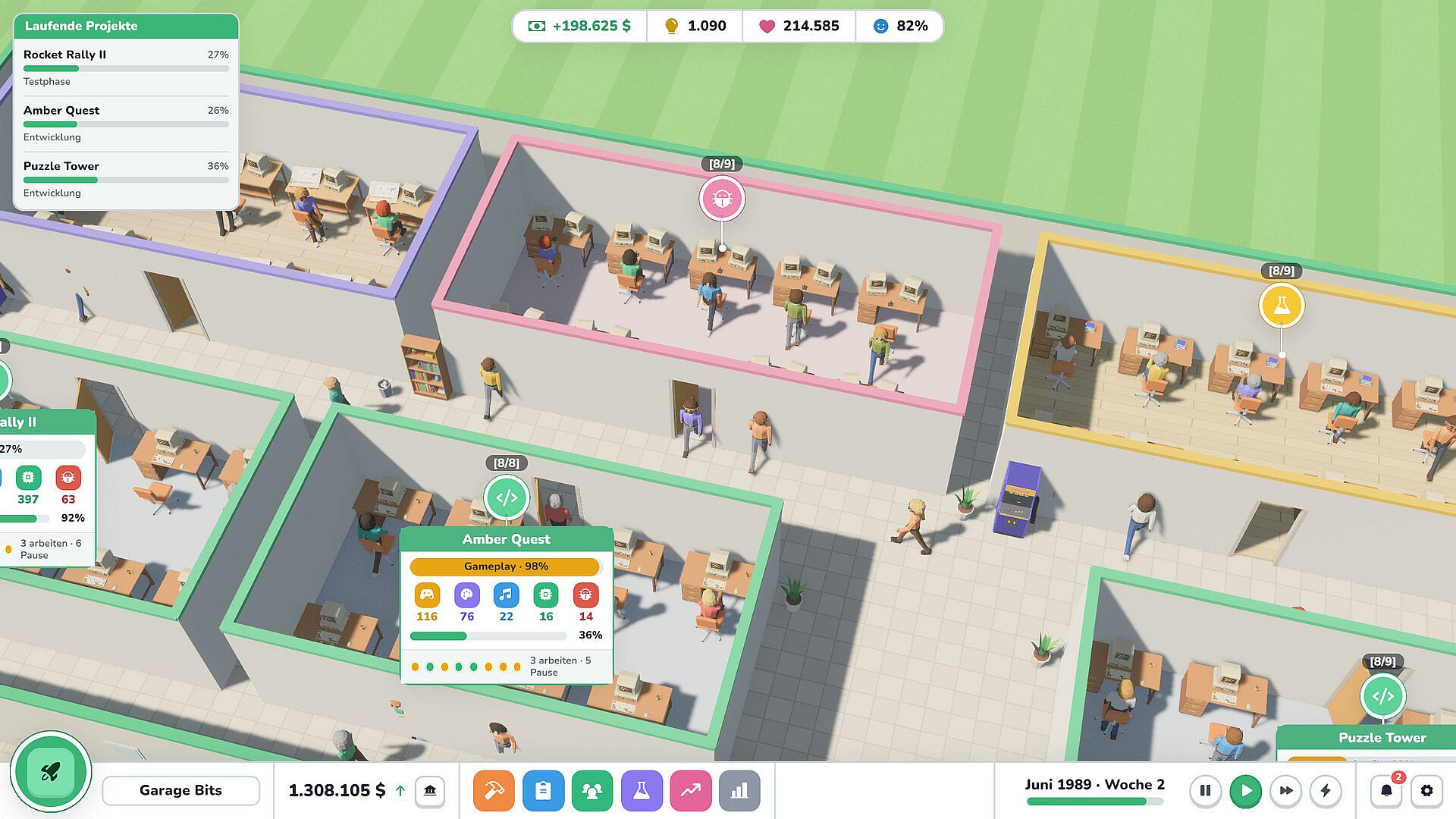
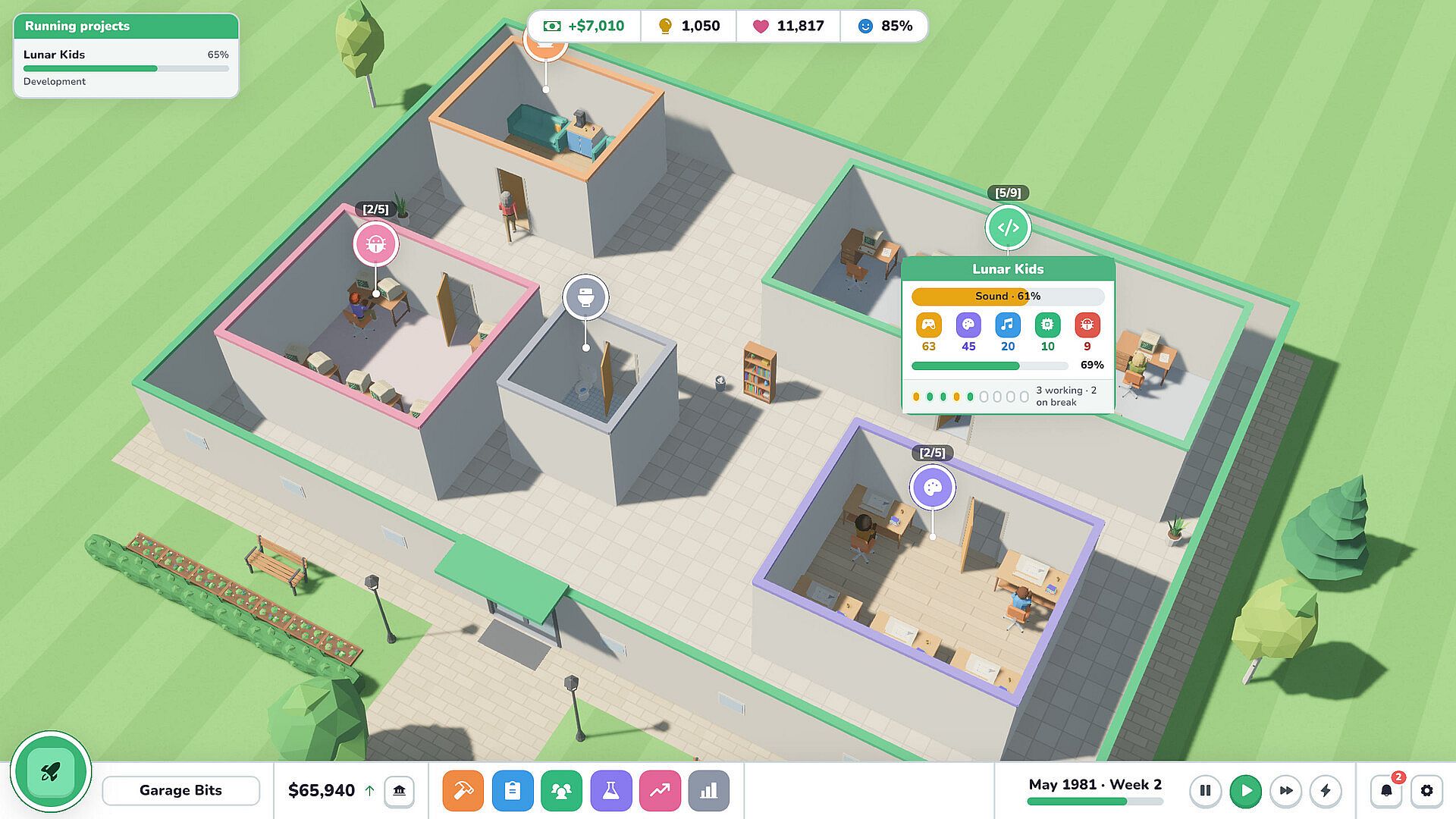
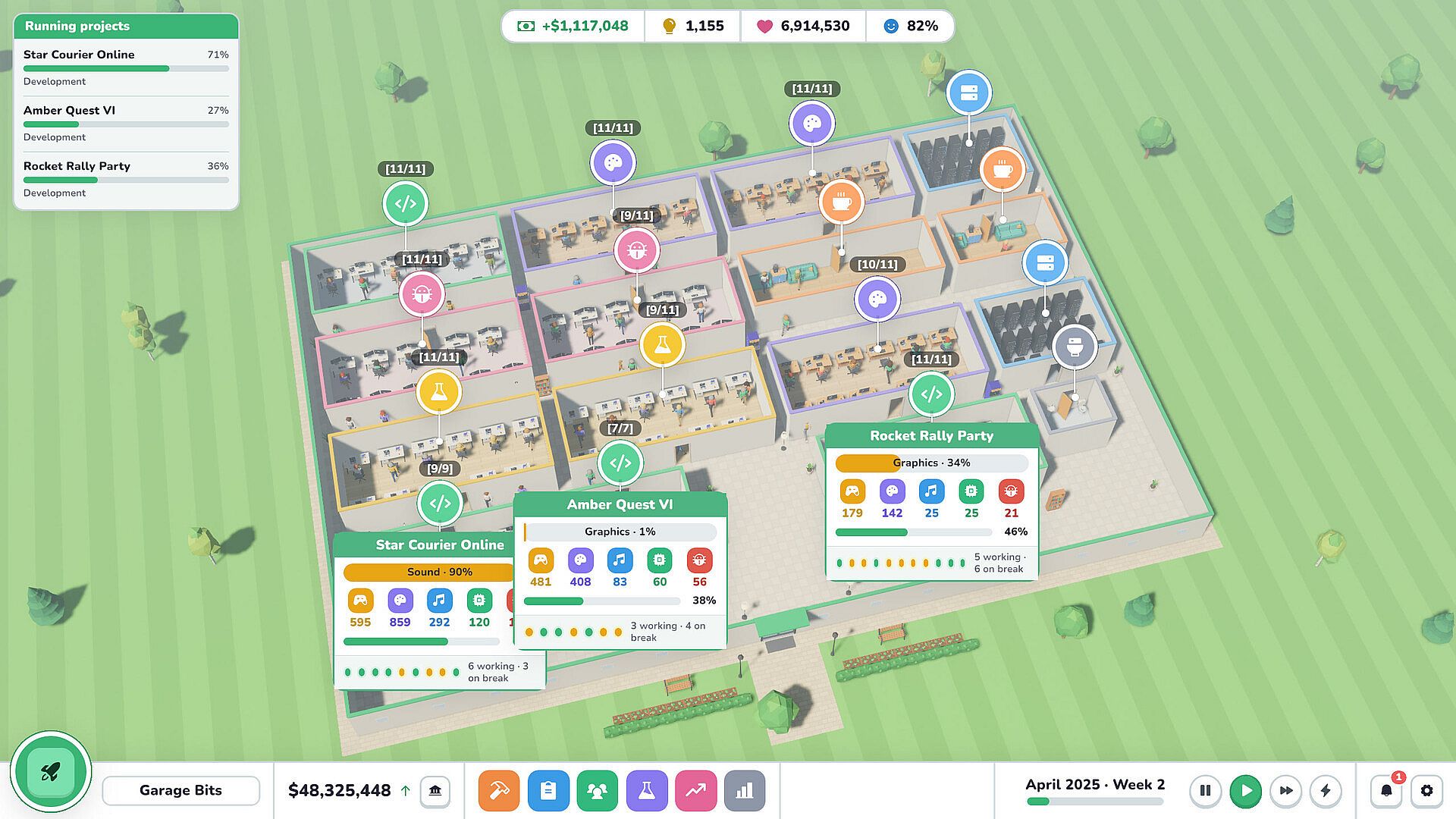
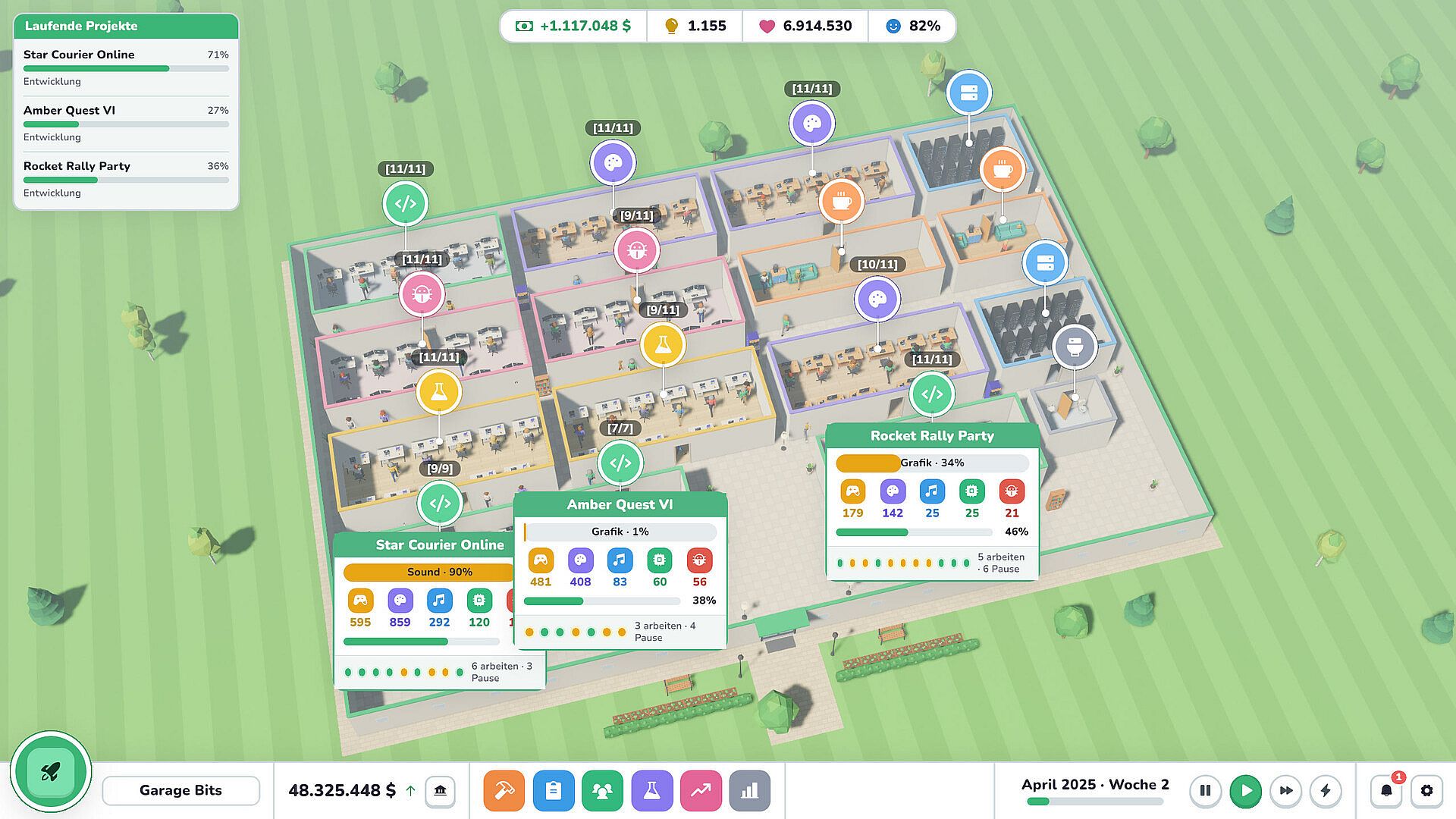
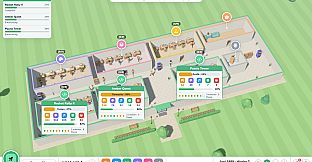
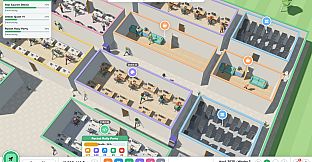
Simple Tech Startup is a strategy, indie, and simulation game on PC that puts players in charge of a game development studio beginning in 1975. The experience centers on growing a small operation into a lasting business by constructing facilities, assembling teams, and releasing titles that match player demand across changing market conditions.
Gameplay
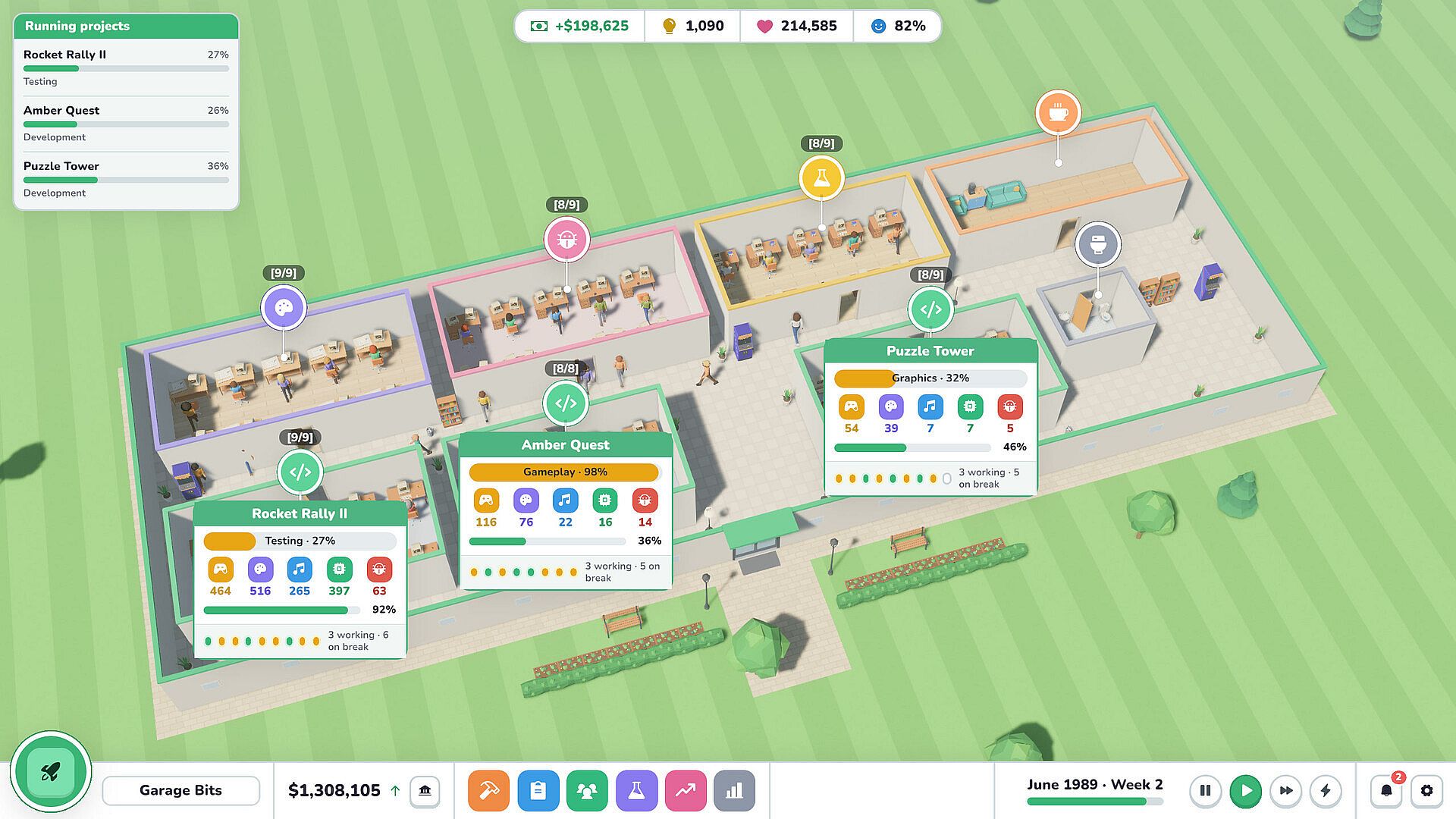
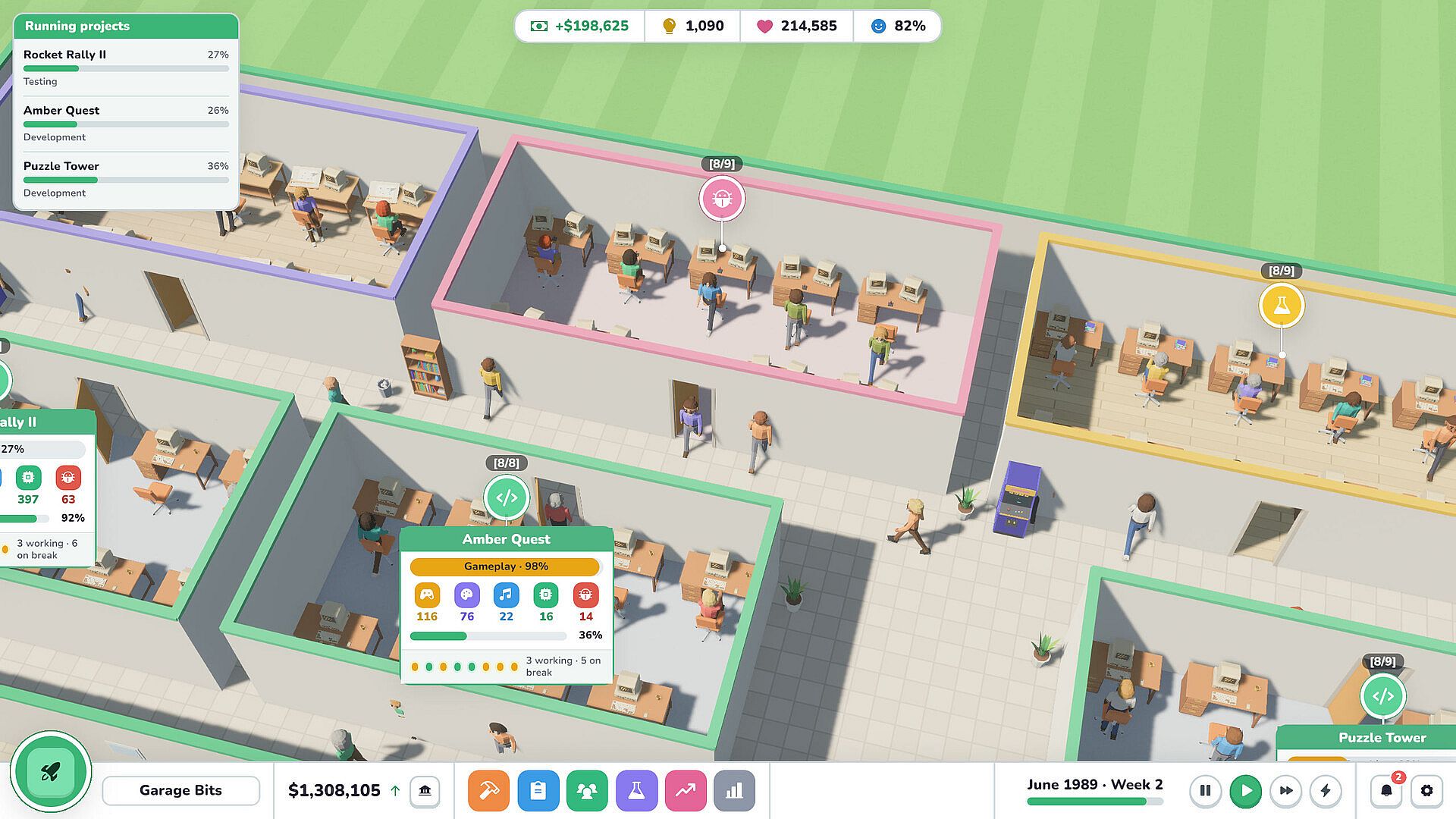
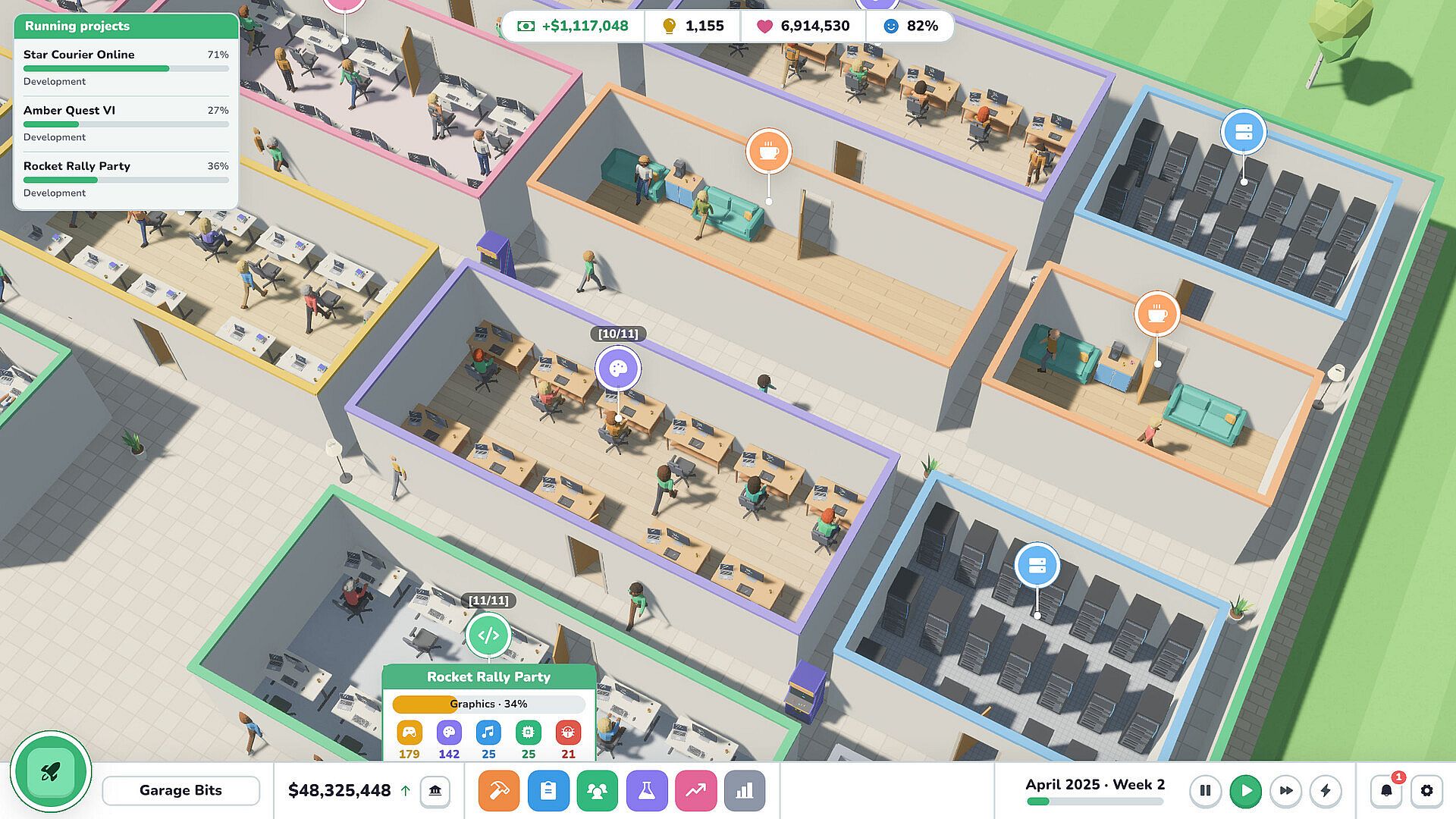
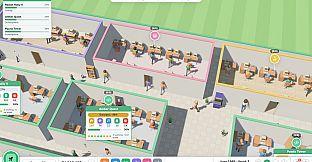
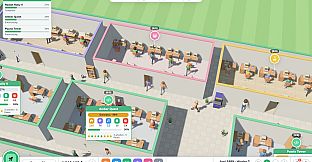
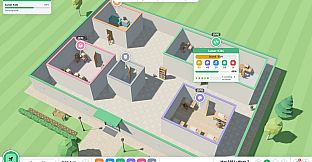
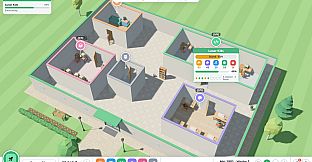
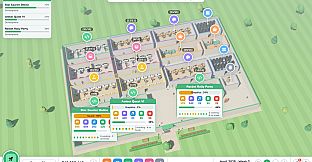
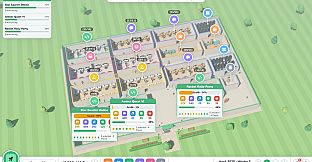
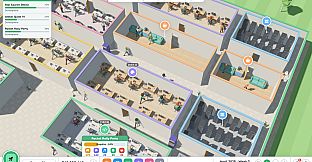
Players begin with limited funds and a single idea, then expand the studio by drawing rooms on available land and equipping them with furniture and decorations suited to different tasks. Additional land purchases allow further growth as the company scales. Game development happens through custom engines built in-house, with each room dedicated to advancing one project at a time. Progress occurs only when assigned staff are present and working, encouraging careful scheduling around employee availability.
Teams handle polishing, bug fixes, and feature work before release decisions. Early launches carry risks visible through post-release reviews, while extended refinement can improve reception. Company management includes hiring from an open job market, negotiating raises, handling absences, and managing notice periods when staff depart. Research unlocks new capabilities and options over time. Financial tools such as loans help during tight periods, while yearly taxes and ongoing expenses demand attention to prevent bankruptcy. Rival studios compete in the same evolving market, and technological shifts including the gradual rise of AI influence industry trends across decades.
Game Modes
The core experience runs as a single continuous simulation without a fixed endpoint. Players advance through the decades for as long as the studio remains solvent, adapting to market changes and technological progress. Setup options include selecting a starting country and difficulty level, with badges available for achievements. An optional tutorial guides new players through initial steps, while the interface reveals features gradually to avoid overwhelming choices at the outset.
Building and Managing the Studio
Expansion focuses on practical layout decisions that support efficient workflows. Rooms serve specialized roles in game production, and their placement on the lot affects overall operations. Furniture and decorations provide functional benefits while also shaping the workspace environment. Land acquisition becomes essential once initial space fills, supporting larger teams and parallel projects. Staff management extends beyond hiring to include ongoing adjustments for compensation and retention amid absences or departures.
Developing Games Across Decades
Engine creation forms a foundation for each title, allowing customization that influences later projects. Dedicated room assignments keep multiple aspects of development moving forward simultaneously once teams are in place. Balancing polish against release timing affects critical feedback, and sustained operations require adapting to shifting player preferences over time. Competition from other companies adds pressure to deliver relevant experiences as the broader industry evolves.
Is It Worth Playing?
Simple Tech Startup suits players who enjoy methodical business simulation and long-term strategy. The open-ended structure rewards careful planning around hiring, research, and financial decisions while letting the studio persist across multiple decades. Those interested in game industry themes will find the room-by-room construction, engine development, and review system provide focused depth without unnecessary complexity. The step-by-step introduction and optional tutorial make it accessible for newcomers to the genre, while difficulty and country choices add replay variety for experienced players. Overall, it delivers a steady, self-directed experience centered on sustainable growth rather than short bursts of action.