




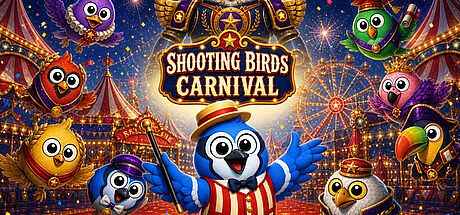


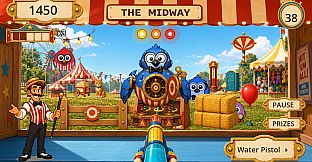
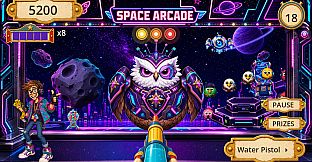
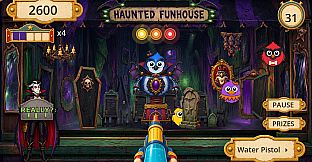
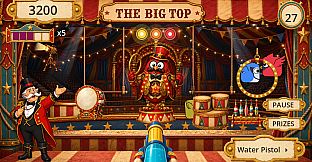
Shooting Birds Carnival is a casual shooting gallery arcade game for PC. Players step into a quirky funfair and take on a series of target-shooting challenges across eleven themed booths, each filled with mechanical birds and carnival contraptions that pop up, swing, or slide into view.
Gameplay
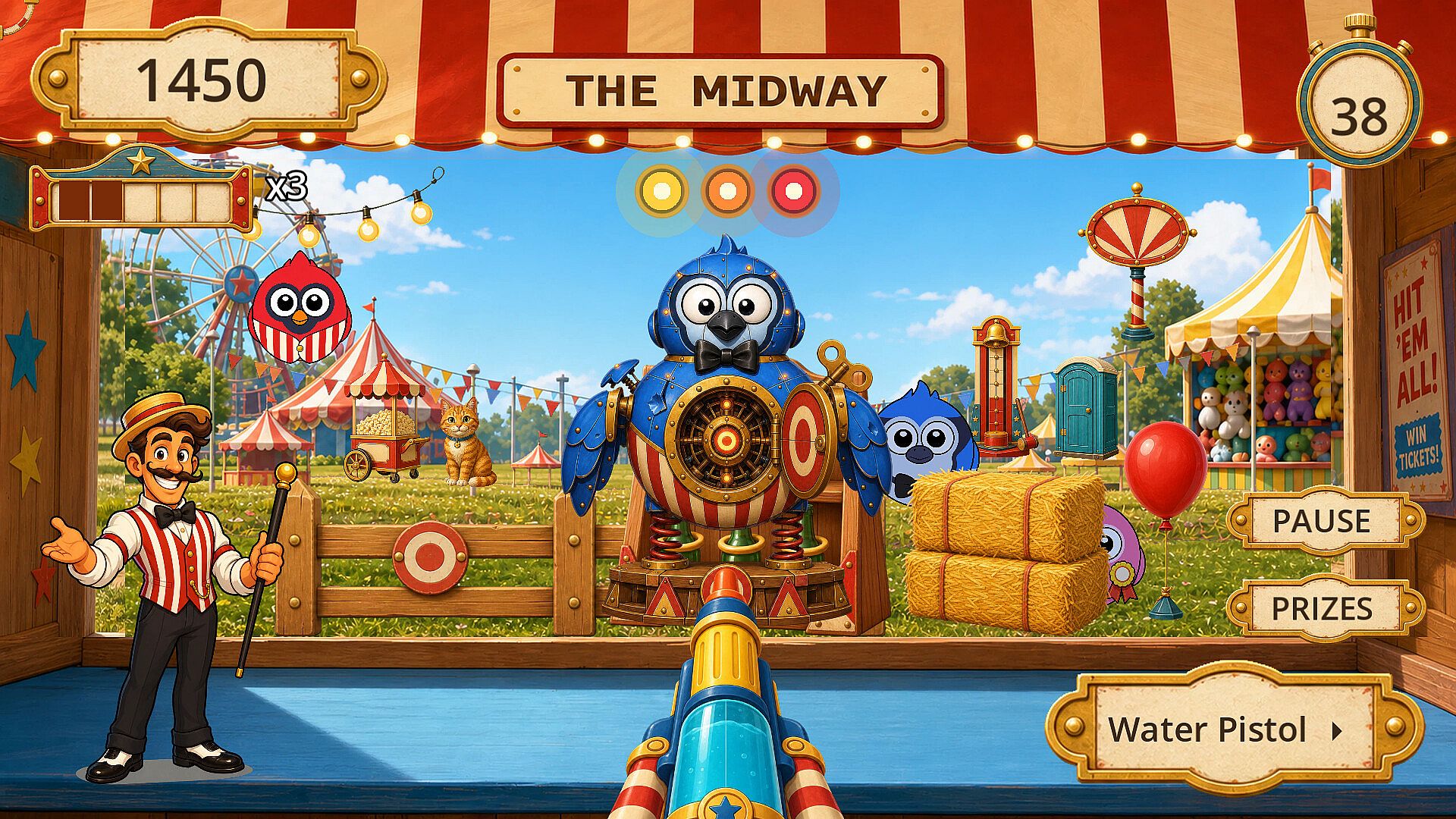
The core loop revolves around quick sessions where the goal is to knock down as many targets as possible within a fixed sixty-second window per booth. Controls are straightforward: click to shoot with the current weapon. Hits build a combo multiplier, while misses reset it. Decoys such as a baby bird or clown appear among the targets, and shooting them penalizes the player by breaking the combo or costing points. Scenery elements like popcorn carts, balloons, or signs can also be shot for visual effects or minor interactions, though they yield no score.
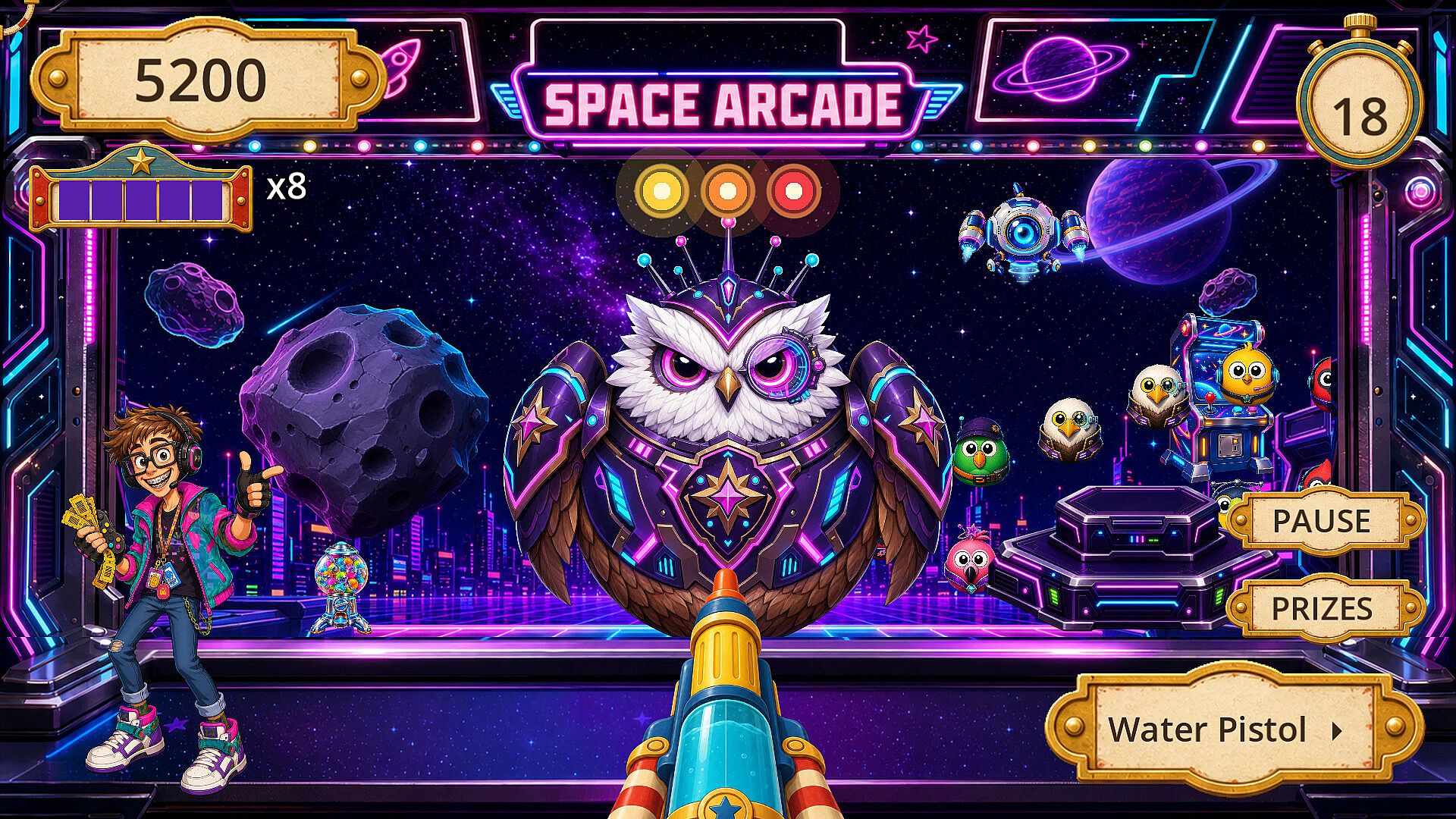
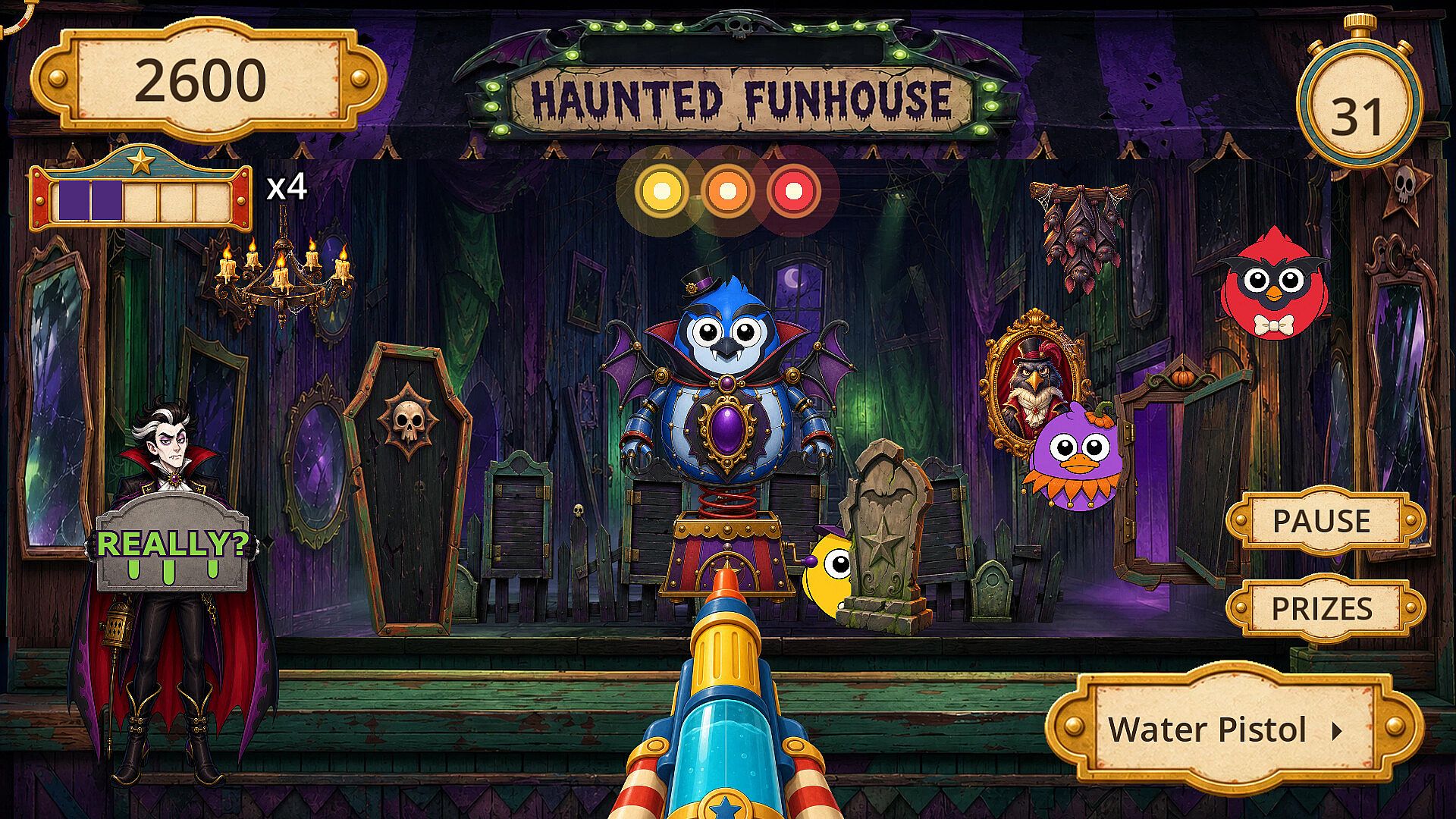
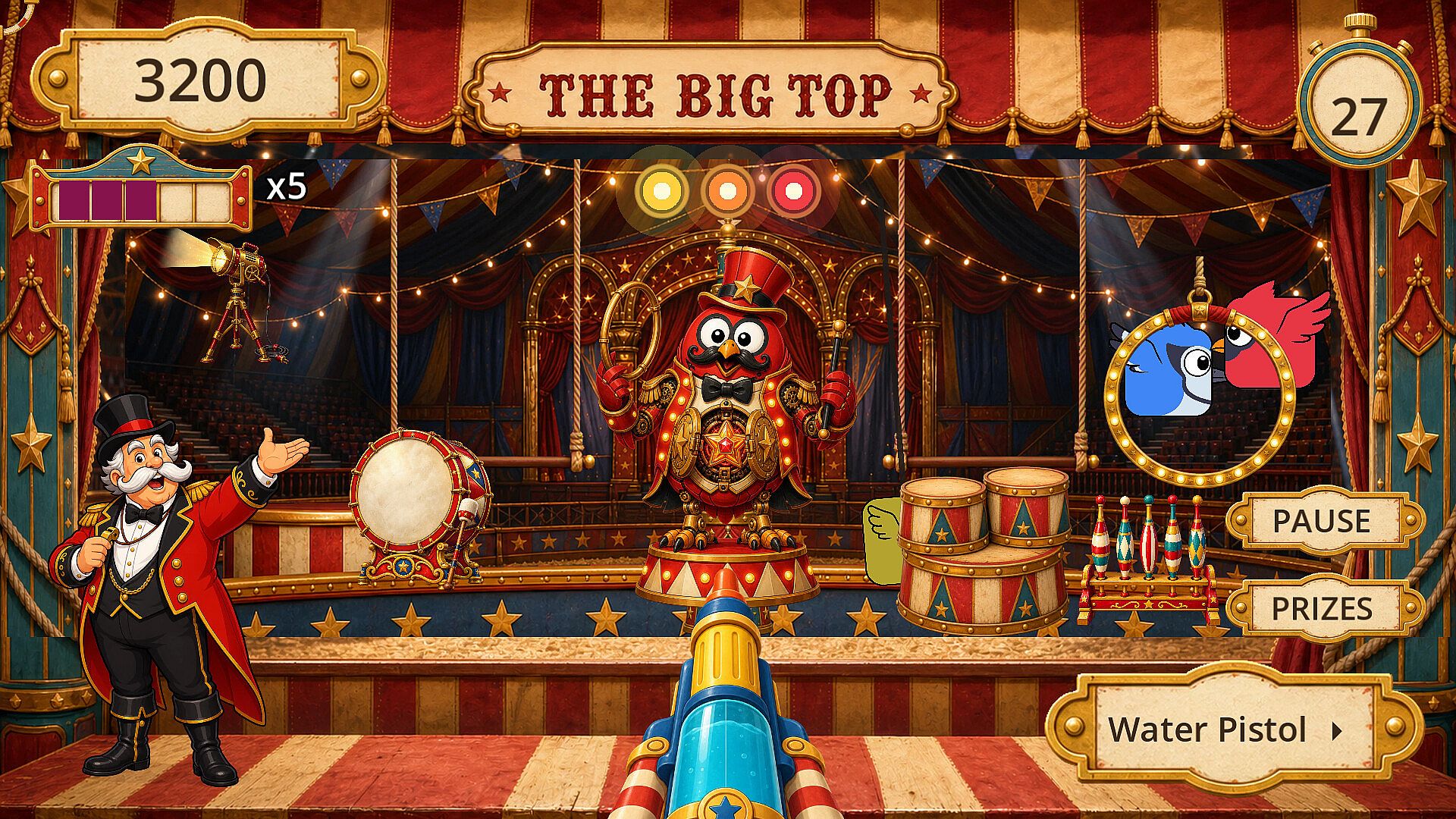
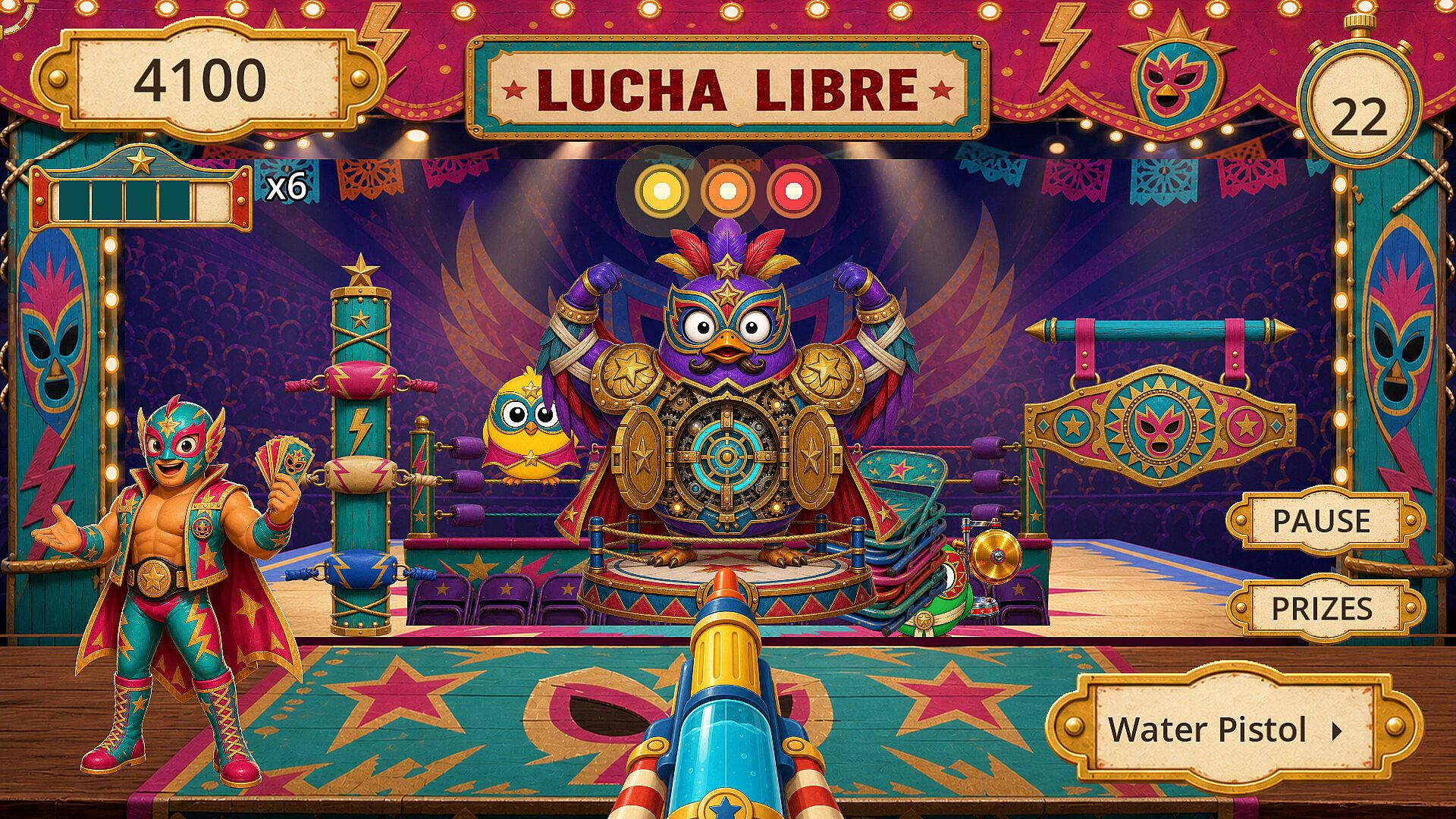
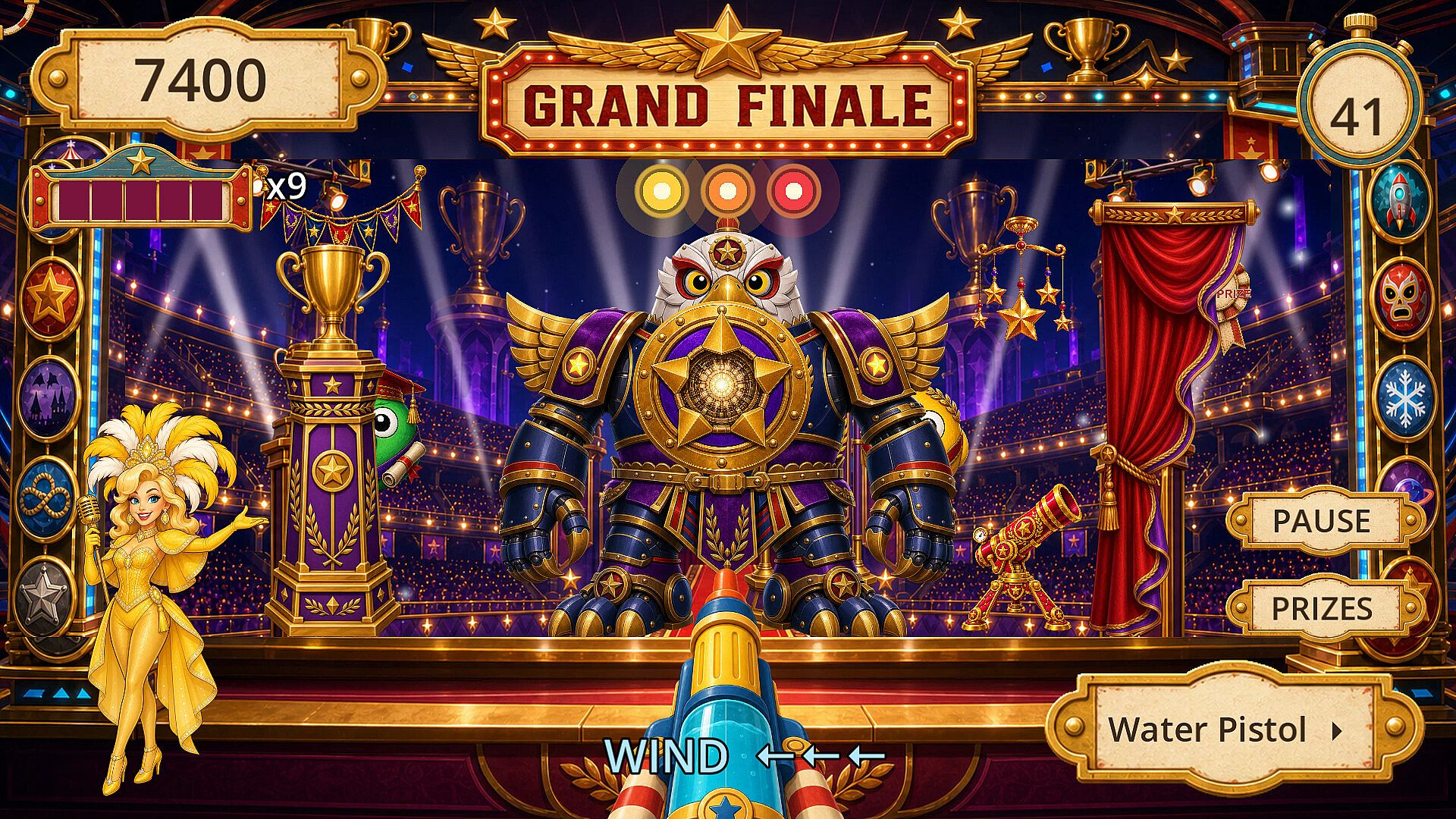
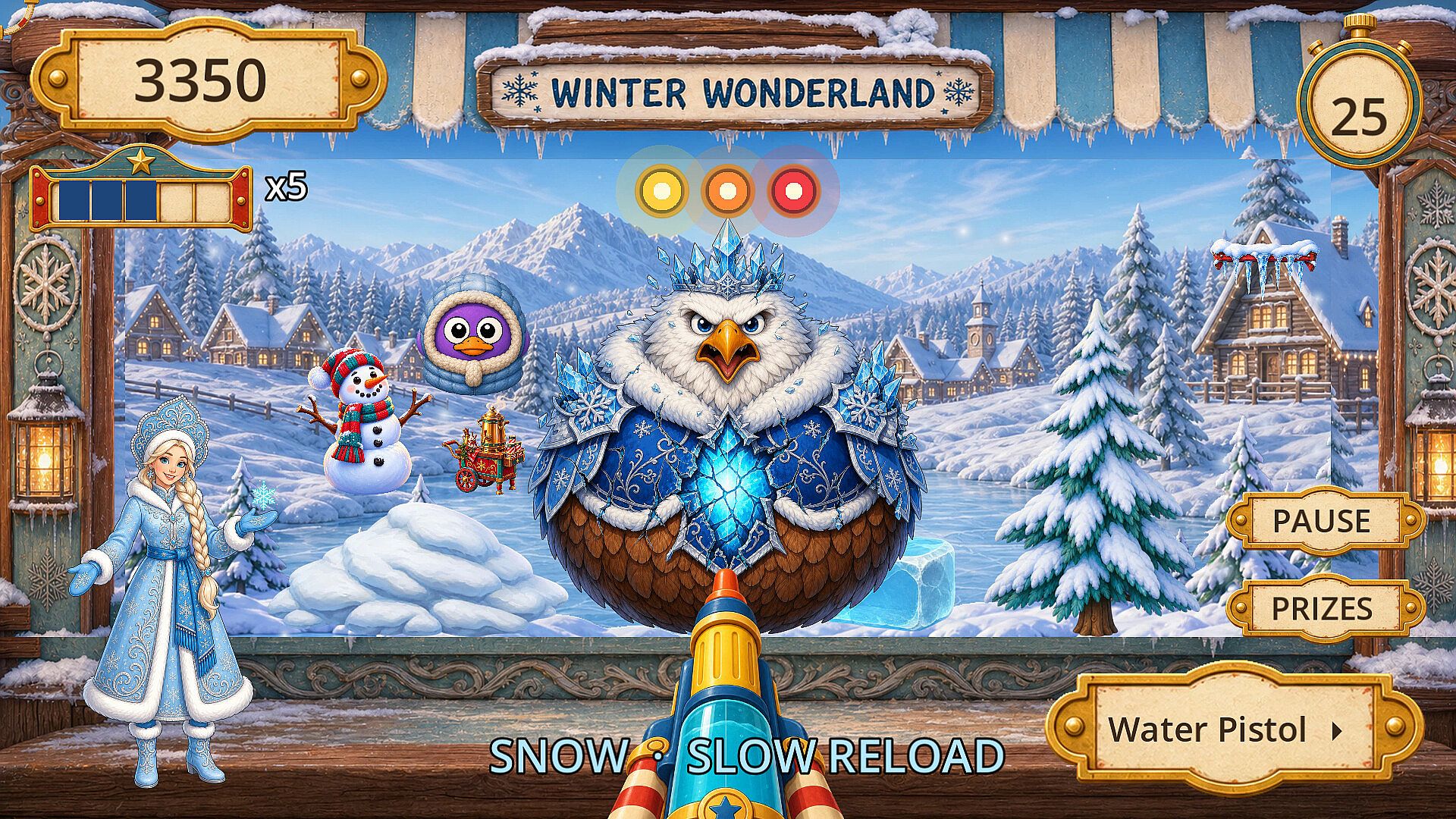
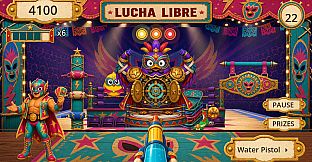
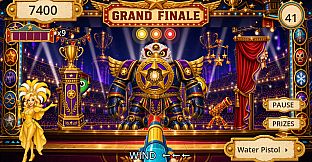
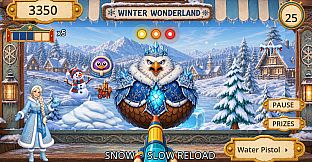
Each booth features unique movement patterns and environmental hazards. The Midway introduces basic pop-ups and rail sliders. The Big Top adds swinging trapeze birds. The Haunted Funhouse sends targets leaping from behind tombstones. The Pier introduces crosswinds that curve shots. The Wild West emphasizes fast rails and timing. Red Square requires stripping armor plate by plate from targets. Lucha Libre brings birds leaping off ropes. Winter Wonderland slows reloads due to cold hands and falling snow. Jungle Safari hides targets in dense foliage with something prowling nearby. Neon Space Arcade features swarms that increase in speed as time runs out. The Grand Finale combines multiple tricks with a larger boss encounter.
Every booth concludes with a boss that seals its weak spot and reveals it only in timed bursts. Players must observe the rhythm to land shots during open windows, then adapt as phases change. Greedy shooting outside the window can break a combo. Nine weapons start with a basic water pistol and expand through tickets earned in play. Slingshots and bean bags arc over cover. The BB rifle allows rapid fire. The foam rocket and party cannon clear groups but risk hitting decoys. The carny attendant in each booth reacts to being shot, progressing from cheers to heckles, sarcastic signs, thrown objects, and eventually a dizzy collapse on the floor.
Game Modes
The game structures its content around the eleven distinct booths, each functioning as a self-contained challenge with its own theme, targets, and boss. There are no separate multiplayer or competitive modes. Instead, variety comes from the environmental differences and progression through the booths. Three difficulty settings alter the booth layout itself rather than the time limit, keeping every round a full sixty seconds. Easier settings reduce decoys and armor for broader accessibility, while harder ones increase both for greater challenge. A free demo provides access to the first three booths with full scoring and progression preserved, allowing players to sample the experience before unlocking the remaining eight through a single purchase.
Weapons and Progression
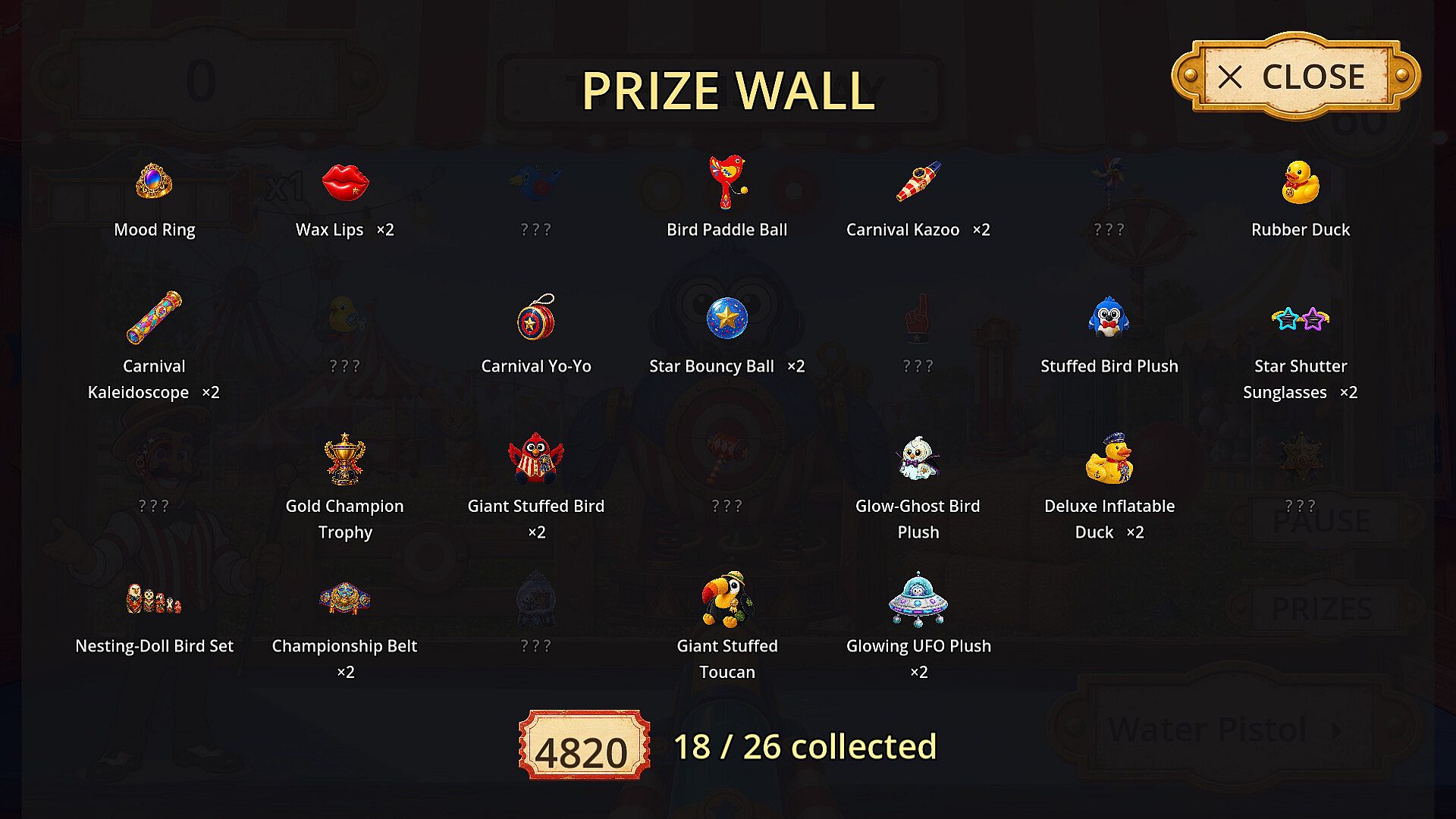
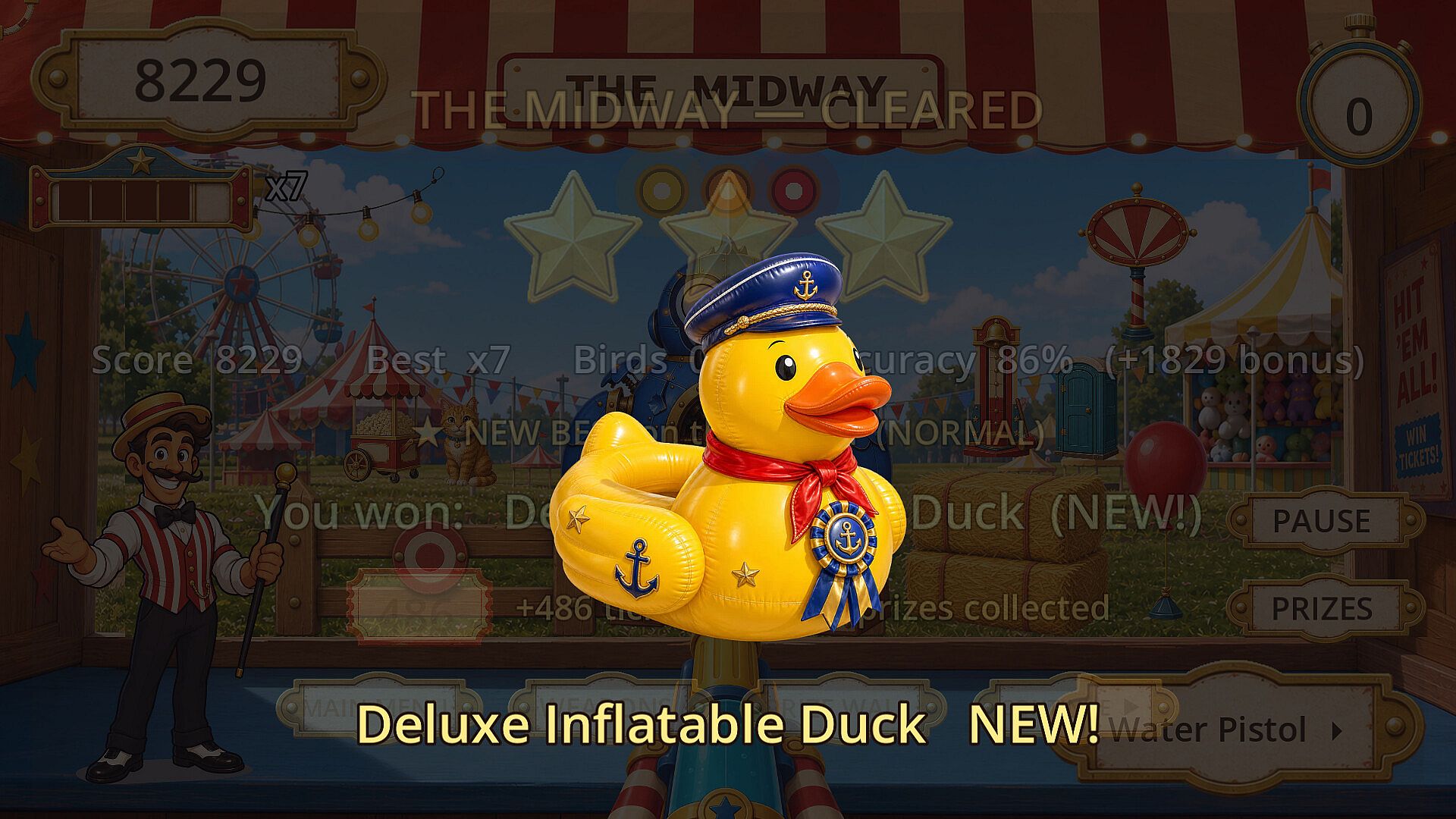
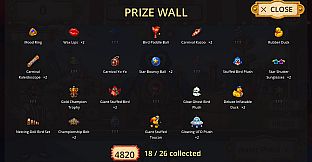
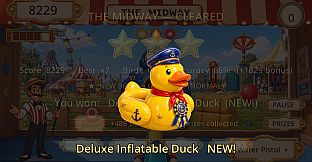
Tickets collected from successful runs fund weapon upgrades that change how players approach each booth. Early weapons suit precise single-target shots, while later ones handle crowds or covered targets. The system encourages experimentation across multiple runs of the same booth to discover optimal loadouts. Scenery interactions add flavor without altering the score chase, rewarding curiosity during repeated plays.
Is It Worth Playing?
Shooting Birds Carnival suits players seeking short, focused arcade sessions that fit into limited time. Its one-time purchase model, complete offline functionality, and absence of subscriptions or additional purchases make it straightforward for casual play. The free demo with the first three booths lets anyone test the core loop and boss encounters before committing. Those who enjoy classic shooting gallery mechanics with added personality from the carnies, varied booth tricks, and combo management will find repeated value in mastering timing and weapon choices across the full set of booths. The game emphasizes skill in rhythm reading and accuracy over long campaigns or complex systems.