




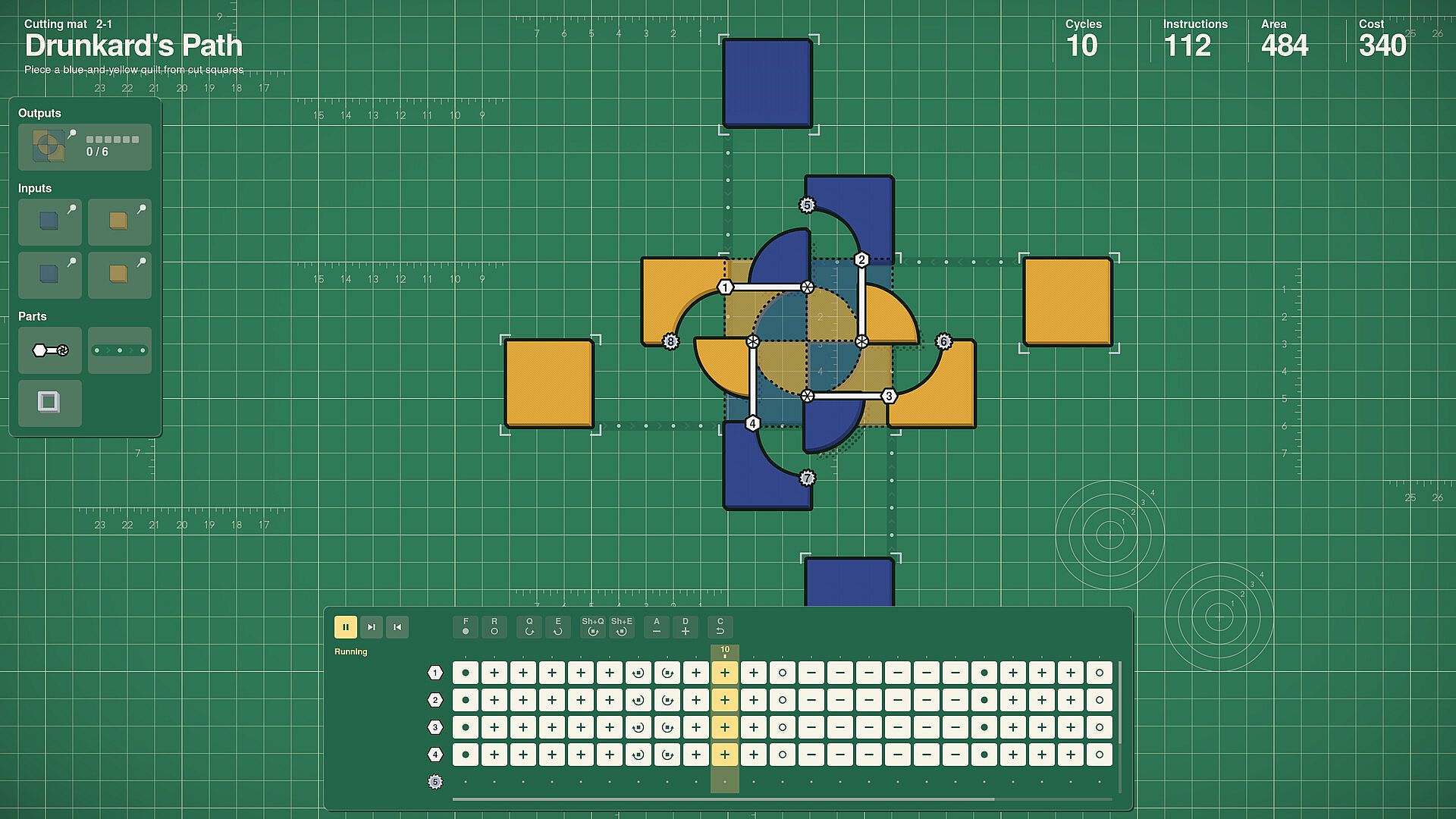
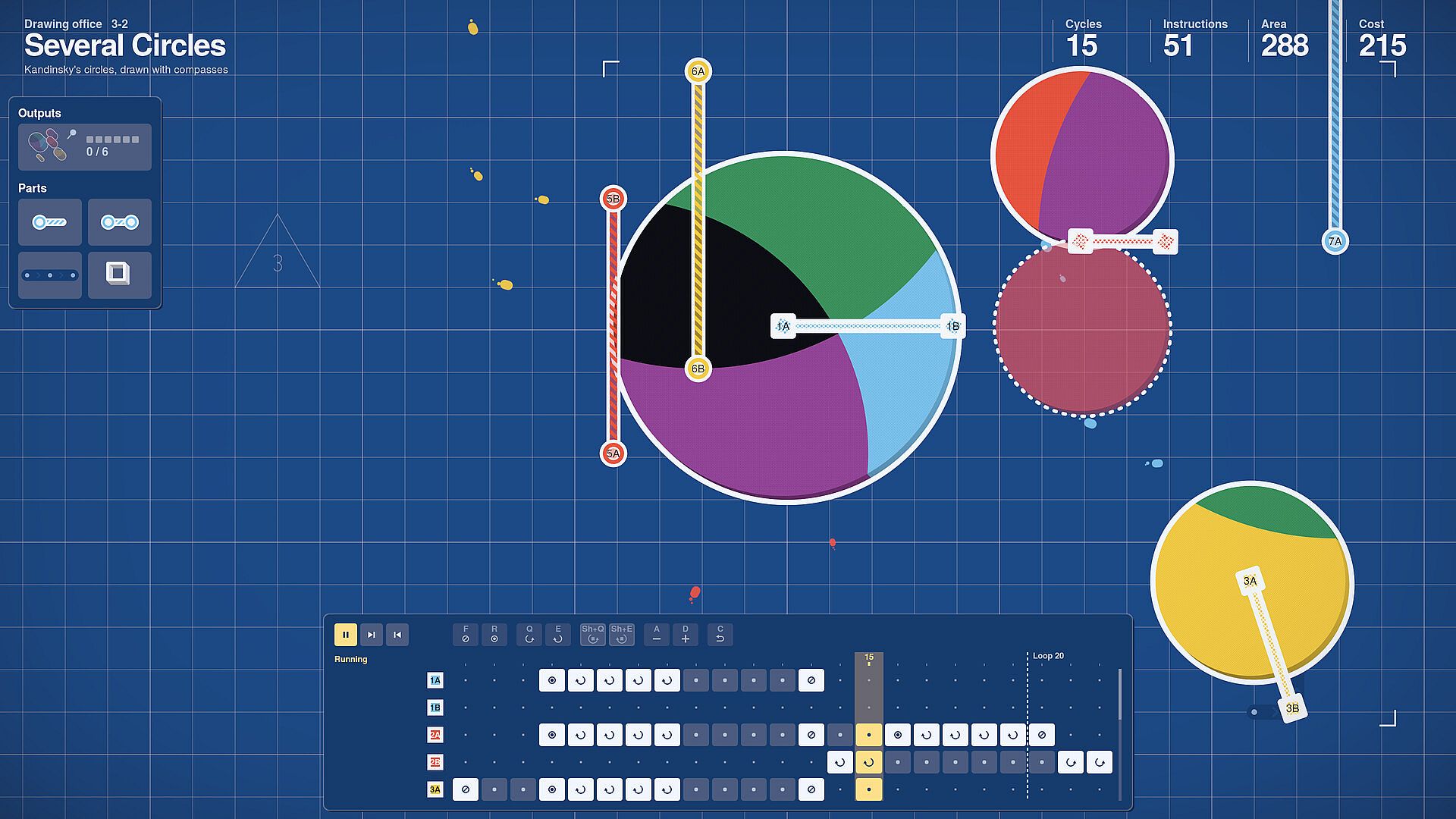
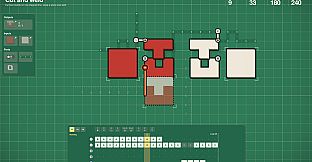
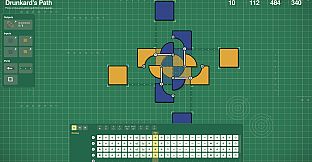
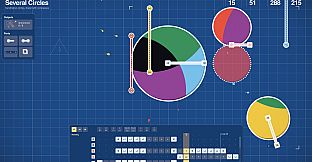
Shapesetter is an indie simulation game built around automation puzzles on PC. Players construct and program machines that transform raw geometric shapes into finished artistic products through precise, visible mechanical actions.
Gameplay
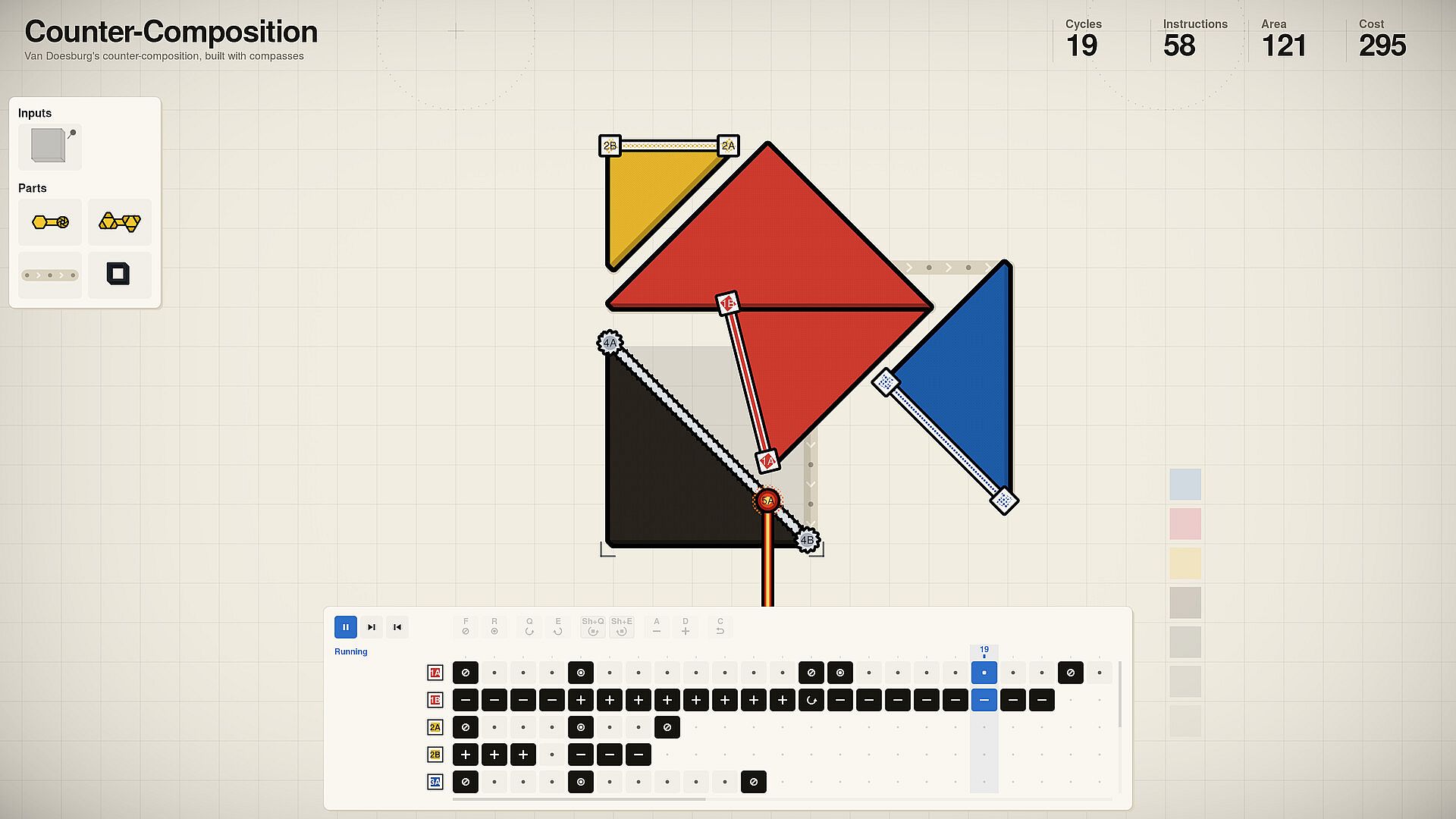
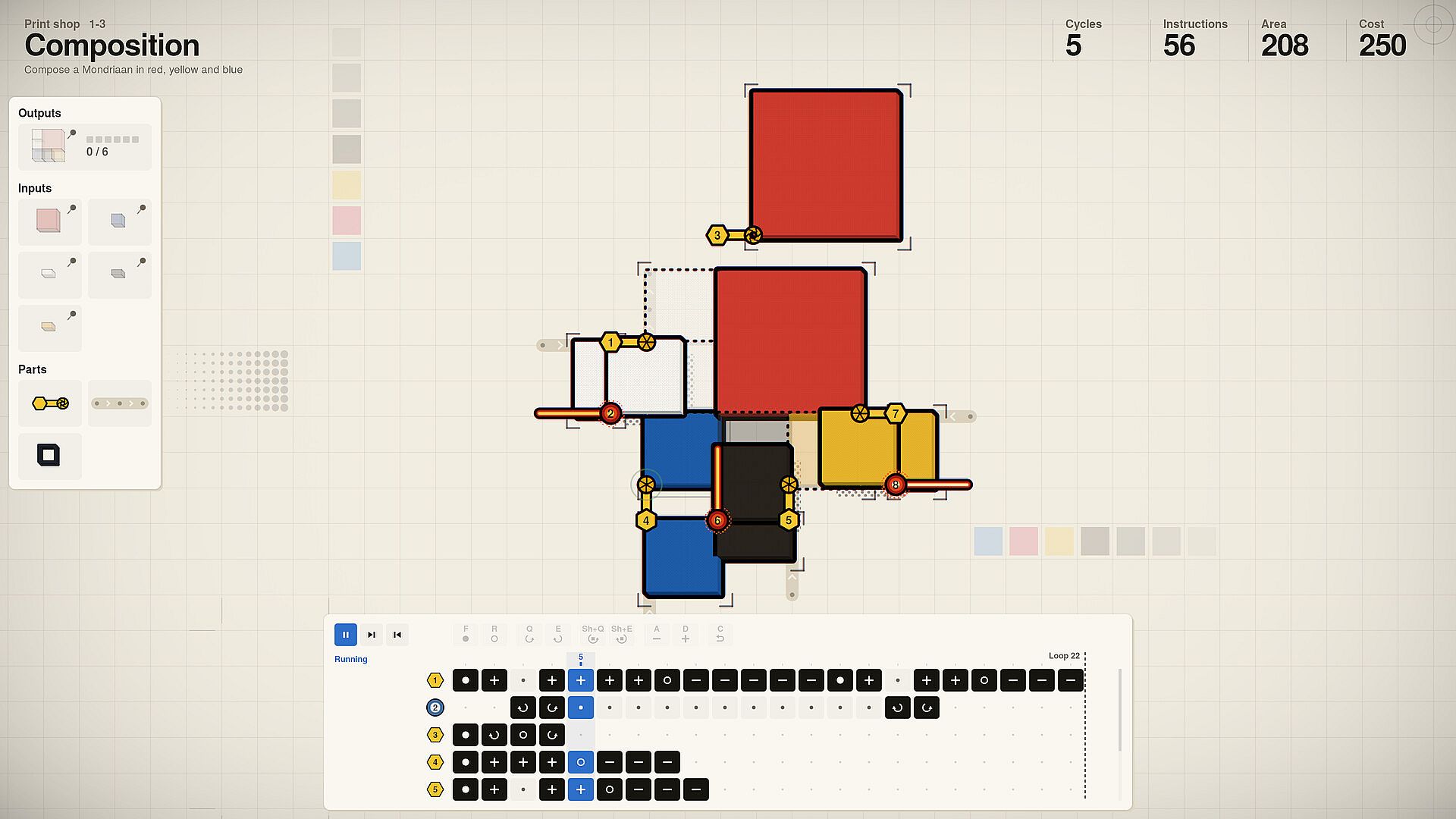
The core loop centers on designing functional machines that process inputs into specified outputs. Each level supplies raw shapes and requires particular finished items such as quilt blocks, Mondrian compositions, or layered circle pages. Arms are placed on the board, equipped with one of five tools, and assigned sequences of instructions on a tape. When activated, the machine executes its program repeatedly, producing items until the required quota is met.
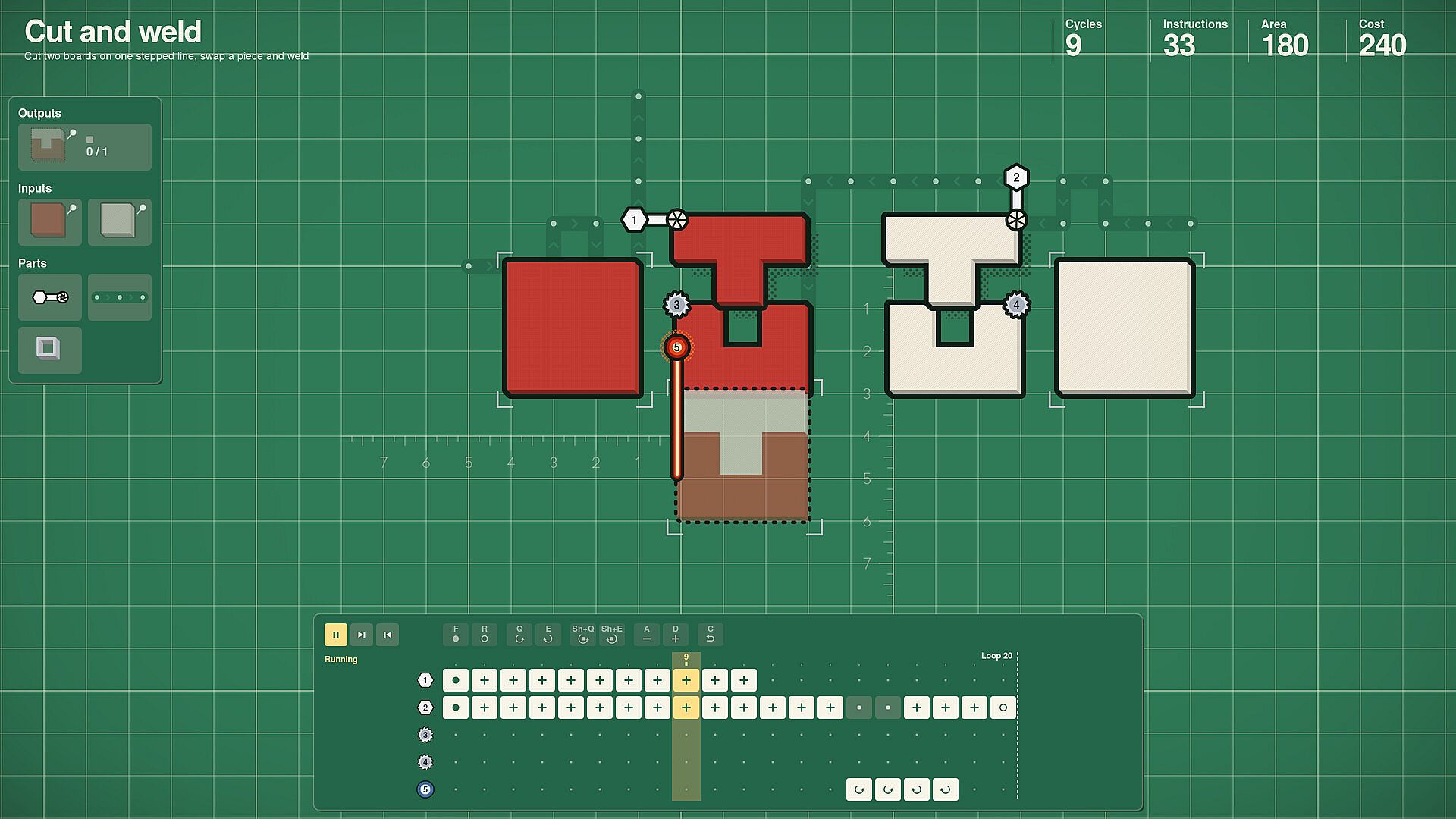
Every action occurs visibly on screen. A cutter arm slices material exactly where its blade passes. Welders fuse pieces at contact points. Painters apply color as shapes move beneath the brush. Extruders add new material in controlled amounts. Grab tools reposition elements as needed. No operations happen off-screen or through hidden calculations, allowing direct observation of how each instruction contributes to the final result.
Shapes themselves follow exact geometric rules using arcs, sectors, and straight edges rendered in flat ink. These remain crisp under any level of zoom, supporting fine adjustments during machine design. Solutions succeed when the machine reliably delivers the target products without deviation.
Game Modes
Shapesetter operates entirely in a single-player format focused on sequential puzzle levels. Each stage presents a distinct input-to-output challenge that requires building and refining a dedicated machine. Progress involves completing these levels by meeting production quotas through programmed automation.
After a functional machine is created, refinement becomes the next objective. Solutions receive scores based on three independent metrics: total cycles required, number of instructions used, and physical area occupied by the machine. Players return to earlier levels to improve performance across these measures, experimenting with different arm placements, tool assignments, and instruction sequences.
Controls and Accessibility
Input supports both keyboard and mouse or a game controller. The interface emphasizes direct placement and editing of arms and instructions, with visual feedback for every change. Exact geometry ensures that adjustments produce predictable results regardless of zoom level or viewing angle.
The five available tools per arm provide clear functional distinctions: grab for repositioning, paint for color application, cut for material separation, weld for joining, and extrude for material addition. These options allow varied approaches to the same production goal while keeping every interaction tangible and observable.
Optimization and Replay Value
Once a machine meets the basic quota, attention shifts to efficiency. Lower cycle counts reduce runtime, fewer instructions simplify the program, and smaller area footprints fit tighter layouts. Multiple valid solutions exist for each level, encouraging experimentation to find superior combinations of speed, simplicity, and compactness.
Levels draw from recognizable artistic references, including Drunkard's Path quilt patterns, square-by-square Mondrian assemblies, and overlapping Kandinsky circles. This variety maintains distinct visual and mechanical demands across the puzzle set without altering the fundamental automation rules.
Is It Worth Playing?
Shapesetter suits players who enjoy methodical puzzle design and iterative improvement in a single-player setting. The emphasis on visible mechanics and exact geometry rewards careful planning and observation over trial-and-error guessing. Those interested in automation systems or precise spatial problem-solving will find consistent depth in refining machines across multiple scoring dimensions. The game remains focused on its core loop without additional layers, making it a direct choice for the described style of play.