







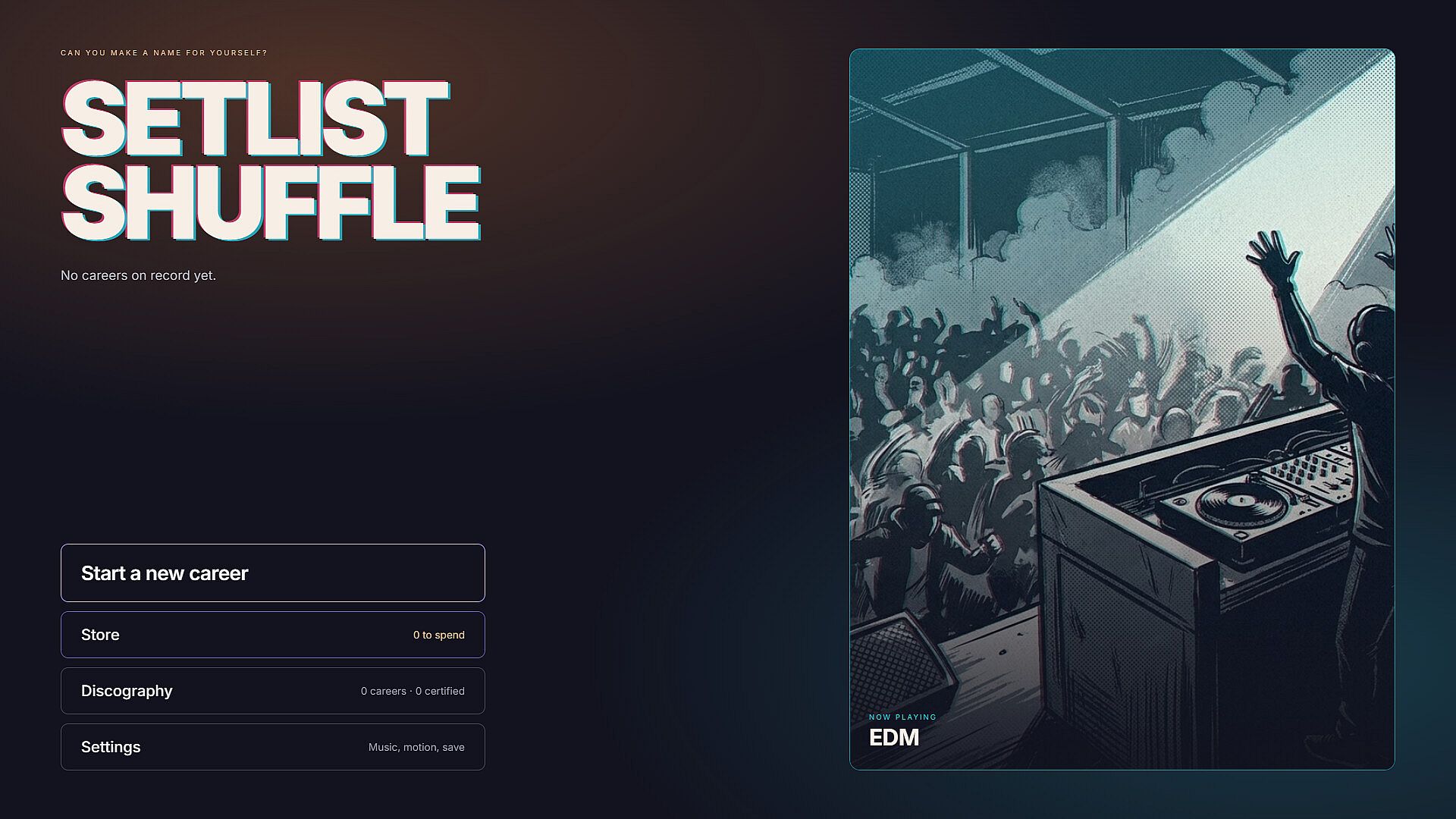
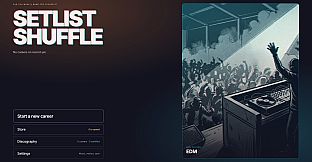


Setlist Shuffle is a strategy indie casual simulation game for PC where players build and manage a music career through deck construction and turn-based decisions. The core experience revolves around shaping a band's sound and audience without any preset genre selection at the start.
Gameplay
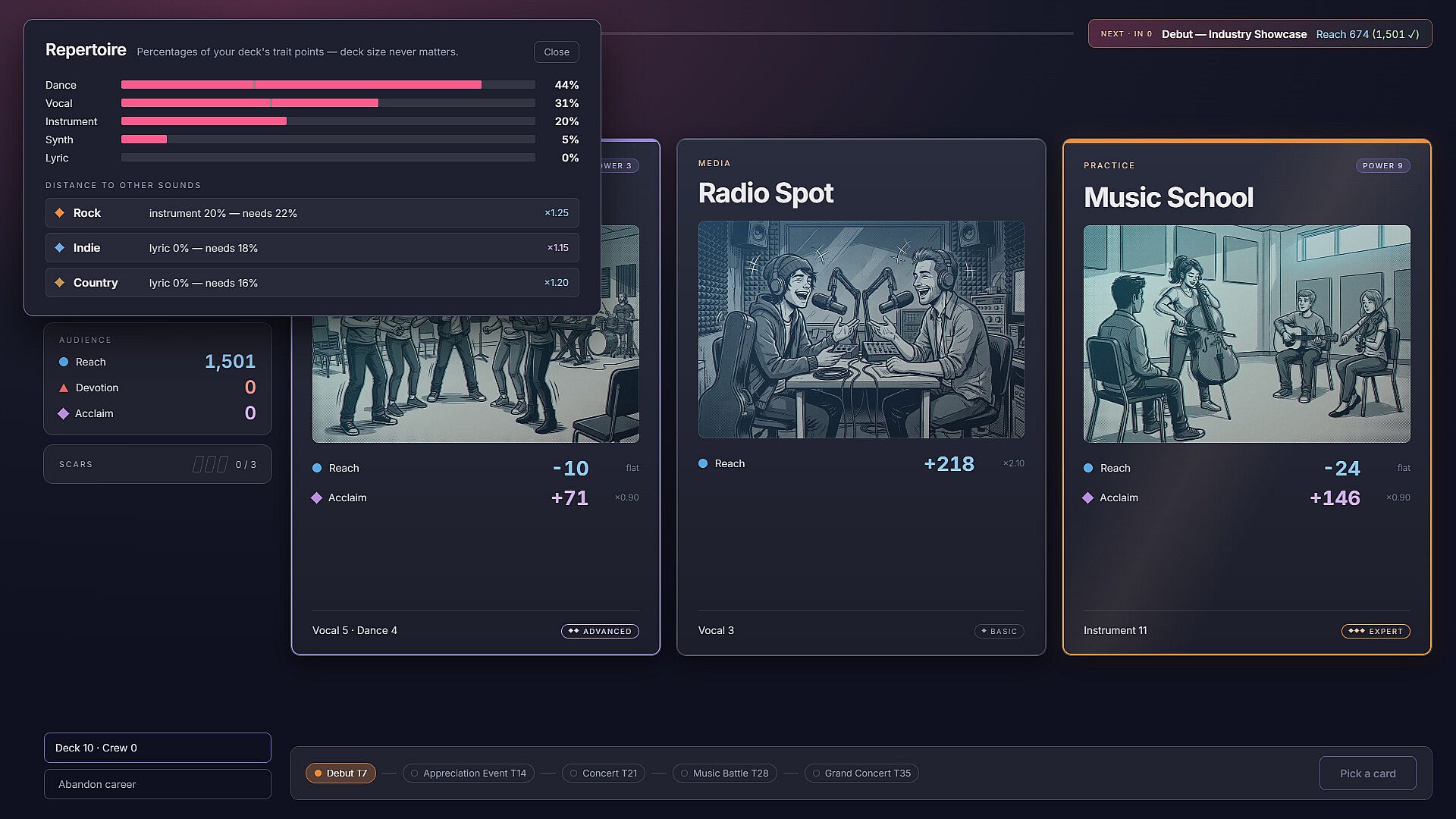
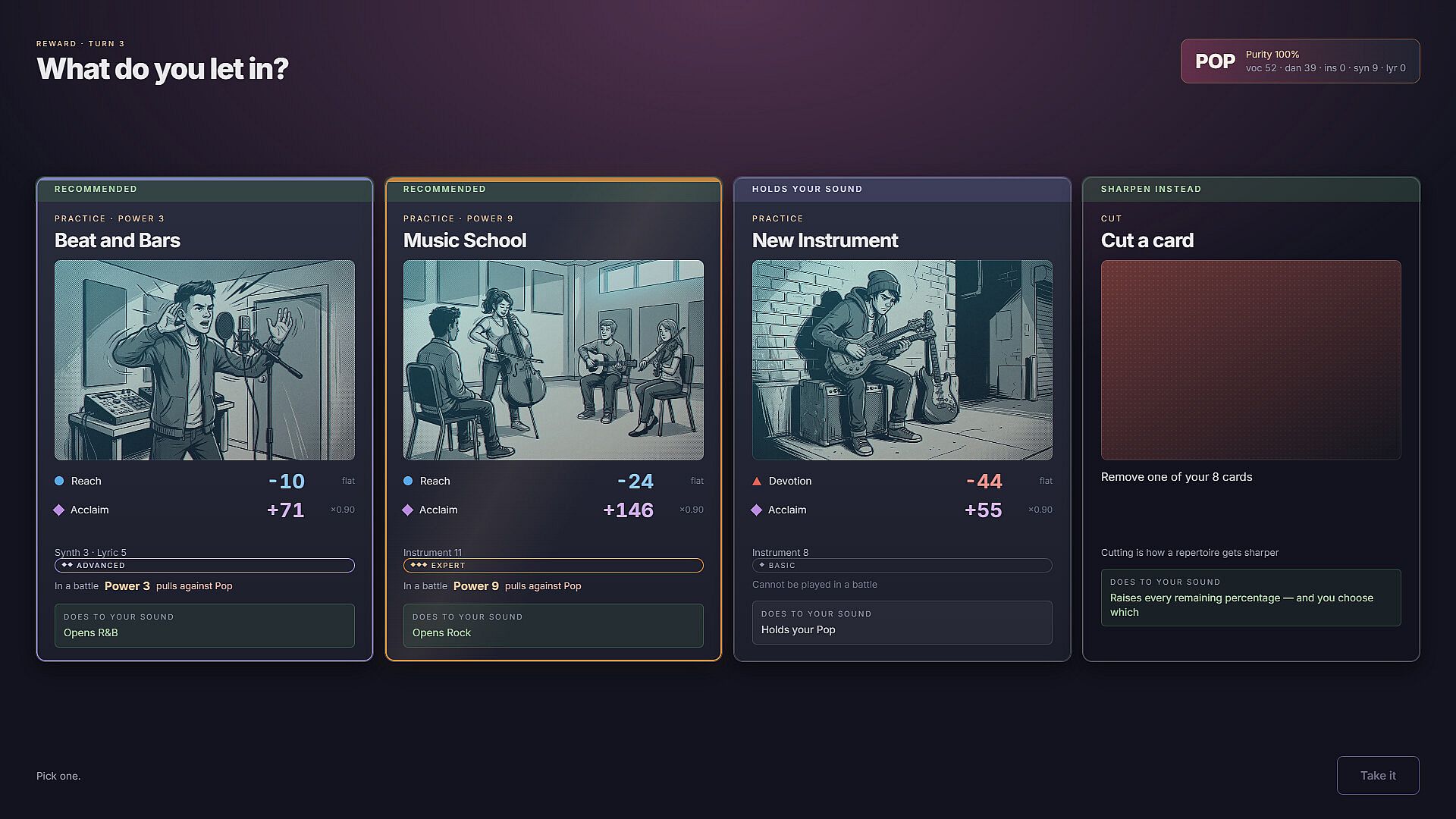
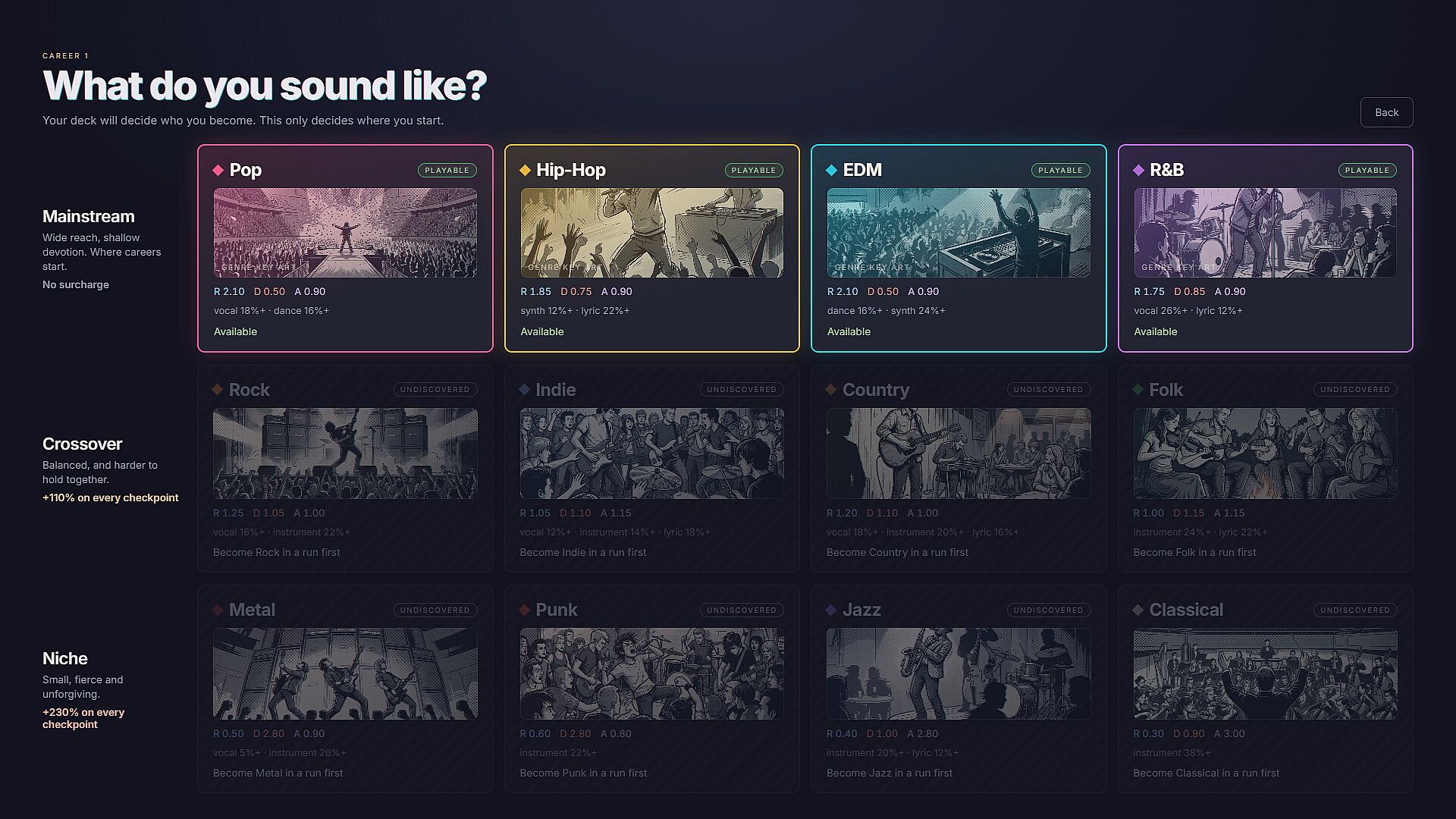
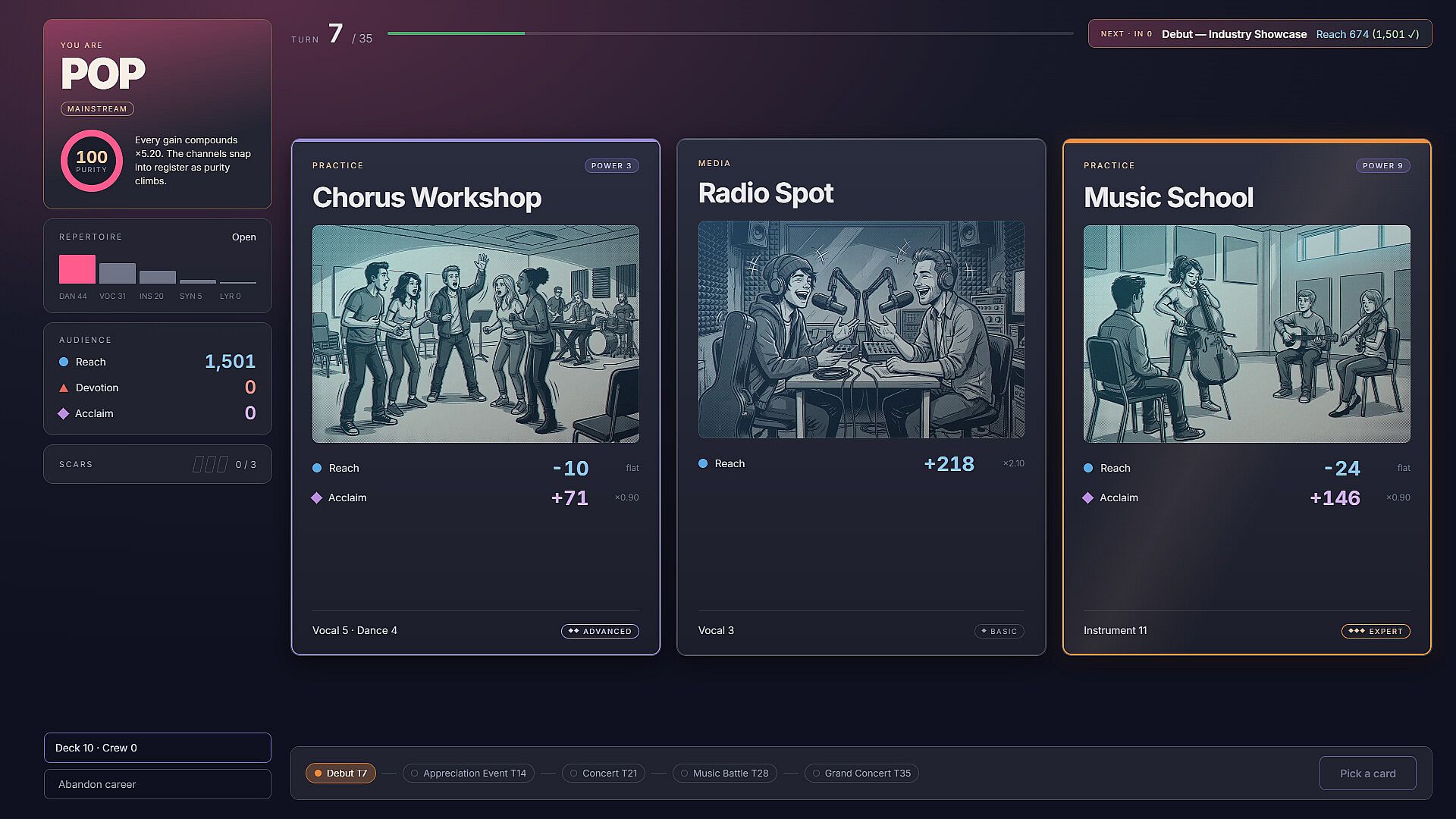
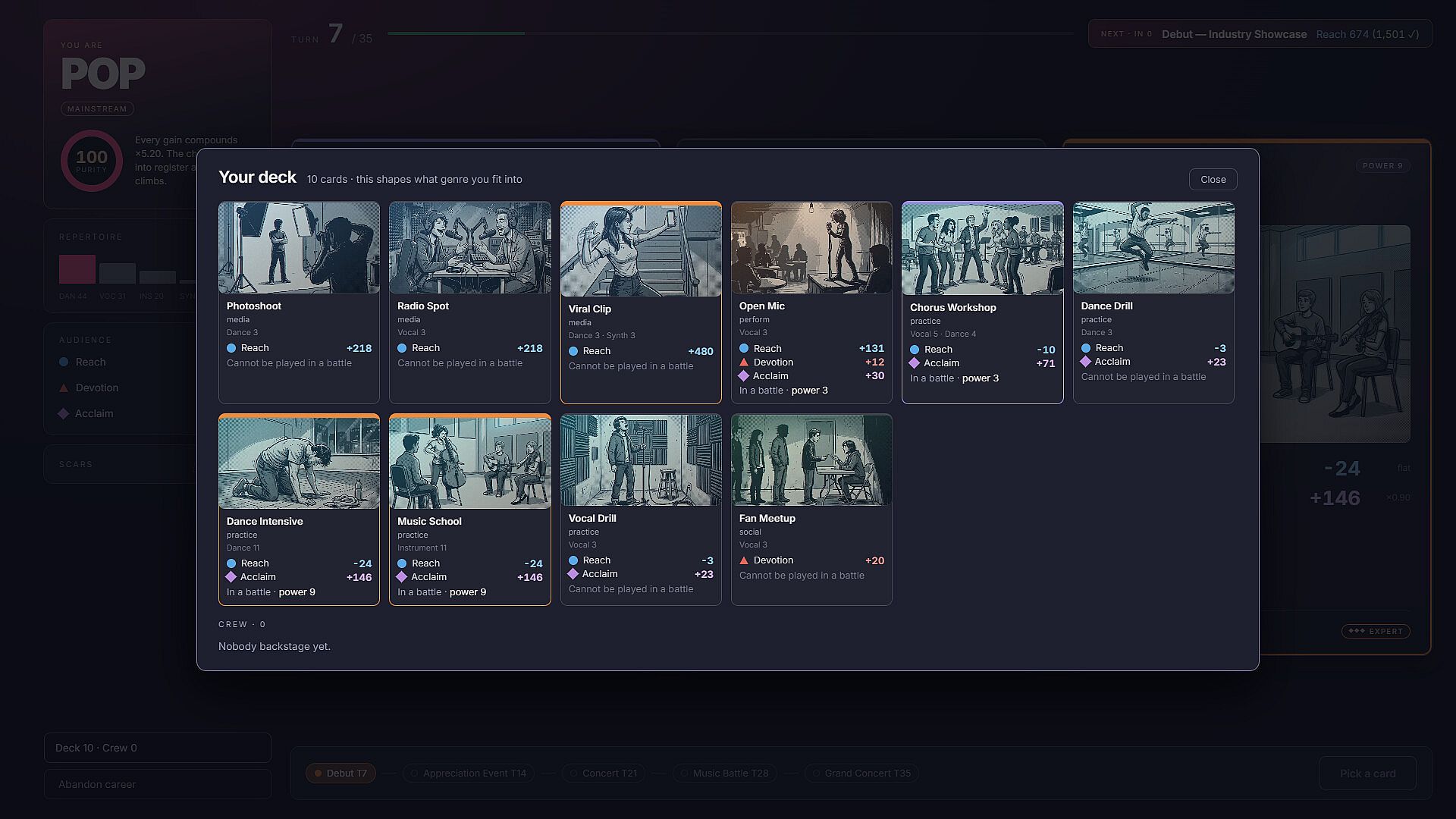
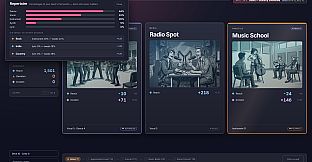
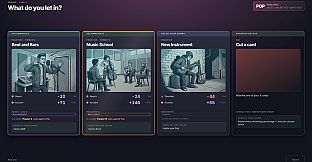
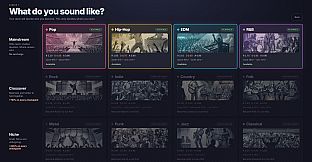
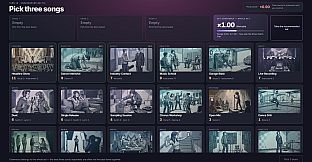
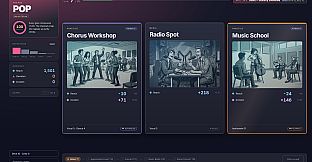
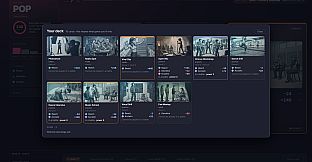
The central loop involves constructing a deck that represents musical activities and influences. Each turn draws three cards from the built deck, and the player selects one activity to pursue, such as rehearsing, performing a gig, posting updates, writing material, or scheming for opportunities. Choices directly affect the emerging sound, which in turn determines access to different performance venues and audience types. Genres form organically through card selections rather than upfront menus, allowing the player to shift styles fluidly across runs.
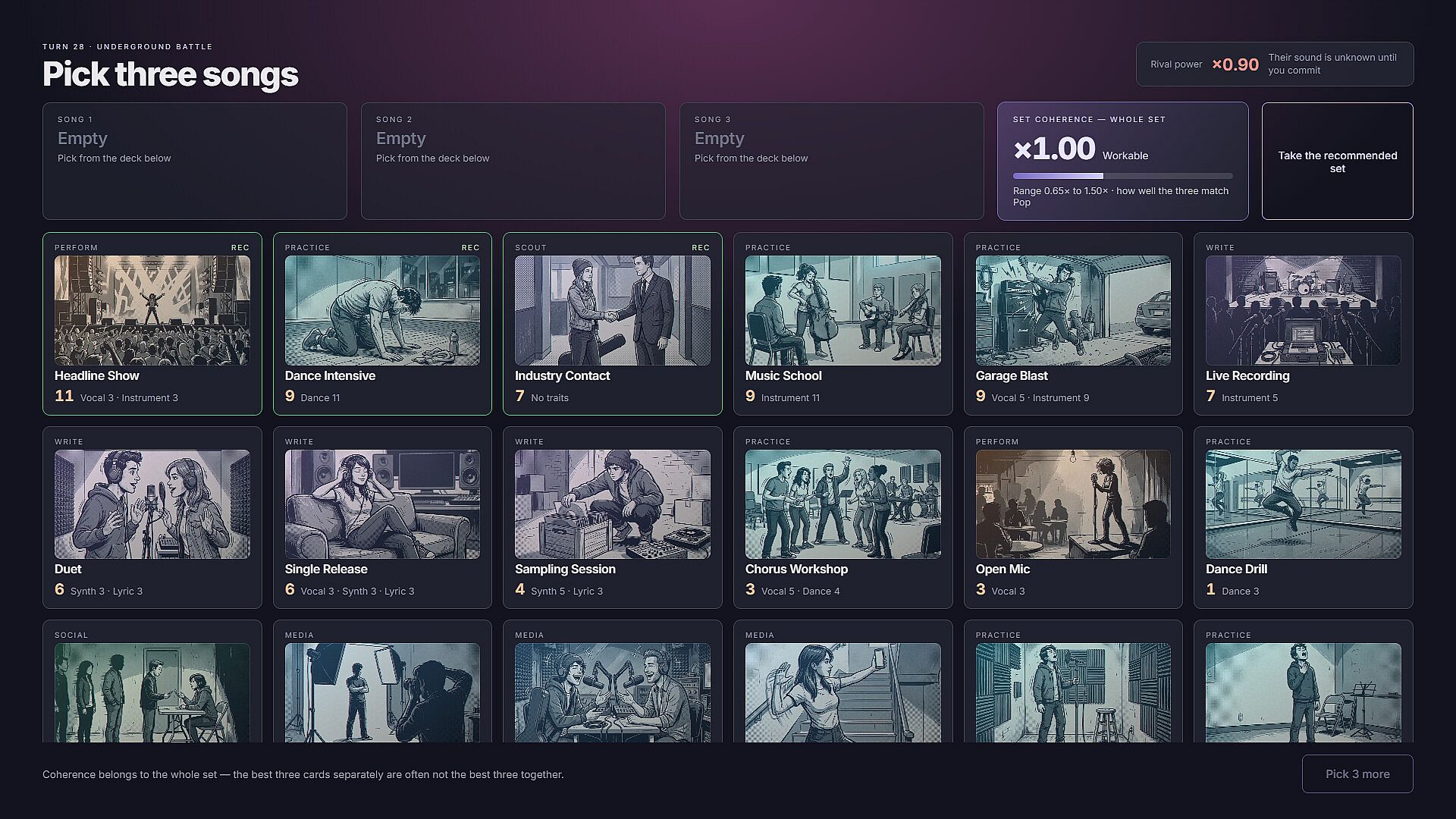
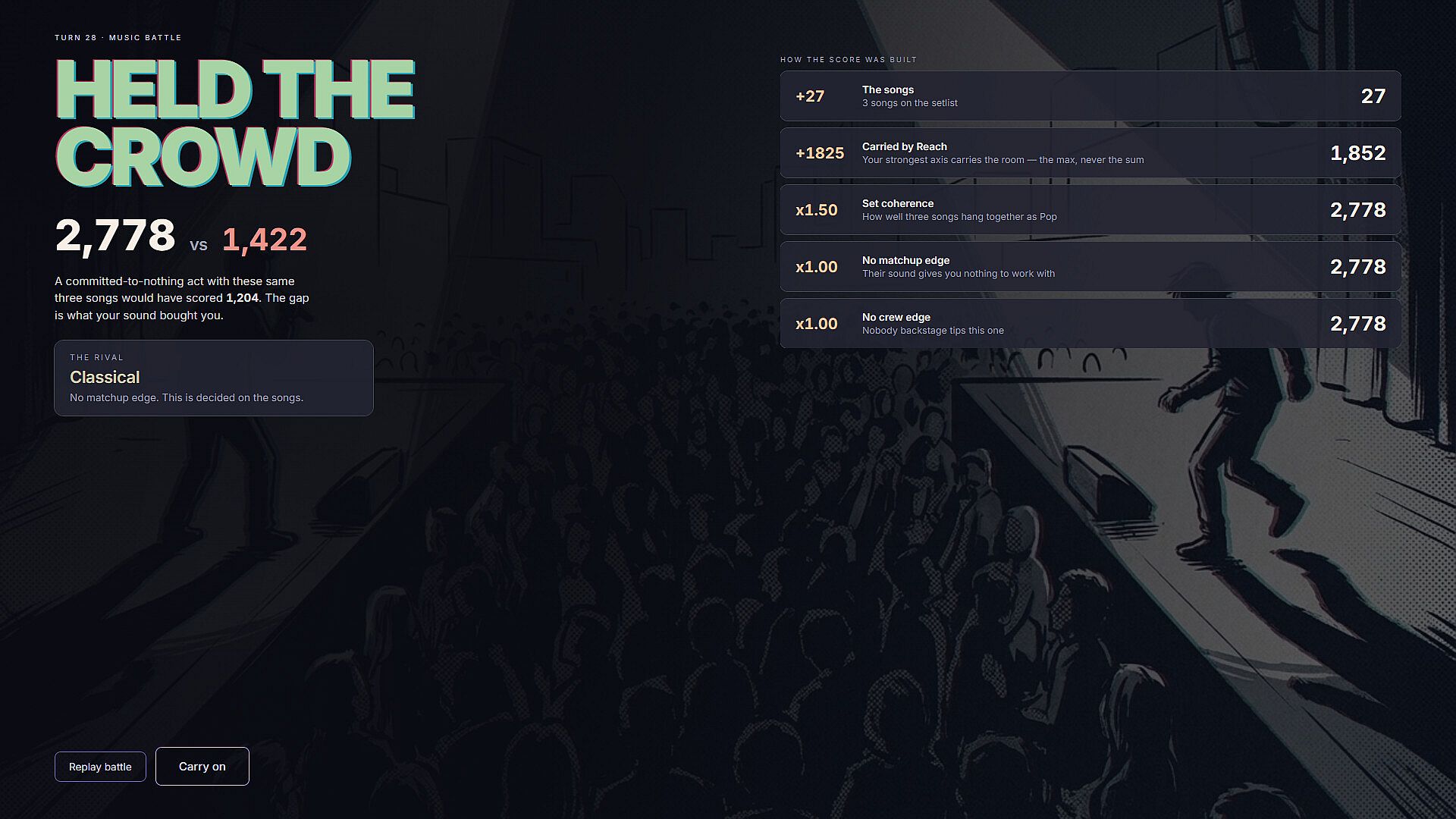
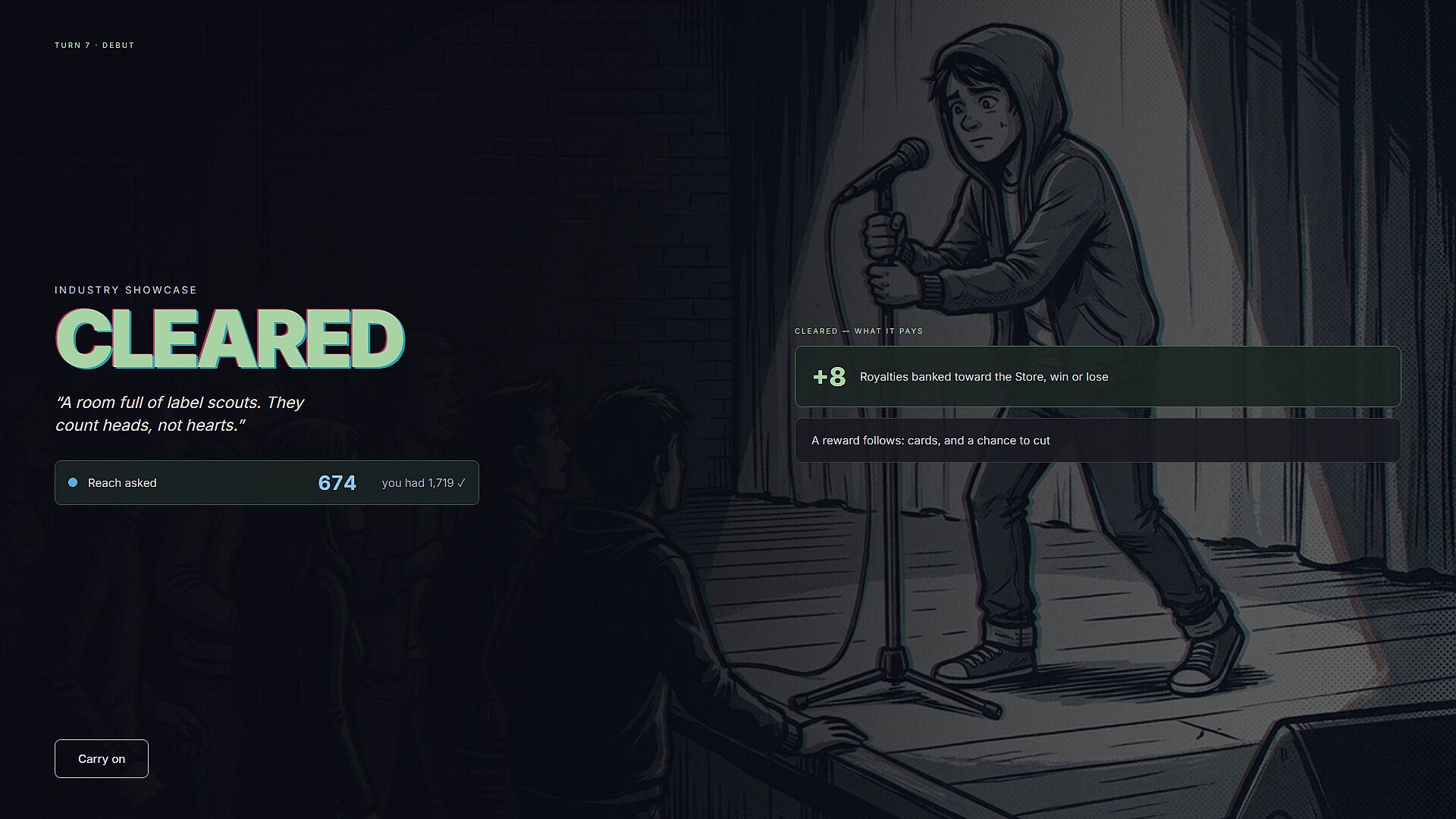
Progress hinges on balancing reach and devotion. Mainstream paths attract large but fleeting crowds, while cult approaches build smaller yet loyal followings that persist. Checkpoints test career milestones with category previews but unknown specifics, forcing adaptive strategies. Failure at a checkpoint leaves lasting effects: career numbers decline, crew members depart, and a traitless card enters the deck, diluting focus. Three such setbacks end the run.
Advancement unlocks eight escalating tiers of performance rooms. Success opens tougher challenges with tighter timelines, limited offers, and higher stakes in the final venue. The system emphasizes measured difficulty increases rather than arbitrary jumps. Persistent elements carry over between careers through scene memory, granting royalties that unlock signature cards, genre-specific crew options, and new starting points. These rewards expand variety without granting direct power advantages, preserving fairness across playthroughs.
Design validation comes from extensive internal testing via a headless simulation that processes thousands of careers against ten gated assertions. The build remains deterministic and seeded, ensuring identical outcomes from the same starting conditions. Accessibility features include full keyboard navigation without mouse input, with support for windowed, handheld, or desktop play.
Game Modes
Setlist Shuffle operates as a single-player experience centered on repeated career runs. Each run presents a fresh test of deck-building and decision-making within the fixed ruleset, with no separate competitive or cooperative variants confirmed. The structure encourages multiple attempts to explore different genre paths and audience strategies while managing the risks of overextension or missed benchmarks. Unlocks from prior runs provide starting variety for subsequent plays, creating a roguelike progression layer around the core simulation without altering core balance.
Is It Worth Playing?
Players who enjoy deliberate strategy games with deck-building elements and long-term career simulation will find the systems rewarding. The emphasis on organic genre evolution, audience trade-offs, and consequence-driven failures creates meaningful choices that reward planning and adaptation. Those seeking quick sessions or visual spectacle may find the text-heavy, numbers-focused approach less engaging. The game suits individuals interested in indie simulations that prioritize mechanical depth and replay fairness over narrative or multiplayer features. Availability on PC makes it accessible for those with compatible hardware, and the deterministic design supports consistent experimentation across runs.