




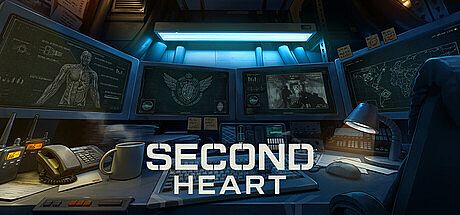


Second Heart is a single-player strategy RPG simulation set on PC that places players in the role of a biotech organization director overseeing covert global operations. The experience centers on managing agents through detailed simulations of human anatomy, ballistics, and organizational logistics without ever entering the field directly.
Gameplay
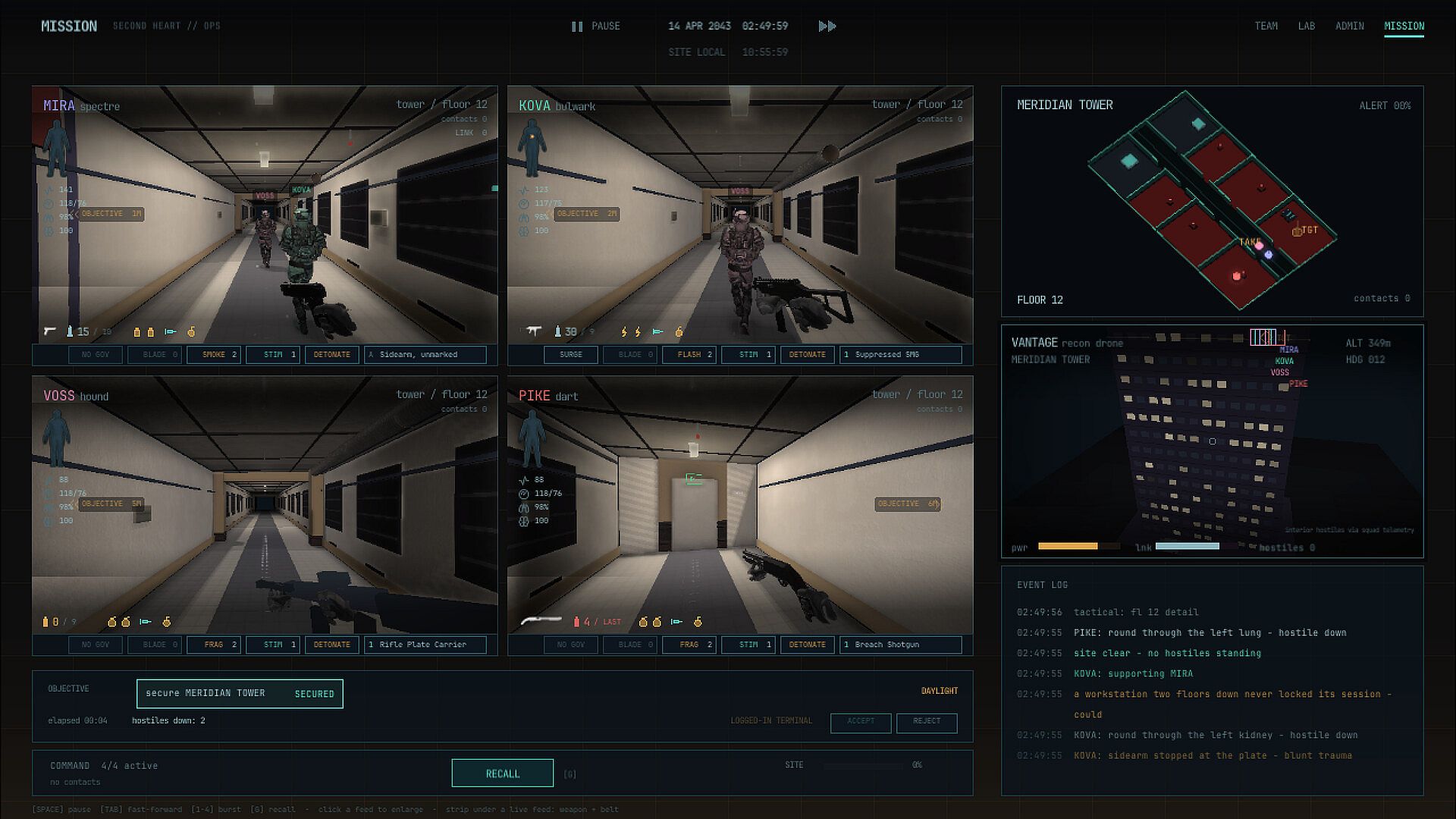
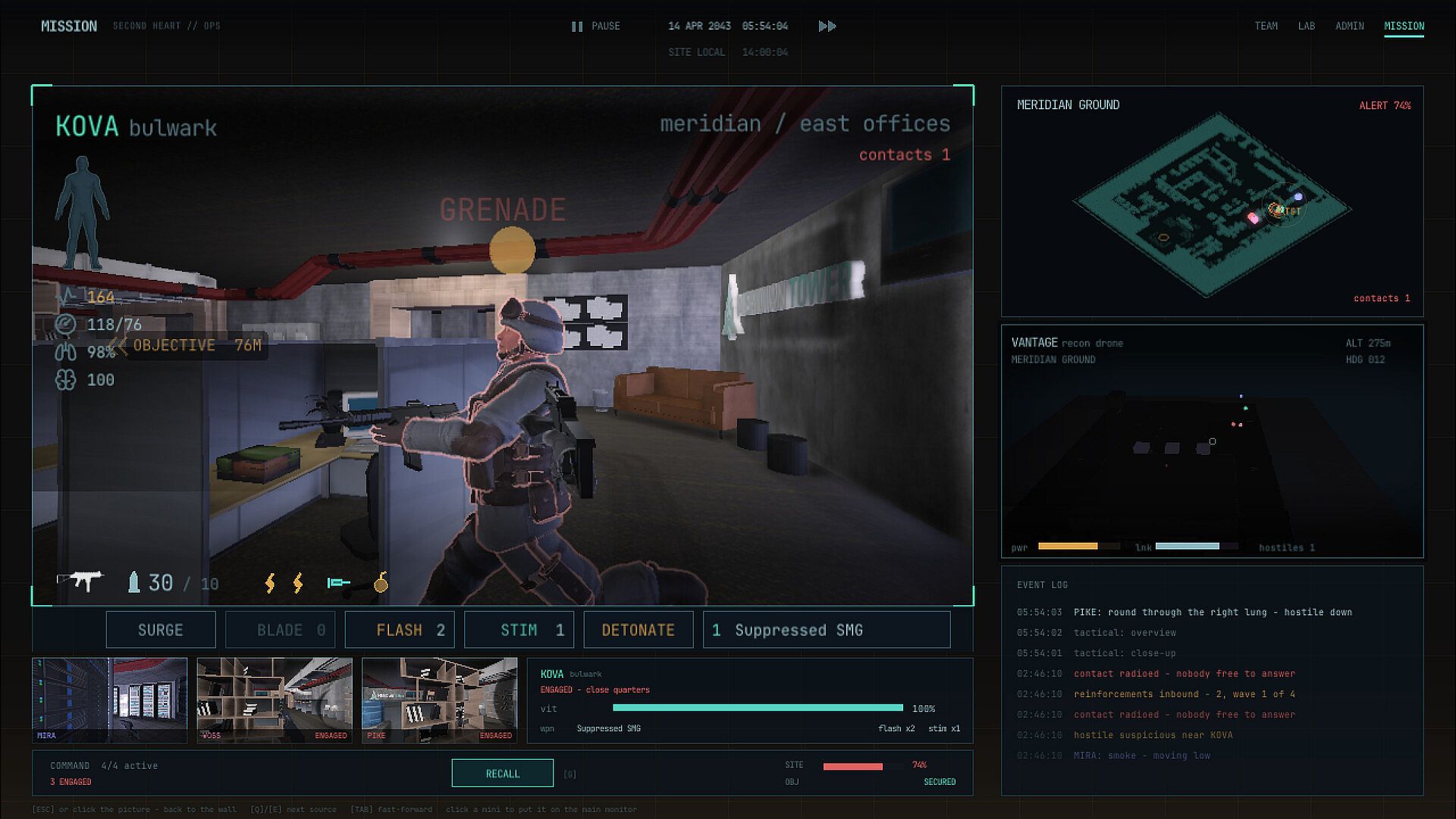
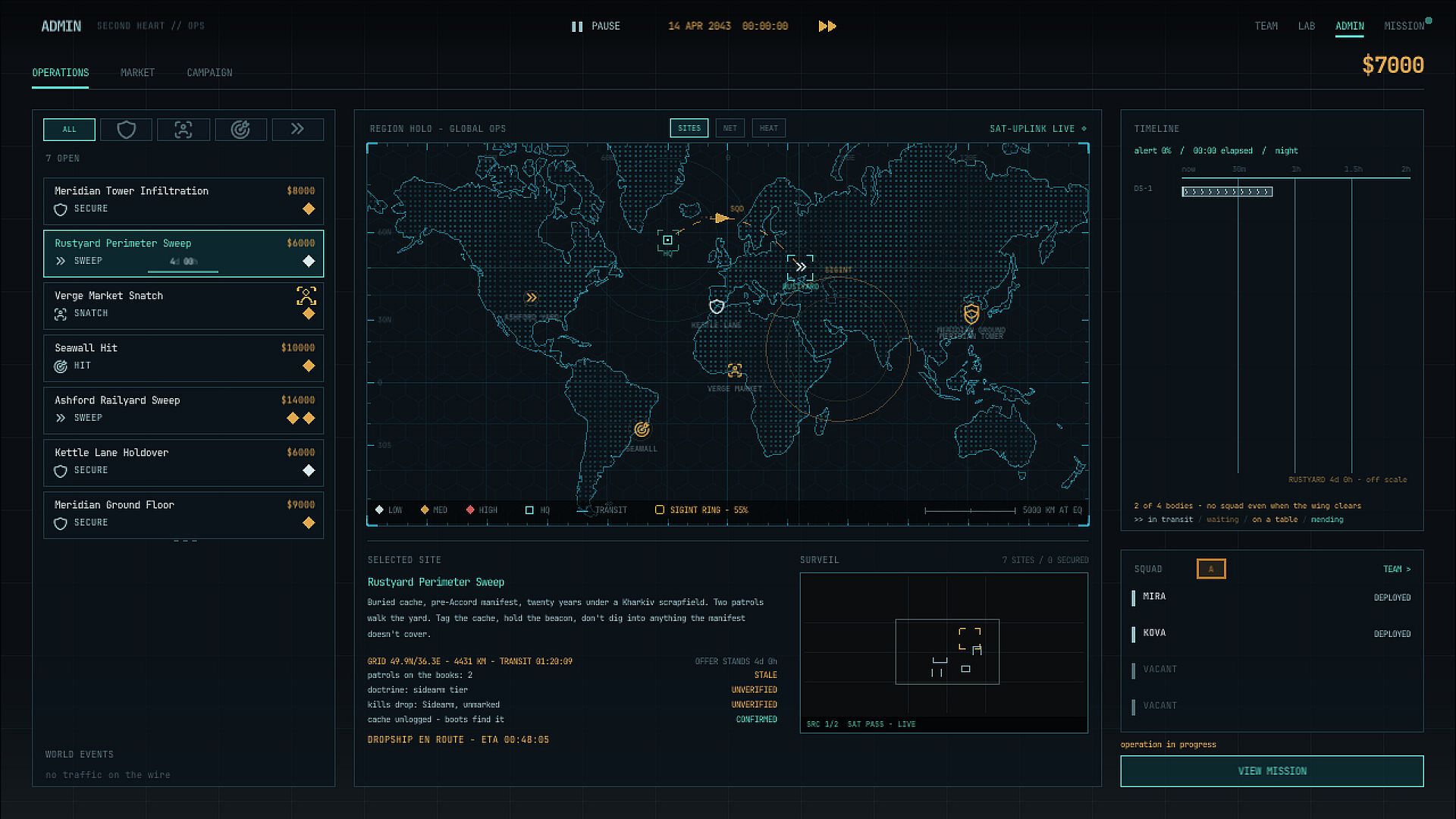
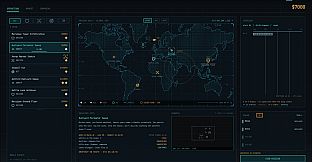
The core loop involves accepting contracts that specify objectives, fees, and risk levels. Players select and equip agents from a growing roster, then monitor operations in real time through agent-perspective feeds and tactical overlays. Agents handle combat autonomously based on their loadouts and physical conditions, taking cover and engaging threats without direct player control over movement or aiming.
Ballistics and anatomy drive every encounter. Each body features simulated organs such as the heart, lungs, and kidneys in specific locations. A bullet impact disables the precise structure it strikes, turning injuries into immediate functional losses rather than abstract health deductions. Feeds capture agent breathing, flinches, and wounds directly from grafted eyes, with a feed darkening permanently when an agent falls.
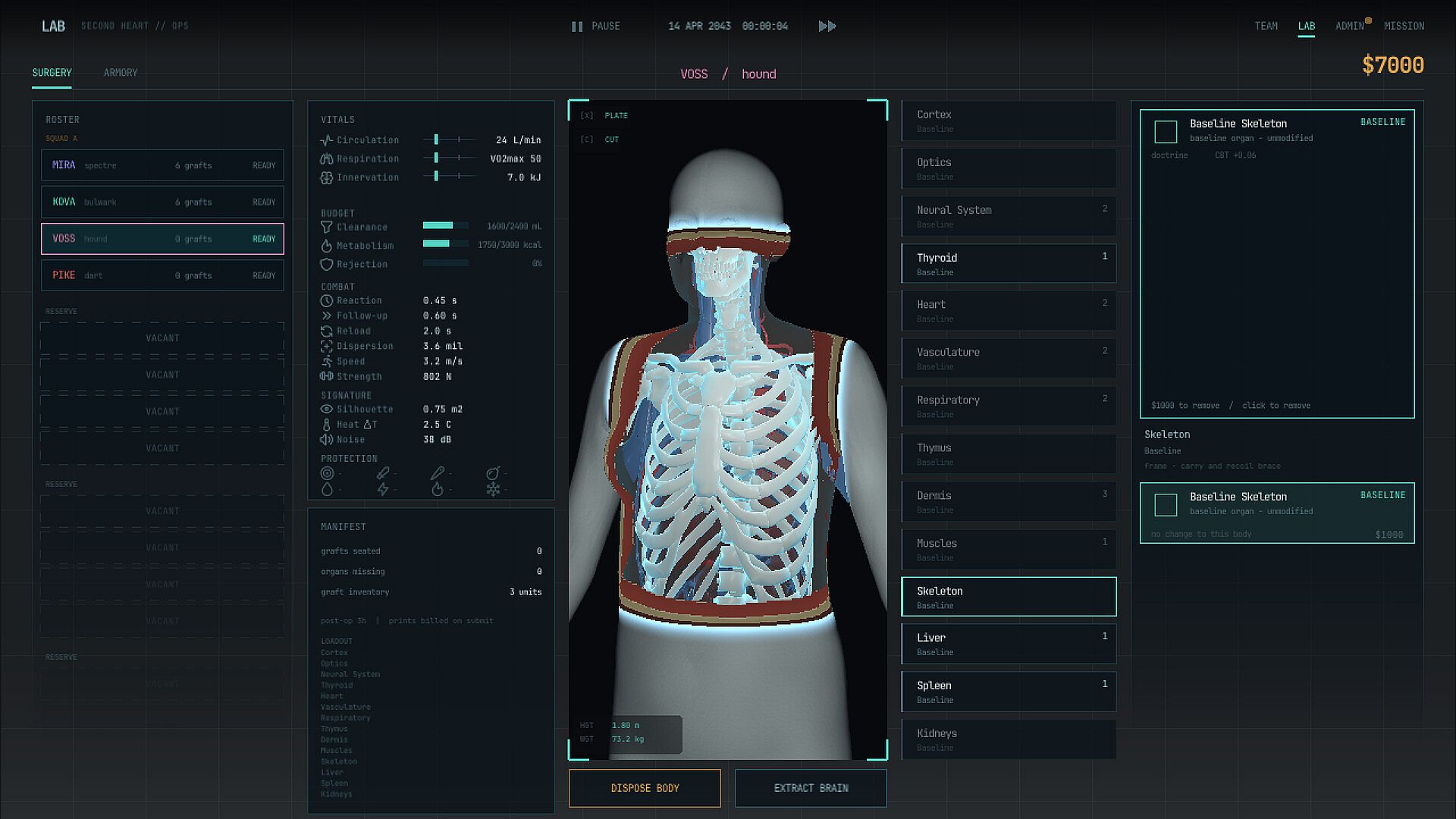
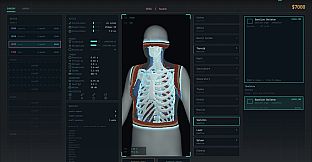
Back at the lab, wounded agents undergo surgery across 14 anatomical zones. Damaged organs can be replaced, and custom biological grafts researched or recovered from the field allow modifications that exceed natural human limits. These living tissues integrate with the host's systems but impose tolerance limits, with recovery periods lasting days after each procedure. The armory emphasizes practical trade-offs in equipment. Plates in vests and helmets defeat specific projectile velocities rather than percentages of damage, and weapons offer distinct roles such as suppressed options for stealth or armor-piercing variants for targeted threats. Ammunition draws from shared caliber stocks rather than per-weapon inventories.
Game Modes
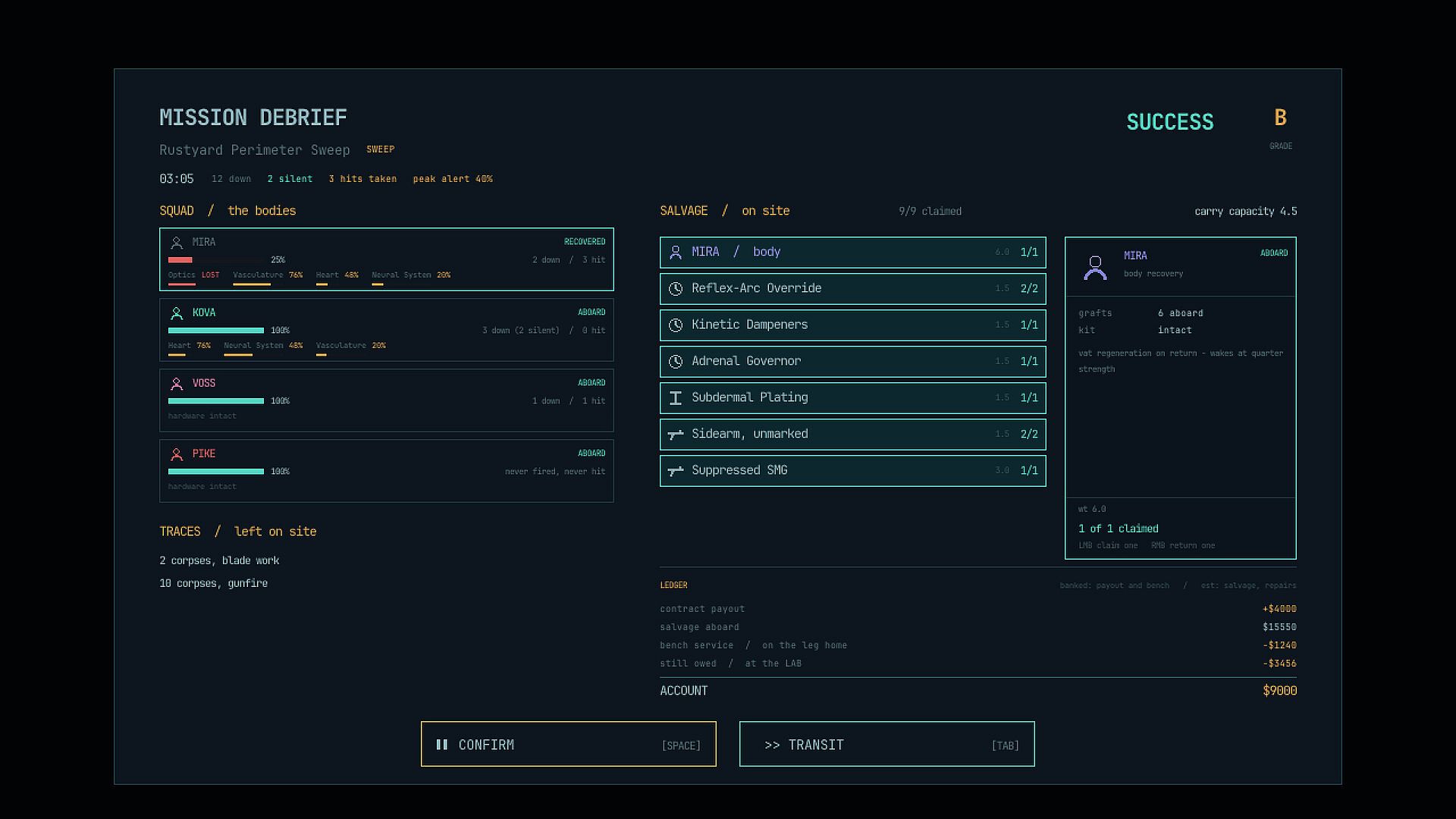
Second Heart operates as a continuous single-player management experience without separate named modes. All activity flows through contract selection, squad deployment, live operation observation, post-mission debriefing, and laboratory upgrades. Contracts vary in scope from sweeps and holds to snatches and hits, each with time-sensitive offers that can expire or relist. Players may deploy one or two squads depending on site demands, with real-time travel elements like dropship flights that transition day to night.
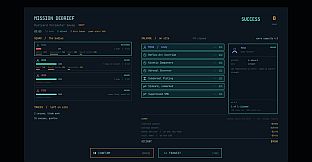
Salvage decisions during debriefs balance immediate gains against long-term risks, including the potential for witnesses or traceable evidence that could draw external attention. The organization expands from an initial two agents and single contract through recruitment and performance-based development, with permanent consequences for losses.
Key Systems and Mechanics
Agent customization extends beyond initial recruitment. Grafts drawn from a researched library enhance capabilities in areas like threat detection, close-quarters weaponry, or concealment, each tied to the body's circulation, respiration, and other physiological processes. Equipment durability adds another layer, as plates wear out individually and require replacement after absorbing impacts.
Strategic depth emerges from squad composition and timing choices. Selecting agents with complementary loadouts influences how operations unfold on the feed wall, while decisions during critical moments determine outcomes without reversals. The emphasis remains on preparation, observation, and adaptation rather than direct tactical commands.
Is It Worth Playing?
Second Heart targets players who enjoy hardcore management simulations with layered systems for anatomy, ballistics, and organizational growth. Its single-player focus and detailed simulation of injuries and modifications create a distinctive experience for those interested in strategy and RPG elements applied to covert operations. The game remains unreleased with a date to be announced, so prospective players can follow its development through official channels for updates on availability. Those drawn to precise, consequence-driven gameplay loops without multiplayer components will find the described mechanics align closely with that preference.