




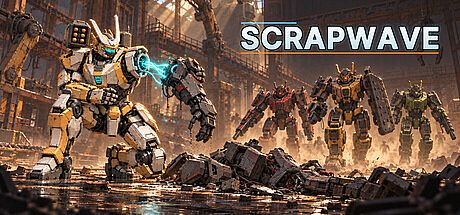


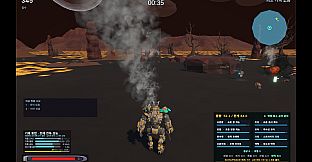
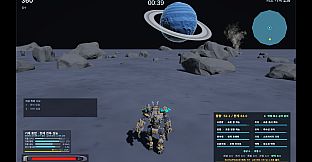
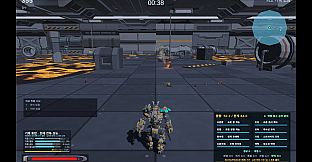
SCRAPWAVE is an action indie game on PC centered on mech customization through aggressive salvage in short, intense survival runs. Players take control of the last salvage mech in the abandoned Kaldora system, where automated foundries continue producing war machines. The core loop revolves around surviving relentless enemy waves while targeting specific components on elite foes and bosses to strip and immediately equip them.
Gameplay
The central mechanic lets players break parts off enemies and bolt them directly onto their own machine without pausing the action. This on-the-fly transformation affects weapons, mobility, and overall shape. Each equipped part carries its own durability rating, so damage sustained in combat can cause permanent loss of that upgrade. Strategic decisions emerge constantly around whether to prioritize ripping a powerful enemy weapon, shielding existing components, or adapting on the spot as threats evolve.
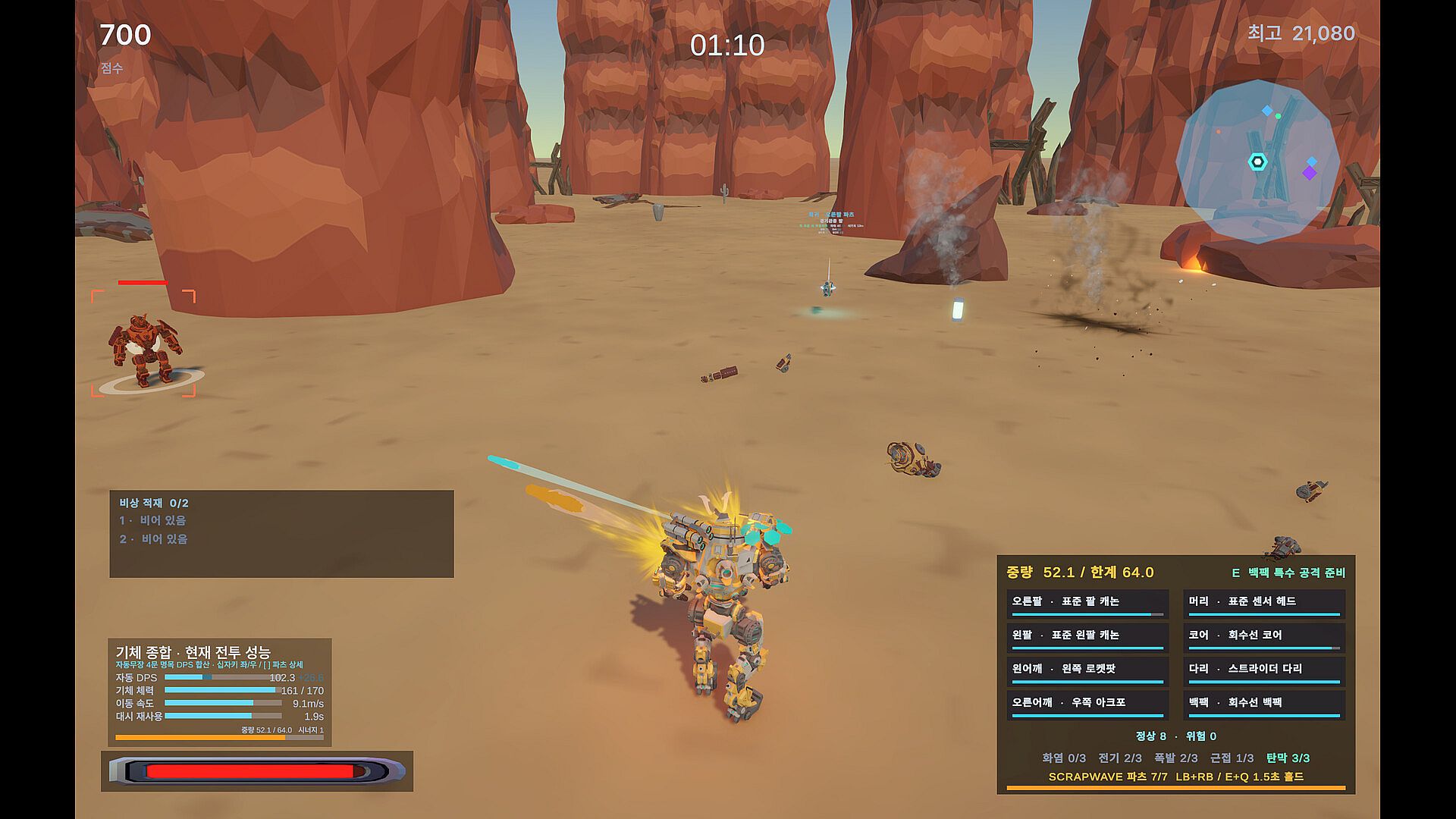
Before each deployment, players assemble an initial loadout in the hangar using parts from their growing collection. Discoveries logged in the Parts Catalog expand available options over time. Eight distinct slots accommodate the mix and match approach: head, core, two arms, two shoulders, legs, and backpack. Parts fall into common, rare, and epic tiers, encouraging experimentation across dozens of collectible items. The system rewards quick thinking because every choice carries risk once combat begins.
Game Modes
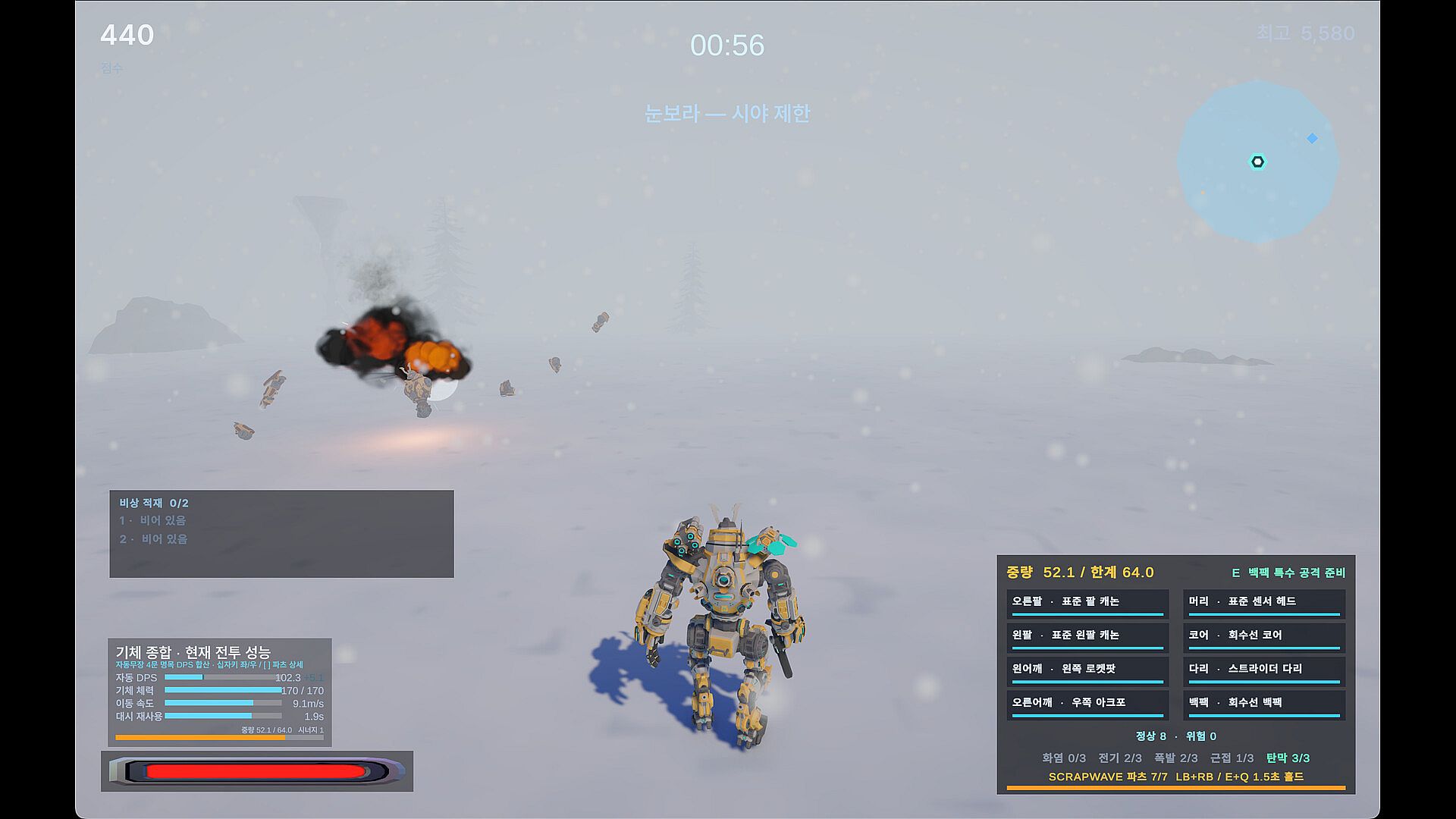
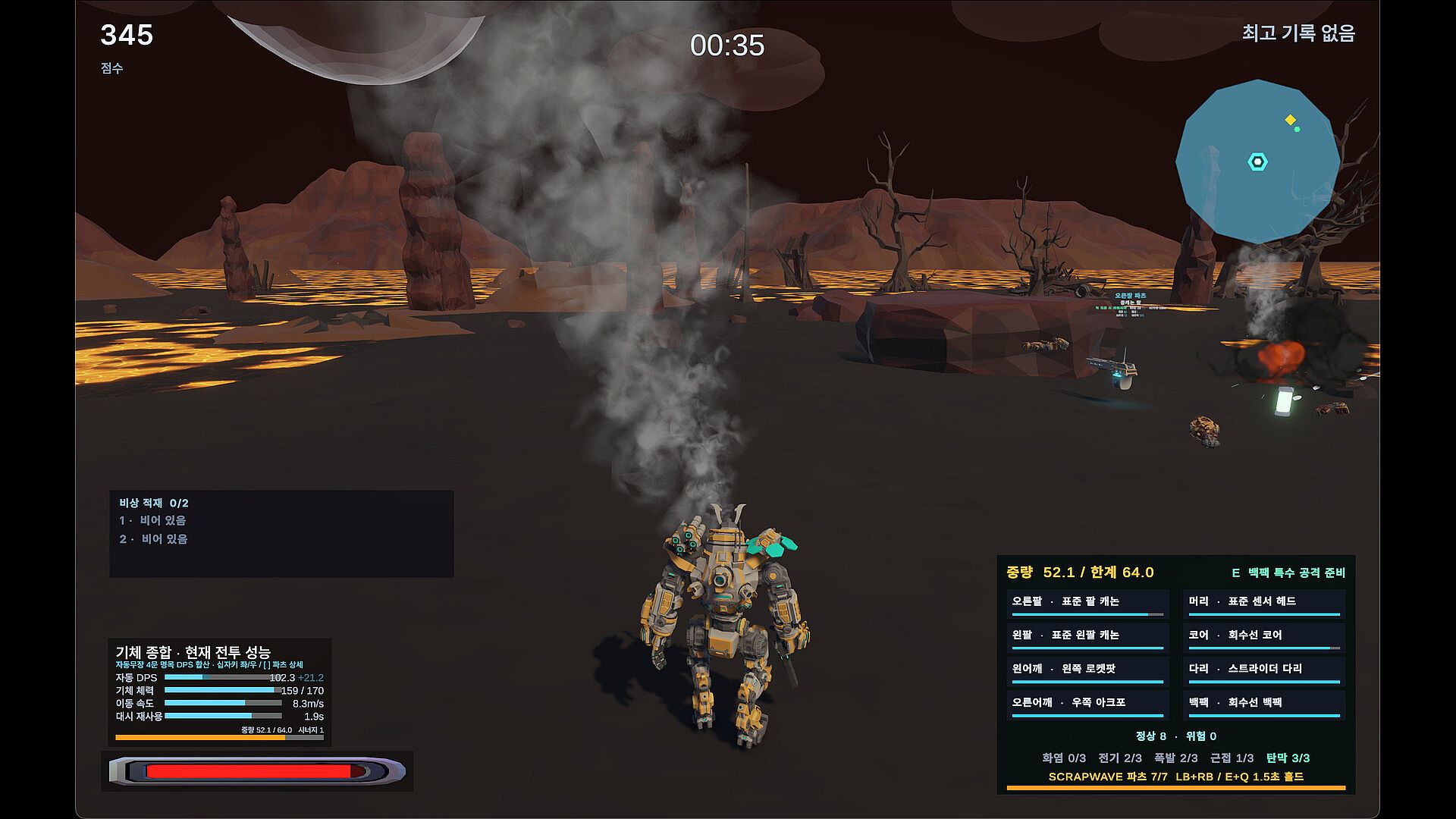
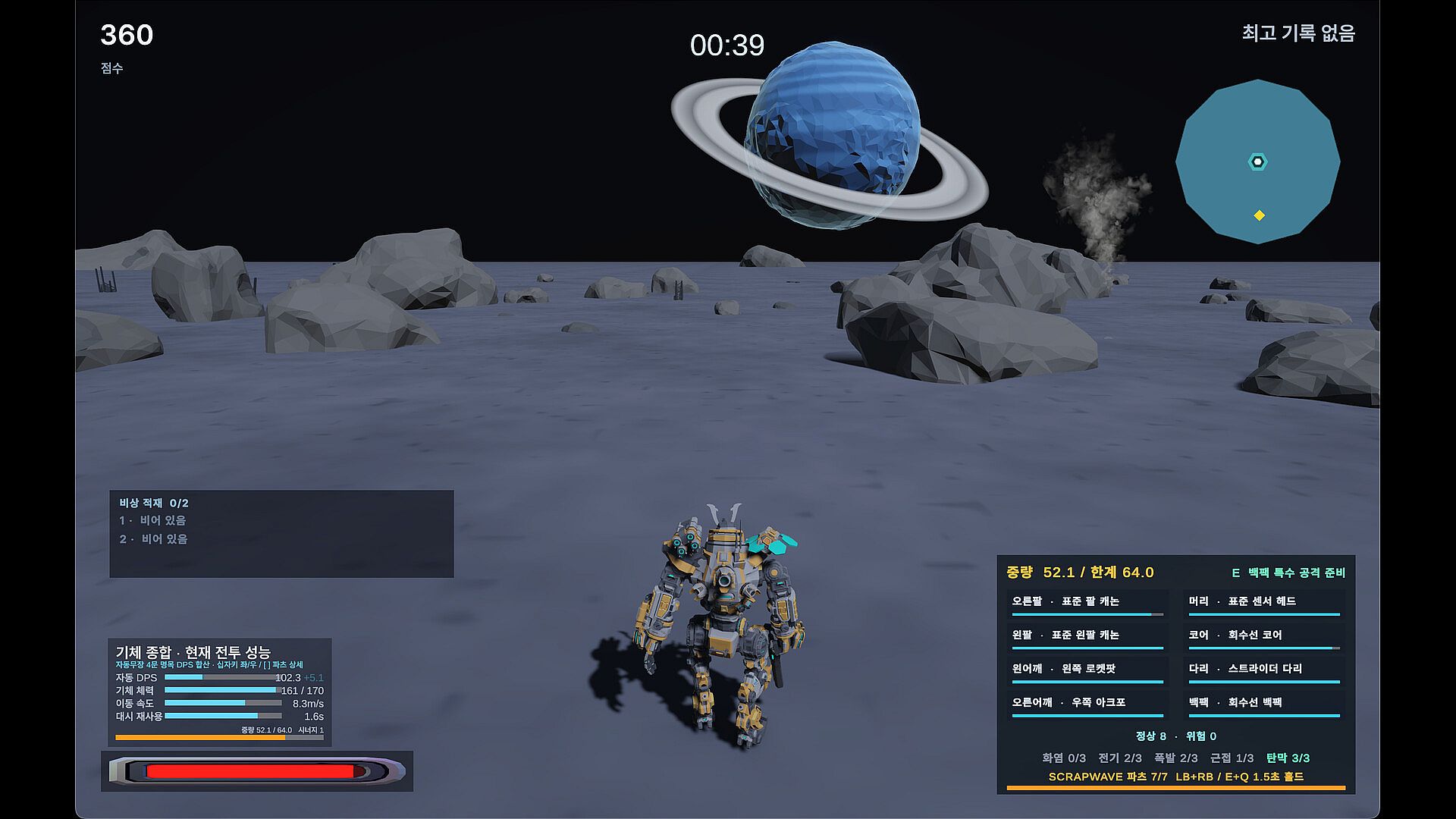
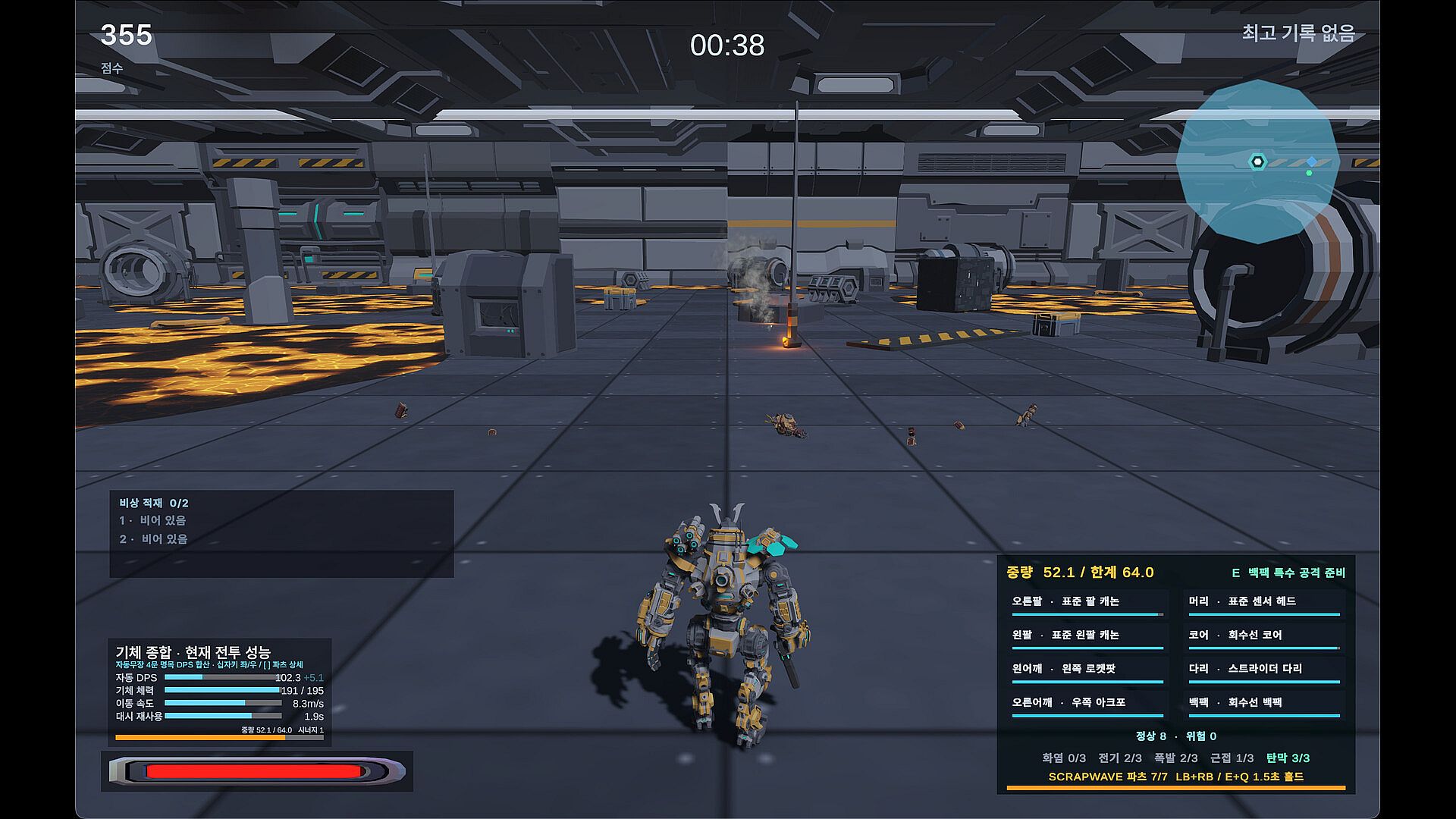
SCRAPWAVE structures its experience around timed survival runs against escalating waves. Five distinct planets impose unique environmental rules that alter visibility, terrain navigation, and movement physics. Scrap Desert, Frozen Planet, Volcanic Planet, Low-Gravity Moon, and the Mother Factory each demand different adaptations from the player and the salvaged parts in use.
Progression follows three run cycles with two possible endings. The first cycle introduces core systems and enemy behaviors. Completing it unlocks a second cycle where every foe becomes stronger and battlefields receive harsher visual and mechanical treatments. Clearing the second cycle grants access to NIGHTMARE, featuring tougher, faster, and more numerous enemies that test every aspect of build management and improvisation.
Build Variety and Adaptation
Sixty collectible parts across the eight slots create substantial variety in how a mech can perform. Common pieces provide reliable baselines, while rare and epic finds introduce specialized capabilities that can redefine a run. Because parts can break mid-fight, no build remains static for long. Players must weigh immediate gains against long-term durability, often improvising replacements from fresh drops as the waves intensify.
The hangar serves as the planning hub where starting configurations take shape based on unlocked parts. Once deployed, the focus shifts entirely to real-time decisions. Environmental differences across the five planets further influence part selection, as certain upgrades perform better under low gravity or in reduced visibility conditions.
Is It Worth Playing?
SCRAPWAVE suits players who enjoy roguelike-style runs with heavy emphasis on mechanical customization and risk management. The short ten-minute wave structure keeps sessions focused while the part-breaking and immediate equipping loop delivers constant feedback on choices. Multiple cycles and two endings provide clear goals for repeated attempts, and the five planets add meaningful variety to each run.
Those drawn to action indie titles that reward observation and quick adaptation will find the salvage system engaging. The game supports play in Korean, English, Japanese, and Simplified Chinese, broadening accessibility. Its single-player focus and emphasis on personal build experimentation make it a strong fit for solo sessions where experimentation with part combinations drives the experience.