


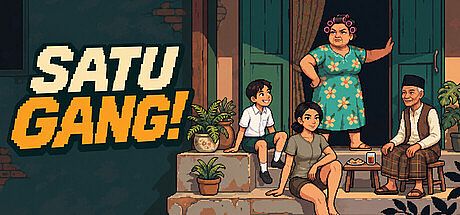


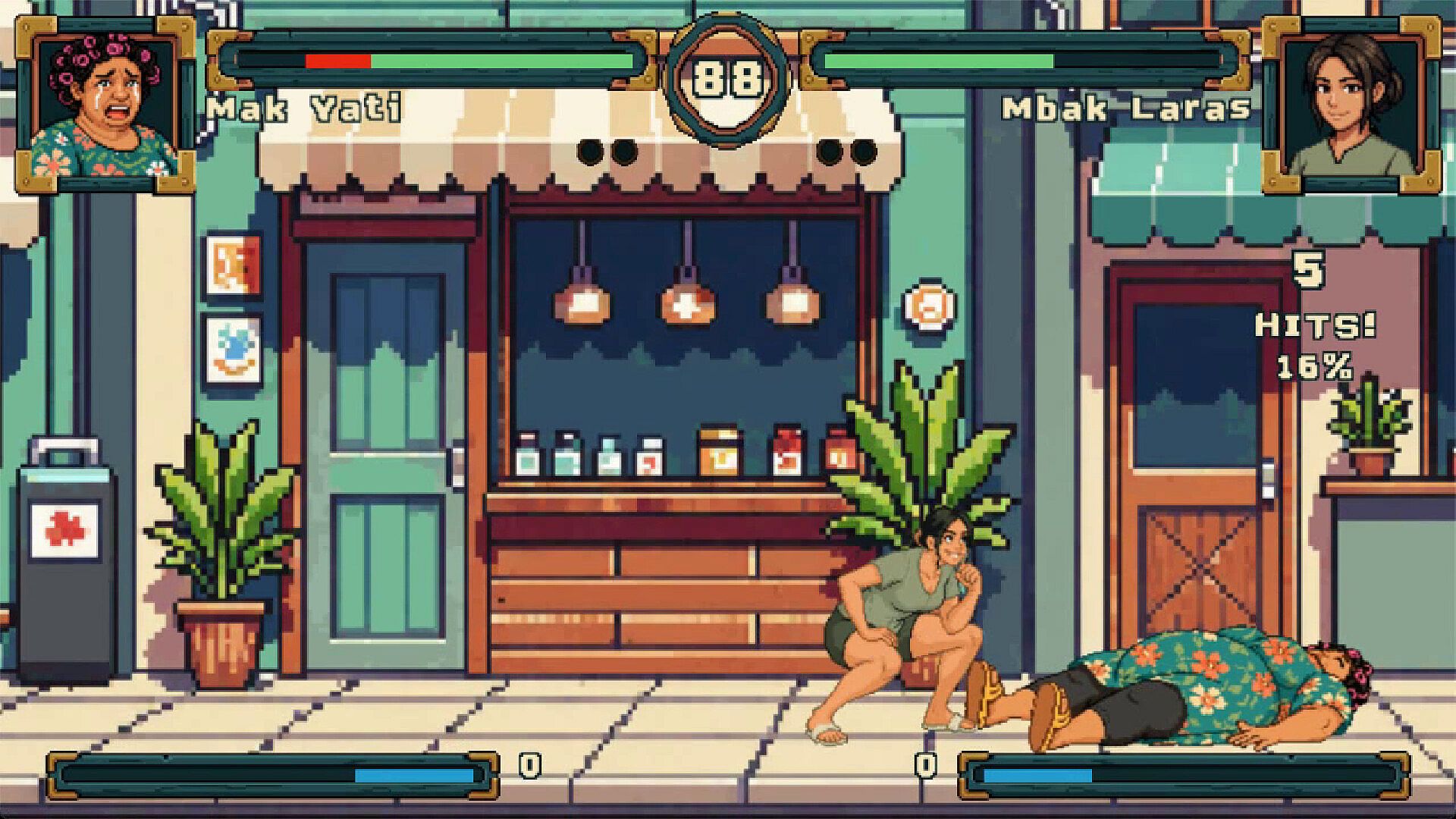
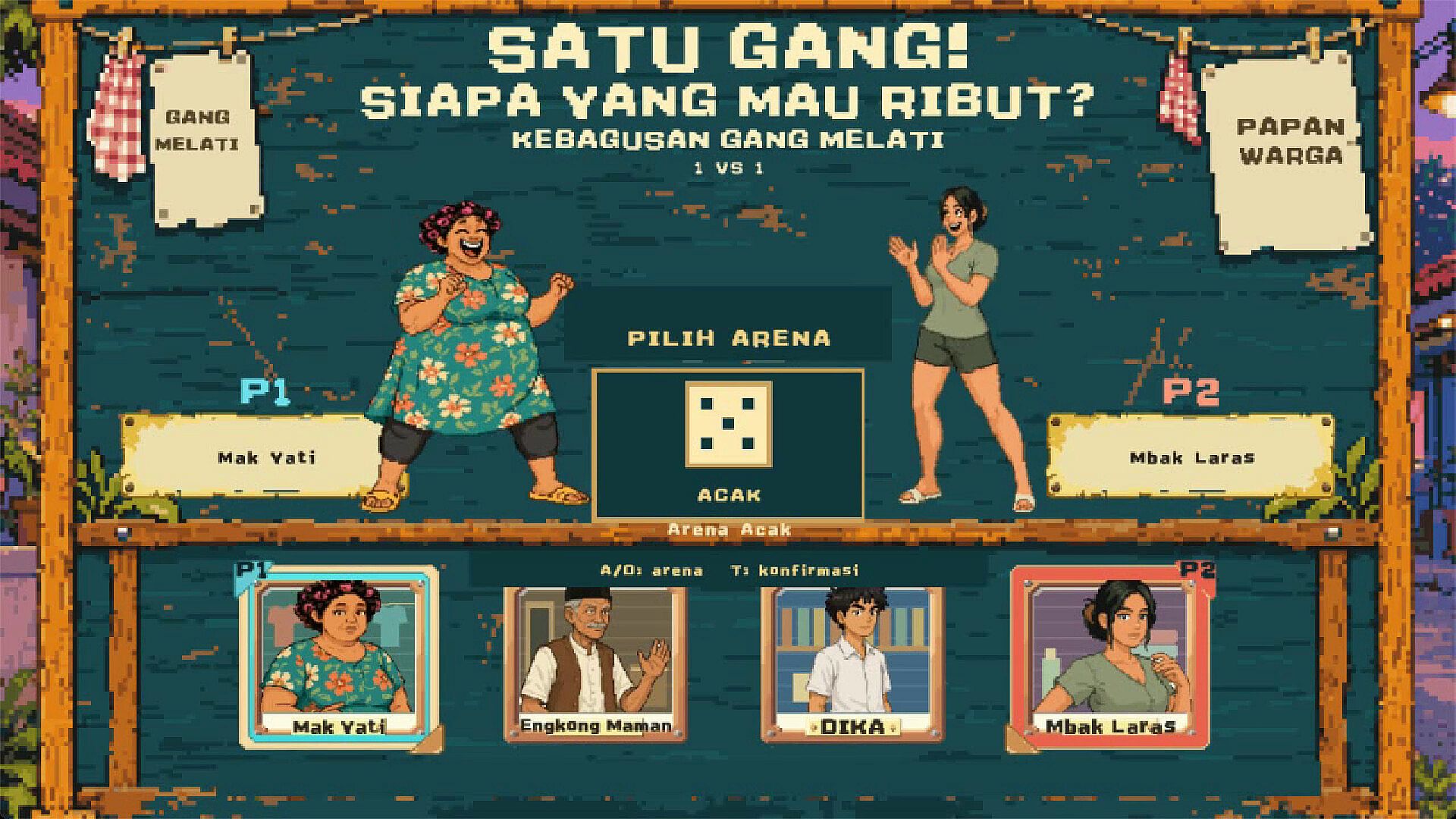
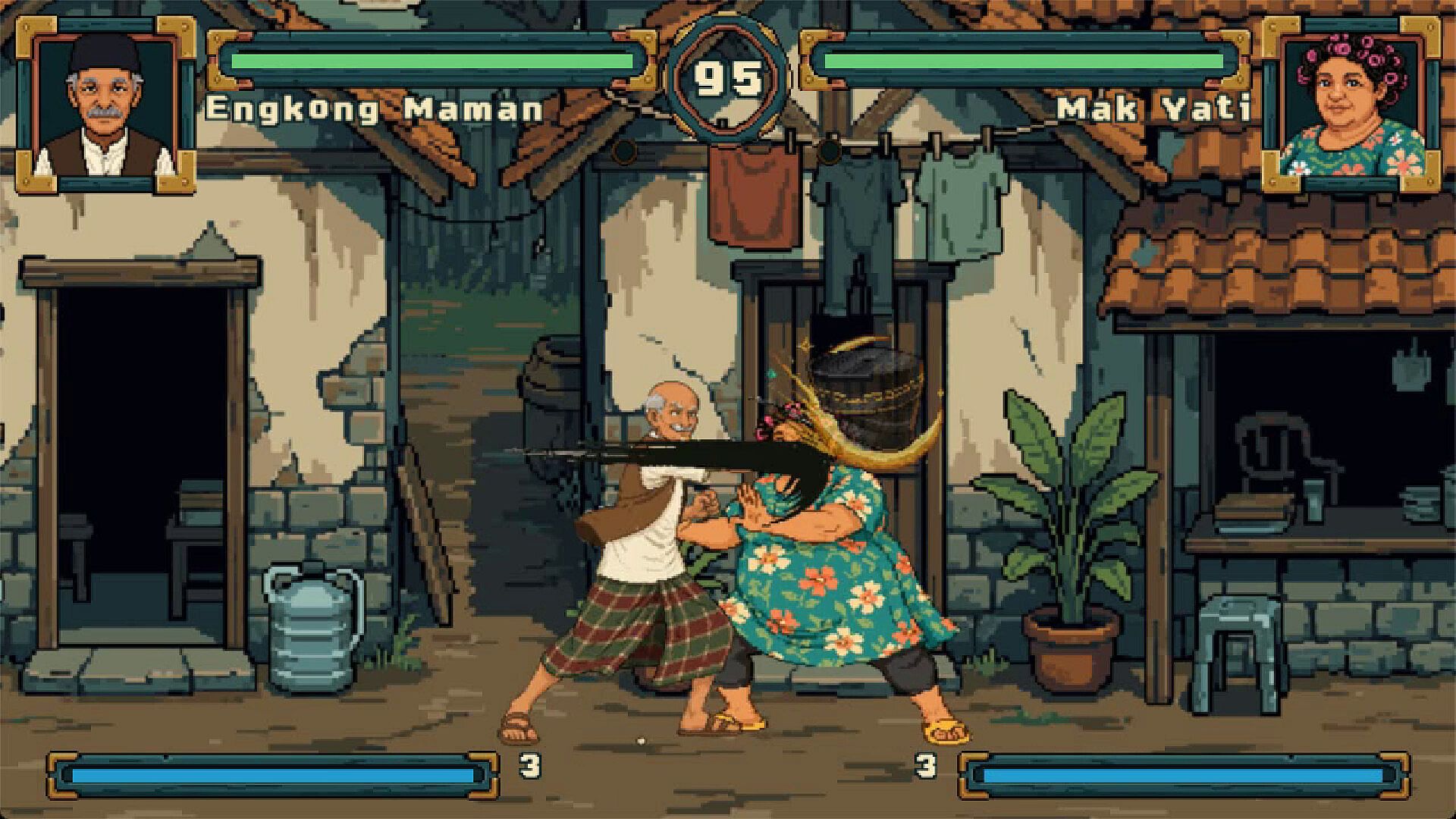
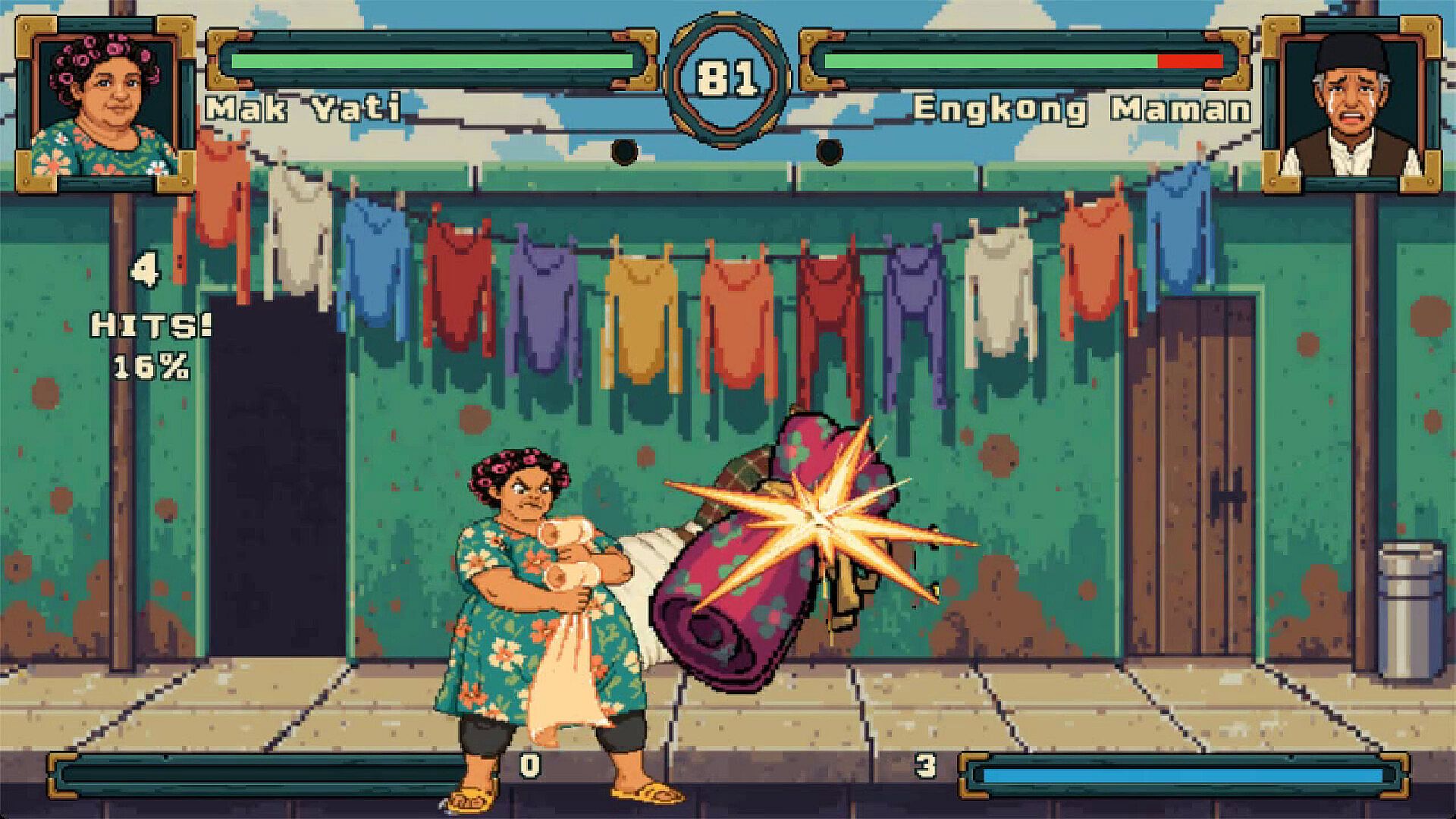
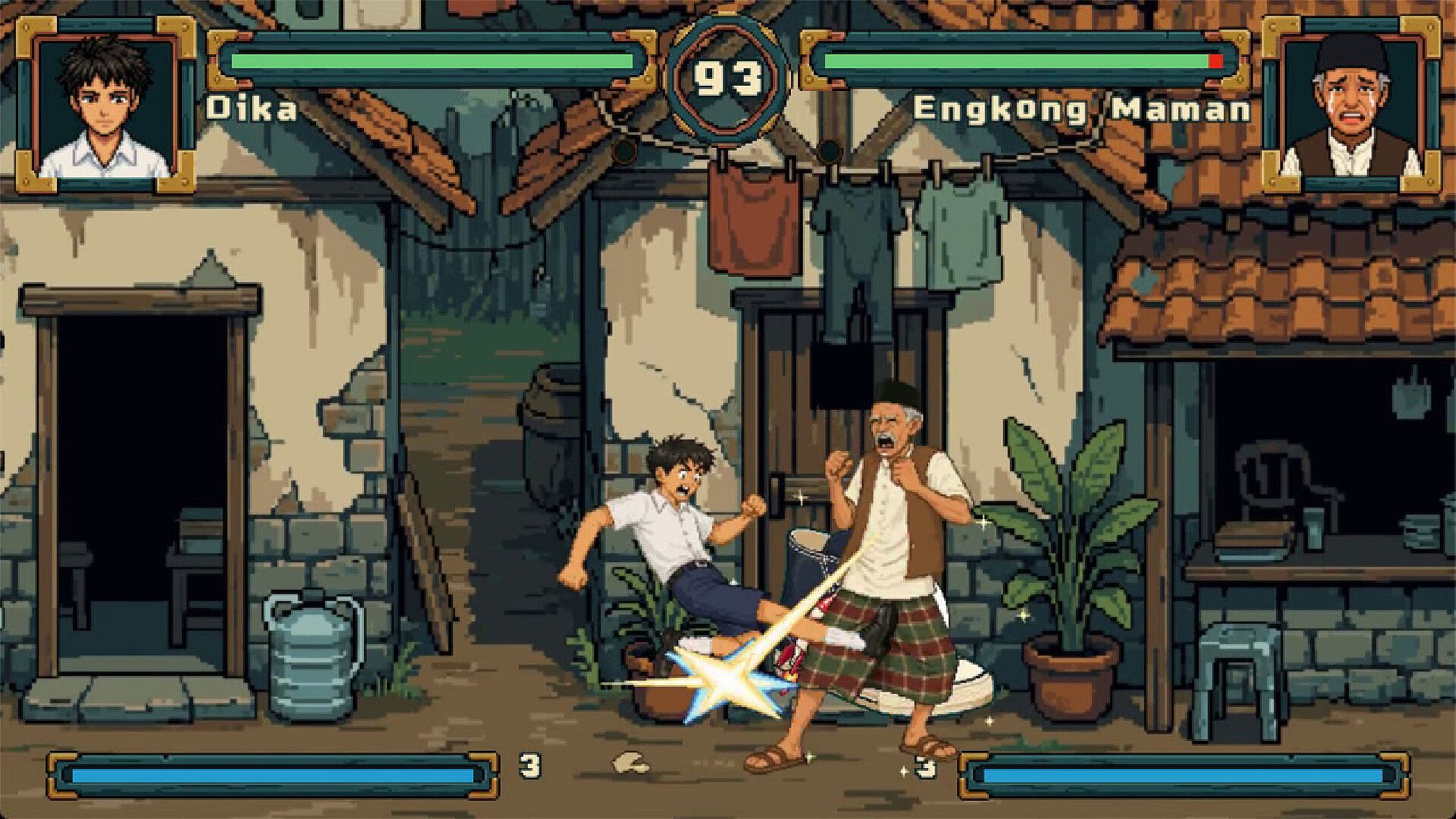
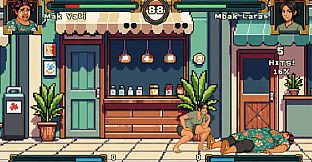
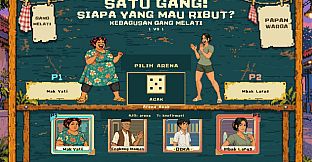
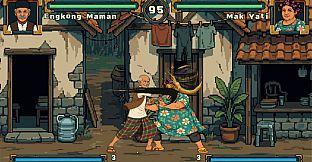
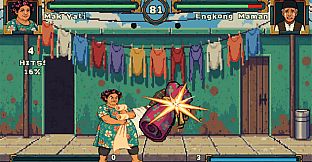
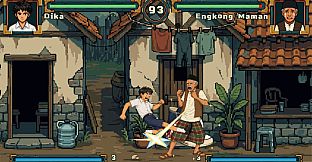
Satu GANG! is a 2D pixel-art fighting game built around neighborhood rivalries in an Indonesian setting. Everyday disputes escalate into fast-paced battles where players control one of four distinct characters and chain attacks using household items turned into weapons. The game emphasizes tight combo systems, character-specific specials, and cinematic super attacks that reflect each fighter's personality and daily life.
Gameplay
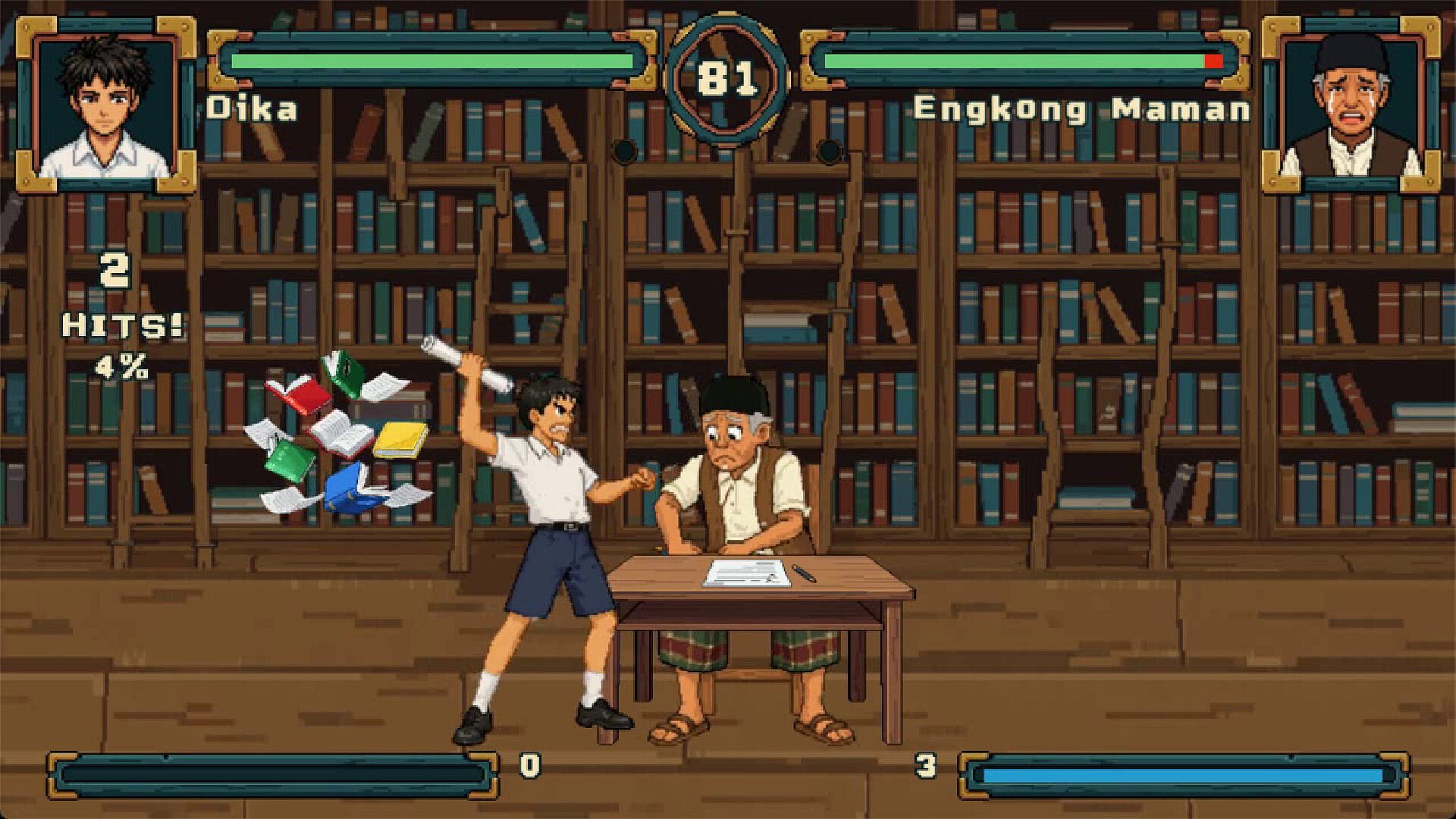
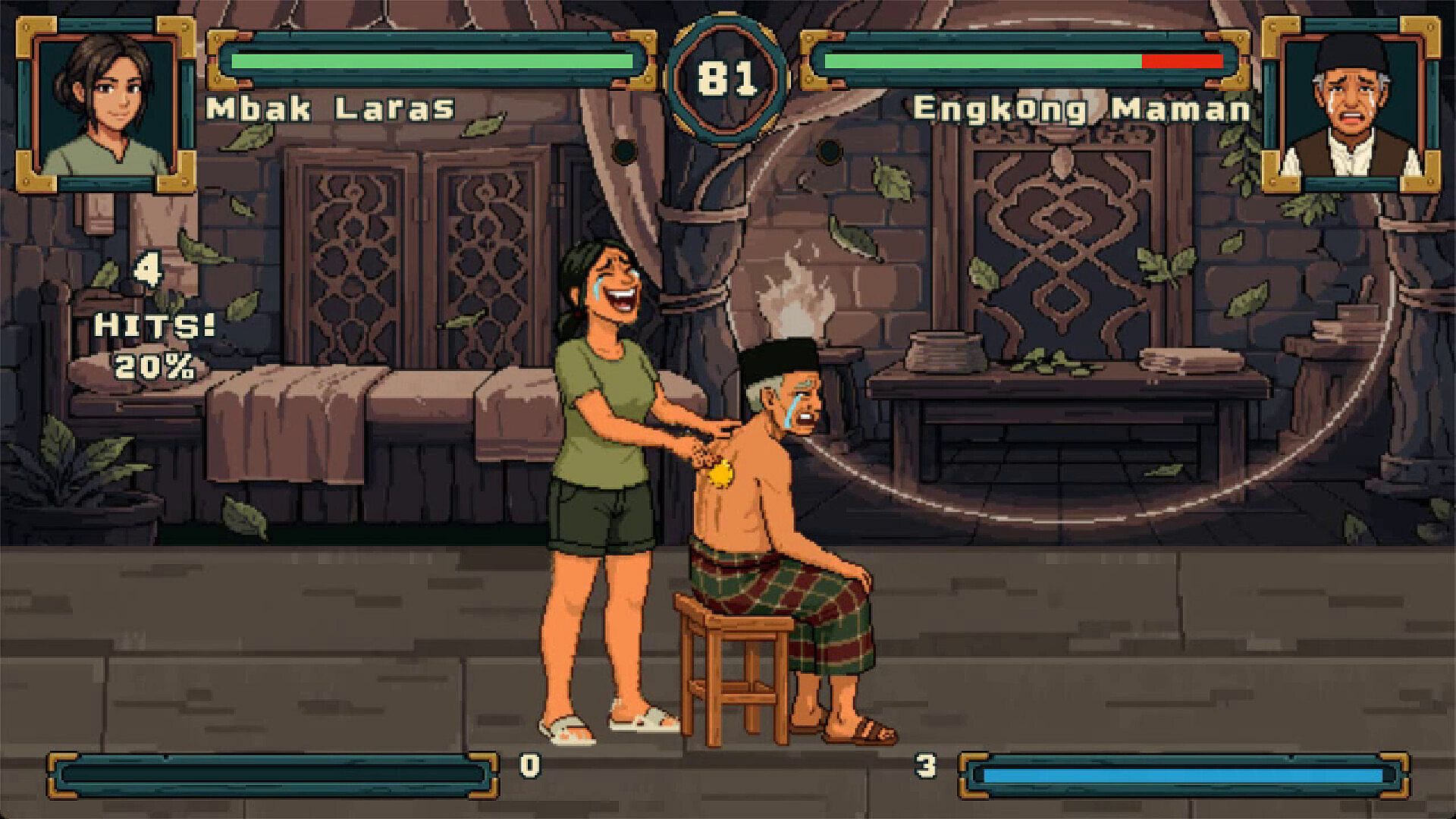
Combat centers on linking light and heavy punches and kicks into fluid sequences. Players can block incoming strikes, parry to create openings, and build a super meter for powerful finishing moves. Each character comes with unique tools drawn from their background, such as cooking utensils or school supplies that transform into special attacks. An in-game move list provides animated demonstrations and sample combo routes so fighters can practice and refine their approach without external guides. Arenas feature colorful neighborhood backdrops that change the visual tone of each match while keeping the focus on close-quarters action. Indonesian battle calls add authenticity to the exchanges, and the overall pace rewards precise timing over button mashing.
Game Modes
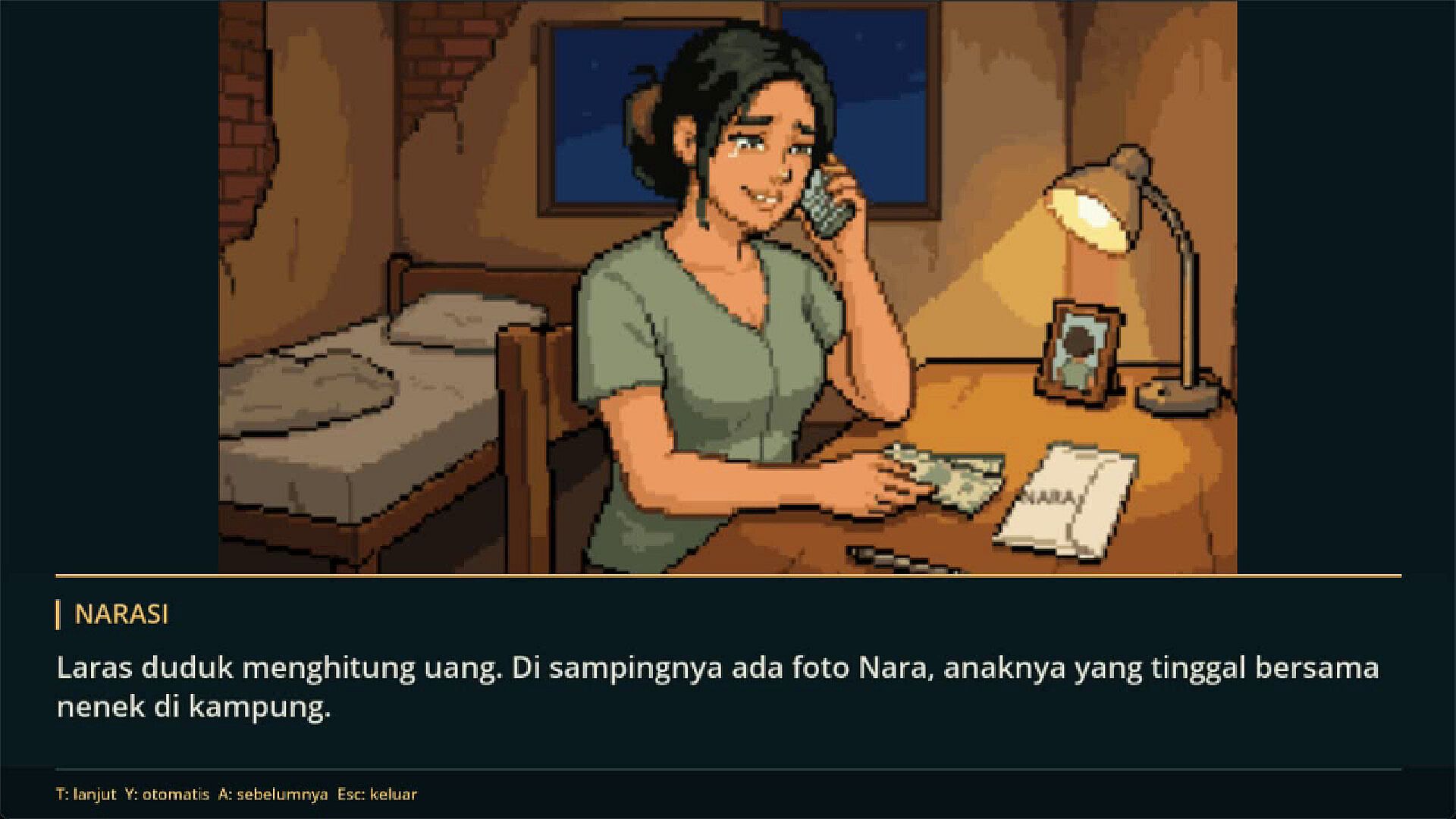
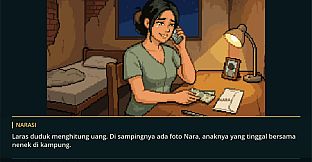
Four distinct modes give players different ways to engage with the roster. Story mode follows each character through illustrated scenes that explore family tensions and local misunderstandings, with fights serving as punctuation rather than the sole resolution. Local 1 vs 1 allows two players to compete on the same PC using shared controls. Survival pits a single fighter against a string of opponents to test endurance and consistency. Training lets users select any fighter, opponent, and arena to drill specific moves and experiment with combo timing in a controlled environment. These options cover both solo practice and direct competition without requiring online connections.
Characters and Setting
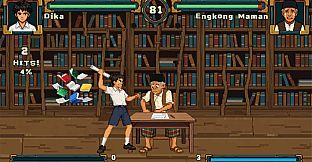
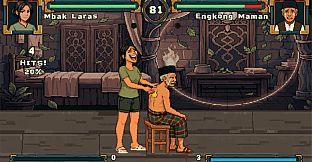
The four playable neighbors each bring a distinct fighting style rooted in their daily routines. Mak Yati draws from household frustrations with cooking tools, laundry, and sandals. Engkong Maman relies on traditional pride and an unconventional sarong. Dika incorporates schoolbooks and drawings into his approach. Mbak Laras uses precise strikes tied to her work as a massage therapist. All action unfolds in Gang Melati, a compact neighborhood where arenas reflect ordinary locations like laundry areas or schoolyards. The setting keeps the drama intimate and grounded even as battles turn chaotic.
Language and Accessibility
Menus, tutorials, and story dialogue support both English and Indonesian, with the option to switch at launch or later in settings. Character voices and battle calls stay in Indonesian for cultural flavor, while story scenes rely on written text. The game runs on modest hardware with keyboard or controller support and focuses on local play only.
Is It Worth Playing?
Satu GANG! targets players who enjoy compact 2D fighters with strong personality and local multiplayer options. Its upcoming release on December 7, 2026, means no player reviews or long-term update history exist yet, but the confirmed feature set includes four fully realized characters, four dedicated modes, and a combo system supported by on-screen move lists. Those drawn to indie fighting games that blend humor, cultural detail, and straightforward mechanics will find the described systems appealing. Fans of story-driven character arcs or quick local sessions should monitor its launch for a direct experience of the neighborhood battles.