


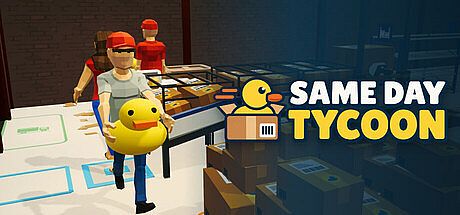



Same Day Tycoon is a single-player strategy and simulation game that puts players in charge of building and operating a logistics network for an online store. The core experience centers on managing every step of order fulfillment across North America, from stocking shelves in a small Madison warehouse to coordinating vans, trucks, and freight trains that reach customers in dozens of metros.
Gameplay
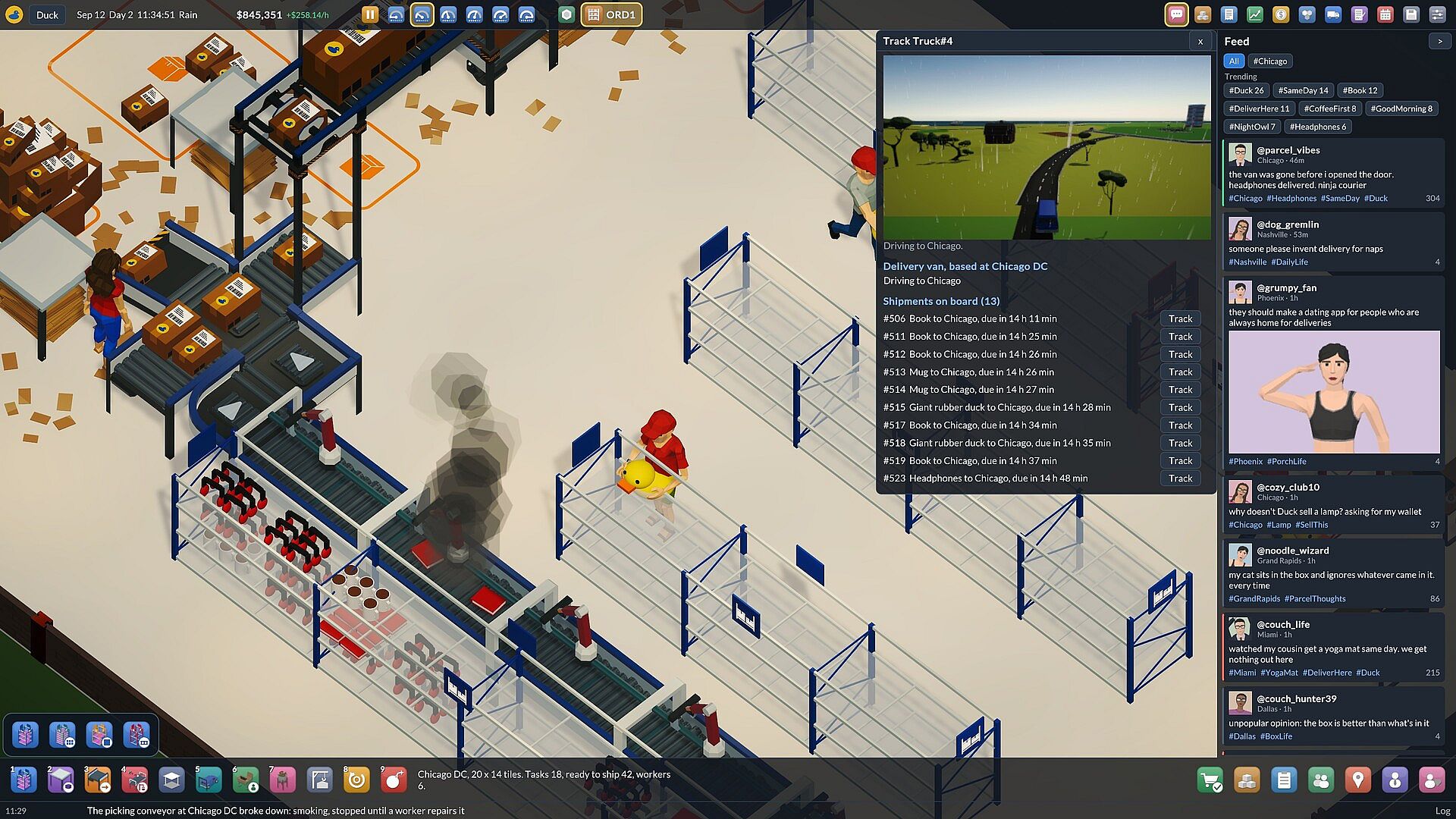
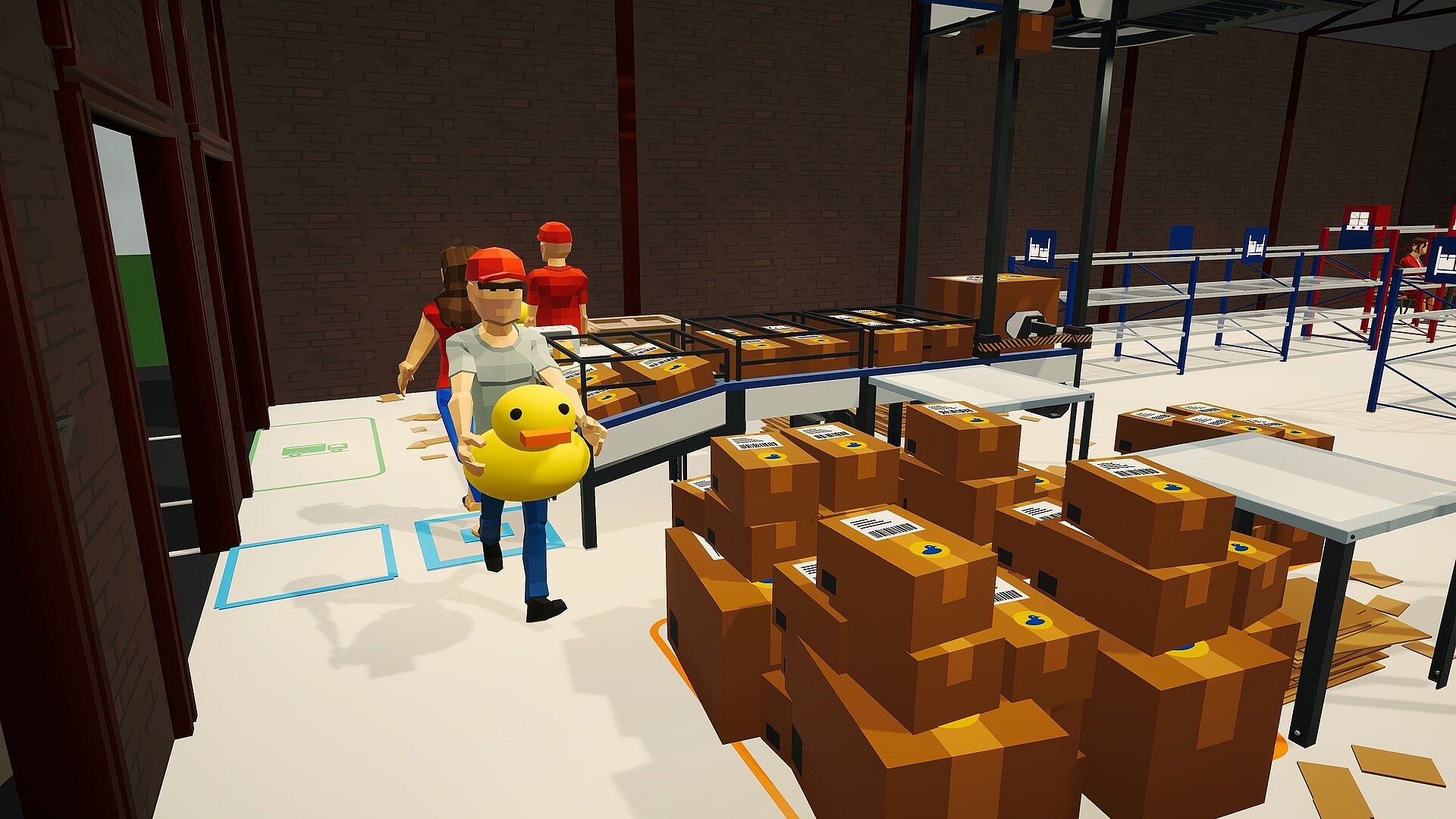
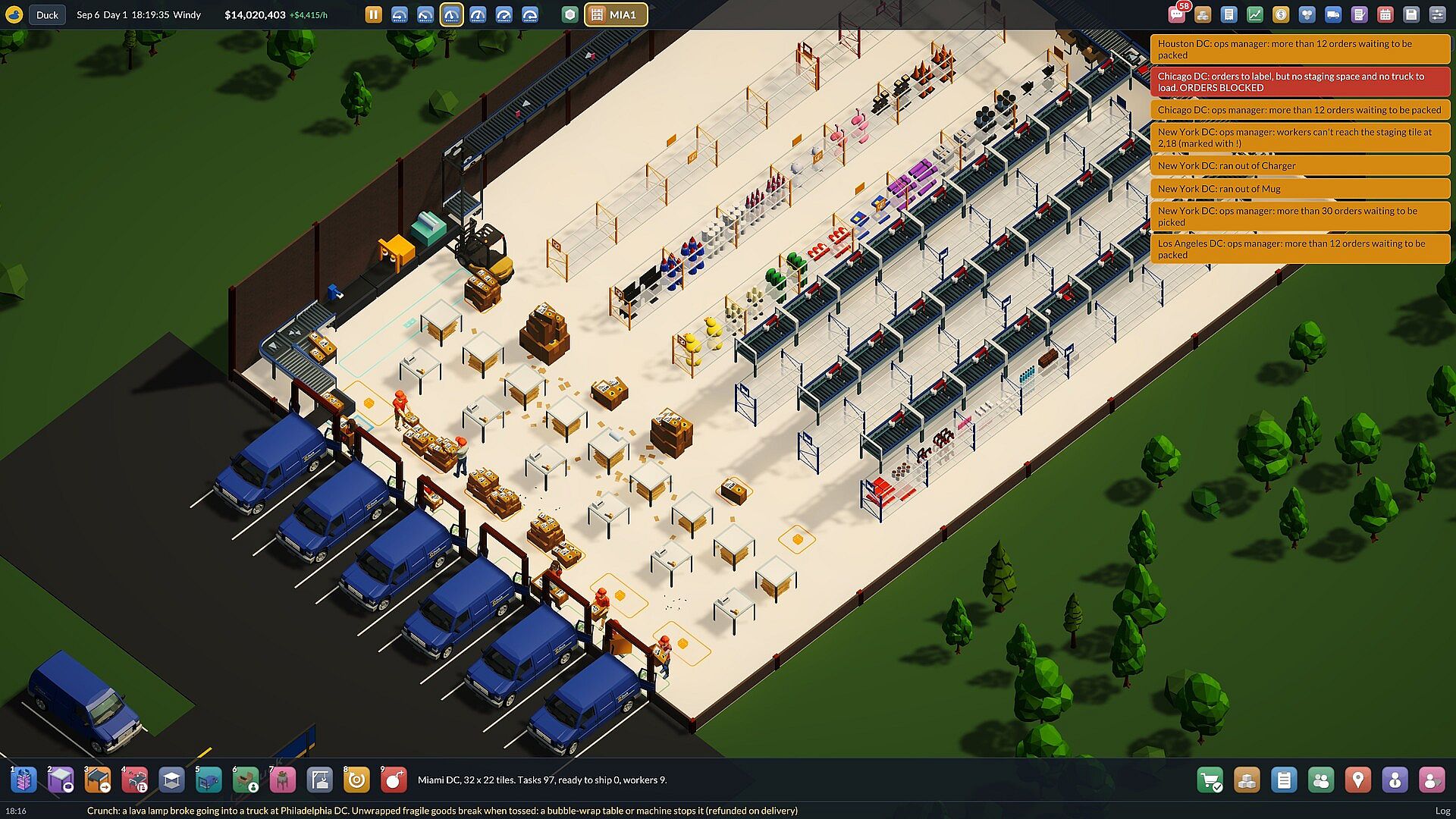
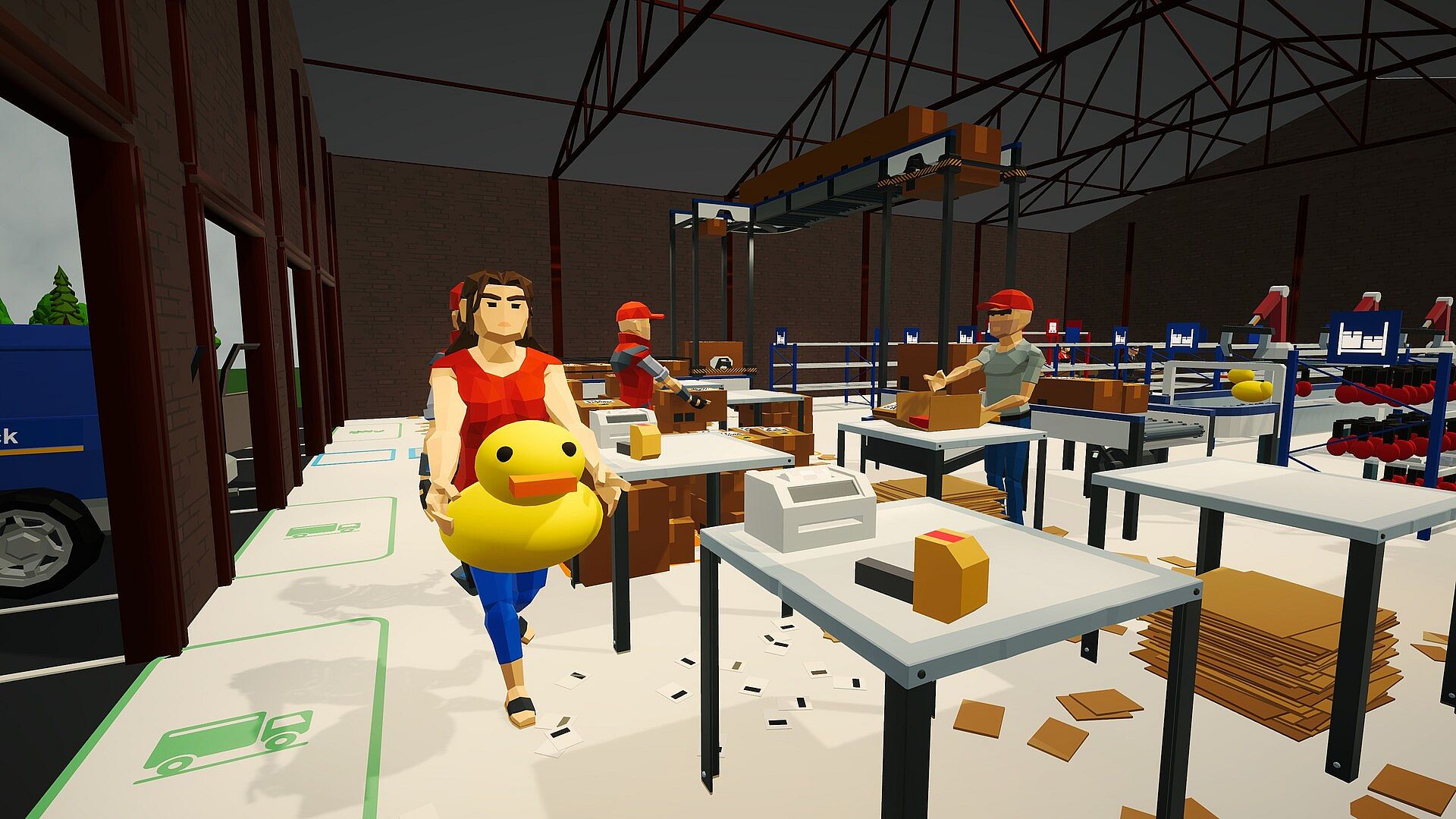
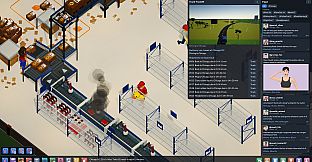
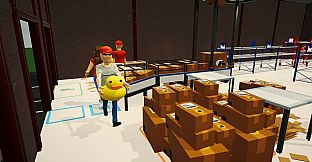
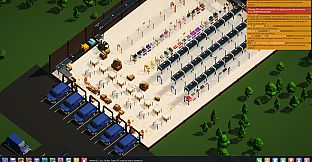
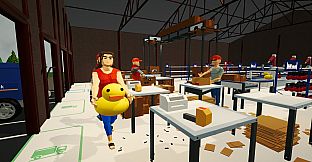
Players begin with limited resources in a compact facility and expand operations tile by tile. Shelves, pack stations, conveyor belts, and dock doors are placed manually, while workers handle picking, packing, labeling, and loading each individual parcel. Every order tracks through the system in full detail, so bottlenecks appear visibly as stacks of boxes or queues of vehicles rather than abstract metrics.
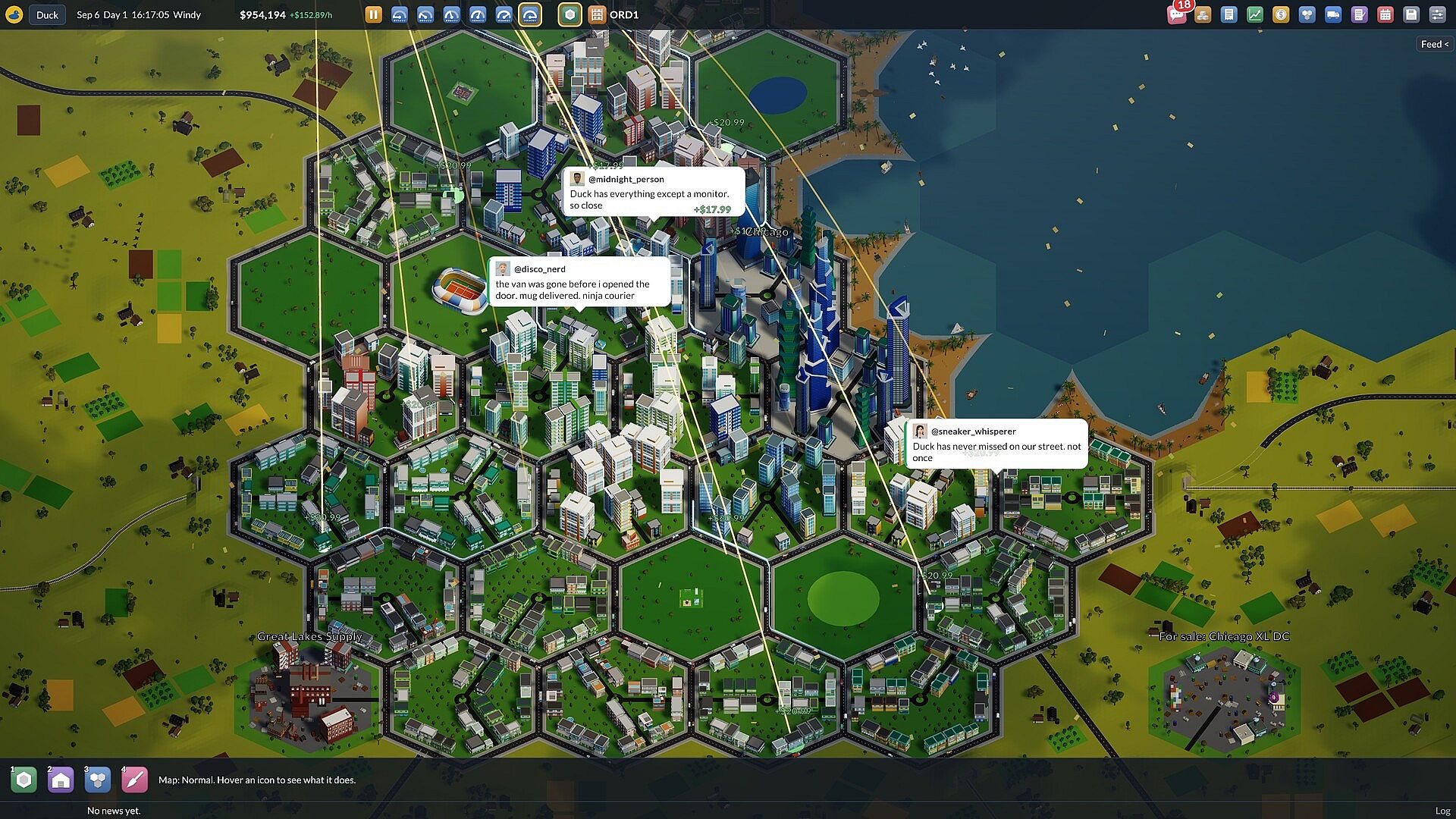
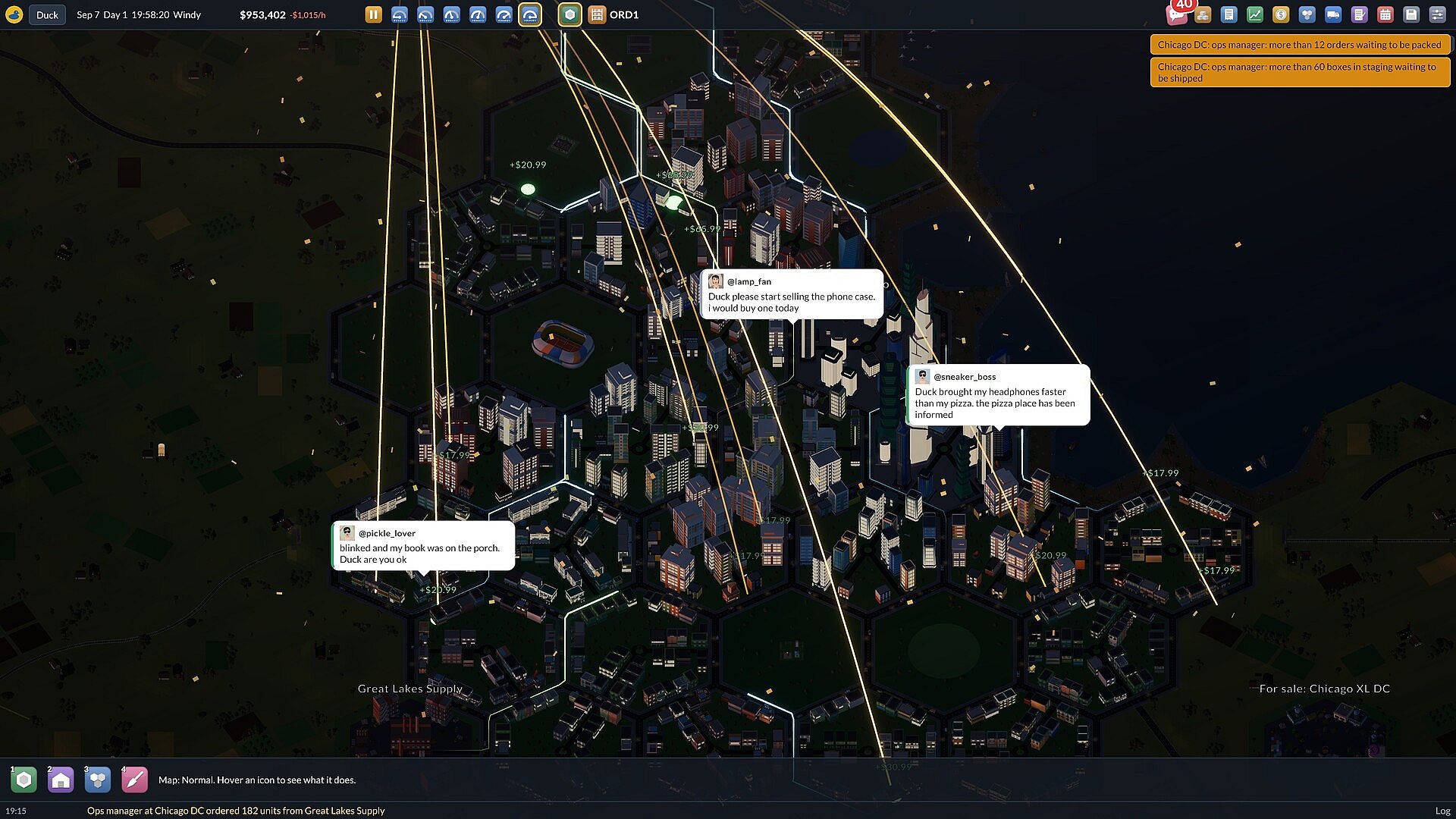
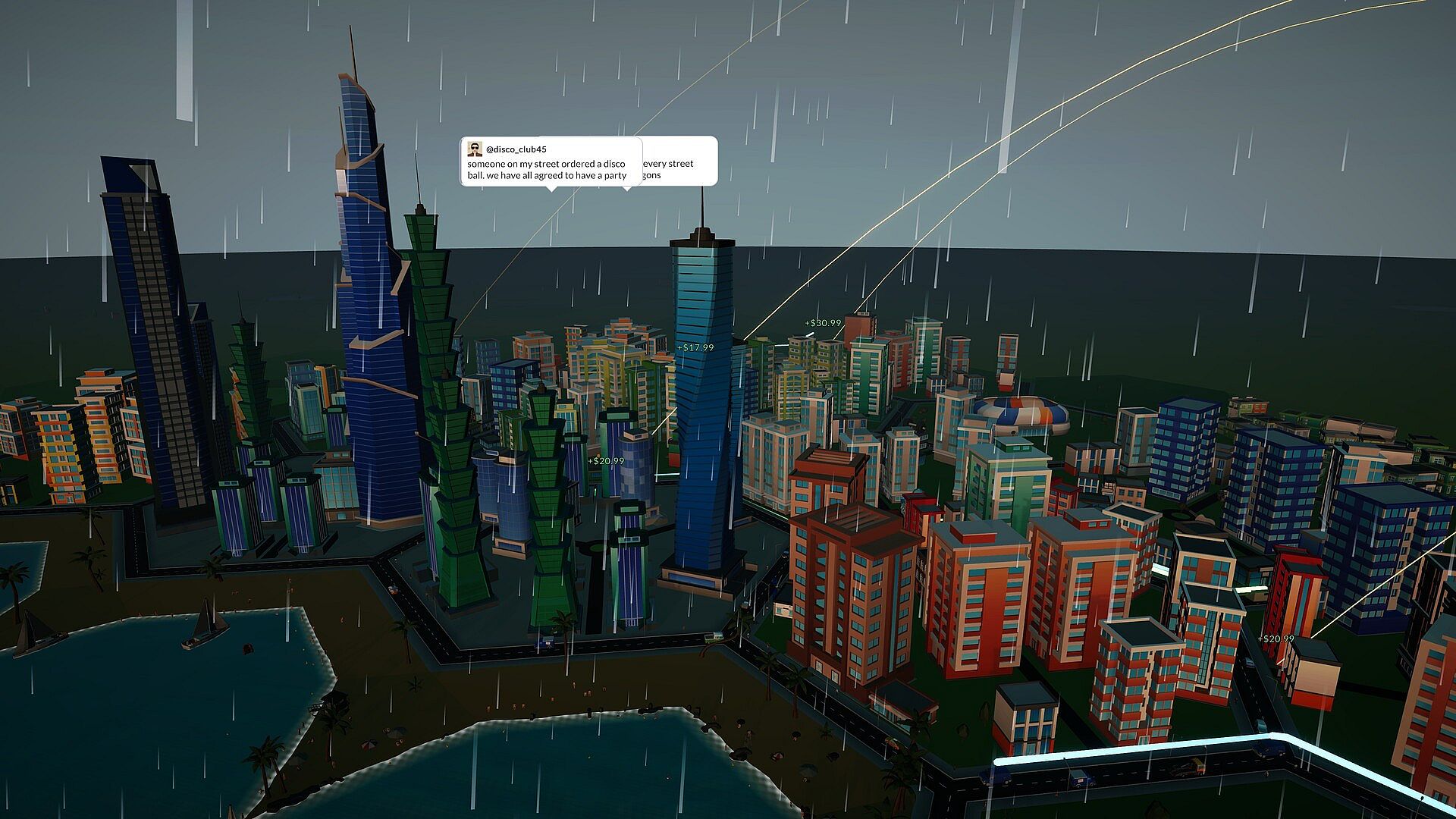
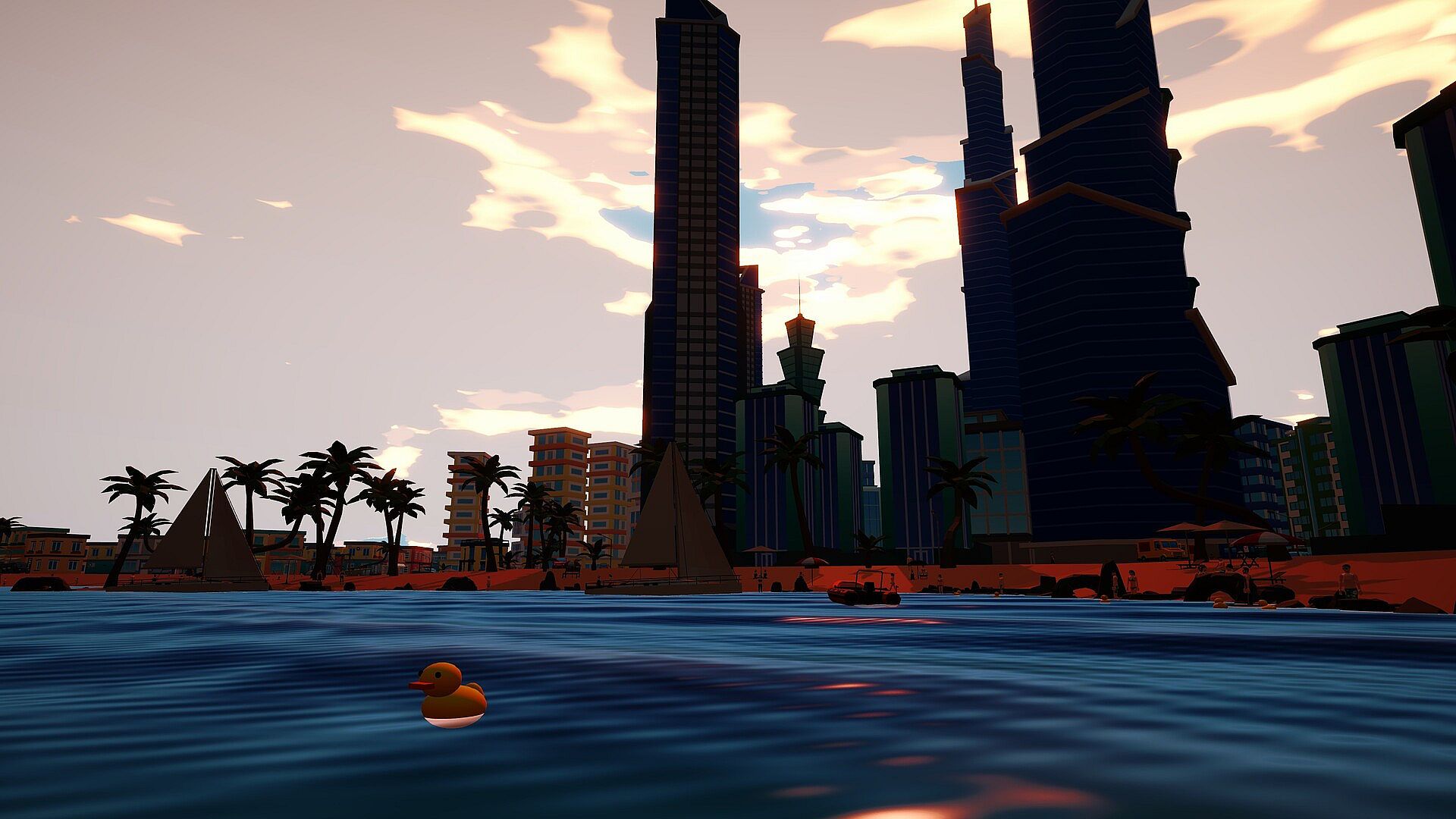
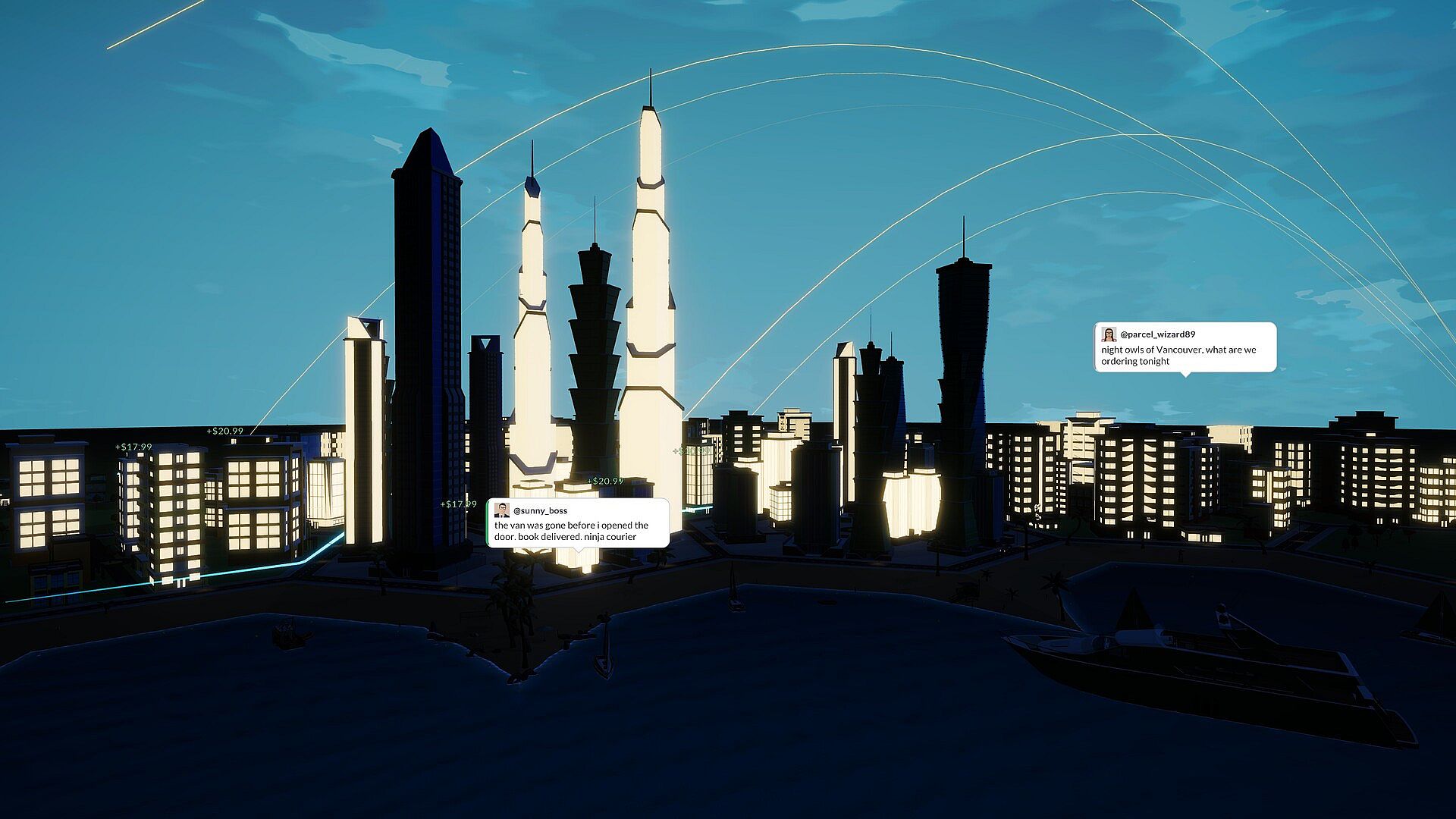
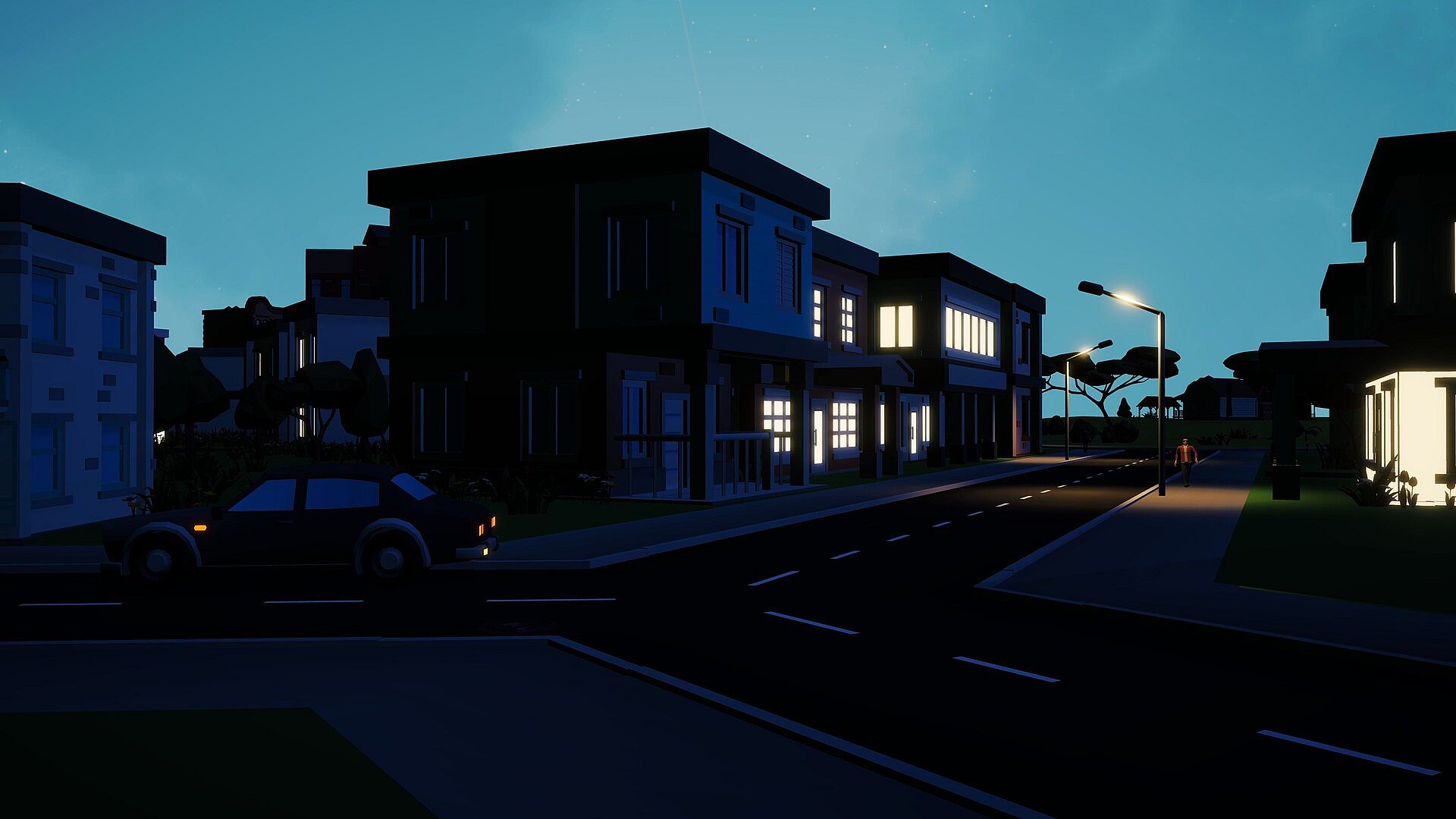
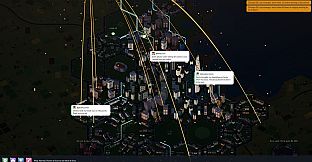
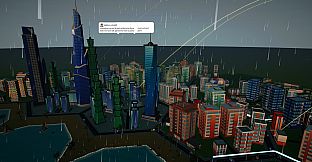
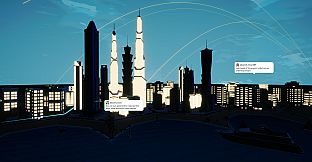
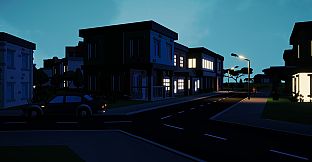
The delivery promise serves as the central control. Setting a longer window keeps operations steady, while promising same-day service draws surging demand neighborhood by neighborhood. Meeting those promises builds trust and revenue, but delays erode both. A hex map of the continent lets players zoom between high-level network planning and street-level warehouse floors, with day-night cycles and weather affecting the entire map.
Staffing and shift planning add another layer. Hiring pickers, packers, loaders, and drivers requires matching headcount to workload, and later additions like operations or HR managers automate routine tasks. Forklifts and pallet jacks move stock from rail docks into racks, while supplier contracts keep inventory flowing. Delivery zones are painted on the map, van routes are optimized for driver shifts, and line-haul trucks connect distant sites.
Game Modes
The current version focuses on sandbox play. Players can start small in a single garage-style unit or jump straight into a mid-game scenario with an established network in a busy city. The simulation runs at speeds from real time up to 3600 times faster, supporting both relaxed oversight and rapid testing of layouts.
Future plans include a campaign built around scenario objectives. These will layer on elements such as rival companies, financial tools like loans, and events including strikes or returns processing. The sandbox foundation already supports neighborhood-level demand modeling and a reactive social feed that reflects delivery performance.
Building and Expanding the Network
Growth happens through deliberate site selection and infrastructure investment. Small town units inside cities complement larger fulfillment centers on the outskirts, while rail spurs bring bulk stock directly to warehouses. Pricing, freight costs, and stock levels must stay balanced as the network scales from one van to continent-spanning routes.
Events keep the simulation lively. Seasonal peaks, fads that sweep regions, equipment failures, and customer reactions in the feed all influence daily decisions. The absence of simplified throughput bars means every inefficiency shows up in the physical flow of goods and vehicles.
Is It Worth Playing?
Same Day Tycoon targets players who enjoy detailed management simulations with visible cause-and-effect systems. The emphasis on individual parcel tracking and the direct link between delivery promises and operational strain creates a grounded logistics challenge rather than high-level abstraction.
Because the game remains in development with a planned Early Access launch in Q1 2027, anyone interested should expect an evolving experience shaped by player feedback. The sandbox already offers substantial depth in warehouse layout, staffing, and network routing, while the promised campaign and additional systems will expand strategic options later.
Those drawn to tycoon-style games that reward careful planning of physical spaces and schedules will find the most immediate appeal. The single-player focus and emphasis on simulation fidelity make it a strong match for fans of methodical expansion and troubleshooting rather than fast action or multiplayer competition.