









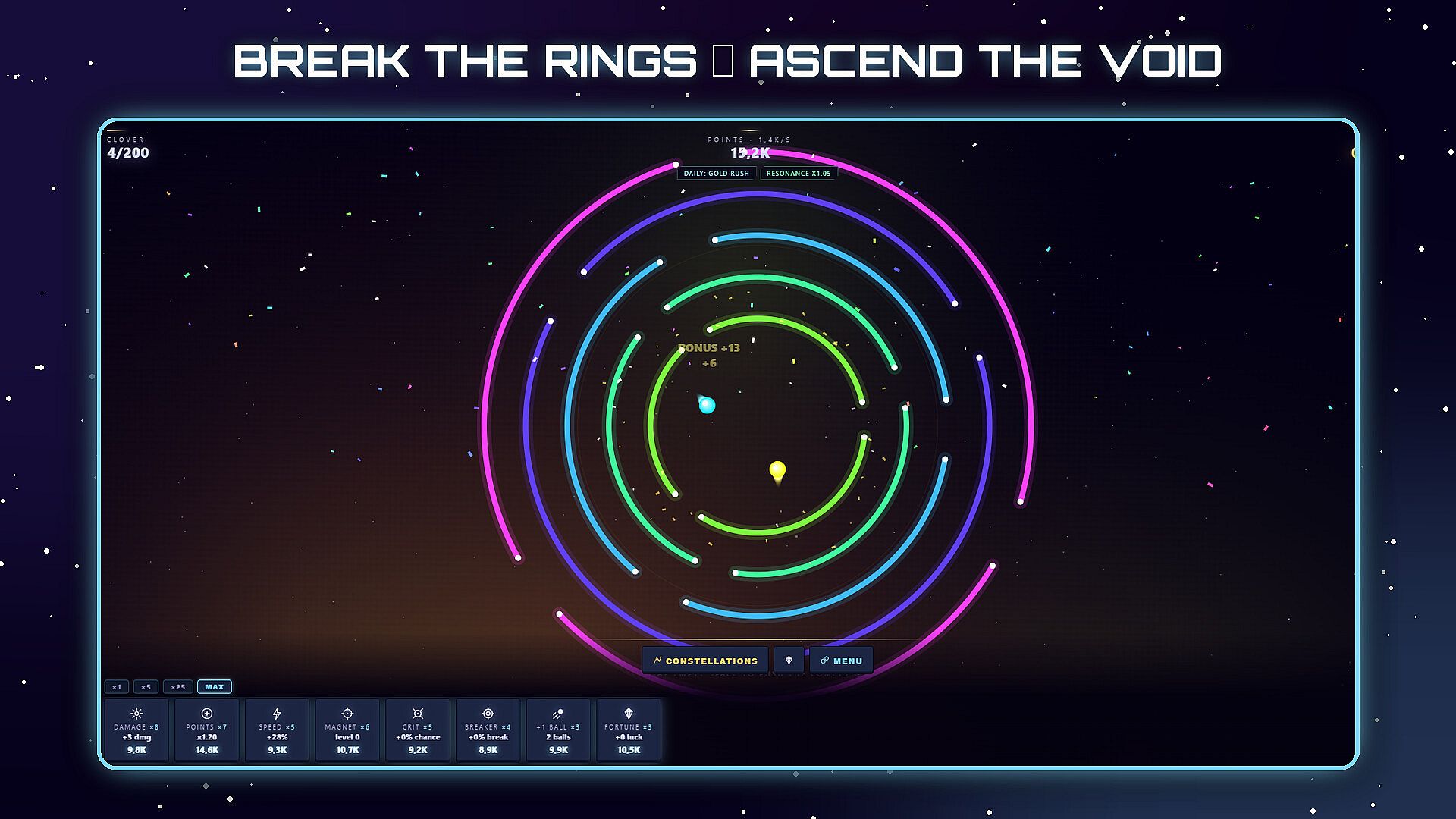

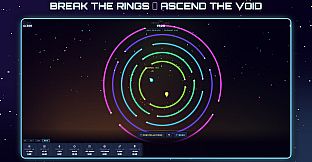
Ring Cosmos é um idle game gratuito criado por um único desenvolvedor e disponível para PC. O jogador toca na tela para direcionar cometas em órbita que destroem anéis neon brilhantes em um cenário cósmico. O ciclo principal gira em torno do avanço incremental obtido ao quebrar anéis, seguido por sistemas de prestígio que liberam novas camadas de progresso. Essa estrutura atrai quem busca mecânicas idle combinadas com profundidade estratégica na criação de builds, em vez de apenas acumular números.
Gameplay
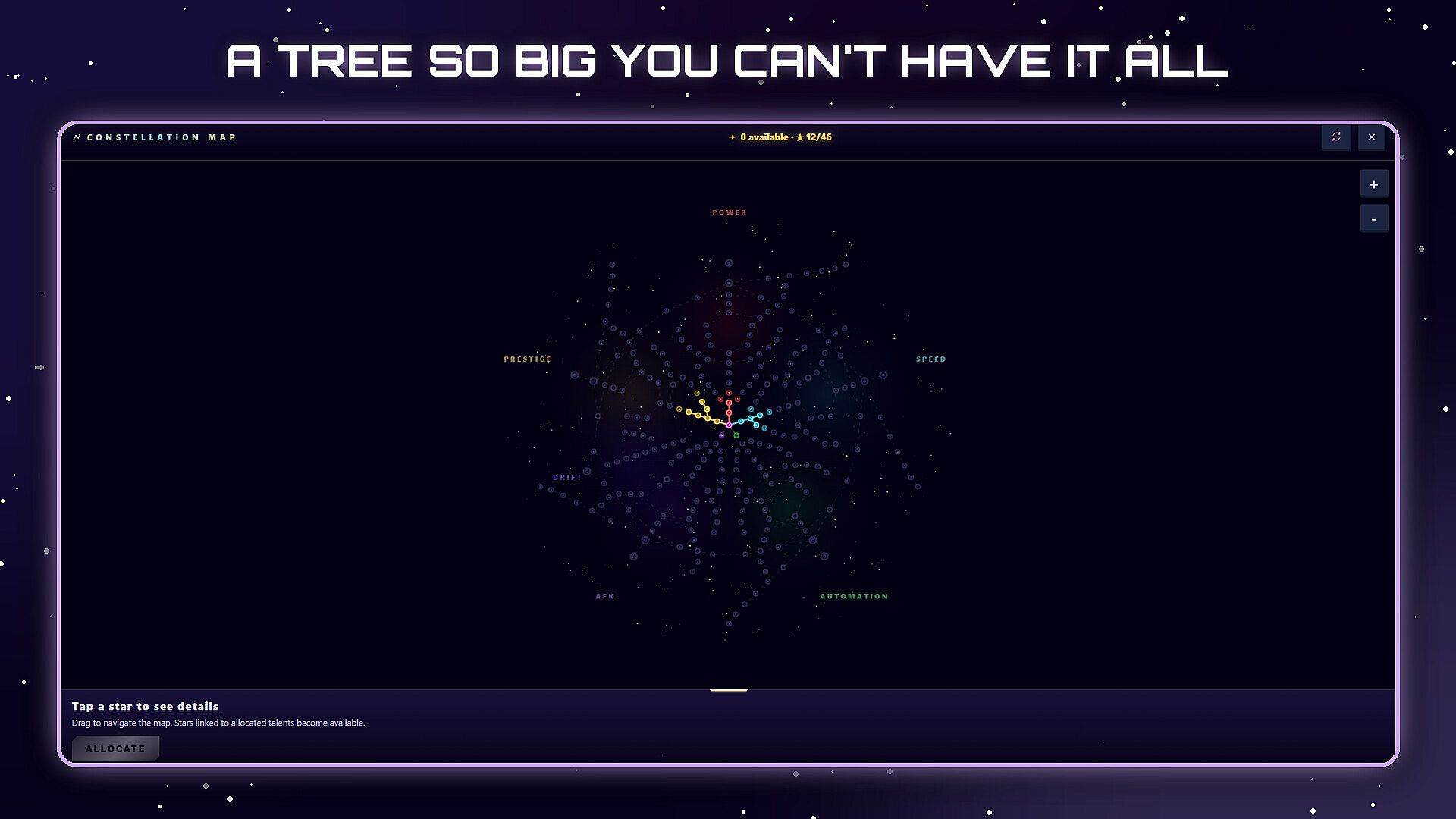
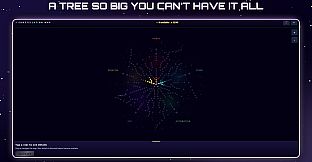
A ação central consiste em guiar cometas para romper anéis sucessivos. Cada quebra gera recursos que alimentam a mecânica de prestígio, na qual o jogador converte o progresso em Cores. Esses Cores são investidos em um mapa de constelações com 269 estrelas. O limite de estrelas ativo simultaneamente força o foco em combinações que sustentam estratégias específicas, como rajadas de dano crítico ou farming eficiente de quebras.
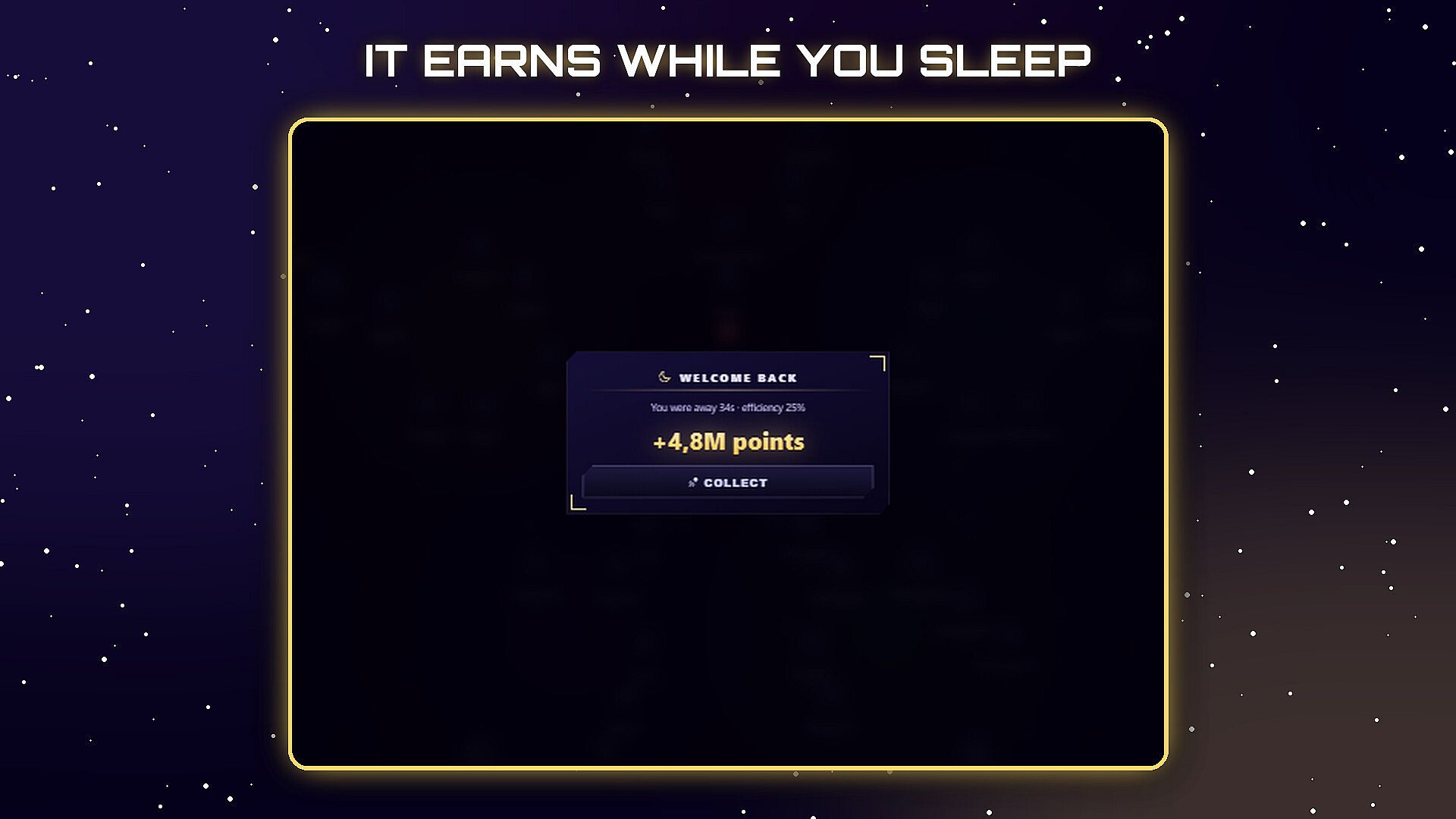
Pedras-chave sombrias introduzem efeitos que alteram as regras, incluindo um cometa que cresce a cada abate, cometas de vidro que causam dano triplo e efeitos de gravidade zero. O equipamento complementa o sistema por meio de bônus de set e itens lendários que o jogador encontra, recicla e fabrica com Stardust. O Warden surge como chefe protegido a cada 25ª fase, criando desafios periódicos. O progresso offline continua mesmo com o jogo fechado, permitindo que os cometas gerem recursos durante a ausência do jogador.
A reespecialização é gratuita a qualquer momento, incentivando testes constantes de combinações de estrelas e efeitos de pedras-chave. A interface permite personalização completa em estilos neon, acompanhada de uma trilha sonora cósmica ambiente que reforça a atmosfera sem distrair.
Modos de Jogo
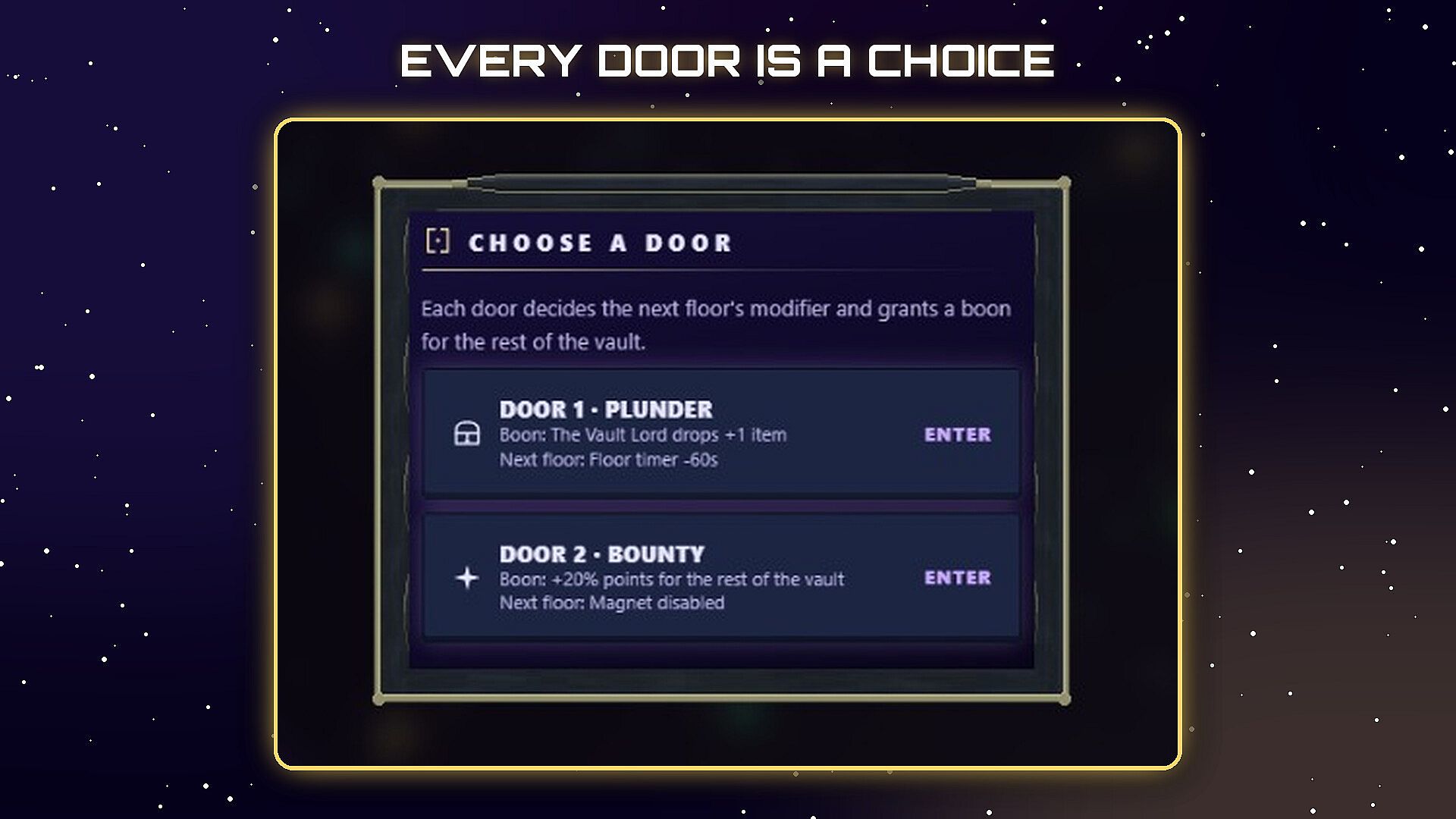
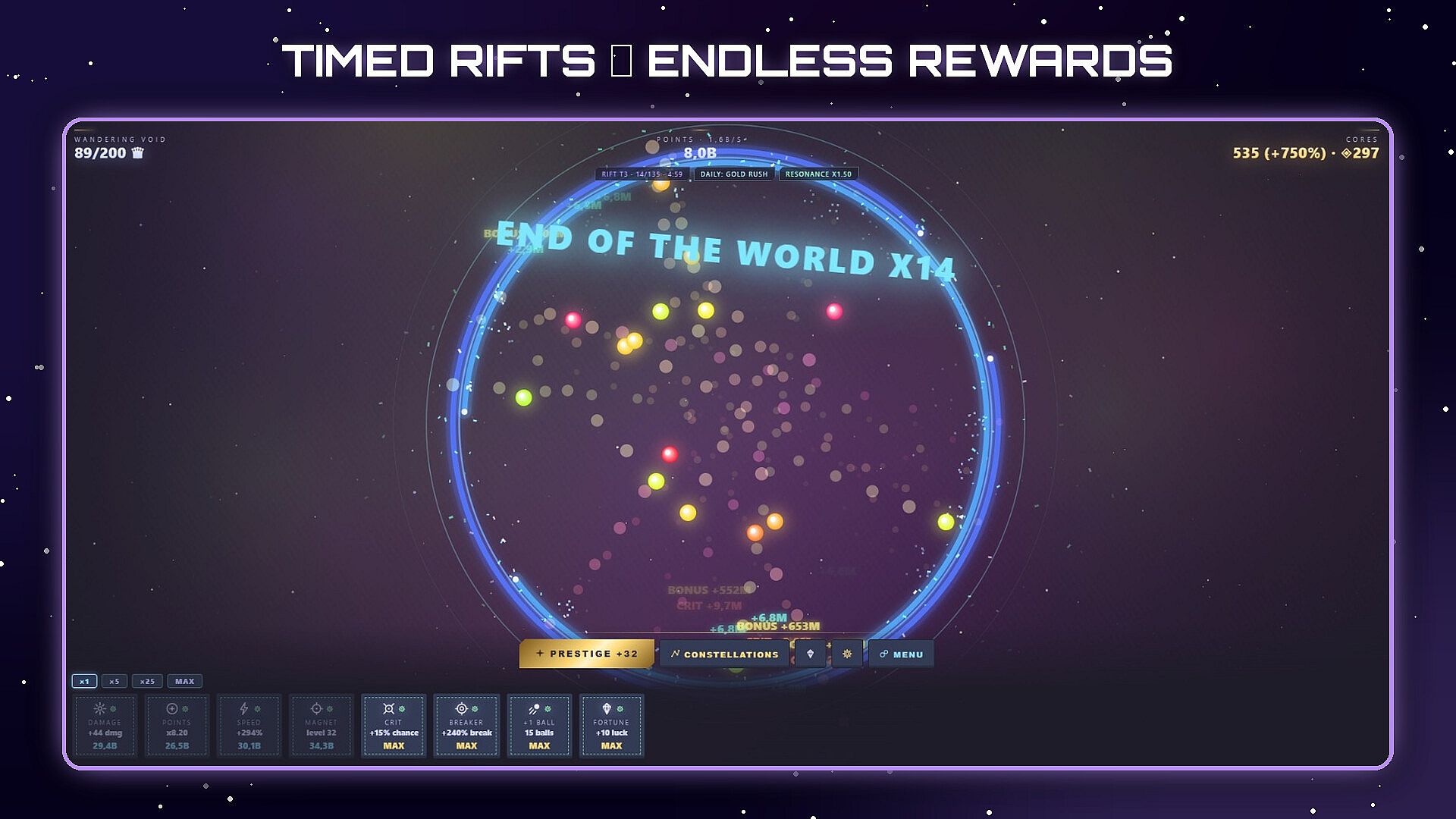
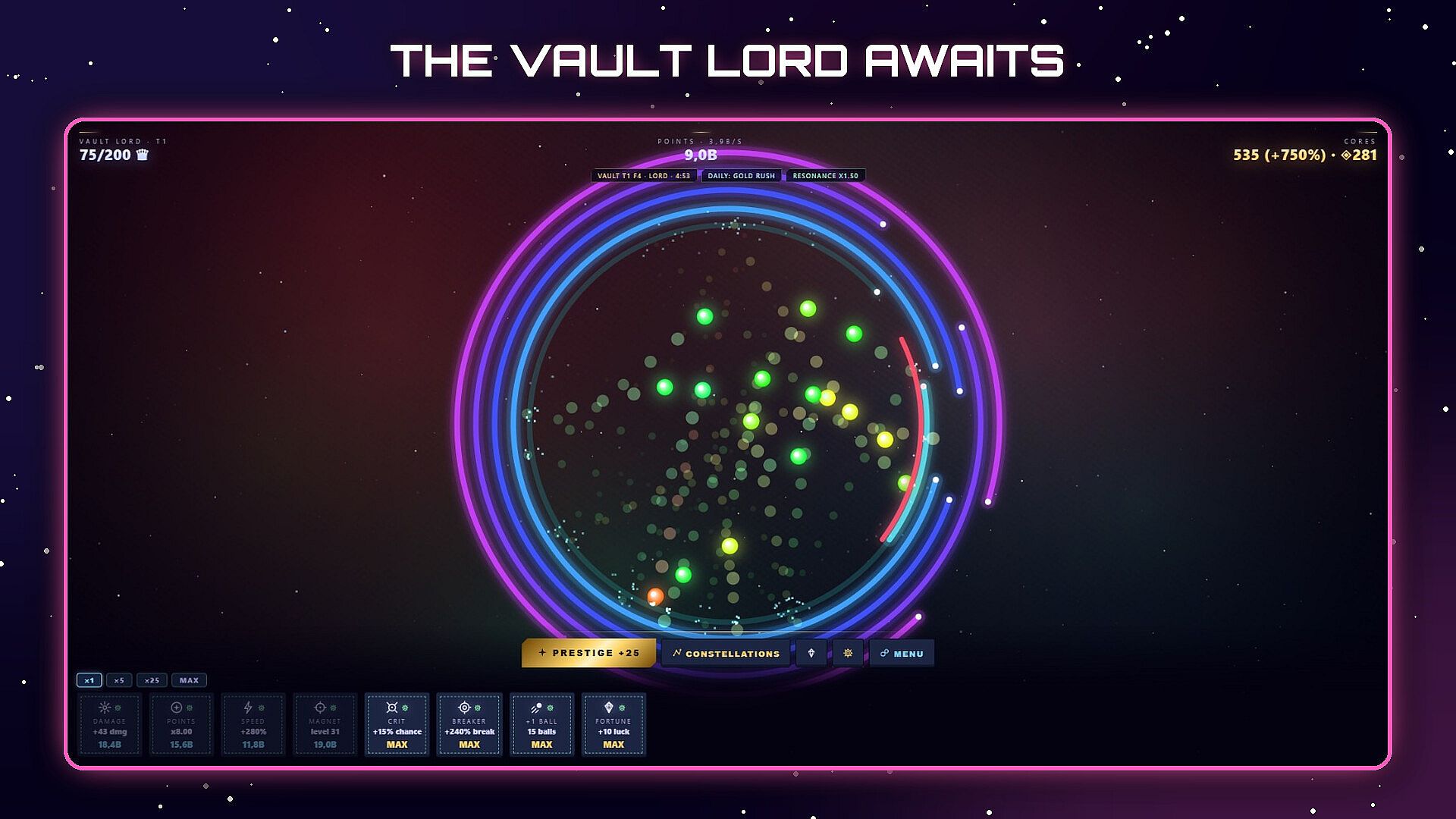
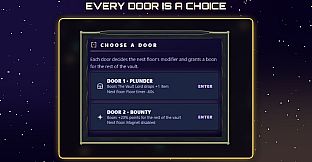
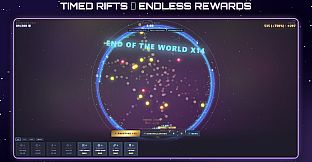
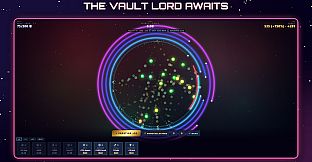
Eclipse Rifts são corridas de desafio de cinco minutos. Cada tentativa traz modificadores aleatórios, e as conclusões bem-sucedidas alimentam upgrades em um sistema infinito chamado Void Forge. Hollow Vaults funcionam como masmorras de quatro andares, onde cada escolha de porta concede um benefício permanente e culmina no confronto com o Vault Lord no último nível.
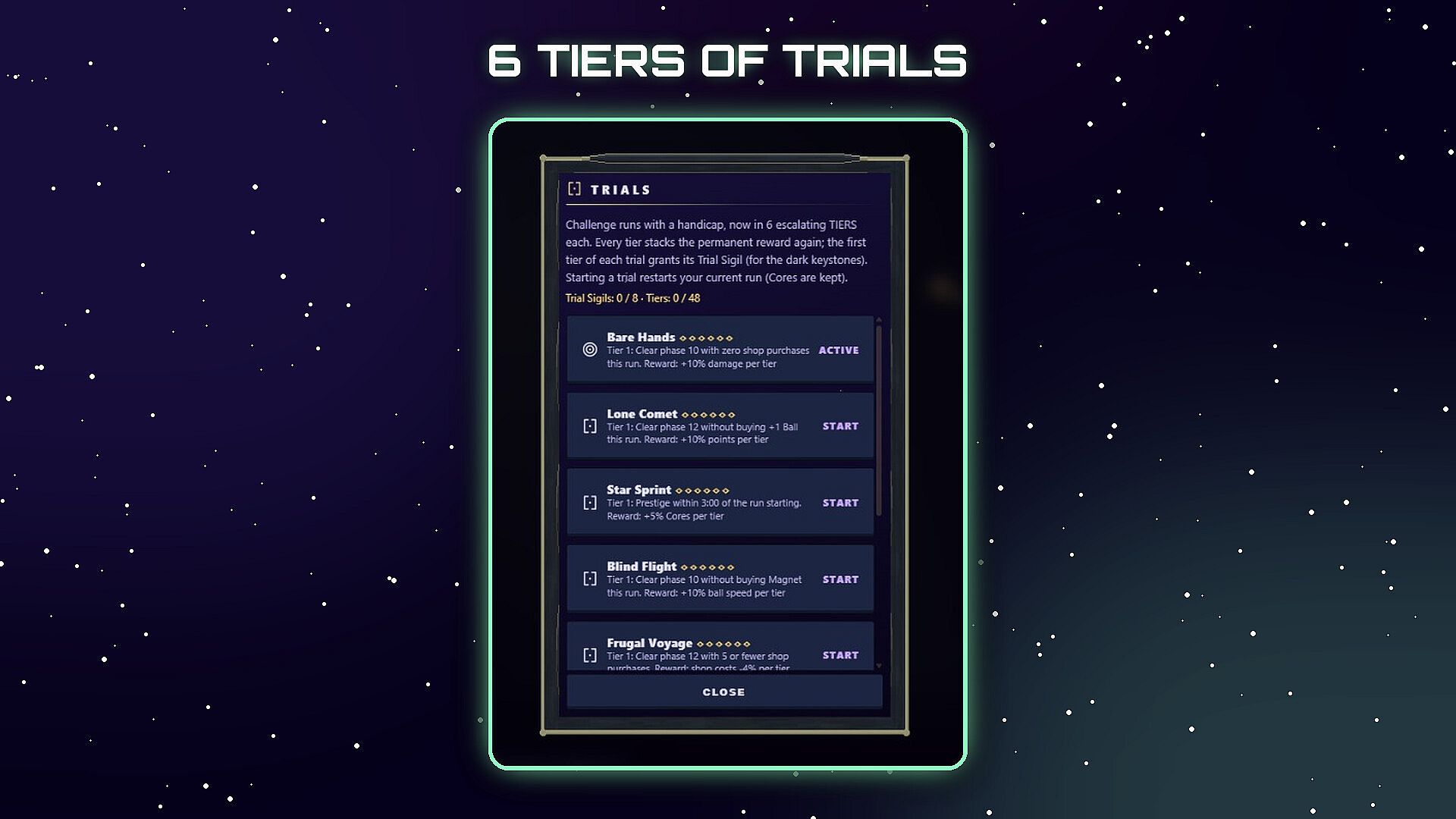
Trials são divididos em seis níveis crescentes, com cada nível acumulando recompensas permanentes que seguem para as próximas tentativas. Após a fase 200 começa a Deep phase, na qual os anéis ficam mais resistentes até o Singularity na fase 500. Um Daily Anomaly aplica um modificador mundial diferente a cada dia, alterando as condições das partidas sem exigir atenção constante.
Prestige e Ascension são duas camadas distintas de renascimento. Ascension expande especificamente o limite de estrelas, abrindo novas possibilidades de build a cada ciclo. Esses modos se integram ao loop principal em vez de existirem como experiências separadas.
Progressão e Sistemas
O avanço depende de duas camadas de prestígio que reiniciam certos elementos enquanto mantêm ganhos permanentes. O sistema de constelações exige escolhas deliberadas por causa do limite de estrelas, recompensando quem testa combinações para impérios focados em crítico, farming ou sustentação AFK. A busca e a fabricação de equipamentos adicionam outra camada, já que bônus de set e itens lendários influenciam o desempenho dos cometas e a eficiência de recursos.
O endgame avança por meio do endurecimento progressivo das fases e do marco do Singularity, apoiado por corridas de desafio e escolhas de masmorra que fornecem upgrades direcionados. Saves na nuvem mantêm o progresso entre dispositivos, e o jogo funciona totalmente offline sem necessidade de conta.
Vale a pena jogar?
Ring Cosmos agrada quem valoriza idle games com elementos estratégicos de build e respeito ao tempo investido. O modelo free-to-play dispensa anúncios forçados, e o desenvolvimento solo no Brasil mantém o foco nas mecânicas centrais. Recompensas permanentes dos trials e a liberdade de reespecializar a qualquer momento favorecem o engajamento a longo prazo sem pressão.
Quem gosta de montar constelações sob restrições, enfrentar corridas curtas de desafio ou explorar masmorras baseadas em escolhas encontra profundidade consistente. A combinação de ganhos offline e modificadores diários garante avanço constante mesmo em sessões curtas. A disponibilidade no PC sem necessidade de conta reduz barreiras para entrada casual e permite experimentação prolongada nas fases finais.
