






Quantum Arbitrage is a simulation game built around node-based programming and optimization puzzles. Players construct algorithmic trading systems that process market data from multiple exchanges while racing against strict latency limits on PC.
Gameplay
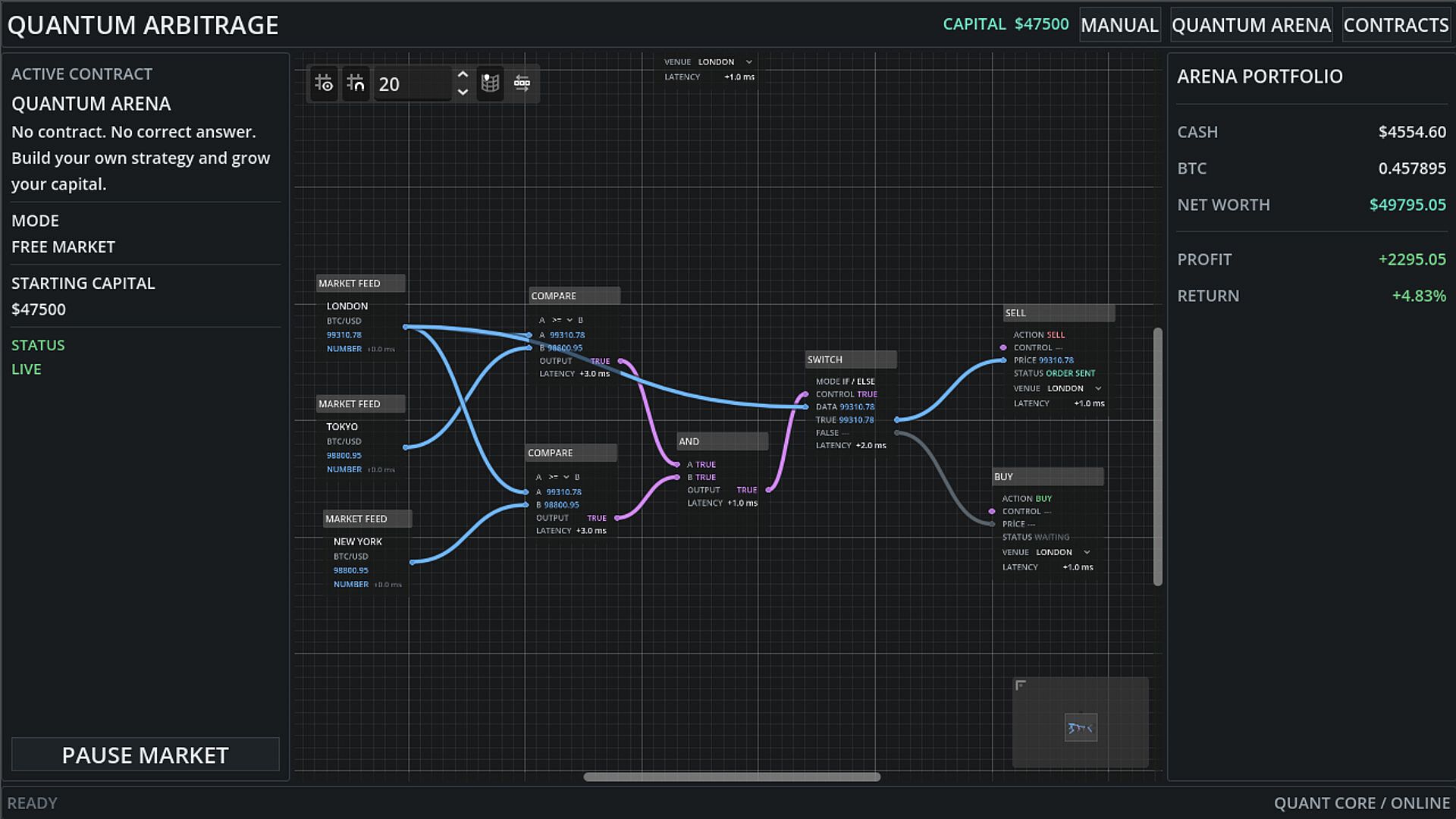
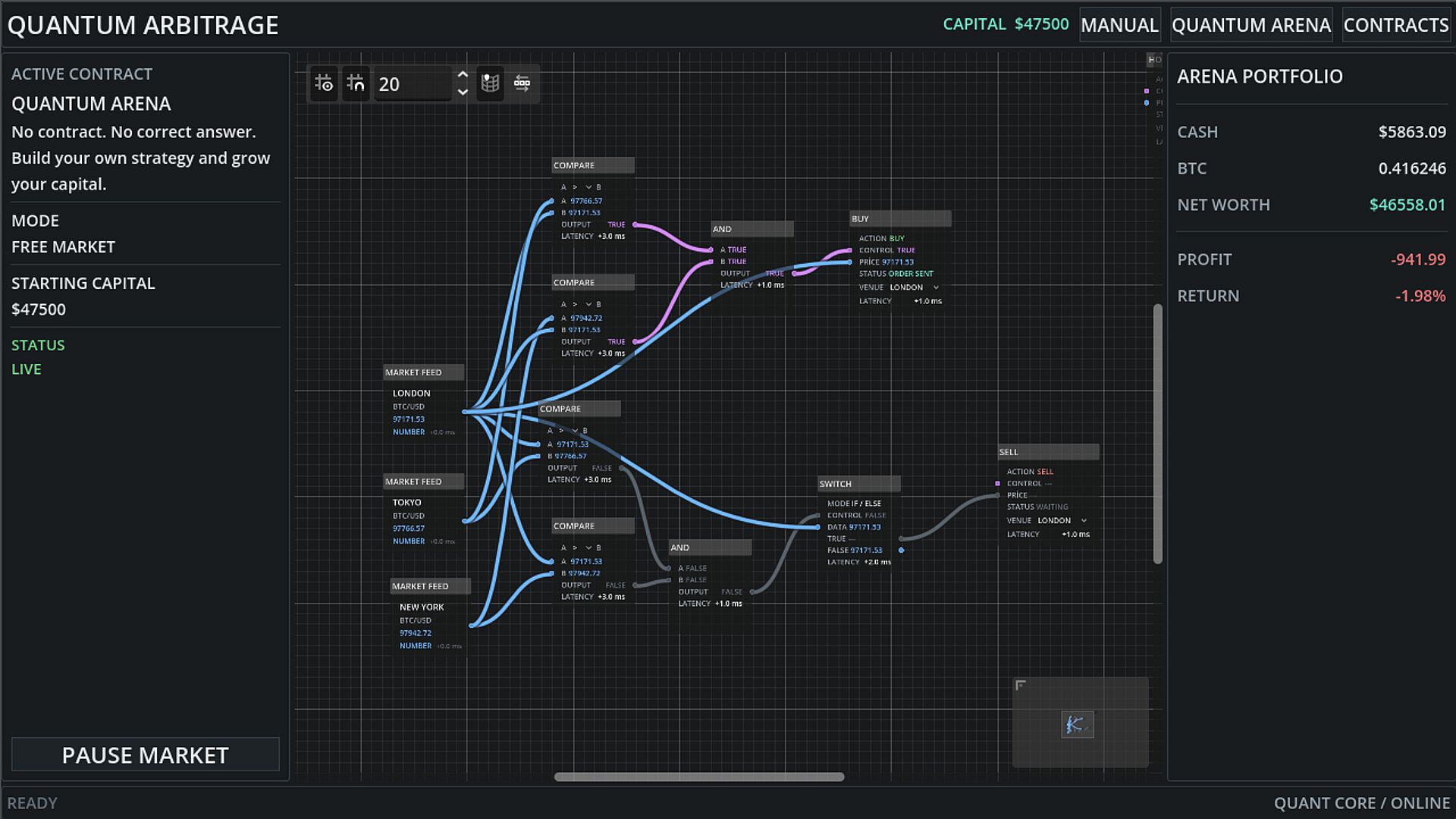
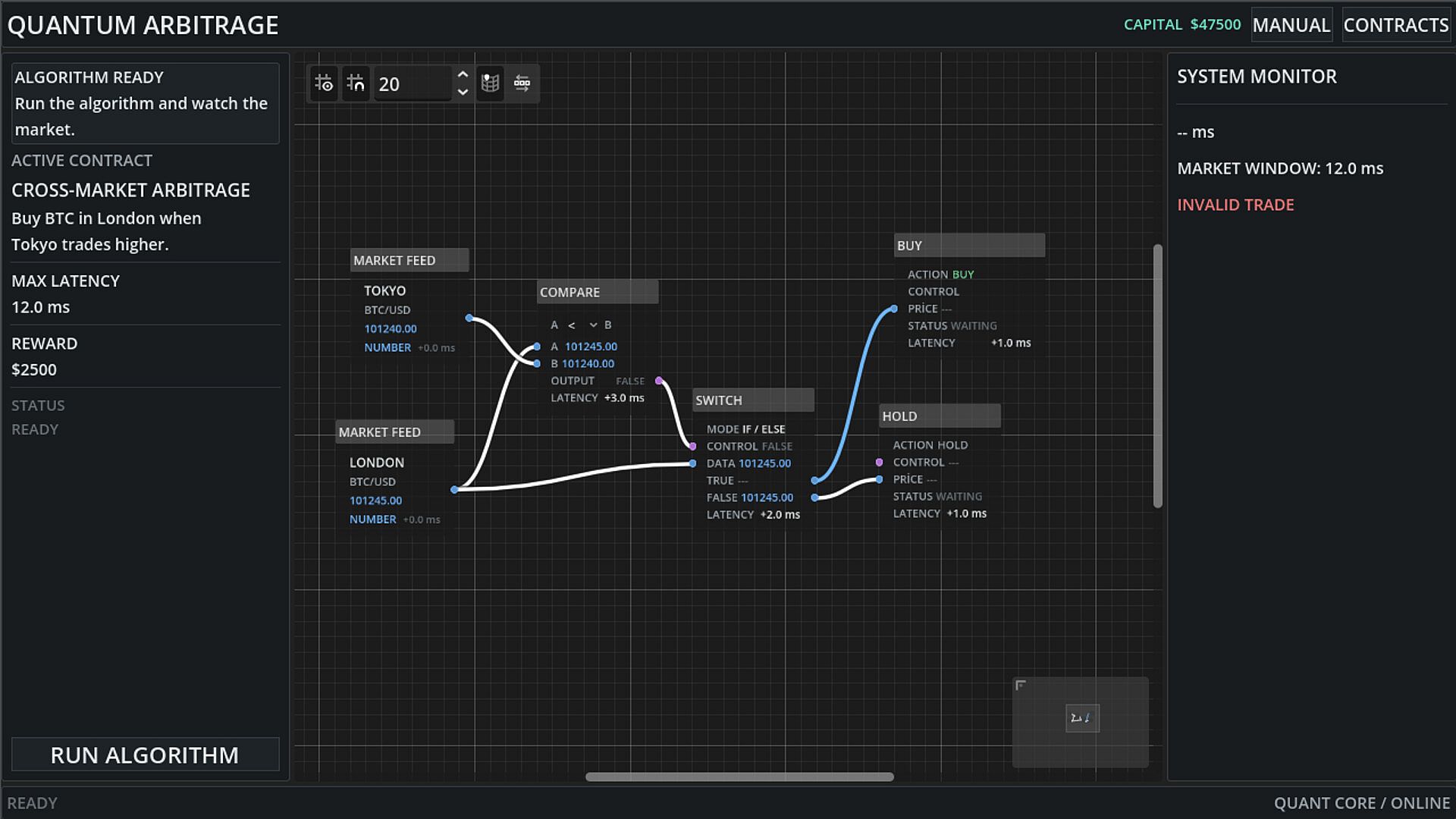
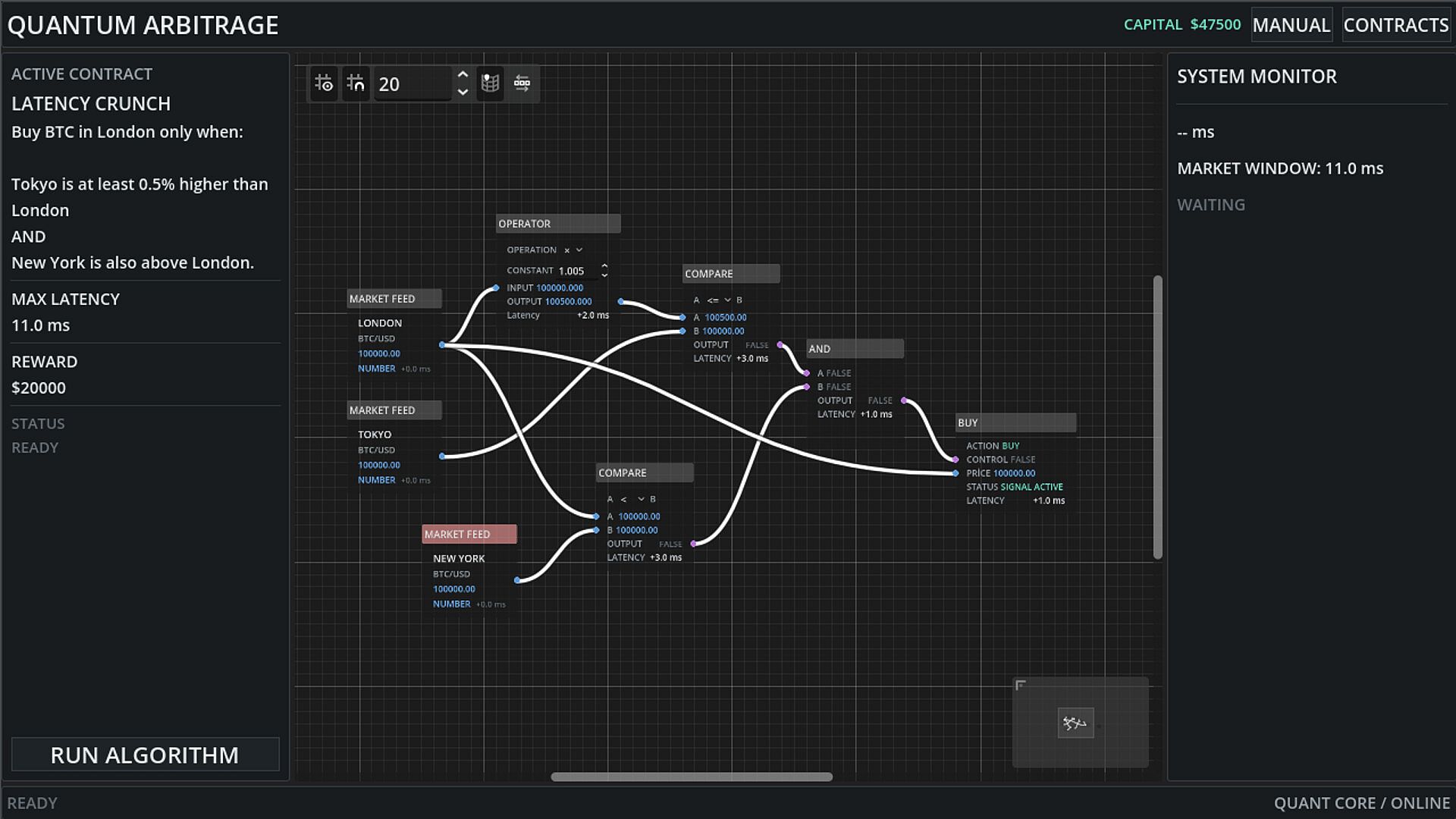
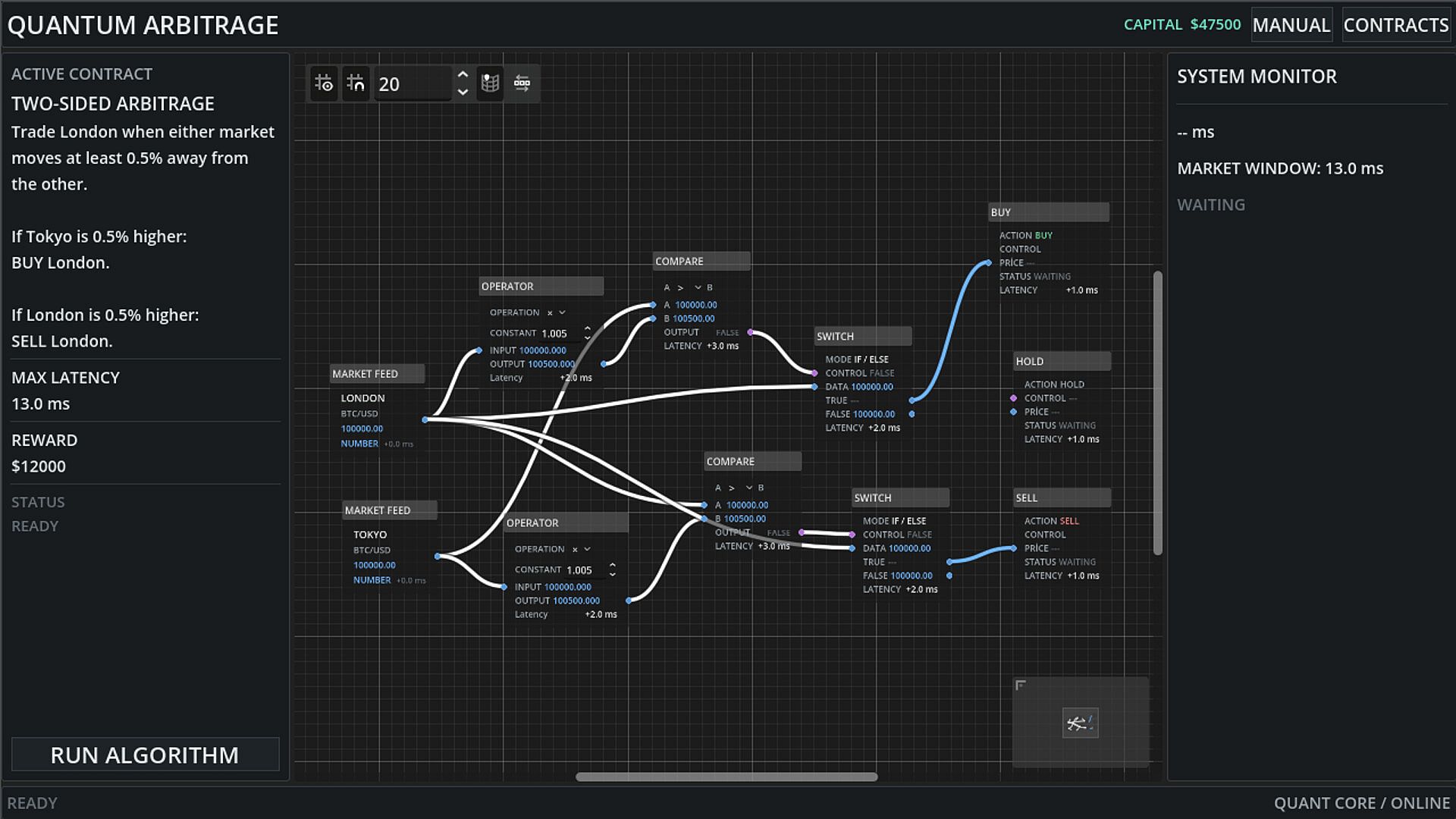
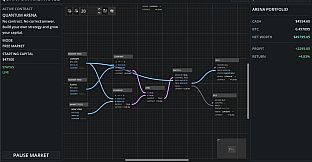
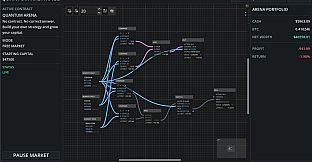
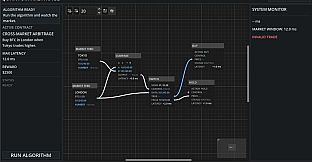
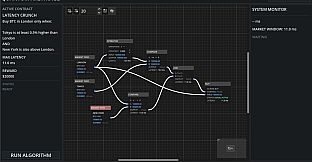
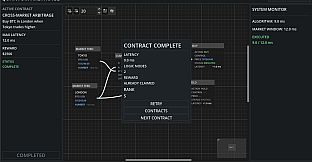
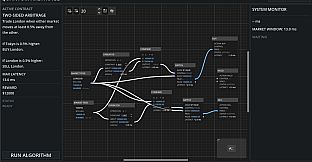
The core loop centers on a visual node editor where market feeds connect to comparison nodes, mathematical transformations, routing logic, and execution controls. Data arrives continuously, and the task involves building automated responses that detect price differences and trigger the right actions before windows close. Each added wire or processing step increases latency, so initial working designs require repeated refinement to trim unnecessary elements and shorten the critical path. Measurement tools track execution time and node counts, guiding iterative redesigns that prioritize speed without sacrificing correctness. New components unlock as challenges advance, introducing numeric and boolean signals alongside conditional branches and multi-market decisions. The system teaches fundamentals through an opening contract and an in-game manual that explains every node behavior, allowing solutions to emerge through experimentation rather than prior coding experience.
Game Modes
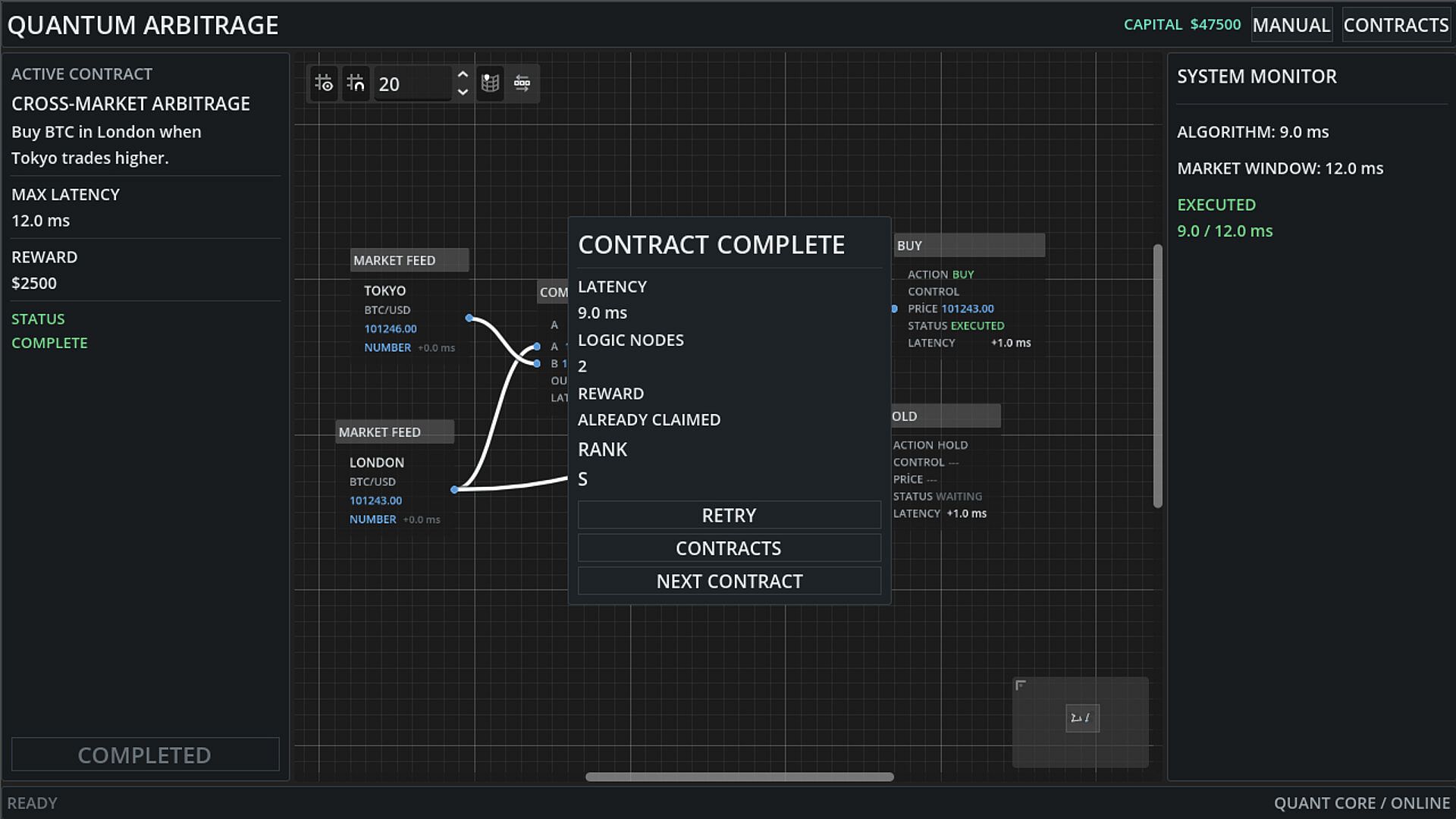
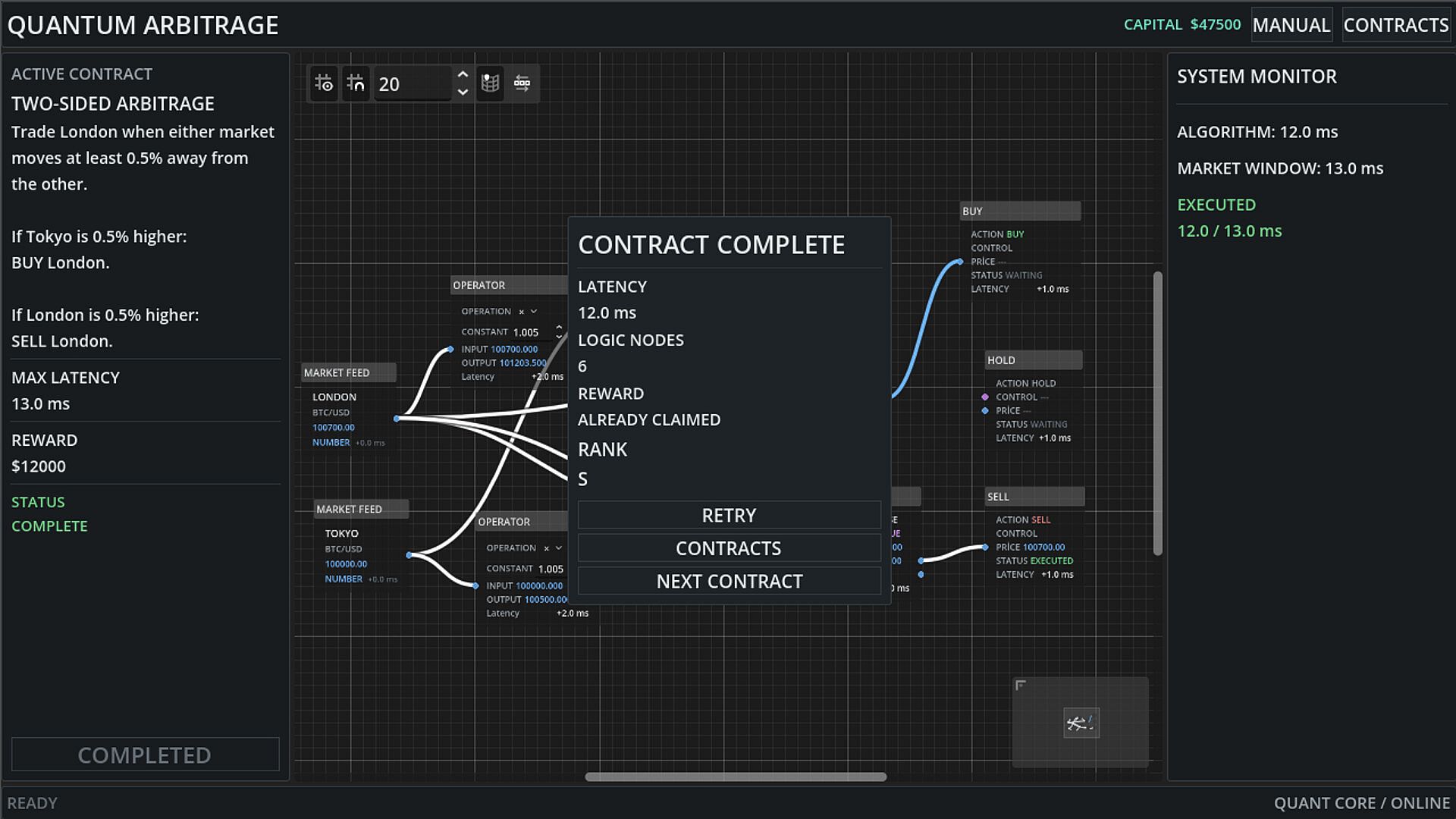
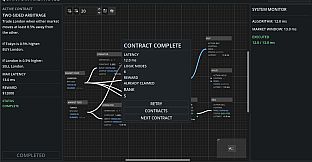
Progression unfolds through a series of contracts that function as structured challenges. Early contracts focus on basic cross-market comparisons, while later ones introduce percentage spreads, parallel processing branches, and direct BUY and SELL execution paths under tighter latency thresholds. Evaluation relies on multiple metrics including total execution latency, the number of logic nodes used, and overall rank. Completed contracts can be replayed to pursue cleaner architectures and faster performance, encouraging repeated optimization passes on the same problems.
Core Mechanics and Progression
Market data processing forms the foundation, with signals routed through logic and math nodes to compare prices across exchanges and execute trades automatically. Latency becomes the primary constraint, turning logically sound systems into failures if they exceed the available execution window. Players measure the full signal path, identify bottlenecks, and rebuild with fewer nodes or more direct connections. Component variety expands gradually, supporting increasingly complex requirements such as conditional routing across several markets and precise timing for buy and sell orders. By the final contracts, success demands both functional accuracy and minimal resource use, pushing designs toward efficient architectures that balance multiple performance factors simultaneously.
Is It Worth Playing?
Quantum Arbitrage suits players who enjoy optimization puzzles and visual systems design. The absence of traditional coding barriers combined with clear feedback on latency and node efficiency creates a focused experience centered on refinement and efficiency. Contracts scale in complexity without introducing unrelated elements, keeping attention on the core challenge of building faster, leaner trading logic. Those drawn to simulation titles that reward careful measurement and iterative improvement will find consistent depth in the contract structure and replay options. The game delivers its intended loop without extraneous features, making it a precise choice for anyone interested in algorithmic thinking applied to time-sensitive decision systems.