







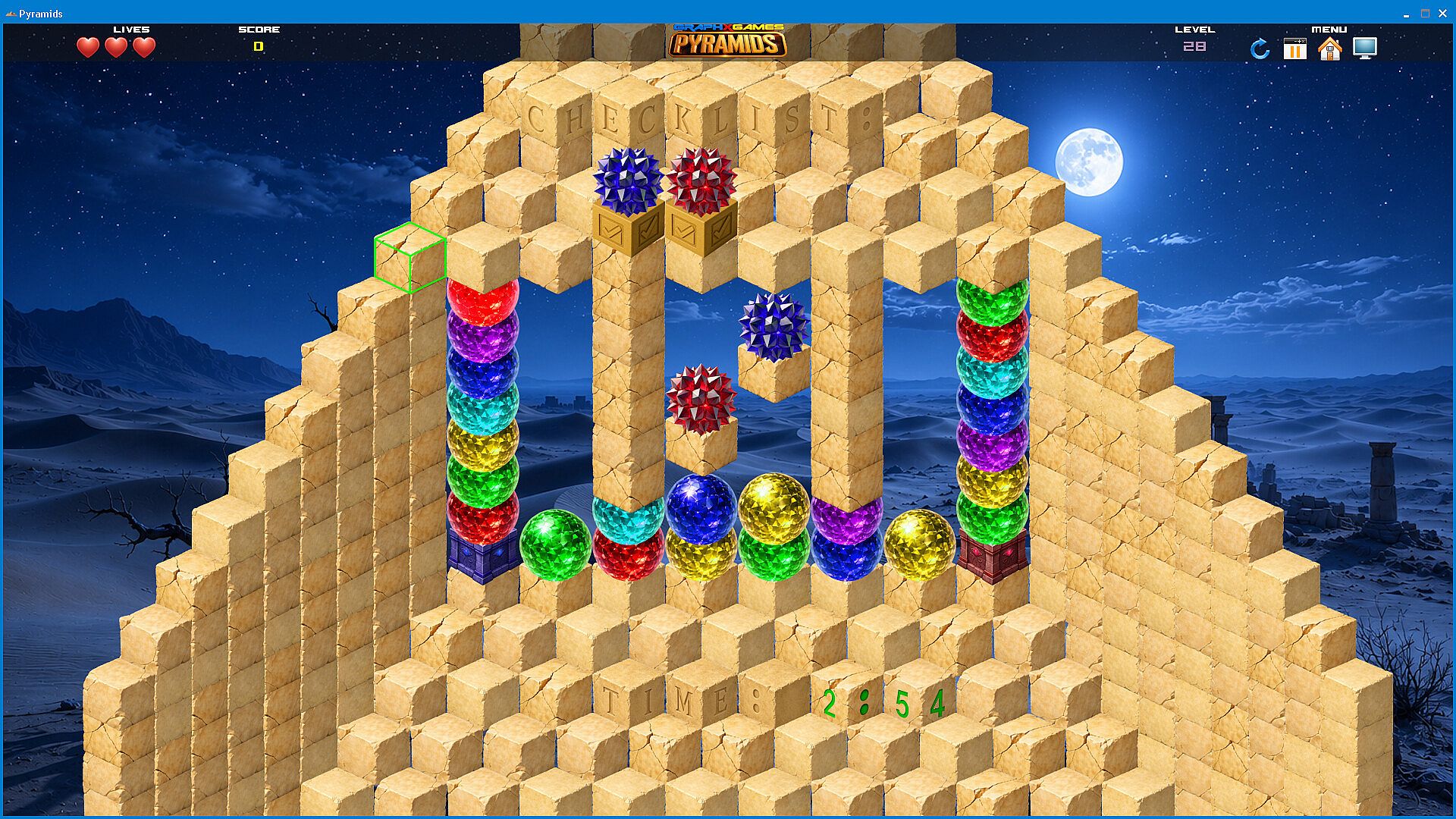
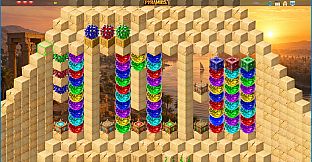
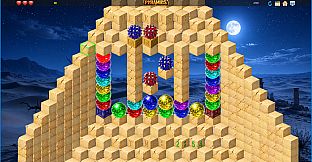
Pyramids is a single-player strategy puzzle game that places players inside the ancient structures of Egypt to solve a series of logic challenges. Developed as an indie title for PC, it combines casual accessibility with strategic depth through its core objective of matching and positioning objects across sixty distinct levels.
Gameplay
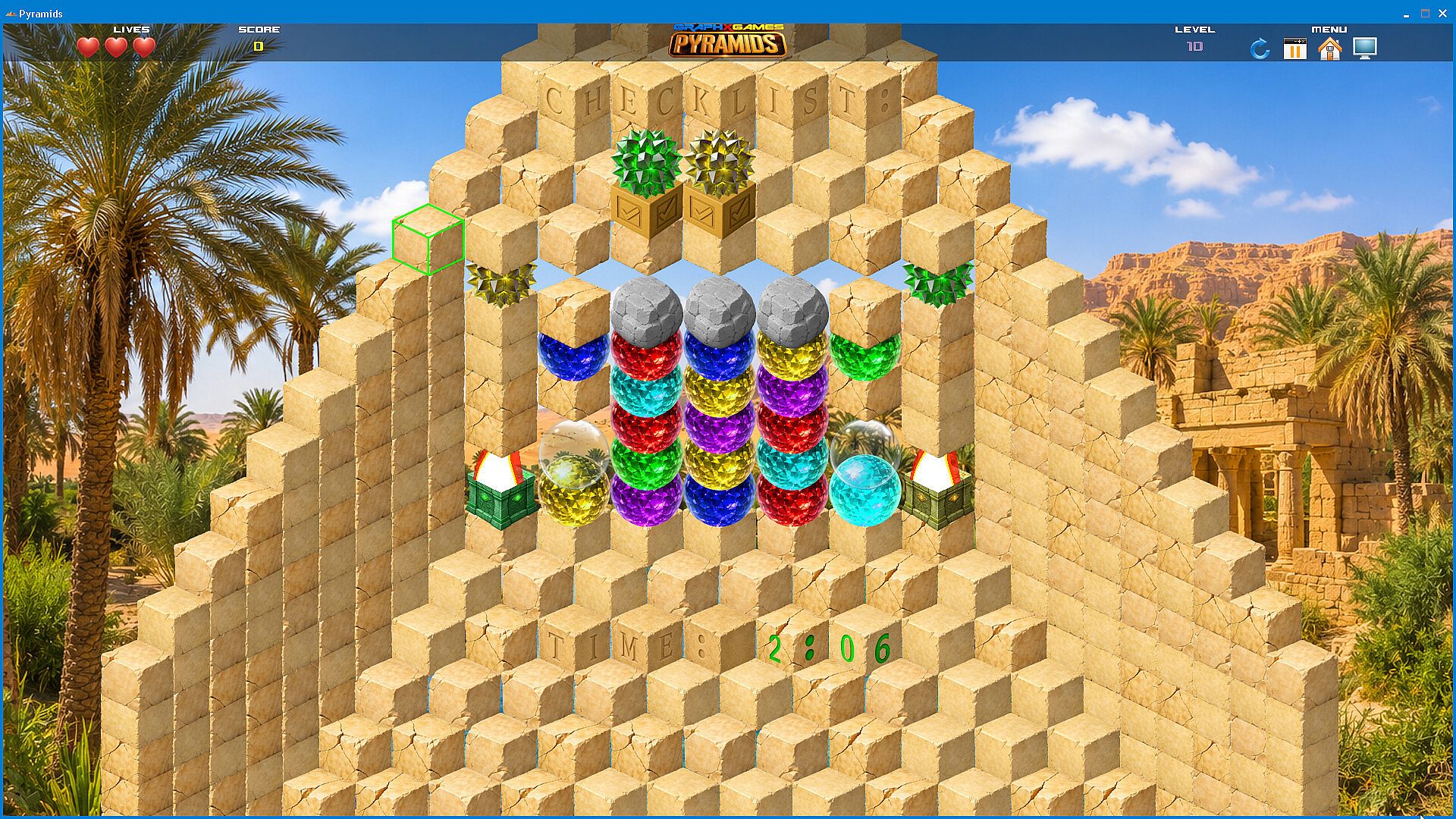
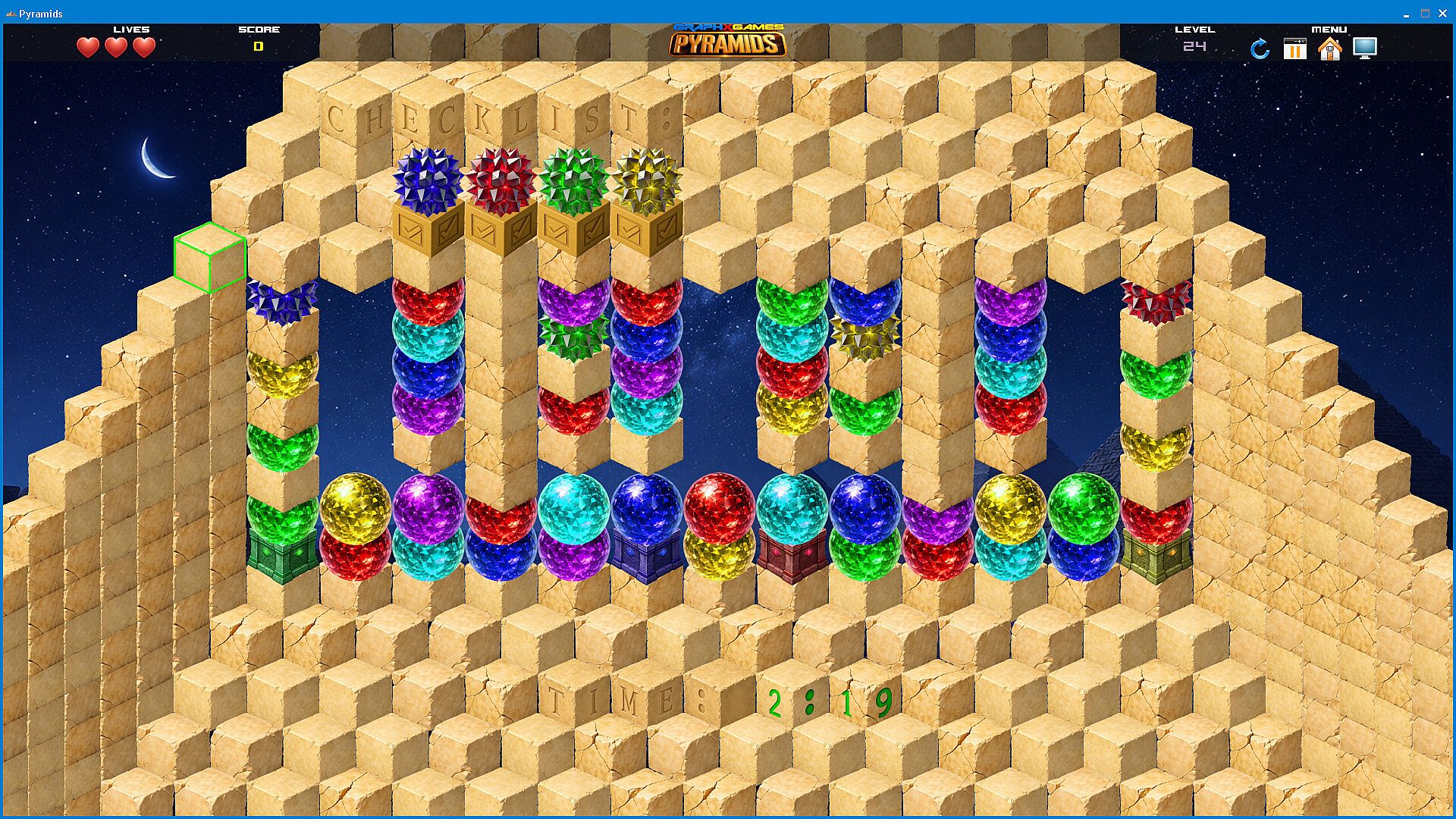
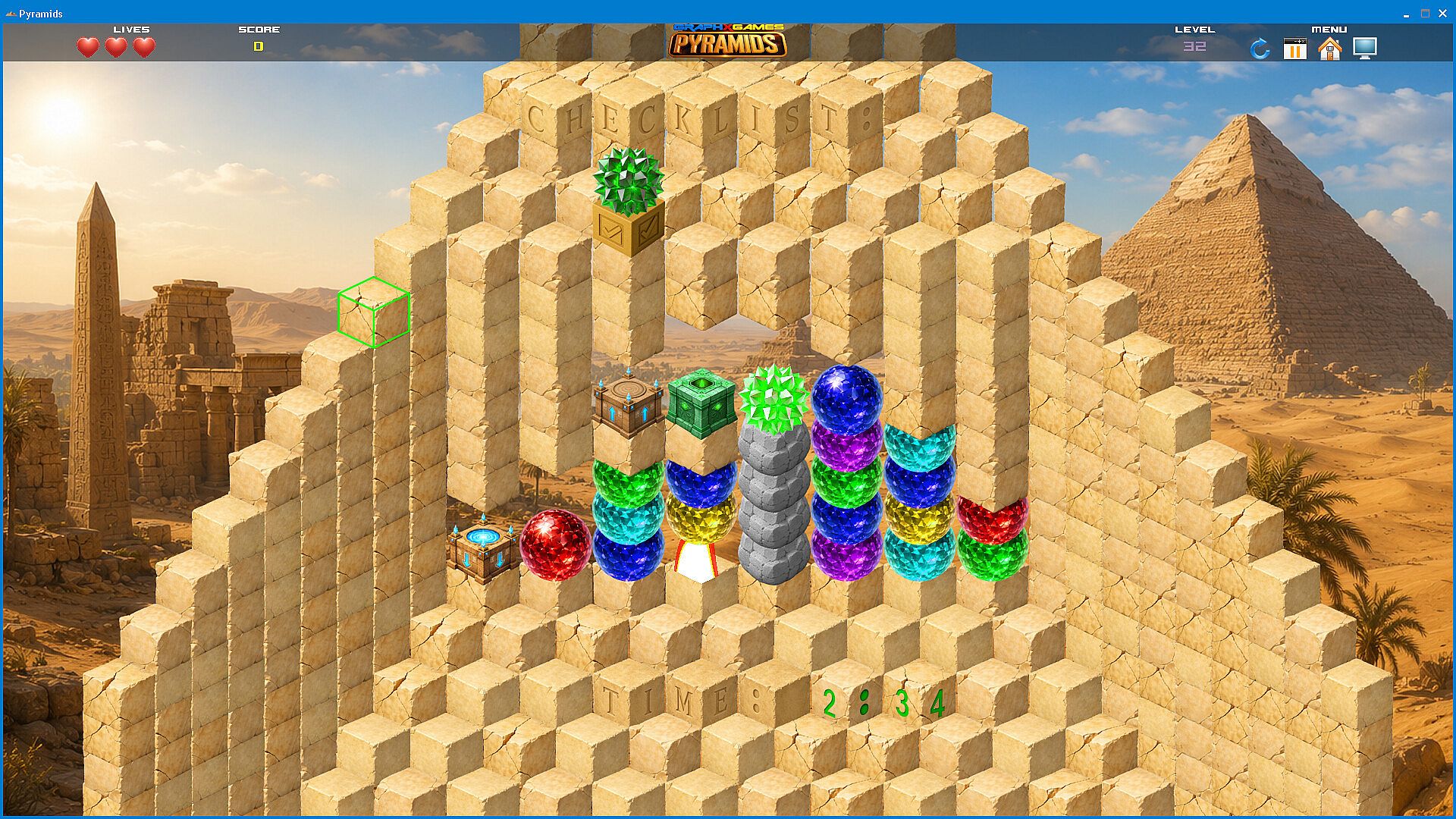
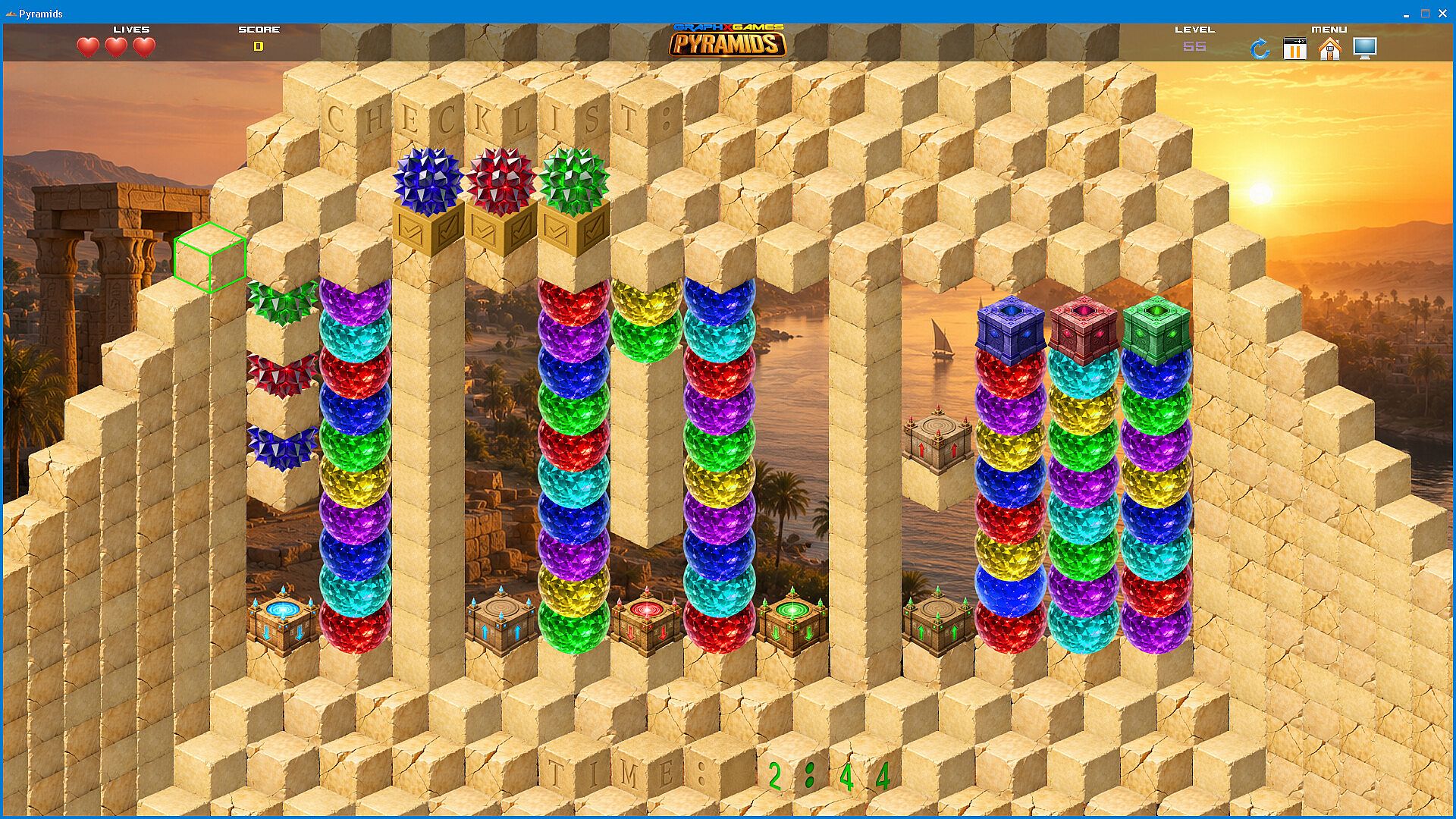
Each level presents a grid-based environment where gravity influences the movement of most objects. Stones, diamonds, and balls fall downward unless supported, while floating bubbles require external pushes to relocate. The central task involves guiding every diamond to its color-matched stand, but walls, stones, and other elements create barriers that demand careful rearrangement.
Fire acts as a destructive element that removes bubbles on contact and burns stones positioned directly above it. Balls of identical types merge and vanish when they touch, clearing space for new paths. Paired teleporters allow instant relocation of objects from one entrance to its matching exit, provided the destination remains clear. Players push movable items directly, exploit gravity for positioning, and sequence actions to avoid dead ends. A timer adds pressure, as delays or errors can lock the puzzle into an unsolvable state.
The mechanics reward forward planning and experimentation within tight constraints. Bubbles serve as temporary platforms or obstacles that disappear upon fire interaction, while stones provide weight for blocking or bridging. This combination creates layered problems where one action alters multiple elements simultaneously.
Game Modes
The game operates entirely in single-player mode with no additional variants or competitive options. All content centers on the sixty puzzle levels set within the pyramid theme. Progression involves completing these challenges in sequence, with each level building on the established rules of gravity, matching, and environmental interaction.
No separate difficulty settings, endless modes, or alternate play styles appear in the available information. The focus remains on mastering the full set of puzzles through repeated attempts and logical deduction.
Core Mechanics and Level Design
Levels incorporate a consistent set of interactive elements that interact in predictable yet complex ways. Gravity applies universally except to bubbles, forcing players to account for falling objects when planning moves. Teleporters introduce non-linear movement that can bypass direct paths or create shortcuts when used strategically.
Matching mechanics extend beyond diamonds to include ball combinations that remove obstacles. Fire provides both a hazard and a tool for clearing space. The clock mechanic encourages efficient solutions without turning the experience into a reflex test. Levels vary in layout and object density, ensuring each puzzle presents fresh arrangements of the same rule set.
Is It Worth Playing?
Pyramids targets players who enjoy deliberate puzzle solving with physical simulation elements. Its single-player structure suits solo sessions focused on completing all sixty levels through trial and refinement. The absence of multiplayer or extra modes keeps the experience streamlined around the core loop of object manipulation and pathfinding.
With a planned release in late 2026 and no reviews available yet, suitability depends on interest in gravity-based matching puzzles similar to other indie logic titles. Those who appreciate careful sequencing and environmental problem solving will find the mechanics engaging, while players seeking variety or social features may prefer other options. The modest system requirements and family-sharing support make it accessible for a broad range of PC users once available.