







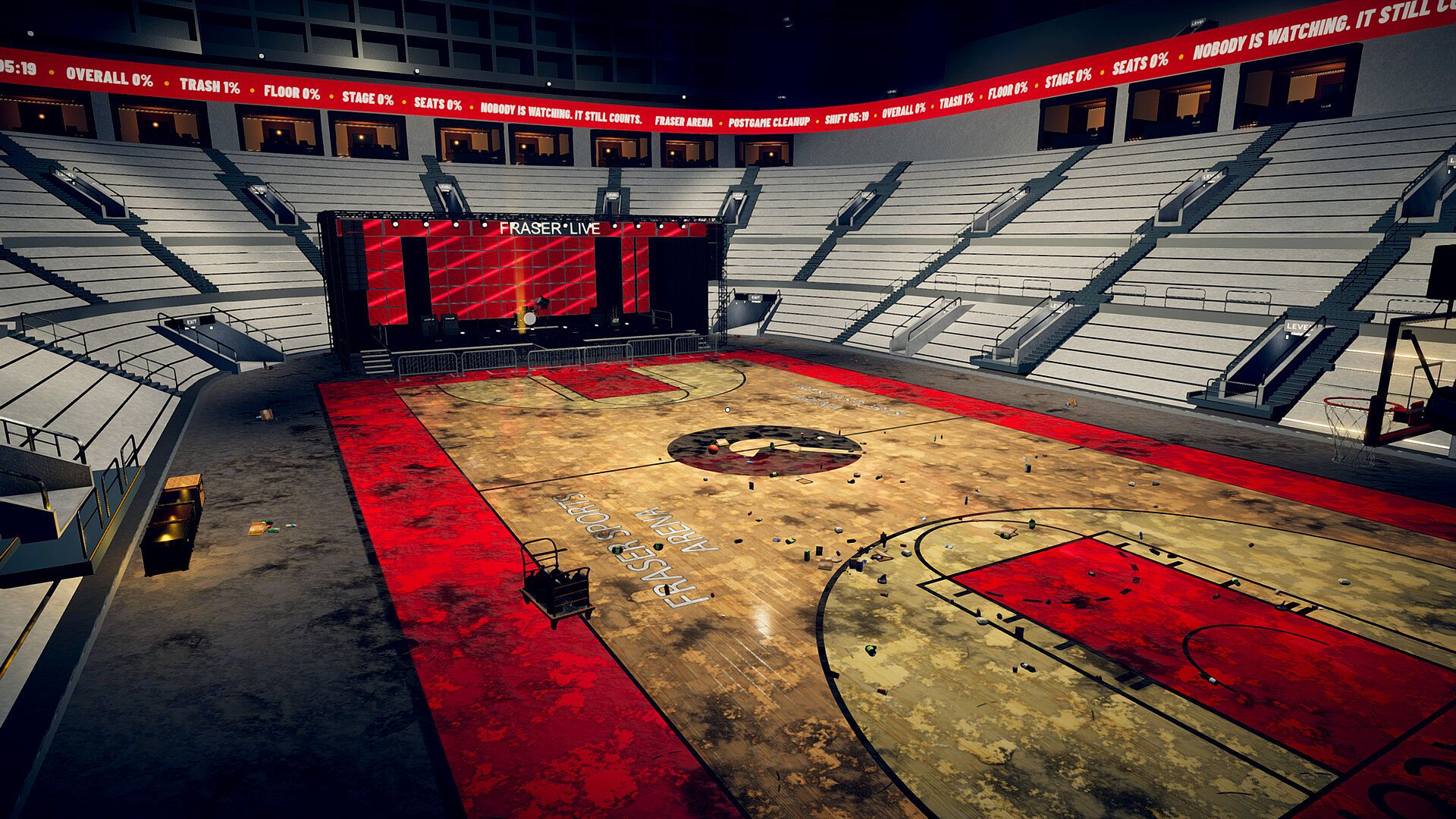
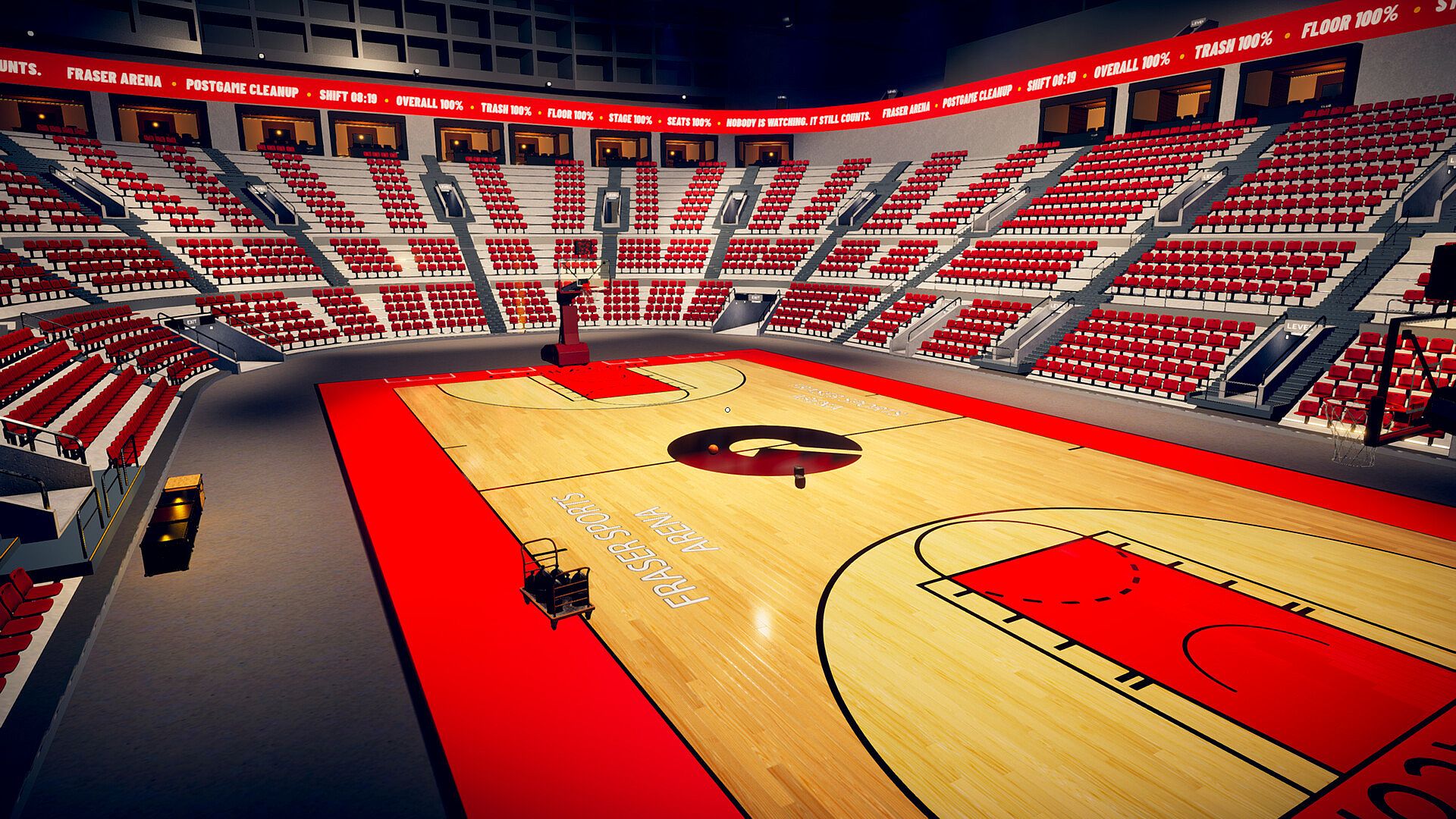
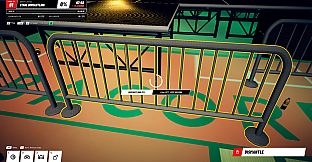
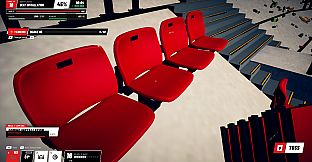
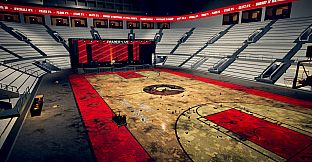

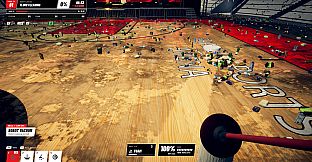
POSTGAME is a single-player simulation game in the casual and sports genres where players restore a full-size basketball arena after a concert. The core loop centers on methodical cleanup and reconfiguration tasks using a cart and four distinct trades to prepare the venue for the next event.
Gameplay
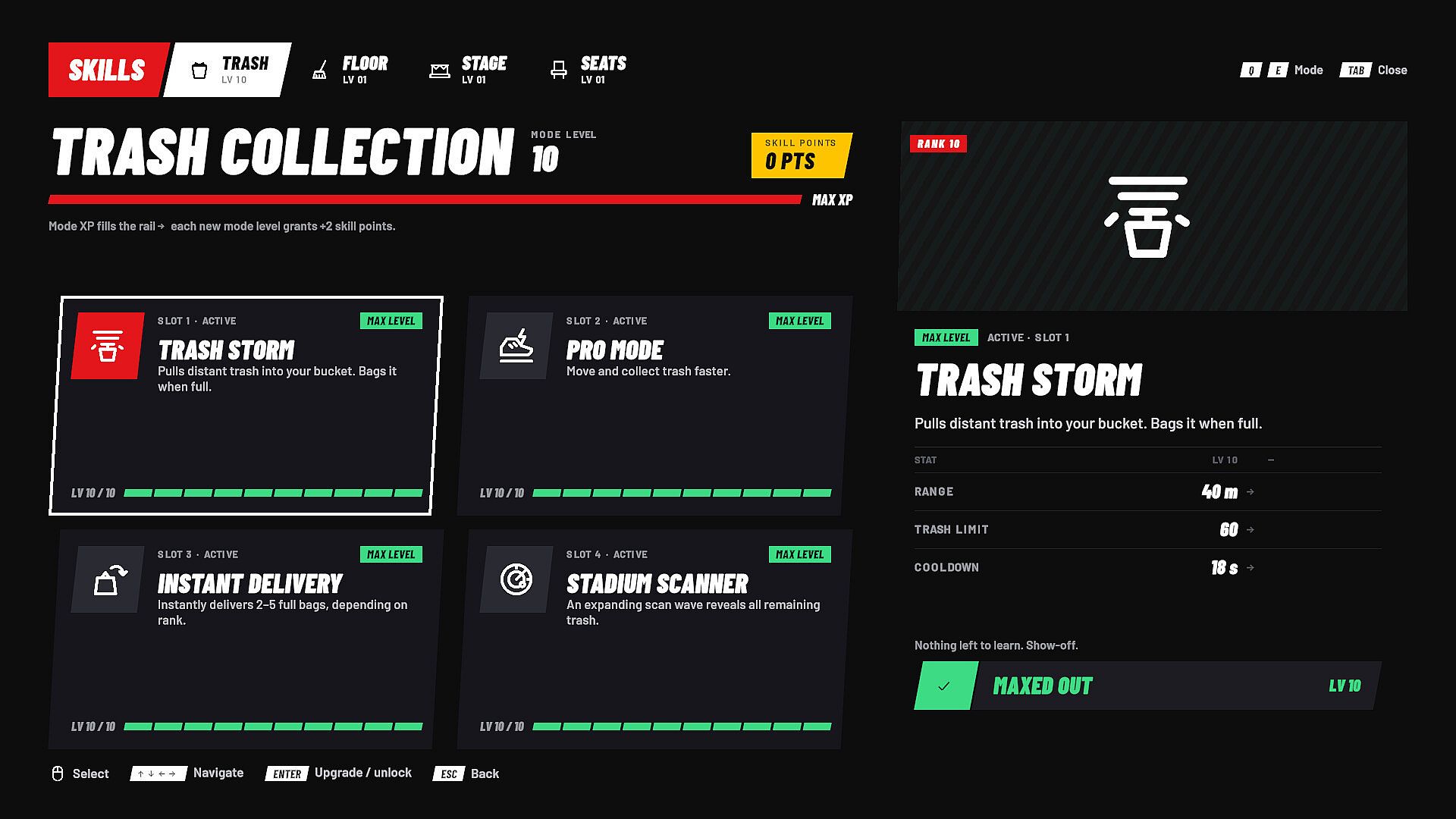
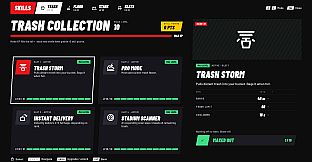
The experience unfolds across one expansive arena filled with more than 13,000 pieces of trash, 370 stage parts, and 3,700 seats. Players manage a single shift with one cart, progressing through four trades that each feature their own progression level and four skills. Skill points are limited, requiring deliberate choices about which abilities to unlock and upgrade.
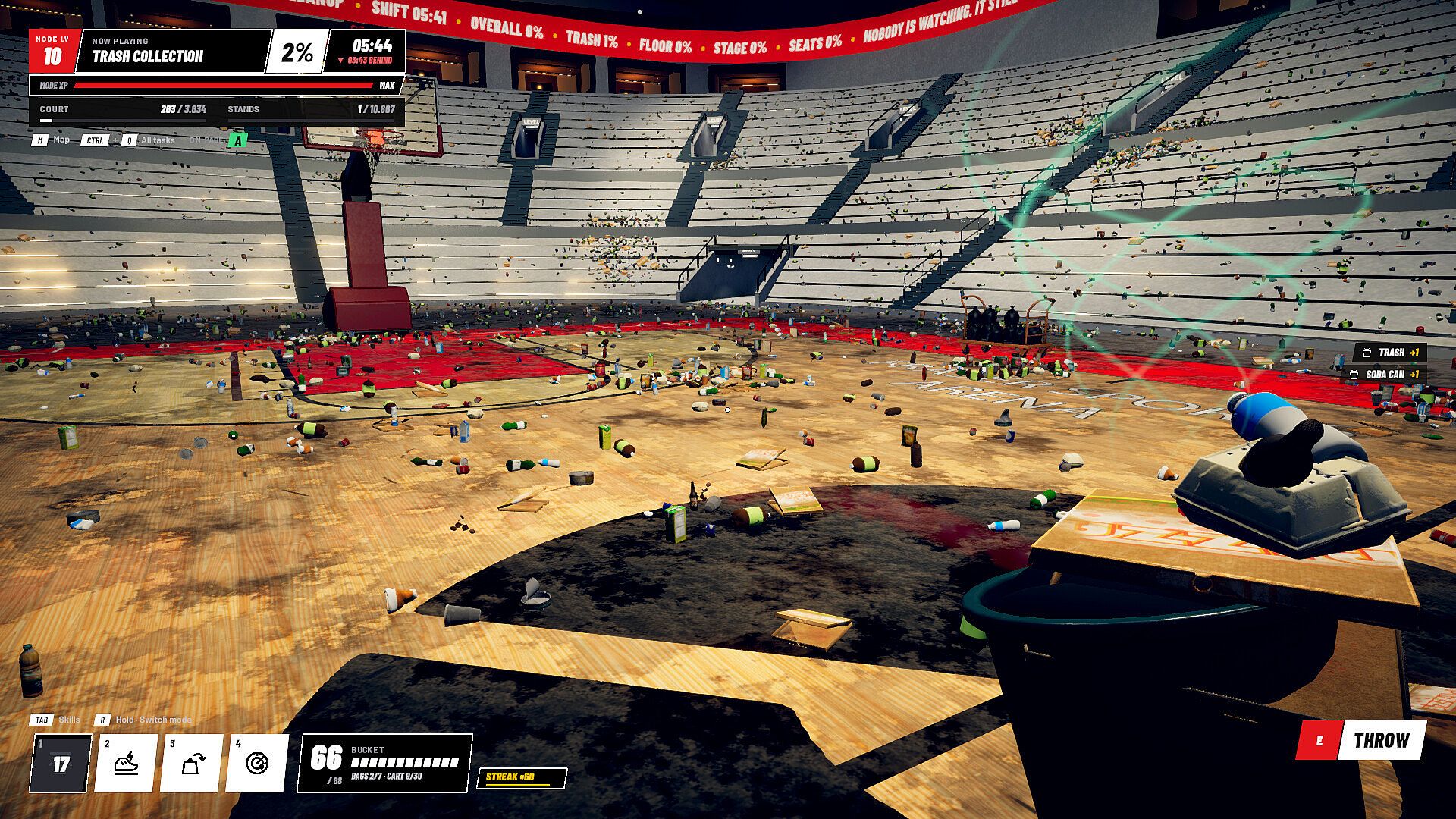
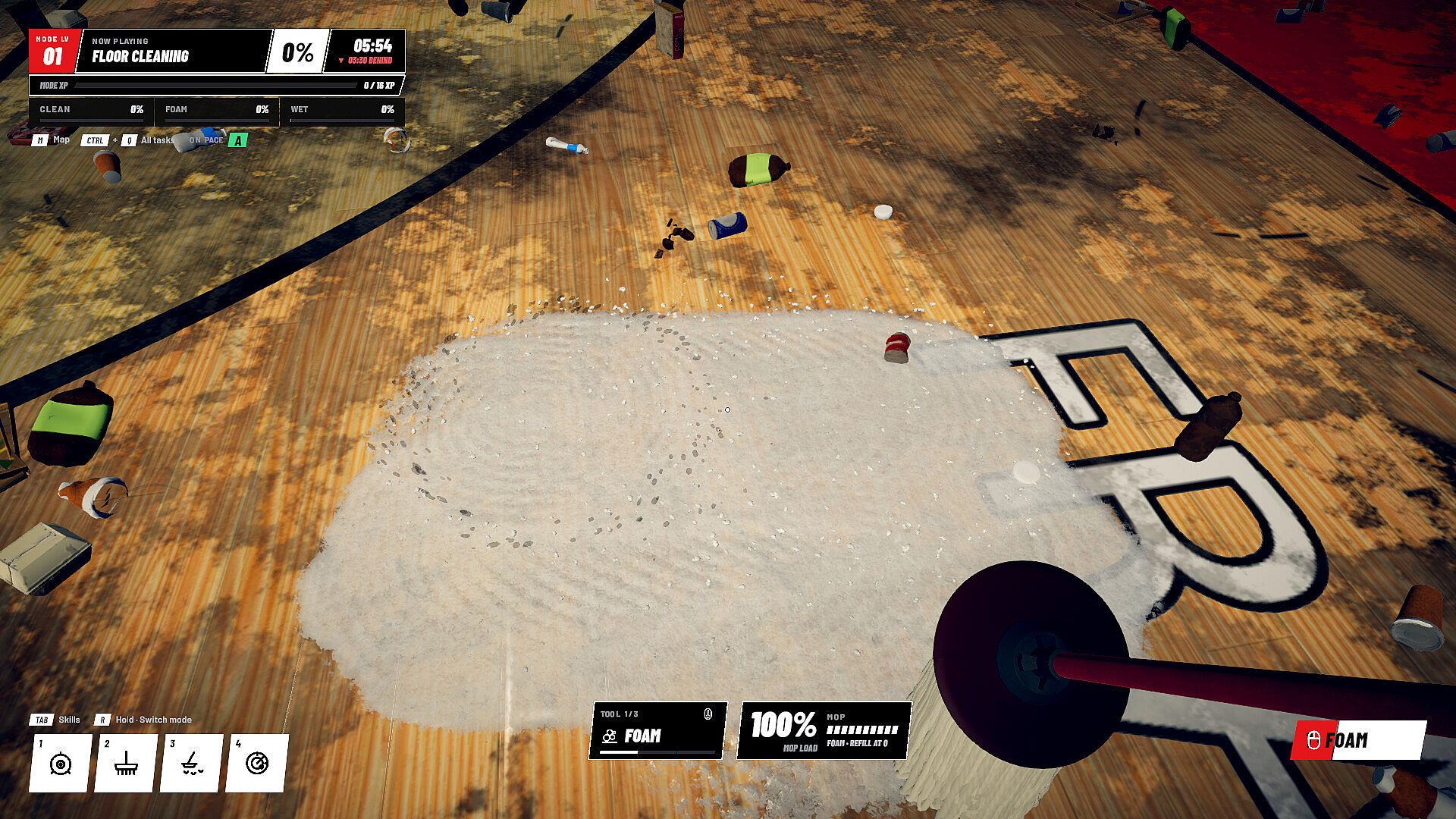
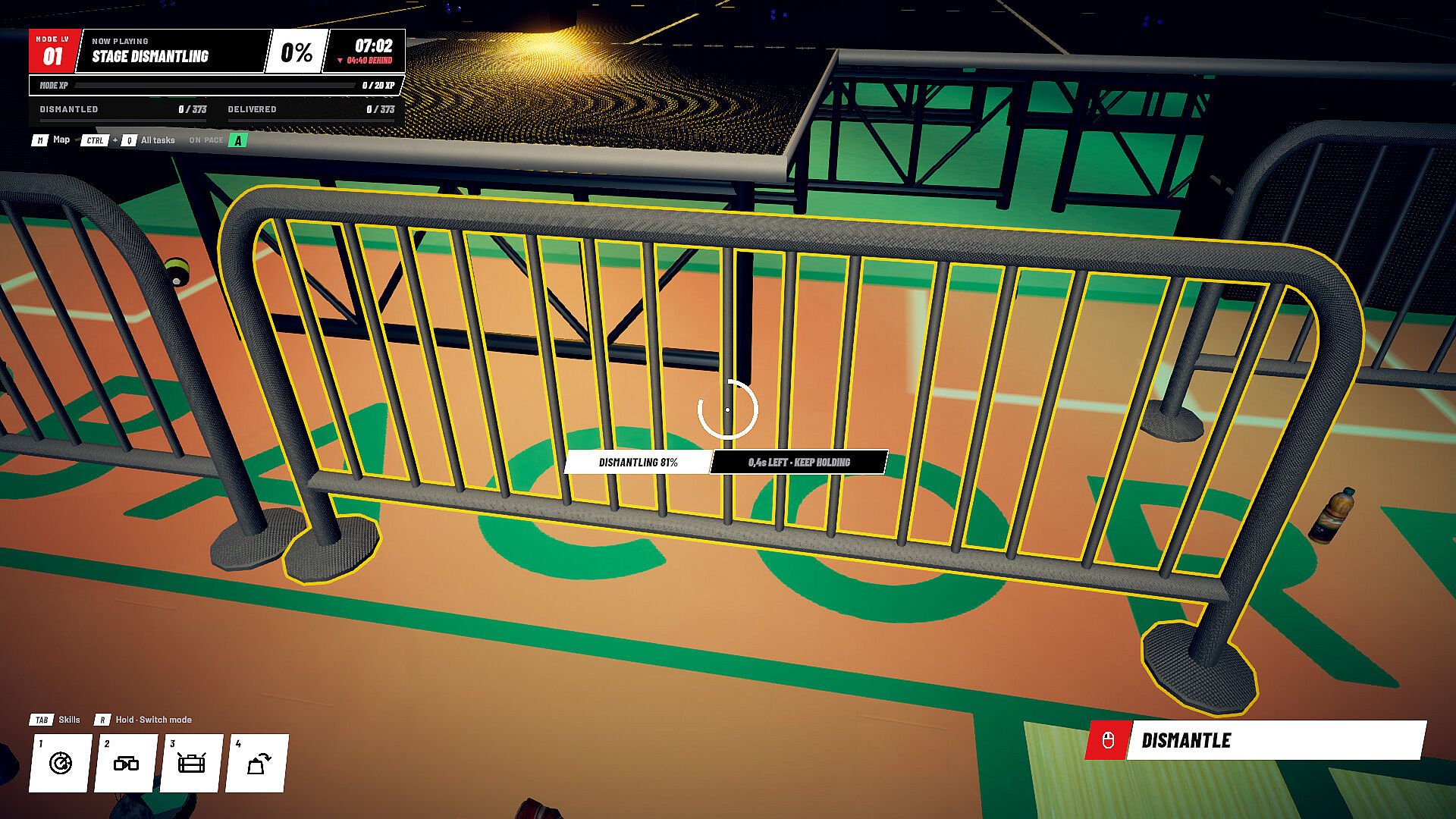
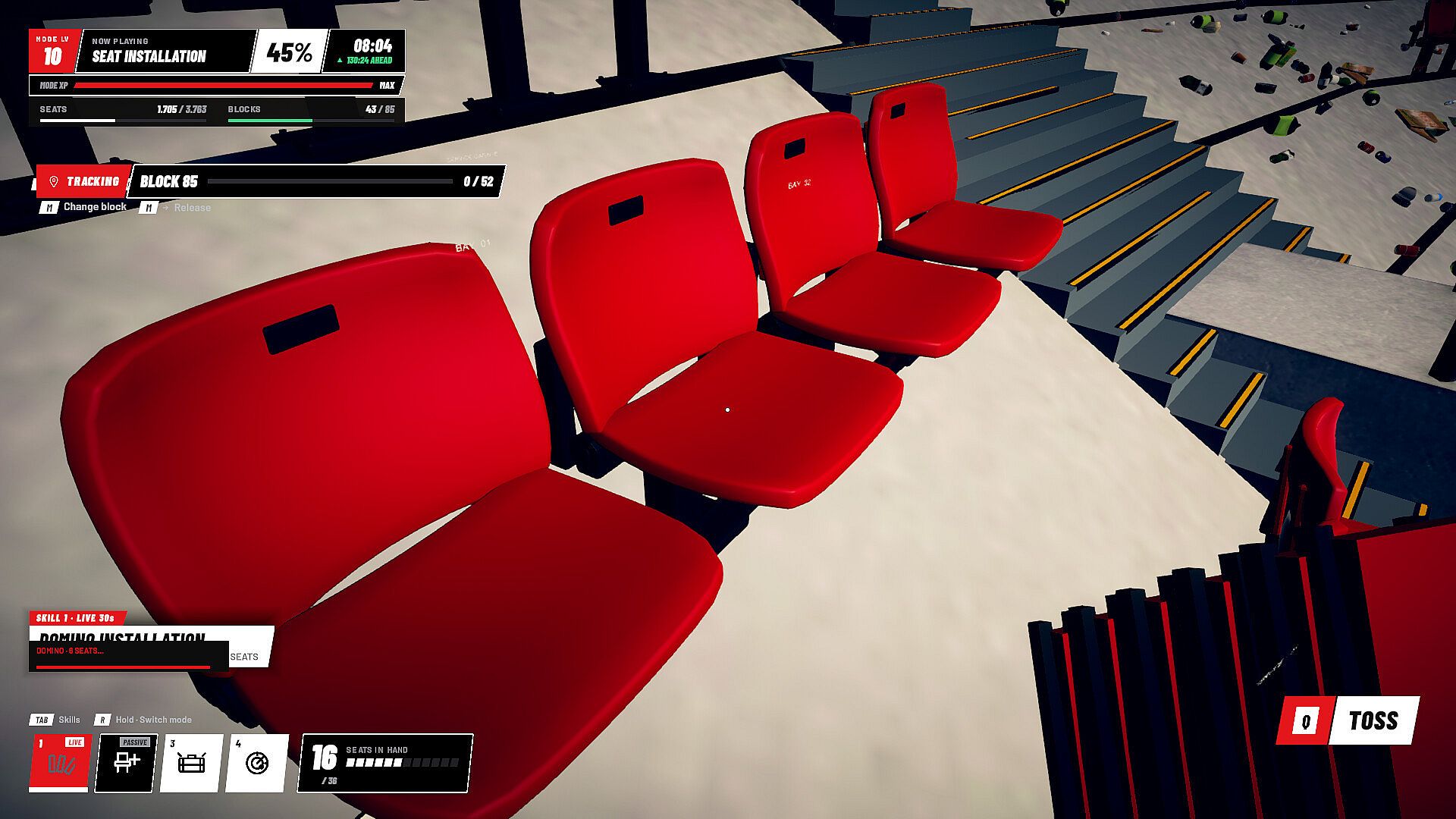
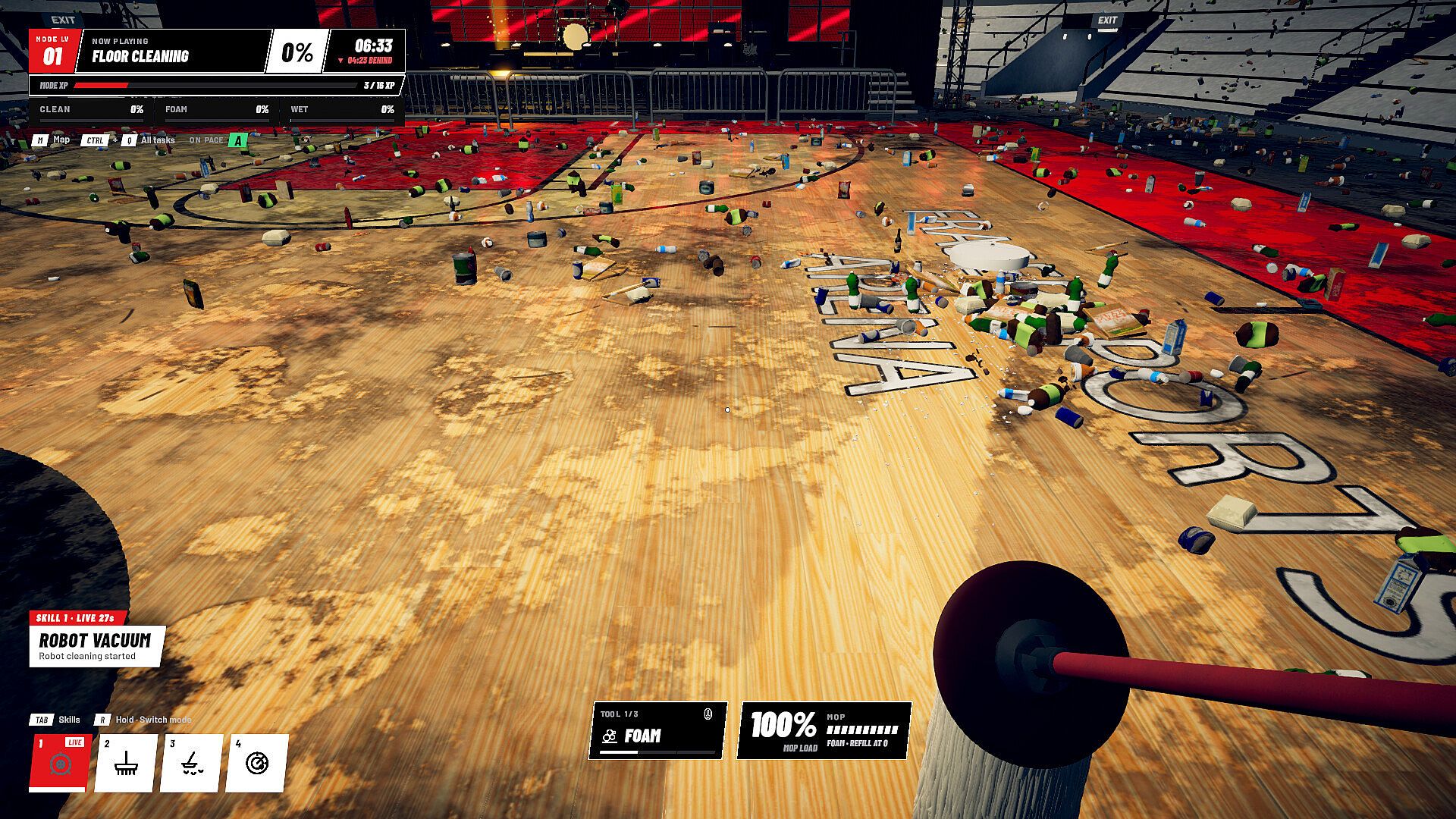
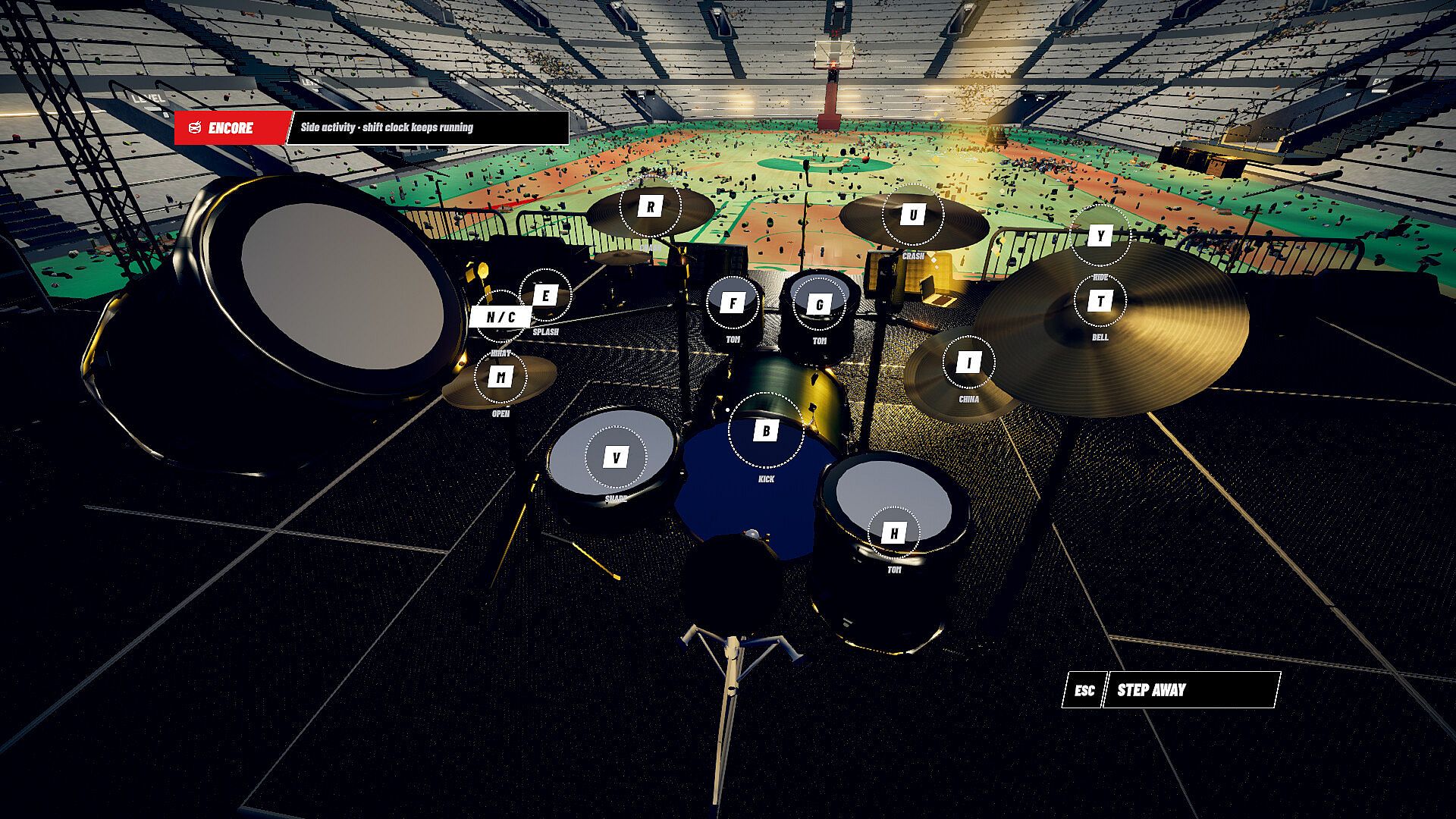
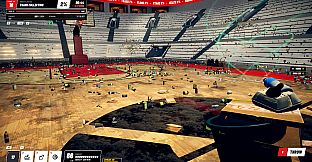
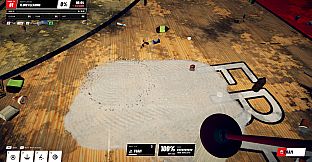
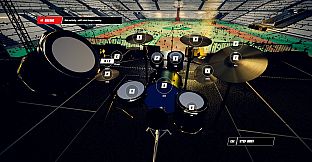
Trash collection involves clicking litter into a bucket, tying full bags, and loading them onto the cart or directly into a truck. A hidden key activates Trash Storm, drawing debris from across the court into the bucket. Mopping requires applying foam, rinsing, and drying the floor, with a robot vacuum available to assist and night vision revealing missed spots. Dismantling the concert stage means cutting power first, then breaking down barriers, trusses, decks, and the drum kit piece by piece before packing everything into flight cases. Installation brings folded seats up from the depot and snaps them into place row by row, with domino installation allowing a sequence of seats to deploy automatically.
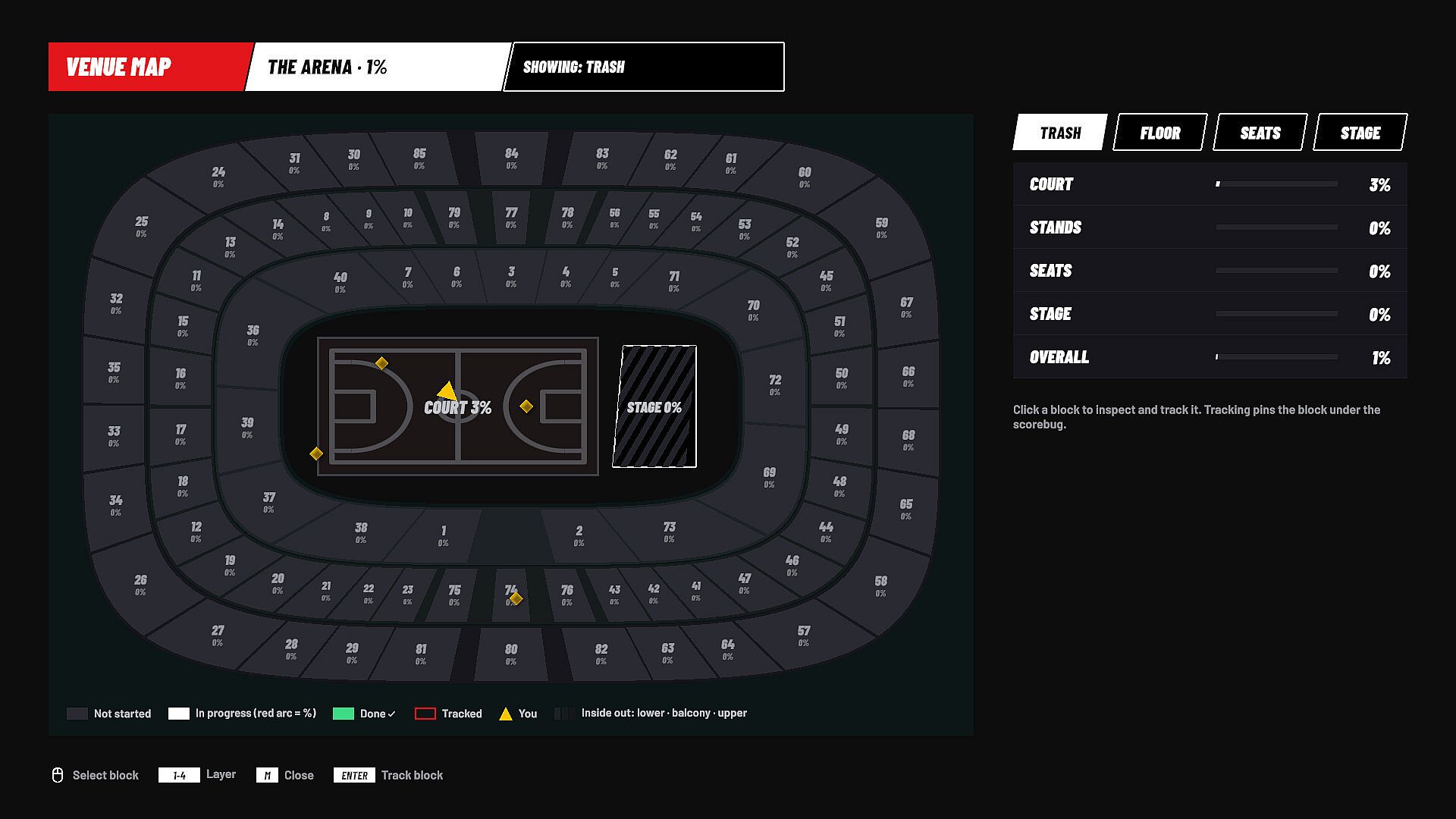
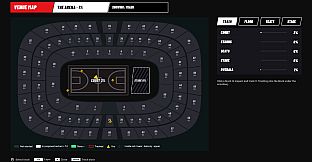
A venue map tracks completion percentages for every block, while a scanner highlights remaining items. Four keys scattered throughout the building unlock chests that expand skill slots. Players can interact with the drum kit before packing it and toss full trash bags through the basketball hoop. Controls support keyboard and controller with full rebinding, plus options for interface scaling, high contrast, reduced motion, and Xbox or PlayStation button prompts.
Game Modes
POSTGAME structures its activities around four trades that function as the primary modes of play. Collect focuses on gathering and managing litter with tools like Trash Storm. Mop emphasizes floor restoration using foam, water, drying techniques, and support equipment such as the robot vacuum. Dismantle handles the careful breakdown of temporary concert structures. Install reverses the process by positioning and securing seating in sequence.
Each trade operates independently with its own level and skill tree, allowing players to tackle sections of the arena in any order while the shift clock records overall pace and assigns a final grade from C to S. The single arena serves as the complete environment, with no additional modes or campaigns available at launch.
Progression and Features
Skill selection drives meaningful decisions because points cannot cover every option across the four trades. Hidden keys and chests provide extra slots to expand capabilities over time. The absence of a timer pressure encourages careful, thorough work, while the scanner and map prevent aimless searching. Accessibility settings accommodate different play styles, and the game supports both keyboard and controller input seamlessly.
One full pass through the arena typically requires around five hours, though players can save and exit at any moment. The interface appears in English and Turkish, with no co-op or narrative elements present.
Is It Worth Playing?
POSTGAME suits players who enjoy deliberate, task-oriented simulation experiences focused on restoration and organization. The four trades create a structured yet flexible loop that rewards attention to detail and efficient routing across the arena. Those who prefer open-ended creative building or competitive multiplayer will find the scope limited to one venue and solo play at launch.
With no story campaign or additional content confirmed beyond the core arena, the game appeals most to fans of methodical cleanup and setup mechanics who value completion grading and skill customization. Accessibility options and control flexibility broaden its reach for players seeking a focused, repeatable session without external pressures.