







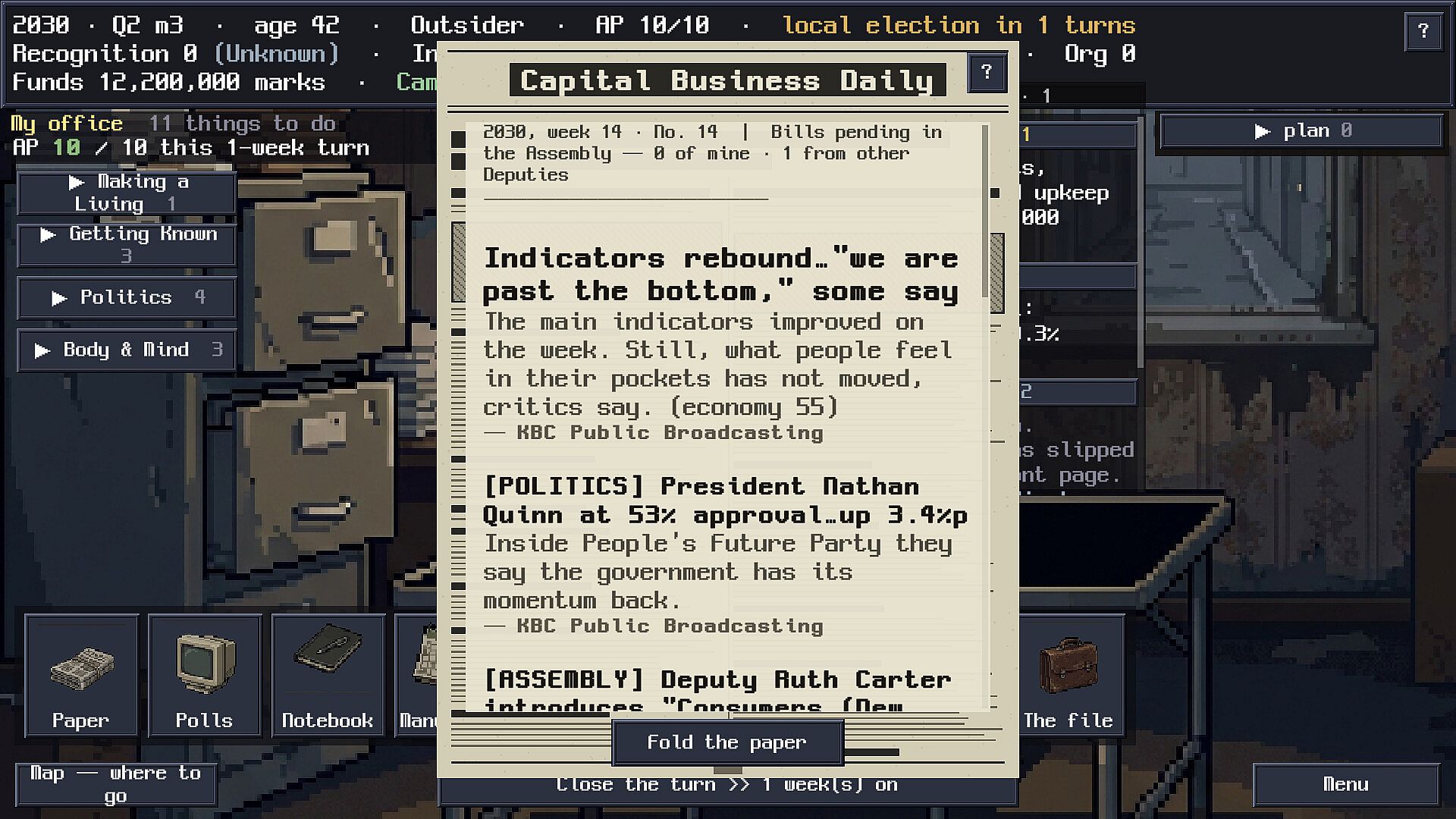
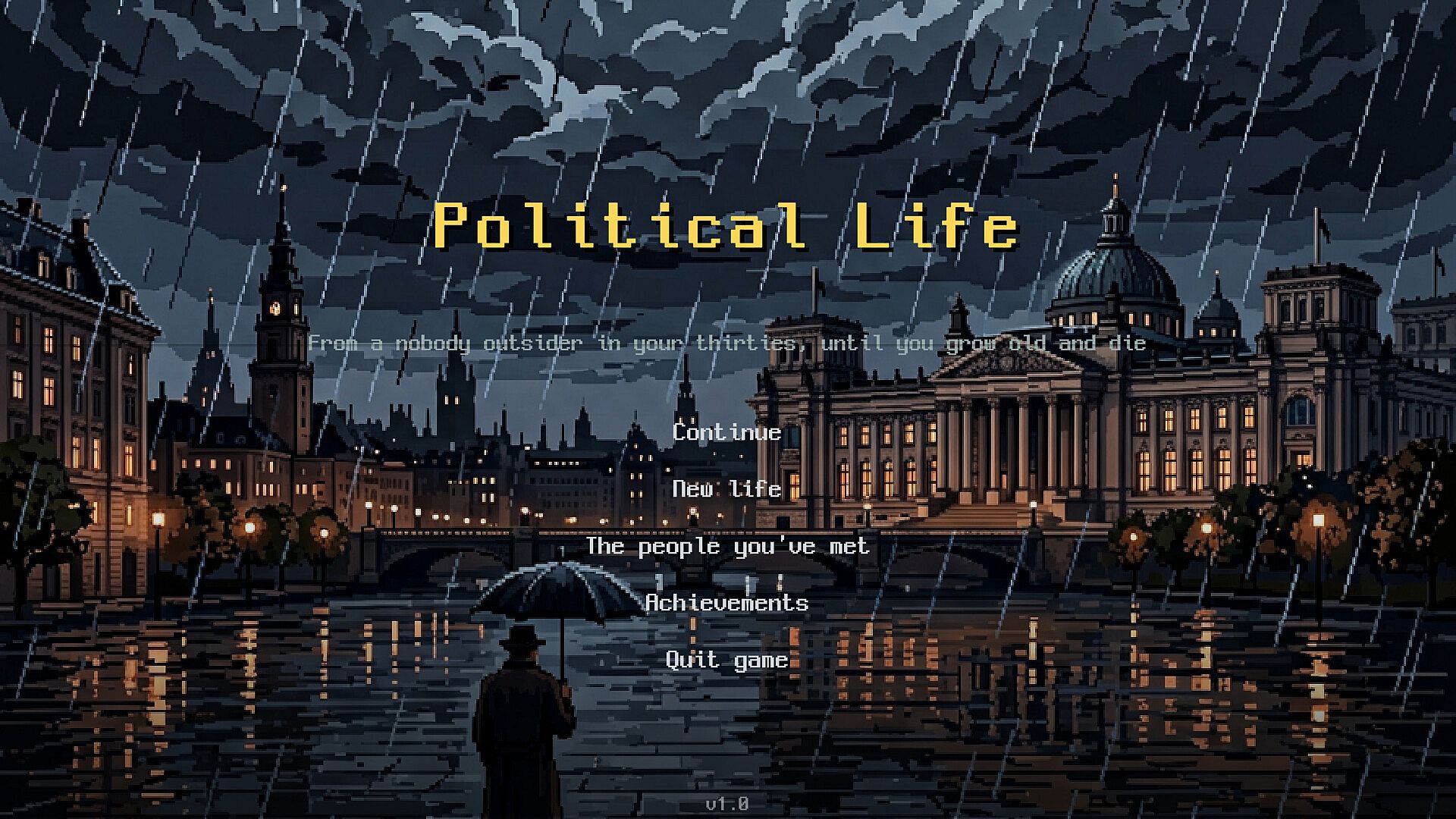

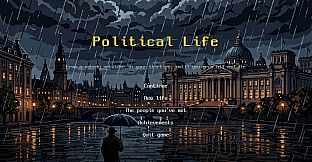
Political Life is a single-player political simulation game set in an invented republic. Players step into the shoes of a middle-aged professional who leaves a prior career to enter politics with no established organization, donors, or seat. The experience unfolds across a full lifespan measured in quarterly turns, where every decision shapes both immediate outcomes and a lasting legacy recorded in an obituary and headstone upon death.
Gameplay
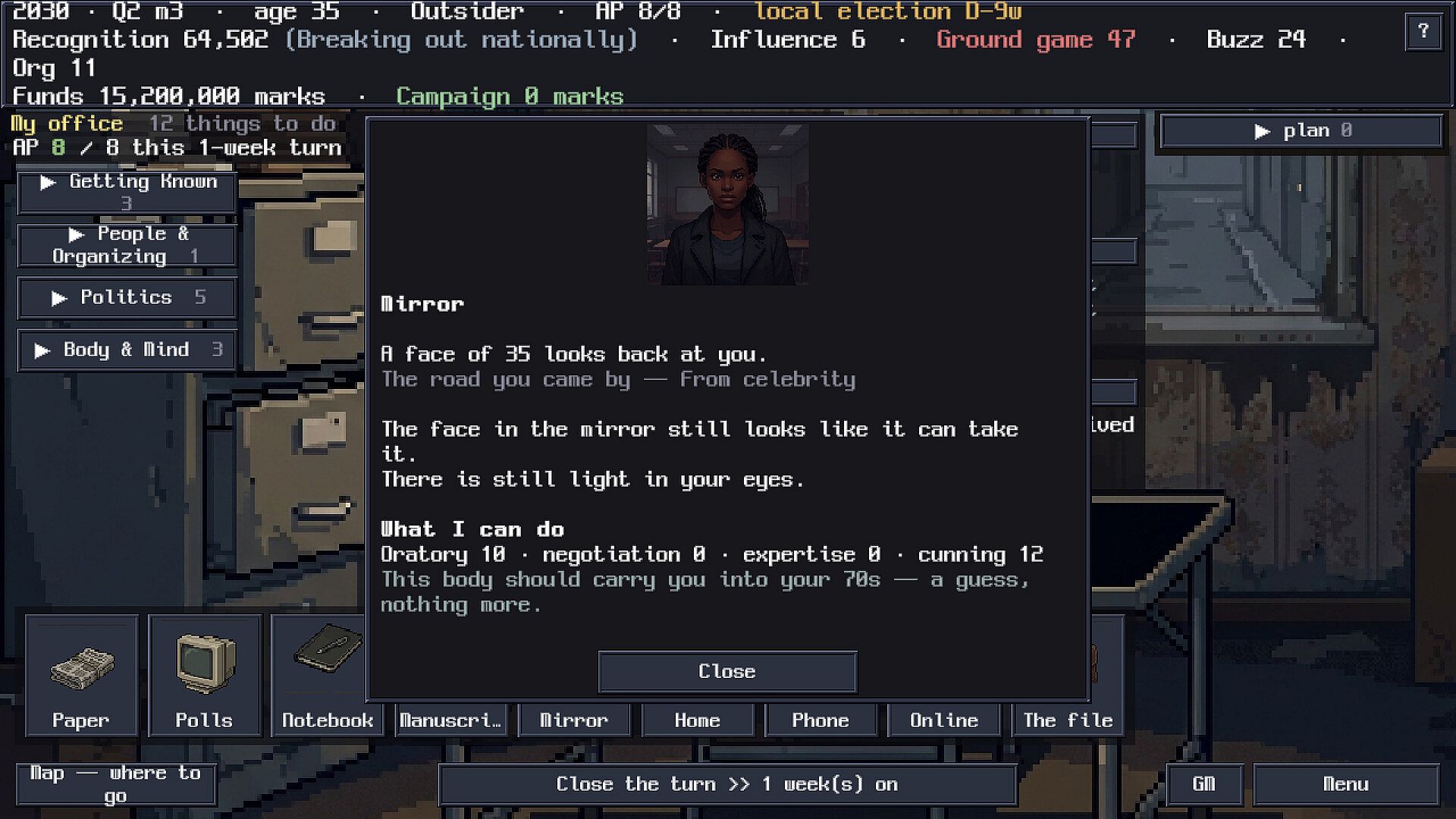
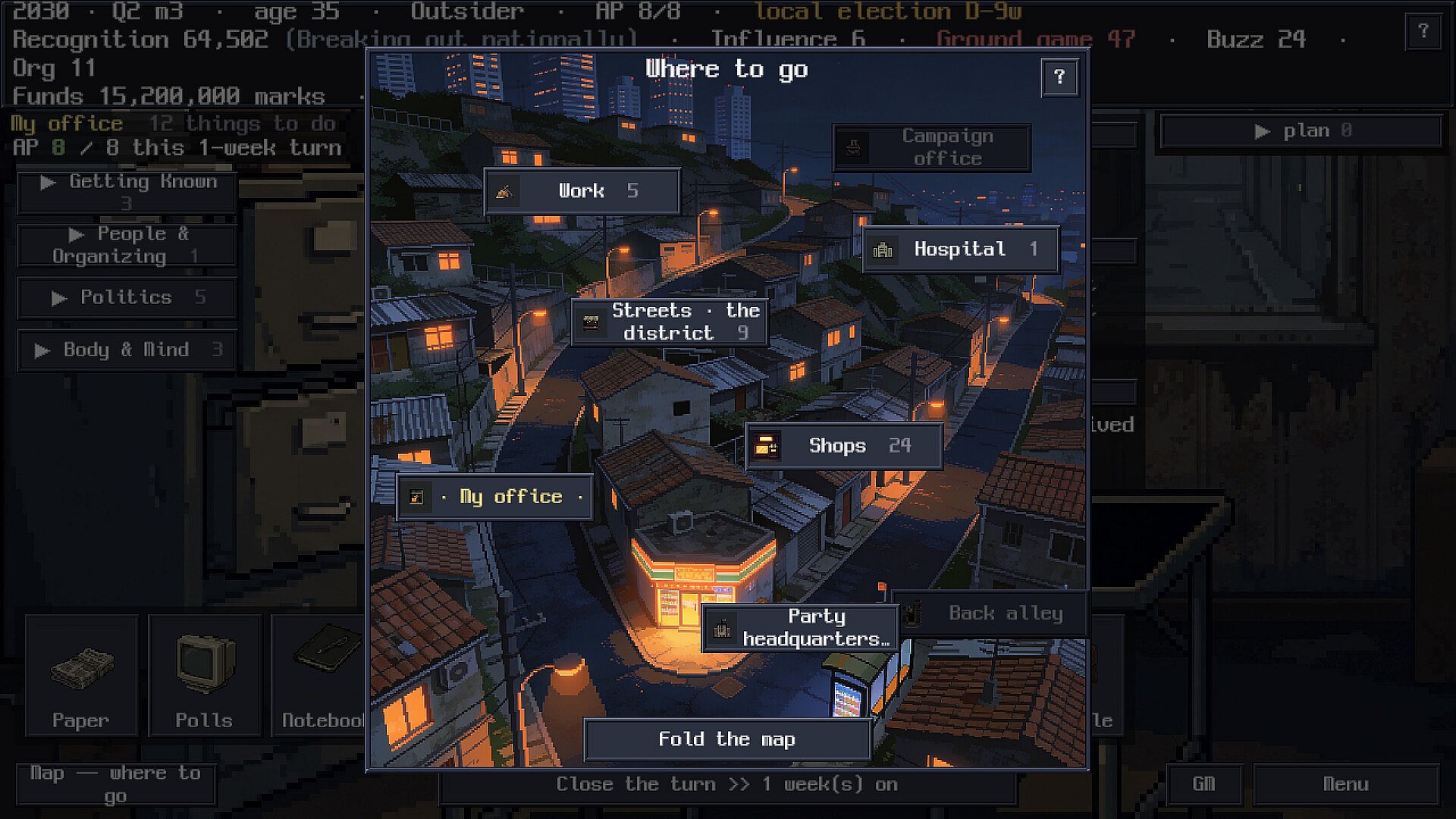
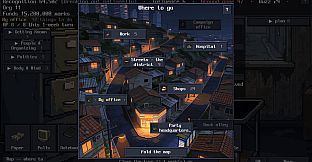
The core loop centers on managing time and resources across three-month periods that accumulate into decades of political life. Players select from 146 possible actions each quarter, drawn from 17 distinct locations that range from a personal room to party headquarters, legislative chambers, hospitals, and back alleys. Actions taken in one location cannot be replicated elsewhere, forcing careful prioritization of the quarterly budget. Health remains hidden, revealed only through narrative descriptions such as longer stair climbs or disrupted sleep, which gradually reduce the number of effective actions available. Players must weigh pursuit of higher office against personal maintenance, as deferring care carries compounding costs without any visible meter or timer.
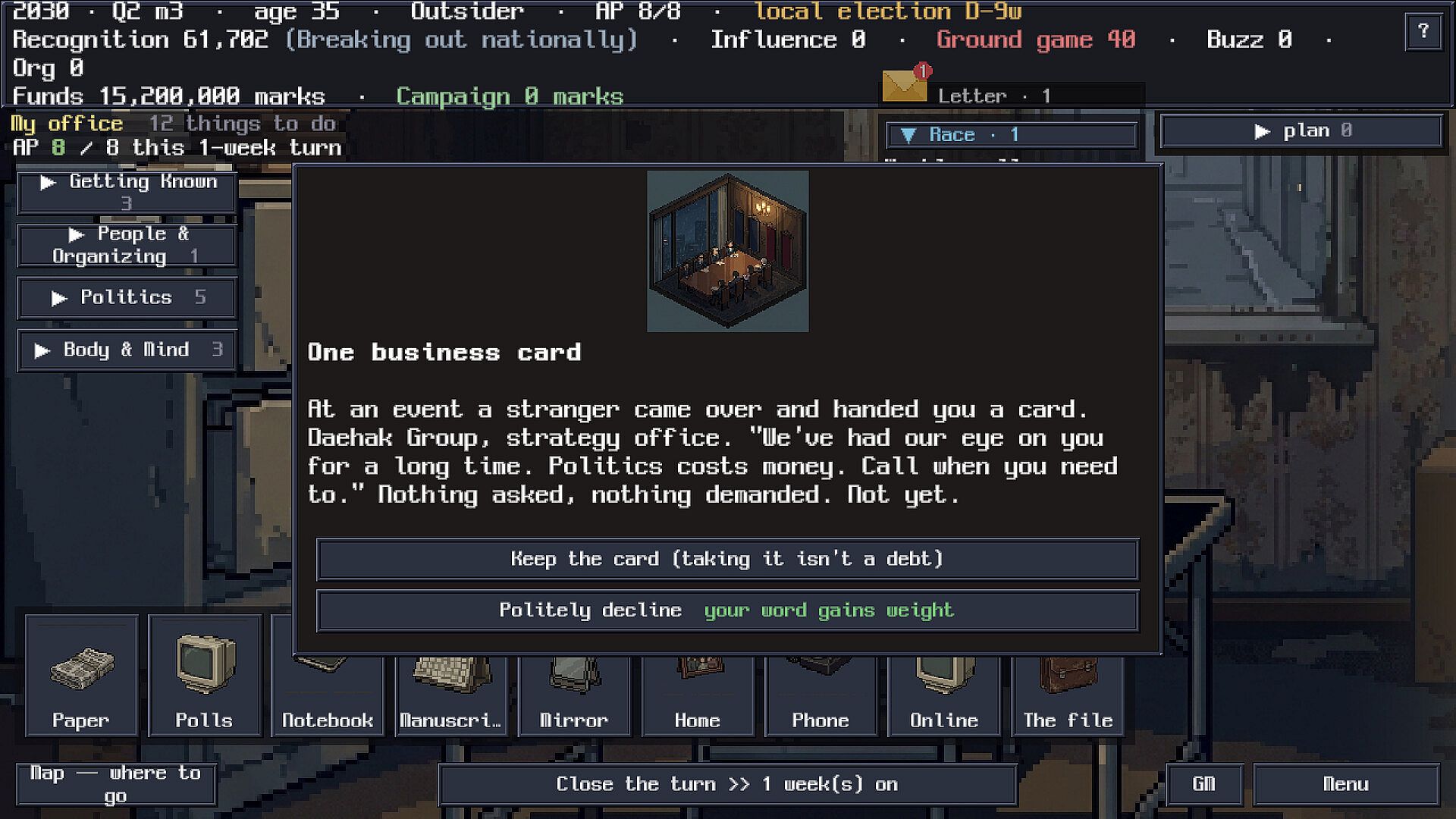
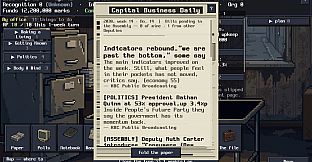
Bills form through modular assembly rather than direct writing. A target, a means, and a funding source combine from 160 building blocks to generate thousands of possible laws. Each combination carries distinct voter consequences, and legislation passed in one session becomes material for future repeal or amendment. Ideology emerges automatically from the record of votes, statements, and passed acts, with inconsistencies flagged by reporters and preserved for later scrutiny. The Red File compiles both scandals and achievements, surfacing lines from decades earlier during press conferences or ethics hearings. Responses to these confrontations depend on the thickness of accumulated evidence, with options including denial, evasion, or reframing that influence subsequent questions.
Rank determines available tools and constraints. Early positions allow basic bill sponsorship, while higher offices introduce mechanics such as pinning multiple bills into sitting slots, trimming nomination slates, balancing competing benches as speaker, signing unread legislation as minister, banking speaking time as a candidate, or cutting wires between simultaneous crises as president. Each promotion replaces the prior board with new objects and decisions rather than simply scaling numbers upward.
Game Modes
The game operates as a single continuous career simulation without separate modes or branching campaigns. Nine starting backgrounds establish different ages, starting funds, and initial file entries, each launching a distinct life path that runs between one and two hundred quarterly moves. Elections compress the turn structure temporarily to monthly or weekly intervals, but the underlying loop remains the management of one politician's trajectory from outsider to potential president and beyond. No separate multiplayer, scenario editor, or alternate play styles appear; every run follows the same structure of quarterly planning, event resolution, and accumulating reputation that determines the final obituary.
Key Systems and Progression
Progression ties directly to rank and reputation rather than experience points or levels. Opening the map reveals work available only in specific sites, and committing actions produces three-month outcomes that rarely match initial plans due to intervening events. The 640-plus events and 500 press questions draw from the player's own history, ensuring questions reference prior statements or votes. Fourteen minigames activate only after reaching the relevant office, providing specialized challenges tied to speaker, minister, or presidential duties. Achievements track 50 specific accomplishments across runs, while 22 ending archetypes reflect different combinations of reform, corruption, or obscurity in the final record.
The fictional setting maintains consistent internal rules for factions, nominations, whipping, and election nights without referencing real-world parties or figures. Every character, organization, and newspaper remains invented, allowing the mechanics of coalition building, bill passage, and scandal management to stand alone.
Is It Worth Playing?
Political Life suits players interested in deep, systems-driven political simulation that emphasizes long-term consequence over immediate victory conditions. The absence of a clear win state and the focus on posthumous reputation reward careful planning across an entire career rather than short-term optimization. Early Access status means the experience centers on the core loop of quarterly decisions, modular legislation, and reputation tracking described in the available build. Those who enjoy managing hidden variables, navigating procedural events drawn from personal history, and accepting that legislation always costs some voters will find the structure engaging. Players seeking fast-paced action or explicit multiplayer elements will encounter a slower, more deliberate pace centered on one life at a time. The game remains available on PC in its current Early Access form for those drawn to its particular blend of simulation depth and narrative consequence.