




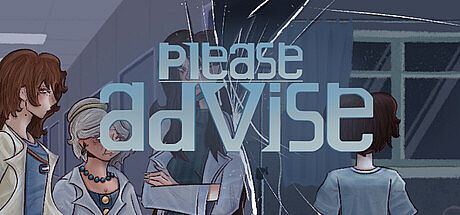


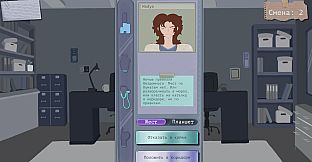
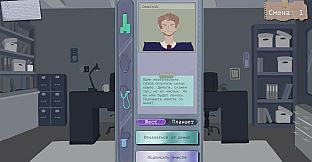
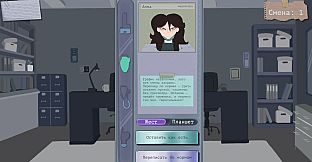
You've been sent to Hart Clinic with the authority of an outside auditor. Officially, to check the books and the finances. You have another reason.
Your uncle died here two years ago. The death was recorded as suicide. You do not believe it.
He was working on a treatment that could give a voice back to people with congenital speech disorders. Shortly before he died, he said he was almost finished.
You cannot speak yourself. That is not a mood detail, it is something you work around every shift.
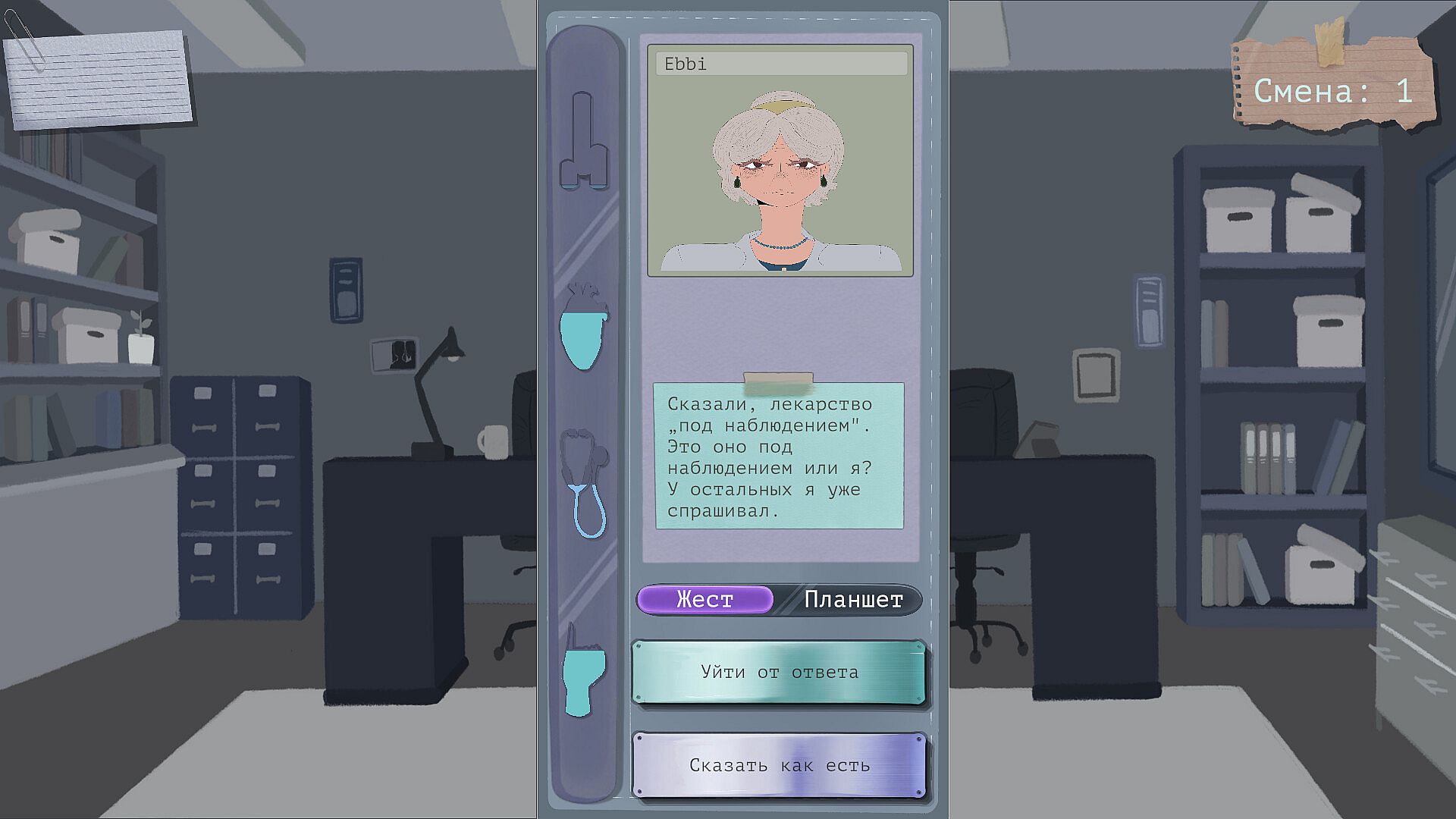
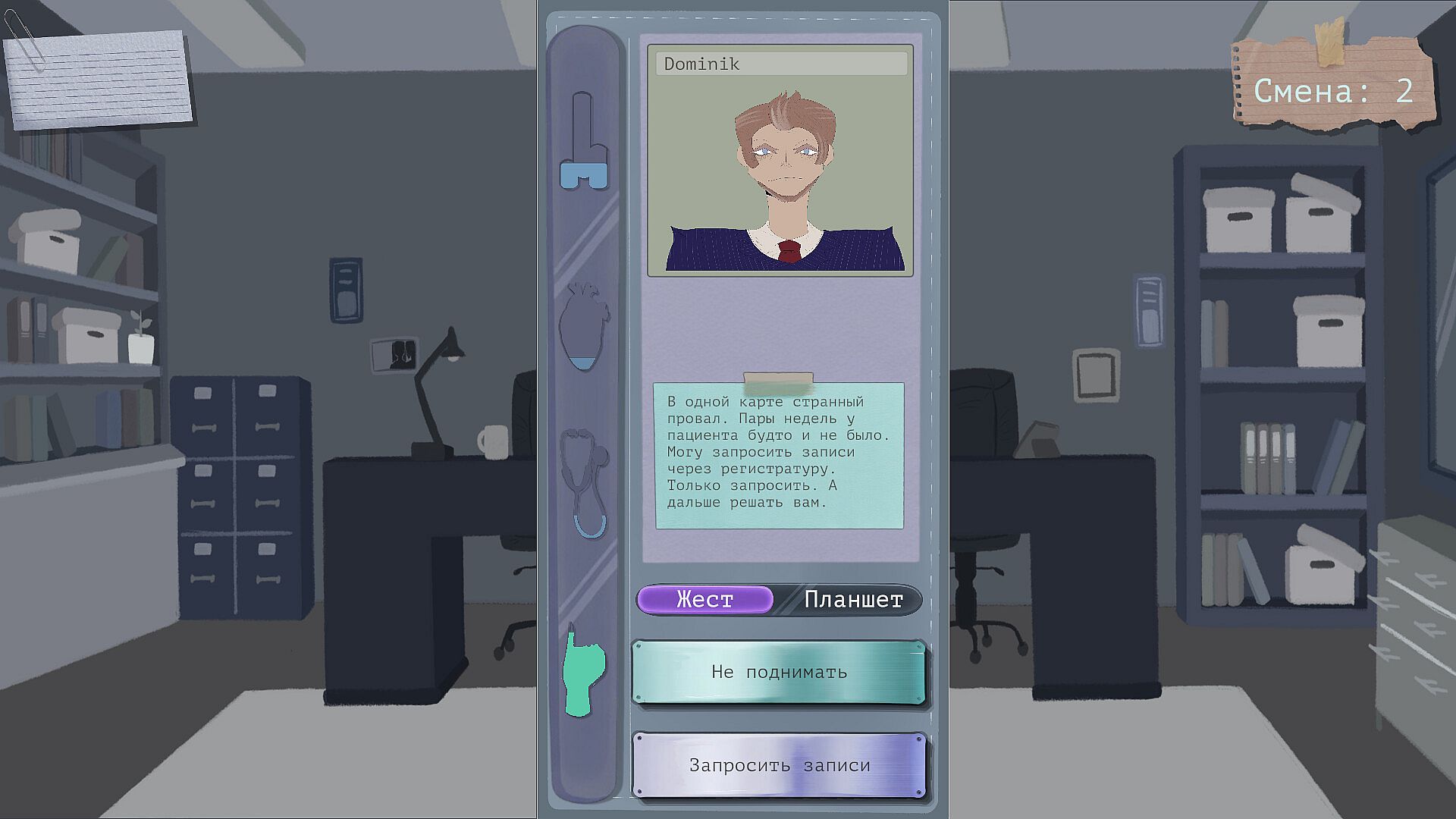
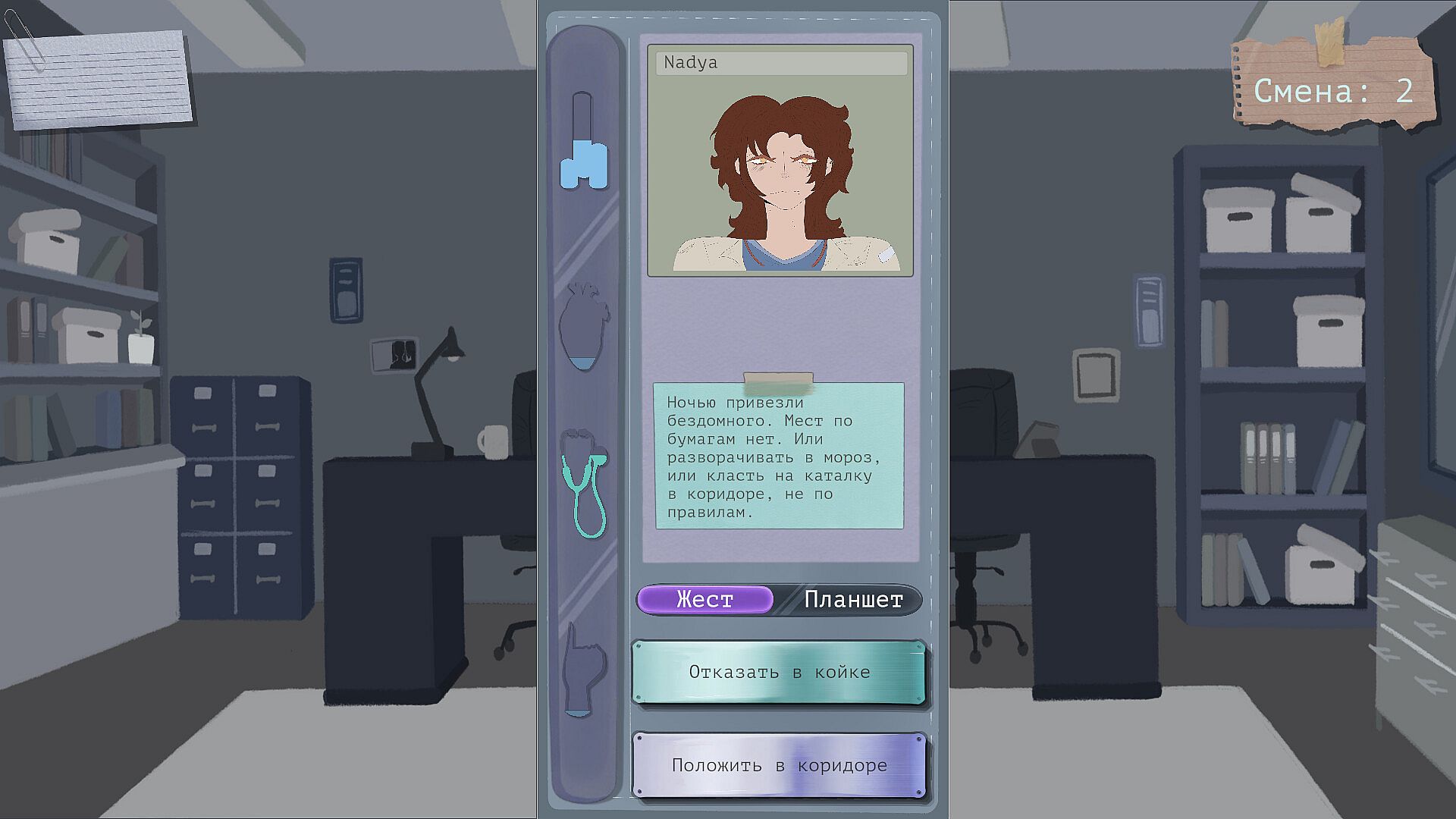
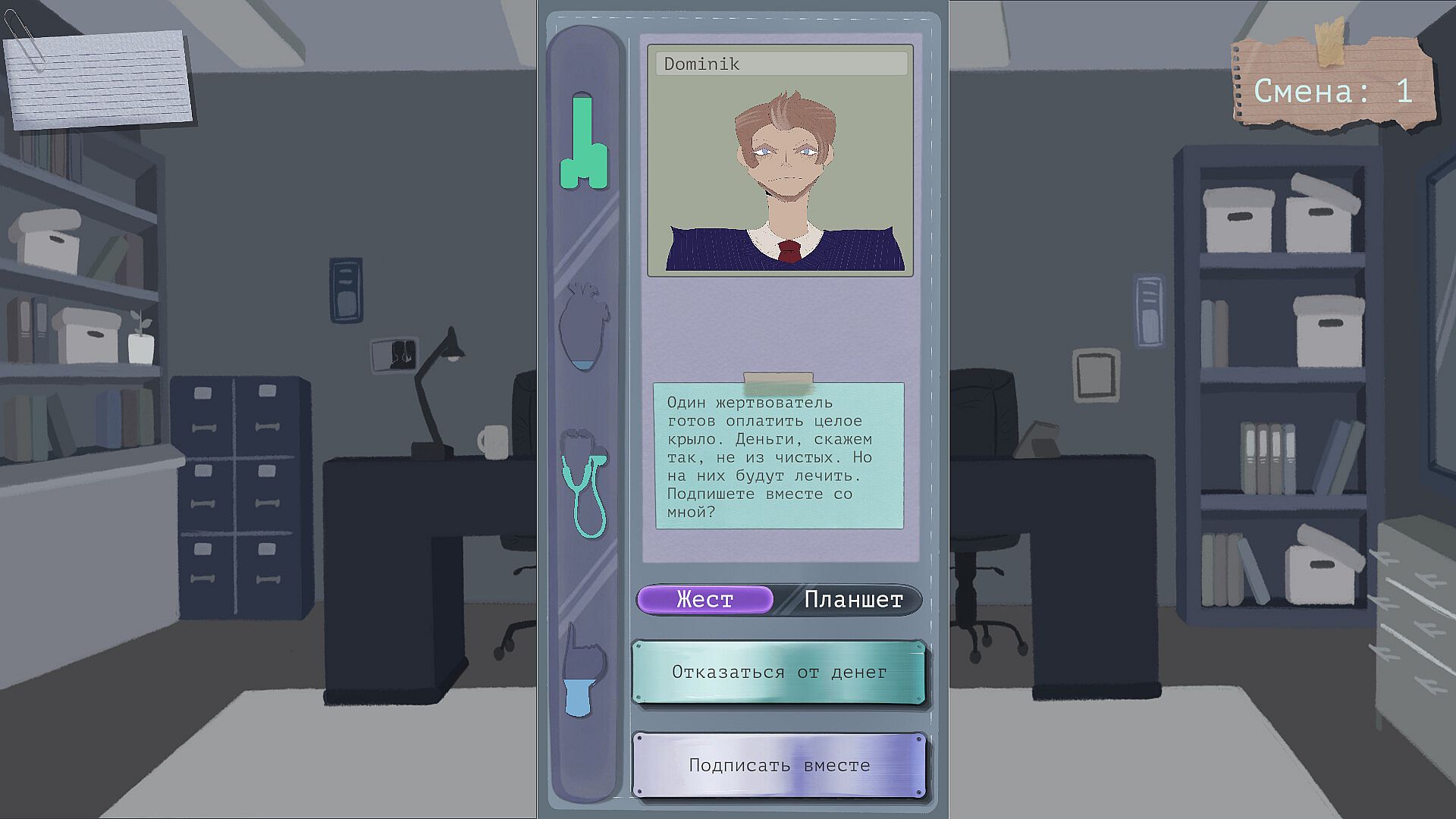
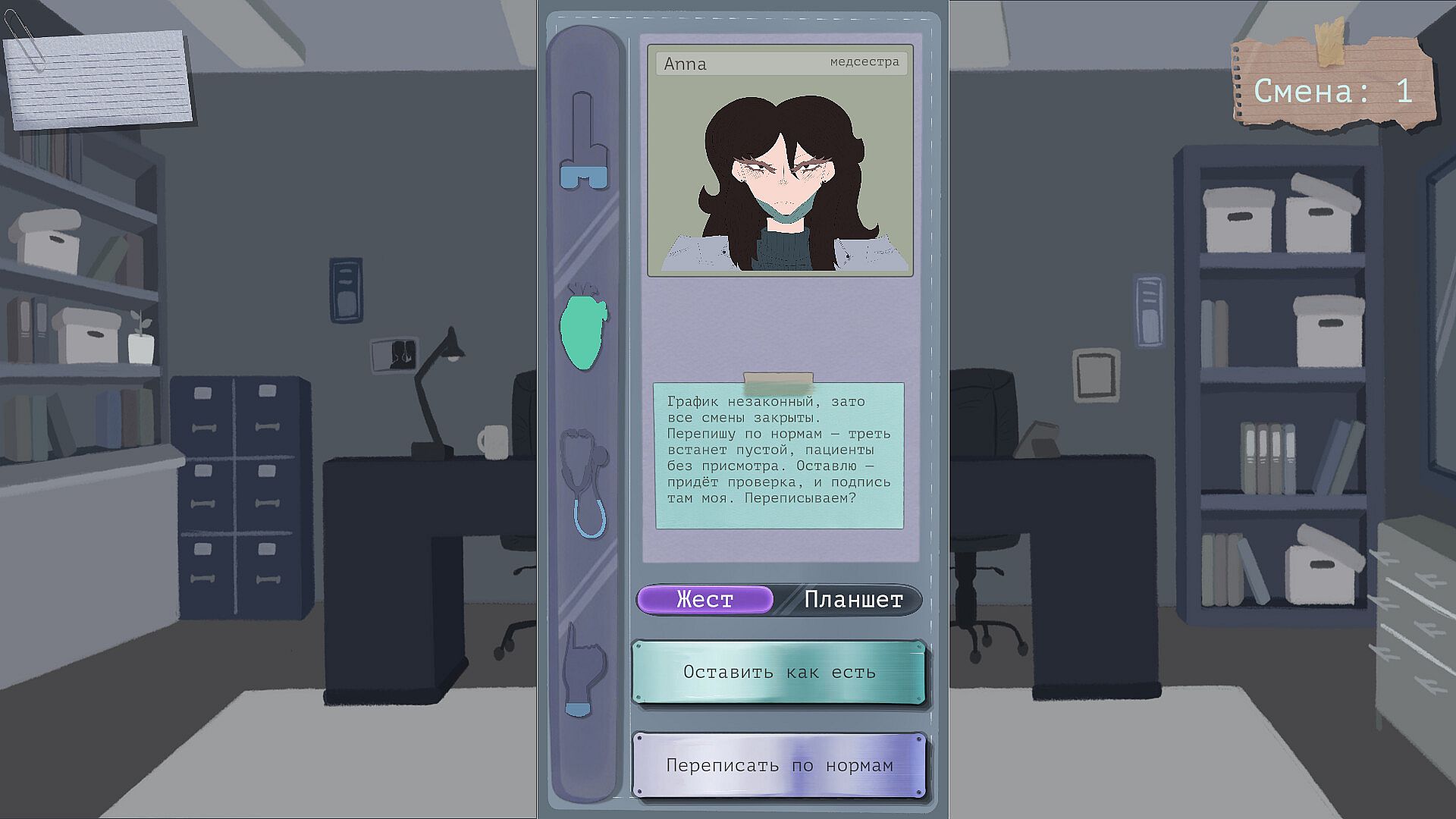
You can answer with a gesture or a tablet.
A gesture is fast and human, but easy to misread. The tablet is precise, but the words stay on the screen, and someone may read them later and use them against you.
Every shift brings a new situation. A patient's request. A demand from management. A suspicious document. Someone who knows more than they let on.
Every situation gets a simple choice. The consequences rarely are.
Four forces are watching you: the clinic's finances, patient trust, staff loyalty, and your own conscience. Any of them can break in either direction. The clinic could go bankrupt, or get sold to its owners. The staff could revolt, or turn into quiet accomplices.
One metric fails, and the audit ends. So does the investigation.
The more evidence you find, the harder it gets to decide what to do with it.
▪ A narrative card game about choices, 150-250 cards, three acts
▪ A mute protagonist: gesture or tablet, each has its cost
▪ Four metrics, each one can break in either direction
▪ 12 endings depending on what held up and what didn't
▪ A dry, cynical tone: not dramatic villainy, everyday corruption
▪ Theme: illegal pharmaceutical trials on vulnerable patients