




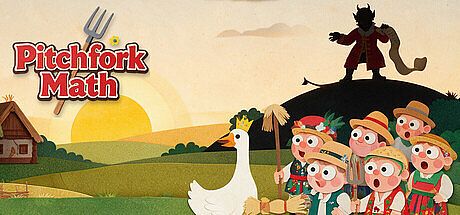


Pitchfork Math is a strategy indie simulation game for PC in which players lead a small Polish village through hardship and conflict. Abandoned by the king and his knights, the peasants face invading geese, northern Vikings, a forest-dwelling Baba Yaga, a dragon in the royal castle, and the soul-counting devil Boruta on Bald Mountain. Villagers arm themselves with pitchforks to defend their home and push back the threats across a fog-shrouded map.
Gameplay
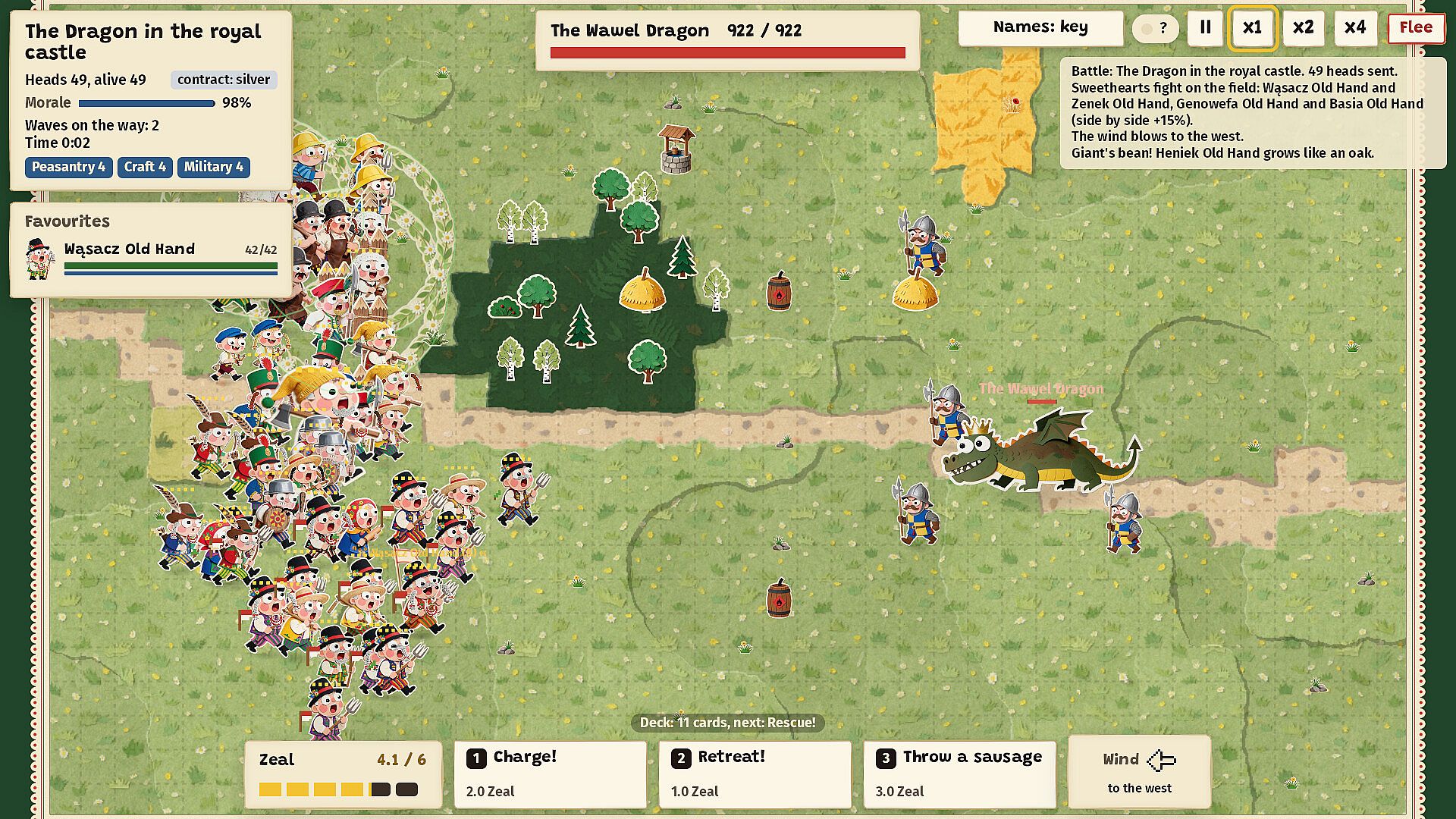
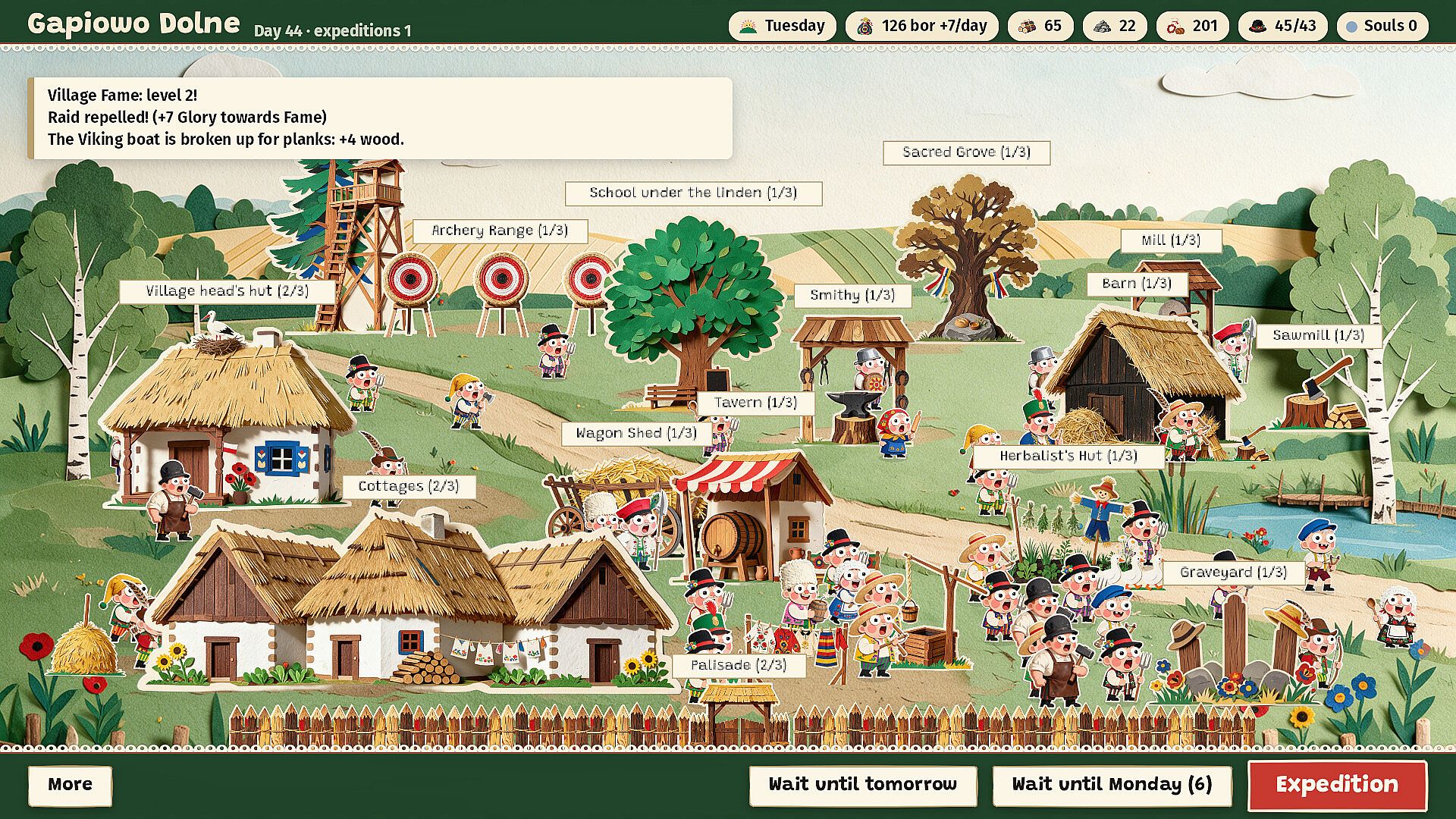
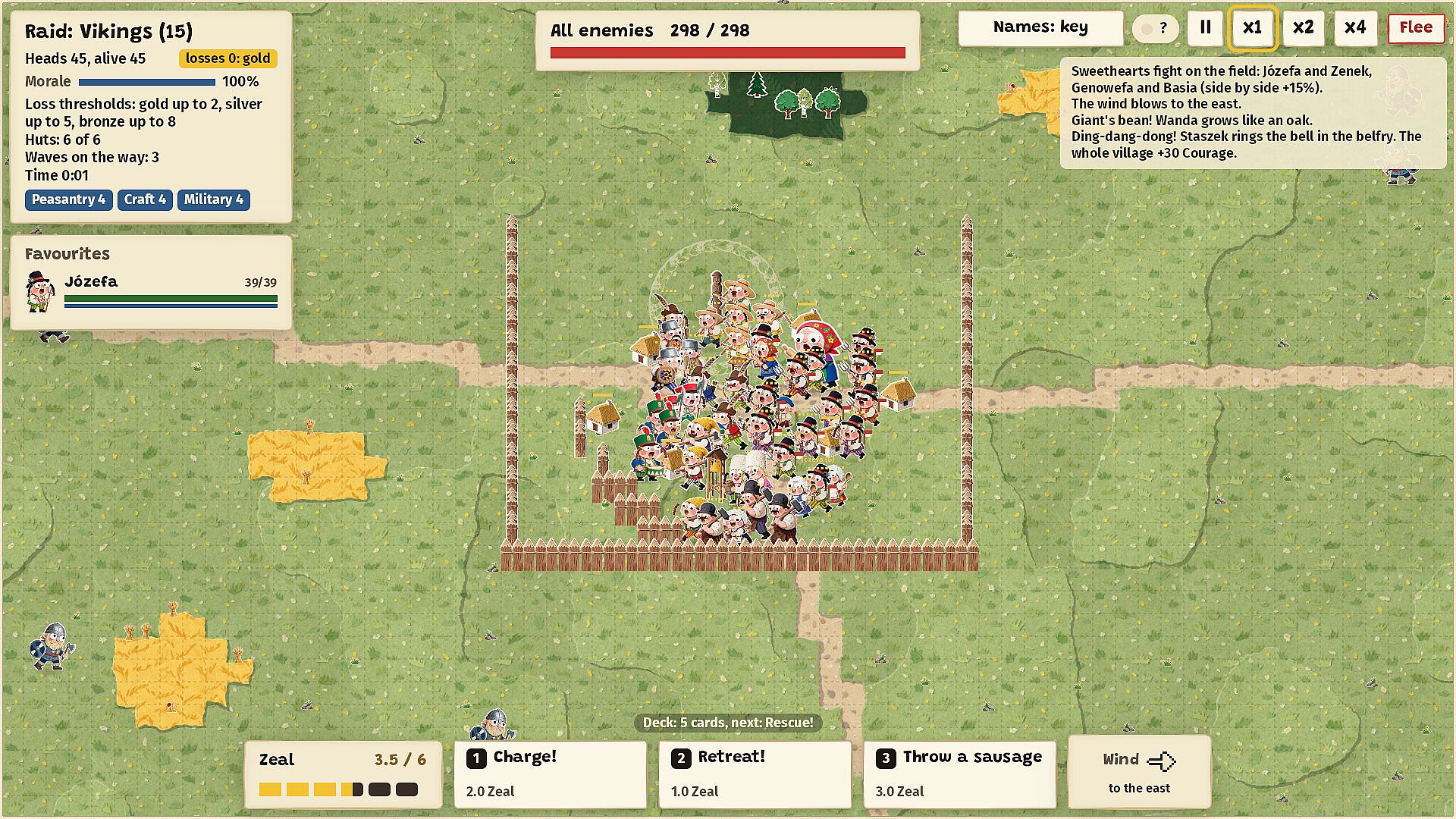
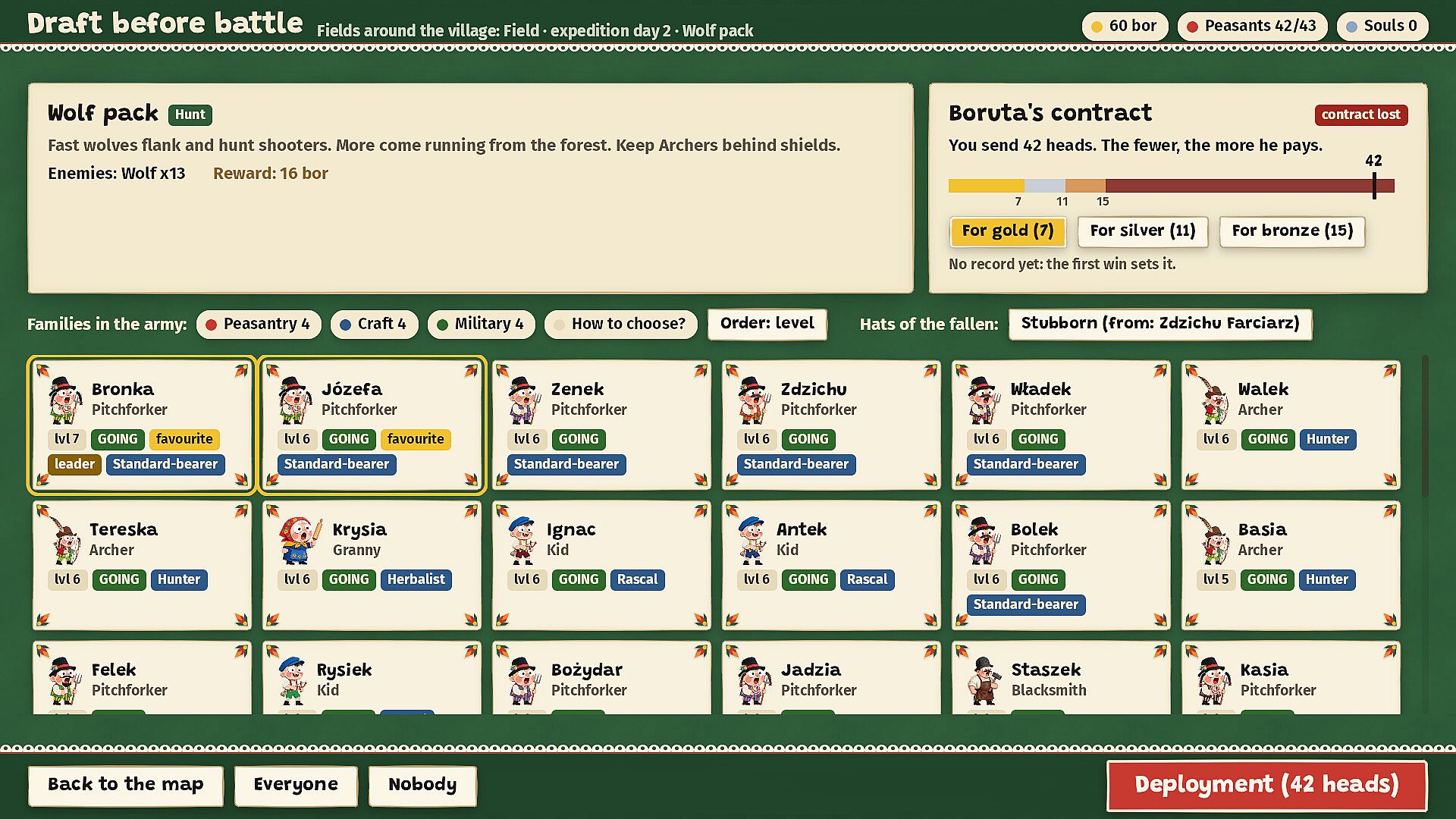
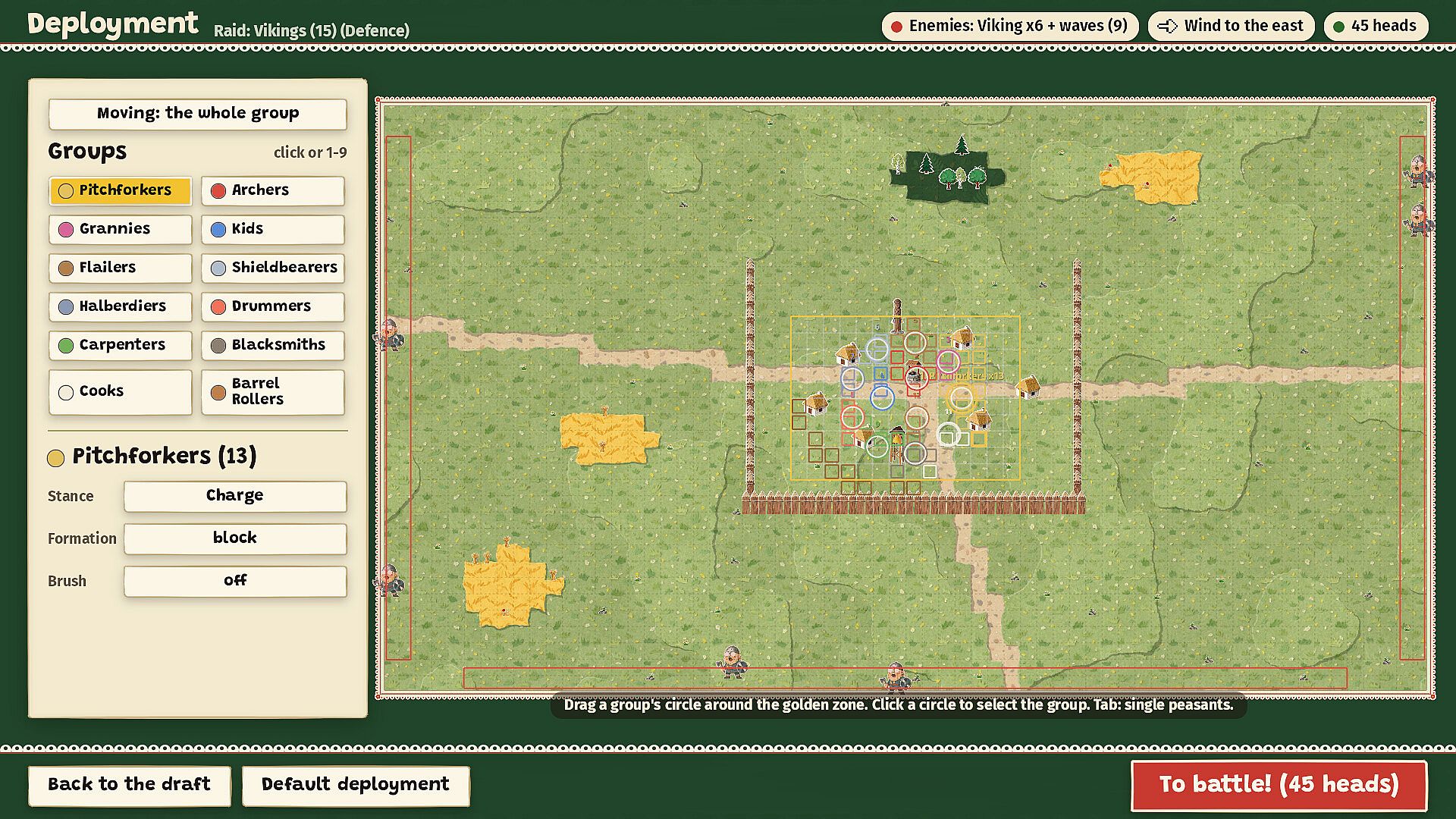
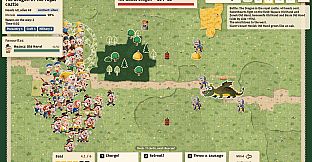
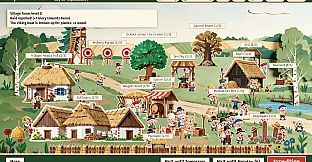
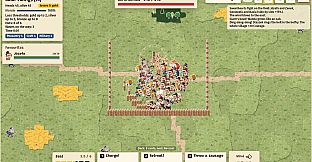
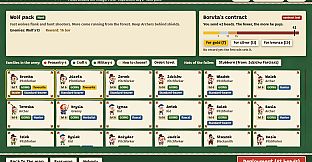
The core loop centers on preparing for expeditions while maintaining the village. Before each battle, the player chooses how many peasants to send. Fewer fighters earn higher rewards from the devil's contract, yet too small a force risks broken morale. The selected party moves onto the field, where combat resolves automatically. A handful of order cards allow limited intervention during the fight. Between battles, attention turns to village development. Cottages, a smithy, a tavern, a mill, and a watchtower can be constructed. New volunteers arrive each Monday. Peasants marry, raise children, and the player assigns roles so some work the fields or guard while others march out. If raiders overrun the village, the run ends.
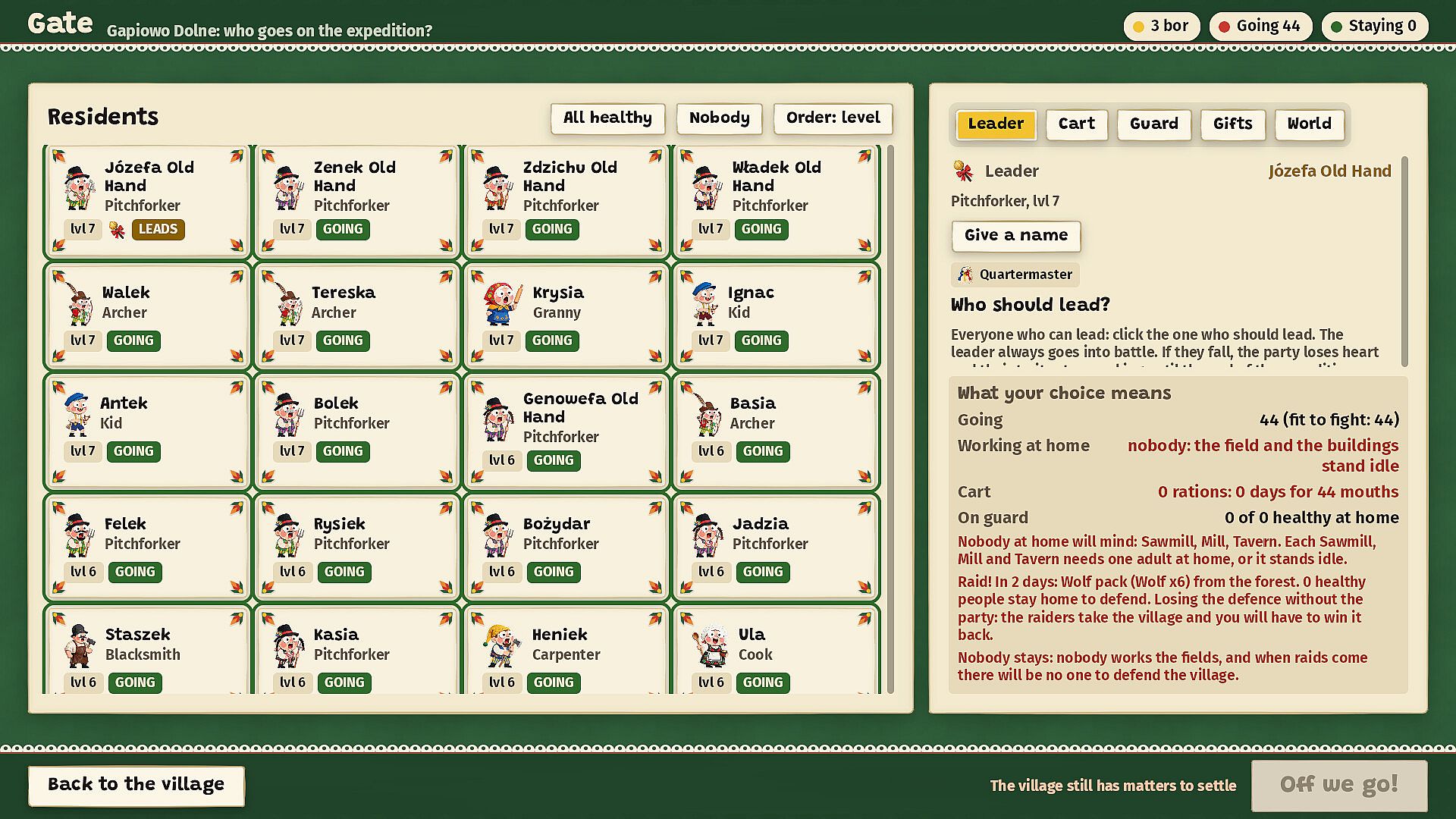
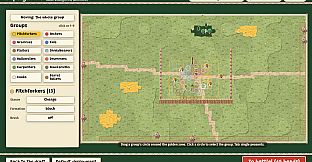
Expeditions leave through the village gate onto a map divided into four lands, with the starting settlement in the center. Most terrain begins hidden in fog. A party leader is chosen, the cart is stocked with food, and travel time is tracked because every day away leaves the village vulnerable. Stops include hamlets for supplies, roadside ambushes to intercept raids, or direct assaults on fortified Viking settlements. Food shortages first sap courage, then lives. Three powerful foes, the Jarl, Baba Yaga, and the Wawel Dragon, guard distant map edges. Defeating all three opens the path to Bald Mountain and the final confrontation with Boruta.
Game Modes
Sandbox mode lets players run hundreds of battles in sequence and receive data on the minimum number of peasants needed to win half the time. This tool supports testing different party compositions and order-card strategies without risking the main village. The primary experience combines village management with map exploration and combat preparation, creating a single-player loop focused on long-term survival and incremental progress.
Village Life and Progression
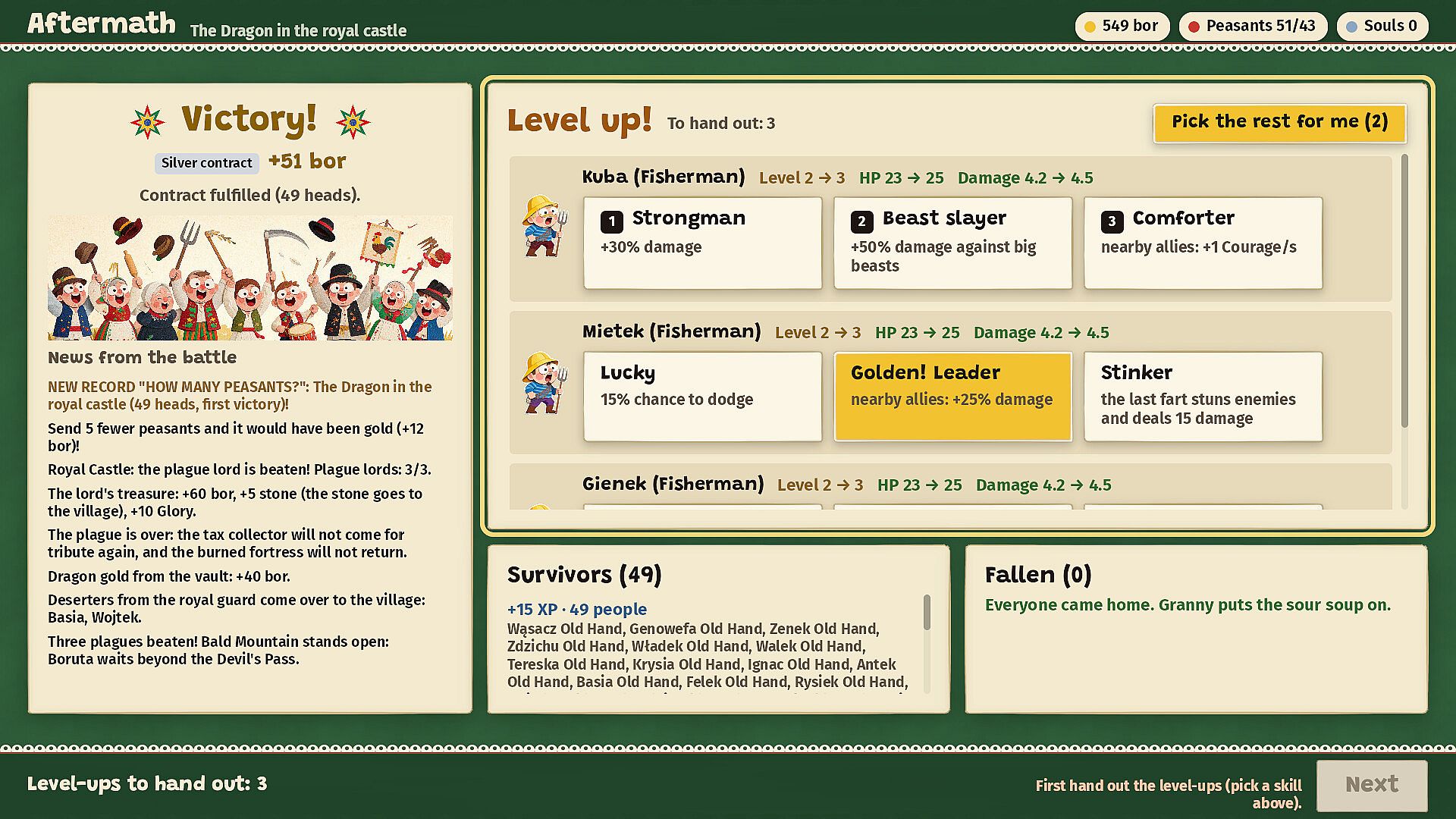
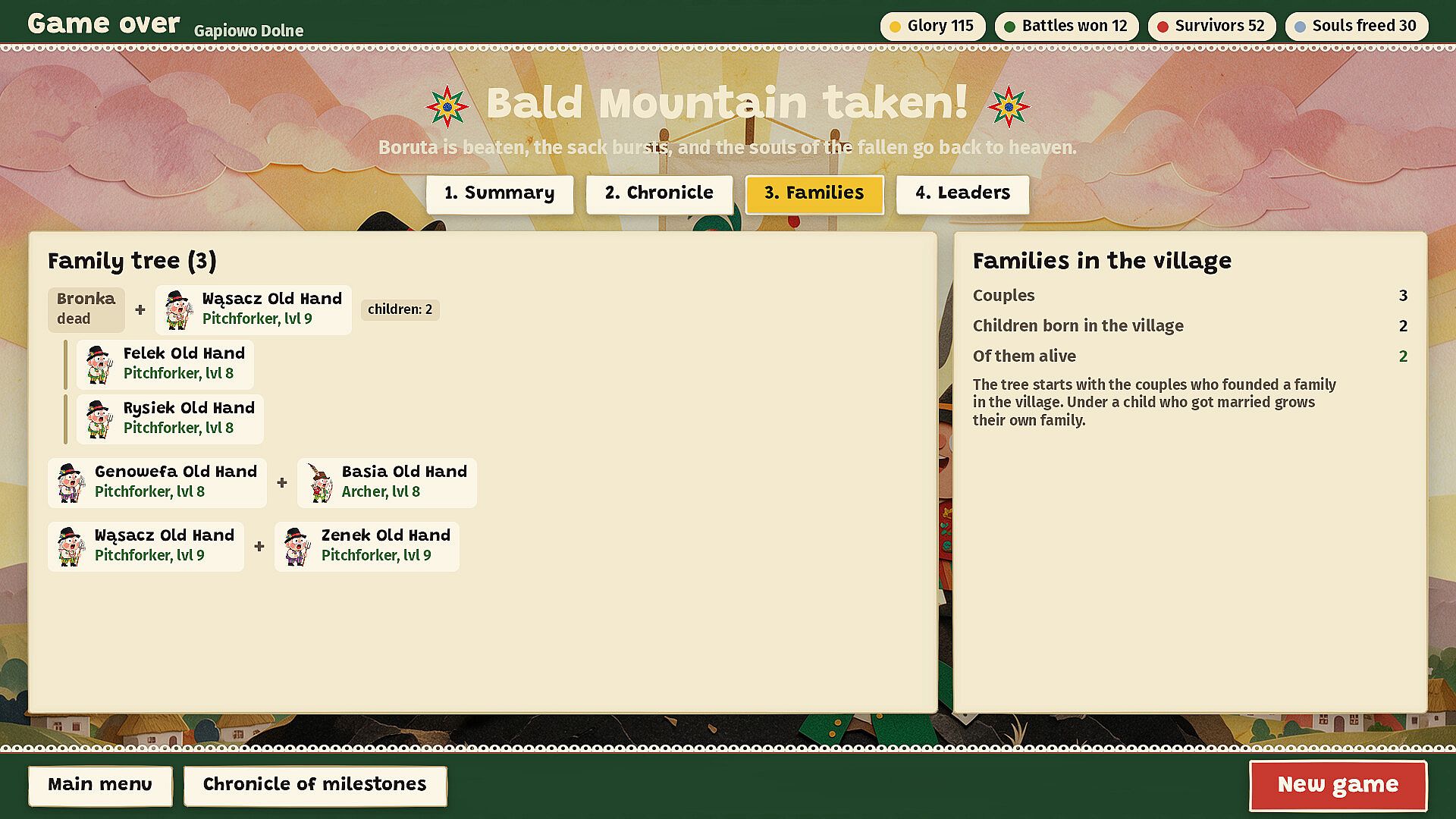
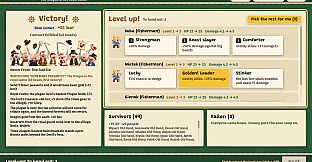
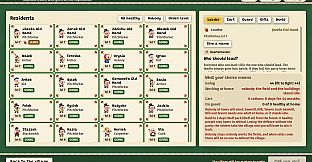
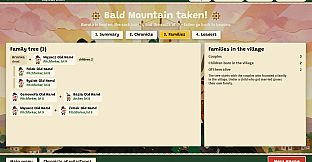
Every peasant carries a name and belongs to one of several types, including Pitchforkers, Grannies, Kids, Archers, and Drummers along with eight additional roles. Individuals gain experience, earn nicknames, form friendships or rivalries, and fall in love. Battle performance can trigger transformations into new forms. When a peasant falls, personal items such as a hat or a final trace remain. At the end of a run, the game displays family trees for the entire village and records who led each expedition. These details reinforce the sense that the settlement evolves through player decisions across multiple generations.
Is It Worth Playing?
Pitchfork Math suits players who enjoy strategy games that blend village simulation, resource management, and turn-based preparation with light real-time intervention. The Slavic folklore setting, named peasant types, and persistent village state provide a distinct identity compared with more abstract strategy titles. Those who appreciate managing limited forces, planning expeditions under time pressure, and watching a community grow or fail over repeated runs will find a focused experience here. The sandbox mode offers additional replay value for optimizing battle outcomes. Availability on PC makes it accessible for fans of indie strategy and simulation titles seeking a self-contained single-player campaign built around folklore-inspired threats and peasant-level decision making.