


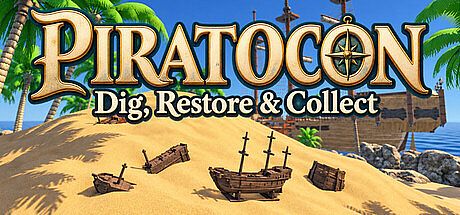


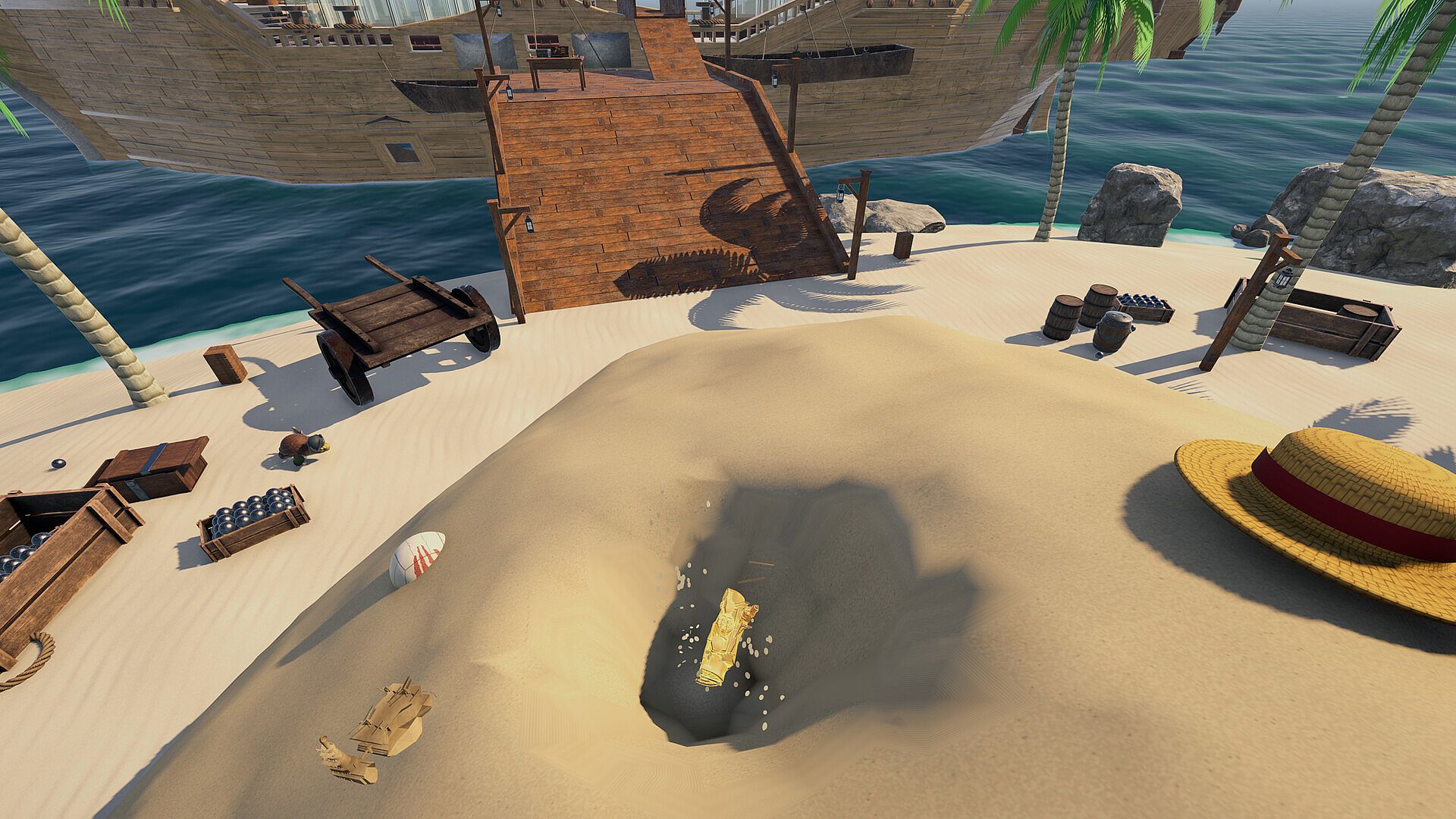
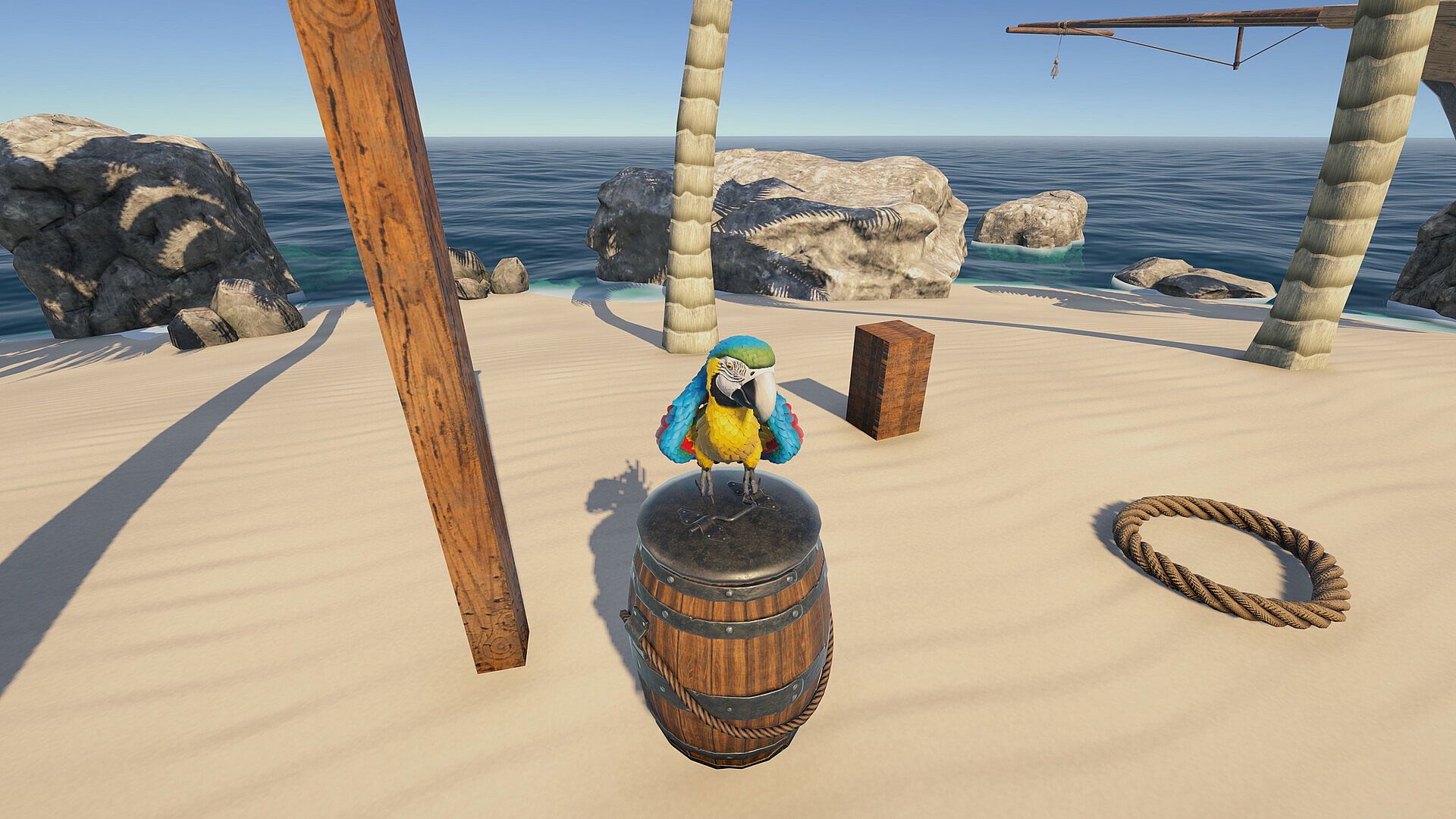
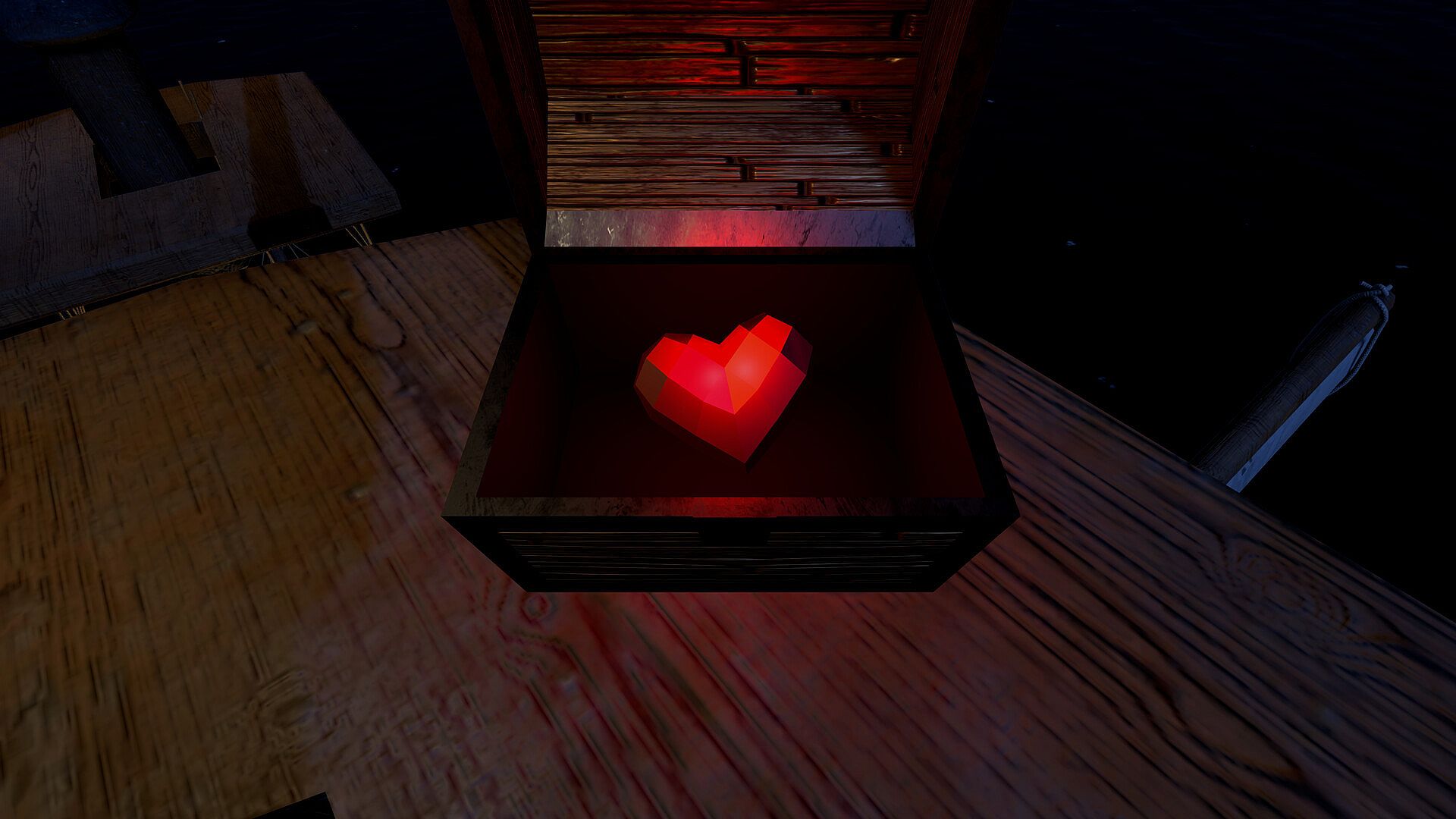
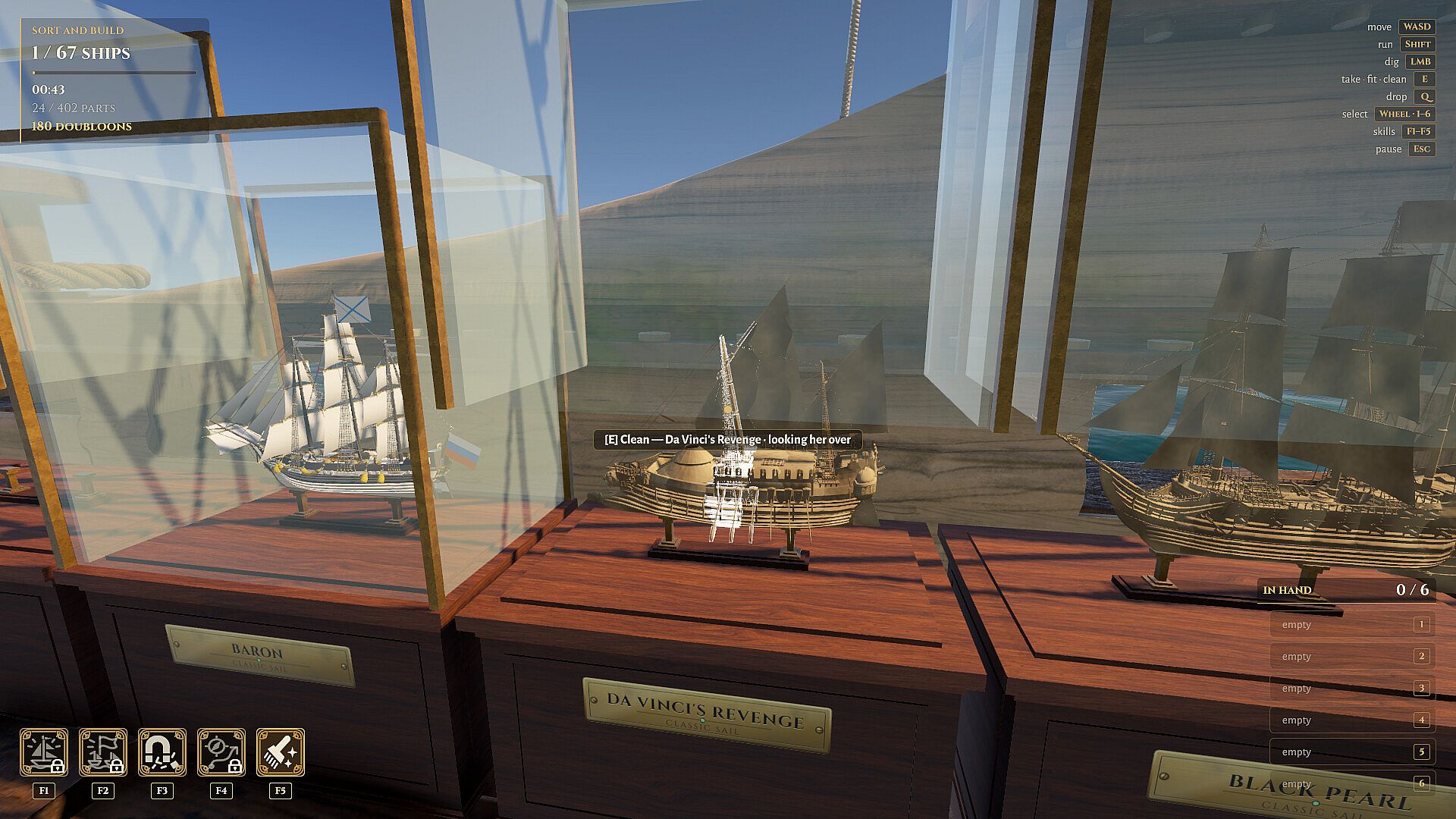
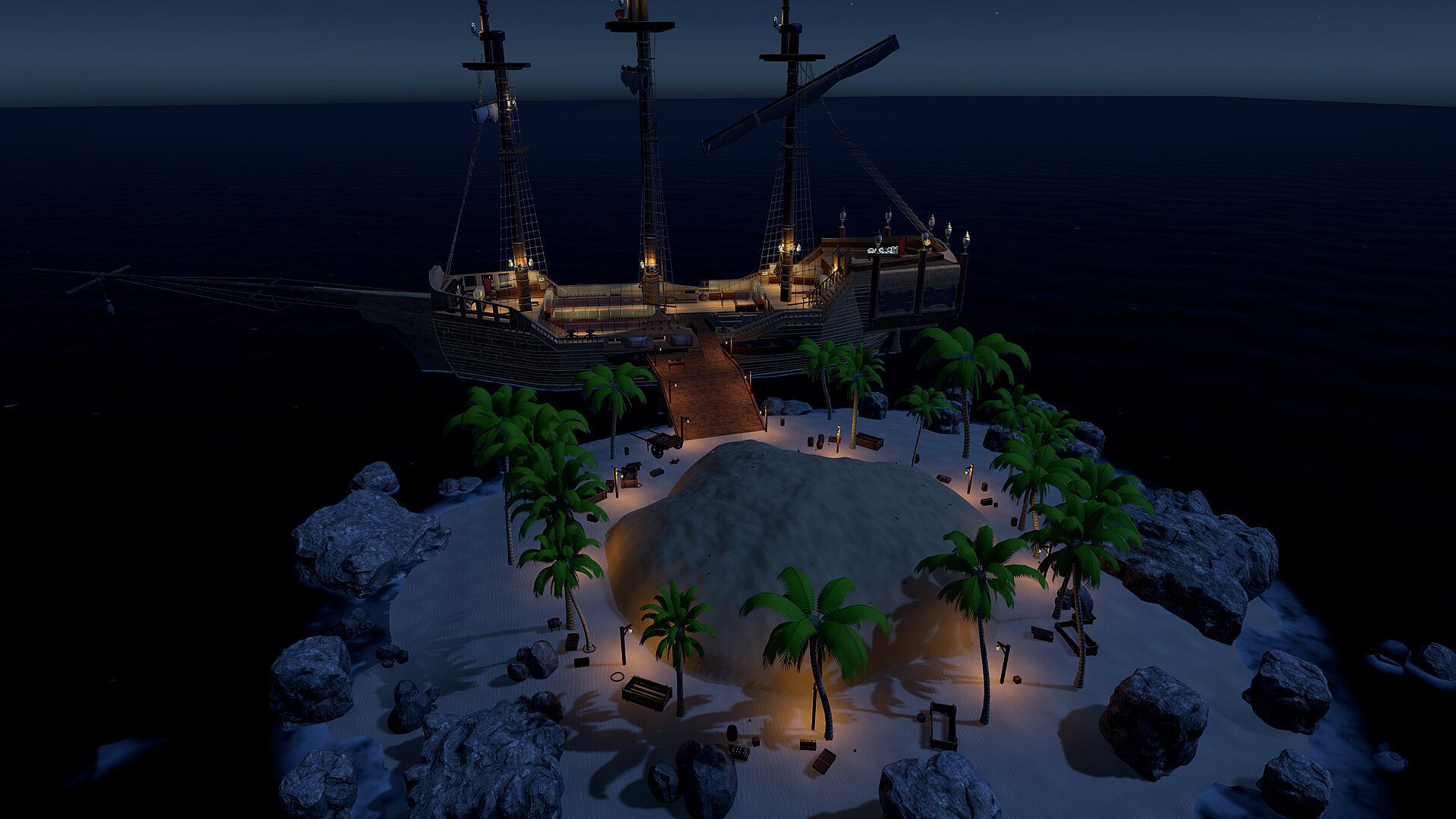
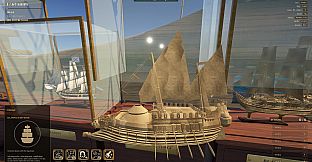
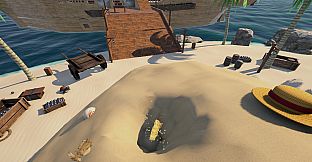
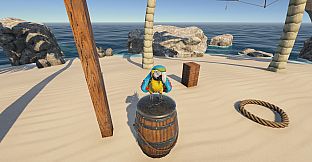

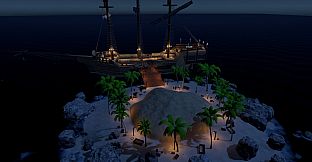
Piratocon: Dig, Restore & Collect is a cozy first-person simulation game in the indie and casual genres. Players explore a quiet island setting where an old galleon serves as a floating museum with empty display shelves. The core activity involves recovering buried model ships from a large beach dune, assembling them in their correct locations aboard the vessel, and cleaning each one to reveal its original appearance.
Gameplay
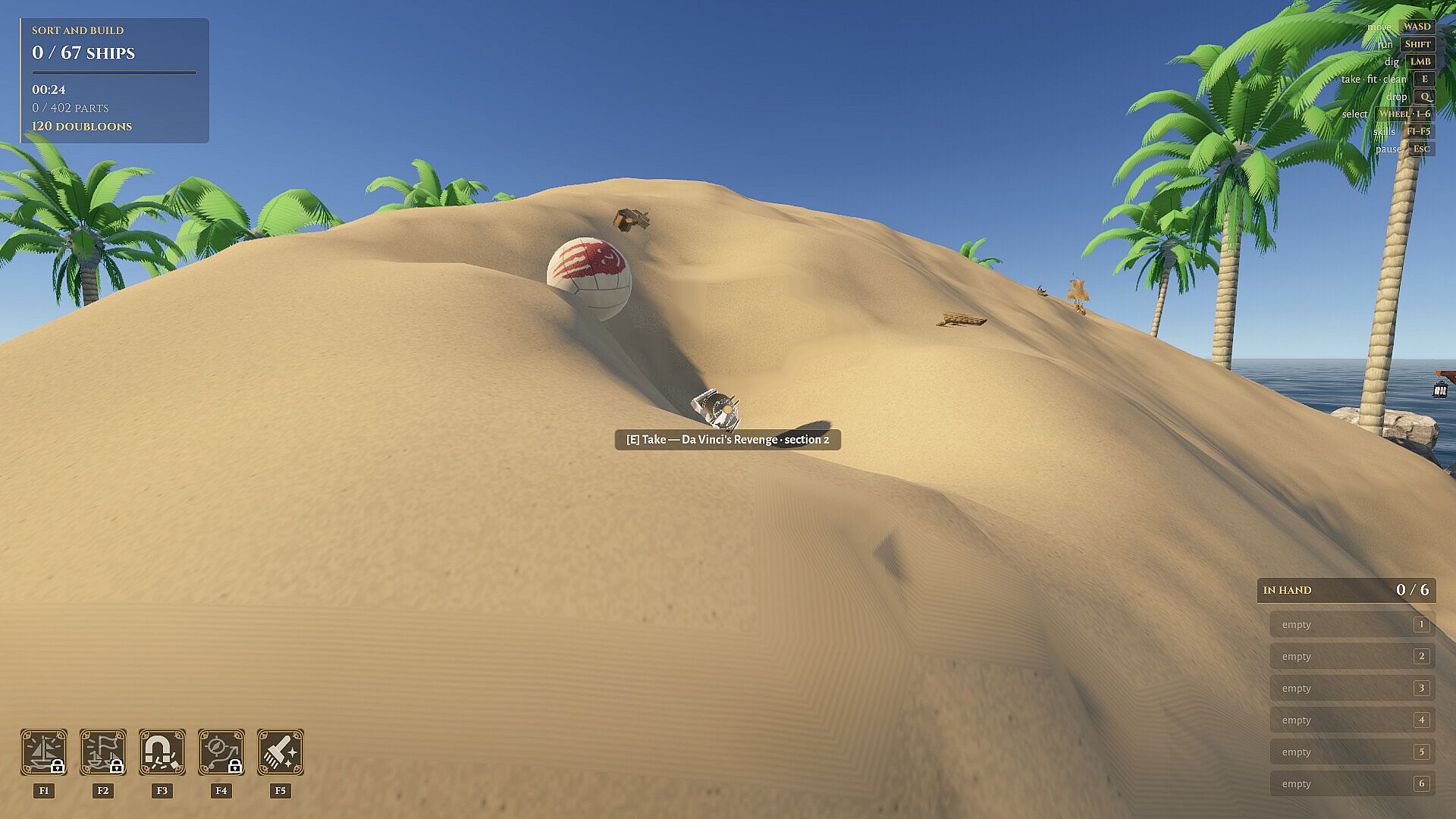
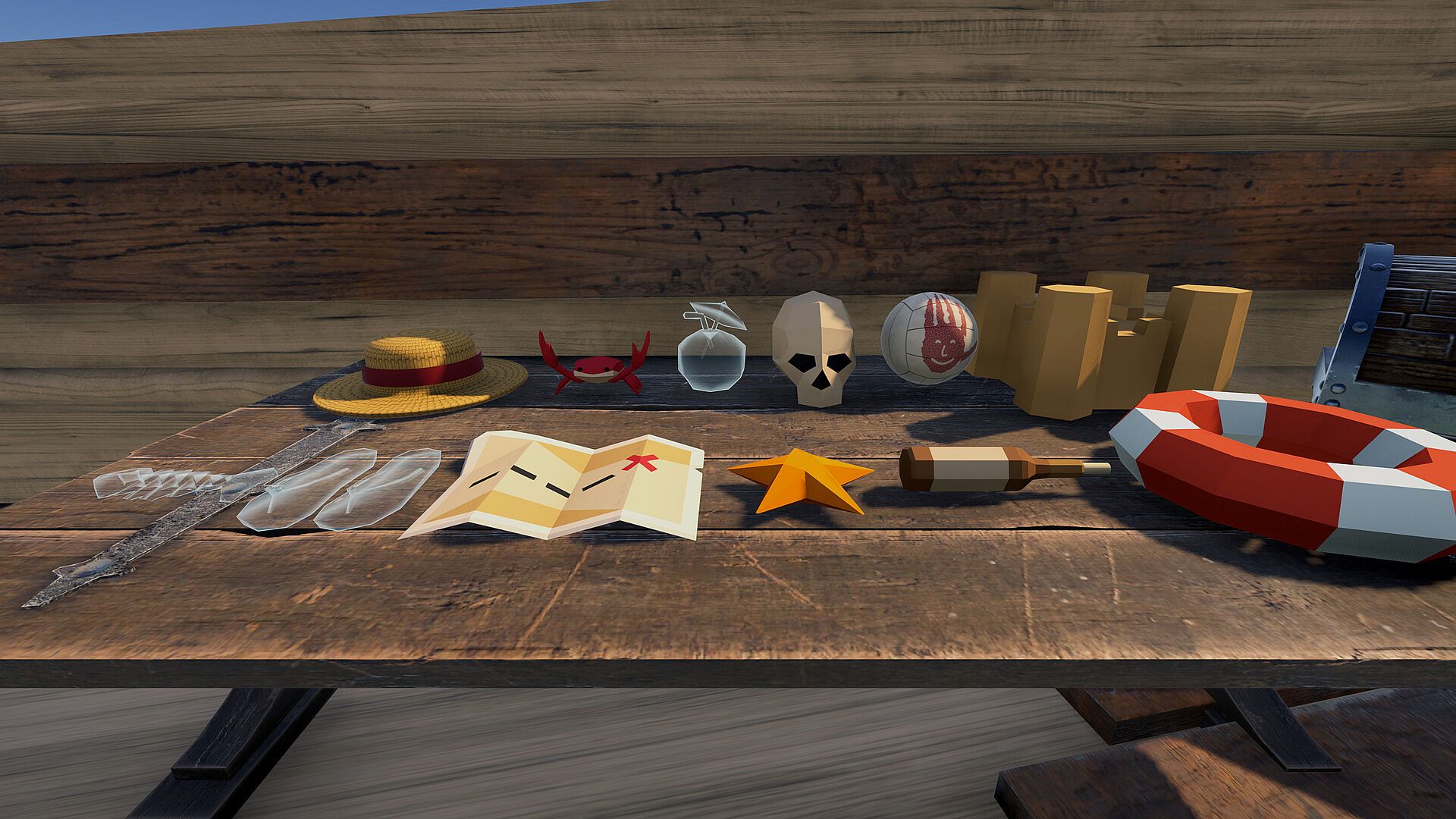
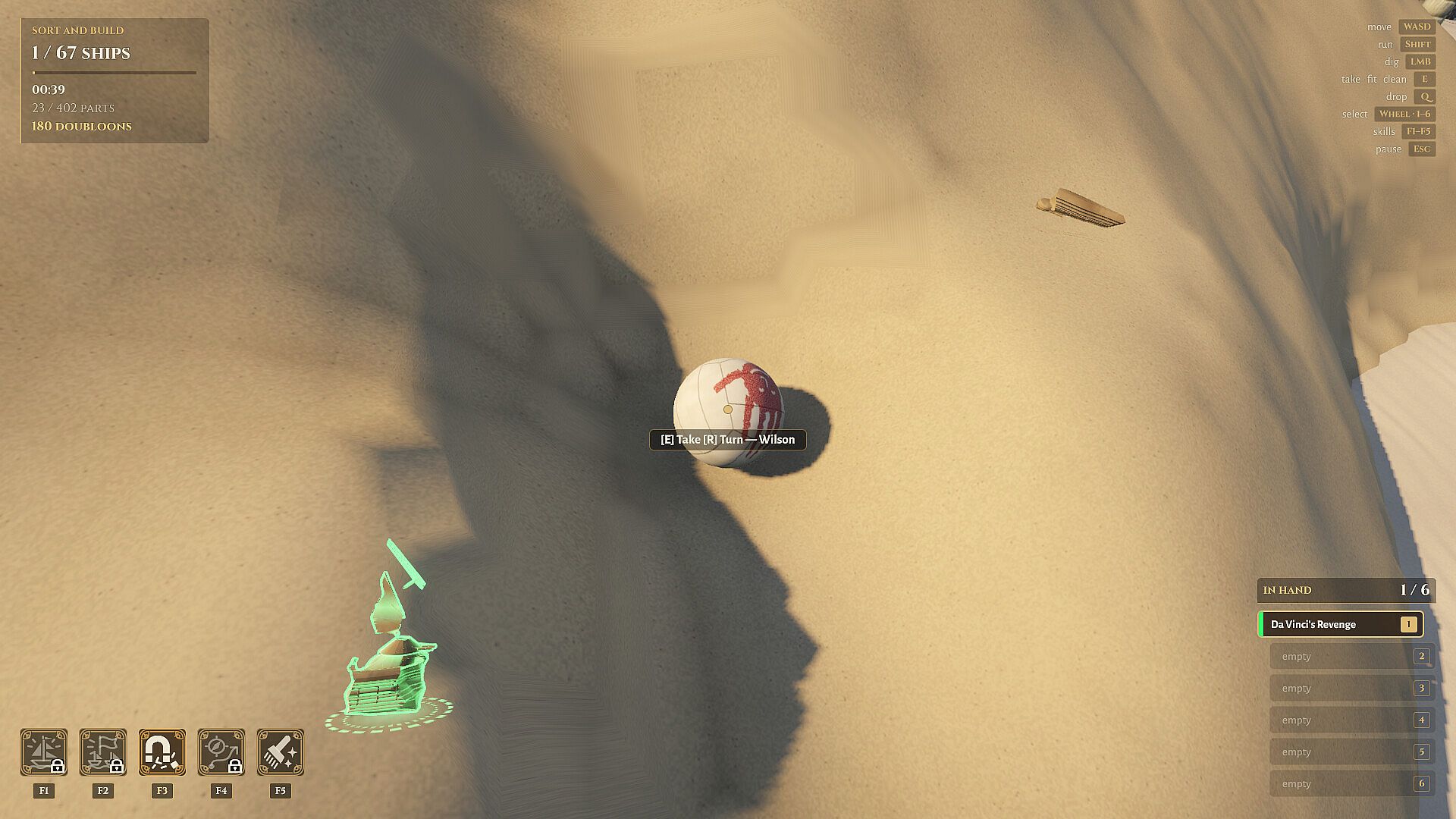
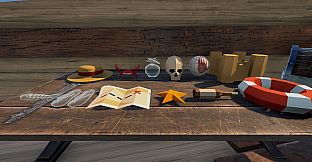
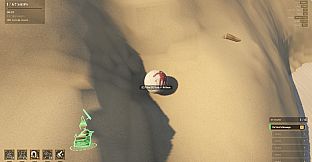
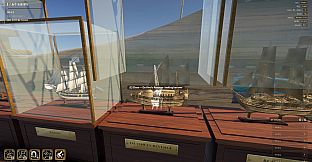
The experience centers on a steady loop of searching, assembling, and maintaining. Players use a spade to shift sand in the dune, where ship sections remain unmarked until uncovered through careful digging. Occasional extra items appear during excavation, such as bottles with messages, discarded footwear, or maps that may aid the process. Once pieces surface, they are carried aboard the galleon and matched to one of eight themed halls using a chart that organizes vessels by type, including drakkars, classic sailing ships, steamers, submarines, and other designs.
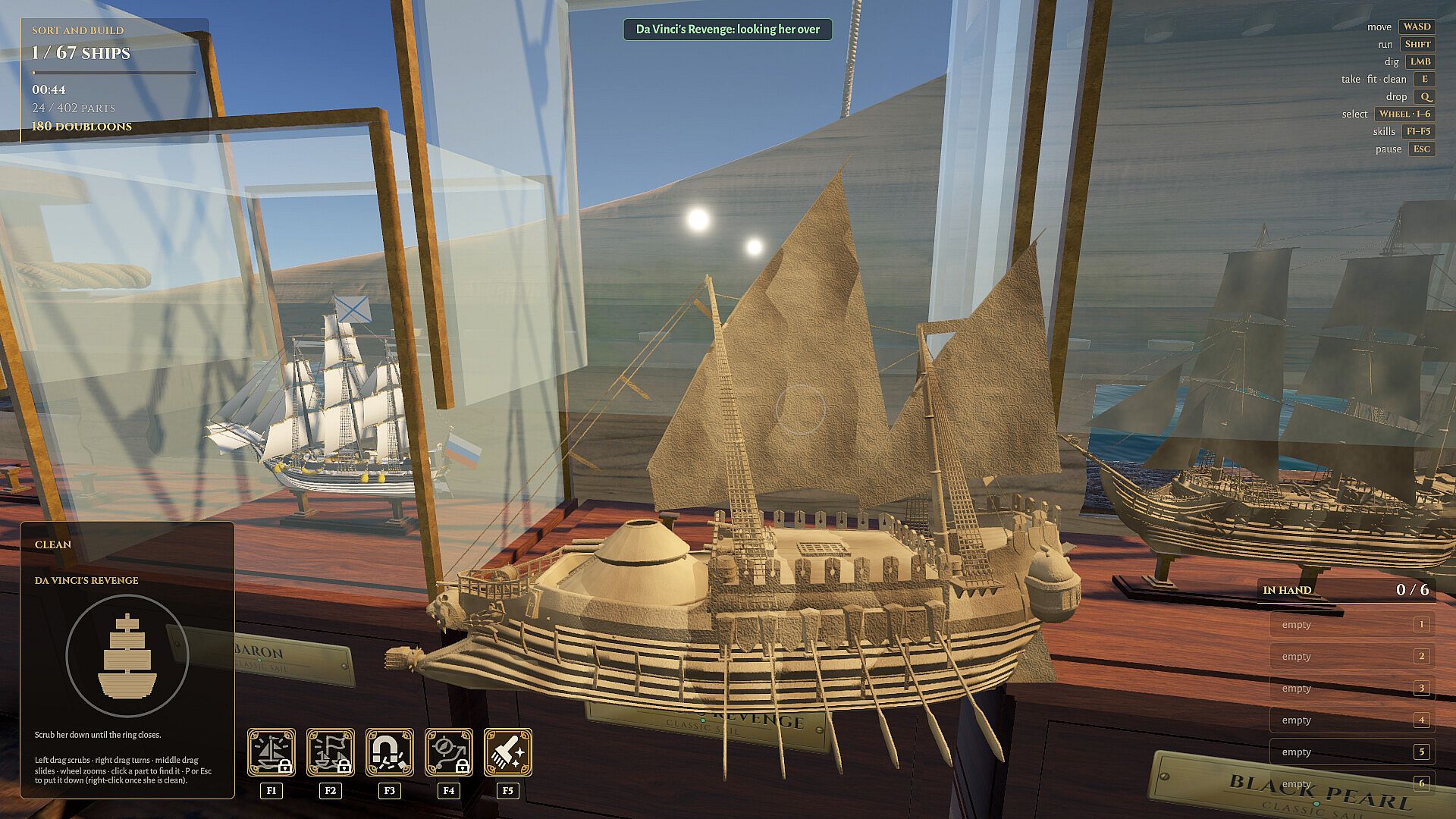
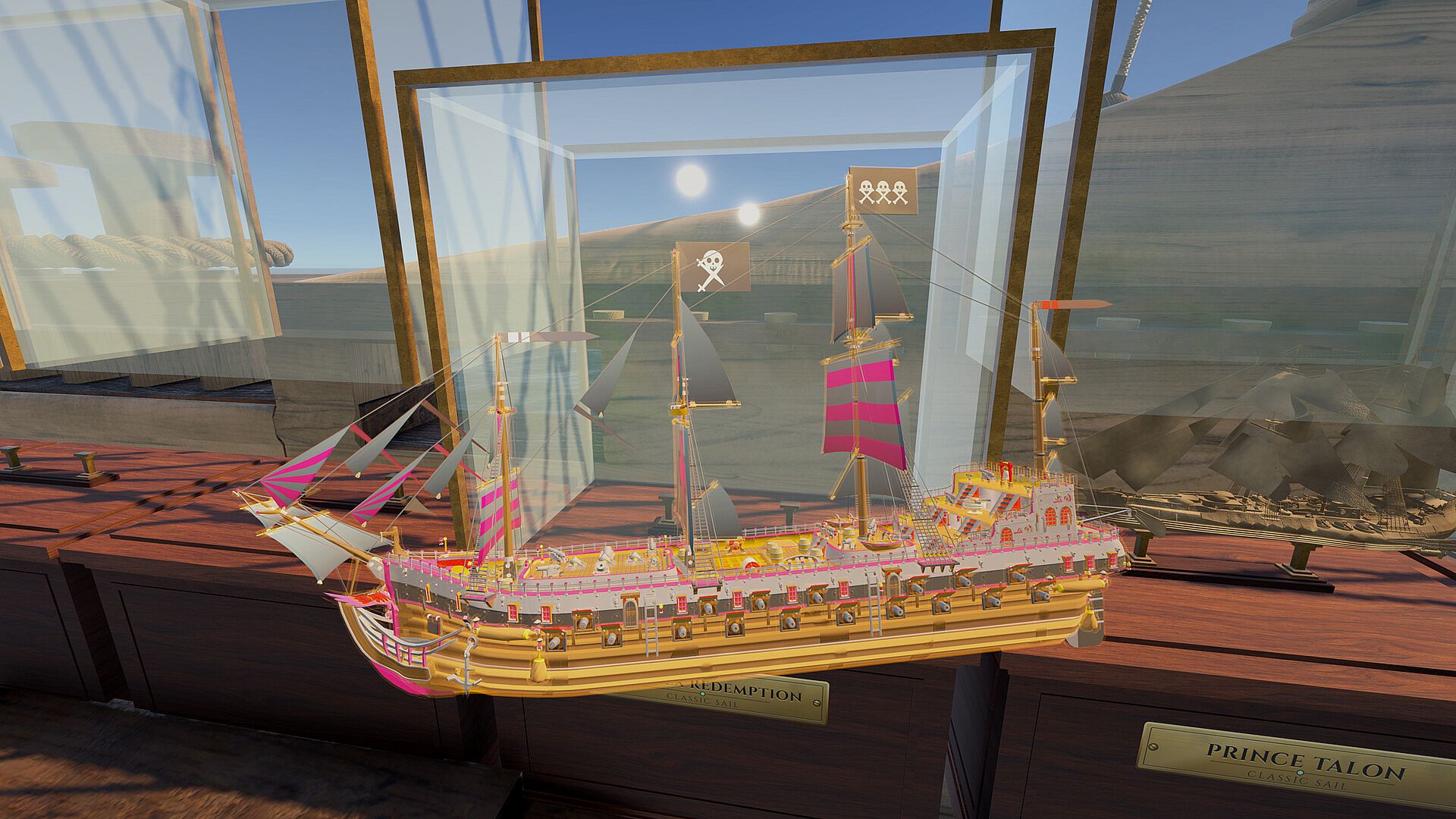
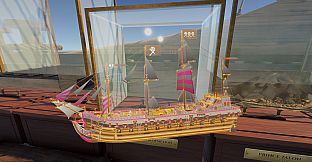
Assembly requires fitting the six sections of each ship into a cradle in proper order from bow to stern. After completion, the model moves to an easel for restoration. Cleaning proceeds section by section across the hull, masts, sails, and fittings, with the ability to rotate the piece for full access until colors and details stand out clearly. The process rewards patience and attention to detail in a relaxed environment without time limits or conflict.
Completed and restored ships contribute to a growing collection while providing resources for tool improvements. These upgrades include a sharper spade for more efficient digging, a broader brush for faster cleaning, enhanced movement options, and abilities that highlight nearby missing sections. The single-player focus keeps the pace personal and unhurried, suited to short or extended sessions on PC.
Game Modes
Piratocon operates as a single-player title with no separate competitive or cooperative modes. All activity takes place in one continuous experience built around the dune excavation site and the galleon interior. Progress unfolds through repeated cycles of digging, assembly, restoration, and collection, with the hall chart guiding placement across the eight distinct display areas. The structure encourages methodical exploration of the 67 total ships rather than branching paths or timed challenges.
Progression and Collection
Each of the 67 ships consists of exactly six buried pieces, and successful placement on the matching shelf unlocks further rewards. Doubloons earned from finished work fund incremental upgrades that streamline future tasks and improve discovery rates. Side items found in the sand add variety without altering the main flow. The system builds a sense of steady accumulation as the museum halls fill over time, with the full set representing a complete catalog of varied vessel types.
Is It Worth Playing?
This title appeals to players who enjoy deliberate, low-pressure collecting and organizing mechanics in a simulation format. The verified elements focus on excavation, precise assembly, and incremental cleaning within a contained island setting, supported by upgrade paths that enhance efficiency. With a release scheduled for November 4, 2026, and no player reviews available yet, suitability depends on interest in cozy first-person activities centered on discovery and restoration rather than action or narrative depth. Those seeking a relaxing single-player loop with tangible collection goals may find the described systems engaging for repeated play sessions.