


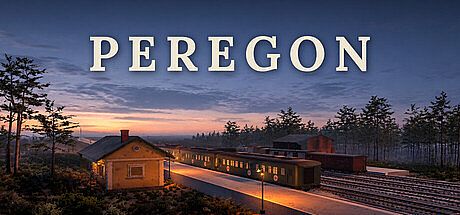


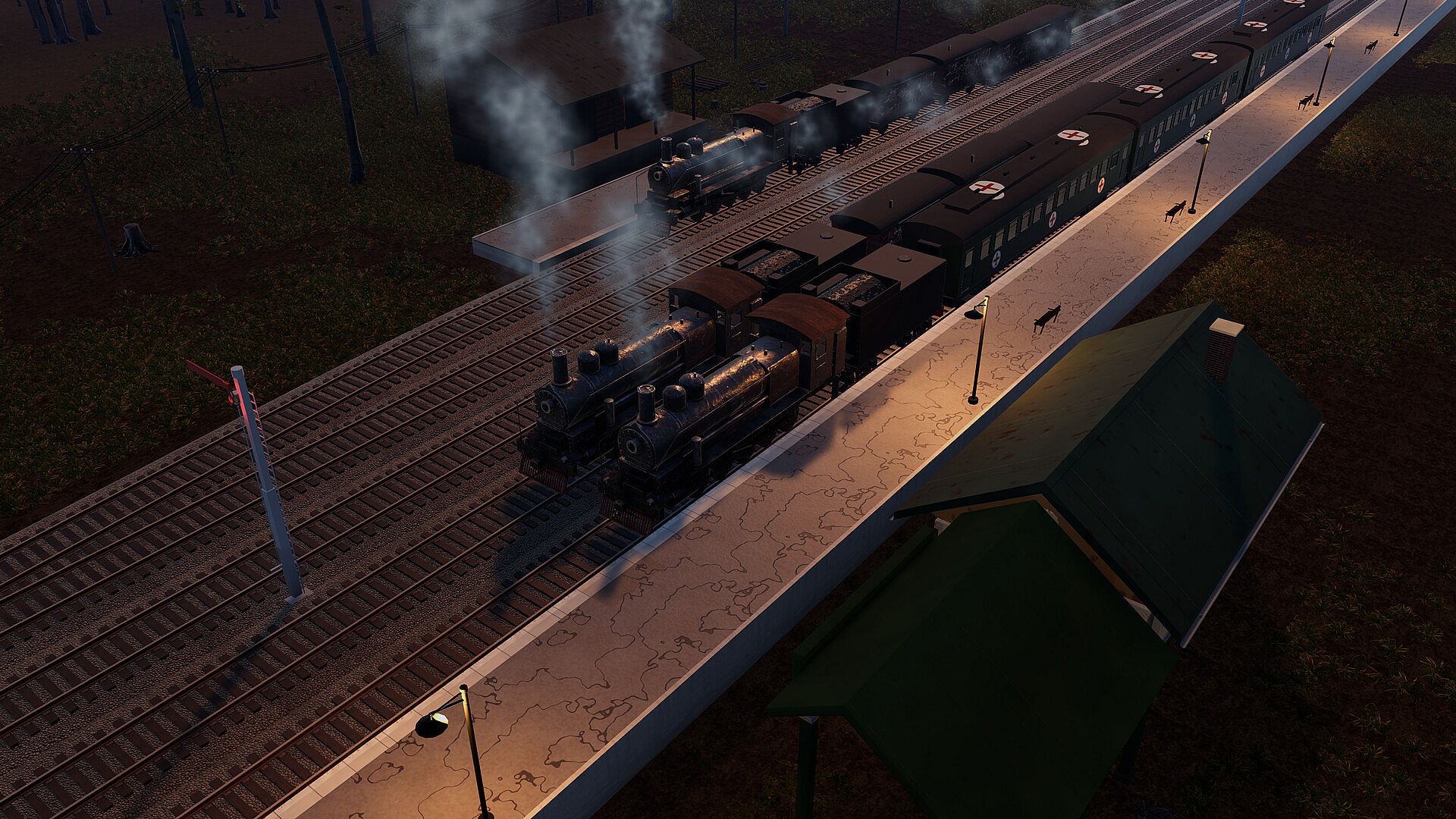
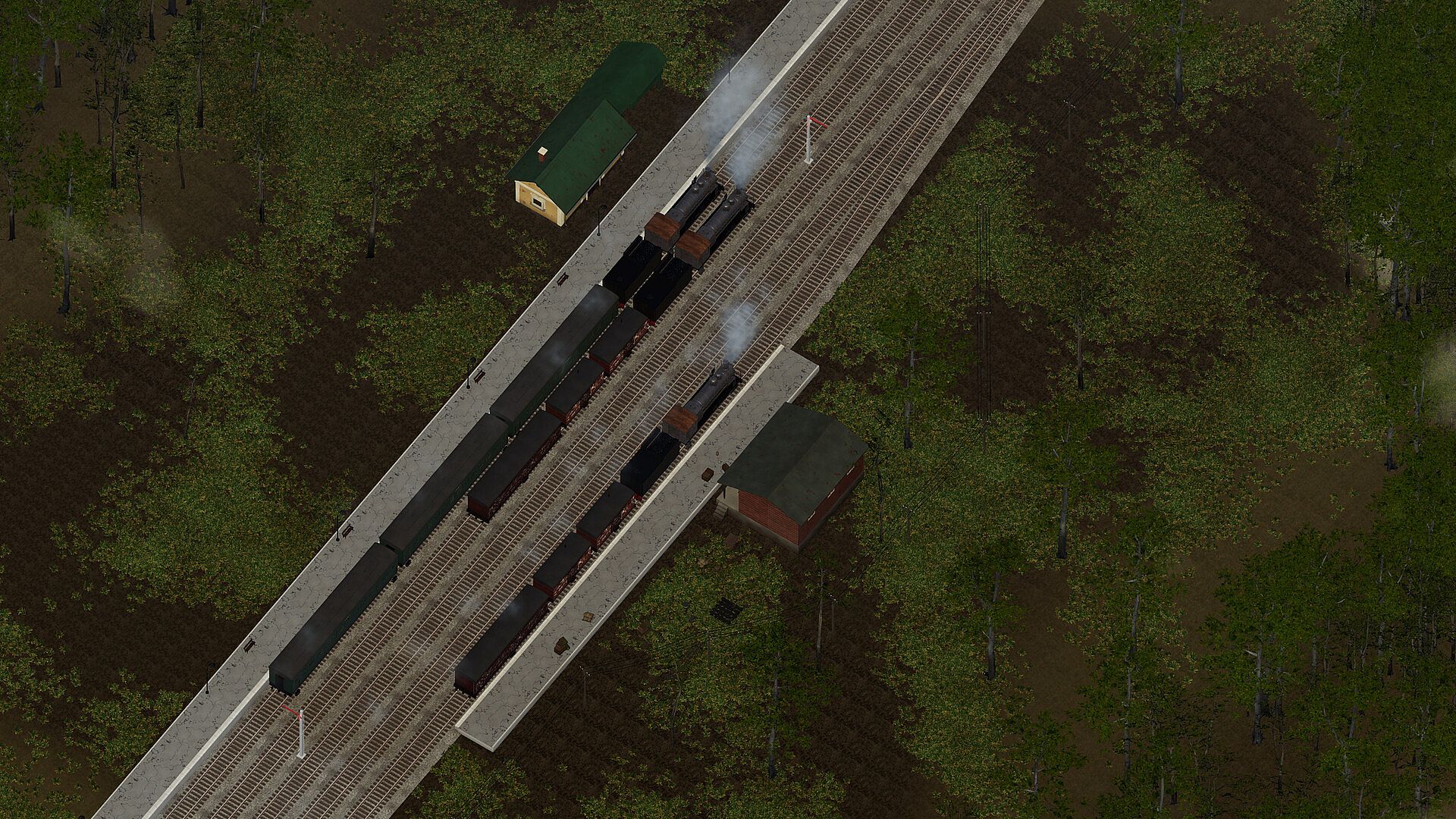
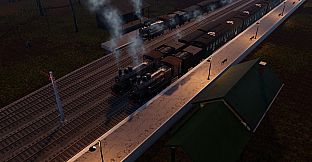
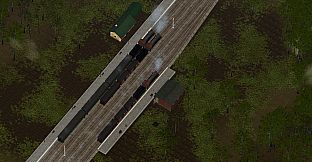
Peregon is a strategy indie simulation game set on PC that places players in the role of a railway duty officer managing a small station on the St. Petersburg Warsaw line during the First World War. The experience focuses on the quiet but demanding work of routing trains through a modest facility a few hours from the front lines, where troop movements, hospital evacuations, supply deliveries and refugee transports all compete for limited space and attention. Rather than combat or heroics, the game centers on the steady pressure of keeping schedules intact amid shortages and competing priorities.
Gameplay
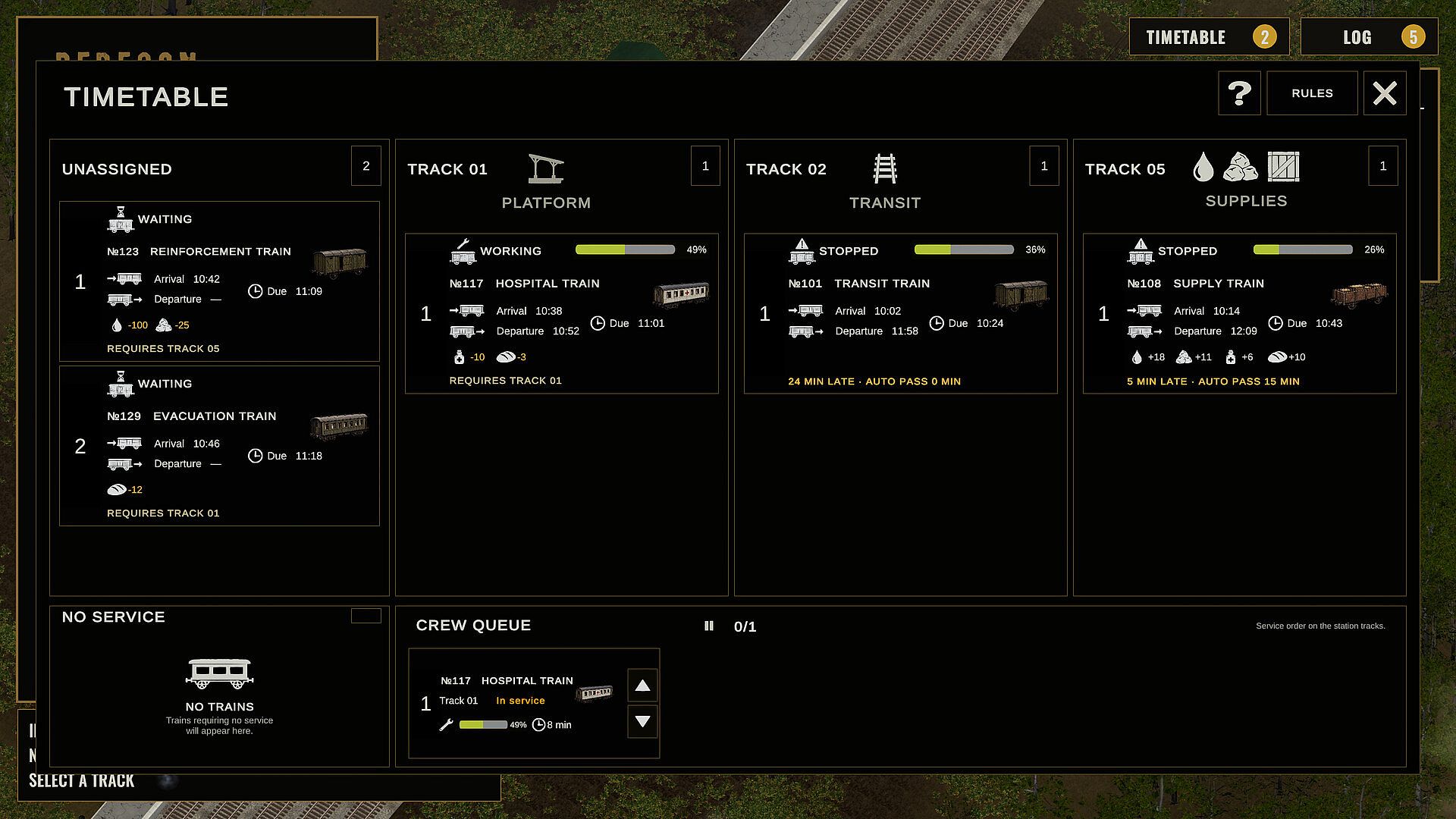
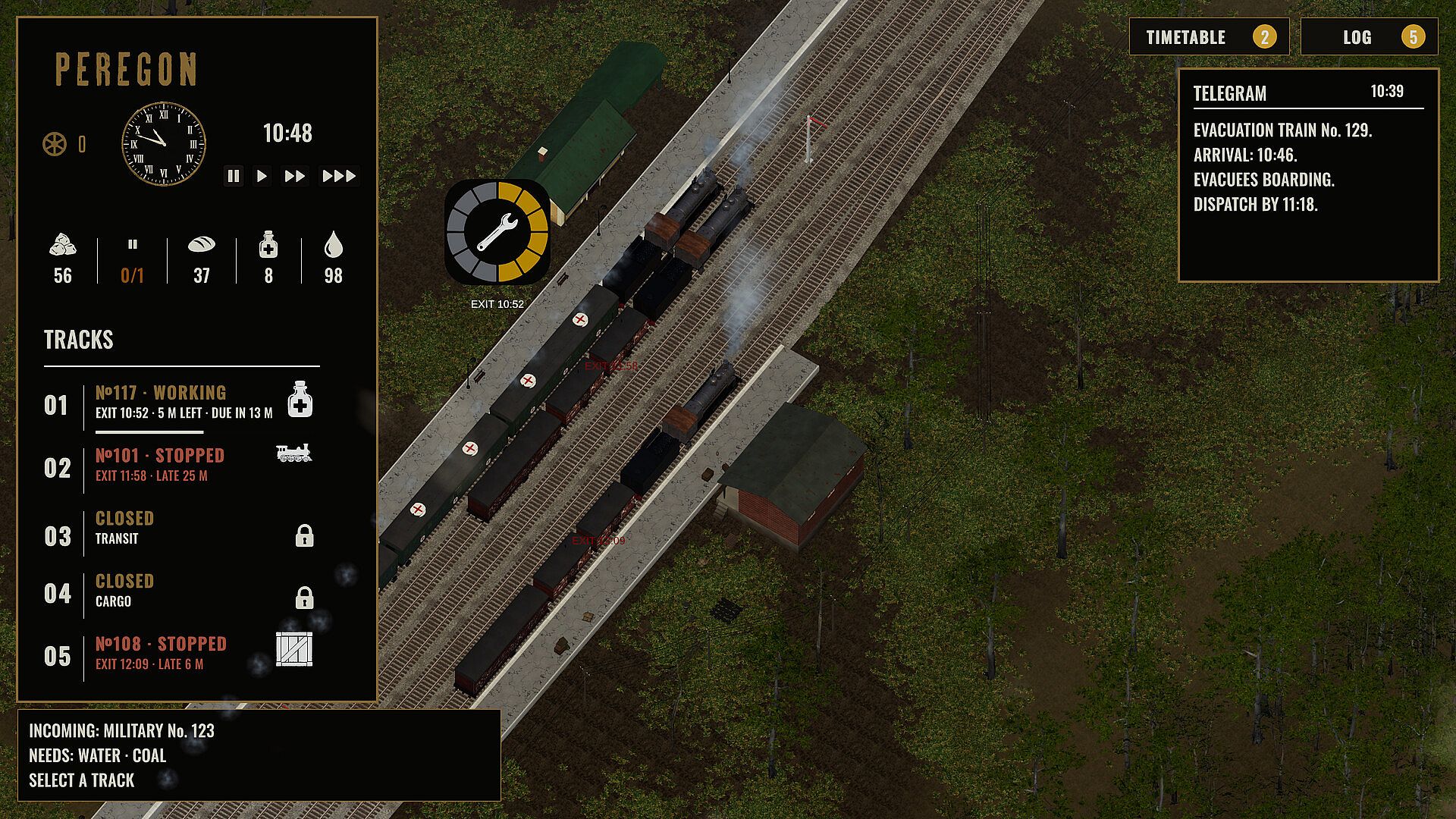
The core loop revolves around assigning incoming trains to the correct tracks while managing a single crew and finite station resources. Each track serves a distinct purpose, from passenger platforms for the wounded to service areas with water towers and coal yards. Players must route trains accurately because hospital trains require platforms and engines low on water need the tower, and mistakes block the station throat where only one train can pass at a time. The timetable board serves as the main planning tool, allowing pre assignment of tracks and crew order before trains arrive on the horizon. Forecasts show arrival, service and departure times, so one poor decision can cascade into widespread delays across the shift.
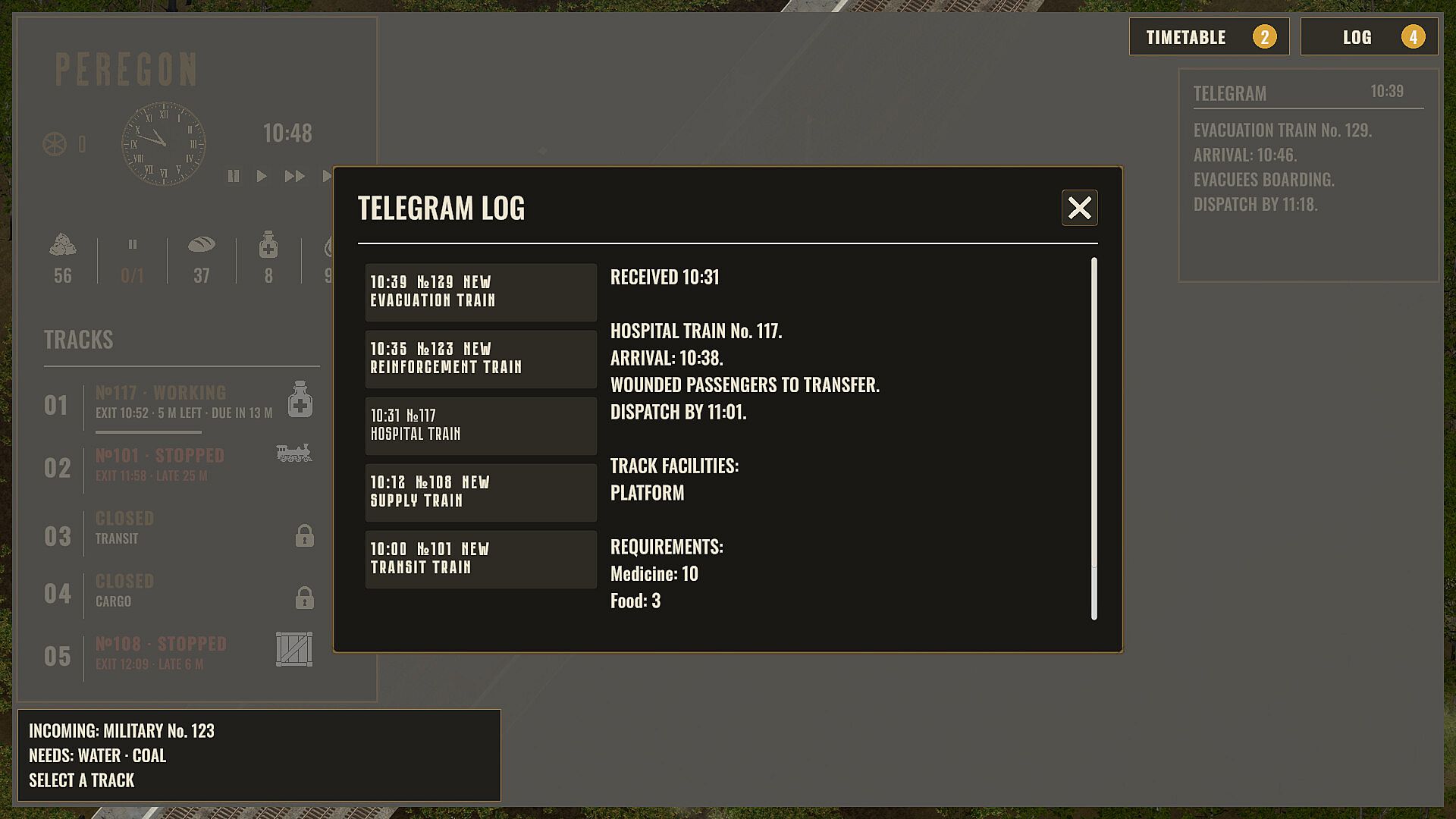
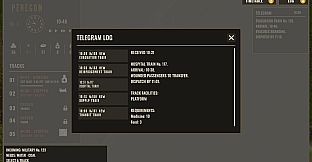
Resources add another layer of tension. Water, coal, medicine and food must be allocated from station stocks that deplete over time. Supply trains replenish these only after unloading, forcing choices about which trains receive priority service. Some trains carry hard deadlines, and hospital trains carrying the wounded cannot wait at all. Time controls let players speed through quiet periods or pause to rearrange plans when multiple trains converge. The single track sections introduce an additional constraint through the token system, where neighboring stations hold the token for opposing directions, requiring telegraph coordination to avoid head on collisions.
Game Modes
Peregon operates as a single player experience built around sequential shifts that progress through the war years from 1914 to 1917. Each shift presents a self contained challenge with its own timetable, train mix and resource constraints, reflecting historical changes such as the initial wave of mobilization trains heading west, the later influx of wounded and refugees during retreats, and eventual shortages and breakdowns. Shift rules can be adjusted to determine outcomes for unassigned trains, queue skipping and handling of severely delayed arrivals. The structure emphasizes careful planning over multiple runs rather than competitive or cooperative modes, with the station evolving across shifts as new tracks open and orders change.
The Historical Setting
The game draws from the real operations of the St. Petersburg Warsaw Railway and the Vilna region that supplied the Russian Empire North Western Front. Telegraph orders, wagon numbers, arrival telegrams and the token system on single track sections all mirror documented railway practices of the era. Players encounter the war indirectly through these documents and the changing composition of trains rather than direct combat scenes. The station log records every telegram and decision, building a cumulative record of each shift that illustrates the broader strain on the home front as the conflict drags on.
Is It Worth Playing?
Peregon suits players who enjoy deliberate, systems driven simulations that reward foresight and efficient resource allocation. The calm pace combined with constant potential for cascading problems creates steady tension without requiring fast reflexes. Because the game remains in active development with the first shift under construction and a demo planned for release, interested players can follow progress through the wishlist on the platform. Those drawn to historical management challenges or the logistics of early 20th century rail operations will find the detailed mechanics and period accurate constraints rewarding, while anyone seeking action or large scale strategy may prefer titles with different pacing. The focus on meaningful trade offs with no ideal solutions gives the experience a grounded, thoughtful quality that stands apart from more conventional war themed games.