


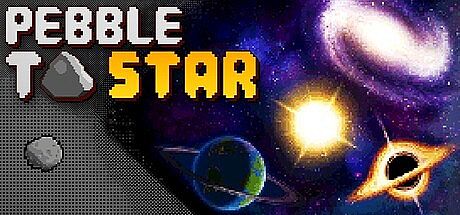


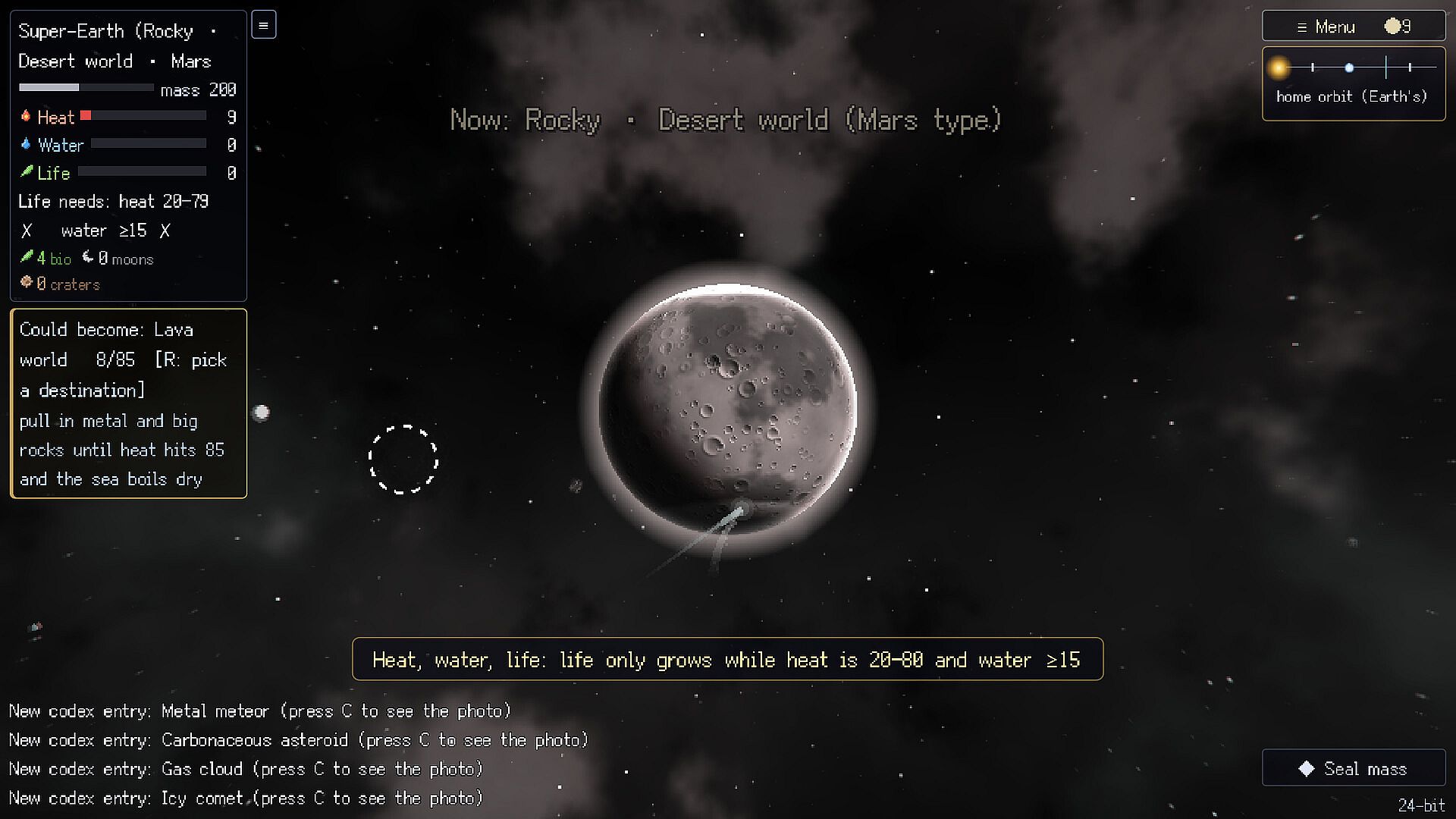
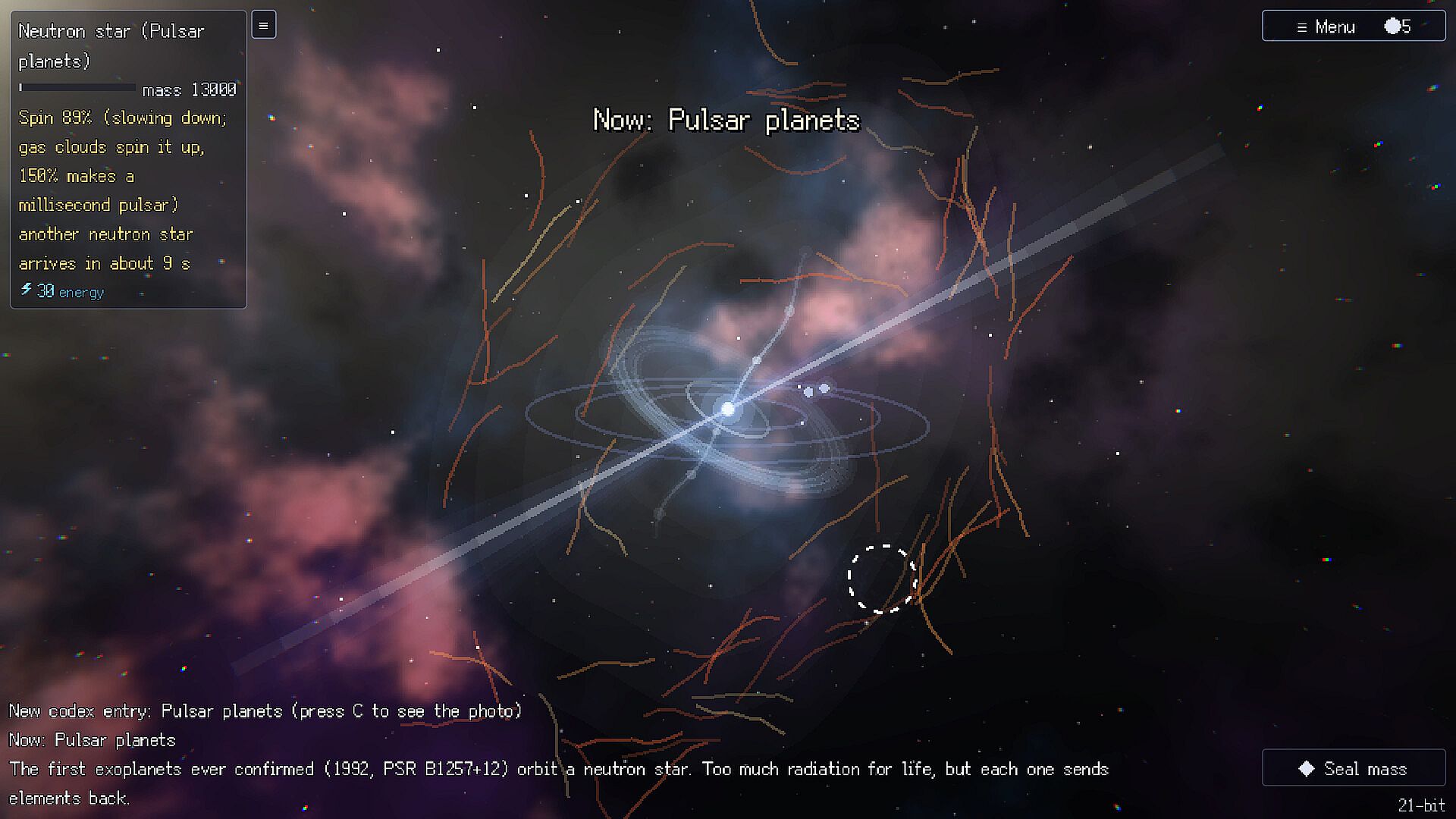
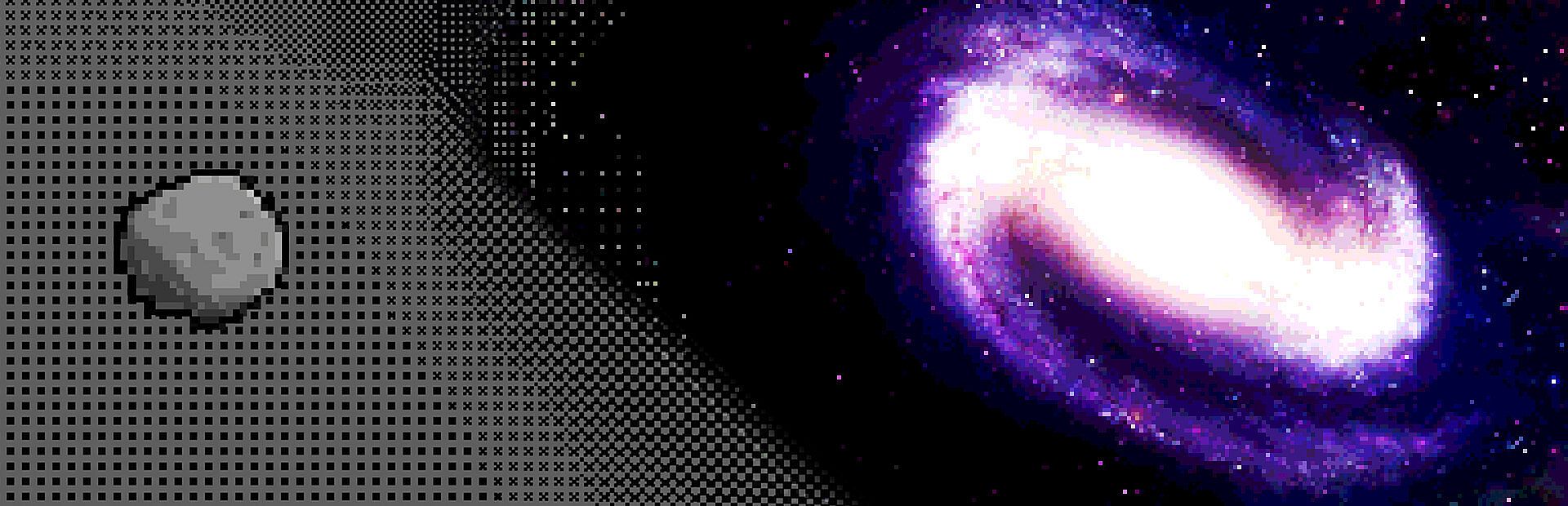
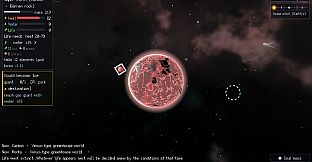
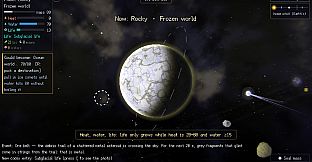
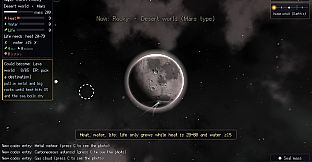
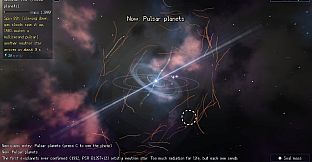

Pebble to Star is an idle growth simulation game for PC in the indie and casual genres. Players begin as a simple grey pebble drifting in a minimalist 1-bit sky and gradually shape it into larger celestial bodies through direct interaction with passing objects.
Gameplay
The core loop centers on attracting or repelling drifting bodies with mouse controls. Left-click pulls comets, meteors, and other debris inward, creating craters and adding mass, while right-click pushes unwanted material away. Holding the left button allows sweeping motions to collect multiple items at once. Flashing red objects signal collision risks that require quick decisions to absorb or deflect.
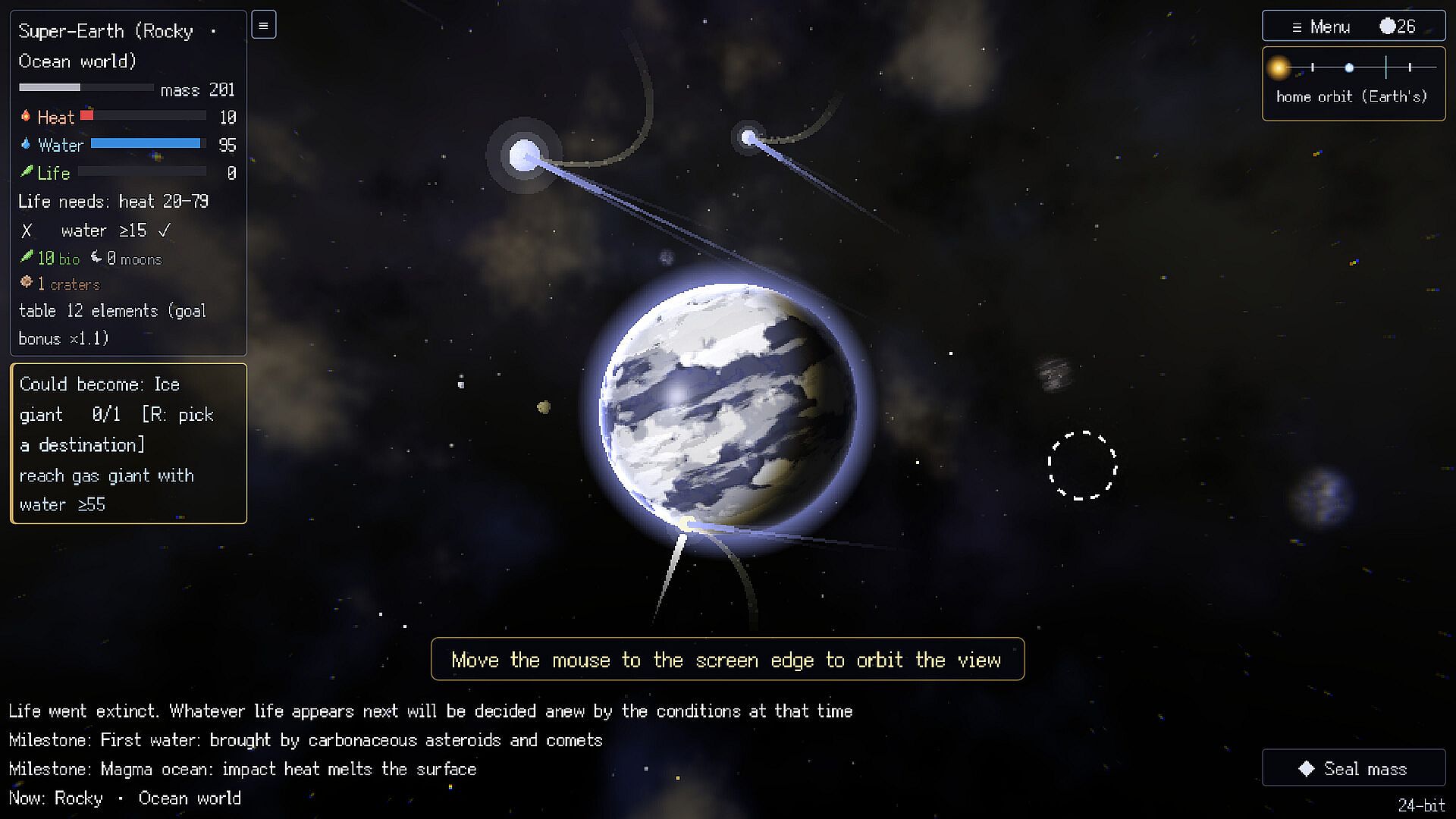
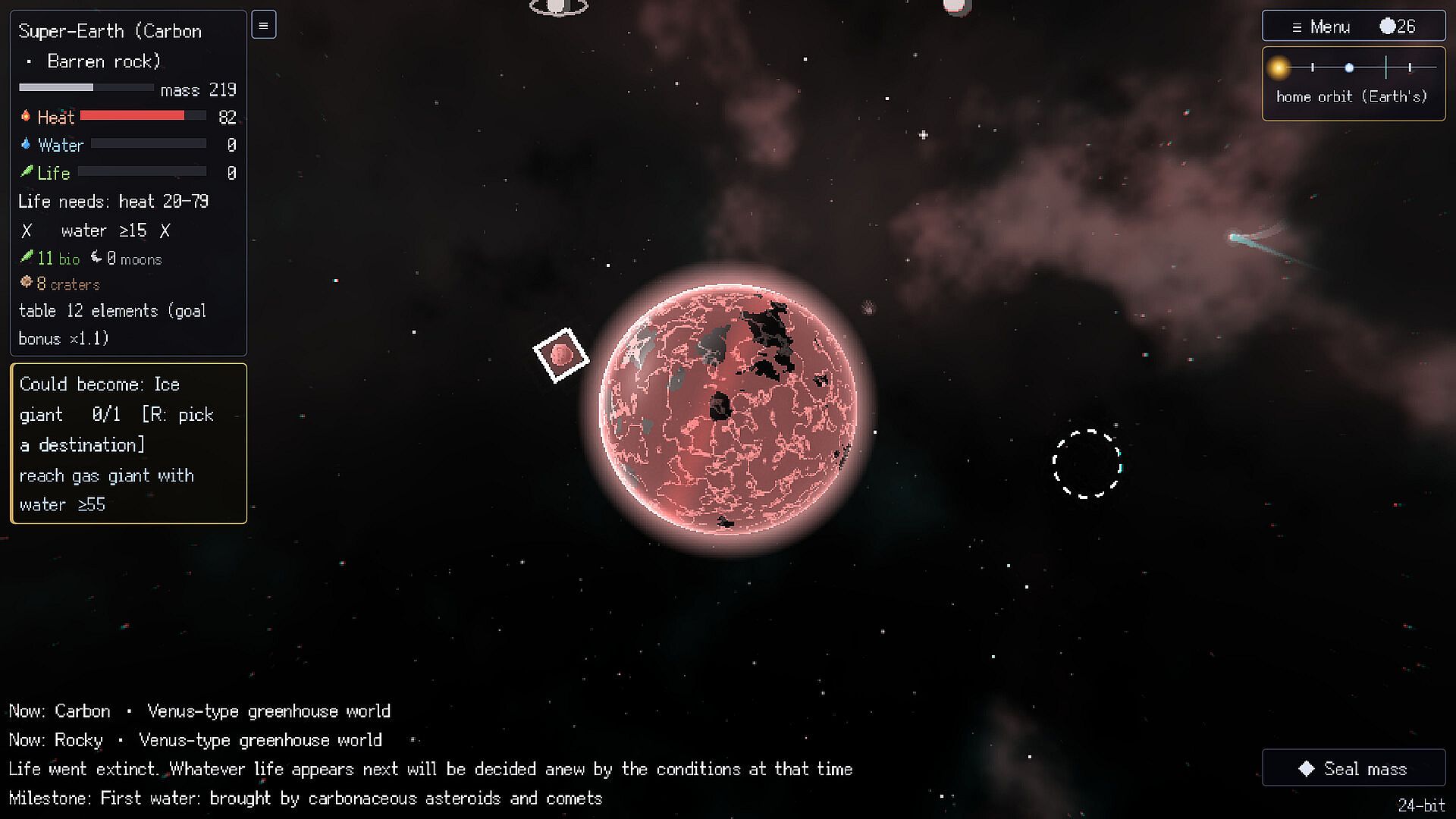
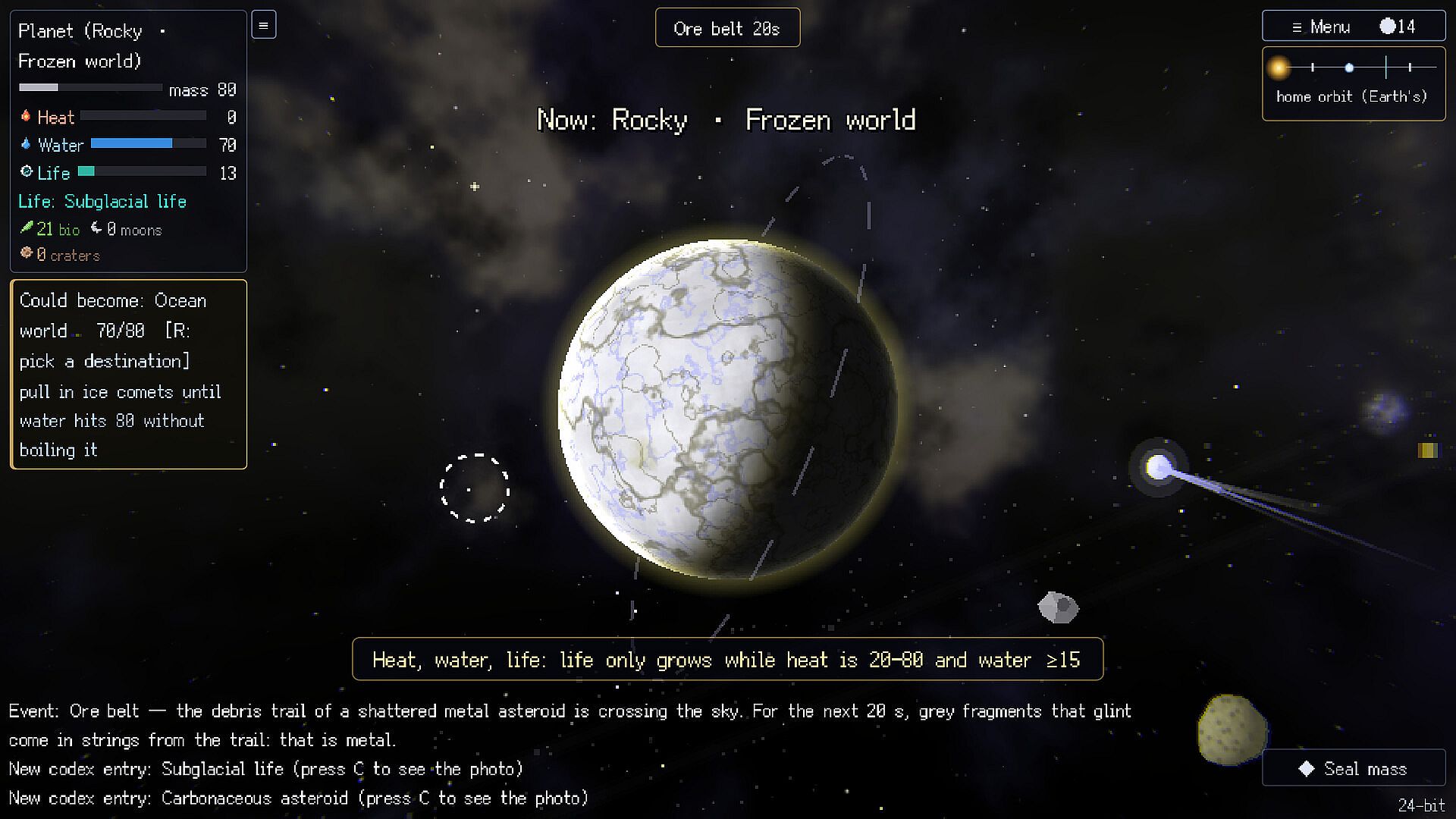
As mass increases, natural gravity takes over, pulling in more material automatically even when the player steps away. Progression advances through distinct layers, each introducing new visual and mechanical elements. The display evolves from stark 1-bit black and white to richer color depths as heat, water, and life accumulate, eventually rendering oceans, clouds, rings, and nebulae in full detail.
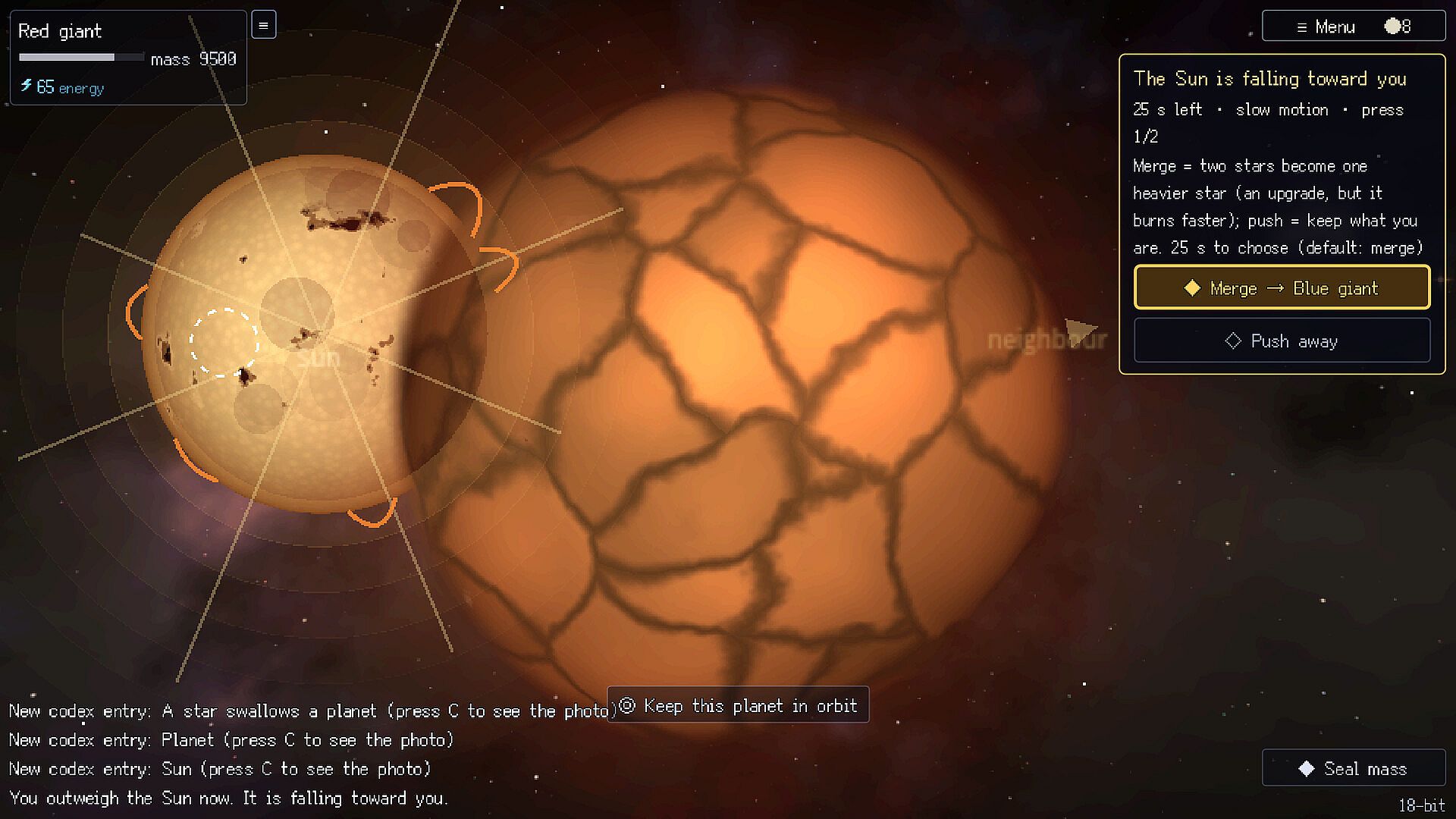
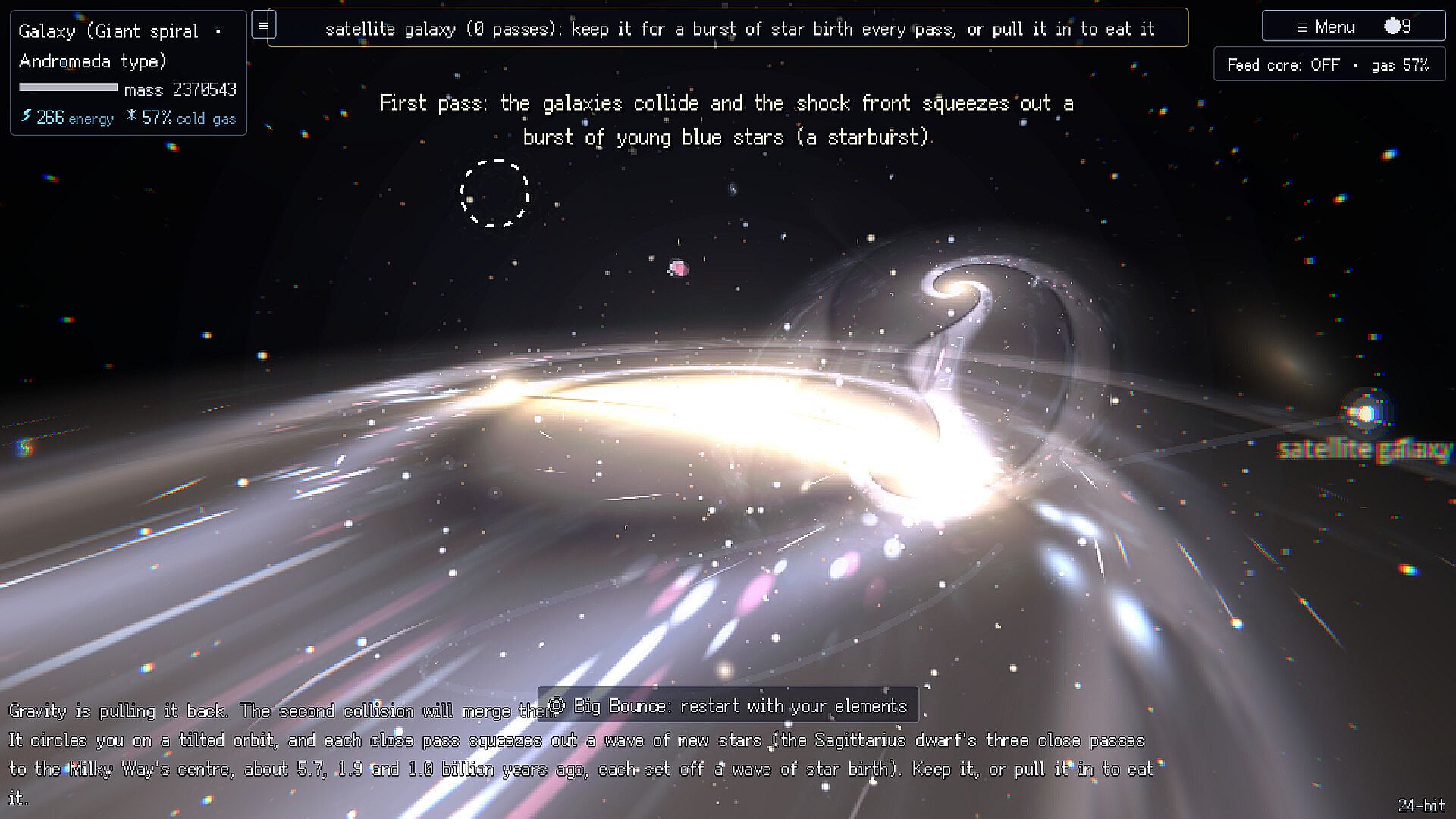
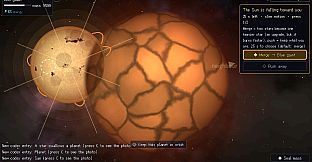
Choices arise through random events, such as deciding whether a neighboring planet moves inward or outward, merging with or repelling the sun, or handling a Mars-sized embryo that could form a moon or melt the surface. These decisions influence the final form and stability of the growing world.
Game Modes
The experience remains a single-player idle simulation throughout, with no separate multiplayer or competitive modes. Players select growth routes toward specific destinations like ocean worlds, iron planets, blue giants, or magnetars, guided by checklists of required elements. A star map offers upgrade branches purchased with collected materials, supporting varied paths to different stellar remnants or galaxies.
Idle functionality allows the simulation to continue autonomously when enabled, letting the pebble accumulate mass during player absence. Completion of the periodic table unlocks an extended mode to observe universal aging toward heat death, while a Big Bounce option resets the universe while retaining progress in the table for repeated runs.
Progression and Features
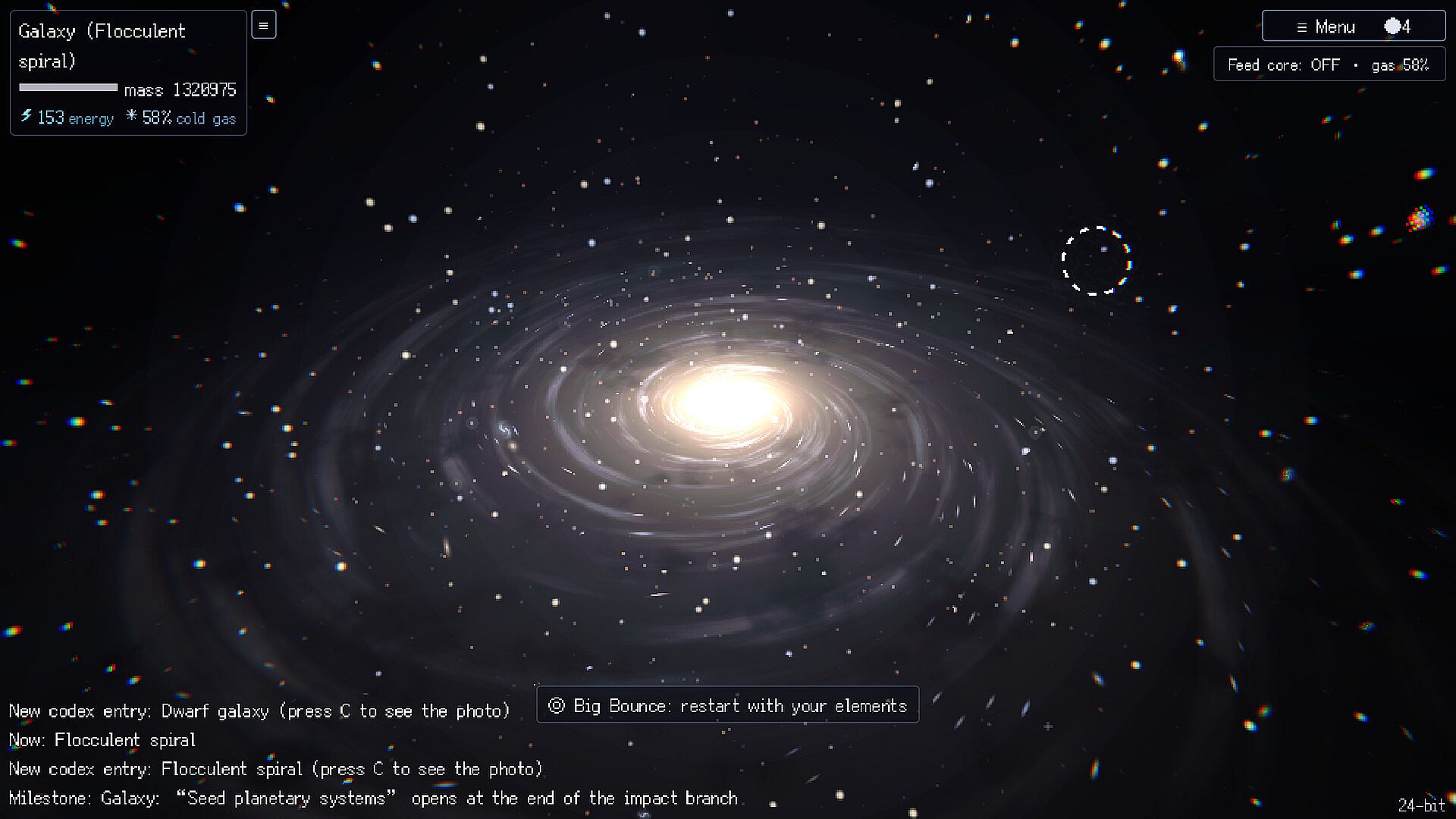
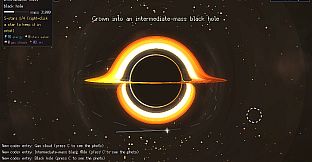
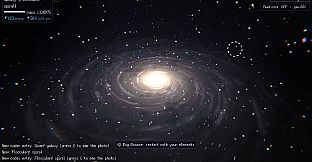
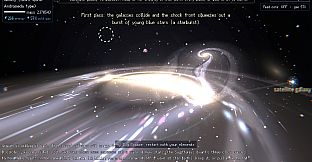
Each stage brings fresh visuals and events, scaling from pebble to planet, star, black hole, and galaxy. Dozens of destination types exist, each with unique conditions based on absorbed materials. Life forms emerge on stable worlds, leading to visible civilizations that develop technology before potential setbacks from impacts.
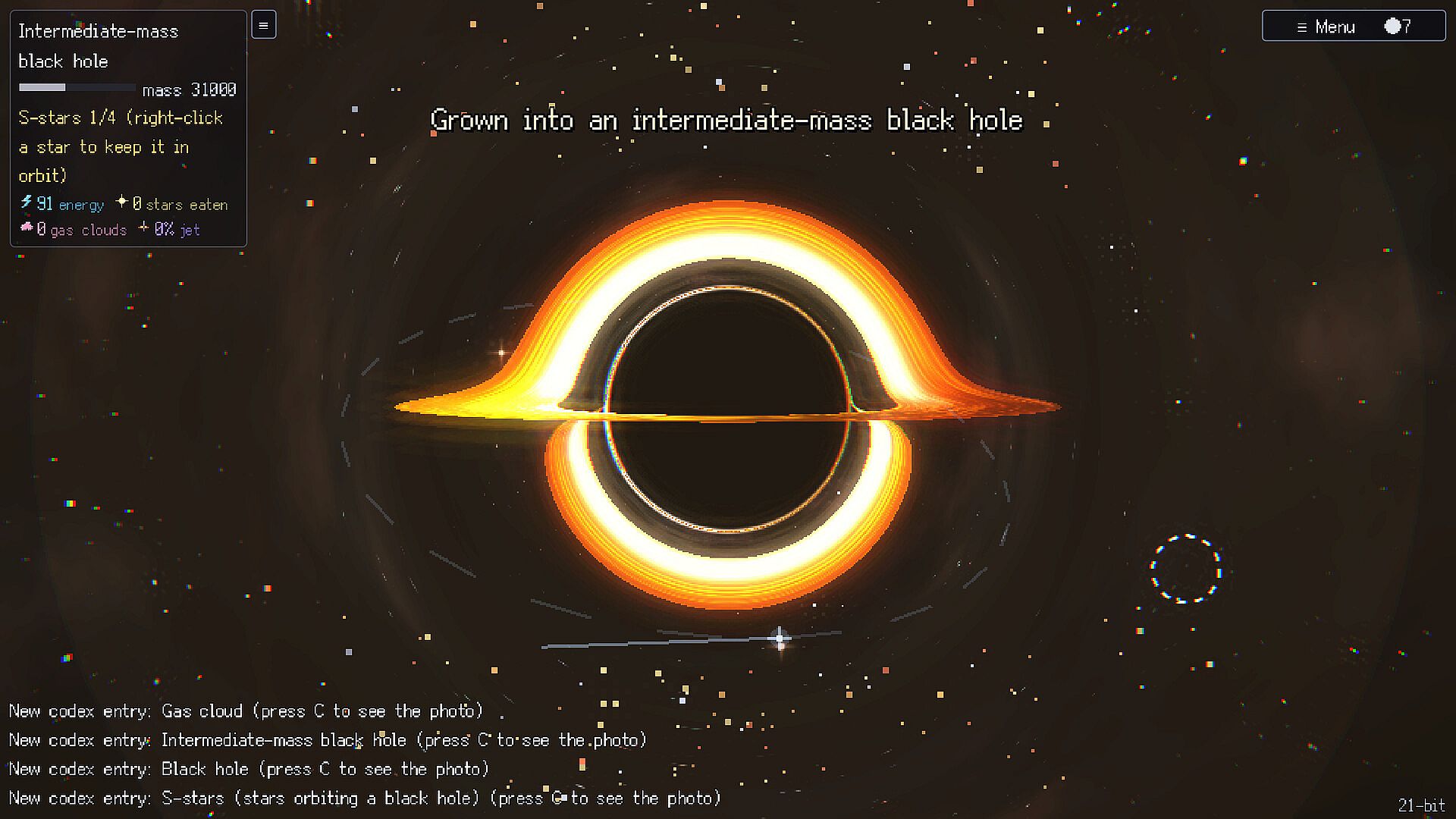
A codex tracks over 100 worlds and phenomena for collection purposes. The system draws from real astrophysical principles, with stellar evolution and events reflecting observed behaviors, including ray-traced black hole visuals. Multiple life types and civilization outcomes add replay depth through different endings and paths.
Is It Worth Playing?
This title suits players who enjoy relaxed, hands-off simulation with meaningful choices in progression and collection. The absence of timers supports flexible play sessions, and the idle option accommodates those who prefer background growth. Since the game has not yet released, current player reception remains unavailable, but the described mechanics emphasize thoughtful decision-making over fast action.
Those drawn to incremental cosmic evolution and scientific-inspired systems will find the layered development and event-driven choices engaging. The focus on single-player exploration of multiple endings and collectibles provides clear long-term goals without external pressure.