




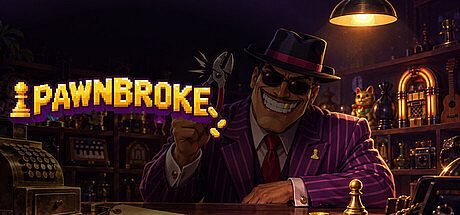


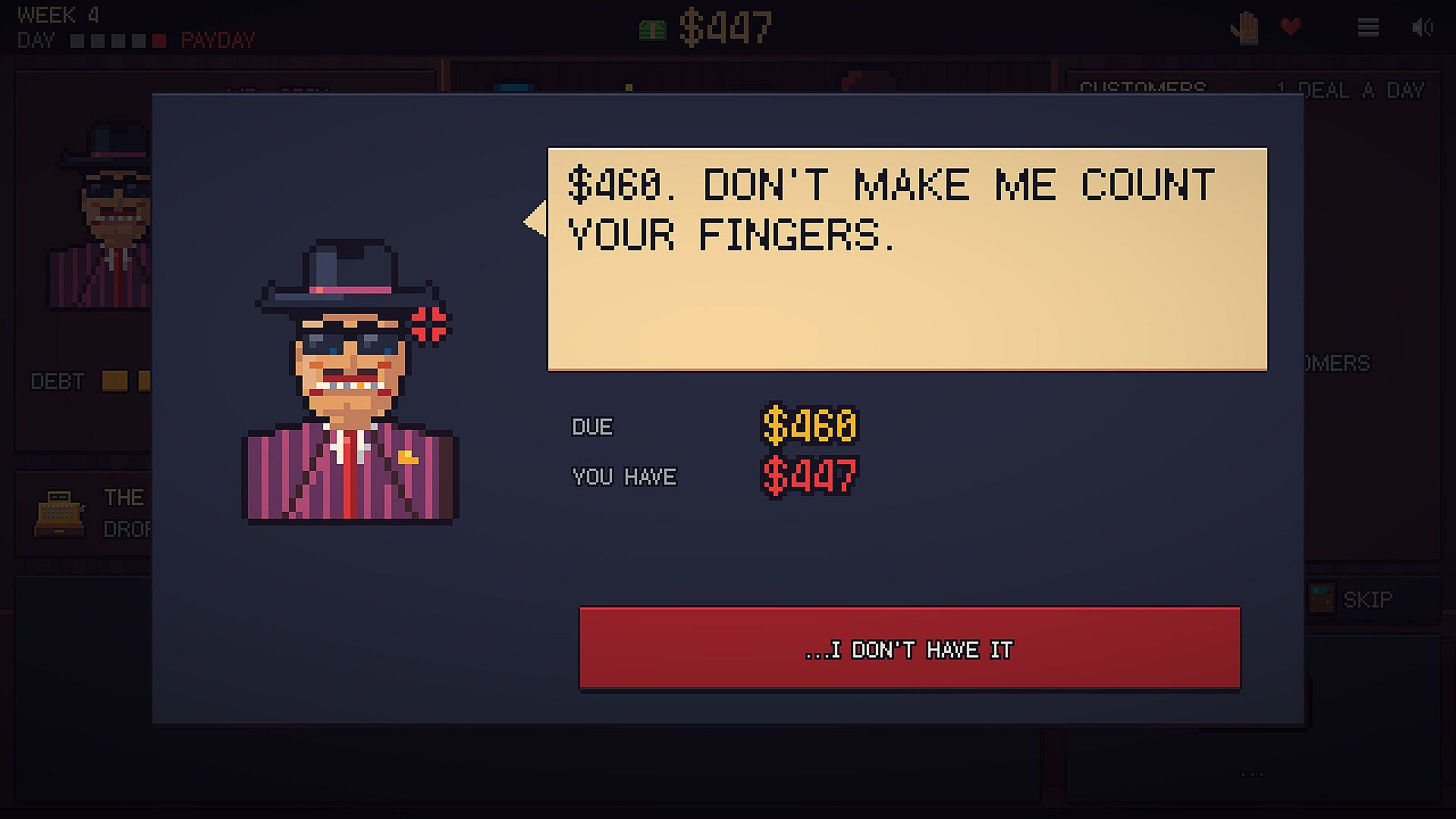
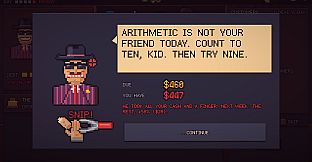
Pawnbroke is a single-player strategy simulation game that blends roguelike progression with pawnshop management. Players inherit a struggling business burdened by debt and must turn junk into profit through careful buying, shelf arrangement, and nightly payouts while fending off a menacing loan shark.
Gameplay
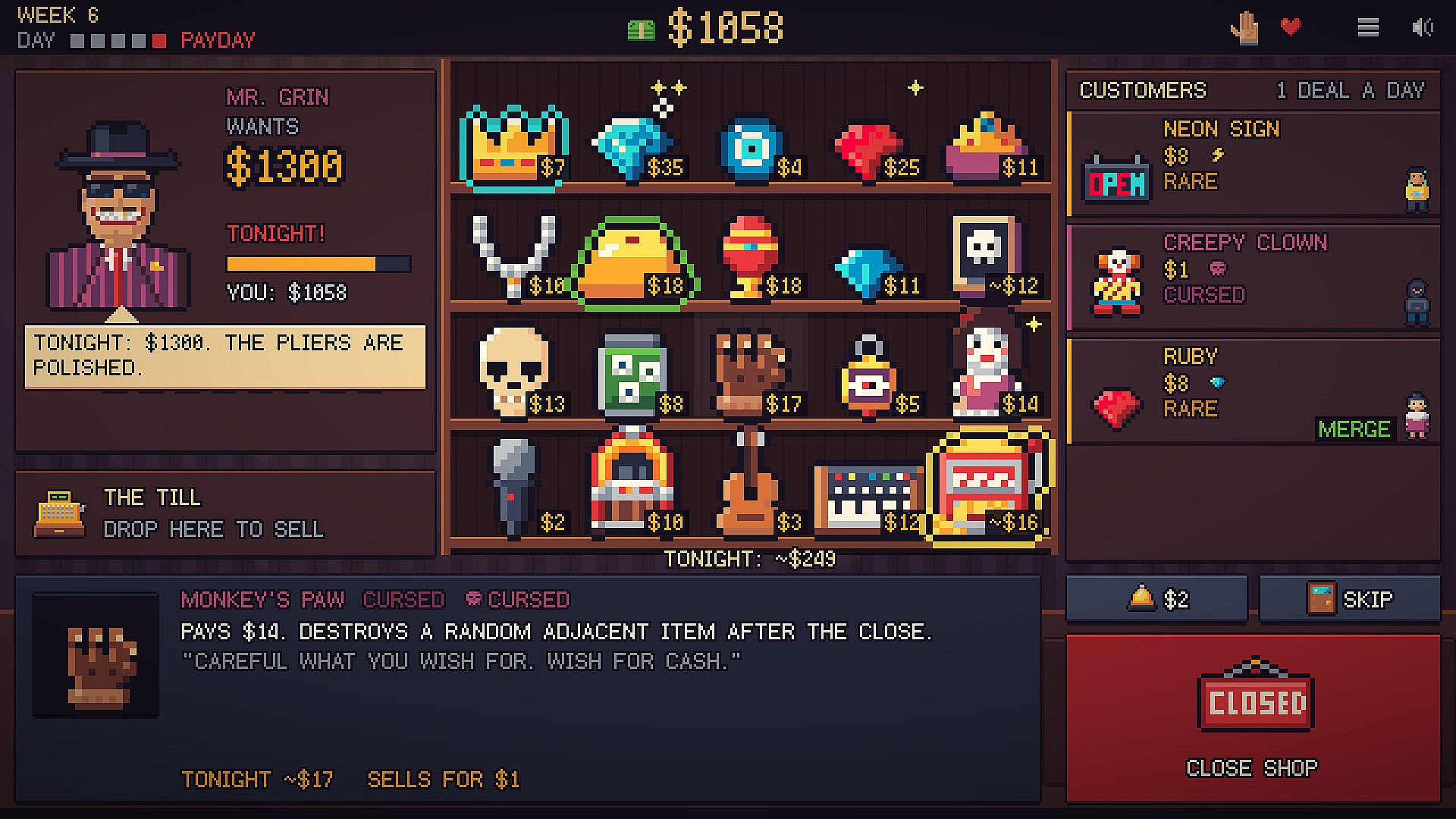
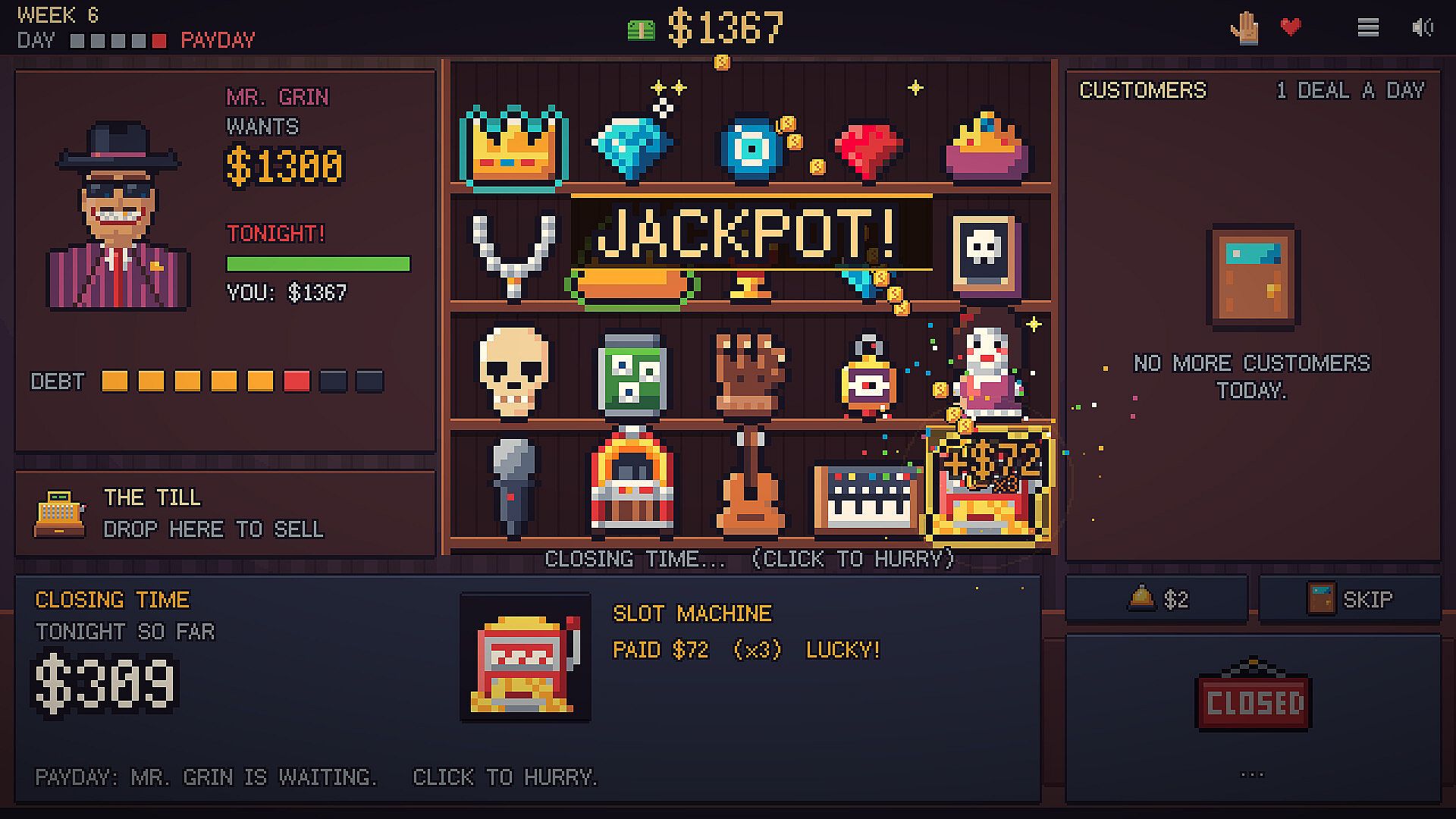
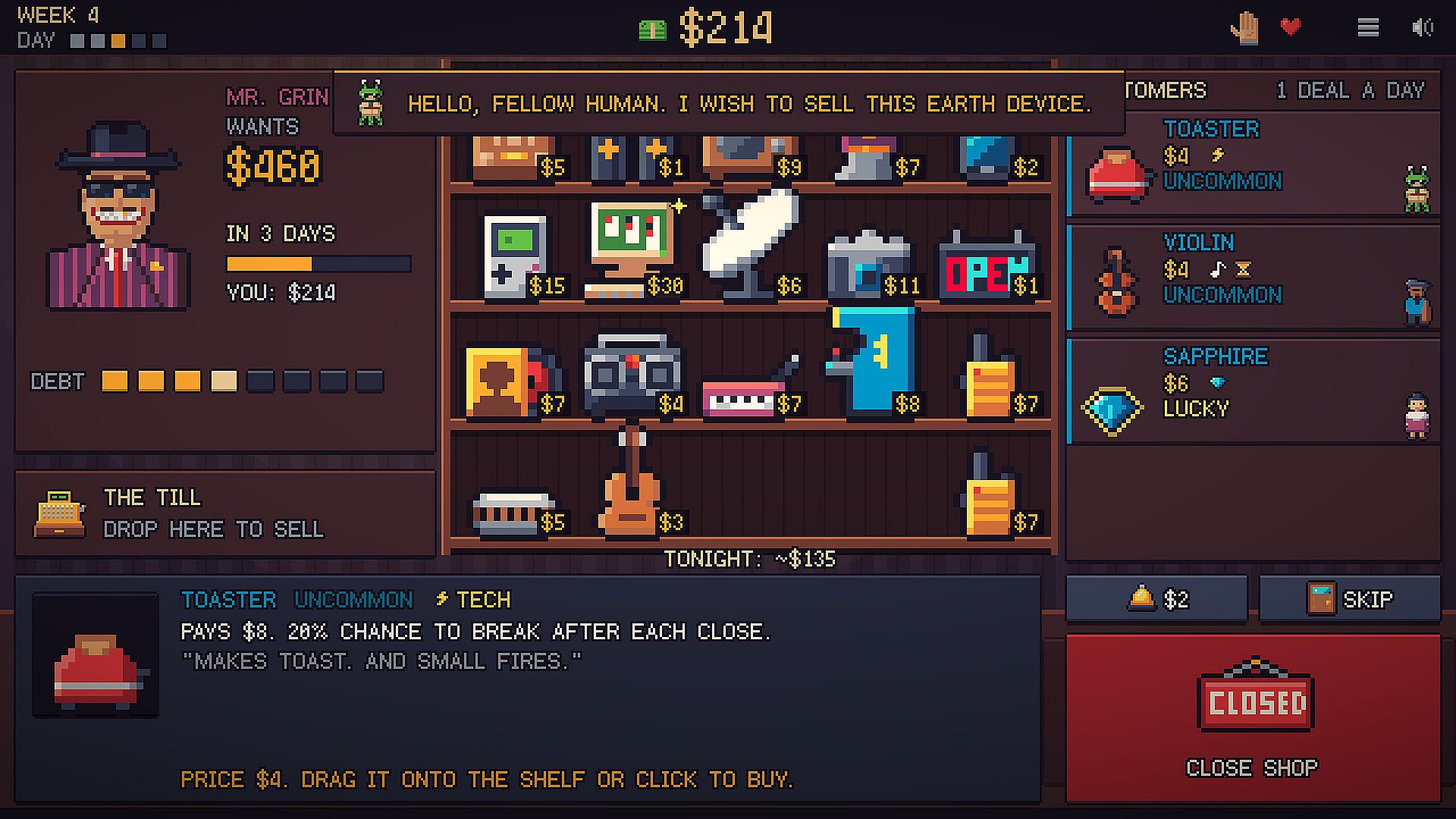
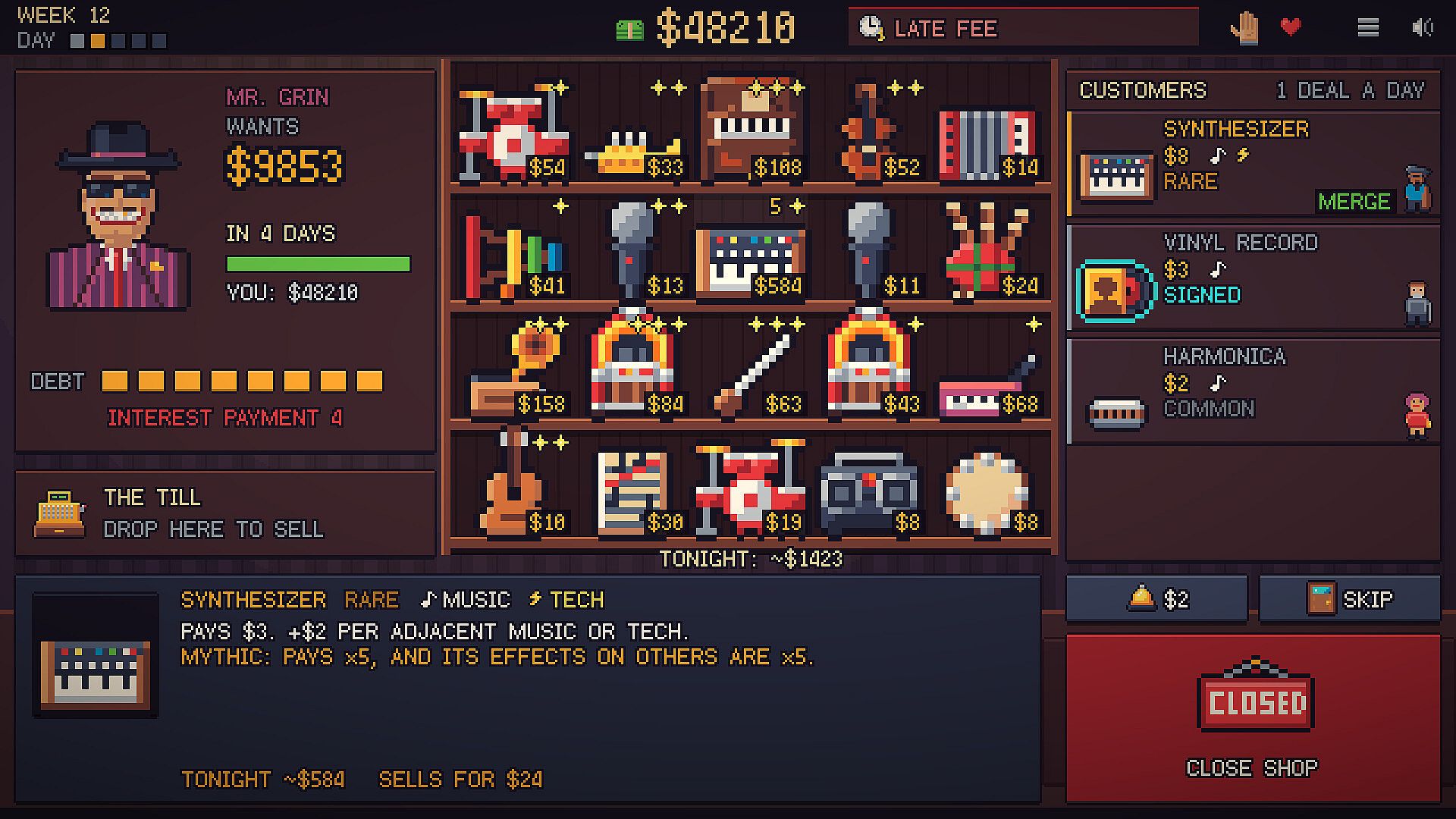
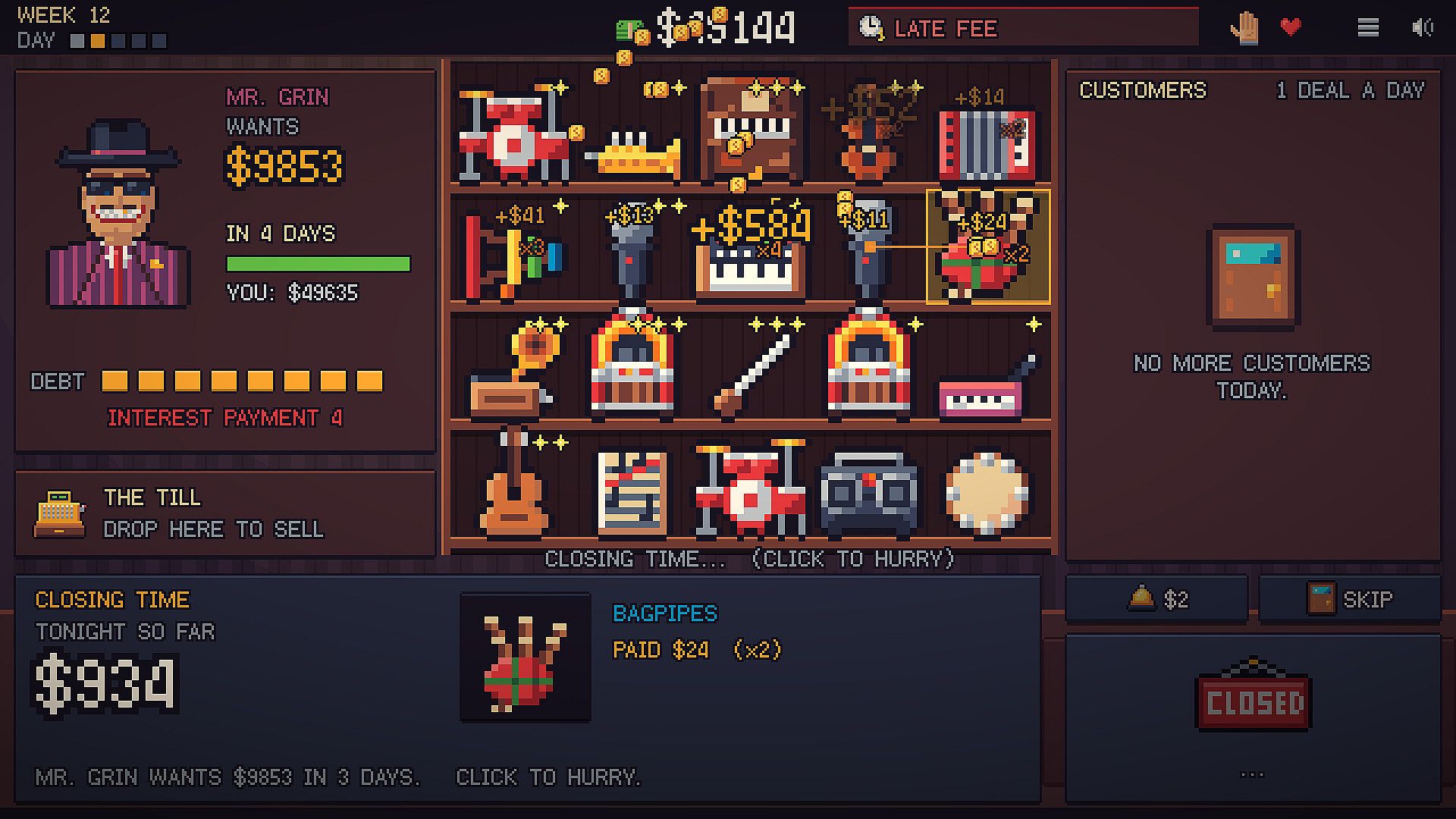
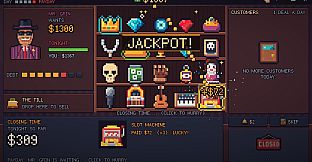
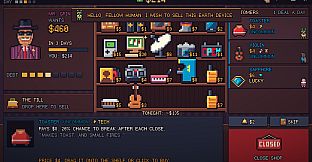
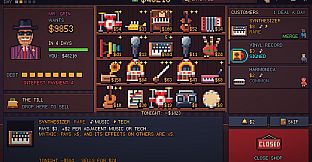
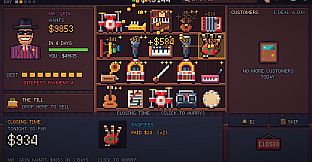
The core loop centers on daily operations in the pawnshop. Each morning brings customers offering items for sale, ranging from ordinary objects like pearls and radios to unusual ones such as haunted dolls or a monkey's paw. After purchasing stock, the player arranges up to nine items on a shelf. At closing time, every item generates payout based on its type and the effects of its eight neighboring items. Specific synergies drive the economy: a Mirror duplicates the value of the item to its left, Duct Tape shields adjacent stock from harm, and a Chainsaw damages neighbors while potentially boosting overall returns. Seven categories of goods exist, including jewels, tech, antiques, junk, music, tools, and high-risk cursed items that offer larger rewards at a personal cost. Duplicates can be merged into upgraded versions such as Mint, Museum Piece, Legendary, or Mythic editions. Overnight events alter the inventory through smashing, melting, growth, spawning, or transformation, and each item displays its projected payout before the shop closes, turning every placement into a calculated choice.
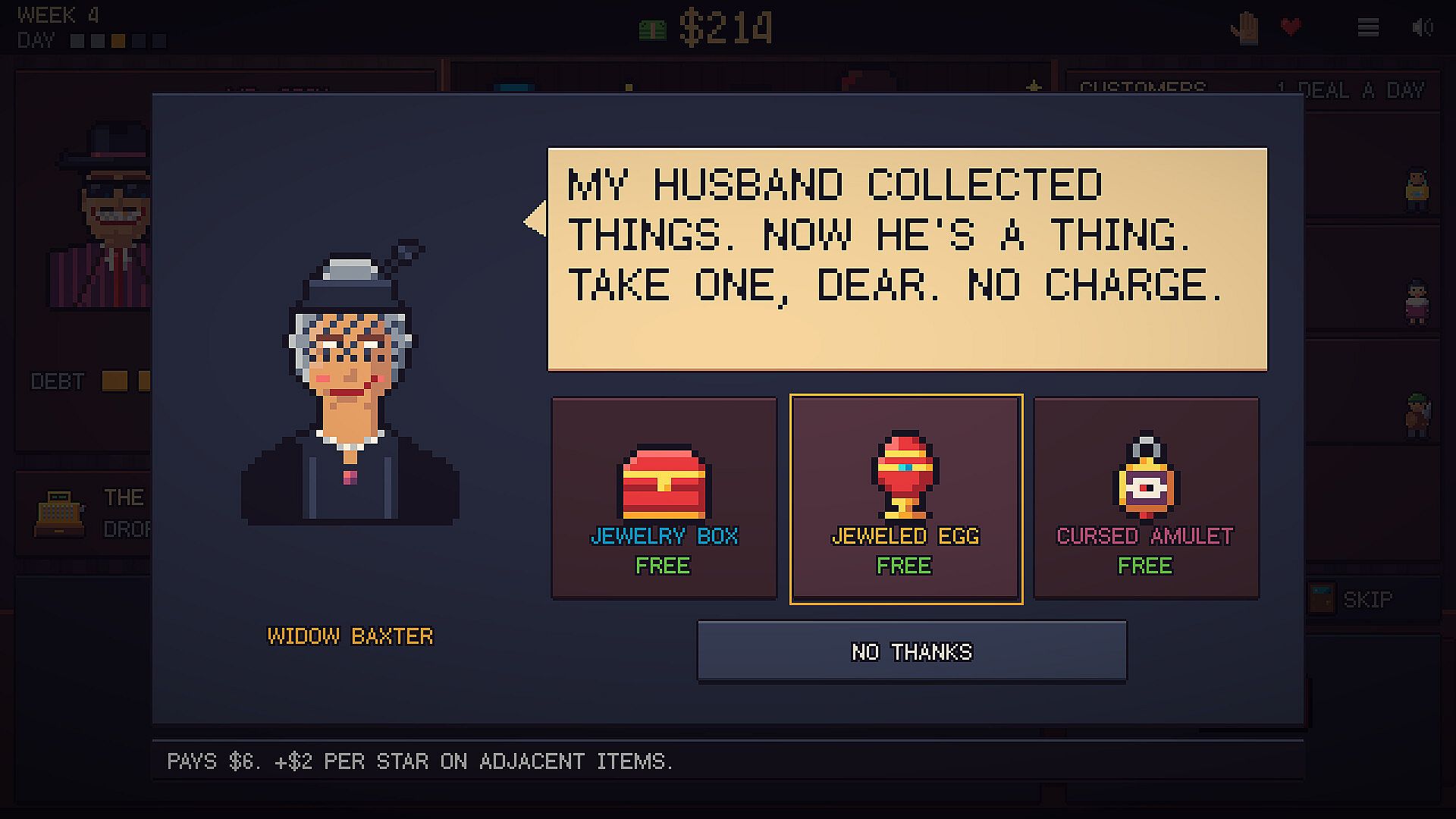
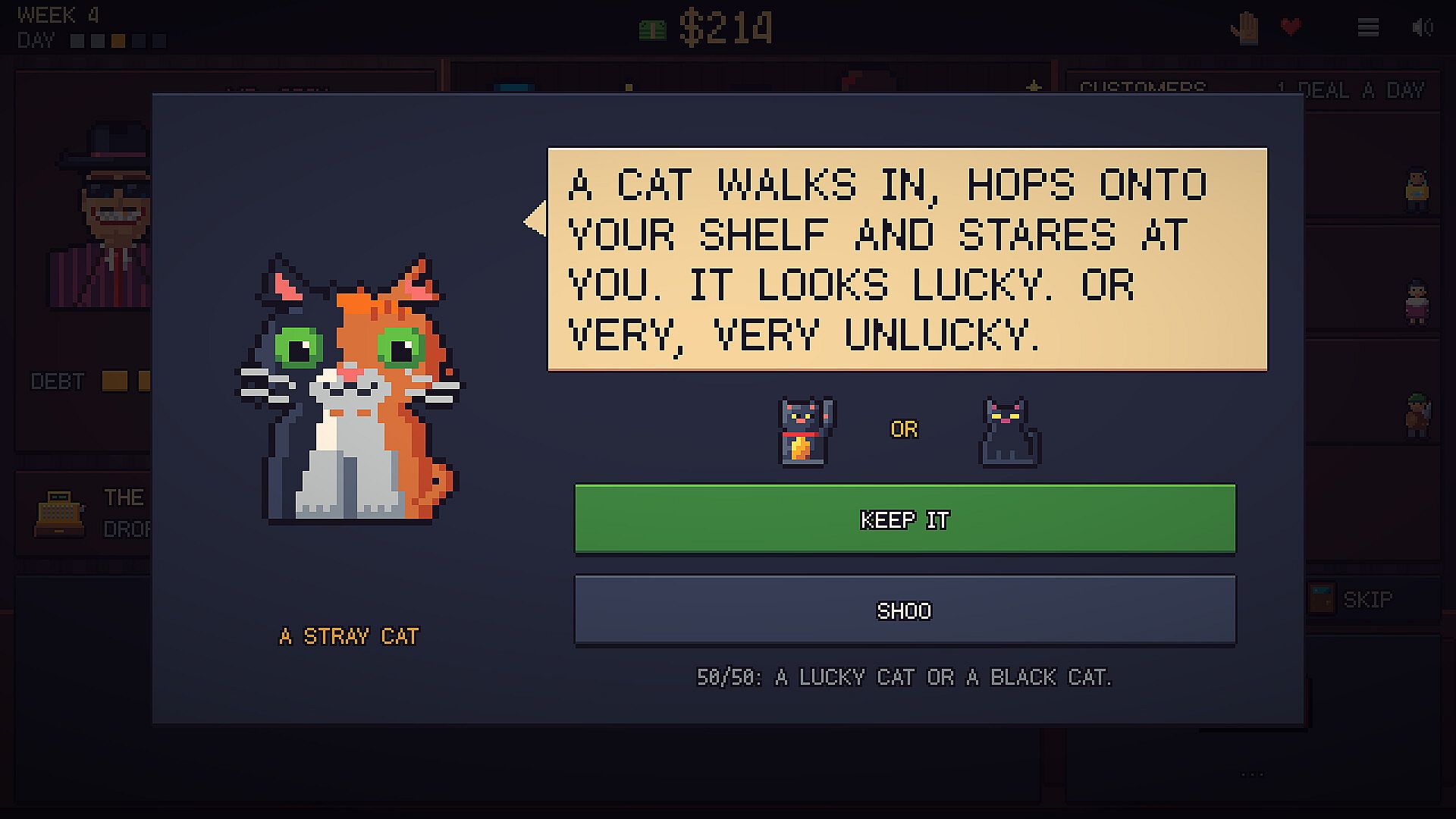
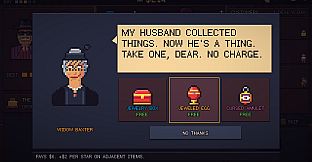
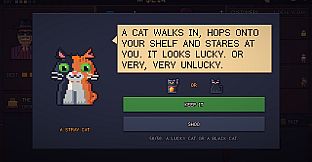
Strange visitors appear weekly before opening hours, presenting side deals with their own risks and rewards. These range from a widow offering an estate sale to a crooked cop seeking a bribe or Mr. Grin's goon demanding a tip. Occasionally, a customer turns out to be something unexpected, such as a cat burglar, an alien in disguise, a mummy, or a raccoon wearing a trench coat. The player must weigh each opportunity against the need to meet the recurring debt deadline every five days.
Game Modes
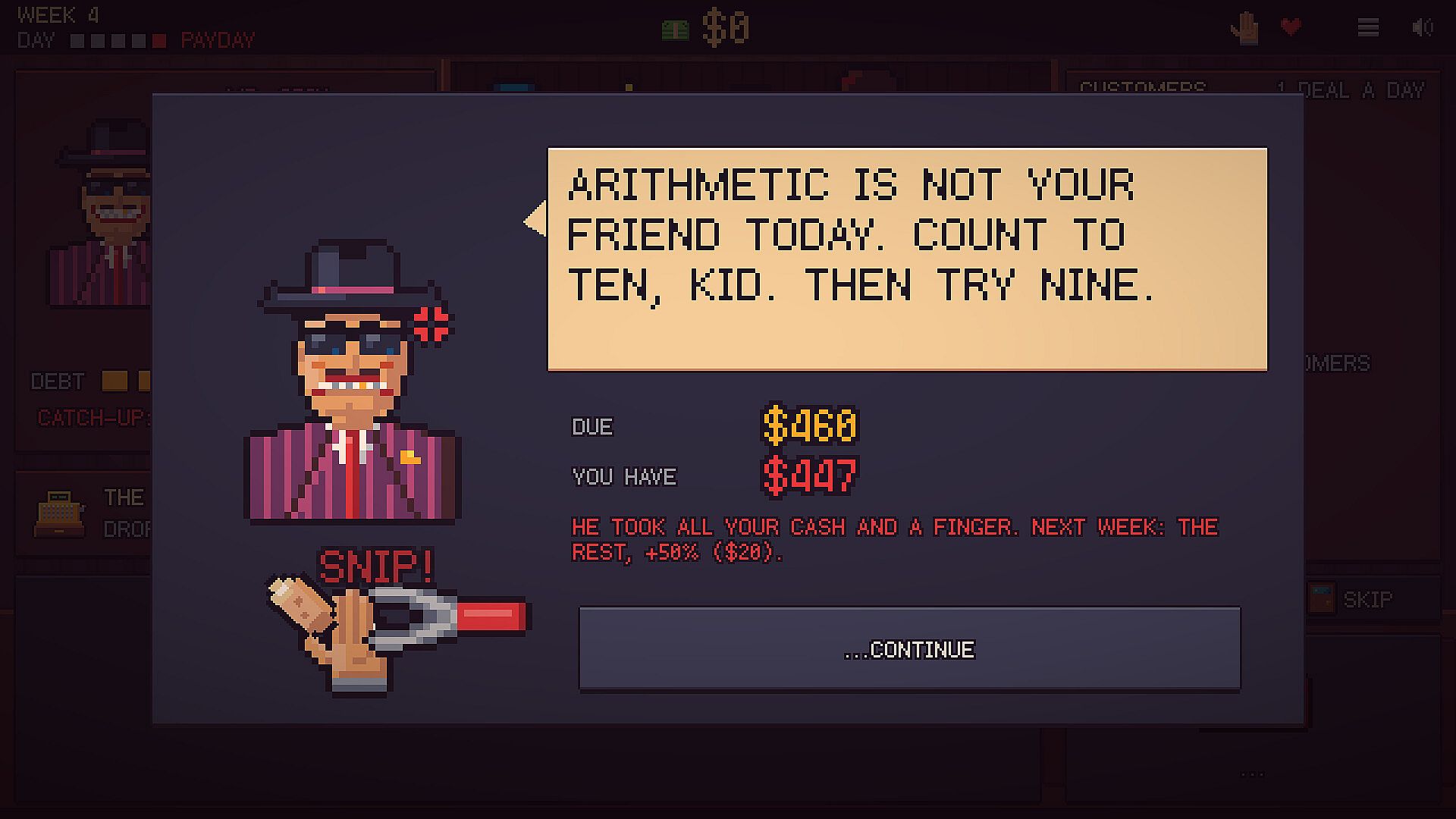
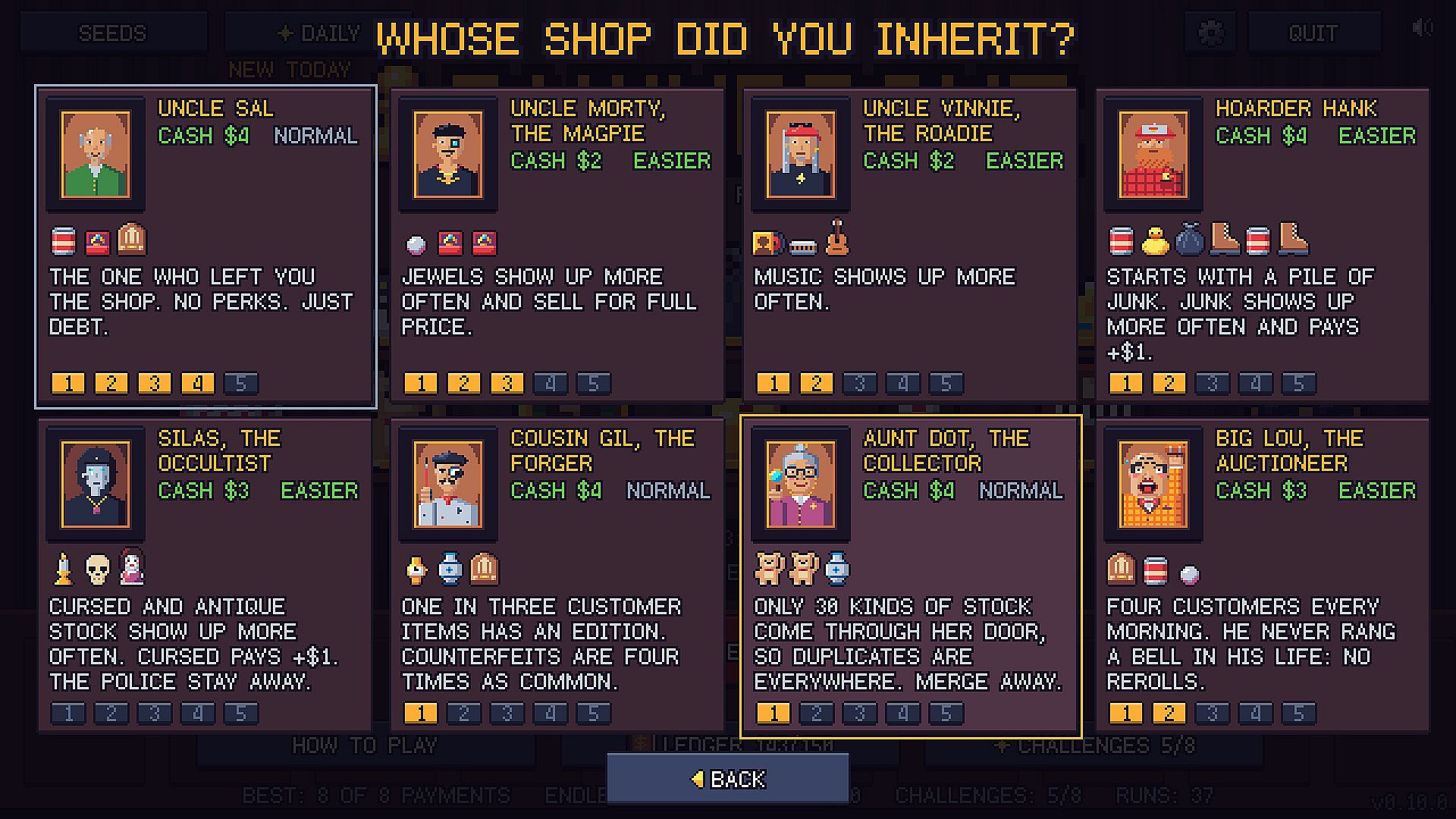
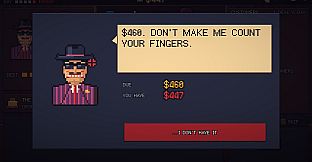
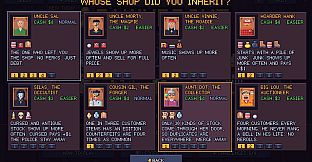
Pawnbroke structures its challenges around debt repayment and long-term survival. Five escalating debt levels impose stricter collection rules each time Mr. Grin arrives. Eight distinct starting shops, each tied to a different uncle, provide unique initial stock and a gameplay-altering perk that reshapes strategy from the first run. Eight separate challenge runs introduce one twisted rule apiece, forcing adaptation to new constraints. Milestones unlock 55 additional items that expand the available pool and populate a personal ledger. Once the initial debt is cleared, endless mode becomes available, allowing merges to scale without an upper limit and extending the roguelike loop indefinitely. Each run lasts roughly 20 to 25 minutes and autosaves each morning, supporting mouse, keyboard, or controller input.
Progression and Strategy
Success depends on recognizing item interactions and planning for nightly changes. Building efficient layouts requires balancing high-payout cursed goods against their drawbacks while protecting valuable stock with supportive neighbors. Merging creates stronger versions that compound earnings over multiple days, and the variety of visitors adds occasional high-stakes decisions that can accelerate or derail progress. The roguelike structure encourages repeated attempts, with each uncle's shop offering a fresh starting point and the challenge runs providing targeted variations on the core formula.
Is It Worth Playing?
Pawnbroke appeals to players who enjoy short, decision-heavy strategy sessions with roguelike replayability and light simulation elements. The focus on spatial arrangement and neighbor synergies creates a satisfying puzzle layer within the management framework, while the debt timer and visitor events maintain tension without overwhelming complexity. Those who appreciate indie titles that reward experimentation with item combinations and careful risk assessment will find the mechanics engaging. The game remains in development with a planned release in Q1 2027, so its final balance and additional content are still forthcoming, but the described systems point to a compact experience suited for fans of casual strategy simulations rather than large-scale management or action-heavy gameplay.