






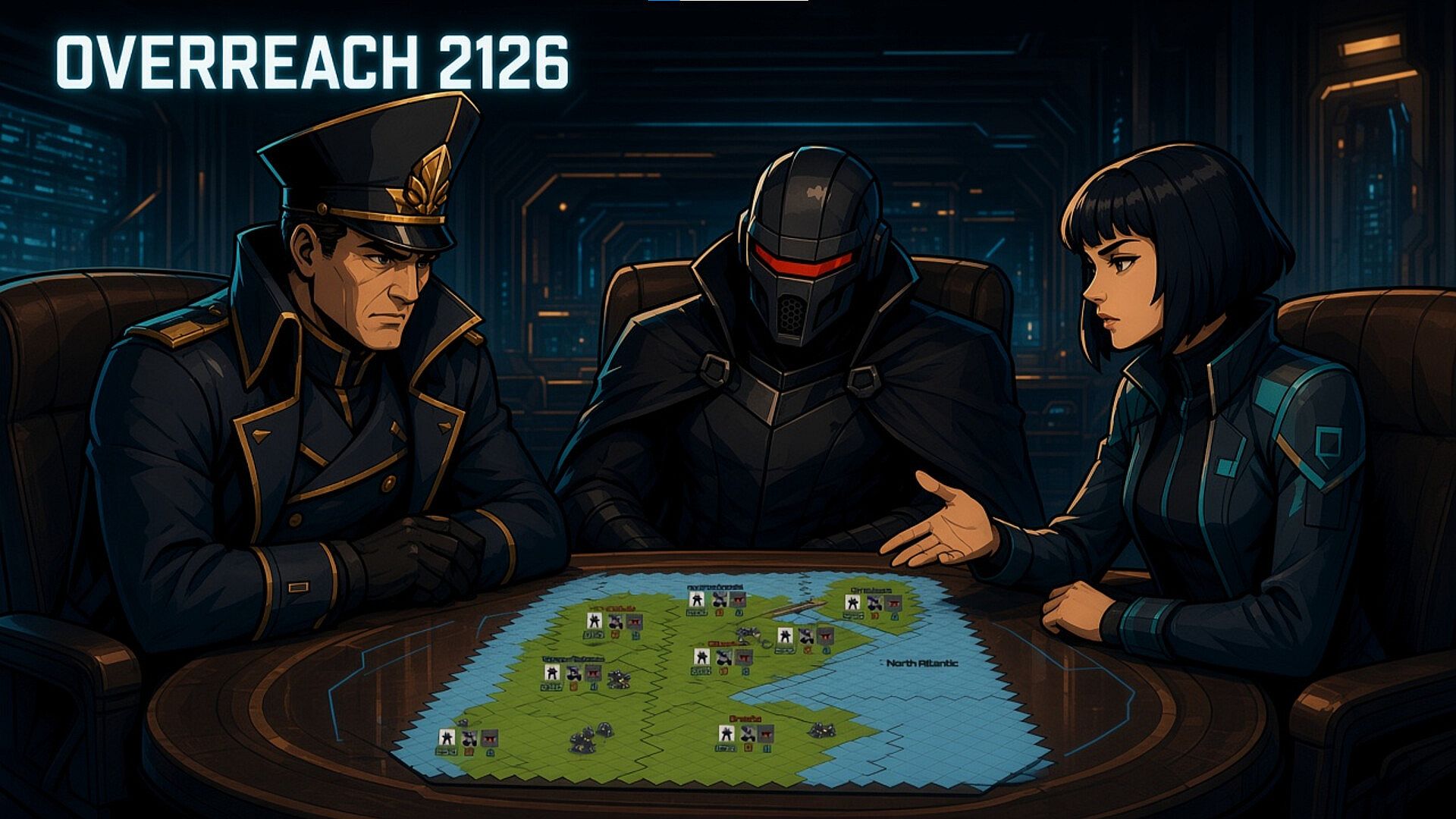
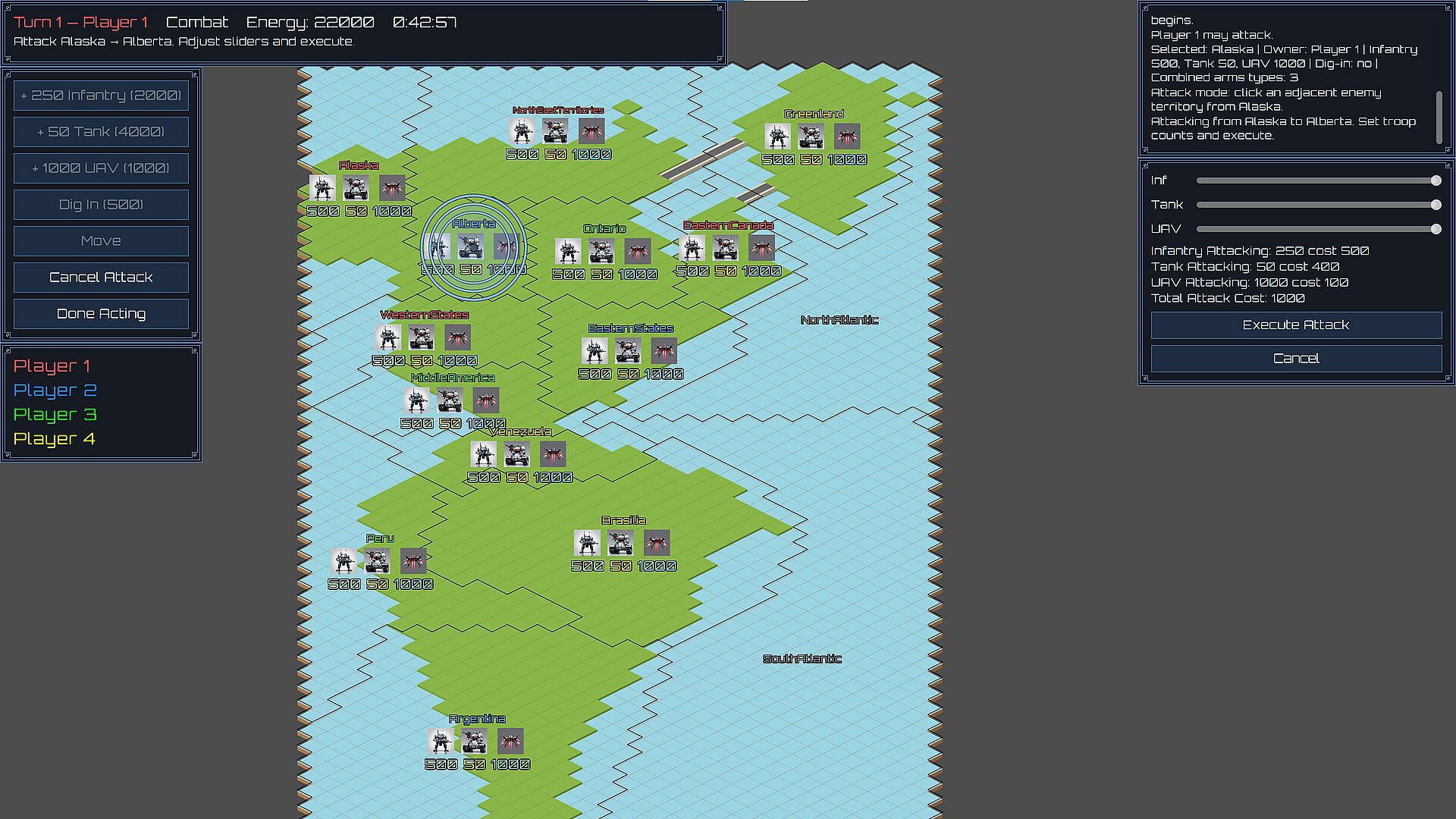
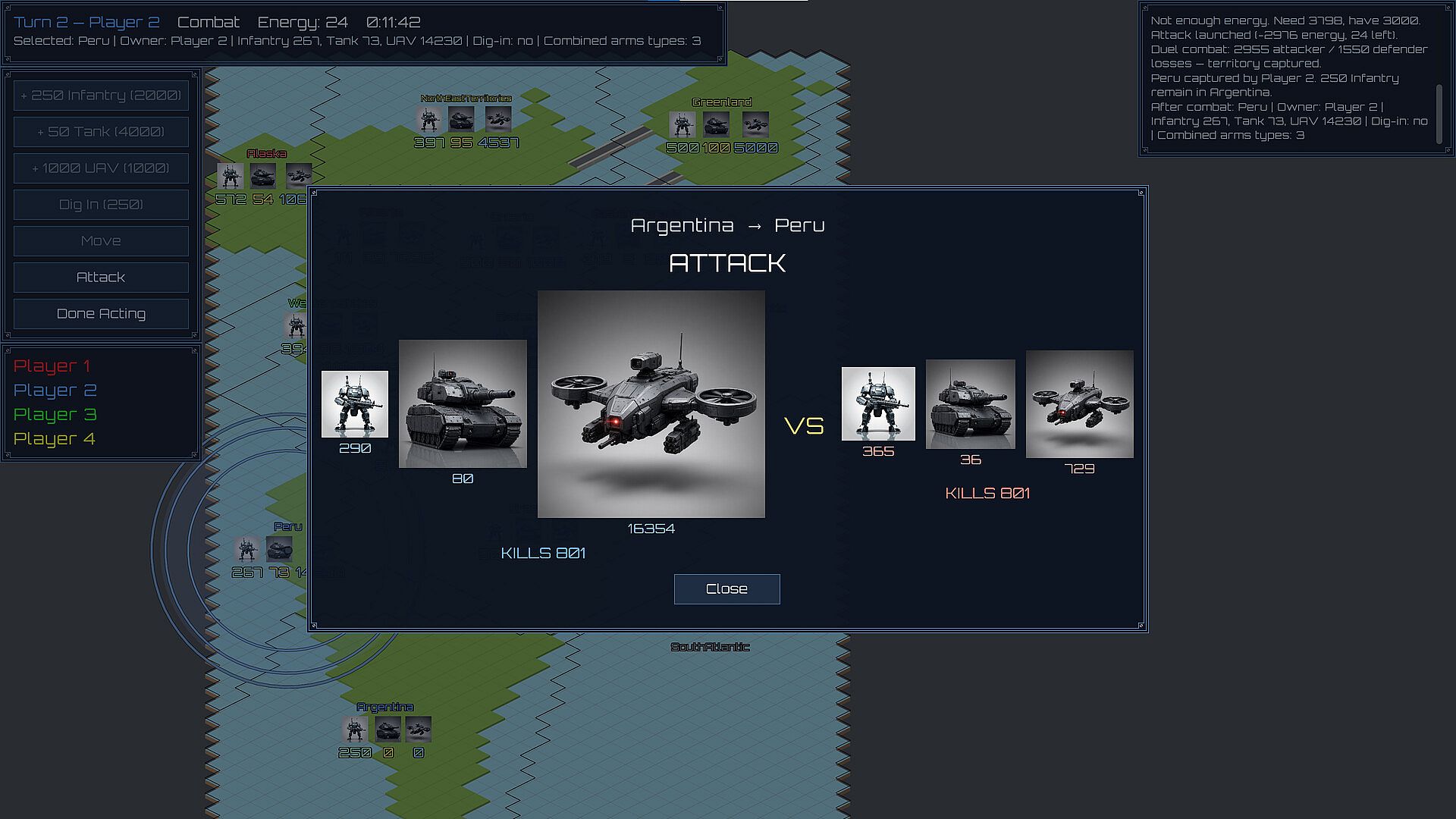
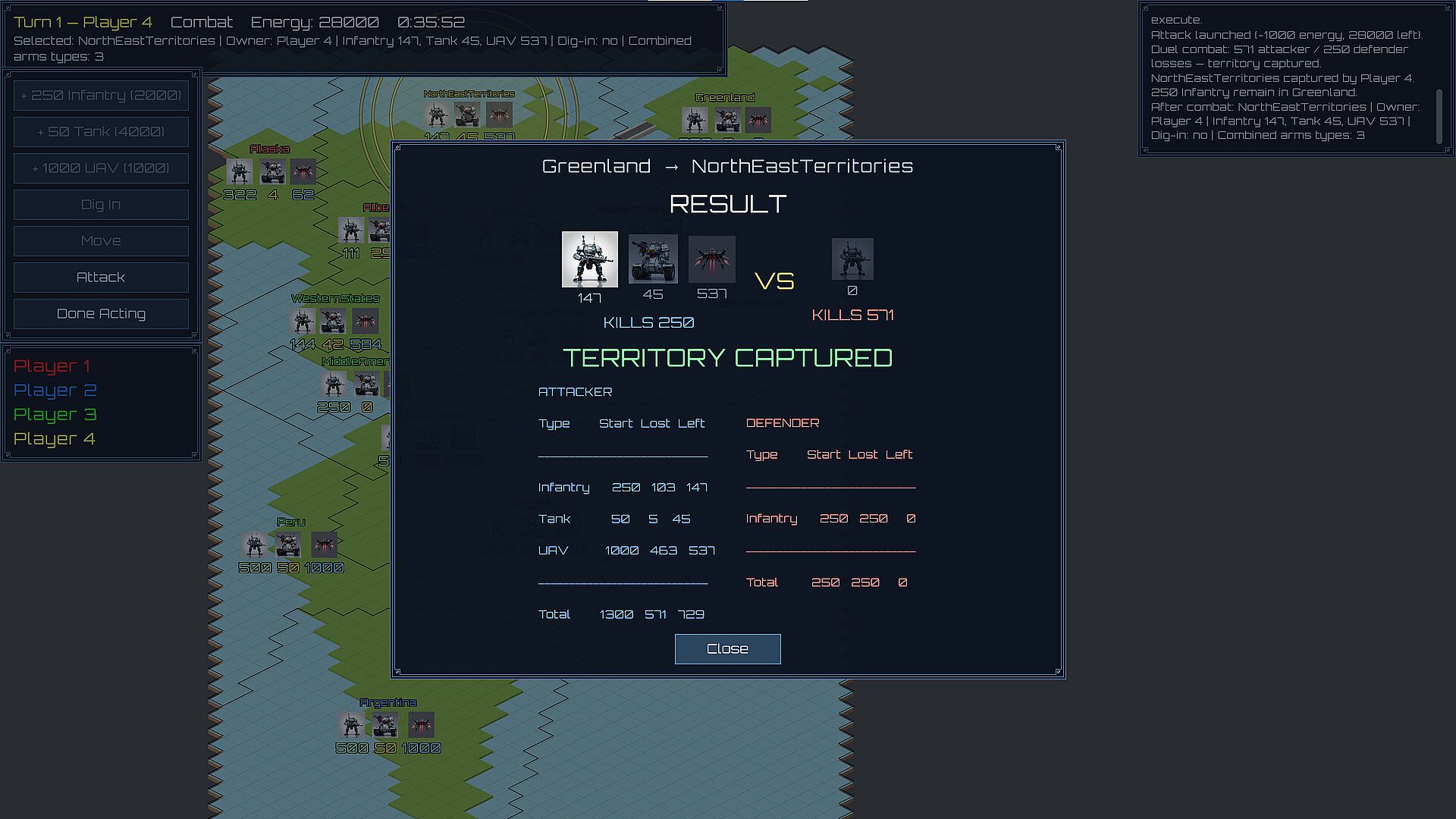
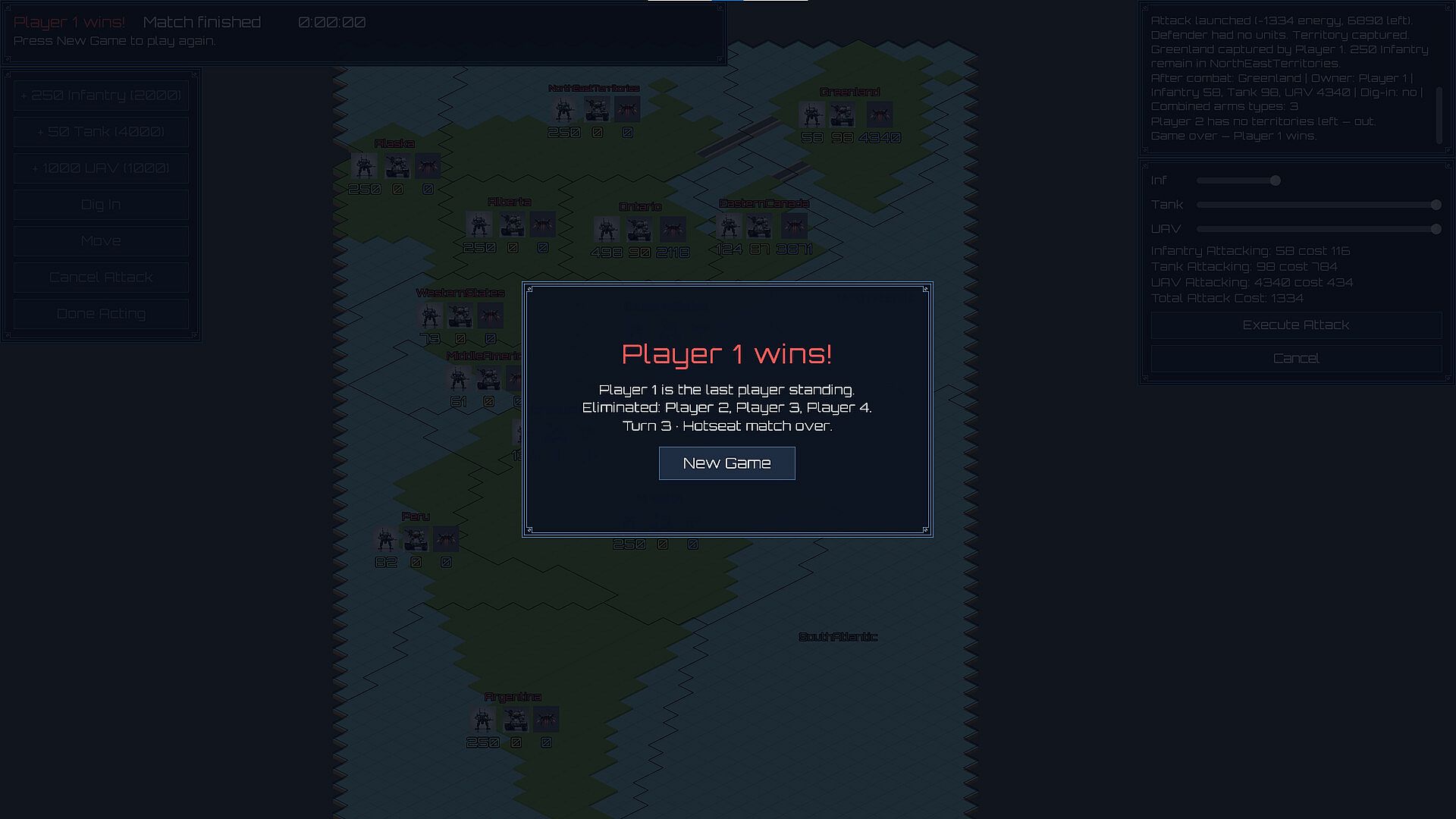
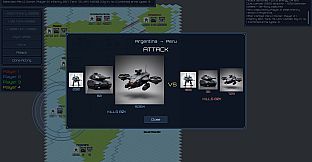
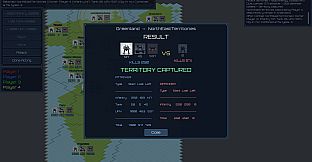
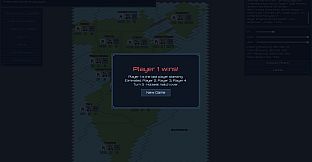
OVERREACH 2126 is a strategy game built around local multiplayer sessions where two to six players share one PC and take turns on a single screen. The title places players in a grim sci-fi setting set in 2126, where they compete for control of a fractured map through straightforward yet layered decisions. Combat follows a clear rock-paper-scissors structure with three unit types: UAVs overpower tanks, tanks overpower infantry, and infantry overpower UAVs. Every action draws from a shared energy pool, forcing careful management of recruitment, movement, attacks, and defensive preparations.
Gameplay
The core loop revolves around territory control and unit positioning on a map that changes with each session. Territories start distributed in a Risk-style random deal, creating fresh starting positions every time. Players recruit units, move them across provinces, and launch attacks while tracking energy expenditure. Overcommitting to an assault leaves forces vulnerable to counterstrikes from surviving defenders. Infantry alone can capture ground, and successful breaks in enemy lines cause defeated tanks and UAVs to switch allegiance to the attacker.
Defensive options add another layer. Infantry can dig into a province, tripling their defensive strength and turning the area into a fortress. This choice trades mobility for resilience but requires energy that could otherwise support expansion. The map itself becomes a tactical puzzle because positioning determines whether a force can exploit weaknesses or must absorb heavy losses. Simple rules allow new players to grasp the basics quickly, yet the combination of energy limits, counter-attacks, and defection mechanics rewards precise planning and adaptation to opponents' moves.
Game Modes
The primary experience centers on hotseat multiplayer for two to six participants around one computer. Players pass the device between turns, recreating the feel of traditional board game nights without additional hardware or accounts. Remote Play Together support extends this to friends in different locations while keeping the same turn-based flow and avoiding complex netcode requirements.
Future updates plan to add single-player campaigns and co-op modes against AI opponents, expanding access beyond group play. At launch the focus remains on the shared-screen format that emphasizes direct interaction and immediate reactions among participants. A shared match clock prevents prolonged turns, ending the game when time expires and ranking players first by territory held, then by remaining troops and energy, with a final tiebreaker if needed.
Strategic Depth and Replayability
Each match unfolds differently because the initial territory distribution shifts the balance of power. One session might begin with scattered holdings that favor quick strikes, while another clusters resources and encourages early consolidation. The energy system ties every choice together, so recruiting extra units early can starve later offensives or leave defenses thin. Counter-attacks punish tentative plays, while overextensions create openings for opponents to seize momentum and flip units to their side.
These elements combine to produce matches that stay tense until the final turns. The absence of complex manuals keeps attention on the table rather than external references, and the grim sci-fi aesthetic frames the units without obscuring the readable combat outcomes. Sessions typically last an evening, building toward a single decisive winner through accumulated territory and resource advantages.
Is It Worth Playing?
OVERREACH 2126 targets players who value local multiplayer strategy sessions with friends or family. Its design prioritizes quick onboarding and immediate table talk over long online grinds or extensive tutorials. The hotseat format and Remote Play Together support make it accessible for couch gatherings or remote groups without extra setup. Planned additions of single-player and AI co-op modes will broaden its appeal once released, but the current emphasis suits groups seeking a contained evening of competition. With development ongoing and a demo expected ahead of the 2027 release, those drawn to straightforward yet punishing turn-based strategy will find the mechanics rewarding through repeated plays with the same group. The game rewards observation of opponents' patterns and careful energy allocation more than raw aggression, creating memorable moments when plans succeed or collapse in real time.