


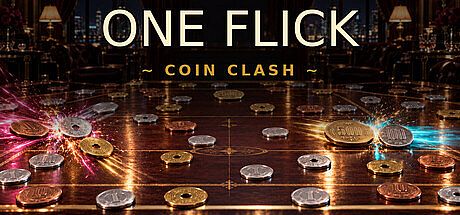


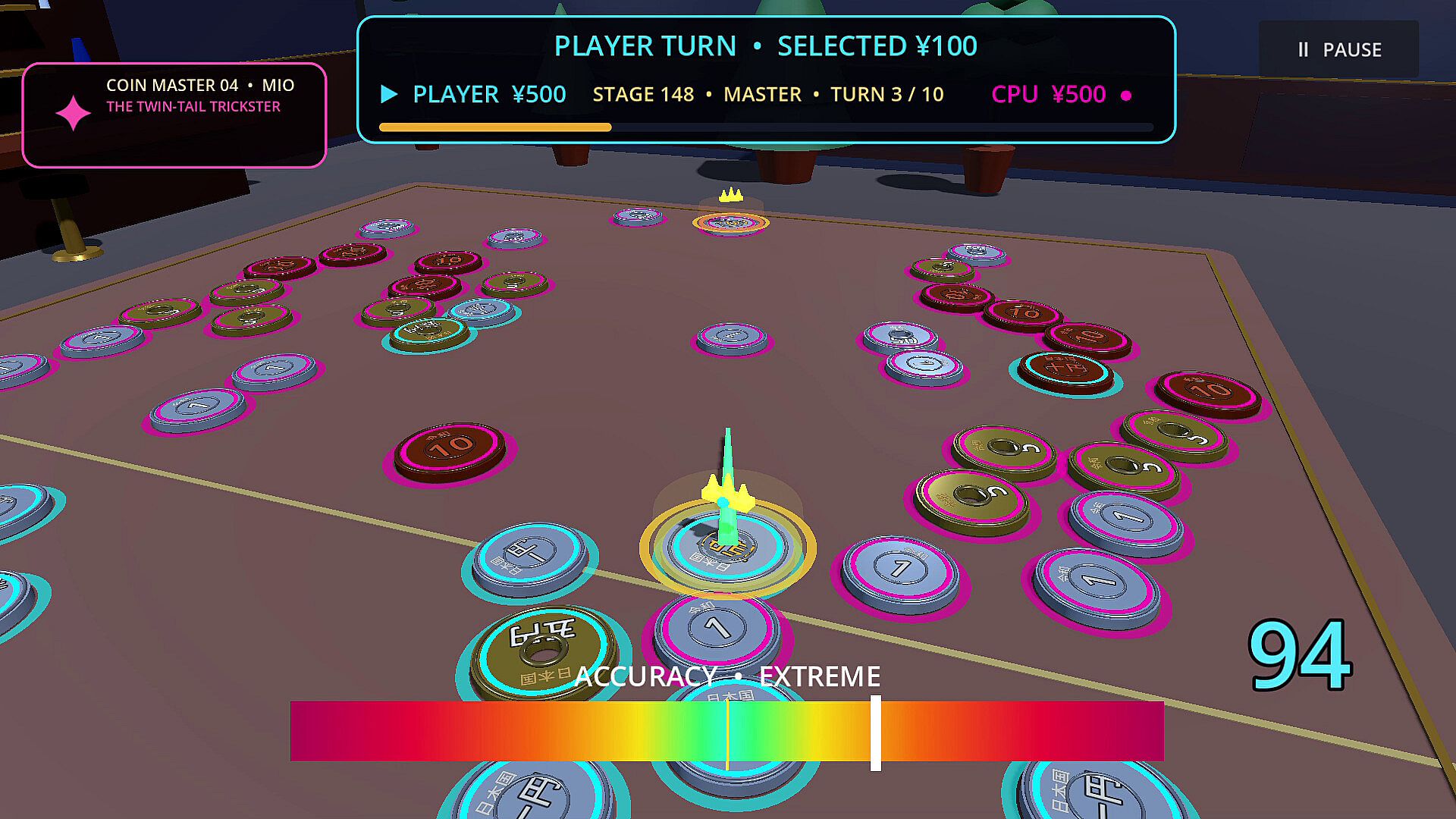
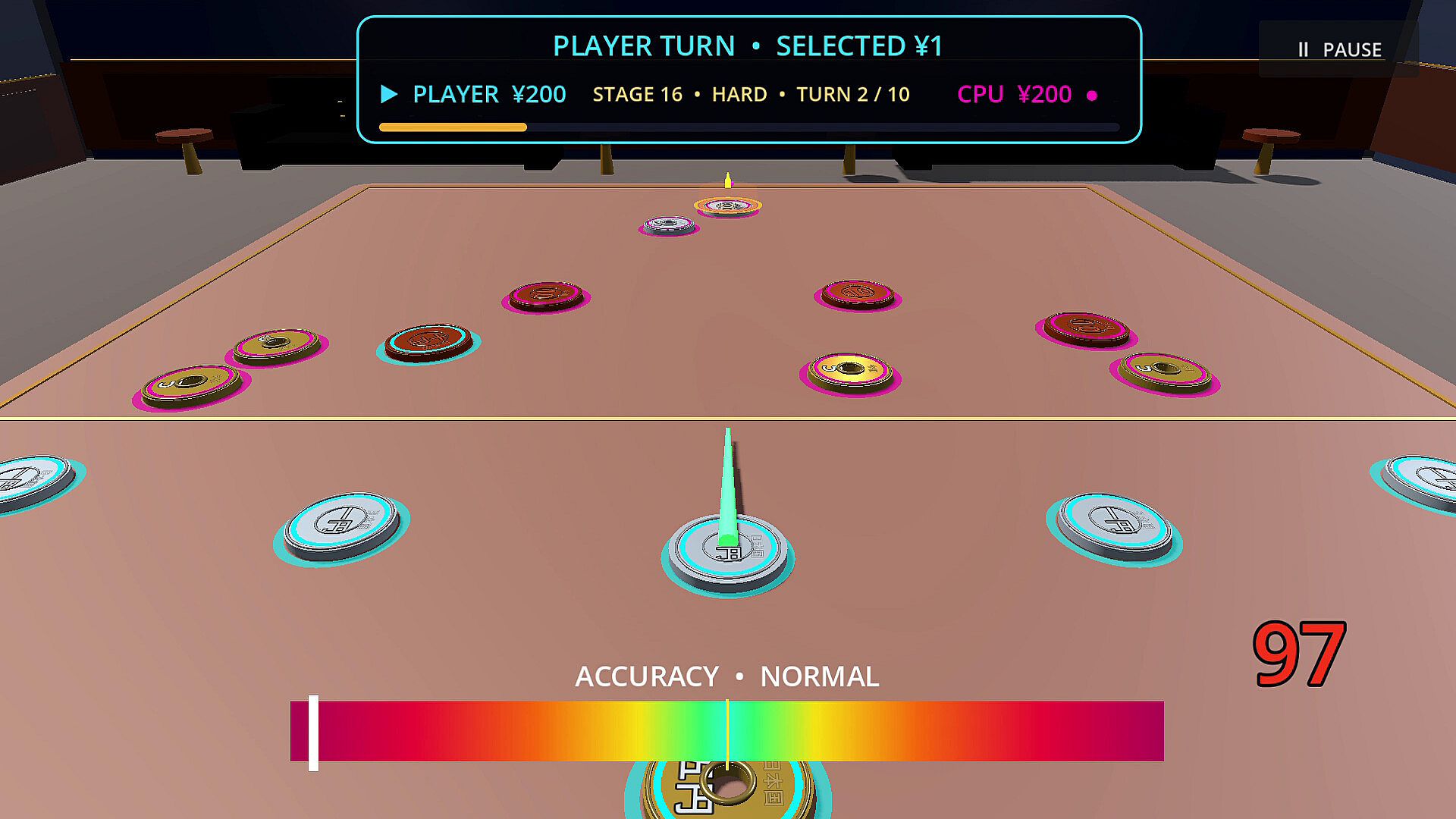
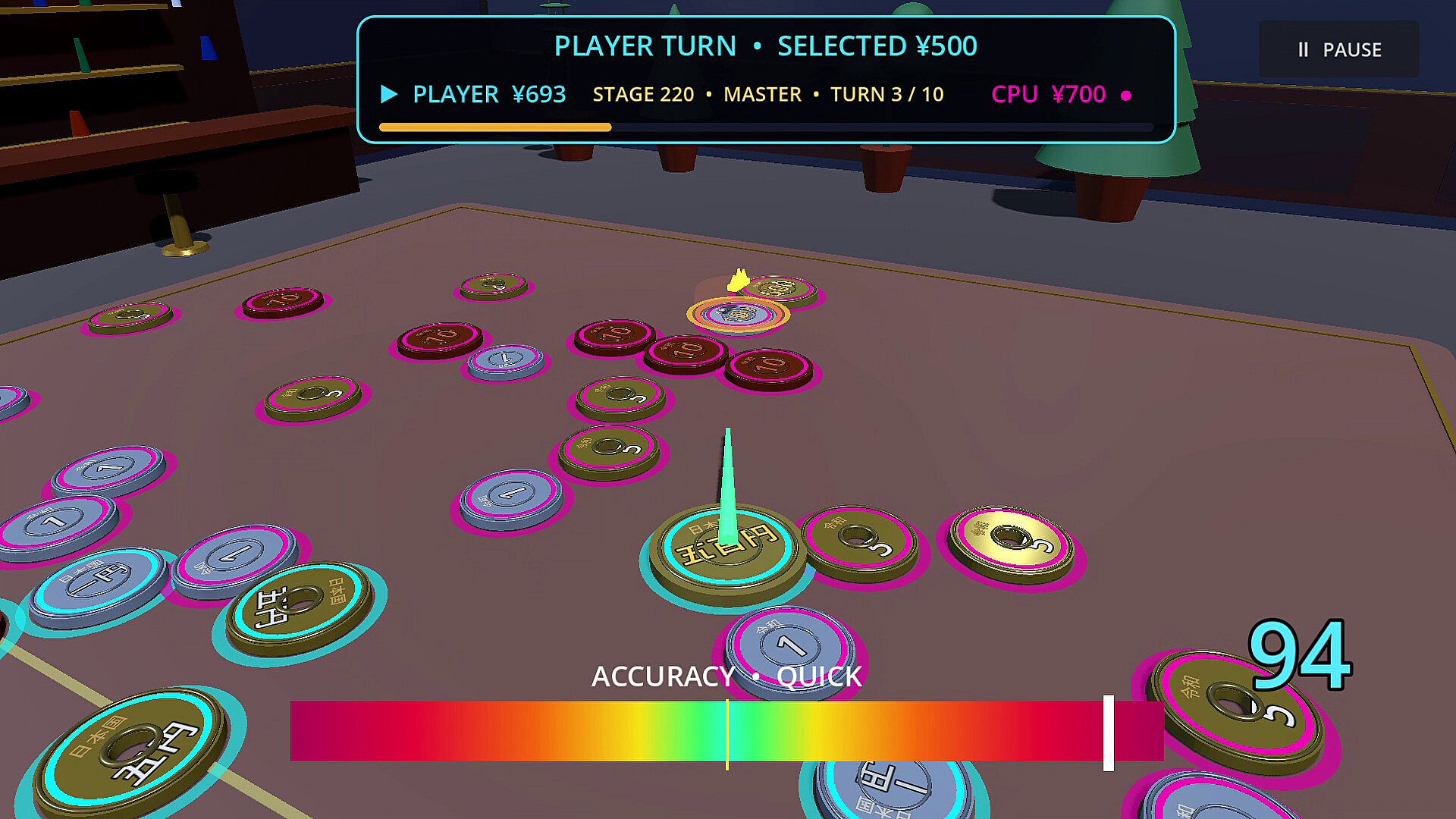
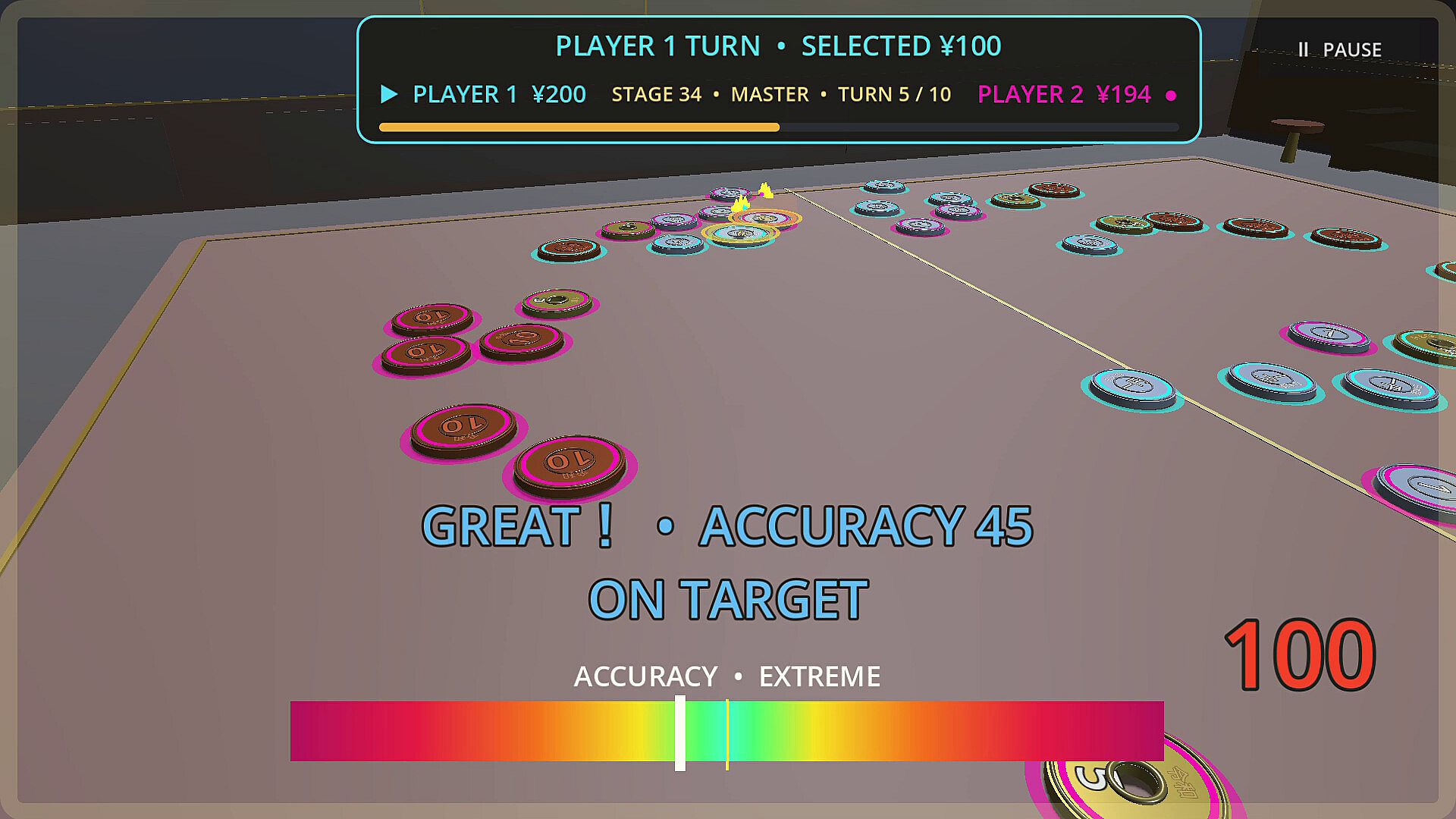
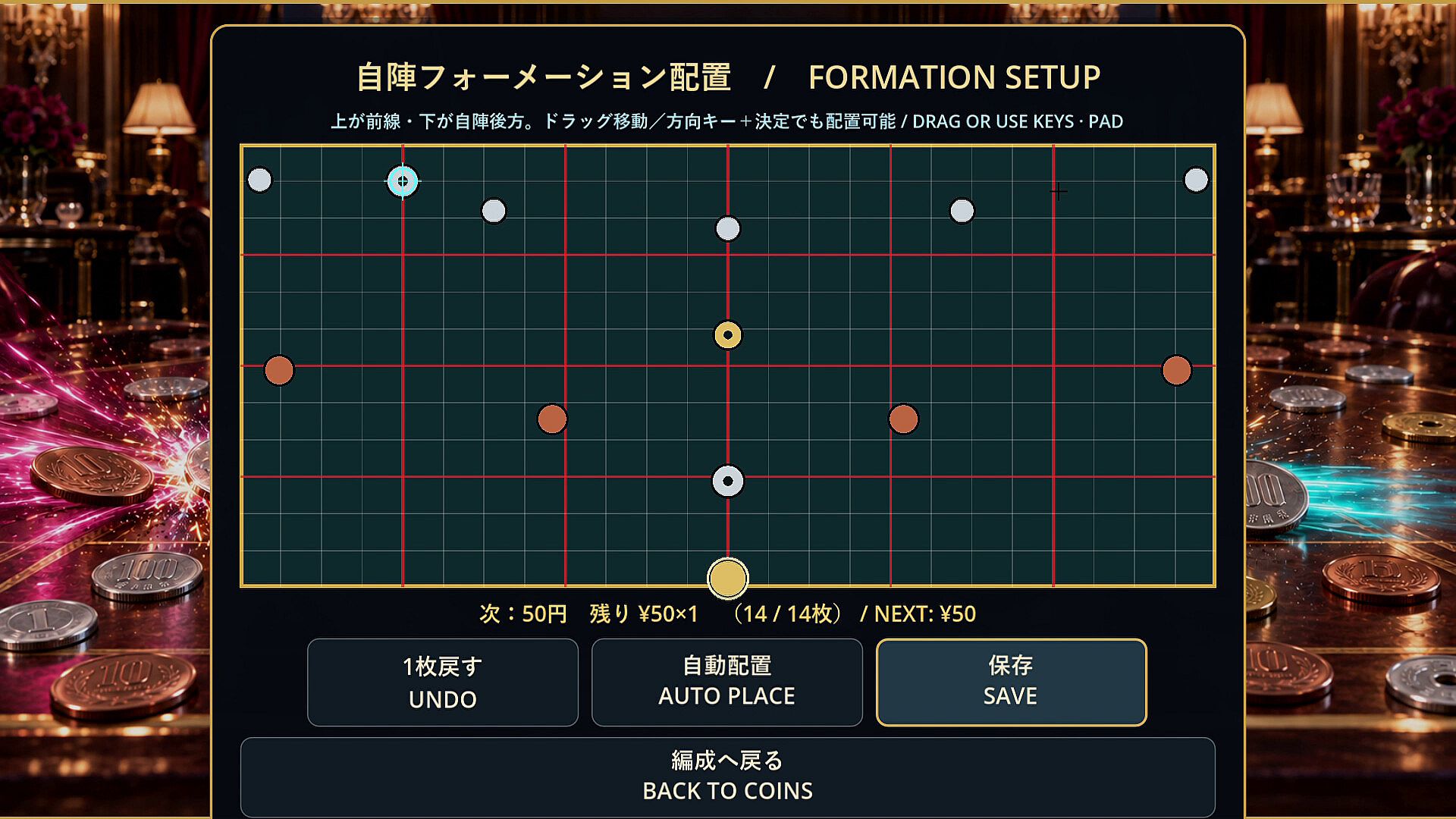
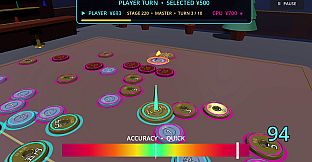
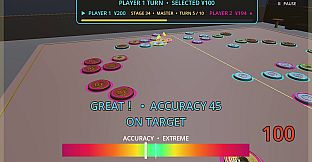
ONE FLICK ~ COIN CLASH ~ is a physics-based strategy game that blends casual accessibility with tactical depth. Players flick coins across a table to knock opponents' pieces off the edge while protecting their own king coin. The game emphasizes precise control over direction, power, and timing through an accuracy gauge, where each shot can shift the balance of the entire match.
Gameplay
The core loop revolves around positioning and physics interactions on a shared table surface. Lighter coins move faster and cover distance quickly, while heavier ones provide stability and control over key areas. Decks consist of Japanese yen coins in values from 1-yen to 500-yen, each varying in size and weight to create distinct playstyles even when the total value remains the same.
Every deck includes a single 100-yen coin designated as the king. Knocking the opponent's king off the table ends the match immediately in victory. Players must balance aggressive shots that remove enemy pieces with defensive positioning that shields their own king from direct attacks. The position of every coin on the board influences future shots, turning the table into a dynamic battlefield where one well-placed flick can create chain reactions.
Game Modes
Single-player content centers on a campaign of 335 CPU stages that increase in difficulty across multiple leagues. At critical points in each league, players face nine specialized opponents called Coin Masters. Success against these rivals advances progress toward the Golden Table.
Local two-player battles allow direct competition on the same PC. Steam Remote Play Together extends this to remote sessions, letting distant players share the same table experience through precise flick controls.
Progression and Challenges
Each of the 335 stages offers three distinct badge objectives: winning within three turns, defeating the enemy king using your own king, and winning after removing at least half the opponent's starting coin value. Collecting all 1,005 badges requires repeated playthroughs with varied decks and strategies, as a single victory per stage falls short of full completion. Earning every badge unlocks the true ending.
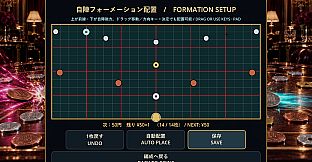
Deck building encourages experimentation. Different combinations of coin sizes and weights alter movement speed, impact force, and defensive formations, rewarding players who adapt their approach to specific stage layouts and opponent behaviors.
Is It Worth Playing?
The game targets players who enjoy precise physics puzzles and turn-based strategy without complex controls. Its simple flick mechanic supports short sessions while the deck variety and badge system provide long-term goals for completionists. Local and remote multiplayer options add replayability for those who prefer head-to-head matches against friends or family.
Because the title remains in a coming-soon state with no released reviews or player data available, any final judgment depends on how the physics feel and how well the stage variety holds up after launch. Those drawn to minimalist strategy experiences centered on positioning and timing will likely find the core loop engaging once it becomes playable.