


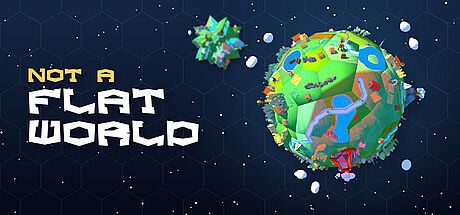


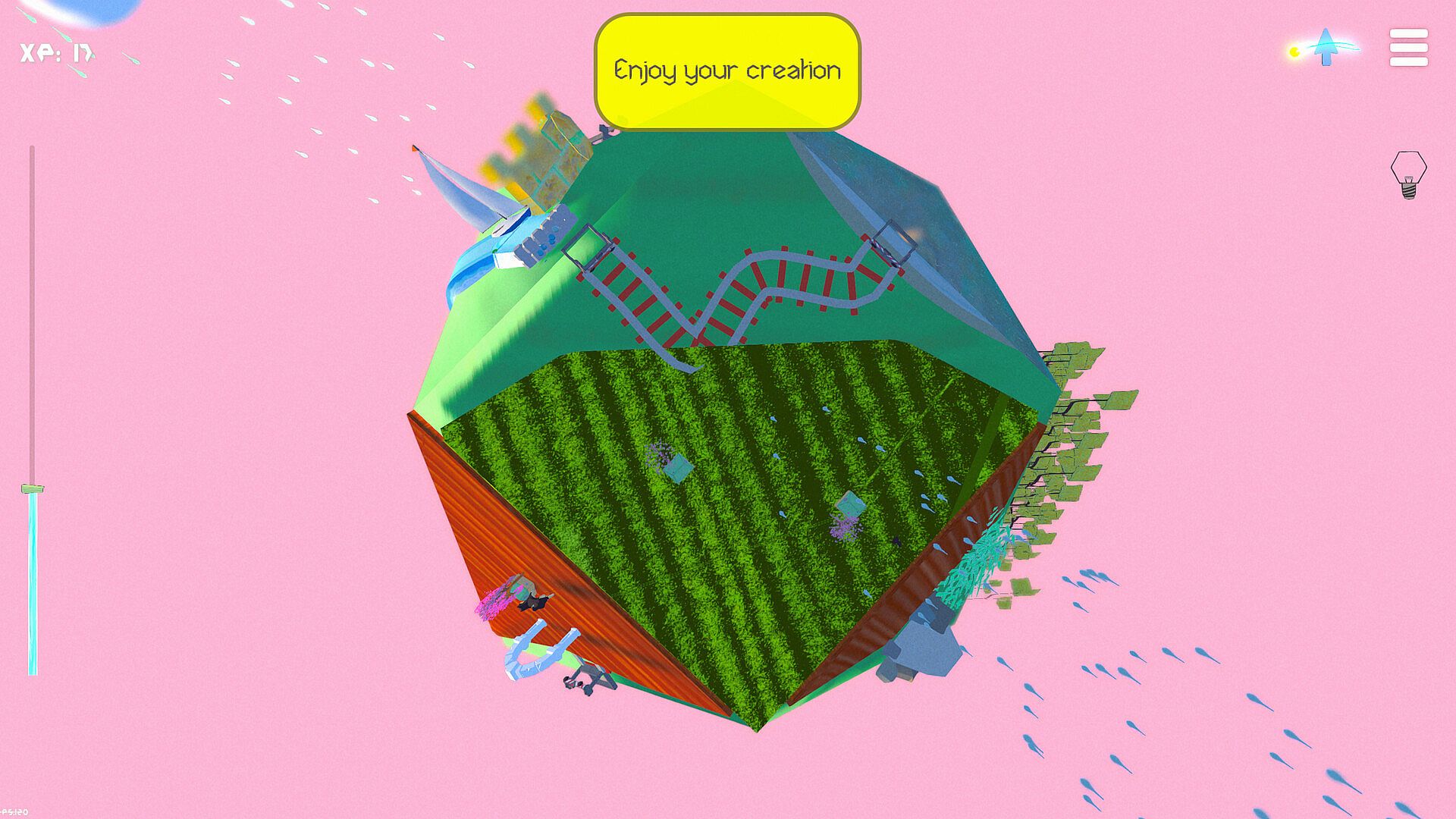
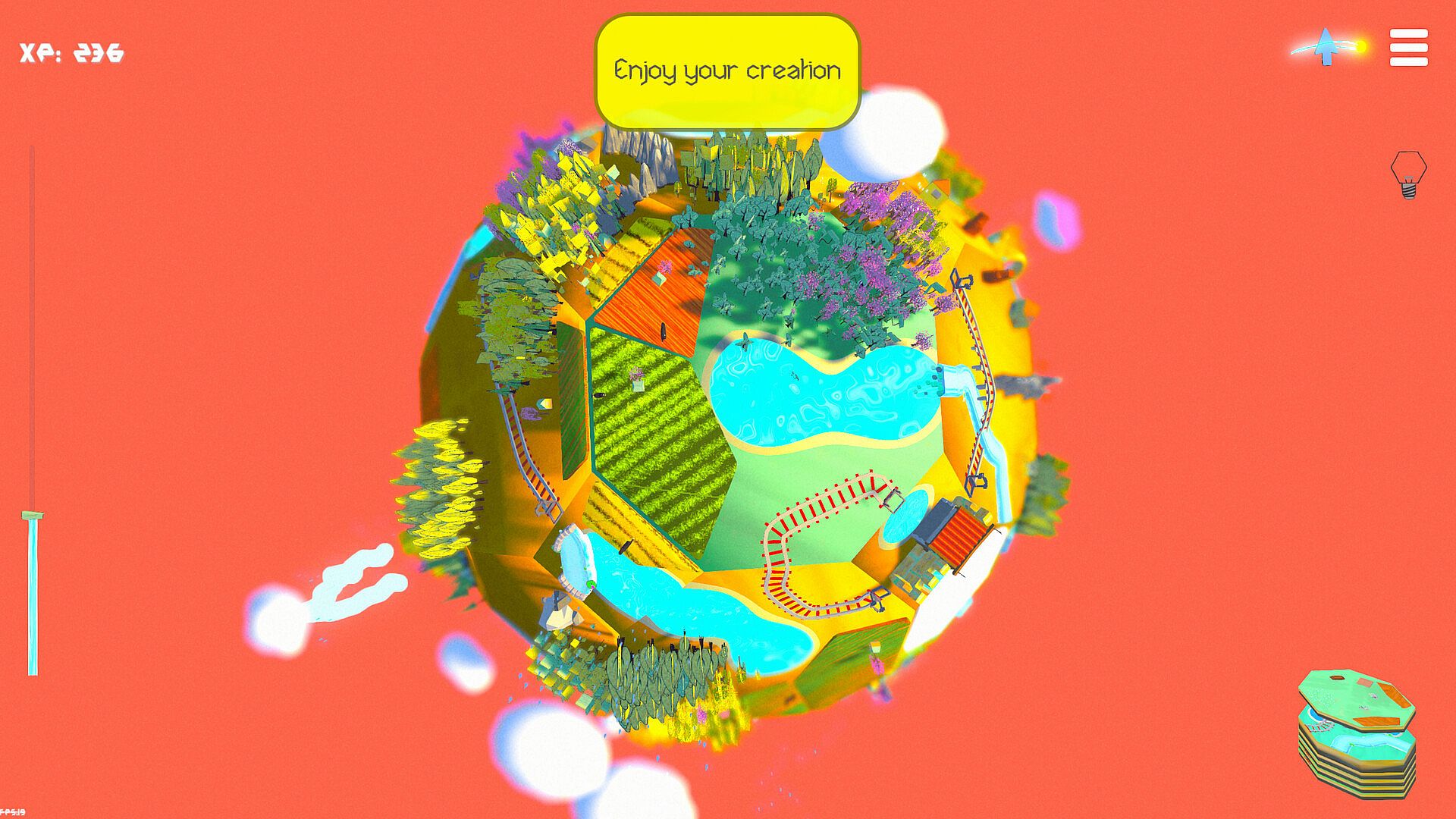
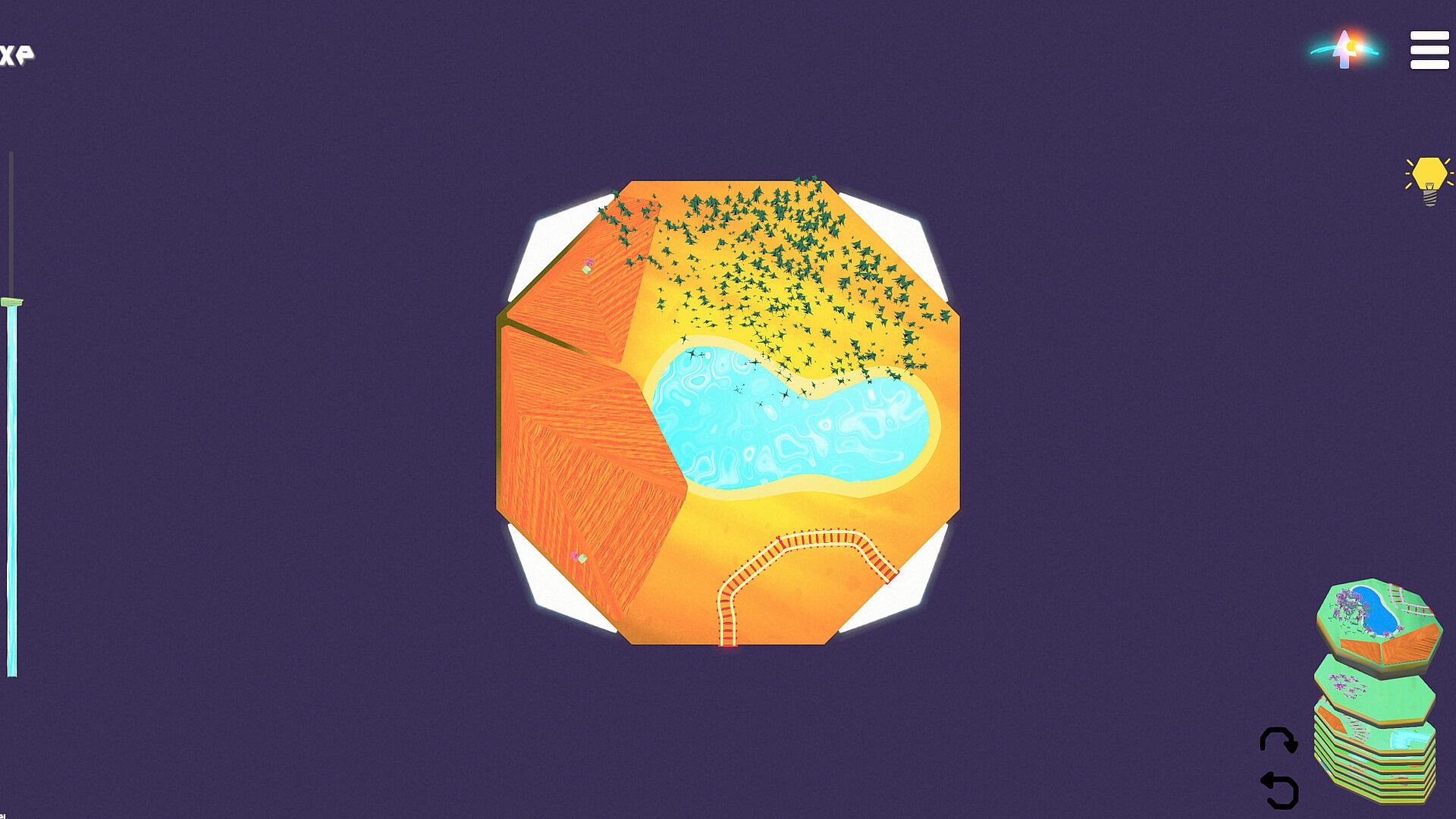
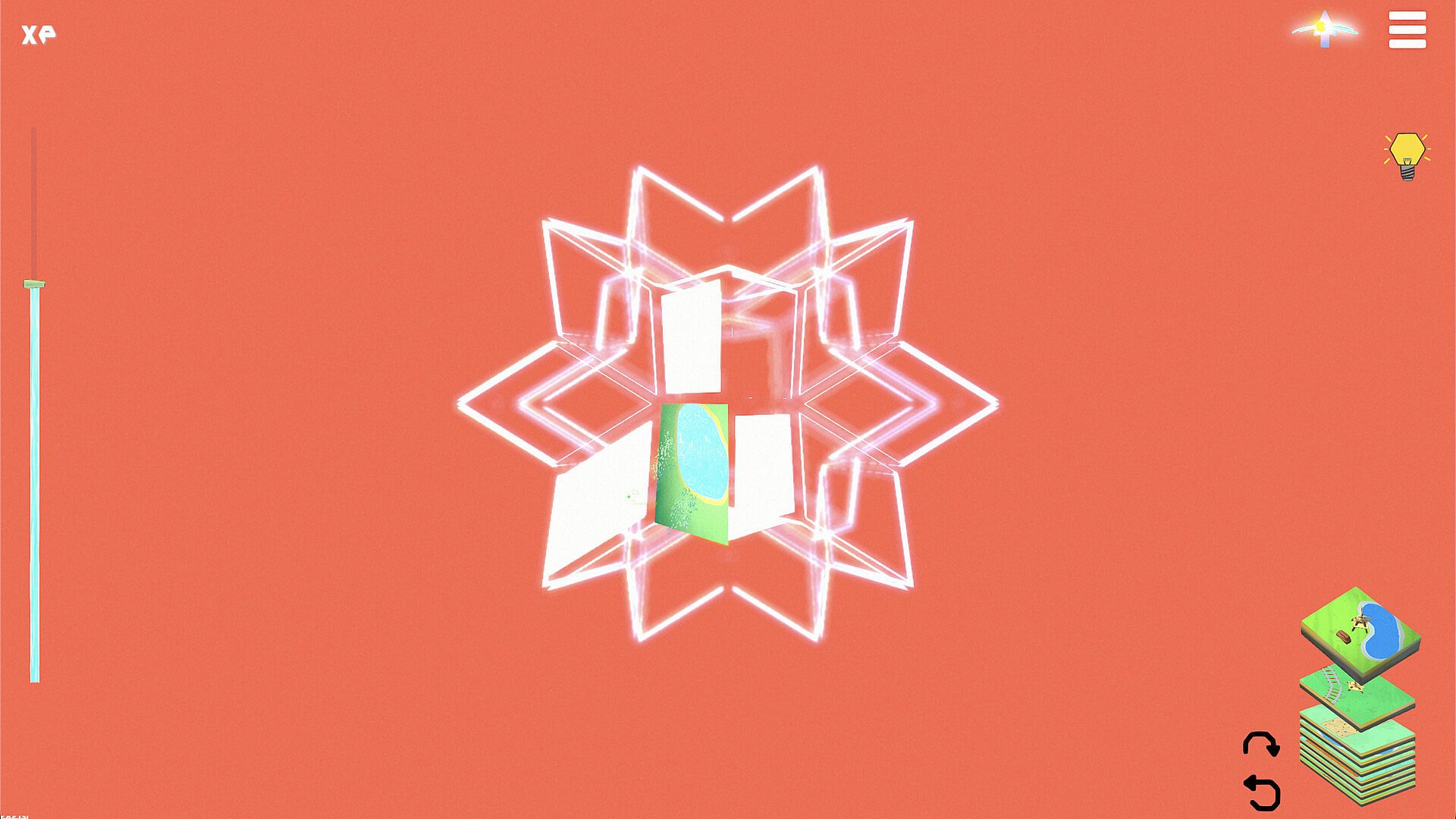
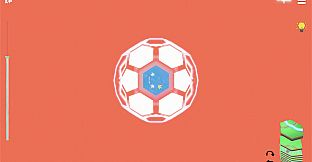
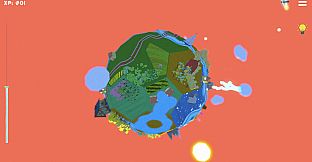
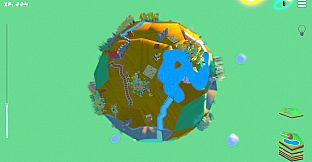
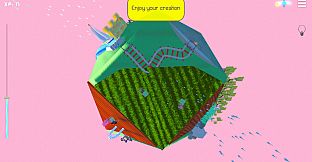
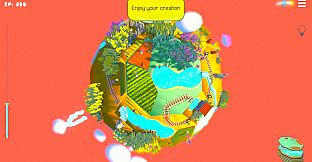
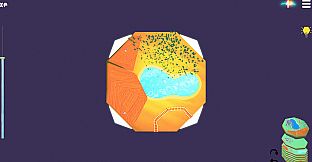
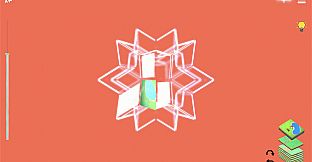
Not a flat world is a relaxing tile placement puzzle game that challenges the idea of conventional planetary shapes. This strategy indie casual title for PC invites players to build living worlds across polyhedral surfaces instead of flat maps or spheres. Each level presents a distinct planet form, from basic cubes to intricate stars and toroidal shapes with central holes, where tiles wrap around edges to create connected landscapes of fields, forests, and waterways.
Gameplay
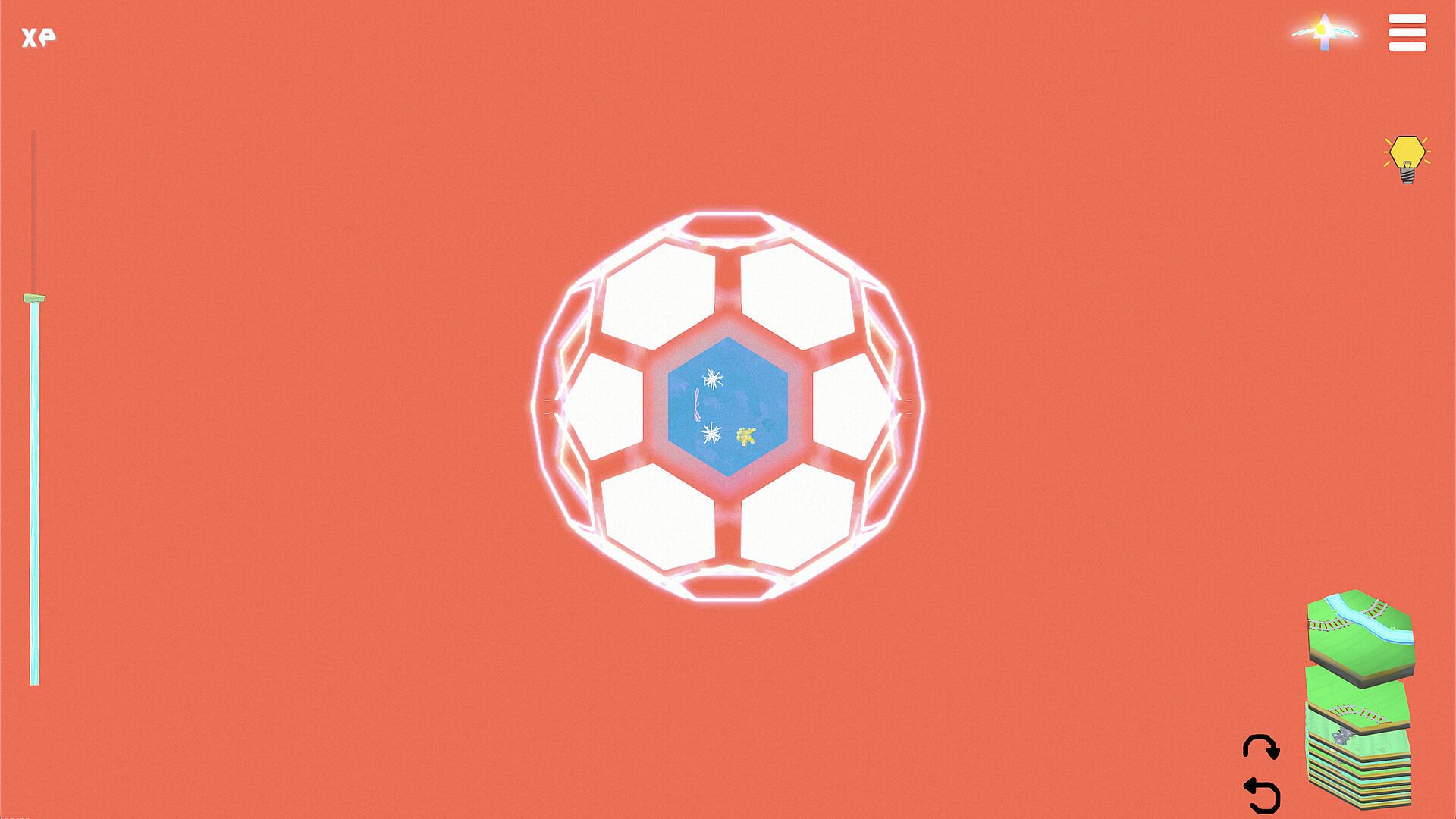
The core loop centers on drawing tiles from a stack, rotating them to align properly, and placing them onto the faces of the planet. Matching edges such as grass to grass, river to river, or rail to rail cause them to glow and award points. The geometry of each polyhedron means connections bend around corners, requiring careful planning to avoid dead ends. Tiles come in hexagon, pentagon, square, and triangle varieties depending on the planet's structure, with eighteen distinct edge types including farm, forest, desert, houses, roads, mountains, cliffs, lava, walls, coral, sea anemones, and seagrass.
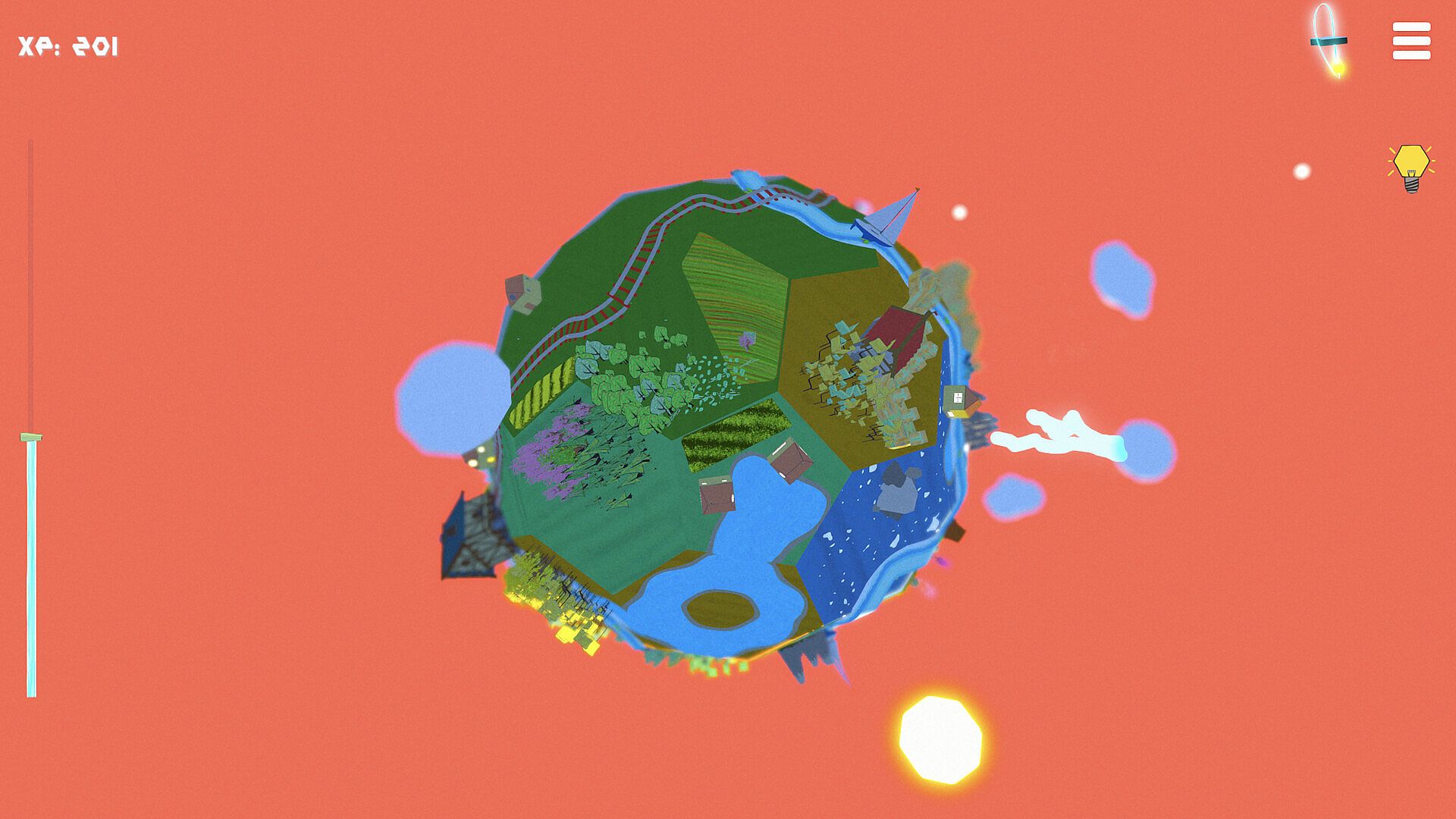
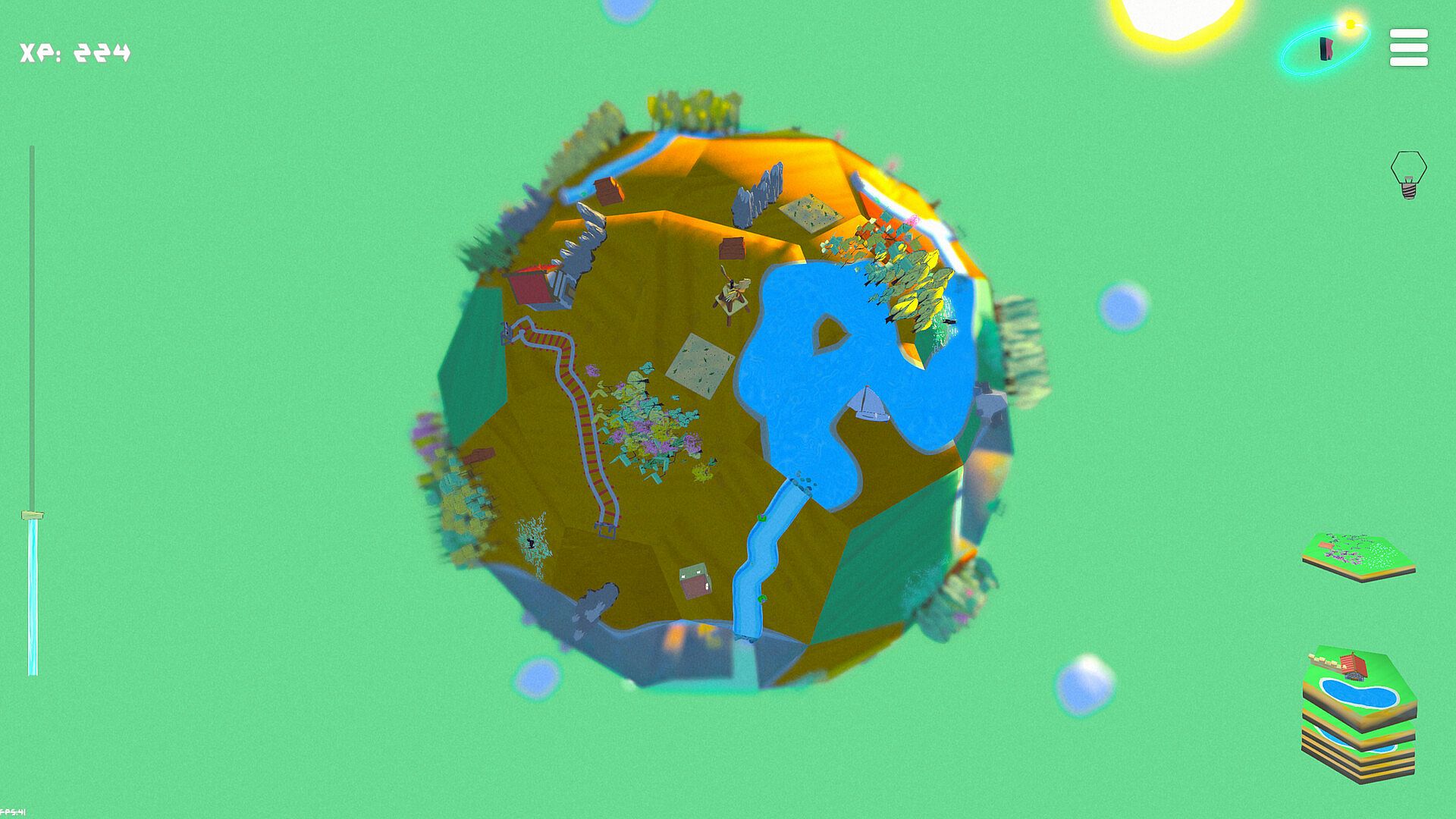
Once placed, the tiny world animates with life. Farms produce crops, ponds develop ripples and fish, lighthouses stand watch, volcanoes emit smoke, and clouds move overhead. Underwater areas fill with coral and seagrass, while roads, railways, and ridges extend across the terrain. Seasonal color palettes shift the visuals from spring greens to winter snows. Hand built shaders enhance water, foam, clouds, and depth of field effects. Players control the pace completely, with options to undo moves, skip tiles, adjust ambient light, and freely rotate the camera to view their creation from any angle.
Game Modes
The game operates entirely in single player mode across dozens of hand designed planet shapes. These range from simple platonic solids like cubes and octahedra to more complex forms such as stellated stars and donut like toroidal worlds. Each shape presents its own tiling challenges and connection rules, turning every level into a unique spatial puzzle. A short tutorial introduces all mechanics quickly, after which players proceed at their own speed through the collection of worlds without timers or external pressure.
Progression focuses on completing individual planets by filling their faces with matching tiles. The absence of competitive or cooperative elements keeps the experience focused on personal satisfaction and creative problem solving within the constraints of each polyhedron's topology.
Visuals and Atmosphere
Hand crafted shaders bring each completed planet to life with subtle animations that reward careful placement. Water surfaces ripple realistically, clouds drift across the sky, and environmental details like anemones and mountain ridges add depth. Seasonal palettes provide visual variety, allowing the same planet shape to feel fresh under different lighting and color schemes. The camera system supports full rotation and zooming, encouraging players to admire the three dimensional results of their tile arrangements from multiple viewpoints.
Is It Worth Playing?
This title suits players seeking a calm, thoughtful puzzle experience without time limits or failure penalties. The combination of spatial reasoning, edge matching, and gradual world building creates a meditative loop that emphasizes planning and appreciation over speed. Features like undo and skip options ensure a single mismatched tile never halts progress. With its focus on varied polyhedral topologies and living environmental details, the game appeals to fans of cozy strategy and indie puzzle titles who enjoy building connected systems at their own pace. As an unreleased project, its appeal rests on the verified mechanics of relaxing tile placement across unique planetary forms.