




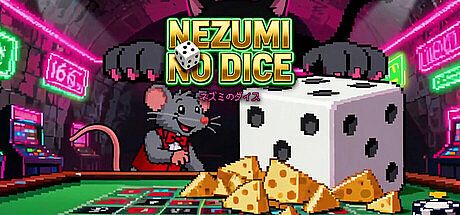


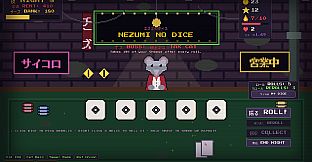
Nezumi no Dice is a single-player roguelite that blends strategy, simulation, and casual dice mechanics on PC. Players take on the role of a sewer rat running an underground casino, facing a strict deadline of twelve nights to meet rent demands while managing dice rolls, resources, and escalating threats from boss cats.
Gameplay
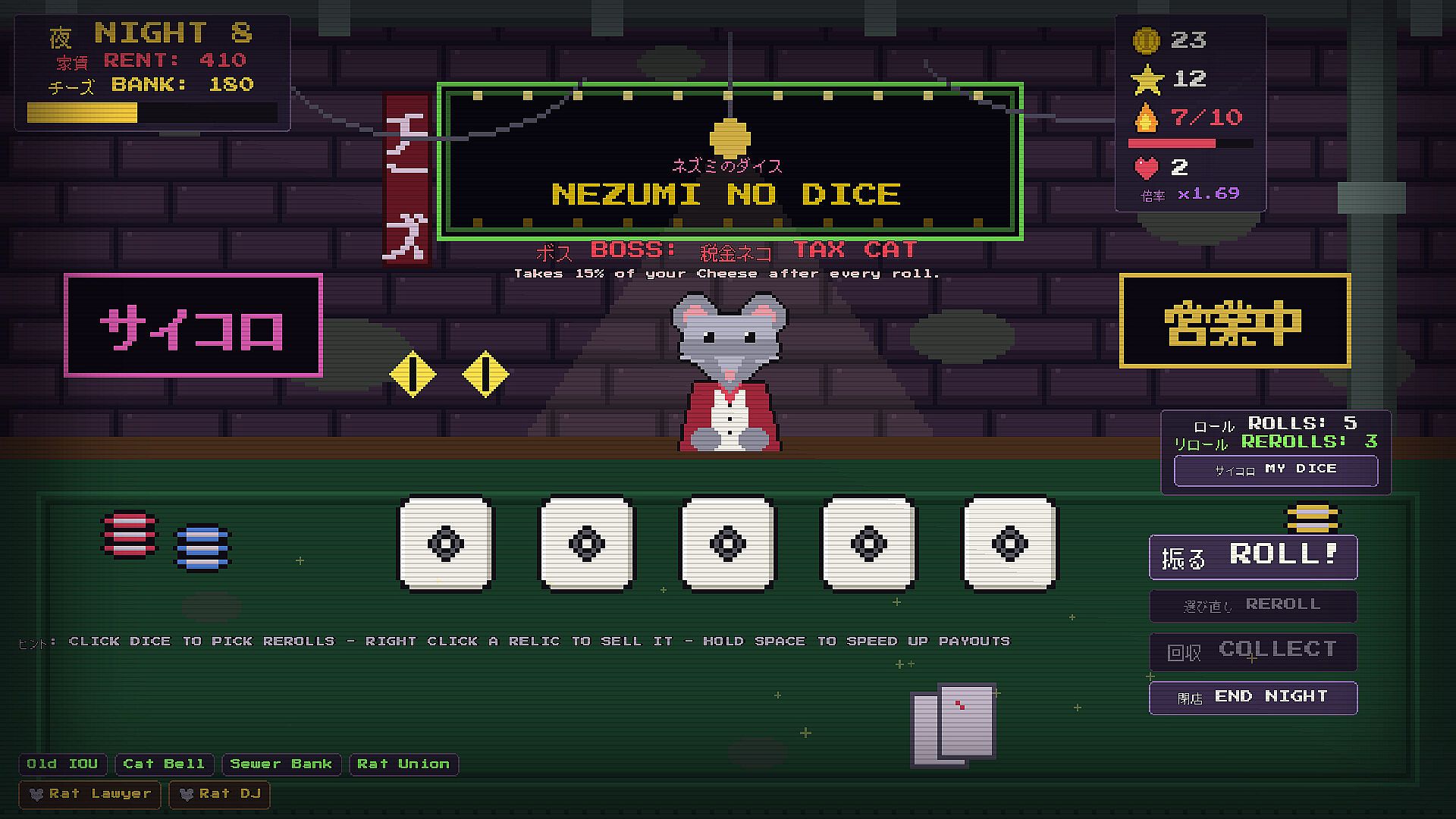
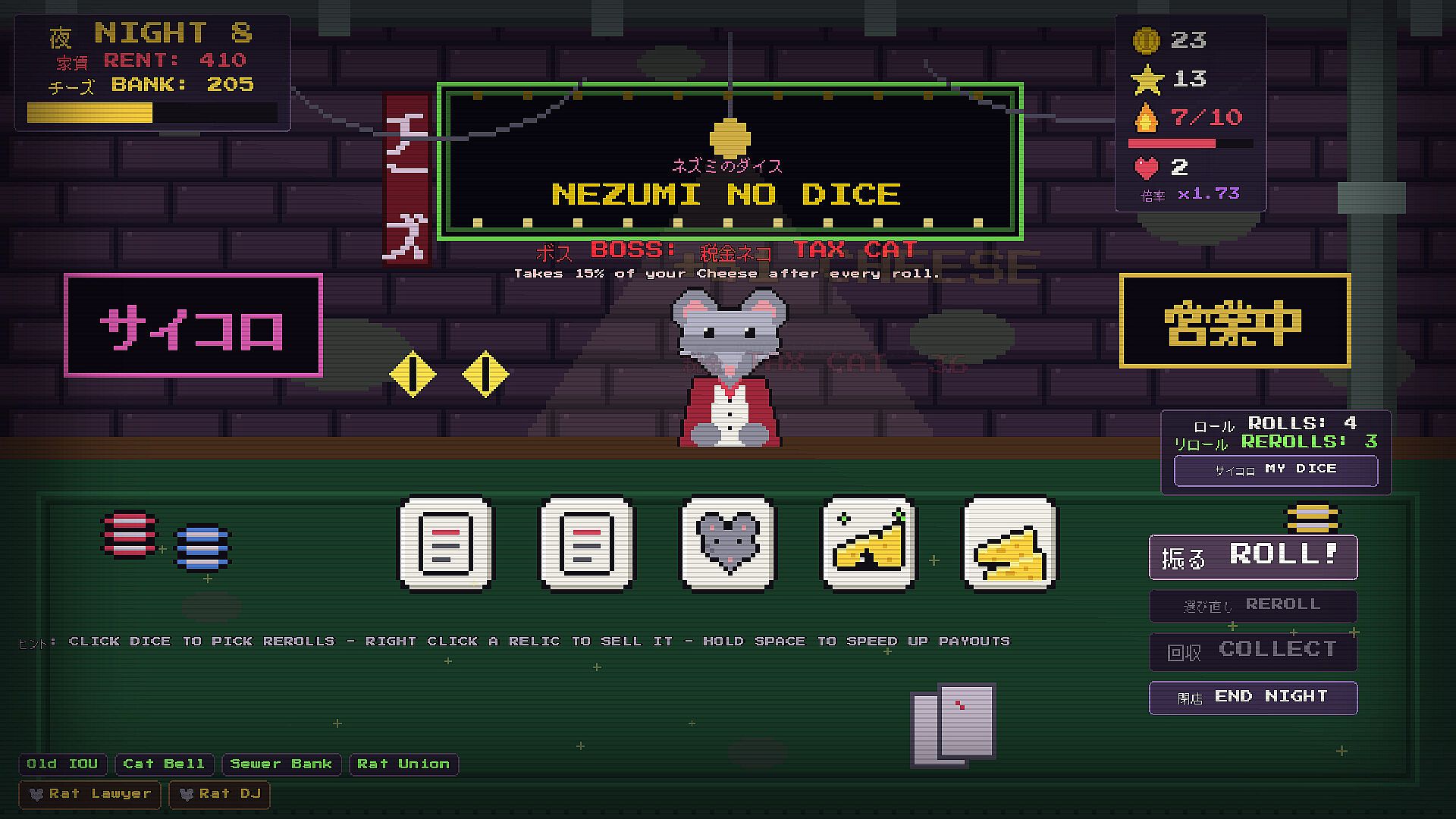
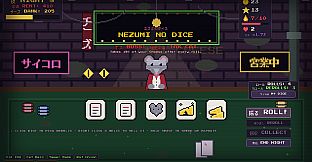
The core loop centers on rolling dice to generate Cheese, which funds upgrades and survival. Each run begins with a basic set of dice, and the goal is to modify faces across multiple rolls to create reliable payouts. Cheese serves as the primary currency for rebuilding dice, while Cash earned between nights allows purchases that alter future outcomes.
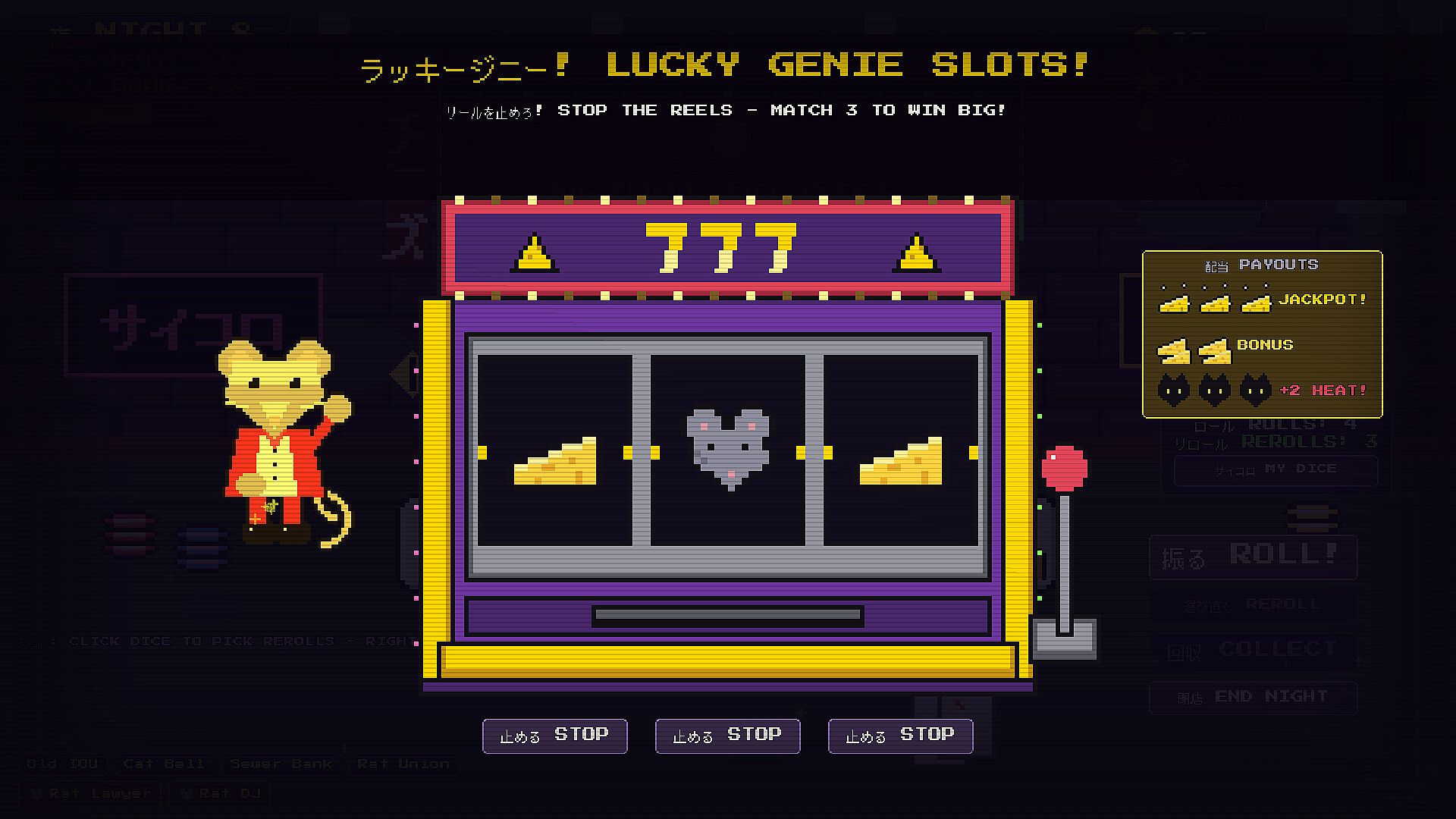
Building a cheating machine involves discovering and combining effects from 40 distinct dice faces. Categories include Cheese for resource gain, Rat for personal advantages, Jackpot for high-reward triggers, Illegal for risky multipliers, Utility for support functions, and various combo effects that chain together. Weak faces can be replaced, additional dice added to the pool, and synergies developed over time to shift odds heavily in the player's favor.
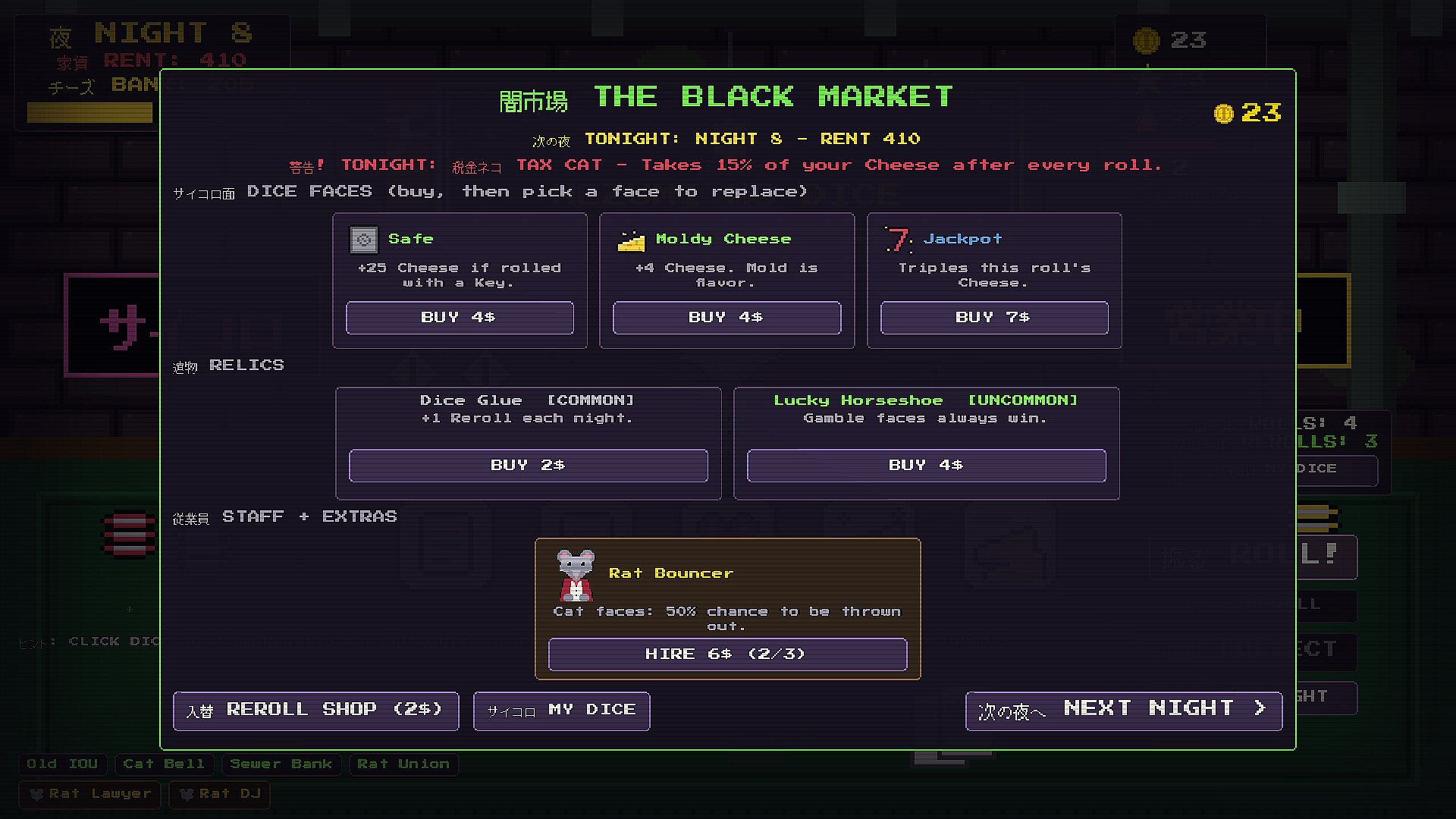
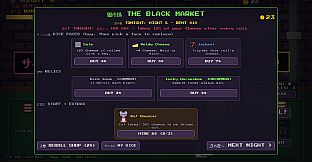
Between nights, the black market offers opportunities to spend Cash on new faces, 33 relics that provide permanent or situational bonuses, and 10 staff rats that bring unique abilities. Purchases influence key variables such as Heat levels, jackpot amplification, face copying, shop pricing adjustments, or high-stakes gambles on single rolls. Heat accumulation draws attention from authorities, leading to inspections and sudden rule changes during play.
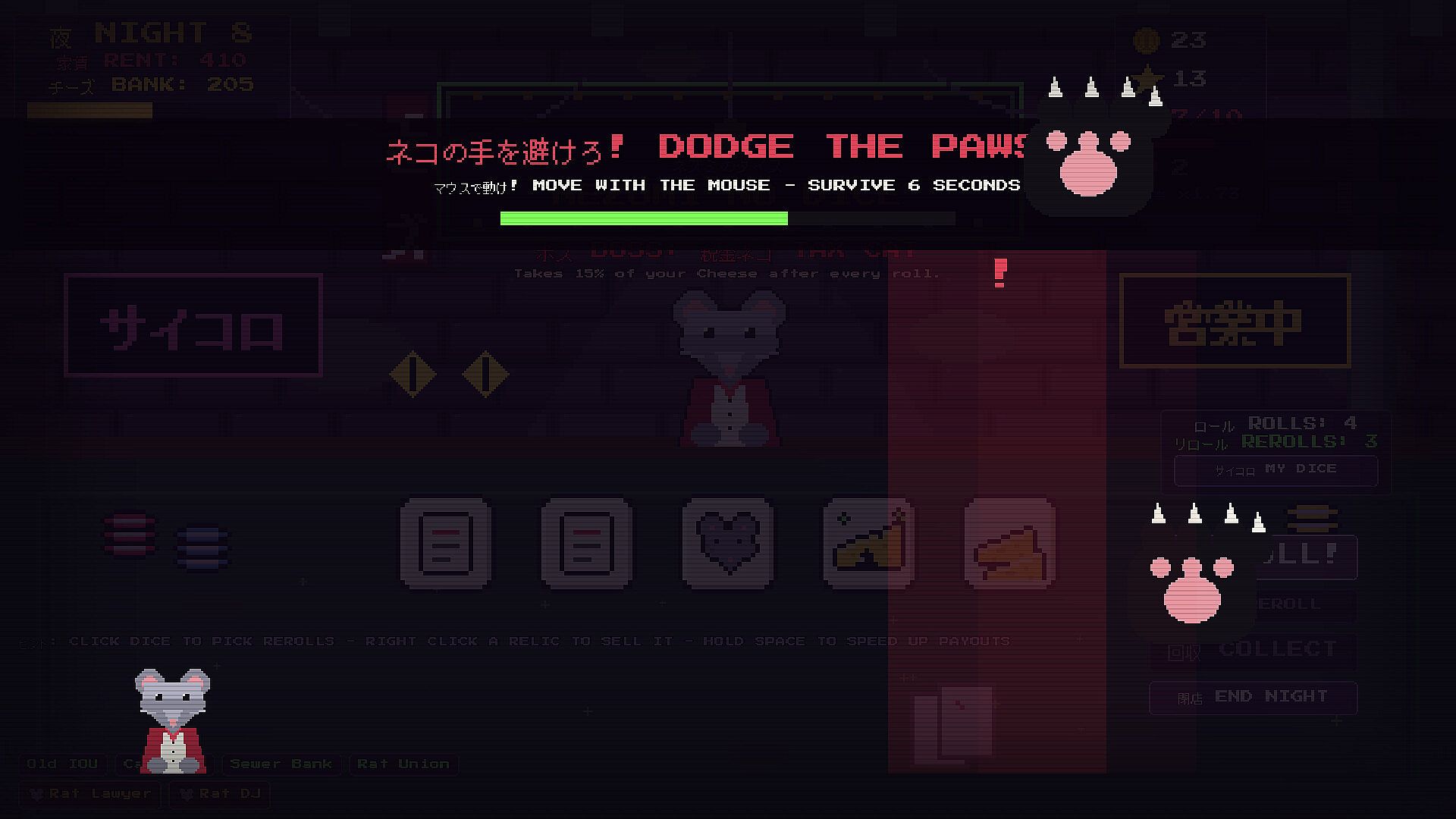
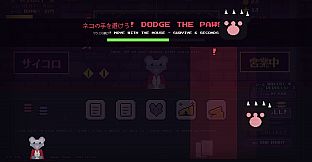
Boss cats appear specifically on nights 4, 8, and 12, introducing heightened pressure through surprise rules, Paw Panic events, and other disruptions. Random sewer events and minigames add variety to each night, requiring adaptation of the current build to hit rent targets. Mouse-only controls keep interactions direct, with tooltips available for every element to clarify effects without interrupting flow.
Game Modes
The game supports eight challenge modes that modify standard runs with harsher rules and new constraints. These variations encourage repeated playthroughs by altering starting conditions, increasing difficulty, or introducing fresh limitations on resources and dice modifications.
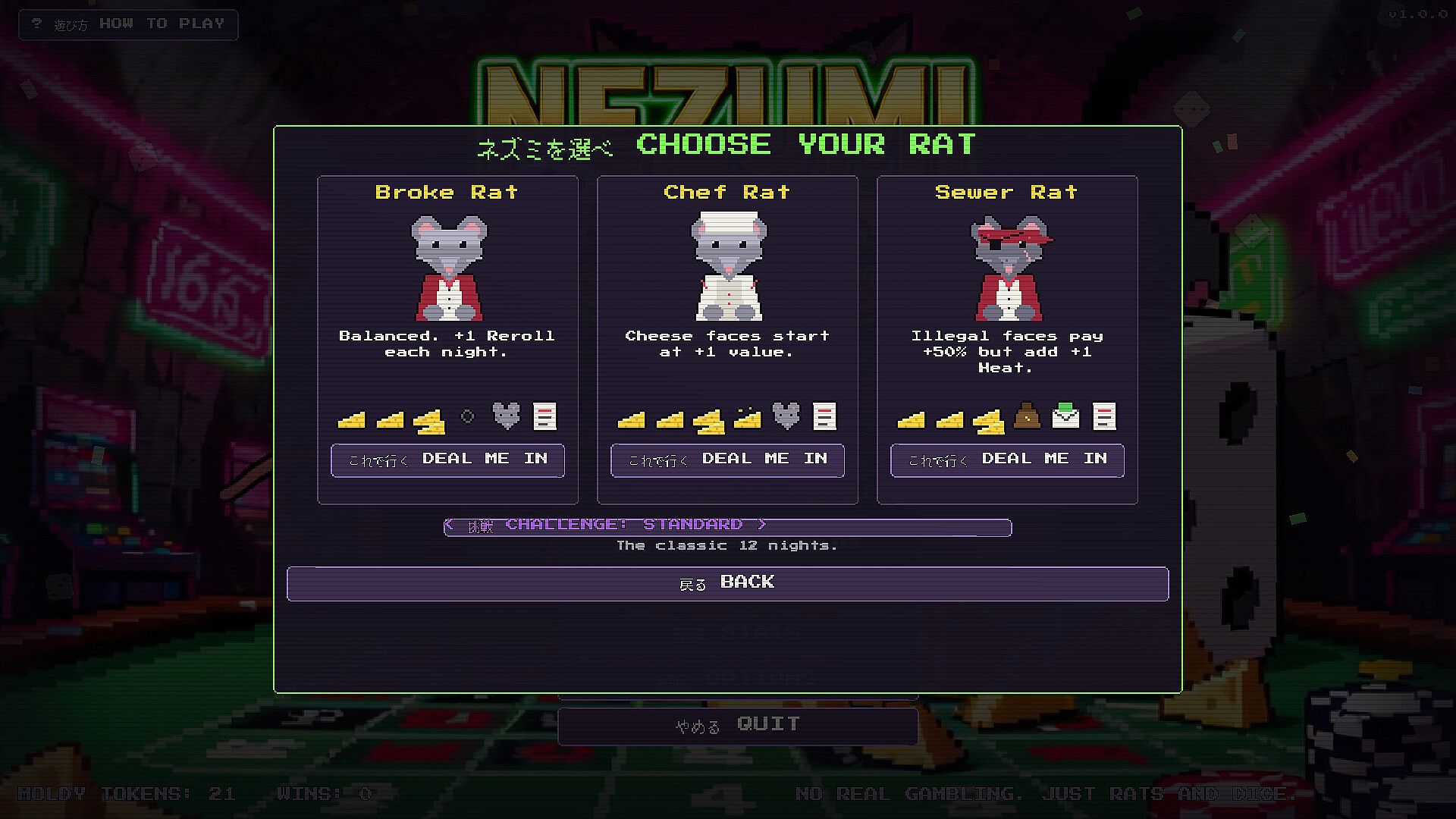
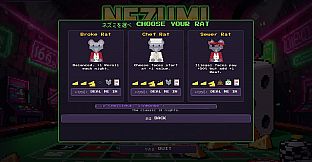
Three playable rats provide distinct starting advantages, allowing different entry points into the same systems. Each rat influences early-game strategies, such as resource efficiency or initial face options, while the underlying mechanics of dice rebuilding and market purchases remain consistent across choices.
Progression across the twelve nights forms the main structure, with boss encounters serving as checkpoints that test the strength of accumulated upgrades. The roguelite format means each attempt resets progress but carries forward knowledge of effective combinations and market priorities.
Core Mechanics and Progression
Dice modification happens face by face, turning an initial scrappy collection into a specialized engine capable of consistent high payouts. Relics and staff integrate directly into this process, offering ways to control Heat, duplicate powerful faces, or manipulate probabilities during critical rolls.
Events and inspections force on-the-fly adjustments, rewarding players who maintain flexible builds rather than rigid strategies. The compact scope keeps sessions focused, with each night building toward the final rent deadline and the threat of shutdown by the Landlord.
Is It Worth Playing?
Nezumi no Dice suits players who enjoy roguelite runs centered on incremental optimization and resource management. The dice-building loop, combined with market decisions and timed boss pressure, creates a tight feedback cycle that rewards experimentation across multiple attempts.
Those drawn to single-player strategy experiences with casual accessibility will find the mouse-driven interface and tooltip support approachable, while the eight challenge modes and three starting rats extend replay value without requiring external content. The simulation elements around Heat management and event adaptation add depth for those who prefer planning around variable threats.
Availability on PC makes it straightforward to try for anyone interested in indie roguelites that emphasize dice manipulation over broader action or narrative layers. The structure supports short, repeatable sessions focused on refining a payout engine before the next cat encounter.