




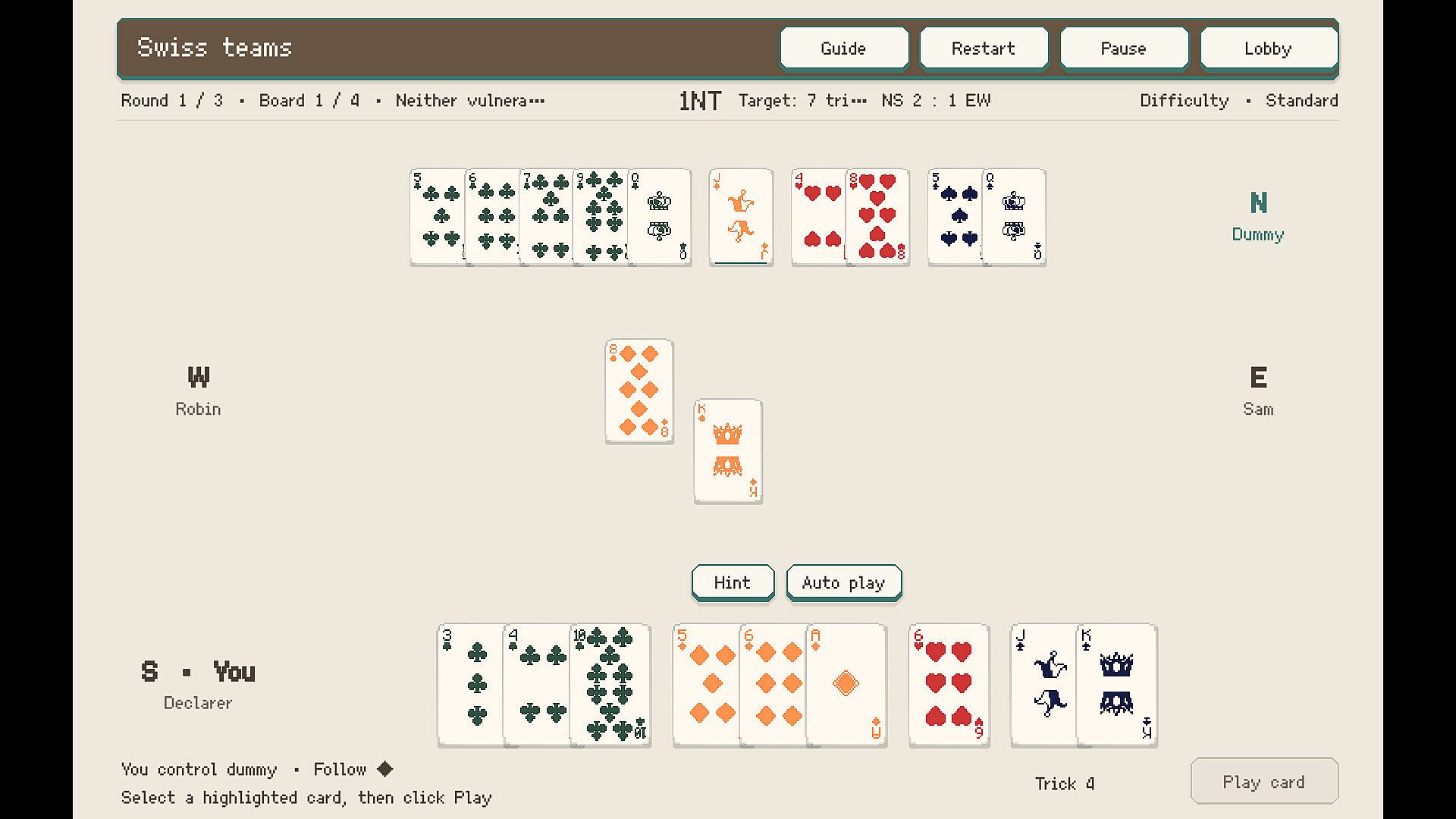
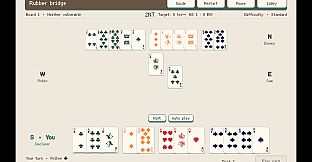
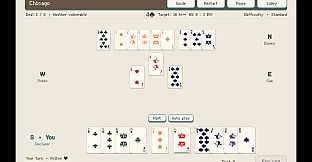
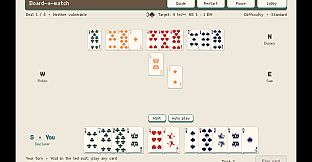
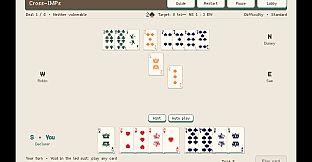
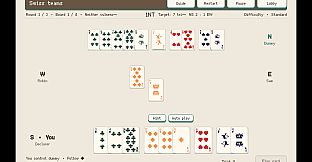
N in One World Bridge Collection delivers a focused offline experience centered on contract bridge for PC players who enjoy strategy and casual card play. This single-player title lets users explore how different scoring systems influence bidding and play decisions with a standard deck of cards. It emphasizes thoughtful choices between securing a contract or pushing for extra tricks, all without any online components or multiplayer features.
Gameplay
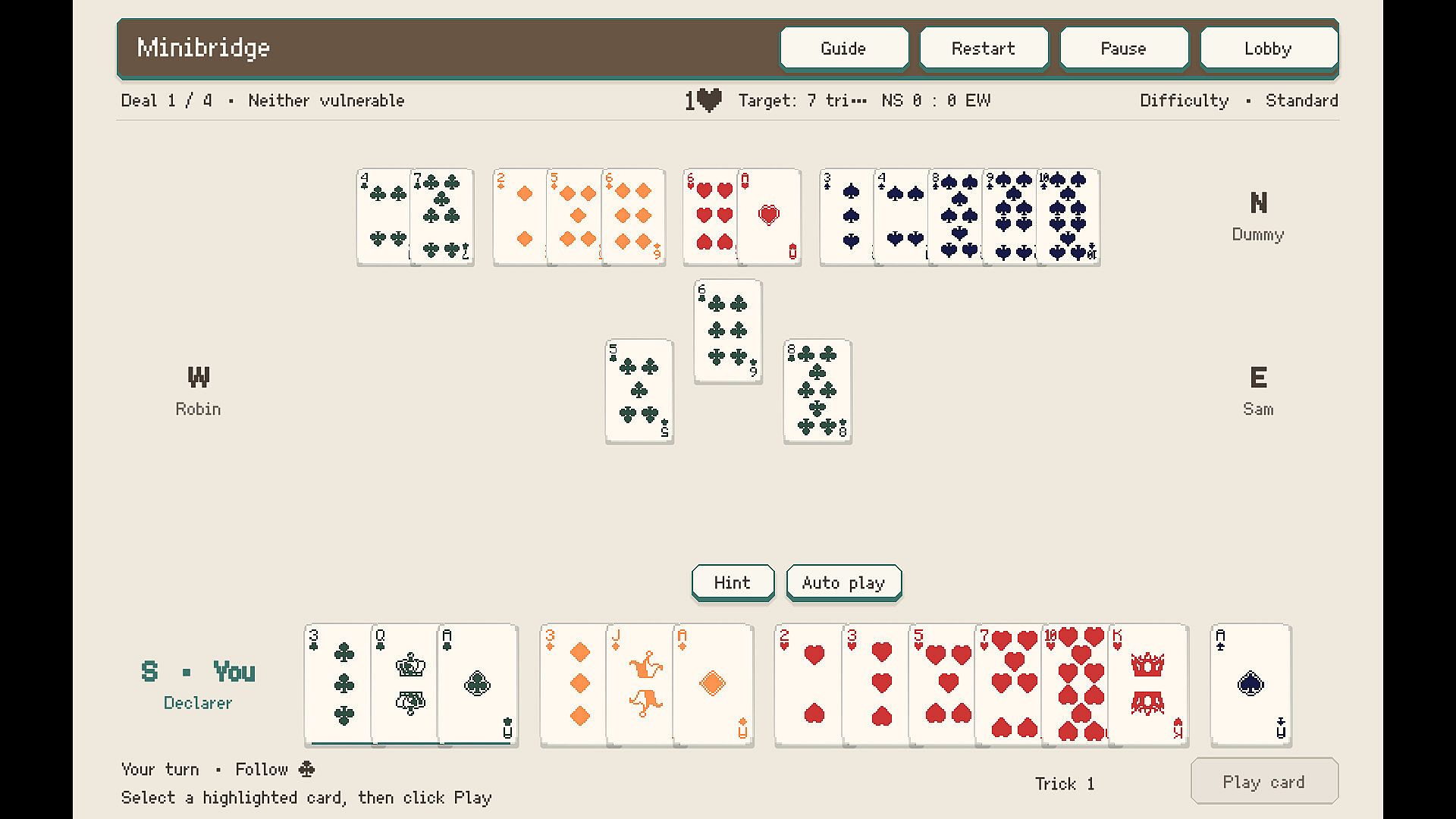
The core loop revolves around dealing hands, participating in auctions, and executing plays while adapting to the specific rules of each scoring format. Players begin with Mini Bridge, which skips the auction phase entirely. Instead, participants compare high-card points and select a contract directly, providing an accessible entry point for practicing suit following and trick-taking fundamentals. Illustrated explanations guide newcomers through the basics of each format before full sessions begin.
Three difficulty levels shape the challenge: Easy and Standard bots rely on their own hands plus publicly available information, while Challenge bots access all four hands for more demanding opposition. Session lengths vary by format, and players can pause at any time with automatic saves preserving progress. After each deal, results can be reviewed in detail, and individual tricks replayed for analysis. In-play hints and an autoplay option assist when needed, with full manual control restored instantly.
Customization options include warm color palettes, pixel-style typography, eight distinct card designs, and adjustable music and sound volume. The interface supports Simplified Chinese, Traditional Chinese, English, Japanese, Korean, German, French, and Spanish, making the game approachable across different regions.
Game Modes
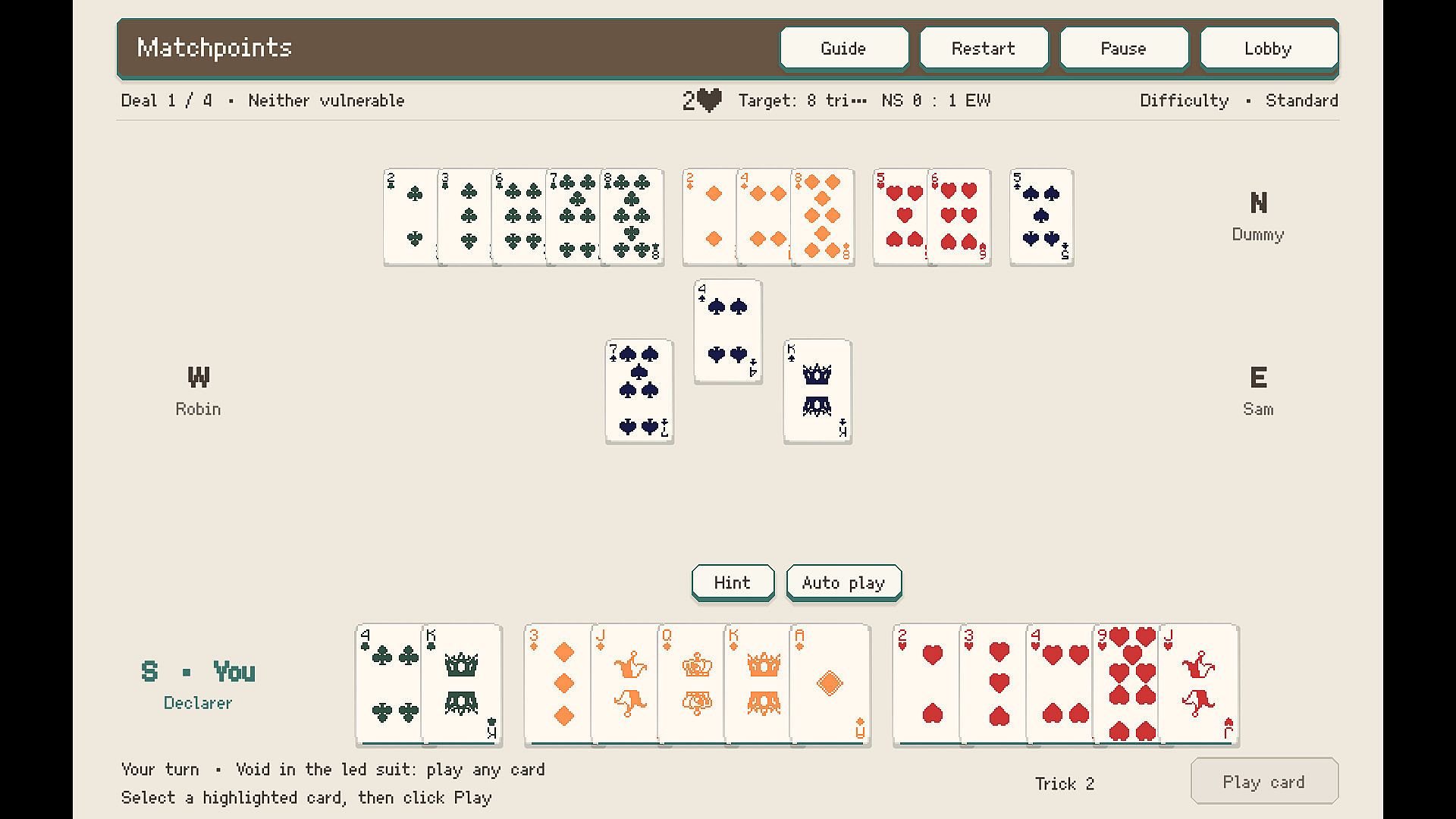
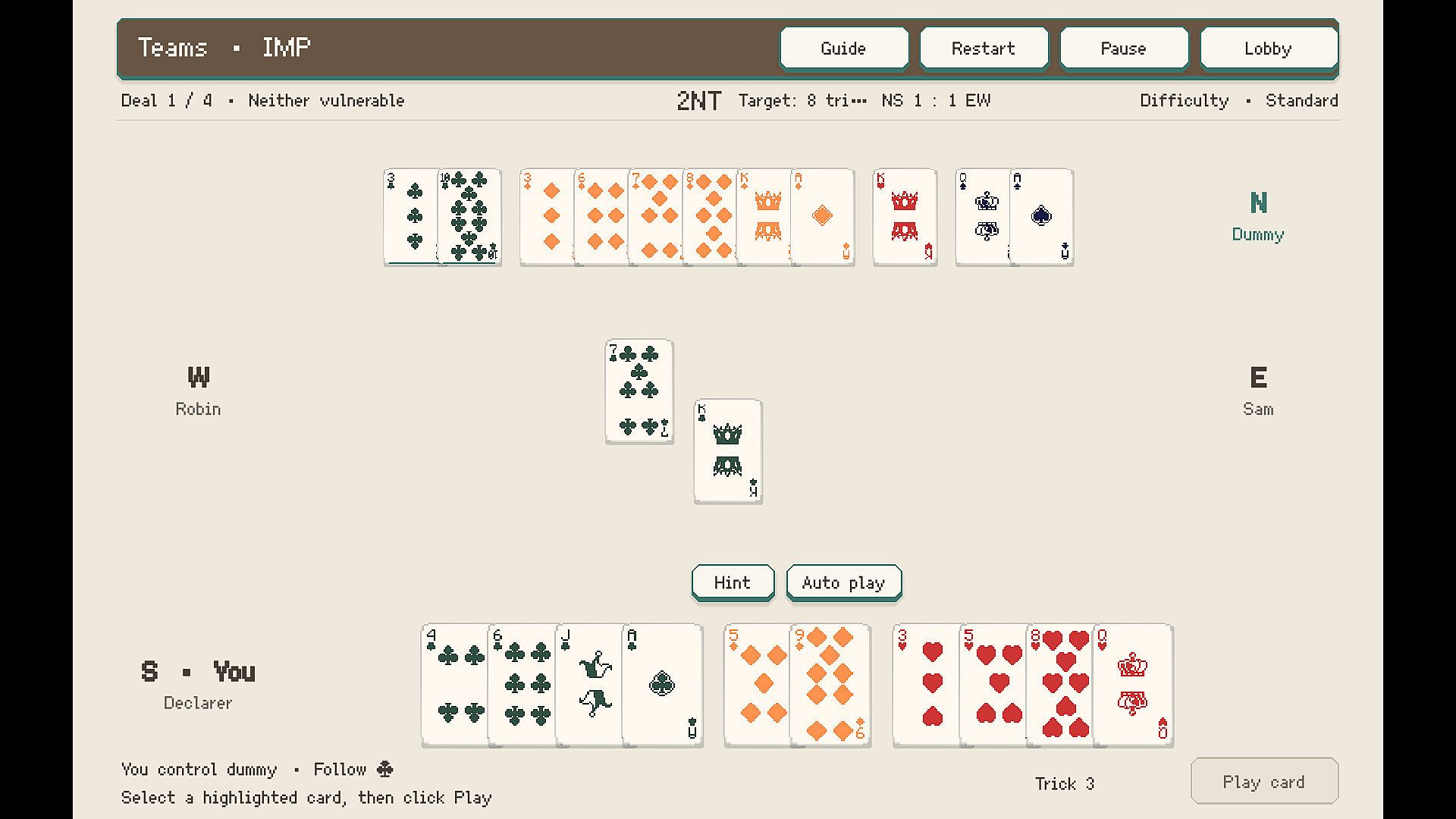
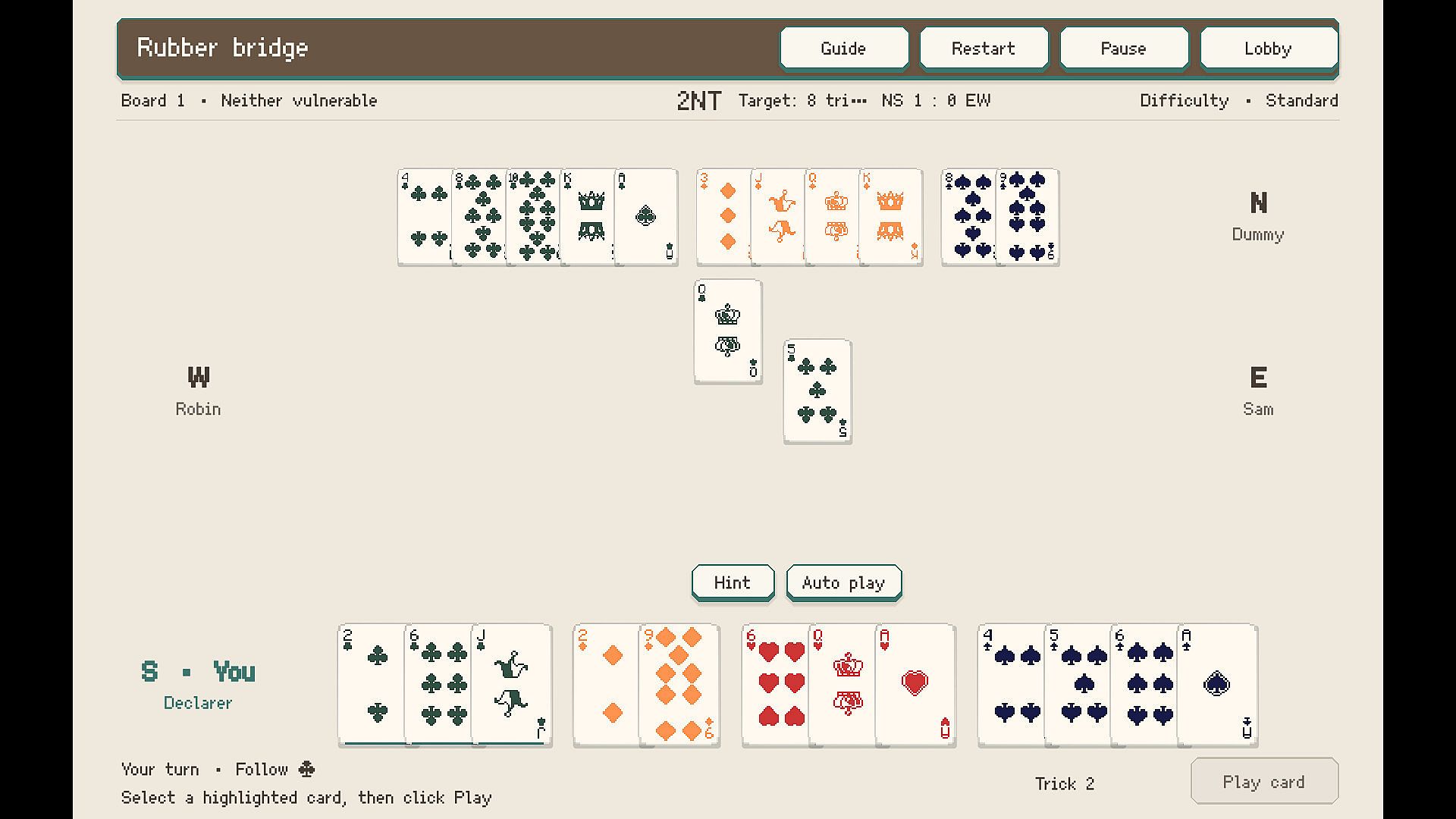
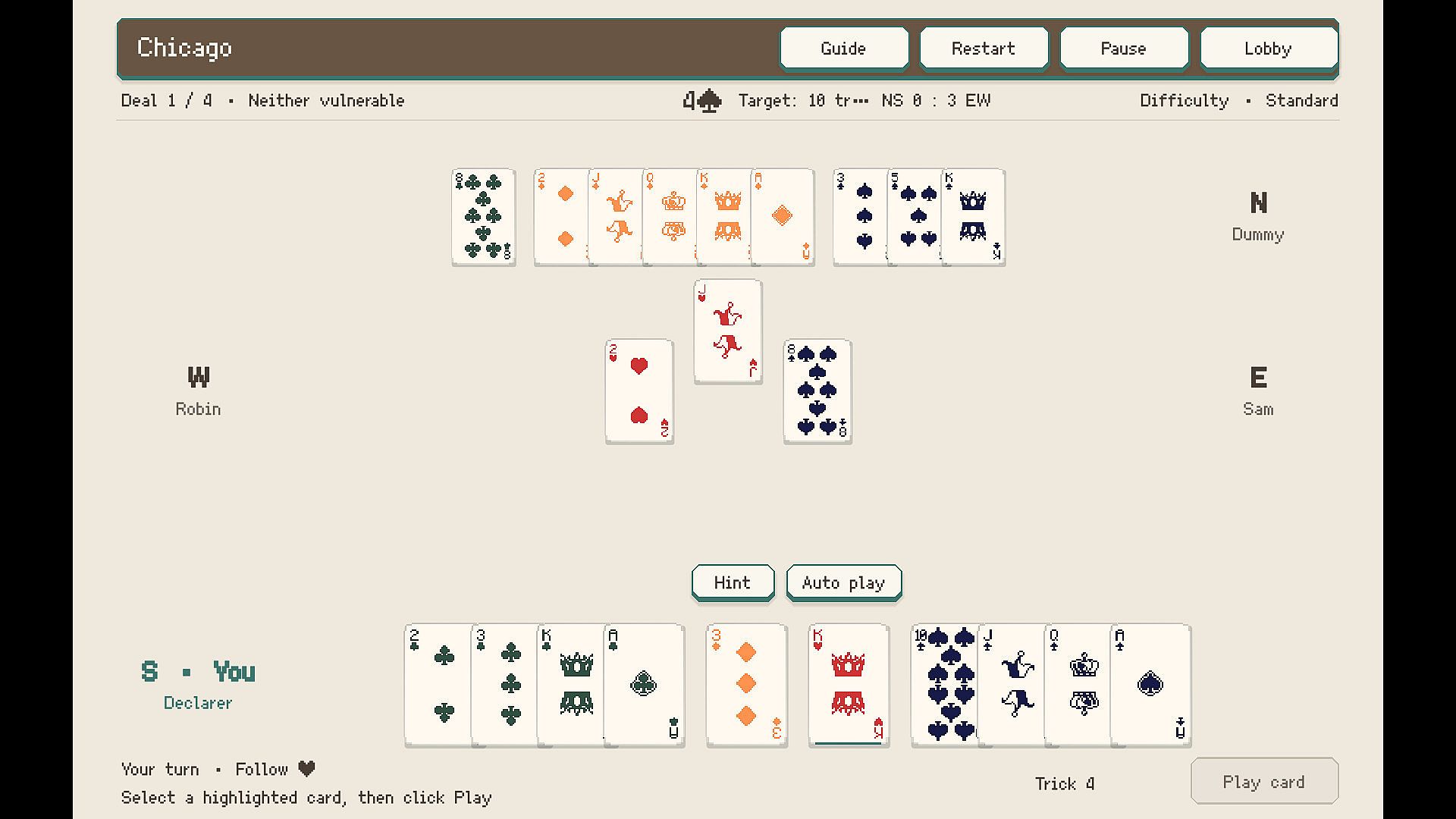
Twenty formats are available, each altering the strategic weight of individual hands through distinct scoring methods. Rubber Bridge and Chicago Bridge represent traditional social play styles, where partnerships accumulate points across multiple deals toward games and rubbers. Matchpoint Pairs focuses on comparative performance against other pairs on identical boards, rewarding consistent results over large swings. IMP Teams converts point differences into international match points, emphasizing the magnitude of gains or losses in team competitions.
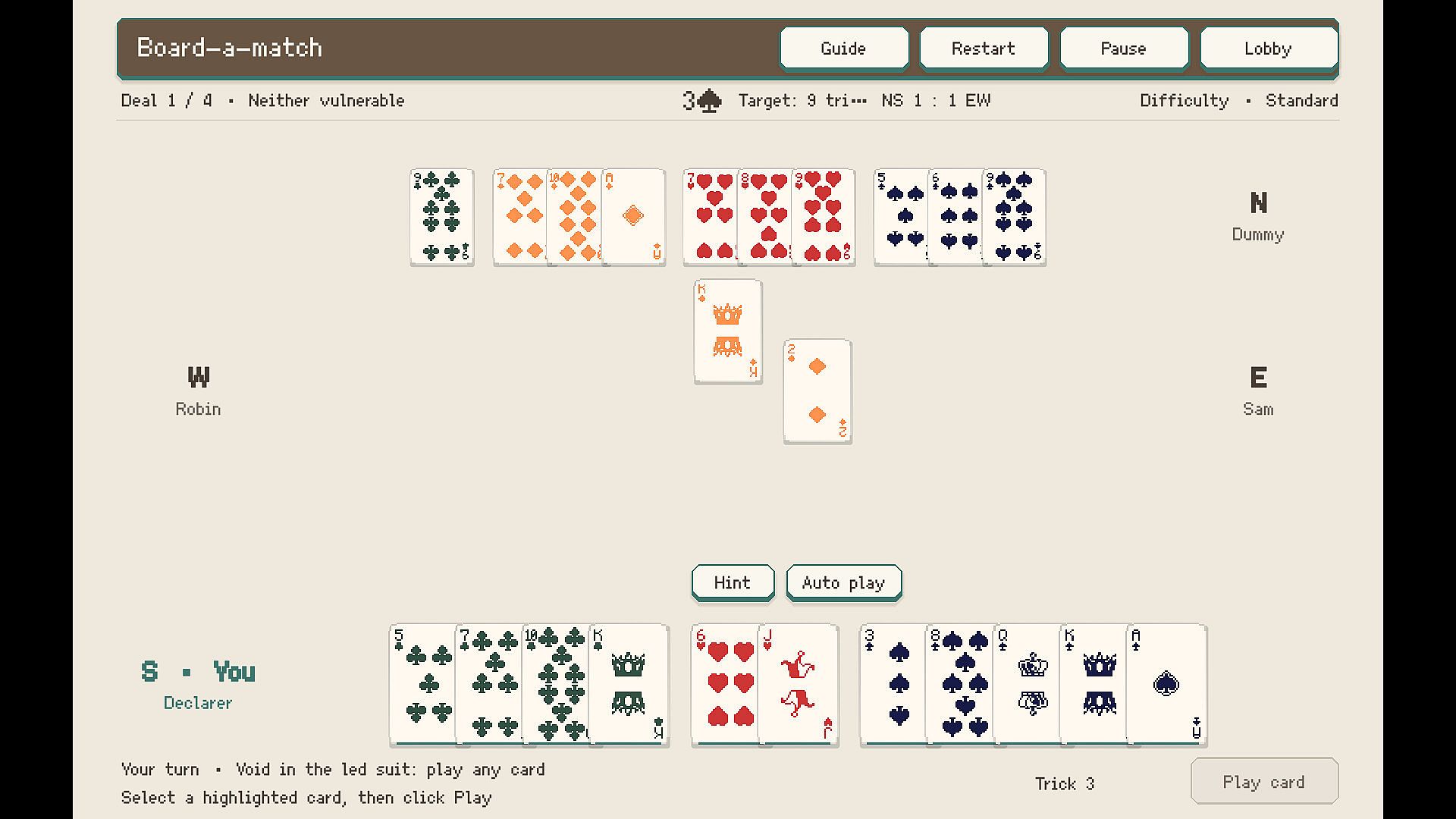
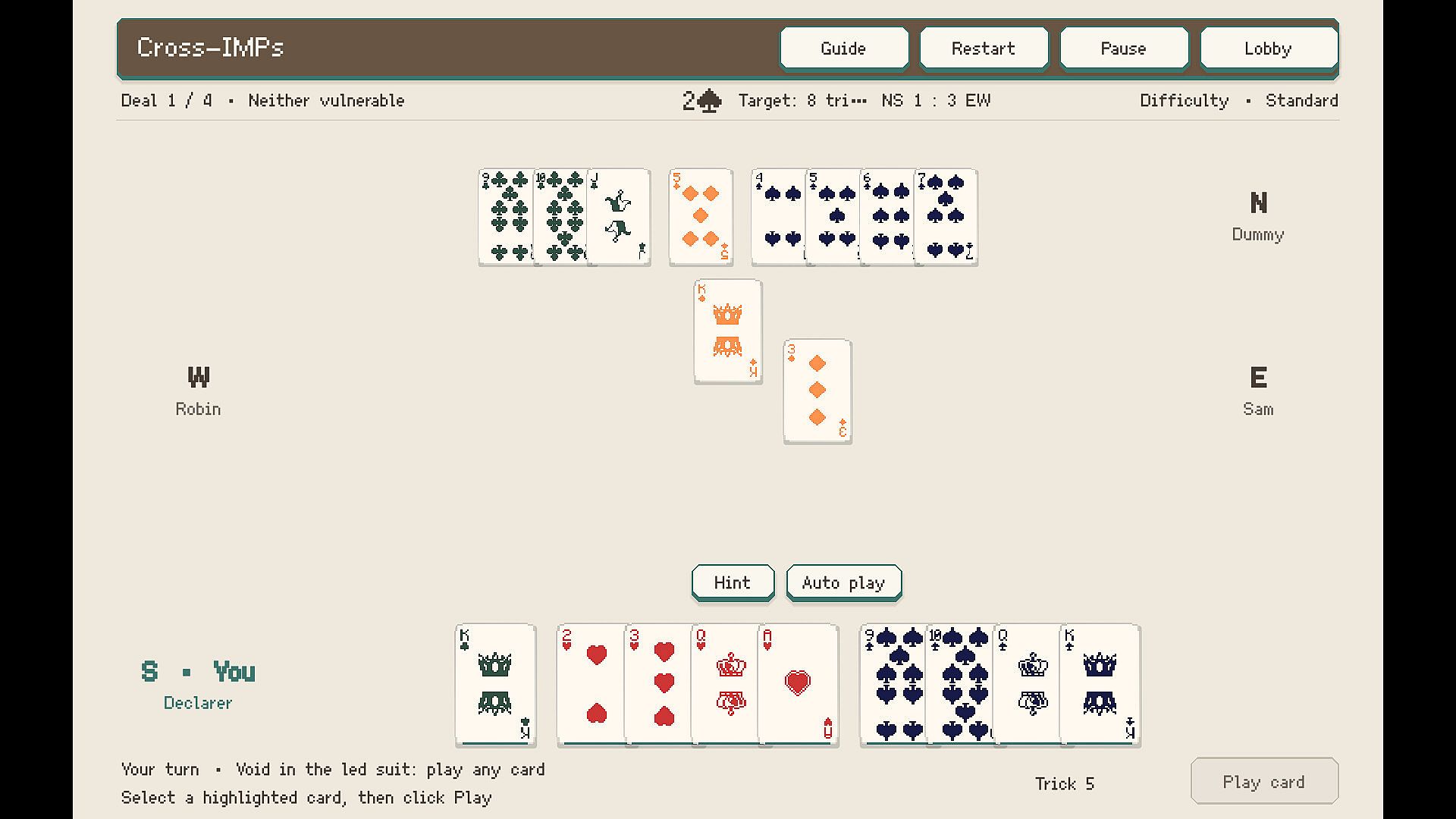
Additional variants include board-a-match, cross-IMPs, Swiss events, round-robin tournaments, and knockout formats. These adapt the core bridge rules for solo play against local bots that simulate opponents and provide comparison tables. Each mode shifts priorities, such as prioritizing contract security in some settings or aggressive overtrick attempts in others, encouraging repeated play to experience the differences.
Customization and Accessibility
Players tailor sessions to their preferences through difficulty selection and format-specific session lengths. The game supports flexible pacing, allowing breaks without losing progress thanks to automatic saves. Post-deal reviews and trick replays support skill development by highlighting decision points. Visual and audio adjustments create a comfortable table environment suited to extended sessions.
Language support broadens accessibility, while the offline design ensures uninterrupted play on PC without connectivity requirements. Short formats designed specifically for solo engagement keep sessions manageable compared to full tournament structures.
Is It Worth Playing?
This collection suits players interested in bridge mechanics who prefer solitary practice and experimentation with scoring variations. It provides a self-contained environment for exploring strategic shifts across formats without external opponents or time pressures. The inclusion of Mini Bridge and adjustable difficulties makes it suitable for those building familiarity with the game, while Challenge modes offer depth for more experienced users. Results depend entirely on card distribution and player choices, with no predetermined outcomes. Those seeking a dedicated, offline bridge experience focused on format diversity will find consistent value in its structured solo approach.